

Key Takeaways
Read China as a negotiated system, not a centrally scripted miracle
Central command, local discretion. China is a one-party bureaucratic state, but not a machine directed in detail from Beijing. The Communist Party controls senior appointments and sets broad priorities, while provinces and cities retain wide room to interpret policy. By 2014, local governments accounted for 85 percent of government spending. This combination supports national coordination and local experimentation, but also lets local interests resist or distort central plans.
Reform learned by trial. After the Soviet collapse, Chinese leaders concluded that weak growth, rigid information flows, and excessive centralization had helped destroy the Soviet Communist Party. Deng Xiaoping chose economic reform without political pluralism. His 1992 southern tour helped restart reforms after the 1989 crackdown, but the path was improvisational, shaped by competing officials and changing circumstances rather than a master plan.
What's striking is that decentralization here is not the opposite of authoritarian rule. Party control over appointments can hold the system together while local autonomy generates experiments and information. This resembles a large organization that delegates operations but reserves hiring and strategic direction for its center. The arrangement can be adaptive, yet its feedback is politically filtered: officials may report problems to improve policy, while suppressing facts that threaten their careers. Adaptability and censorship are not separate features; they are competing forces inside the same information system.
China's export surge joined rural reform, foreign know-how, and unusually good timing
Start with the farms. In 1978, communes left rural incomes stagnant and grain output no higher than in 1955. The household responsibility system gave families responsibility for individual plots and a stronger link between effort and reward. By 1984, grain output was one-third higher than six years earlier, while rural incomes had more than doubled. Higher farm incomes created demand for goods and released workers for industry.
Then connect to the world. China adapted an East Asian development strategy: support export manufacturing, guide finance toward investment, and build infrastructure. Special economic zones attracted foreign companies that brought production methods, management skills, and technology. Hong Kong provided a nearby trade and finance gateway, while container shipping enabled international production chains. By 2014, foreign firms produced nearly half of Chinese exports and about three-quarters of high-tech exports.
The story is not simply that cheap labor wins. Export production tied firms to demanding global buyers, creating pressure to learn production standards and logistics that protected domestic markets might not impose. Foreign investment also transferred less visible knowledge, including management routines and supplier coordination. The tradeoff is that participation in global supply chains did not automatically give Chinese firms control of design, branding, or high-value components. A successful route into manufacturing can build capability while leaving the most profitable capabilities elsewhere.
Urbanize workers fully, or growth hardens into a citizenship divide
Migration moved faster than rights. China’s urban population rose from 18 percent in 1978 to 54 percent in 2013, an increase of 559 million people. Yet the hukou residence-registration system tied access to schools, healthcare, housing, and pensions to a person’s registered locality. Many migrants could work in cities without becoming full urban residents. The result was what scholars called partial urbanization: jobs moved, but equal citizenship often did not.
Property widened the divide. Urban households were allowed to buy state housing at discounted prices in the late 1990s and later capture much of its rising value. Farmers, by contrast, generally held land-use rights, not the right to sell land freely. Local governments could acquire rural land cheaply and resell it at a large markup. The system helped finance urban growth but transferred wealth away from rural families.
Urbanization is often measured by where people live or work, but this account shows why legal status matters just as much. Access to public services shapes whether migration becomes a durable route to opportunity or a temporary labor arrangement. The property contrast also reveals that markets do not create equal gains when people enter them with different rights. The book’s figures describe a major structural transfer, although precise estimates of land value and housing windfalls depend on assumptions about what those assets would otherwise have been worth.
Preserve competition, not protected incumbents, when restructuring state firms
A dual economy. China’s private firms produced roughly 60 percent of GDP, while state-owned enterprises controlled assets valued at about 177 percent of GDP. State firms clustered in capital-intensive and strategic sectors, giving them influence over resources far beyond their output. The 1990s program known as zhuada fangxiao, or grasp the big and release the small, closed or privatized many smaller firms while consolidating larger ones in strategic industries.
The boundary of the model. State ownership did not prevent growth so long as private entrants could compete and inefficient businesses could exit. But local governments often protected troubled firms with credit, land, or other support. After 2008, state firms’ returns weakened while private firms remained more productive. The issue was not ownership alone. It was whether firms faced a real risk of losing their market to better competitors.
This distinction corrects a common shortcut: privatization is not synonymous with a competitive market. A private monopoly can be as insulated as a state enterprise, while a state firm can face pressure to improve if entry and exit are credible. But competition is not self-enforcing. It depends on regulators willing to challenge powerful firms, lenders able to price risk, and governments willing to tolerate closures. The Chinese case makes the institutional conditions behind creative destruction more visible than ownership labels do.
Local governments built the boom by borrowing against tomorrow's land
A fiscal mismatch. The 1994 tax reform increased central control of revenues, but local governments kept most spending responsibilities. Their share of expenditure reached 85 percent by 2011, while transfers from Beijing were complicated and unpredictable. Cities responded by selling or leasing land and borrowing through local government financing vehicles, special-purpose companies that used land as collateral. Rising land prices made the arrangement appear self-reinforcing.
The bill came due. After the 2008 financial crisis, a huge stimulus pushed local borrowing higher. By mid-2013, reported local liabilities were almost 18 trillion renminbi. The danger was not simply the debt total: short-term bank loans financed infrastructure whose benefits might take decades to arrive, and repayment often depended on land prices continuing to climb. China’s broader financial system also used low deposit rates to channel household savings toward state priorities.
This is a case of incentives shaping an entire built environment. If officials are rewarded for visible construction and receive revenue from land conversion, building can appear rational even when long-term use is uncertain. The arrangement resembles borrowing against an appreciating asset: it works impressively while prices rise, then becomes fragile when projects and revenues mature on different schedules. The book argues that the debt was manageable at the time, but manageability is not the same as efficiency or a durable funding system.
A shrinking labor surplus makes productivity, not headcount, China's next engine
Demography supplied a tailwind. China’s dependency ratio, the number of children and older people relative to working-age adults, fell from 80 per 100 workers in 1975 to 36 in 2010. A baby boom followed the famine years, then fertility declined. The large working-age population supported high saving, investment, and factory employment. That demographic dividend created favorable conditions for growth, but reforms were needed to turn those conditions into output.
The labor bargain is changing. By the 2000s, young workers were becoming scarcer and wages were rising, a shift associated with the Lewis turning point, when surplus rural labor no longer keeps industrial wages down. Meanwhile, consumer spending increased fivefold in real per-person terms from 1990 to 2013, even as its share of GDP fell. The central task is to raise worker productivity and household incomes as the population ages.
The demographic story is useful because it separates a temporary tailwind from a policy achievement. A large working-age population does not produce a dividend automatically; jobs, skills, and investment determine whether people become more productive. The distinction between a spending level and its share of GDP matters too: consumers can become much better off while investment grows even faster. Aging raises the stakes for productivity, but it does not mechanically dictate decline, since participation, training, and the composition of work can also change.
Rising incomes bought patience, but unequal assets and graft threaten legitimacy
Growth softened grievance. China’s official Gini index, a measure of income inequality, reached about 0.49 in 2008 to 2009. Yet surveys found broad satisfaction with national economic conditions. One explanation is that average income rose dramatically, lifting hundreds of millions out of poverty. The book records absolute poverty falling from 840 million people in 1981 to 84 million in 2011. Rural and regional programs also helped narrow some gaps, even as wealth remained highly concentrated.
The source of corruption changed. Early reform-era abuses often exploited distorted prices or high import barriers. Later, land deals and infrastructure contracts created large opportunities for officials to extract private gains. Such corruption could coexist with growth while reforms and investment generated benefits, but it became more damaging as returns on investment fell. Xi Jinping’s anticorruption drive targeted officials at many levels, although a party that stands above independent legal checks faces limits in policing itself.
The distinction between absolute improvement and relative fairness helps explain why inequality does not translate directly into unrest. People may judge a system by both their own prospects and their position relative to others; rapid gains can sustain confidence even when distribution worsens. But asset inequality is harder to correct through wage growth alone, especially when gains from property are lightly taxed. An enforcement campaign can deter some misconduct, yet durable accountability usually depends on rules that constrain investigators and powerful leaders as well as their targets.
Coal powered industrialization while making its hidden costs impossible to ignore
Growth had an energy bill. China consumed about a quarter of the world’s energy in 2014 and relied on coal for 66 percent of its primary energy. Its energy use per unit of output was more than twice the US level, reflecting heavy industry, coal dependence, and inefficient buildings and production. By 2012, China accounted for 24 percent of global greenhouse gas emissions. The January 2013 Beijing smog crisis, with particulate readings far above health guidelines, made air pollution impossible to treat as an abstract cost.
Top-down action had mixed results. A program that set energy-saving targets for the largest industrial firms helped cut energy intensity by 19 percent between 2005 and 2010. Coal’s share also declined. But air pollution remained severe, and water and soil cleanup lagged. Central orders can move concentrated industries, yet censorship, weak legal recourse, and restricted civic organizations limit independent pressure on polluters.
Environmental damage is not merely a side effect of growth; it changes health, household welfare, and the value of future development. China’s concentrated sources of pollution make administrative targeting plausible, and its energy-efficiency gains show that central coordination can matter. Yet rules work best when people can report violations, communities can seek remedies, and regulators face incentives to enforce standards. The same centralized capacity that enables rapid intervention can also restrict the public scrutiny that reveals whether intervention is working.
Stop adding capital; make existing assets earn more
The growth engine is changing. For decades, China grew by mobilizing labor and capital, building factories, housing, transport, and power systems. Investment reached 46 percent of GDP in 2010. That strategy made sense while basic assets were scarce and new infrastructure sharply raised productivity. But returns on capital began falling after 2008, while total debt rose from about 140 percent of GDP to roughly 230 percent by 2015. More investment increasingly produced less additional output.
Reform meets political limits. The 2013 reform agenda promised markets a more decisive role, but also preserved the state sector’s dominant position. The tension matters because many low-return investments and protected firms were tied to political incentives. Chinese companies became capable adaptive innovators, yet the book finds fewer examples of domestic firms setting global standards. Technological autonomy can build local suppliers, but it is not the same as innovation, which also depends on exchange of ideas and pressure to compete.
The shift from accumulation to efficiency is a familiar development transition, but China’s scale makes the adjustment unusually consequential. Capital deepening can raise output quickly when tools and infrastructure are scarce; once they are abundant, the harder work is reallocating assets and allowing weak projects to close. The political economy is the core constraint, not a lack of technical proposals. Still, the relationship between political openness and innovation is not a simple on-off switch: adaptive innovation can flourish under limits, even if global frontier leadership is more demanding.
A bigger GDP will not automatically make China a technological or political leader
Size is not capability. China could overtake the United States in total economic output because its population is more than four times larger, while remaining much poorer per person. Its export totals also exaggerate domestic technological control: foreign firms produced most high-tech exports in the period examined. The iPhone illustrates the distinction. Final assembly happened in China, while design, software, and many components came from companies elsewhere.
Influence is built through institutions. China increased its role in trade, investment, and infrastructure finance, including through the Asian Infrastructure Investment Bank and One Belt, One Road projects. These efforts could serve regional needs while advancing Chinese interests. Yet economic weight alone does not replace the technological networks, alliances, and institutions underpinning the US-led international system. The book’s conclusion is neither alarmist nor dismissive: China’s influence is growing, but its reach and leadership remain limited.
The distinction between economic scale and institutional power prevents a misleading race narrative. A country can become the largest producer without controlling the technologies, finance, standards, or alliances that shape how production works. At the same time, new infrastructure institutions can gain influence by meeting needs that existing lenders leave unmet, even before they rival established organizations. The useful question is not whether China replaces another power overnight, but how its growing capacity changes bargaining, supply chains, and security calculations across regions.
Analysis
Kroeber’s central achievement is to make China’s economy legible as a political bargain rather than a technocratic blueprint. The book connects a startling range of mechanisms: household farming released labor and demand, exports brought access to markets and production knowledge, local governments financed urban growth, and state institutions directed resources toward large-scale investment. No single lever explains the outcome. The same arrangement that enabled speed also produced land inequality, debt, pollution, and protection for inefficient firms. Its most useful distinction is between mobilizing resources and using them well. The first phase could tolerate waste because China began with enormous unmet needs and very low productivity. Once roads, factories, housing, and power capacity expanded, the arithmetic changed. Continued growth required selection, competition, and the closure or reallocation of weak investments. That transition was also political: it threatened the officials, firms, and networks that benefited from the old incentives.
The account resists two tempting simplifications. China was not simply a free-market success, since the state shaped capital flows and protected strategic firms. Nor was it simply a state-planned triumph, since private enterprise, local initiative, foreign investment, and experimentation drove much of the transformation. The recurring tension is between central discipline and local discretion, and between market efficiency and party control.
The book is a 2016 snapshot, so its forecasts and statistics should be read as period-specific, not as current measurements. Its confidence in the reliability of broad economic trends is persuasive, while some estimates, especially on consumption, debt, and asset transfers, remain sensitive to definitions and data quality. Its larger argument survives those caveats: understanding China requires tracking who controls resources, who bears the costs, and whether institutions can change when yesterday’s successful incentives become today’s obstacles. The global implication is similarly measured. China’s size makes its choices consequential, but economic scale alone does not confer technological leadership or remake international order.
Review Summary
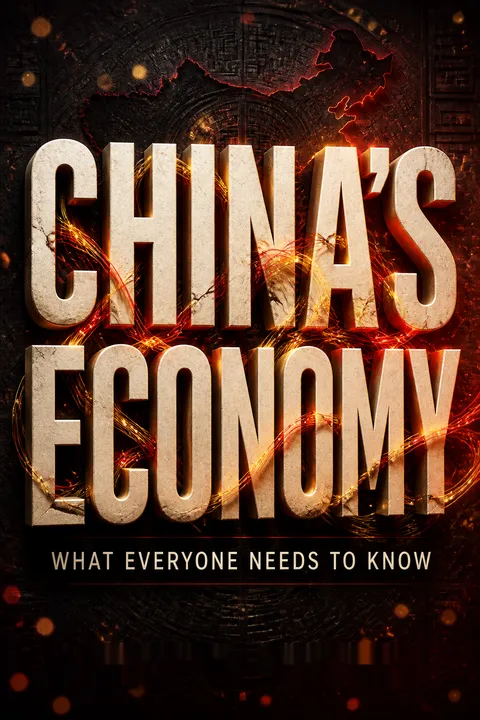
China's Economy: What Everyone Needs to Know receives mostly positive reviews for its comprehensive, accessible overview of China's economic development. Readers appreciate Kroeber's balanced approach, debunking myths and providing insightful analysis. The book covers topics like urbanization, state-owned enterprises, and financial systems. Some criticize its pro-market stance or dated information, but many find it an excellent primer on China's economy. Reviewers highlight Kroeber's explanations of China's decentralized governance, unique growth model, and future challenges, praising the book's ability to inform both experts and newcomers.
People Also Read








Glossary
Developmental state
State-guided industrial growthA model in which government actively shapes economic development rather than leaving investment entirely to markets. In the East Asian version discussed in the book, its recurring elements include land reform, export-oriented manufacturing, and control of finance to direct savings toward favored sectors. China adapted this approach while retaining a larger state-enterprise sector and relying more heavily on foreign investment.
Household responsibility system
Family farming contractsThe rural reform that replaced collective farming with household cultivation of assigned plots. Land generally remained collectively owned, but families gained responsibility for production and greater control over what they grew and sold. Linking household effort more directly to its rewards rapidly increased agricultural output and rural incomes, helping create demand, savings, and workers for emerging industries.
Township and village enterprises
Locally sponsored rural firmsBusinesses formally owned or informally supported by township and village governments, which expanded rapidly during the 1980s and early 1990s. They combined entrepreneurial activity with local government patronage, providing access to capital and political protection when private firms had insecure legal status. They produced consumer goods and moved rural workers into industry; most collective firms were later privatized.
Hukou
Residence registration systemChina’s household registration system, which records a person’s registered locality and historically classifies residents as rural or urban. Although workers became increasingly able to migrate for jobs, local registration continued to shape access to public schools, healthcare, housing, and other services. The resulting gap left many people working in cities without equal access to urban social benefits.
Financial repression
Directed, low-cost financePolicies that channel savings toward government priorities and favored investment. In China these included regulated interest rates, controls on capital moving abroad, and management of the exchange rate. Low deposit rates could reduce banks’ funding costs and make borrowing cheaper for infrastructure and industry, but they also lowered savers’ returns and could encourage excessive investment.
Lewis turning point
Surplus labor begins shrinkingA stage in development, described by economist W. Arthur Lewis, when surplus workers in traditional agriculture become scarce enough that employers must compete more actively for labor. In China, the emerging shift was associated with labor shortages in some export regions and faster wage growth for lower-paid workers. It changes the distribution of income between workers and owners of capital.
Soft budget constraints
Losses invite rescueA condition in which an enterprise expects to receive additional funds or protection if it cannot meet its financial obligations. In China, some state firms and locally favored businesses could rely on government support, land, or credit rather than face closure. This weakens incentives to control costs and makes it harder for more productive competitors to take over resources.
Resource mobilization
Putting more inputs to workA growth approach centered on bringing more labor and capital into productive activity, especially through factories, housing, infrastructure, and modern equipment. Kroeber uses the term to describe China’s main growth engine during the reform era. It can generate rapid gains when basic assets are scarce, but its contribution diminishes as the economy accumulates capital and must improve how existing resources are used.
Local government financing vehicles
Companies borrowing for citiesSpecial-purpose companies used by local governments to raise funds despite formal limits on direct local borrowing. A city could transfer land or other assets to such a company, which then used them as collateral for bank loans. The model financed extensive infrastructure, but often relied on optimistic land valuations and loans that matured before projects generated long-term benefits.
Demographic dividend
Favorable worker-to-dependent ratioA period when the working-age share of a population rises relative to children and retirees. A lower dependency burden can support higher employment and saving, but it does not guarantee growth by itself. China’s unusually large dividend coincided with a baby boom followed by falling fertility; its reversal as the population ages raises pressure on productivity, pensions, and healthcare.
FAQ
What's China's Economy: What Everyone Needs to Know about?
- Comprehensive Overview: The book provides a detailed analysis of China's economic development, covering its historical context, current structure, and future challenges.
- Political Economy Focus: It emphasizes the interplay between China's political system and its economic policies, illustrating how governance shapes economic outcomes.
- Global Implications: The author discusses what China's rise means for the global economy, making it relevant for readers interested in international relations and economics.
Why should I read China's Economy: What Everyone Needs to Know?
- Accessible Information: Arthur R. Kroeber presents complex economic concepts in a way that is understandable for general readers without a specialized background.
- Current Relevance: Understanding China's economy is crucial given its significant impact on global markets and international relations.
- Informed Perspective: The book offers insights based on years of research and experience in China, providing a nuanced view of its economic landscape.
What are the key takeaways of China's Economy: What Everyone Needs to Know?
- Economic Growth Model: China has transitioned from a centrally planned economy to a more market-oriented one, but retains significant state control over key sectors.
- Demographic Challenges: The book highlights the impending demographic transition as the population ages, which could slow economic growth and increase social welfare burdens.
- Environmental Concerns: Kroeber discusses the environmental degradation resulting from rapid industrialization and the challenges China faces in addressing these issues.
What are the best quotes from China's Economy: What Everyone Needs to Know and what do they mean?
- Labor Productivity: "The importance of labor productivity is illustrated by the fact that China’s economy is still only about two-thirds the size of the US economy." This highlights the need for China to improve efficiency to sustain growth.
- One-Child Policy Critique: "The one-child policy was one of the worst major policies of the reform era." Kroeber critiques its long-term impacts on China's demographic structure.
- Lewis Turning Point: "China has begun to enter its 'Lewis turning point'." This indicates a critical juncture where labor supply is tightening, necessitating higher wages.
How does the hukou system affect urbanization in China's Economy: What Everyone Needs to Know?
- Residence Registration: The hukou system classifies individuals as either rural or urban residents, impacting their access to social services and job opportunities.
- Migration Barriers: While it allows labor mobility, it restricts families from moving to cities, creating a class of "incomplete urbanites" who lack full rights.
- Policy Reforms: Recent reforms aim to relax hukou restrictions and improve access to urban services for migrants, but progress has been slow.
What role do state-owned enterprises (SOEs) play in China's economy according to China's Economy: What Everyone Needs to Know?
- Dominant Sector: SOEs control a significant share of national assets and are crucial in strategic industries, despite a declining share of GDP.
- Political Influence: They serve as instruments of state policy, often prioritizing government objectives over profitability.
- Reform Challenges: The book discusses ongoing reforms aimed at improving SOE efficiency, but highlights the difficulties in balancing state control with market dynamics.
How has China's financial system evolved as described in China's Economy: What Everyone Needs to Know?
- Bank-Dominated System: China has a bank-centric financial system where about 80% of financing comes from banks rather than capital markets.
- Reforms and Diversification: The financial system has undergone significant reforms, moving from state-controlled lending to a more diversified structure that includes consumer lending.
- Shadow Banking: The rise of shadow banking has introduced new dynamics, prompting regulators to balance growth with risk management.
What is the significance of the "demographic dividend" in China's Economy: What Everyone Needs to Know?
- Population Dynamics: The demographic dividend refers to a period when the working-age population grows relative to dependents, boosting economic productivity.
- Historical Context: China's demographic dividend was enhanced by historical events like the Great Leap Forward, which led to a baby boom in the 1960s.
- Future Implications: As the population ages, the dependency ratio will rise, posing challenges for economic growth and social services.
What is the “Lewis Turning Point” mentioned in China's Economy?
- Definition: The "Lewis Turning Point" refers to the stage in economic development when surplus labor from the agricultural sector begins to diminish, leading to increased wage demands in the industrial sector.
- Implications for China: As China approaches this point, it will need to adapt its economic strategies to maintain growth, as labor costs will rise and impact profit margins.
- Historical Context: This concept, developed by economist Sir W. Arthur Lewis, is crucial for understanding the dynamics of labor markets in developing economies.
How has the one-child policy affected China's economy?
- Demographic Impact: The one-child policy has led to a shrinking working-age population, which poses challenges for economic growth and labor supply.
- Economic Consequences: Kroeber argues that the policy has contributed to rising labor costs and an aging population, which could strain social services and economic productivity.
- Policy Reversal: The easing of this policy in recent years reflects the government's recognition of these challenges, but the long-term effects on birth rates and population structure remain uncertain.
How does urbanization impact China's economic growth?
- Rapid Urbanization: The book notes that urbanization has been a driving force behind China's economic growth, facilitating industrialization and increasing labor productivity.
- Challenges of Urbanization: However, Kroeber also highlights issues such as housing shortages, environmental degradation, and social inequality that arise from rapid urbanization.
- Future Directions: The need for sustainable urban planning and infrastructure development is critical to ensure that urbanization continues to benefit the economy.
What are the implications of income inequality in China?
- Rising Inequality: Kroeber points out that income inequality has increased significantly since the economic reforms, leading to social tensions and potential instability.
- Policy Responses: The government has implemented various measures to address inequality, but challenges remain in effectively redistributing wealth and improving social welfare.
- Long-term Effects: Persistent inequality could undermine social cohesion and economic growth, making it a critical issue for policymakers.
Download PDF
Download EPUB
.epub digital book format is ideal for reading ebooks on phones, tablets, and e-readers.








