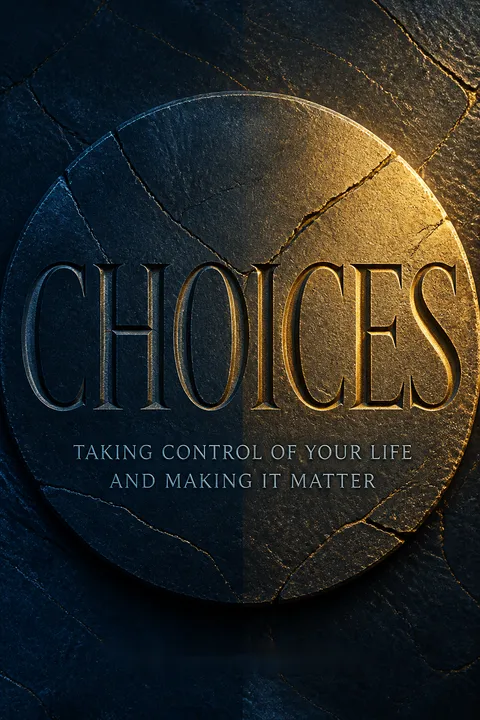


Key Takeaways
You cannot choose every event, but you can choose your next response.
Agency has limits. Beattie begins with a distinction that runs through the book: other people, illness, accidents, and death are not under personal command, but a person still has choices about their own behavior. After her son Shane died in a skiing accident, she recognized that she felt responsible for allowing him to go, even though she knew it was an accident. The feeling was real; it did not prove that she had caused his death.
Separate blame from action. Sherry, a pregnant teenager, entered a car with a boyfriend she did not consciously know was high. A crash left her daughter severely disabled. The story shows that choices can have painful consequences, while hindsight cannot give anyone perfect knowledge or control. The practical question is not whether every outcome can be prevented, but what response is possible now.
The useful distinction here resembles the psychological idea of a locus of control: attention is directed toward what a person can influence, without pretending that everything is controllable. That distinction can restore agency after loss. It also needs protection from misuse. Survivors often feel responsible for events they could not reasonably predict, and trauma can turn hindsight into an imagined duty to have known. A sound application separates responsibility for chosen conduct from responsibility for every outcome. Agency is a resource, not evidence that suffering was deserved.
Small choices set consequences moving before their full cost becomes visible.
Consequences travel outward. Beattie calls this the Great Law of Cause and Effect: actions produce consequences, though the delay can make the connection hard to see. Greg, who had an affair, first hoped his wife would never learn about it. When the other woman threatened to tell her, he chose to disclose the truth himself. His confession did not erase the damage, but it stopped adding deception to the original choice.
Delay hides the chain. Beattie compares personal choices with Edward Lorenz's work on weather systems, later popularized as the Butterfly Effect. Small changes can alter a complex system in ways that are difficult to predict. The point is not that every minor act controls the future. It is that choices can affect other people, and that consequences may emerge long after the moment of decision.
This is a strong model for ethical attention: an action is not merely private when it changes what others must live with. Systems thinking adds an important qualification. In complex systems, consequences are real but often not predictable in detail, so the Great Law should not be mistaken for a moral vending machine in which every good deed earns a reward. Its practical value is accountability: consider who may be affected, tell the truth when harm has been done, and avoid claiming certainty about outcomes.
Make room for not knowing before filling the void with old answers.
The next step may be unclear. Beattie describes entering the unknown as stepping into a dark cave: familiar assumptions no longer guide the way, and a person has to slow down and notice what is actually happening. Darlene reached this point after several painful events made it impossible to keep believing she could control other people. Letting go meant releasing her picture of how life should unfold, not abandoning her own power.
Do one possible thing. Aaron, newly divorced and unemployed, could not see a future. A quiet thought redirected him toward being present rather than solving his whole life at once. Kelly, alone for a weekend, noticed her habit of filling empty space with unsatisfying relationships. She did not immediately find an answer, but she stopped treating uncertainty as proof that she had to repeat the past.
The book's cave is a memorable image for uncertainty tolerance. Learning often requires a period in which an old explanation no longer works and a new one has not arrived. In contemporary acceptance-based approaches, making room for discomfort can help a person act according to values rather than reflexively escaping an unpleasant feeling. Still, uncertainty is not automatically wise or sacred. Some situations call for information, planning, or protection. The useful practice is to suspend premature certainty long enough to see the options that fear or habit has obscured.
Make the hard call that protects your integrity when every option hurts.
A hard call has no easy option. Beattie uses this term for a choice in which neither alternative is appealing, but one feels unacceptable. Brenda faced such a choice at a social-services agency where money meant for clients was being diverted. Reporting the misconduct could cost her job and damage friendships; staying silent would leave vulnerable clients with poor care. She made the call, still afraid, but able to live with herself.
Self-protection can be necessary. Marge, at seventy-one, recognized that her predictable life with an abusive husband was also consuming her chance to live. She sought therapy, found work, and moved out. These stories do not suggest that every difficult choice has an obvious answer. They show the value of naming what matters, getting support, and choosing the option that does not require ongoing self-betrayal.
Moral courage is rarely a clean feeling of certainty. Brenda's decision involves competing duties: to clients, colleagues, and herself. Ethical decision-making benefits from identifying those duties separately rather than allowing loyalty or fear to decide by default. The same care matters in relationships involving abuse. Leaving can require practical help and safety planning, not merely resolve. Beattie's emphasis on choice is most useful when paired with recognition that institutions, money, health, and danger constrain what choices are realistically available.
Feel the emotion before it starts making your decisions for you.
Feelings are information, not orders. Doug repeatedly stole cars and acted aggressively, calling himself a screwup. In treatment, a counselor persisted in asking what he actually felt. Doug eventually disclosed that an uncle had sexually abused him when he was a child and that his parents had not listened when he resisted being sent to spend time with him. Naming the old hurt helped Doug understand some of the anger he had been acting out.
Feeling is different from acting. Beattie describes how people may numb, suppress, or redirect emotions until those feelings emerge through behavior. She argues for staying present with grief, fear, and anger, while avoiding the idea that every feeling must dictate an action. Doug received help in a treatment setting, and the book also recognizes that professional support may be needed when emotions are overwhelming or recovery is difficult.
The distinction between feeling an emotion and obeying it is central to emotional regulation. Naming a feeling can create a pause in which a person can choose a response, while avoidance may keep distress active beneath the surface. Doug's story also illustrates why compassionate inquiry can reveal context behind behavior without excusing harm. A necessary qualification is that not all destructive behavior comes from hidden trauma, and emotional exploration is not a substitute for appropriate clinical care. Understanding an origin can support accountability; it does not erase it.
When instinct traps you, move gently in the opposite direction.
The trap tightens under force. Beattie's Chinese handcuffs are a small finger-trap toy: pulling the fingers apart makes the bamboo tube grip more tightly. To escape, a person pushes inward and then eases the fingers out. She uses this as a metaphor for situations where instinctive reactions make a problem worse. In relationships, clinging harder when someone needs space can deepen distance rather than create closeness.
Choose flexibility, not reflex. Jeanie, who felt her neediness drove people away, applied her riding instructor's advice: show interest, then allow the horse room to approach. The broader lesson is not to do the opposite of every impulse automatically. It is to notice when a familiar reaction is failing, pause, and try a measured response that restores balance rather than escalating the struggle.
The finger-trap image captures a practical feature of self-reinforcing behavior: more force can intensify the very condition someone wants to escape. Behavioral flexibility offers a better alternative than rigidly following either impulse or rule. In relationships, a pause can help distinguish care from anxious pursuit, and boundaries from withdrawal. The metaphor has limits, however. Some situations require direct action, and an opposite response is not inherently wise. Its value lies in interrupting automatic repetition long enough to ask whether the current strategy is working.
Serve others without abandoning the person whose care is your responsibility.
Help can create connection. In Coventry, England, a chaplain mentioned to two bereaved families that each had lost a son. One family sent flowers to the other's funeral; the parents began meeting over tea. Their small act of reaching out grew into the Society of Compassionate Friends, a support network for bereaved families. The story shows how one person's experience can become useful to someone facing the same pain.
Giving needs boundaries. Beattie also warns that compulsive service can become self-neglect. Helping others may ease isolation and offer perspective, as it did for Marvin, who helped create a support group for families blending households. But service is not a guarantee that others will reciprocate, nor is it a reason to ignore one's own needs. Healthy giving includes the ability to receive help and to say no.
The Coventry story illustrates mutual aid: people with lived experience can offer a kind of recognition that outsiders may struggle to provide. Such support can reduce isolation without requiring anyone to claim a perfect solution. The boundary is essential. Caregiving research and everyday experience both point toward the risks of burnout when helping becomes compulsory or tied to self-worth. Service is most sustainable when it is freely chosen, matched to capacity, and accompanied by reciprocal support. The aim is connection, not self-erasure disguised as virtue.
Repair what you can, then stop treating guilt as a verdict.
Guilt can distort the present. Tina's business was failing after a major road closure, and she assumed the losses were punishment for past mistakes. When a woman offered to sell a house Tina had long wanted at an affordable price, Tina nearly dismissed it as too good to be true. A friend urged her to look. The house was a genuine opportunity, not proof that the universe was balancing a moral account.
Choose repair over revenge. Carl, betrayed by a business partner who took money, tried to damage the man's reputation and found that rehearsing revenge kept him agitated. He eventually practiced wishing his former partner well, without inviting him back into his life. The book's point is not that forgiveness cancels consequences. It is that guilt and resentment can consume attention that might be used for amends, boundaries, or a new start.
This section usefully separates remorse from a global sentence against the self. In moral psychology, guilt can focus attention on a particular action and prompt repair, while shame tends to condemn the whole person. That distinction supports accountability without endless self-punishment. Tina's story also challenges the habit of interpreting misfortune as deserved. A caution is warranted around Carl's practice: forgiving someone need not mean reconciling, dropping a legal claim, or minimizing the harm. Inner release and external accountability can coexist.
Use stillness to hear yourself, not to outsource the choice.
Quiet can restore attention. Beattie describes prayer as a way to seek help, admit uncertainty, express gratitude, and ask for guidance. Her account of Bill Wilson, whose recovery helped begin Alcoholics Anonymous, emphasizes choosing a conception of God rather than requiring one prescribed belief. In her own recovery, a simple, uncertain prayer marked a turning point in her willingness to engage with treatment.
Start with a small practice. On the return from Tibet, guide Lami recommended five or ten minutes of daily prayer and meditation. Beattie also points to ordinary forms of stillness, including a walk or a quiet pause. These practices are meant to support reflection and connection, not remove the responsibility to act. Intuition may offer a useful signal, but the person still has to consider evidence, safety, and the likely consequences of a decision.
A contemplative practice can create distance from rumination and make values easier to notice. Its benefit need not depend on agreement about whether guidance comes from God, intuition, or reflective attention. That openness makes the advice accessible across belief systems. The limit is important: a feeling of certainty is not proof that a choice is safe or divinely endorsed. Decisions involving health, abuse, or serious risk need reliable information and appropriate expertise alongside prayer or meditation. Stillness can prepare judgment; it should not replace it.
Keep pursuing what matters, but let reality revise the route.
Desire and surrender can coexist. Beattie traveled through China and Tibet hoping to reach Mount Kailash, a sacred pilgrimage site. At high altitude she became dangerously ill, and her group turned back. She rested, sought medicine and oxygen, and later continued more cautiously. Even then, she could not complete the circuit on foot. Her companion Joe walked around the mountain and dedicated the merit of the pilgrimage to her.
The destination changed shape. Beattie did not get the exact experience she had imagined, but she received help, reached the mountain, and accepted a different version of the journey. Her idea of nonattachment is not indifference or having no ambitions. It is caring deeply while loosening the demand that events follow a preferred script. The story also underlines a practical limit: persistence should not require ignoring the body's warning signs.
This ending holds two capacities together: commitment to a meaningful aim and responsiveness to new evidence. That combination resembles adaptive goal pursuit, where a person can preserve a value while revising the method or even the specific target. It is more robust than either rigid persistence or premature resignation. The altitude episode makes the nuance concrete: spiritual purpose does not cancel physiological risk. Meaning can be found in an altered outcome, but that does not prove every setback was arranged for a reason. The value lies in making room for meaning without denying reality.
Analysis
Choices is a story-driven guide to agency under imperfect conditions. Its recurring structure is simple: a person encounters a consequence, a loss, or a situation that resists control; the old response fails; a different choice becomes possible. Beattie's central contribution is not the claim that people can control their lives outright. It is the more modest and useful claim that control over one's own next action remains meaningful even when control over outcomes does not.
The book's spiritual language gives that claim emotional reach. Cause and effect, karma, surrender, prayer, and a larger plan help Beattie make sense of experience that ordinary problem-solving cannot explain. The mountain journey provides a narrative counterpart: ascent is slow, discomfort arrives before understanding, and the intended destination may not be reached in the expected way. The many personal stories make abstract ideas concrete, especially when they show that service, honesty, boundaries, and asking for help are choices made in ordinary moments.
The framework is strongest when it distinguishes responsibility from blame. A person may own an action without being responsible for every consequence, and painful circumstances do not prove that someone deserved them. That distinction is crucial because the book's language of karma and lessons could otherwise invite victim-blaming or suggest that every tragedy carries a discoverable purpose. Beattie's own examples resist that conclusion, but readers should treat cosmic explanations as interpretations, not established explanations for illness, abuse, or death.
A practical reading of the book is therefore both spiritual and grounded: identify what is actually within one's influence, feel rather than suppress the emotional response, seek competent help, and choose the next action that best fits one's values. Then review the result without demanding perfect foresight. This preserves the book's faith in free will while acknowledging that agency is shaped by circumstances, relationships, health, and power.
Review Summary
Choices by Melody Beattie receives mostly positive reviews, with an average rating of 4.13/5. Readers find it inspirational, empowering, and full of useful insights about making life choices. Many appreciate Beattie's writing style, which incorporates stories to illustrate her points. Some readers find certain aspects, like references to reincarnation, less helpful. The book is praised for its ability to change perspectives and provide guidance for those feeling stuck. Critics note it can be superficial or disorganized at times, but overall, it's considered a valuable read for personal growth.
People Also Read







Glossary
The Great Law of Cause and Effect
Actions create consequencesBeattie's name for the principle that choices produce consequences, even when the effects are delayed, difficult to trace, or spread to other people. She applies the idea to daily behavior and spiritual life, urging readers to take responsibility for what they do. The term does not mean that every outcome can be predicted or that suffering is deserved.
Cave of the Unknown
Unfamiliar ground for growthBeattie's metaphor for periods when familiar explanations, plans, or coping strategies no longer work and the next step is unclear. Entering the cave means tolerating uncertainty, moving carefully, and staying open to learning rather than forcing an immediate answer. The image presents not knowing as uncomfortable, but potentially necessary for change.
Chinese handcuffs
A trap eased by reversalA small finger-trap toy used as a metaphor for reactive behavior. Pulling the fingers outward makes the woven tube grip more tightly; pushing inward and easing out releases them. Beattie applies the image to situations where forceful pursuit, panic, or repetition worsens a problem, suggesting a pause and a more flexible response.
Hard calls
Painful choices with no easy optionBeattie's term for decisions in which neither available option feels desirable, but one may be unacceptable or violate a person's values. Examples include ending an unsafe relationship, telling the truth about harm, or reporting misconduct. Making a hard call requires facing the consequences rather than handing the decision to someone else or avoiding it indefinitely.
Euphoric recall
Selective memory of a relationshipA distorted recollection in which the exciting or pleasurable parts of a relationship dominate memory, while conflict and harm fade into the background. Beattie uses the term in Sally's story about repeatedly returning to a damaging partner. Writing down the full history helps Sally interrupt the fantasy that the relationship will become different merely because time has passed.
Nonattachment
Care without clingingA way of relating to people, hopes, and outcomes without trying to control or possess them. In Beattie's account, nonattachment does not mean indifference, numbness, or refusing to love. It means recognizing what cannot be controlled, shifting attention toward one's own choices, and remaining open to life unfolding differently from expectation.
Wheel of Life
Recurring lessons through experienceBeattie's image, associated with Elisabeth Kübler-Ross's work, for the repeated lessons people encounter through events such as grief, fear, forgiveness, and change. Experiences can deepen understanding, but a lesson may return in another form. The image encourages readers to stay present with each stage rather than rushing toward an imagined final state of completion.
Butterfly Effect
Small causes, large effectsA popular name for the idea, associated in the book with meteorologist Edward Lorenz, that small differences in a complex system can lead to large changes that are difficult to predict. Beattie uses it to illustrate how unnoticed choices may ripple outward. It is a metaphor for sensitivity and unpredictability, not a promise that particular actions have predictable results.
FAQ
What's "Choices: Taking Control of Your Life and Making It Matter" about?
- Empowerment through Choices: The book focuses on how individuals can take control of their lives by making conscious choices, emphasizing the power of free will.
- Understanding Cause and Effect: It explores the Great Law of Cause and Effect, illustrating how our choices lead to specific consequences.
- Personal Stories and Lessons: Through real-life stories, the book demonstrates how people have navigated their choices and the impact of those decisions.
- Spiritual and Practical Guidance: It combines spiritual insights with practical advice to help readers make meaningful choices in their daily lives.
Why should I read "Choices: Taking Control of Your Life and Making It Matter" by Melody Beattie?
- Gain Control: The book offers strategies to help you regain control over your life by understanding and making deliberate choices.
- Learn from Others: It provides a collection of stories that offer insights into how others have successfully navigated their challenges.
- Spiritual Growth: The book encourages spiritual growth by teaching the importance of surrendering to a higher power while making choices.
- Practical Advice: It offers practical advice on dealing with everyday issues, from relationships to personal growth.
What are the key takeaways of "Choices: Taking Control of Your Life and Making It Matter"?
- Free Will is Powerful: Recognize the power of free will and how it shapes your life through the choices you make.
- Consequences of Choices: Understand that every choice has a consequence, and being aware of this can lead to better decision-making.
- Balance and Moderation: The book emphasizes finding balance in life and making choices that lead to peace and fulfillment.
- Spiritual Connection: It highlights the importance of connecting with a higher power to guide your choices and find meaning in life.
How does Melody Beattie define the Great Law of Cause and Effect in the book?
- Interconnectedness of Actions: The Great Law of Cause and Effect is about understanding how every action has a corresponding reaction.
- Awareness of Consequences: It encourages readers to be aware of the consequences of their actions and how they affect themselves and others.
- Spiritual and Practical Application: The law is applied both spiritually and practically, guiding readers to make choices that align with their values.
- Empowerment through Understanding: By understanding this law, individuals can feel empowered to make choices that lead to positive outcomes.
What is the significance of the "Cave of the Unknown" in the book?
- Metaphor for Uncertainty: The "Cave of the Unknown" represents the uncertainty and fear that come with making choices without knowing the outcome.
- Embrace the Unknown: The book encourages readers to embrace the unknown as a necessary part of growth and learning.
- Heightened Awareness: Entering the cave requires heightened awareness and trust in one's intuition and spiritual guidance.
- Transformation and Discovery: It is a place of transformation where individuals can discover new paths and insights about themselves.
How does "Choices" address the concept of letting go?
- Letting Go of Control: The book discusses the importance of letting go of the need to control every aspect of life.
- Nonattachment as a Way of Life: It introduces nonattachment as a way to enhance relationships and personal peace.
- Surrender to a Higher Power: Letting go involves surrendering to a higher power and trusting in the process of life.
- Freedom and Empowerment: By letting go, individuals can experience freedom and empowerment, allowing life to unfold naturally.
What role does spirituality play in "Choices: Taking Control of Your Life and Making It Matter"?
- Guidance and Support: Spirituality is presented as a source of guidance and support in making choices and navigating life's challenges.
- Connection with a Higher Power: The book emphasizes the importance of connecting with a higher power to find meaning and direction.
- Prayer and Meditation: It encourages practices like prayer and meditation to foster a deeper spiritual connection and clarity in decision-making.
- Spiritual Growth: Spirituality is seen as a path to personal growth and understanding, helping individuals align their choices with their true selves.
What are some of the best quotes from "Choices" and what do they mean?
- "We can’t control what happens to us, but yes, we can choose." This quote emphasizes the power of choice in shaping our responses to life's events.
- "Awareness is a choice." It highlights the importance of being conscious and present in our decision-making processes.
- "The hardest person to be honest with is usually ourselves." This quote underscores the challenge of self-honesty and its role in making authentic choices.
- "Letting go of our ideas about how life should go is a choice that sets life’s magic free." It suggests that releasing rigid expectations can lead to unexpected opportunities and growth.
How does Melody Beattie suggest dealing with guilt in "Choices"?
- Acknowledge and Accept: The book advises acknowledging guilt and accepting it as a natural emotion rather than suppressing it.
- Make Amends: It encourages making amends where possible to alleviate feelings of guilt and restore peace.
- Self-Forgiveness: Beattie emphasizes the importance of forgiving oneself to move forward and make better choices.
- Learn from Mistakes: Guilt can be a learning tool, prompting reflection and growth from past choices.
What is the "Chinese Handcuffs" trick mentioned in the book?
- Metaphor for Reactions: The "Chinese Handcuffs" trick is a metaphor for how instinctive reactions can trap us in negative patterns.
- Relax and Do the Opposite: It suggests that by relaxing and doing the opposite of our initial reaction, we can free ourselves from these traps.
- Apply to Life Situations: This concept can be applied to various life situations, encouraging a thoughtful and counterintuitive approach to problem-solving.
- Achieve Balance: By using this trick, individuals can achieve balance and make more effective choices.
How does "Choices" explore the theme of forgiveness?
- Forgiveness as Freedom: The book presents forgiveness as a path to personal freedom and peace.
- Letting Go of Resentment: It encourages letting go of resentment to heal and move forward in life.
- Forgiving Others and Self: Forgiveness is not only about others but also about forgiving oneself for past mistakes.
- Transformative Power: The act of forgiveness is portrayed as transformative, allowing individuals to release burdens and embrace new possibilities.
What lessons can be learned from the personal stories in "Choices"?
- Diverse Experiences: The stories illustrate a wide range of experiences, showing how different people navigate their choices.
- Common Themes: Themes of love, loss, redemption, and growth are common, providing relatable insights for readers.
- Practical Applications: Each story offers practical applications of the book's concepts, demonstrating how they can be used in real life.
- Inspiration and Hope: The stories inspire hope and encourage readers to believe in their ability to make meaningful choices and changes.
About the Author
Other books by Melody Beattie



Download PDF
Download EPUB
.epub digital book format is ideal for reading ebooks on phones, tablets, and e-readers.








