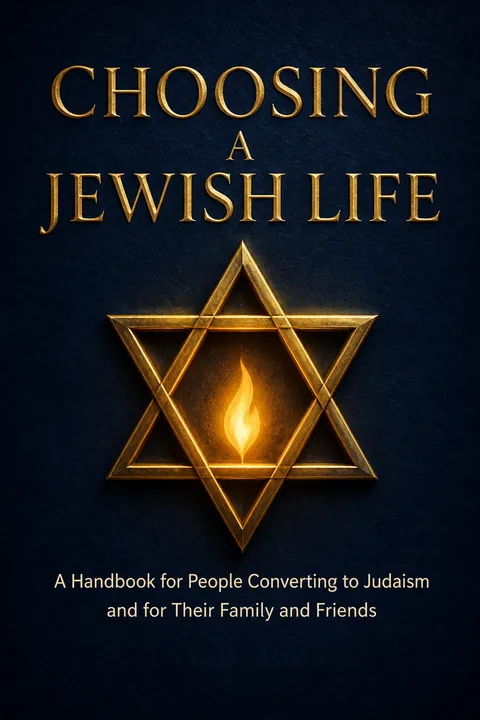


Key Takeaways
Treat conversion as the beginning of Jewish choosing, not its finish.
A journey, not a switch. Anita Diamant’s own story begins with her fiancé Jim, a lapsed Presbyterian who joins her in exploring Jewish life. They learn Shabbat blessings, celebrate holidays, and study with a rabbi for about a year before Jim appears before a bet din and immerses in a mikvah. His conversion does not simply resolve a wedding question. It helps both partners find a religious and communal home, and inspires Diamant to write this guide.
The choice keeps unfolding. The book’s central idea is that conversion is not a single decisive moment. Becoming Jewish begins a lifetime of choices about practice, community, and belonging. The formal ceremony marks a threshold, not a graduation.
The story makes identity feel less like a label acquired at a ceremony and more like a commitment sustained through ordinary routines. That distinction is useful well beyond religion: citizenship, vocation, and family roles also become real through repeated participation. The framing is especially generous because it treats uncertainty as compatible with sincerity. Still, an ongoing choice should not become an endless demand to prove legitimacy. A person can keep learning and changing without having to re-earn belonging at every stage.
Join a people and a history, not only a set of beliefs.
Belonging has many dimensions. Diamant argues that Judaism cannot be understood as belief alone. It is also a people, culture, legal tradition, calendar, and shared memory. Conversion therefore connects a person to Jewish history and community, as well as to practices such as Shabbat and holiday observance. A familiar word may change meaning in this setting: tzedakah, often translated as charity, is framed as an obligation to pursue justice by helping others.
Identity brings complexity. The book explores how conversion can reshape relationships to Christmas, family heritage, the Holocaust, Israel, and anti-Semitism. These connections are not identical for every Jew, and joining Jewish life does not erase the convert’s previous family or culture. It adds another history and set of responsibilities to an already layered identity.
This account challenges the assumption that religion is chiefly a private system of beliefs. Sociologically, shared calendars, stories, and obligations can bind people who disagree about theology, because they provide common practices and reference points. That helps explain why converts may feel drawn to Judaism even when they cannot summarize a creed. The same breadth can also unsettle newcomers: peoplehood offers deep belonging, but it carries inherited conflicts and collective vulnerability. A welcoming community should make room for that weight without treating every member as having one uniform relationship to it.
Let love introduce Judaism, but make the decision unmistakably yours.
A relationship can open the door. The book reports that about 90 percent of converts have a Jewish partner. Diamant’s examples show how affection can lead someone to Shabbat, a study group, or a Jewish home, where attraction to the tradition grows independently. The crucial distinction is not whether love played a part, but whether the person is choosing Judaism for their own reasons as well.
Expect family change to take time. Conversion may feel like a rejection to parents, even when it is not intended that way. The book recommends explaining the process before presenting a final decision, choosing a private setting, and allowing relatives time to adjust. It also treats missing Christmas as a genuine loss for many converts, rather than proof that they are not committed.
The distinction between a catalyst and a motive is psychologically sharp. People often discover a vocation through a relationship, mentor, or community, then make it their own through reflection and practice. Family conversations also resemble other transitions in which one person’s new identity changes the roles of everyone around them. The advice to give relatives time can reduce needless injury, but it should not imply that acceptance is the convert’s responsibility to secure. Patience is a strategy for preserving relationships, not a requirement to tolerate contempt or prejudice.
Prepare through a rabbi, study, and lived experiments, not cram sessions.
Find a teacher who fits. In the book’s account of liberal conversion, a rabbi serves as guide and sponsor, not merely as a gatekeeper. Diamant advises prospective converts to ask about requirements, meet more than one rabbi if needed, and choose someone with whom honest questions feel possible. Study may include Jewish history, holidays, theology, and the Holocaust. The typical process described lasts about a year, though the book gives a range of six months to two years.
Learn by doing. Reading and classes are only part of preparation. Candidates are encouraged to attend services, try observing Shabbat, celebrate holidays, and learn from Jewish mentors. Hebrew can help a person participate, but the book says fluency is not required. A journal can preserve questions, doubts, and discoveries as the process unfolds.
This preparation combines cognitive learning with participation, a strong design for learning any unfamiliar tradition. Concepts acquire practical meaning when attached to meals, music, calendars, and relationships, rather than remaining vocabulary on a page. The emphasis on finding a compatible teacher also recognizes that formal expertise does not guarantee trust. One useful qualification is that no introductory course can represent every Jewish community or settle every disagreement. A good learning process should expose students to differences, while making clear which community’s standards will govern their own conversion.
Let water, covenant, and witnesses make an inward decision communal.
The rituals mark a threshold. A mikvah is a ritual bath used for conversion; immersion gives a physical form to a decision that study alone cannot enact. Male converts may undergo brit milah, circumcision as a sign of the covenant, or hatafat dam brit, the ritual drawing of a drop of blood when they are already circumcised. A bet din, a Jewish court usually made up of three rabbis, asks open-ended questions about motivation, knowledge, and commitment.
The community recognizes the change. The bet din is not meant to be a trivia exam, but it does make acceptance a communal act. Practices vary among liberal movements and rabbis. Diamant writes from a non-Orthodox perspective and notes that Orthodox authorities may not recognize conversions conducted by liberal rabbis, a difference with practical consequences for some life events.
These ceremonies show how embodied acts can make a decision memorable: water, a spoken commitment, and witnesses give private conviction a public shape. Ritual can also create a shared account of what has changed, which helps a community know how to respond. The bet din introduces a genuine tension, however. Communal recognition can affirm a newcomer, yet institutions also control the boundaries of membership. The book’s clear explanation of denominational differences is valuable because welcome is not the same as universal recognition, and candidates deserve to understand that distinction before choosing a process.
Celebrate conversion as a Jewish milestone, and turn joy outward.
Make the welcome tangible. Diamant presents conversion as worthy of a celebration, from a Shabbat meal with close friends to a gathering after a synagogue ceremony. Such events give family and congregation a chance to welcome the new Jew, and they let the convert tell the story in their own words. The book suggests personal touches such as meaningful music, a guest book, or food that honors the convert’s family background.
Let beauty serve obligation. Hiddur mitzvah means beautifying a commandment through care for its objects and setting. A prayer shawl, flowers, or a carefully chosen ritual object can make the occasion memorable. Tzedakah is also fitting: the book suggests that celebrants donate part of a meal’s cost to hunger relief. Its point is not extravagance, but joining joy to generosity.
Celebration helps make a transition socially legible. Guests do more than congratulate an individual: they witness a change and begin incorporating it into the family’s shared story. The suggestion to include foods or objects from the convert’s background also resists the idea that belonging requires cultural erasure. Ritual beauty can deepen attention, but it should not become a measure of sincerity or a financial burden. The strongest version of the practice is accessible, personal, and generous, with the charitable gesture connecting a private milestone to needs beyond the celebration.
Build Jewish identity by practicing mitzvot with other Jews.
Let practice shape belonging. A mitzvah is a sacred obligation or good deed. Diamant describes Jewish identity as something formed through action: celebrating holidays, helping others, studying, praying, and building community. A person need not master every practice at once. Shabbat, for example, can begin with Friday-night candles and gradually become a fuller weekly rhythm.
Study is a shared conversation. Torah can mean the first five books of the Hebrew Bible, but it also refers more broadly to Jewish teaching and interpretation. Midrash is an imaginative, searching way of reading biblical stories, often by asking what a text leaves unsaid. Diamant encourages converts to join a synagogue, where worship, study, and social life meet. The first year may still feel unsettled, so a mentor or support group can help turn unfamiliar customs into lived experience.
The book’s strongest practical insight is that belonging grows through participation rather than through private certainty alone. Shared study is particularly powerful because it allows disagreement to become a form of membership: a learner can question a text and still take it seriously. This approach also avoids turning observance into a checklist completed once and for all. Yet practice should remain meaningful rather than performative. A community that welcomes newcomers needs more than lessons in ritual; it needs recurring relationships in which new members can contribute, ask questions, and be known.
Welcome converts openly, because Jewish continuity has always included newcomers.
Conversion has a long history. Diamant traces a path from biblical stories of outsiders joining Israel, including Ruth, through ancient periods when conversion was more common, to centuries when Christian and Muslim authorities made it dangerous. Jewish communities sometimes responded with caution, but rabbinic tradition also argued for accepting sincere seekers. The book presents converts as part of Jewish history, not an exception to it.
Welcome is an obligation. At the time of publication, Diamant cited estimates of at least 4,000 North American converts annually and one Jew-by-choice in every 37 American Jews, while acknowledging that reliable statistics were lacking. She asks congregations to move beyond quiet tolerance: offer mentors, support groups, thoughtful training, and public recognition when wanted. A convert’s presence should not make them a permanent guest in the community they have joined.
The historical arc gives contemporary welcome more than a feel-good rationale. It shows how attitudes toward converts have been shaped by changing conditions, including periods when accepting newcomers could endanger a community. In a different setting, inherited caution can persist after its original circumstances have changed, leaving custom more closed than principle. Public recognition can counter that inertia, especially when converts choose visibility. Still, recognition should be offered rather than imposed. Respect includes allowing people to decide how much of their personal history they wish to share.
Analysis
Choosing a Jewish Life is both a practical guide and an argument about what religious identity consists of. Its organizing movement is from attraction, through preparation and ritual, into the slower work of belonging. Diamant’s account of her husband’s conversion supplies a personal narrative, but the book’s wider claim is communal: conversion changes the convert and also changes the Jewish community that receives them.
The book is especially perceptive about the mismatch between a visible ceremony and an invisible transition. Immersion and a public welcome can happen in one day; confidence, fluency, and a sense of home may take years. That gap resembles what social theorists call liminality, a period in which someone has left an old status but has not yet fully settled into a new one. Diamant gives this interval practical shape through mentors, journals, holiday participation, and continued contact with a rabbi. The result is a richer model than conversion as either a test passed or a private feeling achieved.
Its account also exposes an enduring tension between personal choice and institutional authority. Judaism is presented as pluralistic and evolving, yet conversion standards differ, and recognition is not universal. The book does not pretend that a warm welcome removes those consequences. Its honest attention to denominational differences is therefore essential, particularly for readers whose future plans may bring them into contact with communities that apply different standards.
The book’s 1998 setting matters. Its estimates and descriptions of American Jewish life belong to the period in which it was written, and its focus is liberal Judaism rather than a comprehensive guide to every Jewish movement. Its deeper contribution remains broader: a community’s ideals become credible through its treatment of newcomers. If Jewish belonging is sustained by shared study, practice, and memory, converts are not additions at the margins. Their questions reveal how those things are taught, transmitted, and renewed.
Review Summary
Choosing a Jewish Life receives mostly positive reviews, with readers appreciating its comprehensive guide to Jewish conversion. Many find it helpful for understanding the process, rituals, and challenges involved. Some criticize its focus on conversion for marriage and lack of diversity in perspectives. The book is praised for its warm, supportive tone and practical information. However, some readers note its limitations in addressing interfaith relationships and non-Christian backgrounds. Overall, it's considered a valuable resource for those considering or undergoing Jewish conversion.
People Also Read
Glossary
peoplehood
belonging to a peopleA form of collective belonging that connects Jews through shared history, culture, community, and responsibility, not only through religious belief. In Diamant’s account, becoming Jewish means joining a people whose memories and practices span generations, while also taking part in shaping its future.
halachah
Jewish law and practiceThe Jewish legal and ethical tradition, developed through scripture, rabbinic interpretation, and later commentary. Diamant distinguishes liberal views, which treat halachah as a human tradition open to interpretation and change, from Orthodox approaches that generally regard it as divinely given and not subject to comparable revision.
mitzvah
sacred obligation or deedA commandment or righteous action understood as a response to the divine. The term can refer to traditional obligations as well as acts of goodness, such as helping the poor or visiting the sick. Diamant presents mitzvot as the practical expression of Jewish values and a way to bring holiness into everyday life.
tzedakah
justice expressed through givingGiving or action on behalf of people in need, understood not merely as optional generosity but as a Jewish obligation rooted in justice. Tzedakah can include donating money, supporting charitable institutions, or directly helping others. The book suggests giving at conversion celebrations as a way to connect personal joy with communal responsibility.
bet din
Jewish conversion courtA Jewish court, traditionally consisting of three rabbis, that witnesses and evaluates a conversion. Its members ask about a candidate’s reasons, preparation, and commitment, then authorize the conversion when satisfied. In Diamant’s account, it is not a memorization test, but a formal act of communal recognition.
mikvah
ritual bath for immersionA pool of water meeting Jewish ritual requirements, used for immersion in several Jewish practices, including conversion. For a convert, immersion marks a transition into the Jewish people. Diamant emphasizes that the water is not meant to wash away sin or replace ordinary bathing; its significance comes from the ritual intention and the change in status it represents.
midrash
searching interpretation of scriptureA Jewish approach to interpreting biblical texts that explores their gaps, ambiguities, and continuing relevance. Midrash may imagine scenes not described in the text or connect an ancient story to present human concerns. In Torah study, it makes reading a shared process of questioning, interpretation, and debate.
hiddur mitzvah
beautifying a commandmentThe principle that objects and settings used to fulfill a commandment should be made as beautiful as possible. It can shape the choice of ritual objects, music, flowers, or other details in a Jewish ceremony. Diamant applies it to conversion celebrations, where thoughtful design can make the occasion more meaningful without being required for its validity.
hachnasat ha-ger
hospitality for convertsA responsibility to welcome and support a convert within the Jewish community. The term literally conveys bringing the convert in. Diamant uses it to urge practical action, including mentoring, support groups, sensitive education, and opportunities for new Jews to participate fully in communal life.
kavod ha-ger
honoring the convertRespect for a convert, grounded in Jewish teachings that forbid humiliating or diminishing someone because of their non-Jewish past. Diamant argues that in contemporary communities this respect should be expressed not through silence or secrecy alone, but through welcome, inclusion, and recognition when the convert wishes it.

Download PDF
Download EPUB
.epub digital book format is ideal for reading ebooks on phones, tablets, and e-readers.








