

Key Takeaways
Choose to see grace without pretending the wound is good
The plan breaks open. Mary Beth wanted a secure, orderly life. Instead, on May 21, 2008, her five-year-old adopted daughter, Maria, was accidentally struck by a car driven by her older brother Will and died. The family’s wedding and graduation plans became funeral plans in a matter of hours. Mary Beth’s central choice is not to call this loss acceptable, or to stop wanting Maria back. It is to look for God’s presence while admitting how unbearable the grief feels.
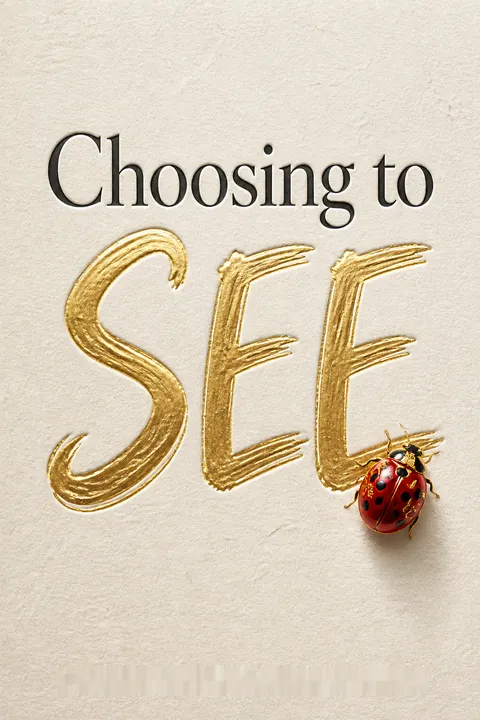
Notice what sustains you. In the weeks after the accident, Maria’s drawing of a flower and the word SEE became a small sign her family could hold onto. For Mary Beth, choosing to SEE means attending to reminders of hope without denying the facts of loss. Some days that means trust; other days it means crying, anger, and simply taking the next step.
The strength of this framing is its refusal to confuse meaning with justification. A family may find sustaining meaning in a drawing, a memory, or a religious belief without claiming that the tragedy itself was good. Grief research describes continuing bonds: mourners often maintain an inner relationship with the person who died through memory, ritual, and symbolic reminders. Such practices can help integrate loss, though their meaning is personal. Maria’s drawing matters because it supported this family, not because every bereaved person must interpret signs in the same way.
Stop trying to earn love through flawless performance
Perfection offered no safety. Mary Beth grew up in a tidy home and learned to work hard, follow rules, and please people. She also absorbed a fearful version of faith in which one mistake might place her relationship with God in doubt. As a child, she once tore up a coloring page after a small error rather than accept an imperfect result. Later, a predator’s abuse deepened her shame, and she tried to bury the pain instead of asking for help.
Love arrives unearned. When Mary Beth first held her adopted daughter Shaohannah in China, she understood adoption as a picture of the grace she had struggled to believe: the child had done nothing to earn a family’s love, yet Mary Beth loved her completely. That experience challenged the idea that worth depends on achievement, purity, or perfect behavior.
The memoir links perfectionism to a search for control: if every line is colored correctly, perhaps nothing painful can happen. That strategy can produce diligence, but it cannot guarantee safety, and failure then becomes a verdict on the self. Self-compassion research offers a useful parallel: treating oneself with the care one would offer another person can reduce shame without excusing harmful behavior. The adoption analogy makes unconditional love vivid, while its limits matter too. A child is not merely a lesson or symbol; adoption is a lifelong relationship with real needs and responsibilities.
Let love interrupt your plans when a child needs a family
An unlikely campaign begins. At eleven, after visiting children in Haiti, Emily urged her parents to adopt. Mary Beth had already had her tubes tied and worried she could not handle another child. She feared she would love an adopted daughter less than her biological children. The family eventually adopted Shaohannah from China, and Mary Beth describes the first embrace as a profound change in her understanding of both motherhood and grace.
Concern becomes organized help. The Chapmans later adopted Stevey Joy and helped friends pursue adoption. When they found that families wanted to adopt but could not meet the costs, they created Shaohannah’s Hope, later renamed Show Hope. The organization offered grants and encouraged churches and communities to take part, turning a personal experience into practical support for other families.
This story shows how a private change of heart can lead to sustained public action. It also avoids making adoption sound like a spontaneous act of benevolence: the family faced fear, paperwork, medical needs, cost, and uncertainty. The wider lesson is not that every household should adopt. Responsible care requires matching a child’s needs with a family’s capacity, respecting the child’s origins, and supporting parents after placement. The book’s strongest argument is that concern becomes more useful when it is joined to preparation, community, and long-term commitment.
Treat depression as an illness, not a failure of faith
Success did not protect her. As Steven’s music career accelerated, Mary Beth was caring for three young children, managing household demands, and coping with her husband’s frequent travel. She became overwhelmed, hid under the bed, and at one point felt she did not want to live. A psychiatrist diagnosed clinical depression and prescribed medication. The diagnosis brought relief, but also guilt: from the outside, her life looked blessed.
Treatment made work possible. Medication was not an instant cure. It eased symptoms enough for Mary Beth to begin addressing earlier wounds and patterns in counseling. She continued to take medication and seek professional help, while drawing on her faith for strength. Her account rejects the idea that a Christian should always feel victorious, or that prayer alone must resolve a medical condition.
The account is valuable because it separates spiritual worth from emotional symptoms. Depression can involve biological, psychological, and social factors, so a person’s gratitude or religious commitment does not rule it out. Medication and psychotherapy can provide different forms of support, and neither needs to invalidate faith. The memoir also shows why a diagnosis should not become a catch-all explanation for every conflict: Mary Beth and Steven still had to examine their communication and relationship patterns. A medical label can clarify one part of a life without explaining all of it.
Offer presence before explanations when someone is grieving
Companionship beats polished words. Years before Maria died, Mary Beth’s friend Lori lost her daughter Erin in a car crash. Mary Beth did not know how to repair such pain, so she visited, sat with Lori, talked about ordinary things, and made a hand-tinted photograph as a gift. A decade later, after Maria’s death, Lori was among the first people Mary Beth called. Their shared history made room for grief without requiring a tidy explanation.
Care can be practical. Friends opened their home, stayed close to Will, helped with the children, and handled tasks the family could not manage. Mary Beth recalls that simple acknowledgment of helplessness often helped more than comparisons or attempts to explain the loss. Grief was not improved by being told that losing a pet or an older relative was the same experience.
The section points toward a useful social skill: match support to the mourner instead of performing reassurance. A quiet visit, a meal, help with transport, or simply listening can reduce the burden of ordinary tasks while preserving the bereaved person’s authority over their own story. Social support is not a cure, and presence cannot make an irreversible loss fair. Its value is more modest and more human: it prevents the grieving person from having to carry every practical and emotional demand alone.
Treat trauma and guilt as wounds that deserve skilled care
Shock fragments memory. After witnessing Maria’s death, Shaoey struggled with guilt because she had told Maria that Will could help her reach the monkey bars. Will blamed himself because he had been driving. The family sought help from a therapist experienced in childhood trauma. She used EMDR, a therapy that combines recalling distressing material with guided bilateral stimulation, such as alternating taps. In Shaoey’s sessions, a terrifying image could be paired with a safer, meaningful image.
Guilt needs careful sorting. The therapist also helped Shaoey distinguish what she had actually done from the responsibility she imagined she carried. Mary Beth notes that children may move quickly between deep sadness and play; this does not mean they are unaffected. Counseling gave the family tools to address painful memories and feelings alongside their religious beliefs.
The distinction between responsibility and guilt is crucial after an accident. A person can be involved in a tragic event without having intended its outcome or deserving lifelong self-punishment. Trauma-informed care offers ways to process memories, but no single technique is right for everyone, and the book’s brief description cannot establish what treatment will work in another case. Its broader insight is sound: spiritual comfort and qualified mental-health care can complement each other. Seeking help is not a repudiation of faith or a demand to forget.
Build a new normal without erasing the life you had
The house holds both stories. Returning home after Maria’s funeral felt almost impossible. The driveway was where the accident happened, but the house also contained years of family life: games, jokes, music, weddings, and Maria’s laughter. Leaving might have meant escaping painful reminders, but it would also have meant leaving cherished memories. The family gradually returned, one ordinary task and one difficult doorway at a time.
Rituals mark change. The Chapmans tried to break a pitcher in the driveway and glue it back together as a symbol of being wounded and offering comfort to others. It shattered into too many pieces to repair. The failed ritual did not invalidate their grief; it showed how little can be controlled. Five months after Maria died, Emily and Tanner married at the family home. The wedding included sadness, laughter, and celebration, not a claim that the family was healed.
A new normal is not a replacement life that leaves the old one behind. It is a changing relationship to familiar places, routines, and memories. Rituals can help people mark transitions, but they do not guarantee emotional closure, as the shattered pitcher makes clear. The wedding is especially revealing because joy and grief occupy the same day without canceling each other. This resembles the idea of psychological flexibility: making room for painful feelings while continuing to participate in valued relationships and events.
Turn compassion into durable systems that keep helping
Concern becomes infrastructure. After adopting Shaohannah, the Chapmans met families who wanted to adopt but could not afford the costs. Show Hope offered grants averaging about three to four thousand dollars, while asking families and their communities to contribute as well. By the time the book was written, the organization reported providing more than 2,500 grants to families adopting from 45 countries.
Care includes children who may not be adopted. In China, the family also helped create Maria’s Big House of Hope, a 60,000-square-foot facility designed to care for up to 128 orphans with special needs. It offered medical treatment, care while children awaited families, and hospice support for children unlikely to be adopted. The work extended the family’s response beyond adoption alone to children with varied medical and long-term needs.
The move from individual generosity to an organization is a meaningful shift: it can make support more predictable and reach families beyond a personal network. The decision to include medical and hospice care also recognizes that a child’s worth does not depend on whether adoption is possible. Still, charitable programs cannot by themselves resolve the structural conditions that create orphanhood or unequal access to care. Durable compassion benefits from transparency, accountability, and attention to local expertise, alongside the immediate relief these services provide.
Let hope guide the next step, not set a deadline for grief
Grief did not follow a schedule. Mary Beth describes the second year after Maria’s death as harder than the first. As shock and numbness eased, ordinary moments brought renewed longing: birthdays, holidays, shopping trips, and the absence of Maria’s voice at home. She did not simply get over the loss. She continued writing, seeking support, raising her children, and admitting that some days she felt angry or unsure.
The future remains a horizon. Maria’s Chinese name, Chun Xi, was later understood by a Chinese friend as meaning spring river. The phrase resonated with the family’s image of new life after winter, and with Steven’s song about spring returning. For Mary Beth, hope is confidence in a future reunion with Maria and in God’s care, not a promise that present pain will quickly disappear.
Hope is most credible here when it is treated as orientation rather than mood. The dual-process model of bereavement describes people moving between attending to loss and adapting to daily life; oscillation is expected, not evidence of failure. That lens fits Mary Beth’s account of returning to ordinary responsibilities while still longing for Maria. Religious hope can sustain people, but it can also become pressure if others demand visible recovery or gratitude. The memoir’s candor about anger and recurring grief protects hope from becoming a timetable.
Analysis
Choosing to SEE is a story-driven Christian memoir, not a universal grief manual. Its narrative moves from Mary Beth Chapman’s perfectionism and unaddressed trauma, through marriage, depression, and international adoption, to the sudden death of Maria and the family’s long work of grieving. The structure matters: the loss is not presented as an isolated catastrophe. It arrives in a life already shaped by plans repeatedly disrupted, and it intensifies the book’s recurring question of whether faith can survive experiences that feel incompatible with a loving, purposeful God.
The memoir’s most persuasive contribution is its refusal to make belief look effortless. Mary Beth wants her daughter back, feels anger and guilt, takes medication, sees counselors, and relies on friends. Such particulars complicate the familiar image of religious resilience as calm acceptance. The family’s faith offers a language for hope and a set of practices, including prayer, scripture, communal care, and service. It does not provide a causal explanation for Maria’s death. The book preserves that distinction unevenly, sometimes making strong claims about providence while openly acknowledging mystery and doubt.
Its account of meaning-making is best read as testimony rather than proof. A drawing, a name, or a timely encounter can function as a personally sustaining interpretation without settling the philosophical problem of why suffering occurs. That nuance also prevents the story’s charitable outcomes from being mistaken for compensation. Show Hope and Maria’s Big House of Hope matter because they respond to vulnerable children, not because their existence makes Maria’s death worthwhile.
The memoir’s practical value lies in how it depicts endurance: accept help, seek professional care, stay near people in pain, and allow grief and ordinary life to coexist. Its theology will not speak equally to every reader, and some may resist its certainty about heaven or divine control. Even so, its honesty about the cost of belief gives the narrative force. Hope here is not cheerful closure. It is a way of continuing to love while the unanswered questions remain.
Review Summary
Choosing to SEE is a deeply personal memoir by Mary Beth Chapman, detailing her family's journey through tragedy and faith. Readers appreciate Chapman's raw honesty about her struggles with depression, adoption, and the loss of her daughter. While some found the writing style conversational and repetitive, most were moved by the family's resilience and unwavering faith. The book offers a candid look at grief, questioning God, and ultimately choosing hope. Many readers found comfort and inspiration in Chapman's vulnerable storytelling and her family's commitment to their faith despite immense pain.
People Also Read
Glossary
SEE
Attending to hopeThe book’s recurring word for noticing signs of God’s presence and hope while facing grief honestly. Maria wrote SEE on a drawing shortly before her death, and her family treated it as a meaningful reminder. Choosing to SEE does not mean denying pain, approving tragedy, or claiming that every bereaved person must interpret events in the same way.
stewardship of this story
Sharing pain to serveMary Beth’s faith-based idea that a person can tell a painful life story in a way that offers comfort, solidarity, or practical help to others. Stewardship does not mean that suffering was deserved or useful in itself. It means responding to hardship with honesty and care, while recognizing that the story remains the family’s to tell.
EMDR
Trauma-processing therapyA therapy the family used with Shaoey after she witnessed Maria’s death. As described in the memoir, a therapist guided her to recall distressing material while using alternating taps on her legs, then helped her connect the memory with a safer image. The approach was intended to make traumatic memories less intrusive, not to erase what happened.
Show Hope
Adoption and orphan-care ministryThe nonprofit organization founded by Mary Beth and Steven Curtis Chapman, first called Shaohannah’s Hope. It provides financial grants to families pursuing adoption, raises awareness of the needs of orphans and vulnerable children, and supports forms of care for children who may not be adopted. The memoir presents it as a response that grew from the family’s adoption experience.
Maria’s Big House of Hope
Special-needs orphan care centerA medical and residential facility in Luoyang, China, created by Show Hope in Maria’s memory. At its planned capacity, it could care for up to 128 orphans with special needs. The facility included treatment and recovery care, support for children awaiting adoption, and hospice care for children whose medical conditions made adoption unlikely.
night commuters
Children seeking nighttime safetyChildren in northern Uganda who, during the conflict described in the memoir, left their villages after dark and walked to safer, lighted places in larger towns. They slept in groups, sometimes under the protection of government troops, and returned home in daylight. The Chapmans visited children doing this and performed a concert at a protected site.
FAQ
What's Choosing to SEE about?
- Personal Journey of Grief: Choosing to SEE by Mary Beth Chapman details her emotional journey after the tragic loss of her daughter, Maria Sue. It explores her struggles with grief and the process of healing.
- Faith and Healing: The book emphasizes the role of faith in overcoming despair. Mary Beth shares how she found God's presence and goodness even in her darkest moments.
- Adoption and Family: It also highlights the Chapman family's adoption journey, showcasing their commitment to orphans and the joy of expanding their family through love and faith.
Why should I read Choosing to SEE?
- Inspiring Story: Mary Beth's candid reflections on grief and healing are deeply moving and relatable, especially for those who have experienced loss.
- Faith-Based Perspective: The book offers insights into how faith can provide comfort and strength during life's challenges, encouraging readers to trust in God's plan.
- Practical Insights: Mary Beth shares valuable lessons learned throughout her journey, making it a resource for anyone navigating grief or exploring faith.
What are the key takeaways of Choosing to SEE?
- Choosing Hope: The book emphasizes the importance of choosing hope amidst despair, showing that hope can coexist with pain.
- God’s Presence in Pain: Mary Beth illustrates how God can be found in suffering, expressing her faith in His kindness and redemptive heart.
- Community and Support: The significance of community and support from friends and family is highlighted as crucial for healing and connection.
What are the best quotes from Choosing to SEE and what do they mean?
- “I want Maria back.”: This quote captures the raw pain and longing of losing a child, reflecting a mother's deep love and struggle with grief.
- “I believe none of my tears have been wasted.”: It signifies the belief that suffering has purpose, with faith that God can use pain for good.
- “I can do hard.”: This mantra symbolizes resilience and strength, reminding readers that enduring life's difficulties is possible.
How does Choosing to SEE address the concept of faith?
- Faith as a Foundation: Mary Beth discusses how her faith in God has been a cornerstone during her grieving process.
- Struggles with Doubt: The book candidly addresses moments of doubt and questioning God’s plan, illustrating the tension between faith and doubt.
- Hope in Eternal Life: Mary Beth emphasizes the hope that comes from believing in eternal life, providing comfort and assurance in the face of loss.
How does Mary Beth Chapman describe her relationship with God in Choosing to SEE?
- Honest Conversations: Mary Beth describes her relationship with God as filled with honest conversations, including doubts and frustrations.
- Trusting God’s Plan: She emphasizes the importance of trusting God’s plan, even when it seems unclear, and learning to surrender her expectations.
- Experiencing God’s Presence: Mary Beth shares moments of feeling God’s presence, providing comfort and reassurance during her grief.
How does Choosing to SEE explore the theme of family?
- Support System: Family is portrayed as a crucial support system for Mary Beth during her grief, emphasizing the importance of being there for one another.
- Shared Experiences: The book highlights the shared experiences of the Chapman family as they navigate loss and healing together.
- Legacy of Love: Mary Beth discusses the legacy of love that Maria left behind and how it continues to impact their family.
What methods does Mary Beth Chapman suggest for coping with grief in Choosing to SEE?
- Journaling and Reflection: Mary Beth uses journaling to process emotions and reflect on her journey, finding understanding in her grief.
- Prayer and Faith: Prayer is depicted as a vital source of strength and comfort, maintaining a relationship with God even when difficult.
- Community Support: She underscores the value of leaning on friends and family, sharing how their support helped her navigate grief.
How does Choosing to SEE illustrate the impact of loss on family dynamics?
- Individual Grieving Processes: The book details how each family member copes with grief differently, showcasing varied ways people process loss.
- Strengthening Bonds: Despite the pain, the Chapmans’ shared experience of grief brings them closer together, emphasizing mutual support.
- Legacy of Maria: The family’s commitment to honoring Maria’s memory becomes a unifying force, celebrating her life and keeping her spirit alive.
What role does Maria’s Big House of Hope play in Choosing to SEE?
- Legacy of Service: Maria’s Big House of Hope is established to care for orphans with special needs, honoring Maria’s memory and extending her legacy.
- Healing Through Helping: Serving others becomes a pathway to healing for Mary Beth, finding purpose in helping vulnerable children.
- Community Impact: The initiative highlights how the Chapmans’ tragedy inspired others to get involved and make a difference.
What challenges does Mary Beth face in Choosing to SEE?
- Navigating Grief: Mary Beth faces the challenge of navigating her grief after losing Maria, describing overwhelming emotions and finding a new normal.
- Balancing Family Life: She discusses the difficulty of balancing family life while dealing with grief, reflecting on being a mother to her other children.
- Advocacy and Purpose: Mary Beth channels her pain into advocacy for orphans, grappling with honoring Maria’s memory while making a difference.
How does Choosing to SEE conclude?
- Hope and Healing: The conclusion emphasizes hope and healing, acknowledging that while pain remains, joy can also be found.
- Legacy of Love: Mary Beth expresses her desire to honor Maria’s legacy by advocating for orphans, believing love transcends loss.
- Faith in God’s Plan: The book ends with a reaffirmation of faith in God’s plan, encouraging readers to trust in His goodness and see Him at work.
Download PDF
Download EPUB
.epub digital book format is ideal for reading ebooks on phones, tablets, and e-readers.








