

Key Takeaways
Let Christ remake the self, not merely improve its image
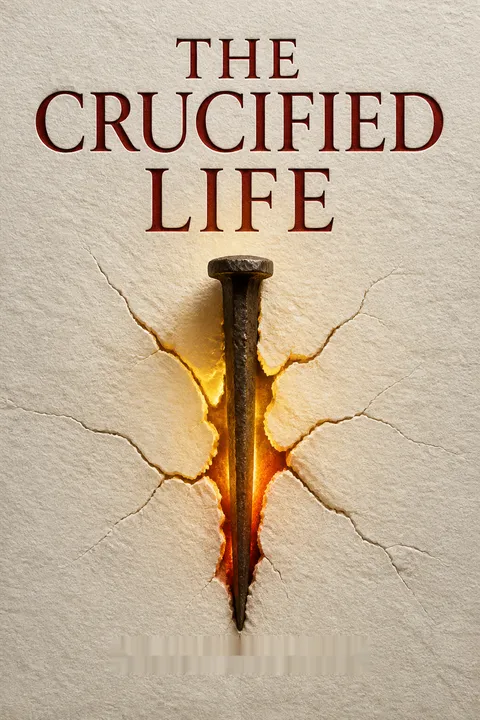
The book’s central claim. Tozer calls the crucified life a wholehearted surrender to God in which the old, self-directed life gives way to Christ’s life within the believer. It is not a program for polishing one’s personality or collecting religious habits. The goal is to become more like Christ in thought, conduct, and love. Tozer argues that salvation is not only rescue from sin’s judgment, but entry into a transformed relationship with Christ.
A demanding journey. The title’s paradox is deliberate: the believer is described as dead to the old self and newly alive through Christ. This pursuit is ongoing, not a claim to flawless behavior. Tozer’s encounter with the devotional writer François Fénelon helped turn his preaching toward this deeper, costly account of Christian life.
The distinction between transformation and self-improvement gives the book its force. It questions a religious culture that can turn faith into a tool for confidence, success, or personal branding. At the same time, language about eliminating the self can be misread as denying individuality or healthy self-respect. A careful reading treats the target as self-rule and self-glorification, not personhood itself. The practical test is whether surrender produces greater love, honesty, and service, rather than shame or passivity.
Let resurrection reorder ordinary work, money, and time
Begin from new life. Tozer frames Christian practice from the resurrection side of the cross: because Christ lives, believers are called to live differently now, not simply await heaven. The Christian life, in this account, means seeking what belongs to God and loosening the grip of status, possessions, and worldly approval.
Make daily life an offering. Tozer rejects a split between sacred and secular activity. He points to Brother Lawrence, a monastery dishwasher who treated routine chores as occasions for attention to God. Work, study, and household tasks need not be abandoned; they can be approached as service. The same logic challenges believers who give God only spare time or leftover resources after protecting everything they value most.
This view makes spirituality less dependent on special venues and more visible in ordinary conduct. It resembles the idea of vocation: meaningful work can serve purposes larger than personal advancement, even when the task itself is mundane. The risk is turning every moment into a performance of devotion, leaving no room for rest or ordinary enjoyment. The stronger interpretation is integration, not relentless religious self-monitoring. Work can be offered to God without being treated as valuable only when explicitly religious.
Keep seeking God after conversion, not just studying claims about Him
Knowledge should become encounter. Tozer values Scripture, theology, and historic Christian writing, but warns against treating information about God as a substitute for relationship with God. He describes the Christian mystic as a believer seeking intimate, direct fellowship with God while remaining accountable to Scripture. The devotional writers he admires, including Fénelon and Brother Lawrence, represent a persistent hunger rather than a one-time spiritual achievement.
Read with attention. Tozer urges readers to slow down, pray, and let biblical teaching shape conduct. His flashlight comparison makes the point: possessing a promise is not the same as relying on it. Scripture, in his view, is meant to lead people toward God, not become an end in itself. The inward life also requires solitude, because no teacher can experience faith on another person’s behalf.
The distinction between knowing about a tradition and being changed by it appears in many fields: expertise can remain purely descriptive unless it alters judgment and behavior. Tozer’s emphasis on encounter makes devotional practice experiential without making it merely emotional. Still, private experience needs public checks. Scripture, community, reason, and attention to consequences can help distinguish spiritual insight from projection. Solitude can deepen conviction, but it should not become immunity from questions or a reason to dismiss other people’s wisdom.
Leave the wilderness: salvation should lead toward spiritual maturity
Rescue is a beginning. Tozer uses Israel’s journey from Egypt toward Canaan as a picture of Christian growth: being freed from bondage is not the same as entering a fuller life. At Kadesh-Barnea, ten scouts focused on the dangers of the land, while Joshua and Caleb trusted that the people could proceed. The community turned back, and the biblical story describes forty years of wandering before the next generation entered.
Three stages of life. Tozer distinguishes the natural person, who has not entered Christian life; the carnal Christian, who has begun but remains spiritually immature; and the spiritual Christian, who is increasingly shaped by the Holy Spirit. His term hundredfold Christian names a life bearing fuller fruit, rather than settling for minimal change. The metaphor calls believers to examine whether faith is advancing or merely repeating familiar routines.
The wilderness image captures a recognizable pattern: people can leave an old condition without yet building a new one. It is a useful model for stalled growth, especially when fear disguises itself as prudence. But the metaphor can overstate personal control. People may face illness, caregiving, poverty, or other limits that make visible progress uneven. Spiritual maturity should therefore be assessed by qualities such as patience, courage, and compassion, not by a simplistic scorecard or by blaming someone for suffering.
Choose inward worship over polished religious machinery
Form can outlive its purpose. Tozer calls hollow reliance on ritual, words, and institutional habits externalism. He argues that churches can preserve the appearance of faith while losing the inner devotion those practices were meant to express. His image is a stained-glass copy that reproduces not only the original artwork, but also centuries of dirt. Traditions may carry real beauty and wisdom, yet accumulated customs can be mistaken for the faith itself.
Look for reality, not scale. Tozer points to reformers and devotional writers who challenged empty religious systems without necessarily rejecting Christian doctrine. He prefers a small, sincere community to a large institution sustained by spectacle or self-promotion. The challenge is not to discard every form, but to ask whether worship, teaching, and church activity actually cultivate obedience, love, and attention to God.
Tozer’s institutional critique remains useful wherever organizations confuse continuity with vitality. Sociologically, institutions preserve practices because repetition creates belonging and coordination, but the same stability can make inherited routines hard to question. A tradition is not automatically empty because it is old, nor authentic because it is spontaneous. The better test is what it forms in people and whether it serves its stated purpose. Ritual can carry attention and communal memory; it becomes machinery when those benefits are assumed rather than renewed.
Turn from worldly status by turning your attention toward Christ
Reject the spirit, not creation. Tozer’s use of “the world” does not mean nature, work, family, or ordinary human life. He means patterns organized around unbelief, pride, appetite, ambition, and the pursuit of position. These can shape church life as readily as secular life, especially when religious language is used to disguise self-advancement.
A positive direction matters. Tozer argues that simply forbidding pleasures or withdrawing from society cannot create spiritual life. The central move is to turn toward Christ, allowing that relationship to reshape ordinary choices. His contrast is between trying to scrub away darkness and welcoming light: renunciation matters when it clears space for a deeper allegiance, not when it becomes an identity built around prohibitions. The aim is engagement with daily life without adopting its status games.
This distinction avoids a crude choice between faith and participation in society. It focuses attention on the motives and power structures behind behavior, a useful question in consumer culture and religious institutions alike. Yet the boundary between legitimate ambition and status seeking can be difficult to draw. Work, recognition, and material security can support families and communities. The insight is strongest when it invites examination of what a person serves, rather than labeling every worldly activity corrupt or treating withdrawal as proof of virtue.
Distrust self-sufficiency, especially when it wears religious clothing
Self-trust blocks surrender. Tozer uses the term self-trust for the belief that one’s virtue, knowledge, or judgment is an independent source of spiritual strength. He compares it to the moon claiming credit for light that it reflects. In his account, humility does not mean denying every ability; it means recognizing that goodness depends on God rather than treating personal merit as self-generated.
Learn through exposure. Tozer identifies several ways believers may discover their dependence: an inward spiritual awakening, physical discipline, severe trials, and the example of earlier saints. He presents hardship as a possible means by which confidence in oneself is loosened. The practical point is to stop assuming that religious knowledge, good habits, or apparent success make a person spiritually secure, and to seek help rather than insisting on control.
The critique of self-sufficiency has a strong parallel in psychology: overconfidence can distort judgment, while honest feedback can reveal blind spots. The moon image also clarifies the difference between using one’s capacities and claiming ultimate credit for them. The section’s account of pain needs careful limits, however. A person cannot reliably infer that illness, trauma, or failure was imposed by God to correct pride. That conclusion can burden sufferers and discourage needed care. Humility is compatible with seeking medical, psychological, and practical support.
Name the respectable attachments that obscure your relationship with God
Obstacles can look harmless. Tozer calls the barriers he identifies “veils of obscurity”: attachments that make it harder to perceive or follow God. He names pride, stubbornness, self-will, religious ambition, fear, money, friendship, social position, and claims of ownership. None is automatically wrong in every form. The danger arises when one becomes more authoritative than a person’s stated commitment to God.
Use an honest audit. A believer might ask what decision would be hardest to surrender, whose approval governs a choice, or what fear is directing attention. Tozer’s concern includes religious work itself: a church can pursue growth, politics, or prestige while calling those goals divine service. The exercise is not to discard relationships and responsibilities indiscriminately, but to identify what has become a rival source of identity, security, or command.
The “veil” image is psychologically astute because obstruction often comes from attachments that appear legitimate, not from obvious wrongdoing. It invites attention to incentives and loyalties rather than just public behavior. An audit can also become obsessive if every attachment is treated as suspect. Human beings need relationships, resources, and social roles; the question is whether these remain sources of care or become absolute measures of worth. A balanced practice distinguishes stewardship from possession and commitment from control.
Renew individuals before expecting an institution to revive
Revival begins person by person. Tozer defines personal revival as a renewed experience of spiritual vitality, and argues that a church or community cannot be revived without individuals being changed. He describes a movement from one person, to a congregation, and potentially into the wider community. A church’s label or size cannot substitute for the character of its members.
Prepare for renewal. Tozer recommends firm commitment, attention to Christ, honest self-examination, confession, and restitution where harm has been done. He tells of a coal miner who spent a day praying for his church shortly before dying in a workplace accident. Tozer presents the timing as spiritually meaningful, but the story also makes plain that the man’s death was not an outcome he could explain. The emphasis is on being responsive to conscience now, not waiting for crisis to force reflection.
The individual-to-institution sequence is persuasive because organizations are made of people, and leaders cannot manufacture trust or integrity by decree. The emphasis on restitution also moves renewal beyond feeling into repair. Still, personal change alone cannot fix structural problems such as abusive leadership or exclusionary policy. Institutions shape incentives and behavior in return. A durable account of revival therefore includes both inward renewal and changes in the practices that govern collective life.
Obey through hardship without assuming suffering guarantees divine favor
The furnace is not a promise of comfort. In the story of Shadrach, Meshach, and Abednego, three men refuse to worship a king’s image and are thrown into a furnace. They trust that God can rescue them, but their loyalty does not depend on rescue. Tozer uses the episode to describe the Refiner’s Fire, his image for hardship that exposes attachments and purifies allegiance. He also invokes Dietrich Bonhoeffer, the German pastor executed by the Nazi regime, as an example of costly commitment.
Suffering is not a measure of worth. Tozer’s central counsel is to remain faithful without demanding that obedience ensure safety. The narrative’s hope is divine presence in danger, not a guarantee that every believer will emerge unharmed. The distinction matters: the story supports courage and faithfulness, but it cannot establish that every painful event has a clear divine purpose.
These accounts resist the bargain-like version of religion in which good behavior is expected to purchase protection. They can strengthen moral courage when conformity is safer than conscience. Their danger lies in turning endurance into a universal prescription. Some situations call for escape, treatment, protest, or protection from an abuser, not passive acceptance. A theological claim that suffering can refine faith should never be used to excuse preventable harm or to tell another person what their pain means.
Choose guides who send readers back to Scripture and Christ
Discern the teacher’s direction. Tozer warns that a guide can sound mostly biblical while quietly diverting attention toward personal authority or ideas beyond Scripture. He calls the devotional writers he values evangelical mystics: Christians who seek intimate experience of God while treating Scripture as their governing authority. Good guides, in his view, understand human weakness, direct attention toward Christ, and demonstrate integrity under difficulty.
Read as practice, not speed. Tozer recommends approaching devotional classics slowly, after prayer and reflection, and with a willingness to act on what they teach. These books are not treated as entertainment or a race through a reading list. Their value lies in the attention and self-examination they prompt. The standard for a guide is not eloquence or reputation, but whether the teaching leads toward truth, humility, and faithful conduct.
Tozer offers a useful safeguard against charismatic authority: a spiritual teacher should not become the object of devotion. Slow reading also resists the modern habit of consuming ideas without allowing them to affect behavior. His insistence on Scripture as the final test is coherent within his tradition, though readers may disagree about interpretation and authority. In practice, discernment benefits from more than one check: close reading, historical context, accountable community, and attention to whether a teaching produces care or coercion.
Analysis
The book’s organizing contrast is not between religious and secular people, but between a faith that remains external and one that changes allegiance. Tozer repeatedly asks whether Christian language, institutions, and practices lead toward lived dependence on Christ or merely preserve a respectable religious identity. The journey metaphor gives the argument motion: release from bondage is only a beginning, stagnation is a danger, and maturity requires ongoing surrender. The resurrection supplies its positive center, so renunciation is meant to open into life rather than remain a catalogue of prohibitions.
Its storytelling works through biblical archetypes and historical witnesses. Israel’s failed entry into Canaan illustrates the cost of fear; Brother Lawrence turns dishwashing into devotional practice; Bonhoeffer makes discipleship a question of conscience under dictatorship; the furnace story depicts loyalty without a guarantee of rescue. These stories make abstract claims memorable, but their force depends on interpretation. They cannot by themselves prove that every period of hardship is divinely assigned or that a particular believer has failed by not displaying visible spiritual progress.
The book is strongest as a spiritual provocation, not as a neutral map of Christian traditions or a systematic theology. Its insistence on intimacy with God challenges faith reduced to information, entertainment, or institutional success. Its rhetoric can also blur distinctions between humility and self-erasure, discernment and distrust, or costly obedience and harmful submission. Readers gain most by preserving its central challenge while resisting simplistic applications: surrender is not self-hatred, suffering is not proof of divine favor, and inward renewal does not remove the need for communal accountability. The lasting question is whether devotion produces a more truthful, loving, and courageous life.
Review Summary
Reviews of The Crucified Life are mixed, averaging 4.5 stars. Many readers find it deeply convicting and spiritually challenging, praising Tozer's passion for total surrender to Christ. However, critics note concerns about his reliance on mystics, perceived legalism, and tendencies toward Christian perfectionism. Some find it less impactful than his celebrated works The Pursuit of God and The Knowledge of the Holy. Several readers appreciate its profound truths while acknowledging theological disagreements, and many recommend slow, repeated readings for maximum benefit.
People Also Read








Glossary
Crucified life
Life yielded to ChristTozer’s term for a Christian life wholly committed to God in humility and obedience. It describes the old self-directed life as surrendered so that Christ’s life may shape a person’s conduct and desires. The phrase does not mean physical death or flawless achievement; it names an ongoing pursuit of Christlikeness grounded in the cross and resurrection.
Spiritual perfection
Ongoing growth toward ChristlikenessTozer uses this phrase for the Christian’s continuing pursuit of maturity in Christ, drawing on Paul’s language about pressing toward what has not yet been fully attained. It is not presented as a claim that a believer has become incapable of sin or has completed spiritual growth. Its focus is direction, surrender, and increasing likeness to Christ.
Natural man
Person outside Christian renewalIn Tozer’s use of Paul’s terminology, the natural man has not been spiritually renewed and therefore cannot know God through Christian experience. Education, talent, health, or religious interest do not by themselves change this condition. The term describes a theological state, not a judgment about intelligence or human worth.
Carnal man
Spiritually immature ChristianTozer uses this term for a person who has entered Christian life but remains governed chiefly by lower desires rather than advancing under the Holy Spirit’s influence. The carnal Christian is contrasted with both the unrenewed natural person and the spiritually mature believer. The distinction serves as a warning against treating conversion as the end of growth.
Externalism
Religious form without inward lifeExternalism is Tozer’s name for reliance on religious words, ceremonies, customs, and institutional activity when these no longer express inward devotion or obedience. He argues that external practices can remain polished while spiritual vitality fades. The term does not make all ritual or tradition false; it questions forms that have become substitutes for their purpose.
Veils of obscurity
Attachments that cloud spiritual attentionTozer’s phrase for loyalties and concerns that obstruct a believer’s awareness of God or willingness to follow God. Examples include pride, self-will, religious ambition, fear, money, social position, and possessiveness. These are not necessarily wrong in every instance. They become veils when they govern a person more strongly than the person’s commitment to God.
Refiner’s Fire
Hardship pictured as purificationTozer’s metaphor for trials that expose what binds a person to the world and, in his theological account, purify allegiance to God. He distinguishes this image from the cross, which he associates with surrender of the self. The metaphor expresses a religious interpretation of hardship, not a reliable way to determine why any particular suffering occurred.
Evangelical mystic
Scripture-grounded seeker of GodTozer’s label for a Christian who seeks intimate, experiential fellowship with God while remaining firmly grounded in Scripture. He applies it to devotional writers whose work, in his view, joins spiritual longing with biblical authority. The term does not mean that every claim by such a writer is accepted without testing.
Personal revival
Renewed spiritual vitalityTozer’s term for an individual’s fresh renewal of spiritual life, described as a restoration of energy, devotion, and responsiveness to God. He treats personal revival as the starting point for possible renewal within a church and community. It involves more than emotional excitement, requiring self-examination, confession, obedience, and repaired relationships where needed.
About the Author
Other books by A.W. Tozer






Download PDF
Download EPUB
.epub digital book format is ideal for reading ebooks on phones, tablets, and e-readers.








