

Plot Summary
Prologue
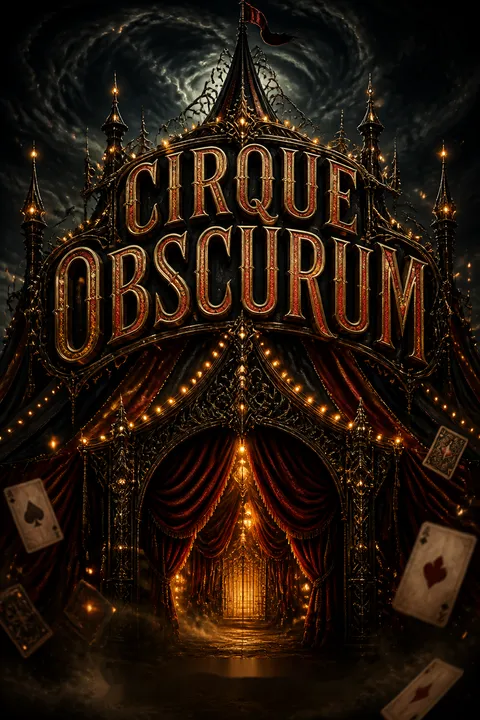
As a child, Ember persuades her father to take her to Cirque Obscurum, despite her mother’s disapproval. Amid its unsettling performers, a black-eyed boy catches Ember’s attention, and a fortune teller reads her cards in a candlelit tent.
She warns that Ember’s life will be difficult and gives her a black joker card, promising the cirque will answer if Ember ever calls for help. Ember leaves with the card hidden in her palm, carrying a strange sense that the circus has recognized her.
The childhood visit gives Ember’s later rescue the shape of a return, not a random escape. Her father briefly protects her curiosity from her mother’s demand for respectability, while the circus welcomes the very strangeness her family treats as a liability. The card makes that welcome tangible: a promise preserved through years of abuse, even when Ember herself can no longer imagine a future beyond survival. The fortune teller’s warning also establishes the book’s tension between fate and choice. The cirque may recognize Ember, but it cannot choose for her when the moment to answer finally comes.
The Attic Call
Six years into her marriage, Ember lives under the control of Roger Campbell, a respected doctor who hides his violence behind a polished public image. After he attacks her, she covers her injuries and performs the dutiful wife for dinner guests. Roger then blames her for the miscarriage he caused by beating her, and when she reaches for a kitchen knife, he assaults her again, drags her upstairs, and locks her in the attic.
Badly injured and unable to escape, Ember finds the joker card from her childhood among her stored belongings. She clutches it as she loses consciousness, calling on the only memory that ever made her feel safe. The card’s old promise becomes her last chance to live.
Ember’s confinement is not only physical. Roger has made dependence seem like the natural order of marriage, then uses public esteem to isolate her from anyone who might intervene. The dinner scene sharpens this mechanism: she must conceal the evidence of his violence while he controls the room’s account of their life. Her reach for the knife signals anger, but not yet an ability to act on it. The old card matters because it reconnects her present terror to a childhood self who wanted wonder without apology. The call begins when that buried self chooses survival, even before Ember knows what survival will demand.
Four Masks Arrive
Ember’s call reaches the cirque’s ringmaster, Diamond, and three performers: Spade, Club, and Heart. They enter her home wearing masks, overpower Roger, and find Ember barely able to move. As Spade carries her away, the others punish Roger for the injuries he inflicted, matching their violence to hers. Diamond gives Ember the choice of whether Roger lives.
She refuses to order his death, leaving him wounded on the floor as he had left her in the attic. The men take Ember to Cirque Obscurum, where the fortune teller from her childhood tends to her. Once she understands that the masked strangers have brought her to the circus, Ember must decide whether this is only a refuge or a life she is willing to claim.
The rescue reverses the power arrangement in Ember’s house, but it does not erase the harm done there. The performers make Roger experience physical helplessness, offering Ember a form of recognition rather than pretending that rescue restores her untouched. Her refusal to order his death is not simple forgiveness. It is a boundary around what she will personally authorize while she is still deciding who she wants to become. Diamond’s offer of choice matters as much as the rescue itself: the cirque can intervene, but Ember is not treated as another object to be moved. Her first experience of safety is inseparable from agency.
Queen Takes Her Card
After days of recovery, Ember learns that Cirque Obscurum is a living force that answers calls from people in danger. Diamond offers her a way to leave or to swear herself to the cirque, whose performers promise protection but surrender their souls to its service. Ember chooses to stay and completes a blood oath at a carved table, receiving a blank card that changes when she selects Queen as her new name.
She begins healing under Dr. Louie’s care and watches the performers’ acts, including Spade’s work with Freedom, his untamed tiger. Hilda, the fortune teller, teaches Ember that the cards connect past, present, and possible futures, and reveals how each of the four men was shaped by captivity, exploitation, or loss.
Ember’s oath offers shelter at a price that the book refuses to disguise. The cirque is not a clean escape into ordinary freedom. It is a chosen bond to a powerful institution whose demands may become her own. Naming herself Queen gives Ember a small but consequential authorship within that bargain: she accepts the role rather than merely inheriting one. Hilda’s lessons complicate the men’s frightening masks by linking their present skills to specific histories of captivity and survival. The performers are neither harmless rescuers nor strangers without wounds. Ember’s new home is built from shared damage, mutual obligation, and the possibility of choosing what that damage becomes.
A Victim Chooses
When the cirque answers a call in New Lockland, Ember follows despite still needing crutches. The performers find a young woman chained in a basement beside photographs of other victims, while her captor boasts that he has attacked dozens. Heart cuts him, Spade takes away his weapon, and Diamond kills him after the captive chooses death for him.
The violence leaves Ember shaken, but the call presses her to act. She offers the rescued woman the same choice the cirque gave her: join the performers or leave with a chance to rebuild her life. The woman chooses to go home. Seeing that the cirque’s purpose is to return decisions to people stripped of them, Ember accepts its dark work, even as she questions her place in it.
This first hunt tests whether Ember can belong to the cirque without mistaking its methods for unquestionable justice. The captive’s choice gives the group a limit: their violence is presented as service to the person harmed, not as authority they can claim without consent. Ember’s offer afterward is the scene’s most important action. She refuses to make survival synonymous with recruitment, unlike the institution that has just absorbed her. Yet the spectacle of punishment also unsettles her; she cannot simply inherit the group’s certainty. Her hesitation preserves a moral problem that will sharpen as she becomes more capable of violence herself.
Noah Names the Nightmare
During a performance, the cirque calls Ember alone into a field, where she finds Noah, a starving child covered in old and fresh injuries. He tells her he escaped Stables Orphanage, and Dr. Louie confirms that Noah has been whipped and neglected. Ember stays beside him until he feels safe, then brings him back to the circus. His condition turns her fear into resolve.
She asks the four performers to help her reach the orphanage, where they discover children locked in filthy cells and guards who treat them as merchandise. Ember orders Heart to kill a guard, then fights another when he lashes her. The group frees roughly sixty children, and a boy whose sister Juliet died there lights the fire that consumes the warden and the institution.
Noah’s arrival turns Ember’s rescue into a responsibility she chooses rather than a service she receives. His fear resembles her own, but she does not assume that resemblance gives her the right to decide his future. Instead, she offers care first and follows his disclosure toward the source of the harm. At the orphanage, the scale of the abuse makes restraint feel inadequate, and Ember begins to participate in violence rather than merely witness it. The children’s part in the building’s destruction complicates the cirque’s role: the rescuers bring weapons, but the survivors name their losses and carry out the final act themselves.
The Cirque Burns
After the orphanage rescue, the cirque settles in another town and tries to rebuild its ordinary rhythm. Then townsmen set fire to its tents, shouting that the performers should burn with them. Ember and Diamond fight back as flames spread, while the other performers evacuate children, rescue what they can, and gather their dead. Monty, a clown, dies after directing a frightened boy to shelter.
The cirque captures several attackers, and Ember punishes the man who spat at her by cutting off his tongue. The troupe buries its dead and leaves before morning, carrying the children and the damage with them. The attack shows Ember that the refuge she chose can be destroyed, and that her new family will need more than escape to remain safe.
The attack removes any easy distinction between sanctuary and danger. The cirque protects people the outside world has abandoned, but its visible difference also makes it a target for people who turn disgust into violence. Ember’s response is no longer the frozen endurance of the attic; she fights, organizes, and punishes. Yet the death of Monty prevents that new capacity from becoming a clean triumph. His protection of a child is a concrete act of care, and its cost makes the troupe’s grief inseparable from its anger. Leaving preserves the living, but it also reveals the limits of a home that must keep moving.
Melvin’s Revenge
The cirque’s next call leads to a cemetery crypt, where Melvin lies injured after three friends beat him and abandoned him to die. He wants revenge, so the performers abduct the three attackers and bring them back to the crypt. Melvin kills two of them and has the third sealed inside a stone coffin, then chooses to join the cirque because he has never belonged elsewhere.
Unknown to the group, someone watches Ember and records the significance of the joker card. As she trains with Hilda to read the cards, Ember sees death appear across the deck, a warning neither woman can explain. The omen changes the mood of the cirque. For Ember, the danger is no longer confined to the people the troupe hunts; something is moving toward her family.
Melvin’s revenge echoes Ember’s desire to reclaim power, but his age and choice make the cirque’s offer newly difficult to evaluate. He is not simply rescued from violence; he actively chooses to inflict it and then binds himself to the institution. The watcher’s presence quietly widens the danger beyond the group’s usual calls, while the death reading gives Ember a language for fear without a usable prediction. Cards can disclose a threat and still withhold its target or timing. This uncertainty shifts her from learning how the cirque responds to other people’s nightmares toward worrying about what may happen to the people she now considers her own.
A Gun in Flowers
A police car reaches the cirque after Roger reports Ember missing, claiming the performers kidnapped his wife. Ember refuses to return, and the officers leave with a warning that they may come back. The troupe moves again.
During the journey, the cirque leads Ember and the four men to Greg, a veteran sitting among crushed wildflowers with a gun and a joker card. Greg believes he has no right to live after surviving a war in which his friends died, but Ember asks him to choose for himself rather than letting the cirque decide.
He hands over the gun and agrees to go with them. At the circus, Greg finds purpose in protecting the children. His choice to live offers Ember a different kind of rescue, one that depends on care rather than revenge.
Greg’s crisis interrupts the story’s established pattern of rescuing victims from an external aggressor. Here the threat comes from despair, and there is no guilty person the cirque can punish to resolve it. Ember’s response shows how her experience has altered her idea of intervention: she does not seize Greg’s choice, but helps him remain alive long enough to make one. His later willingness to protect the children gives that decision a social consequence. The scene also counters the death omen with a specific act of survival, without pretending that survival cures trauma. Greg carries his memories forward, but no longer has to carry them alone.
Roger Finds Them
Ember’s fear sharpens when she sees Roger again in a small town store. He has Melvin by the shoulder and uses the boy as leverage, insisting Ember return to the marriage he still considers his property. Ember refuses and pulls Melvin free when a shop worker’s arrival distracts Roger. She, Melvin, and Greg escape in the car.
Back at the cirque, the four men want to fight, but Ember’s account makes clear that Roger has found their trail and will keep pursuing her. Diamond decides they will no longer flee if Roger comes to their camp. The decision is not a claim that Ember is unafraid; her terror remains. It is a refusal to let Roger’s threats dictate where her family can live.
Roger’s use of Melvin exposes the difference between physical escape and freedom from coercive control. He can still reach Ember by threatening someone she loves, and his language of marriage turns possession into a social claim that the police have already helped legitimize. Ember’s refusal is meaningful, but the rescue depends on a chance interruption and rapid escape, not a decisive victory. Diamond’s choice to stand rather than keep running shifts the conflict from pursuit toward confrontation. That shift does not erase Ember’s fear. It gives her fear a context in which she can act with allies instead of returning to the isolation Roger designed.
The Ambush Breaks
Roger lures the cirque to an abandoned building by using a stolen joker card. He waits with armed men, including off-duty police officers, and claims Ember can never escape him. The performers fight their way through the first group, but reinforcements arrive and overwhelm them. Roger shoots Heart, and Ember helps Spade carry him toward the car while Club and Diamond hold off the attackers.
The troupe escapes, but Heart is gravely wounded and needs Dr. Louie to remove the bullet and treat him. As Ember waits outside the medical tent, terror turns into fury. She recognizes that Roger’s threat is no longer only about reclaiming her; he has attacked the people who gave her a home.
The ambush converts Roger’s private abuse into organized force. By recruiting armed allies and using a false call, he exploits the very system the cirque trusts to guide it toward people in need. The involvement of off-duty officers further blurs the boundary between law and violence, making Ember’s earlier refusal to return seem even more precarious. Heart’s injury gives the threat an intimate cost: Roger can wound the family Ember chose, not merely threaten her from a distance. Her fear becomes anger, but the immediate consequence is helpless waiting while Dr. Louie works. That interval turns revenge from an abstract appetite into a response to possible loss.
The Queen Awakens
While Dr. Louie treats Heart, Ember returns to Hilda’s tent and faces the cards she has repeatedly read as a warning of death. This time, they rise and pass beneath her skin. Hilda recognizes the change as Ember’s acceptance of the cirque’s power and names her its queen and hunter. Ember arms herself, takes Freedom, and follows the surviving officers to a farmhouse where Roger is hiding.
She kills the men guarding him, learns his location, and reaches the house before the rest of the troupe catches up. Roger attacks her with a knife, but Ember resists him with strength she could not command in the attic. When he tries to claim her again, she draws on the cards and turns the fight toward its final reckoning.
The cards’ transformation makes Ember’s inner change visible, but it also deepens her obligation to the cirque. Power arrives through a bond she chose, not through a sudden escape from the institution’s demands. Her decision to hunt Roger alone expresses both courage and guilt: she fears that her choices have endangered the family and tries to keep them from paying again. Freedom’s presence offers companionship without making Ember’s confrontation less personal. The farmhouse brings the opening’s domestic setting back into view, but the balance has changed. Roger still has a weapon and the language of possession; Ember now has allies, training, and a self that no longer accepts his definition of her.
Roger’s Last Night
Inside the farmhouse, Ember and Roger trade knife blows until both are disarmed. Roger strikes her and insists she still belongs to him. Ember summons the deck from within herself, and the cards cut him as she tells him that his claim has ended. She wounds him with her blade and lets the cards pin and slice him while he begs her to stop.
Freedom joins the attack and kills him. The four performers arrive in time to witness the end, and Ember gives Heart Roger’s heart as a grotesque gift after his injury. She leaves the farmhouse with her chosen family, no longer pursued by the man who controlled her marriage and threatened her new home. The long-delayed act is not mercy or escape, but a final refusal.
The climax deliberately answers the attic scene without pretending the answer is morally simple. Ember once refused to choose Roger’s death because she feared becoming like him; now she kills him because his repeated pursuit has made continued danger concrete. The change is not a simple conversion from victim to avenger. It is a shift in how she understands responsibility: sparing him did not keep her innocent of what he might do next, and ending his power becomes a form of protection. The cirque’s magic externalizes the agency she has been building through smaller decisions. Her final return with her family closes the chase, though it does not erase the cost of the violence.
Home Keeps Calling
In the days after Roger’s death, the cirque stays in place while the authorities attribute the farmhouse killings to wild animals. Heart recovers under Dr. Louie’s care, and Ember takes over more of Hilda’s card readings.
The children play, learn, and begin to trust their new surroundings; Greg joins them, while Melvin and the others rebuild their strength. Ember’s relationships with Diamond, Spade, Club, and Heart settle into a committed family life, and the scars they share become chosen marks rather than evidence controlled by an abuser.
In the epilogue, six months later, Ember answers another call with the men. They rescue a sexually assaulted girl and punish her attackers, then offer her the choice to leave or join the cirque. The work continues, but Ember now meets it as Queen.
The resolution locates freedom in repeated practice rather than a single act of revenge. Ember’s authority appears in the ordinary labor of reading cards, caring for the children, and helping decide what happens after a rescue. The epilogue’s new victim shows that Roger’s death cannot abolish the conditions that make the cirque necessary. Instead, Ember inherits responsibility for how the group responds: she can offer safety without demanding permanent allegiance. The children’s play and Greg’s presence give the story a counterimage to its violence, while the scars and chosen bonds refuse a false return to innocence. Home is not a place without nightmares; it is a community able to answer them.
Epilogue
Six months later, Ember has become a card reader and a settled member of the cirque’s family. Another call brings the performers to an abandoned power station, where they find a young woman who has been assaulted and wants her attackers punished. Ember offers her a choice between leaving with help and joining the cirque.
The woman chooses to go home once the perpetrators have been dealt with. Ember then returns to the men who share her life and the circus that has become her home. The call does not end the cirque’s work. It confirms that Ember now carries its promise forward.
The epilogue gives the ending motion instead of sealing it into a private romantic resolution. Ember’s new role is demonstrated through a specific repetition of the story’s central ethical problem: the cirque can punish perpetrators, but it must not decide that every rescued person belongs to it. Her offer preserves the agency she needed when she was first saved. The new call also distinguishes personal closure from social repair. Roger is gone, yet violence remains; Ember’s answer is not to imagine a world without it, but to continue building a community that responds. The circus becomes home because its promise can be renewed without making every newcomer swear the same oath.
Analysis
Cirque Obscurum turns rescue into a question of what the rescued person is allowed to choose afterward. Ember’s first rescue is incomplete if it merely replaces Roger’s control with the cirque’s. The group’s repeated offer of a way to leave therefore becomes an ethical test, especially when a victim wants revenge or refuses the circus’s oath. The distinction between aid and possession is central to the novel’s account of agency.
Ember’s development does not follow a clean path from fear to strength. She is capable of decisive violence, yet she hesitates over Roger, doubts her membership after the first hunt, and is shaken by the deaths at the burning circus. These moments keep her transformation from becoming a simple fantasy of empowerment. She learns that survival requires more than enduring harm, but also that violence has consequences beyond the satisfaction of striking back. Her decision to kill Roger follows his repeated pursuit and his attack on her chosen family; it is protection and revenge at once.
The circus functions as a counter-community organized around visible difference. Its performers turn the traits that make them targets into skills, roles, and relationships. The children, Melvin, and Greg show that this community can offer practical care as well as spectacle. Yet the cirque remains morally complicated: it is alive, hungry, and bound to its members by an oath. Its salvation is not neutrality. It recruits survivors into a shared cycle of responding to violence.
The cards embody the book’s tension between fate and free will. They can call, warn, and grant power, but they do not make decisions for Ember or the people she rescues. The lasting promise is therefore not that darkness will disappear. It is that people who have been isolated by it can form a family, recover a measure of choice, and answer one another when the next call comes.
Review Summary
Cirque Obscurum is a dark reverse harem romance that has polarized readers. Many praise its unique circus theme, empowering storyline, and intense spice scenes. The protagonist's journey from abuse victim to powerful "Queen" resonates with fans of dark romance. However, some critics find the instant love and character development rushed. The book's atmospheric setting and morally gray characters are frequently highlighted. Trigger warnings for violence and sexual content are emphasized. Overall, it's a divisive read that appeals strongly to lovers of dark, twisted tales.
People Also Read

Characters
Ember
The cirque’s new queenEmber is a curious, imaginative woman whose early independence has been suppressed by marriage, social expectation, and prolonged abuse. She is observant and resourceful, but years of adapting to Roger’s moods have taught her to mistrust her own wants. The circus offers her more than physical safety: it gives her a community in which strangeness is welcomed and choice has practical weight. Ember is drawn to the people and work of the cirque, even as its violence challenges her conscience. Her central psychological conflict lies between preserving the identity others forced on her and discovering what she can choose for herself. Her name and Queen card reflect a desire to author her life rather than simply endure it.
Diamond, Atticus
The cirque’s watchful ringmasterDiamond, whose given name is Atticus, leads Cirque Obscurum and coordinates its response to calls. He is controlled, perceptive, and accustomed to carrying responsibility for the performers and the living circus. His polished stage presence conceals a history of loss and a deep attachment to the place where he grew up. With Ember, he balances authority and restraint: he wants her close but recognizes that her decisions must remain hers. Diamond’s instinct is to manage danger by anticipating it, which can make vulnerability difficult for him. His relationship with Ember asks him to share control and let someone see the person beneath the ringmaster’s role.
Spade, Roman
The tiger’s trusted keeperSpade, born Roman, is a performer and animal handler whose gentleness is grounded in hard-won respect rather than naivety. He understands the fear and damage that captivity can leave behind, and he refuses to treat animals or people as possessions. His bond with Freedom, the tiger, reflects his belief that trust must be earned and that care cannot be separated from autonomy. Among the four men, Spade often offers Ember quiet reassurance, especially when nightmares make safety difficult to believe. His calm temperament does not make him passive: he can act decisively when someone is threatened. He is motivated by loyalty, tenderness, and a fierce rejection of cages.
Club, Heath
The cirque’s blade artistClub, whose given name is Heath, is a precise performer skilled with blades and sword swallowing. He presents himself with poise, but beneath that restraint is someone shaped by poverty, criminal violence, and a childhood spent trying to protect his mother. His composure is a form of control in a life where control was often taken from him. Club is drawn to risk, yet he pays close attention to boundaries and the reactions of those around him. With Ember, he can offer both a quiet tenderness and an unsettling intensity. He is motivated by loyalty to the people he considers family and by a determination to make his own choices after a youth largely defined by others.
Heart
The fearless aerialistHeart is a trapeze artist who performs without a safety net and treats danger as both craft and appetite. His humor can be unnerving, while his emotional life is more vulnerable than his reckless manner suggests. Hilda’s account of his past links his intensity to exploitation, beatings, and a love that ended in loss. He uses performance to control the terms of risk: above the audience, he chooses when to release, catch, or fall. With Ember, he welcomes her fierce impulses but also recognizes when she needs room to claim them herself. His loyalty is exuberant and consuming, shaped by the fear of losing people he has chosen to love.
Roger Campbell
The admired abusive husbandRoger is a doctor whose public reputation for competence and respectability helps conceal his private cruelty. He treats marriage as ownership and expects Ember to satisfy his demands while protecting the image he has built in town. His violence escalates when she fails to perform obedience or threatens the household’s appearance of normality. Roger’s power depends not only on physical strength but on the social credibility that makes others more likely to believe him than his wife. He is driven by entitlement and a need to control the people around him, especially when they begin to act independently.
Hilda
The keeper of the cardsHilda is the cirque’s fortune teller and an experienced interpreter of its cards. She recognizes Ember from childhood and understands that the circus’s magic is not fully under the control of its performers. Hilda teaches Ember to read connections among past, present, and possible futures, while cautioning her that foreknowledge is not the same as control. Her manner is composed, but visions can unsettle her, especially when the cards offer warnings without explanations. She is motivated by service to the cirque and care for the people whose paths cross it. For Ember, Hilda is both teacher and link to the promise made years earlier.
Dr. Louie
The cirque’s steady healerDr. Louie is a former war medic who treats the performers and the people brought to the cirque. He tends Ember’s serious injuries and later cares for the children rescued from Stables Orphanage. His practical skills are matched by a careful, respectful manner, especially with patients who have learned to fear touch. The workload weighs on him, but he continues to offer attention and competence when frightened people need both. Dr. Louie represents a form of care that does not demand gratitude or obedience in return. Within the cirque, his medical tent is one of the clearest places where protection becomes concrete.
Freedom
Spade’s untamed tigerFreedom is a tiger who performs with Spade but is never treated as a caged prop. Their bond was formed through shared captivity and escape, and she remains free to approach or refuse people on her own terms. Her presence makes the cirque’s rejection of cages visible, while her strength reminds the performers that trust does not erase danger. Freedom is affectionate with people she accepts, including Ember, but remains a wild animal with her own instincts. She is both Spade’s companion and a symbol of the mutual rescue that made their relationship possible.
Noah
The child who escapedNoah is a young boy who reaches the circus after escaping severe abuse at Stables Orphanage. Hunger and past punishment have left him wary of strangers and convinced that he is troublesome. Ember’s patience allows him to accept medical care and begin trusting the circus. His presence exposes the scale of the orphanage’s cruelty and moves Ember to lead a hunt. Noah’s story shows how survival can begin with a small act of trust, but also how long recovery may take after a child has been taught to expect harm.
Melvin
The betrayed teenagerMelvin is a teenager abandoned in a cemetery crypt by friends who beat him and left him to die. He is badly injured but determined to confront the people who betrayed him. His decision to seek revenge comes from a long history of being treated as a disposable outsider, not from confidence that the world will protect him. At the circus, he begins to recover physically and finds a community in which he can contribute. Melvin’s courage coexists with vulnerability, especially as he tries to prove that he deserves a place among the performers.
Greg Stonewall
The haunted veteranGreg is a war veteran burdened by memories of comrades who died while he survived. He believes his continued life may be undeserved and comes close to ending it before the cirque answers his call. Ember does not promise to erase his grief; she helps him pause and choose whether to keep living. At the circus, Greg finds a purpose in caring for the children, drawing on the protective instincts he once associated with his fellow soldier Ed. His character shows how responsibility and companionship can provide a foothold without making trauma disappear.
Ember’s father
Her childhood allyEmber’s father supports her wish to visit Cirque Obscurum when her mother considers it improper. His willingness to indulge her curiosity gives Ember one of her few early experiences of being accepted as she is. The childhood visit becomes important because it introduces the card and the circus’s promise of help.
Ember’s mother
Her anxious parentEmber’s mother worries that her daughter’s unusual interests will make her an outcast and complicate her future. Her disapproval reflects the social pressure Ember will later face to become a respectable wife and mother. Her concern is real, but it cannot make Ember feel understood.
Plot Devices
The Joker Card
A summons in the darkThe black joker card links a person in danger to Cirque Obscurum. Ember receives hers from Hilda as a child, keeps it through her marriage, and clutches it when Roger leaves her trapped in the attic. The card carries her call to the performers, who arrive to rescue her. Other people receive cards in moments of crisis, though the story also shows that the cirque can respond to a call without one. The card is therefore both a practical signal and a symbol of remembered possibility: help may still come, but the person who needs it retains choices about what happens next.
The Living Cirque
A home with a priceCirque Obscurum is more than a traveling circus. It is a living force that chooses destinations, sends performers toward people in danger, and draws power from the pain and difference of the outcast. Those who stay swear a blood oath and bind their souls to it. In return, they gain a home, family, and a role in answering future calls. The cirque gives Ember a refuge unavailable to her in ordinary life, but it also imposes duties and limits. Its magic does not remove moral choice: those rescued can leave, while people who join accept the costs of belonging.
The Divining Cards
A future shown in fragmentsHilda uses cards to interpret the connections among past, present, and possible futures, and Ember begins learning the practice from her. The cards can identify a call, suggest a person’s history, or warn of danger, but they do not always reveal what the warning means. The death reading leaves Ember fearful without naming its cause, while later the cards become part of her power within the cirque. Their limits matter as much as their magic: knowing that danger approaches does not tell Ember exactly what to do, and the story repeatedly makes her choices consequential.
Masks and Acts
Danger performed as spectacleThe performers’ masks and public acts give the cirque a deliberate identity as a place where fear can be displayed rather than hidden. Diamond addresses the crowd, Club swallows blades, Spade works with untamed animals, and Heart performs aerial stunts without a net. Their acts make the troupe’s risks visible, while their masks protect their identities during hunts. For Ember, joining the spectacle offers a way to participate in a world that once made her feel strange for wanting it. The masks also create a contrast between public performance and private history: each performer’s chosen role contains, but does not erase, a personal past.
About the Author


Download PDF
Download EPUB
.epub digital book format is ideal for reading ebooks on phones, tablets, and e-readers.








