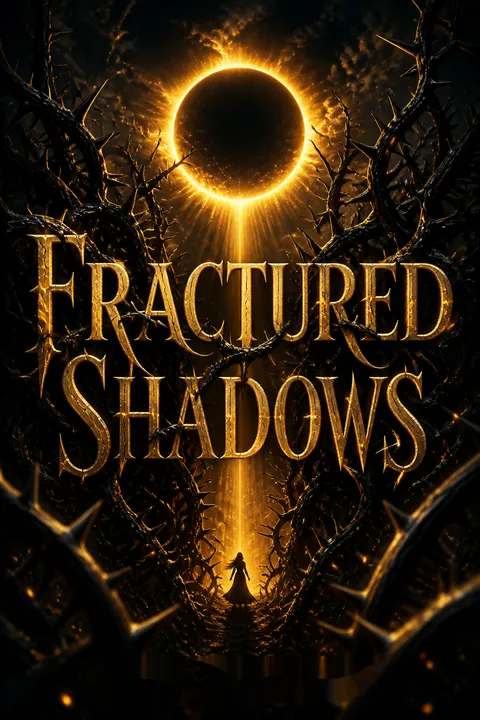


Plot Summary
Prologue
The preface places Cora in the Shadow Lands, a poor territory squeezed between a wealthy human kingdom and the monster-haunted Dead Lands. Women are treated as property, and each year one young woman is sent beyond a magical thorn barrier as a sacrifice.
Cora says she was born there and died there, but postpones the explanation. Her opening frames the story as both a survival account and a challenge to the world that calls its violence necessary.
The preface makes geography an instrument of power. The Shadow Lands are not merely between two realms: their people are made to absorb the danger and deprivation created by both. The annual sacrifice links public survival to private disposability, while women’s lack of rights makes Cora’s eventual choice to volunteer especially charged. Her claim that she died in the place where she was born also plants a question about what kind of death the story means. It invites the reader to see survival not as simple escape, but as the beginning of a transformed identity.
Kai Takes the Hunt
At twenty, Cora works the fields, secretly teaches her older sister Kai to read, and lies to their violent father to shield her. Their mother has withdrawn into silence, while the annual tribute to the king demands crops and a young woman. Kai is chosen for the hunt just as she expects to marry Merryl, the man she loves.
Their father welcomes the reward instead of defending her. Cora begs him to spare Kai, takes his beating, then slips away before dawn and offers herself to the king’s guards. When her father tries to stop her, she kicks him down and leaves in his place. The substitution saves Kai from the sacrifice, but sends Cora toward a danger no woman has returned from.
Cora’s rescue begins as an act of intimate loyalty, not a campaign for power. She understands the cost of stepping forward and chooses it because Kai still has a future she wants to protect. That choice contrasts sharply with her father’s calculation: he values the payment more than either daughter. Cora’s resistance is physical as well as moral. Kicking him down does not undo the system that gives him authority, but it marks the first time she uses her body on her own terms. The story’s larger rebellion starts with one sister refusing to let another become a transaction.
Beyond the Thorn Gate
Before the ceremony, Cora is kept in a luxurious room near the Gilded Lands, where abundant food sharpens her sense of what her own family lacks. She hides a knife and provisions, then faces the king without bowing and condemns his rule before the vines open. Inside the Dead Lands, she crosses a forest, bog, and ruined shelter with an injured foot and little food.
A blue-skinned fey, Bracken, startles her awake and pursues her as she flees across a broken bridge. When the river’s creatures threaten to drag her under, she accepts his hand and reaches the far bank, where an invisible boundary stops him. The monsters are dangerous, but they are not the mindless predators her people described.
The crossing overturns Cora’s inherited map of danger. The Gilded Lands’ comfort is built beside her deprivation, while the supposedly monstrous realm contains beings capable of judgment, appetite, humor, and choice. Cora’s survival skills are improvised from scraps: a hidden knife, stolen food, and memories of lessons learned in childhood. Her encounter with Bracken also complicates the usual rescue pattern. He saves her from the water but had been hunting her moments earlier, so safety is not a simple matter of identifying friend or foe. Cora has to observe, negotiate, and decide while exhausted.
Deals in Dead Country
After the river, Cora reaches the territory of Grimus, a minotaur warrior who intervenes when the naga Nero captures her. Grimus explains that other monsters can sense something powerful in her, although Cora believes she has no magic.
He feeds and shelters her, then offers an escort toward an old palace in exchange for access to that power. Cora accepts because travelling alone would almost certainly kill her. Bracken soon catches up and claims he can secure passage through an orc pass; Grimus distrusts him but accepts a second bargain.
As they cross ruined Blaenau, Bracken describes the former alliance between humans and monsters and the human betrayal that ended it. A pack of corrupted wolf-men attacks, giving Cora her first glimpse of her companions fighting together.
The bargains establish a new social grammar for Cora. In the Shadow Lands, men decide what women owe; here, she can hear terms, weigh risks, and agree for herself. The exchanges are not free of danger or desire, but consent becomes something negotiated rather than assumed. Bracken’s account also destabilizes the human story Cora was taught: the monsters were once political partners, not simply threats. Their ruined city makes that history tangible. The wolf-men, meanwhile, show what happens when magic decays, setting up the journey’s larger purpose before Cora understands it.
A Kraken Joins the March
On the Dread Sea coast, Cora hears a sound that draws her into the water, where a giant octopus seizes her. A red kraken tears it away and carries her to shore, then shifts into the enormous man called Zetros. Though humans once enslaved and abused him, he accepts Cora’s offer of a place in the group and agrees to help her reach the palace.
At a ruined bathing palace, Nero appears again, revealing himself as a naga who has been following her. Rather than threaten her, he offers protection and companionship, and Cora accepts. He makes her durable clothing from shed scales. Surrounded by four very different monsters, she begins to feel less like prey and more like the person deciding who may travel beside her.
Zetros’s rescue makes the old human-monster conflict personal: he has reason to hate Cora’s people, yet responds to her conduct rather than treating her as their representative. Nero’s return similarly reframes an earlier frightening encounter as a test of Cora’s understanding. The group grows through choices, not through a prophecy that erases individual judgment. Even the practical gift of clothing matters: Cora’s first outfit marked her as an offering, while Nero’s scales help her move through the Dead Lands as a traveller. Companionship becomes a form of protection, but also a way for Cora to practice trust without surrendering agency.
The Spring Ignites
At the palace’s natural spring, Grimus checks the dark water before Cora enters. Their attraction, long held beneath his wary discipline, becomes a consensual intimacy, and the magic everyone senses in Cora bursts visibly into the room. The surge leaves the candles dark and Grimus exhilarated, but it also confirms that her power is real and can be awakened through intense feeling.
The other monsters arrive after hearing the commotion, and their reactions reveal that each is drawn to her for more than simple survival. Cora cannot yet summon the power at will, but she has crossed an important threshold: the hunt is no longer only a human woman trying to endure. She may be connected to the damaged magic of the Dead Lands itself.
The first eruption ties bodily autonomy to magical agency without making the two identical. Cora chooses intimacy rather than being used as payment, and the resulting power belongs to her, even though Grimus’s bargain helped bring it forth. The scene also complicates the group’s arrangements: the monsters’ desire is real, but so are their obligations and Cora’s right to set boundaries. Most importantly, magic appears as a capacity that must be understood, not a weapon she can simply command. The revelation offers possibility while adding risk, because her emerging power makes her more visible to creatures already hunting her.
The Orc King's Prison
At the mountain pass, Bracken’s supposed agreement with the orcs proves unreliable, and the group is taken before their king. Cora asks for an audience and identifies herself as the hunt, a distinction that makes the king pause when he senses her magic. He sends them to prison while considering her offer.
There, Zetros explains that he and the young orc were once captives together, abused by humans and their own rulers. The orc king’s old trauma has made him hostile to Cora’s people. When the king summons them again, he offers freedom and safe passage if Cora can restore magic. He gives his name as Krug and joins the expedition himself, making the promise a perilous obligation shared by the whole company.
Krug’s hostility is rooted in remembered violence, not arbitrary villainy. Zetros’s account makes clear that Cora is encountering the consequences of human power, even though she did not personally inflict the harm. Her apology cannot erase that history, and the bargain does not instantly produce trust. Instead, the king’s demand creates a practical alliance with conditions: Cora must find a way to repair a world she barely understands. The prison setting brings the group’s different histories into the same confined space. Their decision to proceed together is therefore more than a quest arrangement; it is an attempt to make cooperation possible without denying injury.
Bracken Bleeds for Her
Beyond the orc city, trolls ambush the travellers. Bracken pulls Cora out of reach, but a troll impales him on a broken tree trunk and leaves him bleeding. Cora’s panic and fury unleash a burst of magic that hurls the attacker away. Bracken is still badly hurt, so he asks her for blood; feeding restores his strength, and their intimacy deepens as he recovers.
Cora learns that her power responds to emotion, but it is not yet reliably under her control. The episode also shifts her place in the group. She is not only being carried, guarded, or rescued. Her choices and power can now protect the monsters who have kept her alive, though their danger remains very real.
The attack reverses the group’s familiar pattern: Cora is no longer only the vulnerable person others defend. Her power saves Bracken, while her blood becomes the means of his recovery. Yet the scene does not turn her into an invulnerable rescuer. Emotion triggers the magic, which leaves her strength inseparable from fear and attachment for now. Bracken’s vulnerability also reveals how teasing can coexist with sincere dependence. The relationship grows through mutual risk, but the power imbalance does not vanish. Cora is learning that care can involve giving, while still requiring her to decide what she is willing to give.
The Diamond Remembers
At an abandoned temple, Cora touches a large red stone set into the wall and is swept into a vision. She sees a once-vibrant realm, humans and monsters facing one another, and the thorn barrier rising to divide them. The images end with the wall failing and a crowned woman leading monsters toward the human lands.
The vision offers no clear explanation, but it connects Cora’s growing magic to a history she was never taught and a possible future she cannot yet interpret. Her companions recognize the pulse of power spreading from the temple and urge her onward before more creatures arrive. The red stone becomes the first unmistakable sign that the past is not finished with them.
The vision turns history into an active force rather than background exposition. Cora does not receive a tidy lesson; she sees fragments whose meaning exceeds her knowledge, including an image of herself in a future she has not chosen. This uncertainty is important because it preserves her agency: a possible destiny may call to her, but it does not yet dictate her actions. The temple also gives the realm a material memory. Stone, art, and magic preserve what human authorities have suppressed. Cora’s inability to explain the vision mirrors the larger problem of inherited ignorance, especially the deliberate exclusion of women from learning.
Krug Breaks the Cage
A group of pixies traps Krug in a cage, and the threat of being taken triggers the terror of his earlier captivity. Cora’s companions strike back, but Krug’s panic turns him feral and makes him attack them too. Cora approaches instead of retreating, frees him with her magic, and keeps speaking and singing until he recognizes her.
Krug tells her more about the captivity that shaped his hatred of humans, and Cora shares how her father’s violence still haunts her. Their exchange does not make the past harmless; it gives them a way to name it without blaming each other for it. Krug accepts that Cora is not the humans who hurt him, and the group continues as a more trusting unit.
The cage makes trauma visible as a present-tense bodily response, not a weakness Krug can simply reason away. Cora’s effective intervention is neither force nor argument: she stays close, uses her voice, and helps him reorient to safety. That choice echoes how she once comforted Kai, but now care moves beyond family and becomes reciprocal. Their shared disclosures do not equate their experiences or cancel accountability. Instead, they allow each character to distinguish personal responsibility from inherited guilt. Krug’s trust grows because Cora does not demand that he forgive humanity; she asks only that he see her clearly.
The Harpies Choose Murder
Harpies intercept the group and recognize Cora as a human capable of changing the realm. Their leader, Nolia, orders her killed, while a singer’s magic draws Cora away from her protectors. Nero reaches her before the harpies can carry out the attack, but Cora cannot summon her own power in time. The failure forces her to admit that instinct alone is not enough.
At Krug’s suggestion, the group stays behind to train her. Cora learns to call on the feelings that first awakened her magic, then uses it to lift Nero and stop Grimus during practice. Her growing control gives the company a better chance against future attackers, but each use also makes her power easier for others to sense.
Nolia’s decision clarifies the political stakes: the harpies fear what Cora could change, not merely what she might do to them personally. Their song works by exploiting a weakness in her attention, showing that power without discipline leaves her vulnerable. Training is therefore not a conventional preparation montage; it is Cora’s attempt to become responsible for a force that can endanger her allies as readily as her enemies. Her strongest access point remains attachment, which is both an asset and a risk. The more she learns to use love as a source of focus, the more the journey’s emotional bonds become consequential.
Emelyn Opens the Refuge
As the ancient arachne fey close in, Cora senses a refuge in the mountain and leads the group through a concealed entrance. Inside, a chamber filled with preserved objects and images belongs to Emelyn, the human woman loved by the old monster king. Emelyn’s lingering magic guides Cora through memories of the realm’s corruption and the theft of power.
Cora understands that restoring magic requires more than defeating a ruler: the dead lovers, King Kulmak and Emelyn, must be reunited. The chamber also explains why the wall and the land are failing. Cora leaves with a clearer task and a small journal, while the others choose to follow her even though the plan means entering the human kingdom.
The refuge changes the quest from escape into repair. Cora had imagined returning to punish the people who oppressed her, but Emelyn’s memories reveal a wound older and wider than her own family’s suffering. The hidden chamber functions as an archive outside official control, preserving the story that the ruling powers erased. Its intimacy matters: this history survives not in a public monument but in a private refuge built for a human and a monster to meet. Cora’s mission now depends on restoring a relationship that political violence tried to make impossible, not simply winning a conflict.
The Protector Wakes
At Kulmak’s castle, Cora’s magic awakens Sir Razcorr, a gargoyle who has remained stone since the old king’s death. Razcorr reads Emelyn’s journal through a magical memory and shows the group that she was buried in the Gilded Lands, while Kulmak lies in the castle crypt. He agrees to help reunite them.
In the same crypt, a crown responds to Grimus, identifying him as a descendant of Kulmak’s royal line. Grimus resists the implication that he should rule, but the discovery changes the stakes of their mission. The group also finds an unfinished tunnel built for Kulmak’s secret journeys to Emelyn. It offers a faster route toward Cora’s homeland, though it will still leave them exposed in human territory.
Razcorr brings institutional memory back to life, but he does not solve the moral problem for Cora. His account confirms the location of the bodies and makes a difficult goal actionable. The crown’s response to Grimus adds a second inheritance: he is connected not only to the old king’s history but to a future political duty he does not want. The unfinished tunnel is a fitting artifact of the lovers’ attempted connection. It was meant to bypass danger, yet its incompletion forces the present group to face the very borders the old rulers could not overcome. History offers tools, not guarantees.
A Crown, Not a Claim
Razcorr discovers that Cora is his destined mate, and the revelation provokes jealousy among her other companions. They attack him rather than ask what Cora wants. Cora uses her magic to pin them in place and insists that her relationships are her decision; no one may treat her as property, even in the name of love.
Bracken and Zetros later apologize, and the group accepts Razcorr as someone Cora may choose. With the tension settled, they use Kulmak’s tunnel to return toward the Shadow Lands. Their affection has become a family, but Cora makes clear that belonging cannot mean ownership. The distinction matters as they prepare to confront the same culture that once claimed authority over her body and future.
This conflict tests whether the new bonds truly differ from the systems Cora escaped. The monsters care for her, yet jealousy turns care into control until she intervenes. Her use of magic here is political as well as defensive: she does not merely stop a fight, she establishes that her consent governs her relationships. The scene resists the idea that destiny or romantic intensity excuses coercion. The group’s reconciliation becomes meaningful only after Cora names the terms. Her insistence on choice also prepares the story’s larger challenge to inherited claims of ownership over women, bodies, and land.
Home Without Kai
The unfinished tunnel deposits the group near Cora’s old home. Her father is still brutal, and he reveals that the king took Kai as a concubine after Cora crossed the barrier. Cora burns one of her father’s eyes with a controlled spark but leaves him alive. In the Gilded Lands, the companions find hundreds of halflings hiding underground, people altered by the king’s attempts to manufacture magic.
Their elder, Marne, offers refuge and allies. Cora later spots Kai in the market, hollowed out and dressed as the king’s property. She pulls her sister and a guard into an alley, but armed men seize them before she can escape. Cora is taken to the palace cells, close to Kai and to the ruler she intends to confront.
The return home tests whether Cora’s transformation can change the conditions she left behind. Her father has not softened, and Kai’s fate shows that Cora’s sacrifice did not protect her from every form of royal violence. Yet Cora now chooses the scale of her response: she punishes her father without killing him and turns toward a broader rescue. The halflings make the king’s abuses visible as policy, not rumor. They are the consequence of his experiments, while Kai embodies the cost of his sexual control. Cora’s capture is a setback, but it places her inside the institution she must dismantle.
The Gilded King Falls
Cora picks the lock of her cell with a nail, but her companions and the halflings soon blast through the prison wall and begin freeing captives. The revolt spills into the palace, where Cora confronts King Tinos and finds Kai among his abused concubines. When Tinos uses Kai as a shield, Cora kills him with the power he tried to control.
Kai initially survives a fall from the tower, but the years of abuse have left her unable to imagine a life beyond it. After Cora pulls her to safety, Kai tells her she feels lost and chooses to leap again. Razcorr cannot save her. Cora has overthrown the king, but the victory cannot reverse what was done to her sister.
The uprising joins personal revenge to collective resistance: the halflings are not rescued as passive victims but help break the cells and carry the revolt into the palace. Cora’s confrontation with Tinos echoes the earlier hunt ceremony, but now she enters the throne room with power and allies. Killing him ends his reign, not the trauma he inflicted. Kai’s final choice refuses a comforting rescue narrative in which love alone can restore a person after prolonged abuse. Cora’s grief is intensified by survival itself: she won the political fight and still could not secure the future she sacrificed herself to protect.
The Wall Comes Down
Cora retrieves Emelyn’s preserved body from the Gilded castle and carries it back to Kulmak’s crypt. When the lovers are reunited, their magic spreads through the lands, heals the corruption, and removes the thorn barrier separating humans and monsters. Cora mourns Kai while the people begin rebuilding as one realm.
In time, she and Grimus are crowned king and queen, with the other monsters beside them. The ending answers the opening’s divisions without pretending that grief or political change is simple: Cora does not get Kai back, and the former kingdoms must learn to live together. Her authority rests on having known deprivation and on insisting that no one should be ruled as property.
The restoration is both magical and political. Reuniting Emelyn and Kulmak releases power that no human king could own, while the barrier’s disappearance makes separation impossible as a governing principle. Yet the ending refuses to equate a healed landscape with healed people. Cora’s coronation follows Kai’s death, so authority arrives alongside grief rather than replacing it. Her legitimacy comes from experience as a sacrificed woman, a survivor, and a leader who has had to negotiate consent at every scale. The story closes its central wound of division while leaving the harder work of shared life to the newly united realm.
Epilogue
The epilogue looks ahead through the viewpoints of Cora’s partners as the realm rebuilds. Cora visits markets, buys gifts for the monsters she loves, and leaves a brooch at Kai’s memorial; Kai’s body was never recovered, and Merryl’s grave lies nearby. The restored lands are green again, and humans, monsters, and halflings begin making homes together.
The companions describe gifts Cora has chosen for them and the ordinary pleasures of life with their queen. Their accounts end not with another battle, but with a family learning how to govern, grieve, and enjoy a world that no longer has to be divided by the wall.
The epilogue measures political change through ordinary acts: buying from a market, choosing a gift, tending a grave, and moving freely through a restored landscape. These gestures contrast with the opening’s scarcity and forced offerings. Cora’s grief remains present in the memorial, and the unrecovered body prevents mourning from becoming neat closure. The partners’ separate perspectives also show that the family she formed is not merely a reward for saving the realm; it is a continuing practice of attention and care. Their private affection and public responsibilities now occupy the same world, rather than being kept apart by fear and borders.
Analysis
Fractured Shadows organizes its fantasy conflict around a precise question: who is made to pay when power calls its violence necessary? The annual hunt turns one woman’s body into public policy. The Gilded Lands claim prosperity while the Shadow Lands starve; the Dead Lands inherit the consequences of an older human attempt to possess magic. These systems differ in appearance, but each depends on someone with less power absorbing the cost. Cora’s development is therefore not a simple rise from weakness to strength. She begins with fierce agency but little leverage. She can read, lie, hide food, and strike back, yet she cannot stop the law from selecting Kai. Crossing the barrier gives her allies and eventually magic, but her more consequential skill is relational: she learns to bargain, listen to histories that implicate her people, and make care reciprocal. Her authority grows from the same habits she used to protect her sister, now applied to strangers and whole communities.
The romances test whether intimacy can escape possession. Cora’s society treats women as property, and even her monstrous companions briefly turn their fear of losing her into a fight over her. She stops them and makes consent an explicit condition of belonging. That moment matters as much as the magical battles because it prevents the new family from reproducing the structure she fled. Affection becomes ethical only when Cora retains the power to choose.
The ending offers restoration without pretending that restoration repairs every wound. Reuniting Emelyn and Kulmak heals the land and breaks the barrier, but Kai’s death cannot be undone. Cora becomes queen while carrying a grief that political victory cannot settle. The novel’s final hope is thus neither innocence nor perfect reconciliation. It is the possibility of building institutions from lived knowledge of hunger, coercion, and loss, and of refusing to make another vulnerable person the price of peace.
Review Summary
Fractured Shadows received mixed reviews, with ratings ranging from 1 to 5 stars. Many readers enjoyed the unique monster romance concept, steamy scenes, and strong female lead. Critics found the plot lacking, character development rushed, and writing style cringeworthy. Some praised the world-building and diverse monster characters, while others felt the story was unrealistic and poorly executed. The book's polarizing nature suggests it may appeal to fans of reverse harem monster romance but may not be for everyone.
People Also Read
Characters
Cora Black
The hunt's defiant survivorCora is a twenty-year-old field worker from the Shadow Lands, where her father’s violence and the law’s contempt for women have made self-reliance essential. She reads, teaches Kai in secret, and refuses to accept the life her community has prescribed. Her first instinct is protective: she takes Kai’s place in the hunt because she cannot watch her sister be sacrificed. In the Dead Lands, Cora’s capacity to bargain and build trust grows alongside her magic. She is courageous without being fearless, often frightened and unsure, but willing to act before certainty arrives. Her central drive is to make choices for herself and defend other people’s right to do the same.
Grimus
The guarded minotaur warriorGrimus is a formidable minotaur who patrols his territory with a weapon made for real combat. He appears blunt and emotionally closed, yet he gives Cora food, water, shelter, and practical care before she has earned his trust. His instinct is to protect through action rather than explanation, and his reserve sometimes makes him seem harsher than he is. Grimus carries a warrior’s discipline and a strong sense of responsibility, but Cora’s presence draws out feelings he would rather keep hidden. He respects strength, especially when it appears in someone the world has treated as weak. His relationship with Cora challenges his belief that attachment is only another danger to manage.
Bracken
The teasing dark feyBracken is an ancient dark fey who combines flirtation, mischief, and lethal skill. He initially treats Cora as an intriguing source of magic and enjoys unsettling both her and Grimus. His jokes can disguise genuine concern, but his instincts are sharp and his loyalty becomes difficult to doubt. Bracken is a creature shaped by a realm whose magic has deteriorated, and his playfulness gives him a way to resist the numbness around him. He is not conventionally solemn, yet he recognizes Cora’s courage and responds to her directness. Their bond develops through teasing, risk, and the surprising vulnerability beneath his showmanship.
Nero
The charming naga guardianNero is a white-scaled naga whose immense serpent body makes him both imposing and graceful. His first encounters with Cora are teasing and deliberately alarming, but he soon reveals a more attentive side. He offers protection, makes her sturdy clothes from his shed scales, and notices what she needs before she asks. Nero’s charm is partly performance, yet his care is sincere. He carries the history of human cruelty toward monsters, which makes his willingness to trust Cora significant. Of her companions, he is often the most openly affectionate. His blend of playfulness and watchfulness allows Cora to feel sheltered without being treated as helpless.
Zetros
The solitary kraken rescuerZetros is a kraken who has withdrawn from the land after centuries of human violence and damage to the sea. He is powerful enough to tear a giant octopus away from Cora, yet initially cautious about joining anyone’s journey. His curiosity about her gradually overcomes his isolation. Zetros values gentleness and consent, partly because his past taught him how devastating it is when others take control of a body. He watches the group carefully and often sees the pain beneath another monster’s pride. With Cora, he finds someone who can acknowledge his history without defining him by it. His presence brings both physical protection and an emotional steadiness to the group.
Krug
The scarred orc kingKrug rules the orcs as a warrior, but his authority rests on survival rather than ceremony. His scars and suspicion reflect a history of captivity and abuse, making him deeply wary of humans. He is pragmatic enough to recognize Cora’s unusual power and to risk traveling with her when his realm needs magic restored. Krug’s temper can be formidable, but he is not incapable of revising his judgments. He responds to courage and honesty, especially when someone does not demand that he hide his pain. His bond with Cora grows through mutual respect, shared vulnerability, and the possibility of a future not governed by the injuries of the past.
Sir Razcorr
The realm's stone protectorRazcorr is a gargoyle and former protector of the old monster court. He is reserved, disciplined, and accustomed to carrying duty without asking for comfort. His long stillness has left him connected to the realm’s history, while his recollections give Cora crucial guidance. Razcorr’s loyalty is shaped by devotion to the old king and queen, but he is able to recognize that the living world has changed. He approaches Cora with patience rather than demanding that she accept his feelings on his schedule. His calm presence balances the more volatile personalities around her, and his commitment to protection is rooted in service rather than ownership.
Kai Black
Cora's beloved older sisterKai is Cora’s older sister, a warm and sociable young woman who hopes to marry Merryl and build a family. She follows the rules more readily than Cora, but she is not shallow or passive; her happiness is real, and so is her fear when the hunt threatens it. Cora has long protected her, while Kai’s affection gives Cora one of her few reasons to imagine a better life. Her relationship with Cora is built on tenderness, shared hardship, and a history of looking out for each other.
The Gilded King
The human ruler's gilded heirKnown as King Tinos, he rules the Gilded Lands through wealth, spectacle, and the exploitation of poorer people. He treats the annual hunt as a useful tradition and keeps young women as concubines. His authority depends on others seeing luxury as proof of legitimacy, even while the Shadow Lands starve and his experiments create suffering below the palace. Tinos represents a present-day continuation of an older human hunger for power.
Cora's father
The household's violent patriarchCora’s unnamed father controls his household through hunger, beatings, and the assumption that his daughters belong to him. He values the reward offered for the hunt more than Kai’s safety, and he expects obedience as a matter of law and habit. His cruelty helps explain why Cora learned to hide food, knowledge, and anger. He is not an abstract symbol to her: he is the daily authority she must resist before she can challenge the kingdom.
Cora's mother
A silenced and fearful motherCora’s unnamed mother has been worn down by years of abuse until silence becomes her main means of survival. She once played and laughed with her daughters, but that earlier self has receded beneath fear. Her inability to protect Cora or Kai leaves wounds that affection alone cannot mend. She represents the cost of surviving violence by withdrawing from the world.
King Kulmak
The old monster sovereignKulmak was the minotaur king who sought peace among humans and monsters. He is remembered as powerful and capable of governing, but also as a ruler whose decisions could not protect his people from human ambition. His love for Emelyn sits beside his political responsibilities, forcing him to confront the limits of both. The surviving stories about Kulmak are fragmented, and understanding him becomes essential to understanding why the realm was divided.
Emelyn
The human princess and bridgeEmelyn is a human princess remembered for intelligence, courage, and an unusual understanding of magic. Her relationship with Kulmak makes her a link between the two peoples, though her father’s political ambitions threaten that possibility. She is more than a symbol of peace: her memories, choices, and work preserve knowledge the later kingdoms have lost. Cora is drawn to her determination and to the life she tried to build across a dangerous divide.
Haveron
The old human kingHaveron is Emelyn’s father and a former human ruler whose desire for monster magic drives him to treat family bonds as political instruments. He sees his daughter’s marriage as a route to power rather than a relationship deserving respect. His choices help establish the old conflict whose consequences still shape Cora’s world.
Marne
The halflings' elderMarne leads the halflings hiding beneath the Gilded Lands. Older and perceptive, she understands how the king’s experiments have harmed people and how difficult escape can be. She responds to Cora as a potential ally, not a savior, and gives her group refuge when they need it. Marne’s practical compassion makes the underground community a place of cooperation rather than another hierarchy.
Nolia
The suspicious harpy leaderNolia leads the harpies who guard their territory and distrust humans. She sees Cora as a threat to the balance of the realm and chooses violence over negotiation. Her certainty shows how fear of human power persists among the monsters.
Ballow
The orc pass commanderBallow is an orc warrior who meets Cora’s company at the mountain pass. He remembers Bracken’s past offense against his intended bride and is quick to challenge the fey. His grudges make the group’s passage more complicated.
Merryl
Kai's absent fiancéMerryl is Kai’s intended husband, a trainee professor who treats her kindly and hopes to build a life with her. Cora considers him one of the few decent men in the Shadow Lands. His choices become important to Kai’s understanding of what protection and loyalty mean.
Beatrice
A previous hunt offeringBeatrice is the young woman sent through the barrier in the previous year’s hunt. Cora remembers her terror and the crowd’s helpless silence. Her fate shows Cora what the ceremony demands before Cora takes her own place in it.
Plot Devices
The annual hunt
A ritual of human sacrificeEach year, the Shadow Lands surrender a young woman to the Dead Lands, ostensibly to keep monsters from crossing the thorn barrier. The ritual begins Cora’s journey when Kai is selected and Cora volunteers instead. It also establishes how political systems make women bear the cost of decisions made by powerful men. As Cora learns more about magic and the barrier, the hunt’s stated purpose becomes increasingly suspect. Its role is not only to create danger, but to expose the lies that keep people accepting sacrifice as ordinary.
The thorn barrier
A border that hides historyThe magical wall separates the Shadow Lands from the Dead Lands and controls who can pass between them. Cora crosses it as the hunt, while its instability and the stories surrounding it shape how humans and monsters understand one another. The barrier conceals the history of their former alliance and helps preserve the human kingdom’s version of events. Later, Cora’s magic opens a passage through it, making the border’s physical collapse part of the political change. Its removal does not guarantee peace, but it makes enforced separation impossible.
Cora's wild magic
Power awakened through feelingCora carries a strong form of magic she did not know existed. It first erupts in moments of intense emotion, then becomes more dependable as she learns to focus on her bonds and memories. Other monsters can sense it, making it both protection and a beacon that draws danger. The magic also connects her to objects, places, and memories from the old kingdom. Its gradual awakening turns Cora from a hunted offering into someone capable of changing the balance among the realms, while requiring her to learn control rather than rely on instinct alone.
Emelyn's memories
A hidden archive of the pastThe red temple stone, Emelyn’s refuge, the journal, and Razcorr’s recovered memories preserve pieces of the history erased by the human rulers. They reveal that the division between humans and monsters grew from greed, political violence, and the death of a person who could have joined the two worlds. The memories do not arrive as a single convenient explanation; Cora receives them in fragments and must connect them to the places and people around her. They transform her objective from personal survival into the restoration of the realm.
The paired royal tombs
A promise left unfinishedKulmak’s tomb and the empty sarcophagus prepared for Emelyn make their separation visible. The crown that responds to Grimus links the old royal line to the present, while the unfinished tunnel shows how the former king tried to remain connected to Emelyn across hostile territory. Together, the tombs, crown, and passage turn family history into a practical route forward. Cora must recover Emelyn’s body and bring it back to Kulmak before the realm’s stolen magic can be restored.
About the Author



Download PDF
Download EPUB
.epub digital book format is ideal for reading ebooks on phones, tablets, and e-readers.








