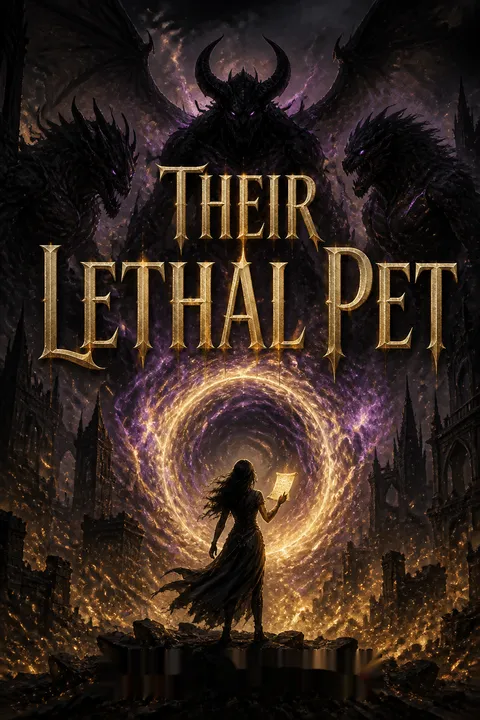


Plot Summary
Prologue
Orcus, an ancient Mythos Fae, agrees to enter an unfamiliar dimension on Monsters Night after his brother Hades senses the possible presence of their missing mother there. The annual portal opening will conceal their arrival, but Orcus must also avoid drawing the attention of the realm’s rulers.
His longtime friends Flame and Reaper accompany him for protection, while their ally Maliki creates a distraction back home. The mission has a narrow purpose: find the source of the strange presence, then leave without exposing the disappearance of the Mythos Fae Omegas.
The prologue establishes a mission built on concealment before Alina’s story begins. Orcus treats the crossing as an investigation, but the missing mother makes it personal, and Hades’s warning about the fate of their kind gives the search existential stakes. Bringing Flame and Reaper makes the expedition feel less like a lone quest than a long-standing brotherhood tested by unfamiliar territory. The plan’s reliance on Monsters Night also introduces a useful contradiction: the Fae enter under cover of a ritual they do not understand, into a world where ritual is itself a system of control.
The Note From Chicago
At twenty-two, Alina Everheart has spent a year deliberately breaking village rules so her name will enter the Choosing Chalice again and again. Her younger sister Serapina was taken as an Offering two years earlier, but a note in Serapina’s handwriting has revived Alina’s hope: find an old map and look for Chicago.
Alina plans to board the train, reach the Elite City, and search for her. Before the ceremony, she tells Sage, her closest friend, that her volunteering is not Sage’s fault and urges her to stay wary of the village’s powerful men. Sage fears Alina will be chosen; Alina fears she will not be.
Alina’s choice begins as a response to grief, but the note gives that grief a direction. Her rule-breaking is not simply youthful defiance: she uses the village’s own punishment system to increase her odds of escape. Her care for Sage complicates the self-reliant image she presents, since she spends scarce resources protecting someone more vulnerable even while preparing to leave. The note’s uncertain authenticity matters psychologically. Alina chooses to trust the possibility of Serapina’s survival because the alternative is a grief she has already endured once.
The Ninth Name
During the Choosing, Alina refuses to lower her veil or bow her head to the Village Viscount, David O’Michaels. He notices her defiance and warns that an unsuitable Offering will become an example. The Chalice yields nine names, including Alina’s, then O’Michaels selects a tenth candidate as a supposed replacement.
On the train, Duke Nightingale overrules the Viscount’s attempt to keep Alina behind for public correction, assigns her to the group sent to Monster City, and strips O’Michaels’s village of its promised reward. The Viscount grips Alina hard enough to bruise her before leaving. The Duke orders her tested and prepared as a bride, confirming that her journey is controlled by powers beyond her village.
Alina’s defiance brings both liberation and danger. She wants the train because it is her route to Serapina, yet the Viscount treats her visible independence as a challenge to his authority. The Duke’s intervention prevents immediate punishment without making Alina free; he simply redirects her into another institution’s custody. That distinction frames the book’s central question about power: protection can be real and still be paternalistic. Alina has escaped one man’s control, but she has not yet gained the right to decide what happens next.
The Alleyway Rescue
When the portals open, Alina loses sight of Bartholomew and Miranda, the other two Nightingale Offerings who left the staging area with her. She slips into an empty building to avoid the countdown, but Timothy, a Protector who once worked in the medical laboratories, catches her and tries to carry her back to a train. Alina fights until he knocks her unconscious.
Orcus, Flame, and Reaper arrive in time to stop him. Flame kills the man holding her, while Reaper consumes the souls of two other attackers. Orcus revives Alina and lets her decide Timothy’s fate rather than execute him himself. Their rescue gives Alina immediate safety, but leaves her surrounded by strangers who can wield frightening power.
The rescue reverses Alina’s usual position. She has been trained to endure systems that discuss her body as property, and Timothy makes that threat immediate. The Fae’s violence is not presented as harmless; Reaper’s power is terrifying, and Alina must reckon with the fact that her rescuers are capable of lethal force. What distinguishes them from her captors is their recognition of her judgment. Orcus’s offer to let Alina choose Timothy’s fate is an early, concrete contrast between domination and protection, though she is too disoriented to trust that contrast fully.
Guests in Monster City
After the rescue, an emissary named Jones arrives on behalf of Queen Helia and invites Orcus, Flame, and Reaper to her tower. The Fae accept because their unauthorized arrival could affect relations between dimensions. They bring Alina with them, and Flame explains that he is a Shifter Fae, Reaper a Death Fae, and Orcus a Mythos Fae.
Orcus believes Alina has the soul of a rare Mythos Fae Omega, although she is mortal and has no reason to understand the term. The Queen delays her audience, asking the visitors to remain within Monster City. Alina is unsettled by their claims and attraction, but their promise to answer her questions gives her room to begin deciding what she wants.
The tower replaces the train as Alina’s new enclosed space, but its meaning is not identical. The Fae have the power to keep her, yet they describe their intentions and leave choices open. Orcus’s claim about her soul unsettles her because it offers an explanation for reactions she cannot control, while also risking a new identity being imposed on her. The Queen’s delay adds another layer of uncertainty: the Fae are not free agents in this realm. Alina’s gradual willingness to ask questions becomes her first way of claiming authority within a situation she did not choose.
The Jaguar in the Garden
While waiting for the Queen, Alina leaves the tower with Flame to explore a vast, jungle-like park. Flame tells her about his jaguar form, then shifts so she can see it for herself. Instead of recoiling, Alina strokes his fur and carries his clothes while he explores the trees. Their walk is interrupted by Sebastian, called Sabre, and Cage, two rival Strigoi princes who secretly crossed into this realm together.
Flame recognizes them and learns they used Maliki’s portal to flee their expected bride trials. Their presence creates a second political problem for Orcus, but Alina’s gentle encounter with Flame gives her a rare stretch of uncomplicated choice: she can approach the unfamiliar rather than merely survive it.
The park scene makes trust physical. Alina does not accept Flame because he explains away his danger; she chooses to touch the animal he becomes and discovers that his power can coexist with gentleness. That experience contrasts sharply with the village’s rules about what women should fear and obey. The Strigoi’s arrival complicates the apparent romance plot with a parallel story of people escaping assigned partners and inherited political roles. Their choice to flee together echoes Alina’s own desire to move toward a life she can author, even before she understands what such a life might be.
A Nest Begins
Back at the tower, Reaper’s attentive flirtation becomes Alina’s first intimate experience, and she asks him to continue when he checks that she wants his touch. Flame later shares his own desire while explaining the need for consent and a safeword. Alina chooses Chicago as the first word, then replaces it with Monster when the city name proves too easy to confuse with the command.
Meanwhile, she begins arranging the Fae’s clothes around her bed, drawn to the scents that make her feel protected. Orcus explains that this is an Omega instinct, not a loss of strength. As her attraction deepens, all three Fae make clear that they want to court her rather than demand instant acceptance.
The emerging bond is deliberately complicated by the difference between bodily instinct and personal consent. Alina’s attraction is intense and unfamiliar, but her requests, boundaries, and safeword let her participate rather than simply be swept along. Nesting gives her a material form of agency: she chooses which scents to gather and where to arrange them. The men’s insistence on patience does not erase the power imbalance, but it makes care observable in small decisions. Alina’s developing identity as an Omega is most convincing when it expands her choices instead of replacing the rebellious self she already knows.
Helia’s Terms
Orcus finally meets Queen Helia and learns that the Elite families run villages, breed humans for compatibility with supernatural mates, and select Offerings before the public Choosing. Nightingale Village is one such property, and its compound lies near the former site of Chicago. Helia allows Orcus to portal within her territory and explains that the Elite City houses the families who oversee the system.
The meeting also reveals that Cage and Sabre are under the protection of King Cain, the Elite City ruler. Reaper scouts the city and confirms the princes chose to remain with Cain rather than return home. Orcus now has a route toward Chicago, but his diplomatic agreement has drawn the group into a larger network of bargains.
Helia’s account turns Alina’s private suspicion into a documented system. The Choosing is not random, and the language of compatibility masks a hierarchy that rewards elites for treating people as breeding stock. Orcus recognizes the injustice but must negotiate with its administrators, revealing the limits of strength when confronting an institution built across multiple realms. The Strigoi subplot sharpens the same issue from another angle: Cage and Sabre reject a prescribed future, while Cain offers a place outside it. Both stories ask whether a relationship can be chosen within structures designed to dictate who belongs to whom.
Chicago’s Missing Sister
At the Elite City, Orcus asks King Cain to help locate Serapina. Cain’s records show a girl with Serapina’s name sent to the Nightingale Compound, but the file’s photograph is of a red-haired stranger. He also reveals that Alina and Serapina were created at the compound and placed with guardians in the village.
The guardians are alive and living in the city, despite Alina’s childhood belief that they died. The Choosing, Cain explains, only stages selections already made by Duke Nightingale. Before the group can pursue these revelations, a strange Mythos Fae spell pulls Alina out of the room. She reappears in a garden with the real Serapina, while her mates lose contact with her.
The records dismantle Alina’s family history in layers: her parents are guardians, their deaths were staged, and Serapina’s official file does not depict Serapina. The system has not merely controlled Alina’s future; it has falsified the past that gave her a sense of belonging. The disappearance intensifies that rupture by separating her from the people she has begun to trust just as the search finally seems to succeed. Yet the records also expose the institution’s weakness: paperwork can name a person, but it cannot establish who that person is. Alina’s own memory becomes more reliable than the archive.
Demeter’s Garden
In the garden, Alina finds Serapina alive and learns that the note really came from her, though Demeter arranged for it to reach Alina. Demeter expects Alina to join her hidden refuge and calls Serapina Persephone, treating the younger woman as a reincarnated daughter. Before Alina can understand the claim, the garden cracks apart and darkness replaces its bright landscape.
Orcus reaches her through their bond and warns her not to let Demeter touch her again, especially because Alina is carrying their child. The sisters emerge in the Viscount’s distant manor, where David O’Michaels appears to speak through the building. The reunion gives Alina back her sister, but the woman who brought them together now threatens both of them.
The reunion arrives with no uncomplicated relief. Serapina’s presence confirms that Alina was right to keep searching, but Demeter’s possessive language makes the garden feel less like shelter than captivity dressed as care. The name Persephone signals that Serapina has been interpreted through someone else’s memory, just as Alina was reduced to a breeding record by the Elite system. The bond with Orcus becomes both a lifeline and a channel for danger: he can warn Alina, but he cannot yet reach her. The sisters’ shared physical presence restores their relationship while placing it under pressure from a much older claim.
The Viscount Unmasked
At the manor, the Viscount reveals himself as Demeter’s disguise and binds Alina with magic that makes her obey. He calls Serapina Persephone and claims that Mythos Fae Alphas once enslaved Omegas, a history Orcus disputes as a distortion of the past. Demeter’s real motive is to keep Omega souls hidden and prevent them from forming bonds with Alphas.
When she turns her power against Alina and the unborn child, Serapina fights back. Alina’s own Omega magic surges, breaks the binding, and destroys the Viscount’s human shell. The sisters are free of the restraint, but Demeter remains powerful and pursues them. Alina’s emergence as a Mythos Fae is no longer only a question of identity; it is the force that can protect her family.
Demeter’s account weaponizes history by converting the abuse of a few into a justification for controlling all future bonds. Her protection is inseparable from captivity: she decides what Serapina is, where Alina belongs, and whether their child may exist. Alina’s resistance matters because it is not delivered by a rescuer. Her power awakens when someone threatens the life she has chosen, joining her defiance to the Omega identity she feared might erase it. The scene does not make instinct inherently liberating; it becomes liberating because Alina’s attachment and judgment guide its use.
The Sisters’ Counterattack
Orcus, Reaper, and Flame arrive at the manor ready to confront Demeter, but Alina’s escape has already weakened her hold. As the Fae attack, Serapina rejects Demeter’s insistence that she is Persephone and refuses to let her decide who she must become. She turns Demeter’s fear of losing her daughter against her, then stabs her in the chest.
Reaper and Flame help Orcus force Demeter through a portal to the Mythos Fae realm, where her soul can be imprisoned in Pandora’s Box. Alina and Serapina survive, and the child remains safe. The sisters’ escape is not simply a rescue by Alina’s mates: Serapina’s refusal and decisive strike help end Demeter’s control.
The climax resolves the conflict over who has the authority to name Serapina. Demeter’s belief that she is protecting Persephone cannot withstand Serapina’s insistence that she is a person with her own will. The knife is an act of self-determination as well as defense, while the Fae’s coordinated force makes that choice survivable. Alina’s mates do not replace the sisters’ agency; they create an opening, but Serapina uses it. The ending also exposes a limit in Demeter’s logic: trying to preserve a bond by force destroys the trust that could have made any bond meaningful.
Rhea Returns Home
After Demeter is contained, Rhea, Orcus and Hades’s long-missing mother, appears in the human realm. She explains that she has been hiding and protecting the displaced Omegas, and that thousands may still be scattered through the dimension. She offers to serve as a liaison between the realms so the Mythos Fae can search for them.
Serapina chooses to leave with Alina, while Queen Helia and King Cain remain to manage the upheaval in their territory. Orcus opens a portal to the Netherworld and takes his mate, her sister, and their friends home. The original search for one missing mother has widened into a chance to find an entire people, but for Alina, the immediate victory is that her family travels together.
Rhea’s return converts the novel’s private rescue into the beginning of a collective restoration. Orcus entered the dimension looking for one lost person; he discovers that the same world contains thousands of possible reunions. The revelation does not undo the damage done to Alina and Serapina, but it changes the scale of what can be repaired. Rhea’s role as liaison also turns kinship into practical work: the Omegas need more than symbolic recognition; they need people willing to locate and protect them. Alina’s decision to take Serapina home keeps that larger mission grounded in the family she has fought to recover.
Epilogue
In the Netherworld palace, Alina checks on Serapina, who is safe but too tired to describe everything that happened during her captivity. Reaper can see her in the space between life and death, a sensitivity that helped the sisters resist Demeter.
Alina eventually leaves Serapina to rest and joins Orcus, Flame, and Reaper in the room they have rebuilt around her nest. Their gathered scents make the new home feel familiar, and Alina feels the life growing inside her. She has not only reached the world she once feared; she has found a place where her sister, her mates, and her future can exist together.
The ending grants Alina what her opening made urgent: Serapina is no longer an absence, and Chicago no longer serves as a distant promise. Yet the sisters do not instantly return to who they were before separation. Serapina asks for space, and Alina must learn that care sometimes means not pressing for disclosure. Reaper’s ability to perceive the in-between hints that Serapina’s experience has changed her in ways the epilogue does not resolve. The rebuilt nest offers a contrasting kind of structure to the village and compound: it is shaped by Alina’s preferences and shared with people who treat her choices as consequential.
Analysis
Their Lethal Pet builds its fantasy romance around a world where coercion has been made administrative. The village’s Chalice, the laboratory tests, the trains, and the Elite families’ breeding compounds all make control seem orderly, even benevolent. Alina’s resistance begins by gaming that order: she wants to be selected because selection is the only route she can see to Serapina. As she learns more, her goal changes from escape to deliberate action against the system that defined her family and future.
The novel’s romantic arc depends on a tension between involuntary bodily instincts and chosen intimacy. Alina’s Omega nature brings powerful attraction, nesting, and a new sense of connection, but the narrative repeatedly distinguishes those impulses from consent. Her partners’ willingness to explain their desires and honor a safeword gives her a practical form of control. The distinction matters because Demeter also claims to protect Omegas. Her version of care removes the very capacity to choose that makes care meaningful.
Serapina’s resistance makes this argument extend beyond Alina’s love story. Demeter imposes a remembered identity on her, just as the village and Elite City reduce women to names, files, and reproductive potential. Serapina’s insistence on defining herself becomes as decisive as Alina’s awakening power. Their reunion does not erase the years of separation, and Serapina’s request for space in the epilogue allows survival to remain more complicated than a clean restoration.
Finally, the discovery of Rhea and the thousands of missing Omegas widens the ending without diminishing its intimate center. The story begins with one sister trying to find another; it ends with the prospect of a broader search and a home where that family can begin to heal. The promised safety is not a return to innocence. It is the possibility of building a future in which protection no longer requires surrender.
Review Summary
Their Lethal Pet is a steamy reverse harem paranormal romance set in a dystopian world. Readers praised the unique world-building, complex characters, and intense chemistry between the protagonists. Many enjoyed the balance of spice and plot, though some felt the pacing was uneven. The omegaverse elements and consent-focused relationships were highlights for many. While some found the world-building initially confusing, most were intrigued by the premise and eager to read more in the series. Overall, it's a popular choice for fans of dark fantasy romance.
People Also Read


Characters
Alina Everheart
Defiant village survivorAlina is a resourceful young woman raised under rules that treat women as future wives or Offerings. She breaks those rules strategically, not for rebellion alone, but to create a chance of finding Serapina. Her loyalty to her sister and protectiveness toward Sage reveal the tenderness beneath her hard-won independence. In unfamiliar settings, she watches closely, asks direct questions, and tests whether people will honor her choices. Her developing identity as an Omega challenges her assumptions about strength, but her defining quality is not obedience to instinct. It is her insistence that care, intimacy, and belonging must leave room for her own judgment.
Orcus
Mythos Fae AlphaOrcus is a powerful Mythos Fae who can create portals and manifest objects. He begins the journey focused on finding his missing mother and protecting the secrecy of his people. His directness makes him impatient with political maneuvering, yet he recognizes that diplomacy can protect those he loves. Around Alina, his instinct to guard becomes a test of restraint: he must offer care without treating her as something he has already claimed. His history of searching for the lost Omegas gives him a deep investment in her identity, while his willingness to explain rather than dictate creates the possibility of trust.
Flame
Jaguar Shifter FaeFlame is Orcus’s longtime friend, a Shifter Fae whose jaguar nature gives him a fierce protective streak. He is playful with Reaper and steady with Alina, offering information about his nature rather than expecting her to understand it intuitively. Flame shows care through practical attentiveness: he helps Alina out of uncomfortable clothing, finds her suitable clothes, and gives her time to decide what she wants. His animal instincts can be intense, but he works to keep them from overruling her consent. His mix of physical power and patience makes him a bridge between Alina’s fear of monsters and her curiosity about Fae.
Reaper
Death Fae soul-eaterReaper is a Death Fae who can create weapons and consume the souls of people he considers irredeemably cruel. His humor and appetite for danger make him seem unpredictable, while his attention to consent reveals a disciplined side beneath the provocation. With Alina, he uses gifts and teasing to build familiarity, but he also learns to express a kind of care that is not merely appetite. He has spent much of his existence surrounded by dark souls, and Alina’s presence gives him a rare sense of quiet. His bond with Orcus and Flame is old, affectionate, and strong enough to contain their competing instincts.
Serapina Everheart
Alina’s missing sisterSerapina is Alina’s younger sister, remembered as gentle and vulnerable but not defined by that impression. Her separation from Alina shapes the older woman’s choices, while the note attributed to her becomes the reason Alina risks Monsters Night. Serapina has endured an experience Alina cannot initially understand, and she has her own way of surviving it. She resists being defined by another person’s memories or expectations, even when that person claims to love her. Her bond with Alina rests on shared history, but both sisters must make room for the people they have become during their years apart.
Sage
Alina’s vulnerable friendSage is Alina’s neighbor and closest friend, a young woman with silver hair who lives with her outcast mother. Alina has given Sage and her mother food and water, sometimes accepting extra Choosing entries as the cost. Sage worries that Alina’s generosity will make her a target, and she sees more clearly than Alina expects. Their friendship gives Alina someone to protect at home and forces her to acknowledge that leaving has consequences for those left behind.
Hades
Orcus’s elder brotherHades is Orcus’s older brother and the ruler whom Netherworld Fae regard as their deity. He first identifies a possible trace of their missing mother and asks Orcus to investigate because his own obligations keep him from traveling. His careful planning contrasts with Orcus’s impulsive temperament. Hades also understands the danger of exposing the disappearance of the Mythos Fae Omegas, making secrecy a matter of survival rather than mere politics.
Duke Nightingale
Offering program authorityDuke Nightingale oversees the train that transports selected humans from the villages to Monster City. He speaks gently to Alina at moments when the Viscount treats her as a problem, but his kindness exists inside a system that still classifies her as an Offering. He believes her unusual qualities will impress the monsters and sees her selection as significant. His manner suggests a more personal, conflicted view of the program than the public ritual allows, though Alina has no reason at first to know what he truly understands.
Queen Helia
Monster City rulerHelia rules Monster City and manages relations with visiting dimensions. She is frank, politically alert, and comfortable testing what powerful guests will accept. Her account of the Elite families reveals that monsterkind benefits from a system it does not directly govern. She tries to preserve order through rules and negotiated favors, yet her own relationships complicate her claim to neutrality. Helia’s position is both practical and morally uneasy: she can grant access and protection, but she has also allowed village hierarchies to continue.
King Cain
Elite City rulerCain rules the Elite City and becomes the person Orcus must approach for records about Serapina and access to the region. His authority rests on knowledge of the city’s systems, including its files, trains, and compounds. He is accustomed to hierarchy but recognizes the political weight Orcus carries. Cain is also connected to the Strigoi princes who fled their home realm, making him a point where the novel’s separate stories of escape and chosen partnership meet.
Cage
Strigoi prince in flightCage is a Strigoi prince from a royal family competing for influence in his home realm. He crosses into Monster City with Sabre rather than submit to the future expected of him. His choice signals that the rivalry between their families does not fully describe their private loyalties. Cage is proud and willing to challenge authority, but he also acts within a partnership that depends on trust and shared risk.
Sabre
Strigoi prince in flightSabre, whose formal name is Sebastian Sanguinis, is Cage’s fellow Strigoi prince and longtime political rival by family. He escapes with Cage rather than accept the bride trials arranged for him. His decision to leave the safety and status of his own realm reveals how little those privileges matter when they require surrendering control of his future. He is composed in public, but his private attachment to Cage gives the rivalry a more complicated shape.
Rhea
Orcus’s Mythos Fae motherRhea is the mother Orcus and Hades have searched for across realms. She has a direct, commanding manner and a strong interest in the fate of the missing Omegas. Her understanding of the human dimension is broader than Orcus’s, and she is prepared to take on work that extends beyond her own family. She treats powerful men with little deference, a quality that suggests her authority comes from more than her connection to her sons.
Demeter
Mystery behind the gardenDemeter first appears as a powerful woman connected to the garden where Alina finds Serapina. She speaks with certainty about protection, family, and the danger of the wider world, but her certainty leaves little space for others to disagree. Her attention to Serapina and the missing Omegas hints at a long history that neither sister can initially understand. Demeter’s confidence makes her both persuasive and unsettling, especially when she treats her own interpretation of another person as more authoritative than that person’s wishes.
David O’Michaels
Nightingale Village ViscountO’Michaels is the Viscount of Nightingale Village, a public authority who uses ceremony and punishment to keep villagers compliant. He prizes obedience and views Alina’s defiance as a threat that must be made visible to others. His control reaches beyond the Choosing, through the Protectors and the rules governing resources, marriage, and movement. To Alina, he represents the everyday face of a hierarchy that presents itself as protection while making her choices narrower.
Timothy
Protector turned pursuerTimothy is a Protector who has also worked in the laboratories that examine Offerings. He handles Alina as if her body belongs to the village authorities and tries to return her to the Viscount. His actions make the threat behind the polite language of selection immediate and physical.
Jones
Queen Helia’s emissaryJones speaks for Queen Helia and escorts Orcus, Flame, Reaper, and Alina through Monster City’s political protocols. He presents the Queen’s requests as hospitality, even when they carry pressure. His careful manner introduces the visitors to a realm where diplomacy and permission matter as much as supernatural strength.
Bartholomew
Fellow Nightingale OfferingBartholomew is a large, quiet Offering selected from the same village as Alina. He accompanies her and Miranda away from the staging area and tries to keep Miranda calm when the portal countdown begins. His practical steadiness offers Alina brief companionship in the first confusing minutes of Monster City.
Miranda
Fellow Nightingale OfferingMiranda is another Offering from Nightingale Village who leaves the staging area with Alina and Bartholomew. The countdown and opening portals frighten her, and Bartholomew’s presence helps steady her. Her brief appearance shows how differently the chosen humans respond to the uncertainty of Monsters Night.
The Nightingale guardian
Alina’s childhood authorityThe guardian assigned to raise Alina and Serapina represents the hidden human network behind the village system. Alina grows up believing her guardians died, so their absence becomes part of the grief and self-reliance that shape her. Their history illustrates how official family ties in this world can be constructed to serve the Offering program.
Plot Devices
Monsters Night
Annual portal coverOnce a year, portals open between the human dimension and other realms, allowing supernatural visitors to seek compatible mates. Human authorities call the selected people Offerings and send them toward Monster City, where they are dressed and released among the arrivals. The event gives Orcus, Flame, and Reaper cover for entering the dimension, while it gives Alina her only plausible route toward Chicago. Its public image as a mating festival hides an unequal system of selection and breeding. The same night is therefore both a crossing point between worlds and a mechanism by which powerful people control who may cross.
The Choosing Chalice
Public face of selectionThe village’s annual ceremony presents names being drawn from a Chalice as a public lottery. In practice, the Elite families select Offerings in advance according to their breeding program, while the ceremony lets local leaders perform authority and frighten villagers into obedience. Alina deliberately breaks rules to increase her entries because she believes the extra chances will help her reach Serapina. Learning that the selections were predetermined exposes the ceremony as theater: it turns a controlled decision into apparent fate and encourages the people affected by it to blame themselves for the result.
Serapina’s note
Clue to the Elite CityThe note Alina finds after an earlier Choosing claims that Serapina is alive and directs her to an old map and the name Chicago. It transforms Alina’s grief into a concrete search and motivates her to volunteer for Monsters Night. The message is more than a clue to a location: it raises questions about how Serapina could send it from the compound and why she knows a city name no one in the village should know. Its uncertain origin keeps Alina moving toward her sister even when officials insist that the system’s records are complete.
Omega bonds and nesting
Instinct shaped by choiceOrcus identifies Alina as a possible Mythos Fae Omega, and her growing attraction to the three Fae comes with new sensory and emotional instincts. She responds to their scents, begins building a nest from their clothing, and eventually shares bonds with Orcus, Flame, and Reaper. These instincts create intimacy, but they also risk making Alina feel that her old self is disappearing. Consent, questions, and the ability to stop an encounter keep the bond from becoming another form of imposed ownership. The nest becomes a symbol of safety because Alina determines what belongs inside it and who may enter.
Pandora’s Box
Prison for Mythos FaePandora’s Box is a magical prison capable of containing a Mythos Fae’s essence, a rare limit on beings who otherwise cannot die. Its existence gives Orcus and his allies a way to restrain a powerful enemy without relying on ordinary injury. The book introduces the prison through the history of the Mythos Fae and makes its significance clear when Demeter is taken through a portal for confinement. The device turns an otherwise endless supernatural conflict into a problem with a possible boundary, while leaving open the question of what can happen to a prisoner’s soul over time.
About the Author


Download PDF
Download EPUB
.epub digital book format is ideal for reading ebooks on phones, tablets, and e-readers.








