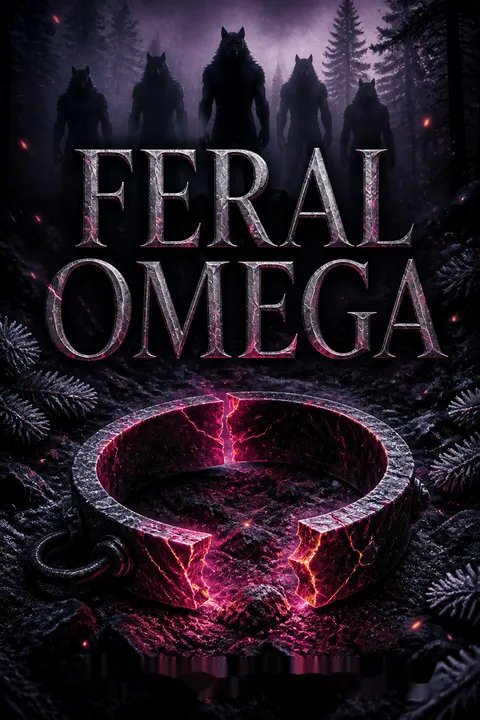


Plot Summary
A Finger on Tile
In the Refinement Center’s solitary ward, Ivy has spent months resisting the guards who mean to make her a compliant omega. When one tries to force food into her mouth, she bites off his finger and is beaten for it. Her defiance is more than stubbornness: she would rather die than be handed to an alpha as breeding stock.
The Center calls her Irreparable, a designation that has left her starving, chained, and nearly nameless. She remembers surviving in the wilderness with her mother before soldiers took her away, but keeps that grief buried because endurance is the only protection she has left. Her attack makes the Center’s cruelty impossible to disguise, even as its staff use it to justify keeping her caged.
Ivy’s bite turns the Center’s language of correction into a physical contest over who controls her body. Refusing food is dangerous, but accepting it from a guard’s hand would mean participating in the submission the institution demands. Her resistance is not presented as uncomplicated freedom: starvation has already narrowed her choices, and defiance may hasten her death. The designation Irreparable converts a person into an administrative failure, allowing the institution to treat coercion as treatment. Ivy’s memories of her mother and the wilderness give her a self beyond the number the Center assigns, but that self is built around survival rather than trust.
An Omega for Wolves
At the mountain compound called the Chateau, Ghost leader Thane tries to contain a growing fracture among his four fellow Ghosts. Wraith’s violent episodes have become harder to control, while Whiskey openly challenges Thane’s protection of him.
General Hargrove, Thane’s father and a senior officer, then reveals the Council’s bargain: the Ghosts can remain in service only if they take an omega into their pack. The chosen woman is Ivy, a twenty-three-year-old the Refinement Center has kept in solitary for six months.
She has driven guards away and bitten one badly enough to lose a finger. Thane objects to placing any omega among his dangerous soldiers, but the Council has already decided. He learns that Ivy’s transfer is also meant to be her final chance before a worse fate.
The Council frames Ivy as a stabilizing instrument, not a person, and makes the Ghosts’ continued usefulness depend on accepting her. That bargain exposes the regime’s governing logic: it manages alpha violence by controlling omegas, then presents coercion as social order. Thane recognizes the danger to Ivy, yet his first response is still shaped by command structures he serves. His conflict with his father is therefore more than personal disobedience. It is a clash between a leader who sees the human cost of an order and an institution that measures success by whether its weapons remain pointed in the right direction.
The Cell Door Opens
Thane visits the Center alone and follows Headmistress Emilia Thorton below its polished public floors to Ivy’s bare cell. He finds the omega chained by her neck and ankle, malnourished, bruised, and still watching him as if another blow might follow. When Emilia offers a collar and leash for the transfer, Thane refuses them, removes Ivy’s chains, and gives her his own coat.
Ivy answers his attempt at reassurance by spitting in his face, but he does not strike back. At the Chateau, the Ghosts crowd around her, each studying the woman the Council has assigned them. Thane warns them to keep their hands off her, then gives Ivy a private bedroom and promises no one will enter without permission.
The rescue offers Ivy a sharp contrast, not an immediate cure. Thane rejects the Center’s visible symbols of ownership, yet he still brings her into a compound where she has little power and cannot freely leave. His restraint matters because Ivy has learned to expect violence from every alpha, but his promise cannot erase that history. The bedroom is significant precisely because it is ordinary: a door she can lock and a space no one enters without asking. To Thane, these are modest safeguards. To Ivy, they are privileges so unfamiliar that accepting them feels like the beginning of another trap.
The Cost of Survival
When Plague approaches Ivy for a medical examination, his attempt to hold her wrists triggers memories of invasive treatment at the Center. She breaks free, runs for the exit, and collapses before she can escape. Plague discovers that she is dangerously dehydrated and starved, with bruises and scars that cannot be explained by one fight.
He places her in a medically induced coma and feeds her through a tube while her body recovers. Thane confronts his father with photographs of Ivy’s injuries and learns the General knew the Center abused its most difficult omegas. When Ivy wakes, she resists eating until Plague leaves toast within reach rather than forcing it into her hand. Alone, she chooses to eat.
The collapse establishes that Ivy’s apparent toughness has a bodily limit: surviving abuse has not made her immune to its consequences. Plague’s medical intervention saves her, but the coma also repeats the loss of control that frightens her, complicating any simple distinction between care and coercion. Her first voluntary food is a small but consequential reversal. Plague does not demand a performance of trust; he leaves the decision with her, and Ivy acts when no one is watching. Thane’s confrontation with his father expands the source of harm from abusive staff to a political system whose leaders know enough to tolerate it.
A Collar and a Nest
After Ivy slips away from Plague’s examination, she panics again at the clinic and later tries to flee with Valek during an unsanctioned walk. Thane catches her before she reaches the trees. To prevent another dangerous escape, Plague fastens a metal tracking collar around her neck, deepening her sense that the Ghosts have made her their property.
Ten days later, Thane offers to move her from the clinic into her own room, with blankets, pillows, and nesting supplies. Ivy recognizes the gesture as an attempt to make captivity feel safe. She refuses the soft materials and builds a small nest from the rough wool and plain pillows she knows, preserving familiar hardship rather than risking comfort that might weaken her defenses.
The collar and the nest expose the ambiguity in the Ghosts’ protection. The men fear Ivy will die in the mountains if she runs, but their solution reproduces the logic of containment she has already endured. Comfort cannot undo that contradiction, especially when it is offered by captors who still control her movement. Ivy’s choice of coarse, familiar materials is a form of self-definition: she will not let the pack decide what safety should feel like. Yet the fact that she begins to occupy a room of her own suggests that her resistance is not simply refusal. She is testing whether any space here can become hers.
The Rabbit Runs
The Council orders Ivy onto a mission against an arms-running oligarch in the Redtooth Mountains, hoping her presence will steady the Ghosts. Thane objects but must comply. Before departure, Plague injects Ivy with a scent suppressant so hostile alphas will have a harder time tracking her. Disguised as a male soldier and called the little rabbit over the radio, Ivy hikes through deep snow with the team.
At the target’s compound, Valek takes her to a sniper’s position while Thane’s group assaults the estate. Ivy watches Valek kill the guards, then strikes him with a rock, takes his rifle and pack, and escapes. Thane captures the oligarch, who hints that the Council is not what Thane believes, but Thane kills him before getting answers.
The mission brings the Council’s dehumanizing policy into the literal field: Ivy is treated as equipment meant to improve a unit’s performance, while her untrained presence increases the danger to everyone. Yet the terrain also exposes capacities the Ghosts underestimate. Ivy endures the march, observes Valek, and uses an opening to seize supplies and escape. Her decision is both a bid for autonomy and a calculated gamble, not a sudden conversion to trust. Meanwhile, the oligarch’s suggestion that Thane’s own side is compromised creates a political question the book leaves unresolved. Thane’s choice to kill him closes off evidence at the very moment he begins doubting his father and the Council.
Wraith in the Snow
Alone in the forest, Ivy breaks her tracking collar with bolt cutters and drinks from a stream. When two surviving guards find her, she shoots one and wounds the other, but a bullet tears into her arm. Wraith appears, kills the remaining guard, then grabs Ivy by the throat in the confusion. He stops when he realizes she is bleeding, carries her to a cave, and struggles to bandage her with his clumsy hands.
At dawn, Ivy wakes frightened but accepts water and warmth from him. She shares a ration bar and discovers that his silence comes from a destroyed throat. When Whiskey finds them, Ivy steps between him and Wraith, insisting the giant saved her. Whiskey carries her back toward the mansion, with Wraith following.
The cave reverses the roles Ivy and Wraith have been assigned. She is not merely his vulnerable object of protection, and he is not only the uncontrollable weapon the others fear. His first response is violence, but he recognizes that he has hurt her and tries to keep her alive. Ivy’s trust remains narrow and practical: she takes warmth, water, and food because she needs them, then defends him when Whiskey mistakes him for the threat. Their closeness does not cancel the danger of what happened. It creates evidence that Wraith can choose restraint, and that Ivy can revise her judgment without surrendering her caution.
A Vein Between Them
Back at the oligarch’s mansion, Plague finds Ivy feverish, badly wounded, and losing blood. The makeshift clinic lacks proper supplies, so Plague treats the wound as best he can and Valek, whose blood type is compatible, donates blood for a transfusion. Ivy survives, but her medications and the suppressant contribute to an unusually difficult heat.
Plague helps ease the first wave when she asks him to, then tells Thane what happened. Rather than punish Ivy or claim the right to decide for her, Thane asks whether she wants help and explains that her scent could attract hostile alphas drawn to the arms convoy. He offers her a choice among the Ghosts as a way to keep her safe, and promises the others will accept her decision.
The transfusion makes care materially reciprocal: Valek, who has built his identity around killing, gives his blood to keep Ivy alive. The gesture does not make him harmless, but it complicates the role he has chosen for himself. The heat presents a more intimate test of the Ghosts’ conduct. Ivy’s history makes an alpha’s claim feel inevitable, so Thane’s insistence that she can choose is psychologically meaningful only if the pack honors it. His offer is still made inside a coercive situation, with an external threat and a body in crisis. The scene therefore holds consent and constraint together rather than pretending that one erases the other.
Ivy Names Her Terms
Ivy emerges from the infirmary and chooses Thane, Whiskey, Valek, and Plague, telling them she wants all four rather than selecting only one. Wraith remains outside, unwilling to approach while her heat intensifies because he fears the violence his instincts might unleash.
Ivy builds a proper nest in the mansion’s master suite, using the soft materials she previously rejected. With Thane and Whiskey, then Valek and Plague, she explores intimacy on terms she can voice and revise.
When Whiskey’s knot proves too much, he stops rather than forcing it. Valek also needs Plague’s help to avoid hurting her, and Plague later takes his turn. By morning, Ivy’s heat has eased; the experience has brought her pleasure and care, but it has not erased her doubts.
Ivy’s choice marks a shift from survival through refusal to agency exercised through selection. The change is not a proof that captivity has become romance without remainder; she remains inside the Ghosts’ compound, and the crisis of heat shapes the available choices. What matters in the scene is that her decisions affect what happens. Whiskey stops when her body is not ready, and Valek accepts assistance rather than treating force as entitlement. Wraith’s absence is equally revealing: desire does not automatically become permission, and his fear of himself leads him to keep his distance. The nest, once refused as a tool of compliance, becomes a space Ivy actively arranges.
The Convoy at Dawn
While Ivy recovers, Wraith stays outside rather than risk losing control around her scent. Thane finds him and explains that Ivy needs the whole pack, helping Wraith recognize that she is in heat and that his restraint is also a choice.
In the morning, Wraith bursts into the master suite to sign that the convoy is ten to fifteen minutes away. Thane quickly organizes a defense: Ivy will remain upstairs with two Ghosts guarding her, while the others meet the convoy outside.
Because Plague’s remaining suppressant cannot fully mask the house, Valek proposes releasing vials through the mansion’s ventilation system. Plague agrees it may work. The pack prepares to protect Ivy and intercept the shipment, but the book ends before the convoy arrives.
The ending turns the Ghosts’ private reorganization into a public test. Wraith’s warning shows him acting as a member of the team rather than simply an unstable weapon, and his earlier decision to stay away demonstrates restraint without requiring him to deny his desire. The plan to use the ventilation system is improvised and uncertain, just like the pack’s new arrangement. Thane gives Ivy protection, but it remains protection within a military operation she did not choose. By ending before the convoy arrives, the novel leaves both conflicts active: the Ghosts must face the Council’s mission, while Ivy must decide whether their growing care can become something other than another form of custody.
Analysis
Feral Omega places bodily autonomy inside a society that treats biology as a license for governance. The Council’s slogan-like belief that controlling omegas will control alphas is not merely an oppressive custom; it is the political mechanism that organizes registration, education, confinement, and military service. Ivy’s designation as Irreparable makes this mechanism visible. Her resistance is interpreted as a defect because the system cannot imagine an omega whose refusal is rational and self-protective.
The Ghosts complicate the distinction between captor and protector. They rescue Ivy from an abusive institution, give her private space, and gradually respond to her choices. Yet they also collar her, restrict her movement, and bring her into a combat operation against her wishes. The novel does not make care innocent simply because it is sincere. Thane’s central problem is that he wants to shield Ivy while commanding the conditions of her life. His ethical progress depends on recognizing that protection without meaningful choice can reproduce the very violence he opposes.
Ivy’s relationship with Wraith offers the clearest test of whether people can exceed the roles imposed on them. The team sees Wraith as a weapon whose violence may become uncontrollable; Ivy sees the same capacity for harm at close range. His rescue of her does not erase the moment he chokes her, but his shame, improvised care, and distance during her heat complicate the idea that he is only a monster. Likewise, Ivy’s willingness to accept warmth or intimacy does not signify surrender. She remains watchful, chooses what she can, and retains the possibility of leaving.
The ending deliberately withholds resolution. The convoy is near, the Council’s motives remain suspect, and the pack’s new devotion has not yet been tested by a full return to combat. Ivy has found moments of care, but not freedom from the structures that endanger her. The book’s most important question is therefore not whether the Ghosts desire her, but whether they can build a relationship in which desire does not become ownership.
Review Summary
Feral Omega receives mixed reviews, averaging 3.86/5. Many readers praised the unique dystopian omegaverse setting, morally grey characters, and the resilient FMC, Ivy. However, the most common criticism centers on the final 20-30% of the book, where the heat sequence felt rushed and out of character. Wraith emerged as a fan favorite, with many disappointed by his exclusion from the heat scene. World-building inconsistencies and underdeveloped relationships were also noted, though fans of dark omegaverse romance largely enjoyed the premise and anticipate the sequel.
People Also Read





Characters
Ivy
Feral omega survivorIvy is a twenty-three-year-old omega whose years of wilderness survival and institutional abuse have taught her to treat dependence as a threat. The Refinement Center labels her Irreparable because she resists the role imposed on omegas, but her defiance is not mere aggression: it protects a hard-won sense of bodily autonomy. Hunger, trauma, and the memory of her mother shape her distrust, while her capacity to observe and improvise makes her dangerous to underestimate. She is wary of kindness because she has seen how easily it can become leverage. Ivy’s central tension is between the survival strategies that kept her alive and her emerging wish to experience safety without surrendering control.
Thane
Reluctant pack commanderThane leads the Ghosts, a feared special-operations pack, and carries the authority of his father, General Hargrove, even as he increasingly rejects the General’s values. He is disciplined, physically imposing, and accustomed to managing volatile men through command. Ivy’s arrival forces him to confront the difference between protecting someone and controlling her. His instinct is to take responsibility, but that instinct can reproduce the same paternalism he condemns in the Council. His attachment to Wraith complicates every decision about the team’s safety. Thane’s deepest struggle is whether he can lead without treating people as assets, including the omega the Council has placed in his care.
Plague
Masked combat medicPlague is the Ghosts’ combat medic, recognizable by his plague-doctor mask, clinical manner, and meticulous handling of medical supplies. His fear of contamination and preference for control make him seem detached, but he is acutely observant and willing to act when someone is in danger. He approaches Ivy as both a patient and a member of the pack, a dual role that tests the boundaries of medical care and personal desire. Plague’s self-image rests on rationality, yet Ivy unsettles the distance he uses to manage his impulses. He is a healer who understands that saving a body does not automatically earn a person’s trust.
Whiskey
The volatile loyalistWhiskey is the youngest Ghost, a broad, quick-tempered soldier whose jokes often conceal restlessness and insecurity. He is loyal to the unit but openly challenges Thane when he believes Wraith’s behavior puts them all at risk. His impulsiveness makes him a source of friction, and his bravado can obscure how carefully he watches the people around him. Ivy’s arrival intensifies his instincts, but it also confronts him with the need to temper them. Whiskey is not polished or especially reflective; his value lies in the directness with which he protects those he considers part of his circle and in his ability to meet defiance without always answering it with punishment.
Valek
Killer with a codeValek is a former death-row serial killer recruited into the Ghosts for his unusual skills and his ability to move through dangerous circles. He is calculating, sardonic, and drawn to violence, with a sharp awareness of other people’s weaknesses. His history has made control feel safer than intimacy, so his attraction to Ivy unsettles him more than he admits. Valek tests boundaries through provocation and enjoys being feared, yet he is not indifferent to the possibility of causing harm. His relationship with Plague is combative, built on mutual suspicion and recognition. Valek’s polished appearance and lethal competence make him difficult to read, even to the men who serve beside him.
Wraith
Silent wounded giantWraith is the Ghosts’ towering, masked soldier, a man whose ruined face and throat leave him unable to speak. He communicates through gesture and sparse signing, and his size and history of uncontrolled violence make the others wary of him. Thane treats him as a brother, while the rest of the unit struggles to distinguish his personhood from his usefulness as a weapon. Wraith’s silence is not emptiness; he observes closely and feels intensely, but has few ways to express what he cannot safely show. His deepest fear is that his body makes gentleness impossible. He is drawn to connection yet expects himself to destroy whatever comes close.
General Maxwell Hargrove
The Council's loyal generalThane’s father is a senior military commander who answers to the Council and has learned to defend the regime’s compromises as necessities. He is controlled, politically experienced, and capable of recognizing the value of the Ghosts while accepting the abuses carried out in the name of social order. His relationship with Thane is shaped by an old divide: the son still wants moral limits to matter, while the father believes leadership requires accepting costs. The General’s authority makes him more than a family antagonist. He represents the respectable face of a system that delegates cruelty and calls the result stability.
Emilia Thorton
The Center's cruel headmistressEmilia Thorton runs the Refinement Center and treats its most resistant omegas as problems to be disciplined. She uses institutional language and routine humiliation to disguise the violence of the Center, presenting coercion as preparation for a future pack. Her contempt for Ivy is personal as well as bureaucratic, and she takes satisfaction in frightening her with the Ghosts’ reputation. Emilia matters because she shows how power can be exercised through procedures, not only through direct physical force. She is an administrator who helps make abuse appear normal and useful.
Ivy's mother
Ivy's lost wilderness anchorIvy’s mother raised her in the wilderness after escaping a society hostile to omegas. The two struggled for food and shelter, but their time together gave Ivy her first sense of home and practical knowledge of survival. Her death, after years of trauma, leaves Ivy with grief and a painful belief that she herself embodies what harmed her mother. Though absent from the present action, her lessons and memory shape Ivy’s endurance, caution, and understanding of the wild.
Plot Devices
The Irreparable designation
Turns defiance into a sentenceThe Council’s label for omegas it deems unmanageable gives the Refinement Center a bureaucratic reason to isolate and mistreat them. Ivy’s designation explains why she is kept in solitary instead of being placed through the ordinary system for registered omegas. It also follows her into the Ghosts’ compound, where the men initially know her through the Center’s report rather than her own account. The label functions as a political weapon: it makes institutional failure sound like a defect in the person subjected to it. Ivy’s actions repeatedly challenge the category by showing judgment, skill, and choices the word is designed to erase.
Scent and heat
Makes instinct a dangerIn this world, omega scent and heat intensify alpha instincts and can draw unattached alphas from far away. Ivy’s distinctive scent affects the Ghosts before she trusts them, creating both attraction and a risk of violence. Plague’s suppressant can conceal her scent during the mountain mission, but it does not fully resolve the danger, especially when her heat begins. This device drives the need for Ivy to make choices about intimacy while surrounded by powerful men and under immediate threat. It also reveals the gap between biological impulse and ethical conduct: the Ghosts feel the pull, but their actions still determine whether instinct becomes coercion.
Collar and suppressant
Control and conceal IvyPlague’s metal collar is introduced as a tracking safeguard after Ivy’s escape attempt, but to Ivy it is a visible reminder that her movement remains controlled. She eventually breaks it with bolt cutters while fleeing through the mountains. The scent suppressant serves a different purpose: it hides her from hostile alphas during the mission and later inspires a plan to disperse remaining vials through the mansion’s ventilation system. Together, these devices make protection and captivity physically legible. The collar limits Ivy’s freedom; the suppressant may help preserve it. Neither is neutral, because both are administered or used within a power structure in which Ivy has little control.
The arms convoy
Turns refuge into a battlefieldThe Ghosts’ mission against an oligarch is intended to secure a base for intercepting an incoming arms shipment and infiltrating its network. The operation puts Ivy into a war zone by Council order, prompting her escape and the events that separate her from the team. Even after she returns to the mansion, the convoy remains a looming threat, with hostile people likely to be drawn by her heat scent. Its arrival is the final deadline of the book: the Ghosts prepare to meet it outside while guarding Ivy inside, but the confrontation itself has not yet begun.
Ghost Alpha Unit Series Series

Download PDF
Download EPUB
.epub digital book format is ideal for reading ebooks on phones, tablets, and e-readers.








