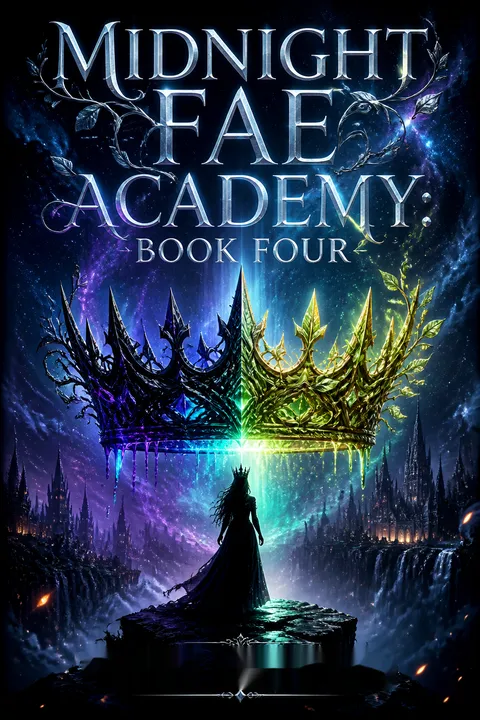


Plot Summary
Prologue
Constantine Nacht, an ancient Midnight Fae power broker, chants an old ritual over the sleeping Aflora, forcing the Dark Source into her. Her Earth magic fights the intrusion, but black markings spread across her skin as the Source begins to claim her.
Zakkai, the Source Architect and one of Aflora’s mates, reaches her too late to stop the ascension. He realizes Constantine has exploited her royal blood and bonds to make her a candidate for the Midnight Fae throne. As Aflora’s mates try to hold their shelter together against an approaching attack, the first trial begins inside her mind.
The opening makes power feel less like a prize than an assault: Aflora is not pursuing a throne, but being forced into its machinery by someone who intends to make her transformation look monstrous. Her mixed heritage gives the scene its central tension. Earth magic resists the Dark Source, yet neither can simply erase the other without destroying her. Zakkai’s inability to prevent the ritual also establishes the limits of protection. Love and strength may help Aflora survive, but they cannot spare her from the political violence that has already chosen her as its instrument.
The Maze Calls Night
Inside a maze of black roots, Aflora cannot reach her mates and cannot use her Earth magic to keep the darkness from killing whatever she grows. Constantine appears, but his strange confusion and unwillingness to fight back make her question whether the figure is real. The trial has disguised Kols, her recently resurrected Midnight Fae mate, as the man she fears most.
Kols explains that the test measures trust, then admits he has not tried to call Night, the familiar he felt die when he died. Aflora recognizes that Kols must trust her enough to try. He summons Night, and Aflora uses her magic to restore Kols’s life, allowing the crow to guide them through the maze and into the blinding exit.
The trial turns trust from a feeling into a reciprocal act. Aflora must recognize Kols beneath a form designed to repel her, but the decisive risk belongs to Kols: he must believe that his familiar and his own life survived his death. Her insistence does not replace his agency; it makes his choice possible. The test also makes resurrection emotionally consequential. Kols has returned physically, yet Night’s absence keeps his near-death experience unfinished until he dares to call for him. Their escape is therefore a shared repair, not a victory produced by Aflora alone.
Hell's Hidden Academy
Aflora and Kols wake exhausted as Constantine attacks their refuge, while Zakkai and Zeph hold the failing defenses. Aflora finds the strength to reinforce the damaged boundary, and Shade returns after being blocked from reaching them. Constantine has publicized a false story that Aflora stole the throne, so the group needs somewhere he cannot reach.
Shade takes them to a concealed Midnight Fae academy inside the Hell Fae Realm, protected by an arrangement between his grandmother Zenaida and Lucifer. There, Aflora discovers that Constantine has already turned much of fae society against her. The sanctuary buys the group time, but its gates immediately become the site of Aflora’s next test: the Midnight Fae creatures attack the newcomers.
The move into the hidden academy changes the conflict from private survival to public legitimacy. Aflora’s power can protect a room, but Constantine’s story can isolate her across whole kingdoms. Shade’s refuge offers more than shelter: it is a society built for fae rejected elsewhere, a living counterexample to the claim that dangerous difference must be destroyed. Yet the hostile creatures at its gate prevent sanctuary from becoming simple escape. Aflora has to prove that she can belong there through action, not merely through Zenaida’s protection or her mates’ authority.
Creatures Kneel to Life
At the academy entrance, firebirds, snake-vines, gargoyles, crows, and other dangerous creatures turn on Aflora. Zeph’s defensive spell kills some of the birds, but Aflora refuses to answer the attack with more destruction. She reaches into the campus plants and stone, strengthens them with Earth magic, and gradually wins the creatures’ curiosity and respect.
Then she revives the fallen firebirds and restores a wounded stonepecker. The phoenix bows, and the gargoyles form a ceremonial passage for her through the gates. Aflora has passed the second trial, mastering the Midnight Fae creatures without subduing them through fear. Zenaida welcomes the group, while Kols explains that the creatures’ respect marks Aflora as the ascending royal.
Aflora’s method reframes command as stewardship. She does not deny that the creatures could destroy her; she establishes authority by demonstrating that her power can renew what they are and still remain capable of directing them. This matters in a culture where violence is treated as proof of fitness. Her choice to revive the birds after Zeph’s shield kills them shows that compassion is not a retreat from power, but one of its uses. The creatures’ response is earned through attention to their nature, making the trial a practical model for the kind of rule Aflora hopes to build.
Training Breaks the Circle
With six trials still ahead, Zakkai, Zeph, Kols, and Shade build Aflora an accelerated course in combat, magic, and Midnight Fae history. Zeph’s instinct is to shield her; Zakkai argues that gentler instruction will leave her unprepared for Constantine. During a punishing exercise, Aflora refuses to stop, draws on the frightening darkness inside her, and releases enough power to halt the attack.
The force then drives Zeph and Zakkai into a duel over their methods. Aflora blasts them apart and makes clear that she will not choose between her mates. Their later willingness to share intimacy becomes a practical truce as well as an expression of affection. Zeph accepts that protecting Aflora also means allowing her to be tested.
The training conflict exposes a central ambiguity in care: protection can preserve someone, or quietly deny them the chance to become capable. Zeph’s restraint is loving, but Constantine’s trials will not honor it. Zakkai sees that danger clearly, though his willingness to push Aflora past her limits risks turning preparation into control. Aflora’s intervention changes the terms. She is not merely the object over which the men argue; she exercises authority over their bond and demands cooperation. Their intimate reconciliation matters because it translates that demand into trust between the men, rather than leaving unity as an abstract promise.
Execution Becomes a Trial
As Aflora learns to draw on the Dark Source, its visions carry her to a Midnight Fae village. Constantine has killed Anrika and Emelyn, then stages the public execution of Ella, the Halfling mate of Kols’s twin, Tray. Aflora sees that Tray is bound by a spell and cannot act freely, despite appearing to support the sentence.
She interrupts Constantine’s killing spell, fights off the crowd, and shadow-transports Ella to safety in the Hell Fae sanctuary. The spectacle leaves Aflora furious at the crowd’s celebration and tempted to condemn all Midnight Fae as cruel. Her mates remind her that the scene is also a trial. She accepts the darkness as part of herself without accepting Constantine’s judgment of what that darkness must mean.
The trial weaponizes moral injury. Aflora witnesses real deaths, a coerced betrayal, and an audience that treats execution as entertainment; the horror cannot be dismissed as a harmless illusion. Constantine wants her to confuse the kingdom’s cruelty with its nature, then respond with indiscriminate violence. Her rescue of Ella interrupts that script, while her recognition of Tray’s compulsion preserves a distinction between a person and the force controlling him. Accepting the Dark Source here is not agreement with its most brutal use. It is Aflora’s refusal to let Constantine define what power makes her.
The Staff at the Table
After Aflora reaches the sanctuary, the Dark Source marks her with a cloak, and Zenaida gives her the ancient royal staff, a relic visible only to its chosen bearer. Zakkai’s father, Laki, arrives with Quandary Bloods divided between reform and revenge.
At their meeting, Aflora uses a memory spell to show that Tray was compelled and argues that Constantine must be removed, while those who chose to participate in his crimes should face judgment. She offers neither faction’s program as a whole.
Instead, she proposes punishment for the willing and freedom for the controlled, followed by a more equal Midnight Fae order. Laki recognizes the difference between her sincerity and naivety, accepts her proposal, and chooses unity. Aflora passes the fourth trial without demanding that anyone kneel.
The staff makes authority visible, but Aflora earns political consent through a more difficult act: she declines both available camps. Her plan distinguishes responsibility from victimhood, an essential distinction in a society where coercion can make obedience look like allegiance. The memory spell turns private perception into shared evidence, preventing Laki from dismissing her account as sentiment. Most revealingly, Aflora does not ask the Quandary Bloods to abandon justice; she refuses to equate justice with revenge. Her invitation to stand as equals creates legitimacy through participation, not submission, and gives unity a concrete political meaning.
Four Lives on One Thread
A dead stonepecker, brought in by Zakkai’s familiar, draws Aflora into a trap Constantine has used before to track her. In the darkness, four life-strands connect her to Shade, Zakkai, Kols, and Zeph, and the trial begins tearing them apart. Constantine demands that she sacrifice one mate. Kols weakens first because he has already died once, and each man urges Aflora to let him take the loss.
Outside the trial, their bodies falter as they feel her strain through the bonds. Aflora refuses to select any of them. Instead, she pours her own life into all four strands, exhausting herself to keep them alive, and declares herself the sacrifice. Her choice ends the trial’s immediate demand, but her body goes still.
Constantine’s test tries to make leadership synonymous with calculation: select the expendable person and preserve the rest. Aflora rejects that premise, but her response is not an easy sentimental victory. She accepts the cost herself, transferring the violence of the test onto her own body rather than pretending no one must suffer. The mates’ willingness to volunteer also matters. Their bonds are not merely a source of power for her; each has enough agency to offer himself, making her refusal a response to their love as well as her own. The scene asks whether a leader can refuse an unjust choice without escaping its consequences.
Death Opens the Throne
Shade tries to hold Aflora’s departing soul, while Zakkai senses that her life-strands still pulse through the Dark Source. Her sacrifice has reached every Midnight Fae, and the Source accepts it as an act of leadership rather than surrender.
Aflora returns to her body, passing both the sacrifice and respect trials. At the LethaForest, the ancient site of Midnight Fae ascension, Constantine calls her an abomination and attacks. Aflora turns his spells into rose petals, frees her father Malik and others from his control, and lets Tray strike back at the man who coerced him.
Tadmir, revealed as a time-bending ally, restores Tray after Constantine turns him to stone. Aflora binds Constantine inside a living tree, transforming his destructive magic into a warning against tyranny.
The apparent death is the book’s sharpest reversal: what Constantine intends as proof that Aflora cannot rule becomes the evidence through which the Midnight Fae recognize her. Her return does not cancel the sacrifice; it completes its political meaning by making her grief and risk legible to the whole kingdom. At the forest, she refuses to mirror Constantine’s violence. She frees the controlled, allows Tray to reclaim his agency, and contains the tyrant rather than simply killing him. The tree is both punishment and public memory, converting the magic used for domination into a durable sign of the consequences of rule without restraint.
An Empire Starts Again
With Constantine contained and the controlled fae freed, Aflora and her mates begin replacing a council whose members have lost the kingdom’s trust. Kols takes the Elite Blood leadership role, Shade accepts the Death Blood mantle, Zakkai represents the Quandary Bloods, and Zeph refuses a political seat because he wants to guard Aflora.
They leave room for Tray, who is not ready to return to public service, and plan to scrutinize officials whose loyalties remain uncertain. A month later, the group is living at Shade’s California home, where Aflora tends a garden and the mates share a more settled life. Her story closes not with the throne alone, but with a chosen family and a government still being built.
The ending refuses to treat the tyrant’s removal as the same thing as justice completed. The council must be rebuilt, old officials cannot be trusted automatically, and Tray’s withdrawal is respected rather than turned into a political obligation. Aflora’s rule therefore begins with limits and unfinished work. Her home in the garden provides a necessary counterweight to public power: she remains connected to the living world that taught her how to lead without reducing life to an instrument. The domestic calm is not an escape from politics, but the human scale against which political reform can be judged.
Epilogue
Several years later, Shade accompanies Zakkai to visit Zenaida, where they learn that Lucifer is opening bride trials for Hell Fae males. Ajax, still grieving Emelyn, has become the chosen Warden for the trials after Zakkai altered his magic as part of a deal with Lucifer.
The contest will force female fae from other realms to fight, with marriage or death as the stated outcome. Zenaida has known this obligation was coming, though the scene hints that she may have plans of her own. Lucifer makes clear that Aflora and her mates are not included in his bargain, but a new and dangerous story is beginning around Ajax.
The epilogue deliberately unsettles the security of the main ending. Aflora’s kingdom has a new ruler and a plan for reform, yet the wider fae world still turns women into bargaining pieces and calls coercion a solution to political disorder. Ajax’s role connects private grief to a system built around punishment: his loss makes him vulnerable to Lucifer’s offer of retribution, while Zakkai’s negotiated limits show that power can restrict a bargain without making its premise just. Zenaida’s foreknowledge suggests that accommodation may conceal resistance, but the future remains ethically uncertain rather than neatly resolved.
Analysis
The novel treats succession as a contest over interpretation as much as power. Constantine’s strategy depends on persuading others that Aflora’s mixed nature proves she is dangerous; he then stages trials that tempt her to behave according to that accusation. Each test asks whether she will reproduce the Midnight Fae order she inherits or alter its terms. Her repeated preference for restoration over annihilation is not passivity. She commands creatures, interrupts executions, exposes compulsion, and finally contains Constantine, but chooses forms of force that leave room for responsibility and future life.
The mates provide the emotional and magical infrastructure of this change, while their rivalries show that intimacy alone does not create unity. Zeph’s protectiveness can become coddling, Zakkai’s hard preparation can become coercion, and Shade’s secrecy can isolate the group. Aflora’s leadership requires her to confront those costs directly. Her refusal to choose among her mates becomes the most extreme expression of a larger political refusal: she will not accept a system that calls one life expendable simply because it is convenient. Her apparent death makes that position costly rather than rhetorical, and the Dark Source’s response validates a form of authority grounded in responsibility to others.
The story’s strongest political distinction is between justice and revenge. Aflora does not excuse those who willingly help Constantine, but she recognizes that magical compulsion can make apparent loyalty false. Her plan to punish the willing and free the controlled offers a more complex alternative to either factional vengeance or blanket forgiveness. The ending’s council-building reinforces that reform is institutional work, not a single heroic victory. Even after Constantine is contained, trust must be rebuilt and power watched. The final image of Aflora at home with her mates does not erase that labor; it gives her rule a living purpose beyond the throne.
Review Summary
Midnight Fae Academy concludes Aflora's journey with her four mates. Readers praise the character development, steamy scenes, and satisfying ending. The book wraps up loose ends while setting up a new series. Some found it slower-paced than previous installments, but most enjoyed the action, romance, and world-building. Aflora's growth and relationships with her mates are highlights. The series overall is highly recommended for paranormal romance fans, with many readers sad to see it end but excited for future works in this universe.
Characters
Aflora
Life-rooted claimantAflora is the Earth Fae Queen whose life changes when the Dark Source is forced into her. Her first instinct is to protect life, whether she is tending plants, reviving creatures, or trying to save people trapped by another’s magic. That instinct does not make her timid: she can be stubborn, politically direct, and capable of frightening power. Her central psychological struggle is whether accepting a new source means losing the identity she has built around Earth and its values. Her relationships with four Midnight Fae mates give her emotional support, but also require her to insist on her own authority and refuse the idea that love must become a competition.
Shade
Time-haunted protectorShade is a Death Blood, one of Aflora’s mates, and a practiced user of shadow magic. He tends to keep information and emotion close, relying on secrecy and planning to protect the people he loves. That habit makes him useful in a crisis and difficult to trust, especially when others need to understand what he knows. Beneath his self-contained manner is a long history of devotion to Aflora and an unusual relationship with time and fate. He offers her a kind of understanding rooted in death and survival, while learning to let the rest of her circle share responsibilities he has often carried alone.
Zakkai
Unruly Source ArchitectZakkai is the Source Architect and a Quandary Blood whose formidable magic is matched by an appetite for strategy, control, and provocation. He sees danger before others do, but his confidence can make collaboration feel like a contest. His bond with Aflora draws out a more protective and emotionally invested side without removing his impatience or pride. He often understands that she needs difficult preparation rather than reassurance, yet must learn that a correct strategy is not a substitute for clear communication. With Aflora and the other mates, he is forced to make room for a collective strength he cannot simply command.
Kols
Resurrected royalKols, also known as Kolstov, is a Midnight Fae prince and one of Aflora’s mates. His recent return from death leaves him carrying grief for the familiar he believes he lost, as well as a newly complicated place within his own bloodline. He is perceptive and strategic, often able to explain the danger of a trial without disguising its cost. His relationship with Aflora grows through mutual reliance: she believes he can recover what he has lost, and he trusts her judgment enough to act. Kols also has deep ties to his twin Tray and to a family whose political history makes personal loyalty difficult.
Zeph
Warrior and guardianZeph is a Warrior Blood and Guardian whose training has taught him to meet threats with force and to place himself between danger and those he protects. As Aflora’s mate and instructor, he struggles to distinguish shielding her from preparing her. His temper and competitiveness are real, especially around Zakkai, but so is his capacity to revise his behavior when he sees its cost. Zeph brings discipline and practical combat knowledge to the group, while Aflora brings an ethic that questions whether survival must always be bought through violence. Their closeness lets him remain protective without treating her as fragile.
Constantine
Power-hungry elderConstantine Nacht is an ancient Midnight Fae strategist with immense influence over the Dark Source and a rigid idea of who deserves power. He regards difference as a threat to order and uses ritual, political storytelling, and coercion to make opponents appear dangerous to the very people he governs. His intelligence makes him difficult to dismiss as a merely impulsive villain; he understands the fears and loyalties he can exploit. Constantine’s fixation on control also reveals a deep inability to trust a society that does not mirror his hierarchy. He is the antagonist whose actions force Aflora to define what authority and protection should mean.
Zenaida
Fortune Fae architectZenaida, whom Shade calls Zen, is his grandmother and a Fortune Fae who helped establish the hidden academy in the Hell Fae Realm. She sees possible futures but resists directing others away from the paths she foresees. Her hospitality can arrive with unsettling news, and her agreements with powerful figures are rarely simple. Zenaida’s work creates a refuge for fae who have been rejected elsewhere, making her a practical political force as well as a seer. She respects Aflora’s capacity to choose, even when withholding information leaves the younger woman to meet danger without warning.
Laki
Quandary Blood patriarchLaki is Zakkai’s father and a leader among the Quandary Bloods. He arrives carrying the division between those who want reform and those who want revenge, and initially measures Aflora’s proposal with skepticism. His political authority matters because his followers are unlikely to unite simply because she has been chosen by the Source. Laki is proud and guarded, but not incapable of reconsidering his assumptions when evidence and judgment warrant it. His relationship with Zakkai is shaped by family history, royal responsibility, and the difficult question of whether a father can recognize a son’s independent choices.
Tadmir
Hidden time-weaverTadmir is a Paradox Fae and a relative of Zakkai who has operated under another identity within Midnight Fae politics. He works through time and hidden interventions, preferring to prepare events from behind the visible struggle. His knowledge can be invaluable, but his methods make it difficult for others to know how much of their path he has shaped. Tadmir’s loyalty is tied to a long effort to resist destructive rule and protect the future he believes possible. He becomes an important source of context when the group discovers that the present is connected to earlier altered timelines.
Kyros
Paradox Fae allyKyros is a Paradox Fae who has helped Shade and Tadmir manipulate time. His presence is brief but signals that the apparent sequence of events has been shaped by people working beyond ordinary memory. He is observant, self-possessed, and comfortable remaining at the edge of a scene while others take the visible risks. Kyros represents the unsettling possibility that protection can require altering events without the knowledge of those being protected. His role clarifies that Aflora’s present is not simply a first attempt, but the outcome of repeated efforts to find a survivable path.
Ella
Halfling in perilElla, whose full name is Isabella, is a Halfling raised in the Human Realm and Tray’s mate. Her mortal upbringing gives her a different relationship to Midnight Fae customs, and her limited standing leaves her vulnerable when the Council turns against her. Ella is not merely a victim to be rescued: her attachment to Tray and her understanding of what has happened to him become important evidence for Aflora. Her friendship with Aflora rests on acceptance that the Fae world has often denied. Under pressure, she becomes a reminder that political decisions reach people who have little power to shape them.
Tray
Kols's twinTrayton, usually called Tray, is Kols’s twin and Ella’s mate. His loyalty to family and partner makes him vulnerable to the political forces that surround the Nacht line. To those watching from outside, he can appear to have chosen sides against the people he loves, which makes his actual state difficult to read. Tray’s story highlights how coercive magic can disguise captivity as consent. He matters to Kols not only as a brother but as a living link to the family life that political conflict threatens to erase.
Malik
Kols's fatherMalik is Kols’s father and a Midnight Fae royal whose authority becomes entangled with the struggle over the Dark Source. His relationship with Kols carries the pressure of family expectation and a history the younger fae cannot fully control. Malik’s position makes him both a personal presence in Kols’s life and a figure whose choices affect the succession. His character helps distinguish private family bonds from political obedience, a distinction the story repeatedly tests.
Claire
Elemental Fae QueenClaire is the Elemental Fae Queen, a Halfling with access to the elements and a partner to several kings. Her arrival brings the possibility that Aflora’s new nature will be judged through the memory of earlier harm caused by another powerful fae. Claire is cautious, but she can recognize that power is defined by its use rather than its mere existence. Her acknowledgment of Aflora helps bridge the Elemental and Midnight Fae worlds without erasing the injury and fear between them.
Sol
Earth Fae KingSol is an Earth Fae King and a close friend of Aflora. His size and protective manner can make him intimidating, especially to the Midnight Fae around her, but his affection for Aflora is familial rather than political. He embodies the Earth Fae world she grew up in and gives her a personal connection to the life she fears losing.
Ajax
Grieving academy friendAjax is an academy friend whose grief and anger deepen after the violence in the Midnight Fae village. He is strong-willed and vulnerable to offers that give his pain a purpose, a combination that makes him susceptible to powerful political arrangements. His connection to Aflora’s circle links the main conflict to the future of the Hell Fae Realm.
Dakota
Council operativeDakota is a sharp-edged operative who has served the interests of Constantine’s political circle. Her confidence and willingness to act make her dangerous to Aflora and those close to her. She represents the people who advance a ruler’s agenda without always being its architects.
Anrika
Village victimAnrika is a Midnight Fae woman whose death becomes part of the public violence Aflora witnesses. Her final magical message is intended for Seif, giving her private bond a presence within a political spectacle.
Emelyn
Councilman's daughterEmelyn is a young Midnight Fae connected to the ruling circles through her father. Her fate at the village exposes how Constantine turns public punishment into a tool for frightening the wider population.
Lucifer
Hell Fae rulerLucifer is the powerful king of the Hell Fae Realm, where Zenaida’s concealed academy stands. He makes bargains that can offer refuge while carrying a price, and his interest in power gives him influence beyond his own territory. His appearance in the epilogue opens a new conflict rather than resolving the old one.
Plot Devices
The Seven Ascension Trials
Tests of royal fitnessThe Dark Source uses seven trials to test the candidate for the Midnight Fae throne. The trials examine qualities such as trust, command of creatures, acceptance, unity, sacrifice, respect, and final ascension, though their order and form can change. Constantine exploits his position as the acting conduit to make the tests unusually dangerous and personal. The trials also involve the candidate’s closest bonds, meaning that Aflora’s mates are tested alongside her. Structurally, they turn the book into a sequence of escalating moral and practical challenges, each of which reveals what Aflora believes power is for.
The Two Sources
Competing forms of powerThe Earth Source is associated with life and elemental creation, while the Dark Source is tied to Midnight Fae power and death. Aflora’s body becomes the site where these forces meet. Rather than simply rejecting one source, she learns to make them coexist, using each without allowing either to erase the other. The image of a multicolored tree in her inner life gives this conflict a concrete form. The device carries the novel’s central question: whether power that has been feared can be used without reproducing the cruelty associated with it.
Life-Strand Bonds
Love made consequentialThe mates’ magical bonds let them sense one another’s pain, share energy, and recognize when a spell has interfered with someone’s will. These connections help Aflora survive the first trial and reveal that Tray is being controlled. They also expose the cost of Constantine’s sacrifice test, because the weakening of one mate becomes a physical threat to the rest. The bonds are not a simple solution: they intensify fear and make each choice more painful. Their narrative function is to turn intimacy into both practical knowledge and a source of responsibility.
The Hidden Academy
Sanctuary beyond the kingdomZenaida’s academy, concealed inside the Hell Fae Realm, shelters excommunicated Midnight Fae and other outcasts. Its wards prevent hostile forces from entering easily, giving Aflora and her mates a place to regroup and train after Constantine turns public opinion against her. The academy also exposes her to a community that challenges the assumption that an abomination must be evil. It is both a refuge and a political example: a society can protect powerful outsiders without requiring them to become conquerors.
The Royal Staff
Visible sign of legitimacyThe ancient staff is a royal relic once held by Zenaida. Aflora alone can see and wield it after the Dark Source marks her as its chosen bearer. Zenaida presents it before Laki’s arrival, allowing the Quandary Bloods to understand that Aflora speaks with more than personal authority. The staff does not win the political meeting by itself; Aflora must still show evidence of coercion and offer a credible plan. Its function is to make her claim legible while leaving the substance of leadership to her choices.
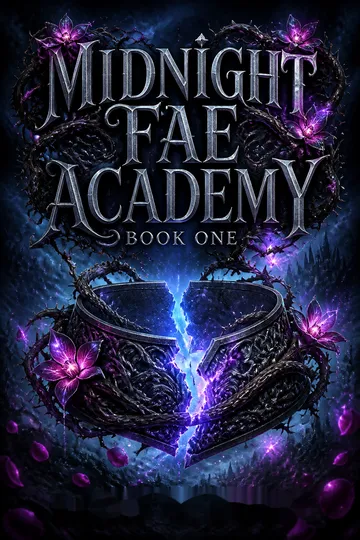
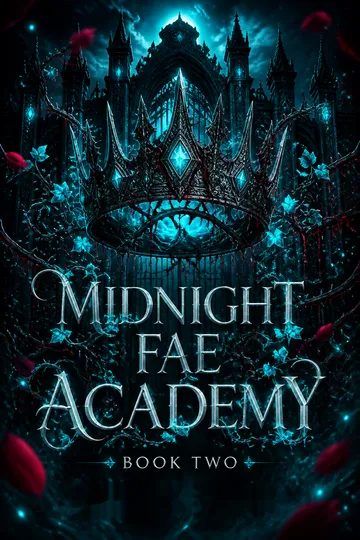
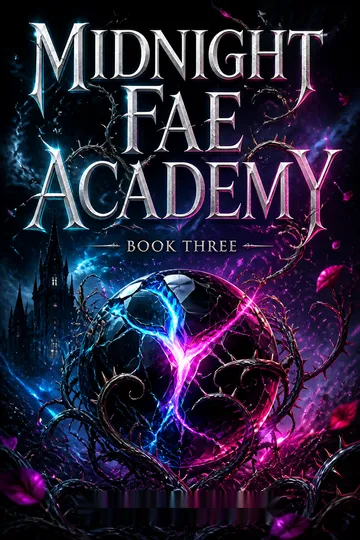
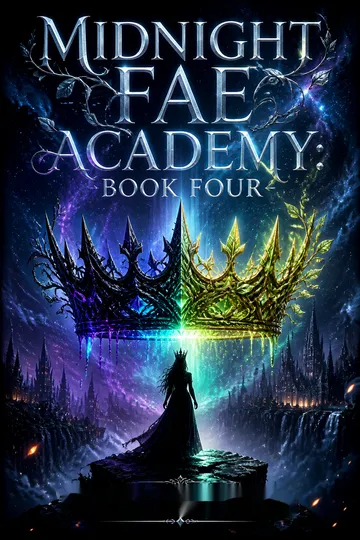
Midnight Fae Academy Series
About the Author


Download PDF
Download EPUB
.epub digital book format is ideal for reading ebooks on phones, tablets, and e-readers.








