


Plot Summary
Prologue
Aflora, an Earth Fae captive in the Midnight Fae realm, wakes in a dungeon after the three males bound to her have helped conceal her powers and then allowed her arrest. Their silence feels like betrayal, and the iron choker around her throat keeps her from reaching the earth magic that once made her feel at home.
Rather than surrender, she studies the spells restraining her and vows to turn their rules against them. She does not yet know what she is accused of, or whether the Council will execute her. She knows only that the men who promised to protect her have left her alone behind bars.
The opening makes captivity both physical and relational. The dungeon’s underground stone denies Aflora access to the element that once grounded her, while her mates’ secrecy makes emotional safety seem equally unavailable. Her vow to retaliate is not simple bravado: it restores agency in a world where men, institutions, and magical bonds keep making choices for her. The prologue also establishes a useful tension between her anger and attachment. She believes the men have betrayed her, yet remains bound to them, so every later act of care must compete with the memory of this cell.
The Council's Altered Recording
The Council reviews a recording in which Aflora says she should be killed if her growing power cannot be controlled. Shade has cut the surrounding conversation and recasts her words as a hypothetical concern for her people. Kols supports that interpretation, arguing that executing her without proof of danger would provoke the Elemental Fae.
The Council accepts their case and sends Aflora back to the Academy under Kols's supervision. Shade’s account conceals an even more dangerous discussion: he knows Aflora’s hidden heritage and the old slaughter of the Quandary Bloods. Aflora is released, but the ruling does not restore her trust. She leaves the dungeon alive and still convinced her mates acted for themselves.
The hearing turns truth into a political instrument. Shade saves Aflora by manipulating evidence, while Kols makes the same outcome sound like a matter of lawful restraint. Their success depends on presenting care as procedure, since openly naming their bond or her power would expose them all. The scene also establishes the cost of protection without consent: Aflora survives, but because the men choose what she may know, survival feels indistinguishable from control. Her resentment is therefore not a misunderstanding to be corrected with one explanation. It is a rational response to a system in which even rescue arrives disguised as deception.
A Meadow Through the Collar
Instead of taking Aflora straight to the Academy, Shade carries her to a meadow and claims exhaustion made him lose their way. The grass, trees, and flowers restore her spirits, but the choker still blocks her earth source.
Shade explains that the dungeon’s wards had made its spells harder to sense, then leaves her to investigate the enchantment herself. Using her Quandary Blood talent, Aflora loosens the magic suppressing her elemental power and learns how to restore the collar with a concealed route to her earth.
She fills the meadow with flowers and grows a peach tree for Shade. Before they return, she understands that he arranged this reprieve deliberately, though she remains unsure whether his kindness is another form of manipulation.
The meadow gives Aflora more than comfort. It lets her experience power as an ability she can examine and shape, rather than a threat defined by the Council. Shade’s choice to teach indirectly respects her intelligence, but his secrecy preserves the unequal terms of their relationship. The collar becomes a precise image of that conflict: it restrains her, hides her bonds, and can also be altered by her own skill. The scene suggests that autonomy need not mean rejecting every connection. Aflora can accept a gift and still withhold trust until the giver’s actions prove consistent.
A Room Made Hers
When Shade returns Aflora to Kols's suite, Kols attacks him, while Aflora punches Kols and learns that his earlier outburst destroyed her belongings. Ella sides with her, escorts her shopping with Tray, and refuses to let the princes treat her as a helpless prisoner. Kols later replaces the ruined room, gives Aflora a key he cannot override, and apologizes by making the space hers.
He also consults the Academy caretaker about adding an Earth Fae plant. The gesture does not erase his cruelty, but it gives Aflora privacy and a place of her own. Her anger remains, now joined by the uncomfortable recognition that Kols is trying to repair what he broke.
The room matters because it changes the material conditions of Aflora’s dependence. Kols cannot undo the fire or the humiliation of calling the suite his, but a lock he cannot override gives her a boundary she controls. Ella’s intervention also supplies a social alternative to the male hierarchy: Aflora is defended by someone who treats her as a friend, not a dangerous asset. Kols’s apology is therefore meaningful without being absolution. The narrative makes repair concrete, but leaves the emotional debt unpaid, preserving Aflora’s right to judge the difference between a changed gesture and changed character.
The Song Beneath the Meal
Tray takes Aflora and Ella to Anrika’s tavern, where Aflora learns that Anrika’s son Seif is bonded to Gina, the Fortune Fae she once met in the Human Realm. While the group eats, Aflora hums a childhood ballad her mother taught her. Tray recognizes its words as a forbidden Midnight Fae spell for realigning the source.
Kols later asks the Elemental Fae king Sol about the song and Aflora’s family. Sol recognizes the melody but cannot explain its origin or account for the history of Aflora’s royal line. He sends Kols a rare photograph of Aflora as a baby with her parents. The song’s meaning and the missing family records turn Aflora’s past into a mystery with political consequences.
The tavern briefly offers Aflora ordinary belonging through food, friendship, and a familiar melody. That ease ends when the song is identified as a spell, showing how inherited culture can carry knowledge its inheritor does not understand. Aflora’s family history is also conspicuously incomplete: the photograph proves her parents existed, but the records that might explain them are absent. The book links personal memory to political control, making the lullaby more than a clue. It is a fragment of suppressed history that survived because it was passed through affection rather than official institutions, precisely the kind of knowledge power struggles often fail to erase.
Emelyn's Death Field Illusion
In a combat lesson, Emelyn uses an illusion to trap Aflora in the Spirit Kingdom’s death fields, then makes her hear the voice of her dead father. Aflora recognizes that the scene is false and unweaves the spell, but grief and fury take hold before she can stop herself.
She turns the illusion back on Emelyn, flooding her with the terror of the death fields until Kols breaks the confrontation apart. The class sees Aflora’s power as an attack, while Shade argues that Emelyn provoked it. Shaken by the episode, Aflora wonders whether she can sever her mating bonds with Quandary magic. Her strength has surfaced, but she still fears that using it makes her dangerous.
Emelyn’s attack exploits Aflora’s most vulnerable material, not merely her unfamiliarity with combat. The false voice of her father converts bereavement into a weapon, and Aflora’s retaliation reveals how easily defense can become punishment when trauma is activated. Her power is neither inherently benevolent nor inherently monstrous; its meaning depends on what she is made to endure and how much control she has. The scene also complicates the Academy’s idea of training. A lesson designed to teach offensive magic becomes a public test of Aflora’s grief, leaving her to wonder whether the safest answer is to cut herself off from everyone.
Four Bonds, One Choice
Aflora tells Shade, Kols, and Zeph she may be able to undo their ties. Zeph refuses, while Kols explains that their Earth Fae bond required both souls to consent and cannot be removed by Aflora alone. Kols admits his human-world exploits were staged with glamour to preserve appearances, but the explanation cannot erase her hurt.
The three men begin discussing what their shared bond requires, and Zeph cooks Aflora a meal from Sol’s suggestions. After nights of teasing, Kols and Zeph finally give her real pleasure, while she dreams of a beautiful white-haired stranger she assumes she invented. Aflora has not forgiven them, but desire and curiosity begin to coexist with anger.
This section treats intimacy as a negotiation over agency rather than a cure for mistrust. The mates insist the bonds are permanent, yet Aflora’s threat to leave forces them to confront the consequences of their behavior. Kols’s explanation addresses the rumor of betrayal but cannot retroactively make her feel safe. Their shift toward food, conversation, and consensual pleasure offers a beginning, not a resolution. The white-haired dream figure adds a second kind of uncertainty: Aflora’s imagination seems to be making room for a presence she cannot explain. Both the relational bond and the dream challenge her assumption that she can simply choose isolation.
Alqisian in the Flames
During Zeph’s physical training class, the Academy erupts into magical violence. Students are shielded while the Death Blood Education Building collapses, and the word Alqisian appears above the rubble in red fire.
Aflora recognizes it from her mother’s song; Shade translates it as a promise of retribution. Soon afterward, her familiar Clove drops a dead stonepecker into Aflora’s lap. Zeph explains that the creature can absorb protective enchantments, making it useful for breaching wards.
Shade warns that the Council blames Kols and that Warrior Blood guards will search the suite. Zeph destroys the evidence before they arrive, but the guards still ransack the rooms. Someone has attacked the Academy and is preparing the Council to suspect Kols.
The attack translates a buried cultural fragment into public violence. The word from Aflora’s song now hangs over a destroyed building, making private inheritance legible as a political threat. The stonepecker provides a physical mechanism for the breach, while the Council’s rapid suspicion of Kols turns an assault into a succession crisis. Aflora’s position is especially precarious: she recognizes the message but cannot yet explain why. The scene shows how evidence can be both material and interpretive. A dead creature, a burned word, and a remembered melody point toward a plot, but whoever controls their explanation may decide who is treated as the enemy.
The Rock Remembers
After Shade returns from a week away, he partners with Aflora in a psychometry lesson. A rock draws her into the memory of a male entering the Death Blood building, humming her mother’s ballad, and destroying it after evacuating the students. She experiences the attack from inside his body and hears him leave a promise for her.
Shade pulls her out and takes her to their meadow, where Aflora confirms the memory was real. Their closeness deepens there, and she asks him to complete their bond. Afterward, Shade admits that he carries Fortune Fae ancestry and that his family’s history is entangled with the old purge. He still cannot identify the attacker, but Aflora senses that he knows more than he will say.
The rock makes history experiential rather than documentary: Aflora does not merely observe a past event but inhabits another person’s body, an unsettling collapse of self and witness. This is the first clear evidence that the attacker’s interest in her is personal and that the ballad links them. Her choice to bond with Shade emerges from vulnerability and recognition, though it does not resolve the ethical problem of his secrecy. His ancestry gives context to his outsider position, while his refusal to explain the full past keeps knowledge unevenly distributed. Intimacy increases their access to one another, but access is not the same as transparency.
The Village Turns Against Her
Aflora and Zeph visit Anrika’s tavern to investigate the magical signature left by the earlier assault. The village is unnaturally empty, and Aflora senses the same Quandary-like energy before the attack begins. She throws up a defensive barrier around herself and Zeph as the village wards flare. A hidden presence speaks to her about her mother and claims a connection to her destiny.
The surge overwhelms Aflora, so Zeph bites her to anchor her power and carries her to his New York apartment. There, he admits that their bond and her distrust have left him uncertain how to act. Aflora chooses to complete their mating in Central Park, where their connection becomes mutual rather than merely imposed.
The village attack turns Aflora’s intuition into a survival tool, though it cannot yet tell her whether the unseen male means harm. Her spontaneous shield shows the growth of her abilities, while Zeph’s bite shows how their bond functions as both refuge and bodily claim. The New York interlude matters because it shifts their relationship from emergency management toward conscious choice. Zeph acknowledges his discomfort with the coercive customs he has followed, and Aflora responds to vulnerability rather than command. Their mating does not settle the larger threat, but it changes the emotional architecture of the group by making Zeph a participant in mutual trust.
The Elders' Hidden War
While Aflora recovers, Kols joins an emergency meeting with the Council and Elders. They reveal that a Quandary Blood resistance has survived the historic purge and that they deliberately left Aflora at the Academy to draw it out.
They also confirm that her parents were killed as suspected sympathizers. Kols is expected to let the resistance capture her so Shade’s completed bond can help the Council track them. Kols later tells Aflora the truth through their dream connection.
The news drives her to collapse, then to question whether her parents were actually hidden Quandary Bloods who redirected the earth source. Tray overhears Kols discussing the bonds and joins his brother’s side, while the men recognize that their own Council has made Aflora a pawn.
The revelation recasts prior events as part of a state strategy: Aflora’s detention, surveillance, and apparent protection were also methods of baiting an enemy. The Council’s candid admission that her parents were killed makes institutional violence intimate, while its plan to permit her capture repeats that violence under the language of security. Kols’s distress arises from discovering that loyalty has not protected him from being used either. Aflora’s hypothesis about her lineage is an effort to recover a coherent self from contradictory evidence. The scene’s moral pressure lies in the difference between protecting a person and protecting a political order that intends to spend her.
Emelyn Opens the Source
Eight days later, Emelyn confronts Kols over the Blood Gala, and their argument releases a surge of Midnight Fae power that overwhelms Aflora. The force carries Aflora and Emelyn into a dangerous region of the LethaForest.
Aflora taps into unfamiliar strands connected to her mates, destroys a fire-clawed creature, and heals Emelyn before both are transported into a hidden paradigm. There, the resistance leader Dakota urges Aflora to join a campaign of retribution against the Elders.
Zen and her allies argue for reformation instead, warning that revenge will kill more innocents. Aflora refuses to accept either faction’s answer without knowing whether the Elders will face justice. Before she can decide, the conflict around them escalates and the group is scattered.
The forest sequence makes Aflora’s power relational and politically consequential. She draws on several sources at once, saves the woman who had tormented her, and discovers that her capacities cannot be reduced to a single bloodline. Her refusal to condemn Emelyn for a history she did not choose becomes a test of whether she can apply the same principle to the larger conflict. Dakota offers accountability through vengeance; Zen offers survival through restraint. Neither position is emotionally neutral, because both emerge from murdered families. Aflora’s insistence on justice without immediate allegiance preserves her moral agency, but it also leaves her exposed between factions that want her to lead.
The Stranger Claims His Wand
Shade reaches Aflora through the chaos and pulls her away from the battle, while Ajax gets Emelyn to safety. Instead of returning Aflora to her other mates, Shade takes her to their meadow, where the white-haired man from her recurring dreams is waiting.
The stranger says the meadow was their meeting place and identifies himself as Zakkai. He retrieves the wand Aflora has been using, revealing that it belongs to him, then reaches into the magic linking her to her mates.
Aflora sees that her unexplained Quandary abilities come through her bond with Zakkai, not from the ancestry she had suspected. Shade refuses her appeal for help and keeps their connection closed. The book ends with Aflora realizing that her mate has handed her to the attacker she has been trying to understand.
The cliffhanger converts the dream figure from private fantasy into an external political and intimate force. Aflora’s wand, which seemed to be a tool of her own developing identity, proves to have belonged to Zakkai; even her powers have been shaped by a bond she did not know existed. Shade’s betrayal is especially destabilizing because he has become the person who rescued her from the rock’s memory and shared a bond with her. The scene does not establish whether Zakkai’s claims are trustworthy, but it makes clear that Aflora’s self-understanding has been built on missing information. Her agency now depends on discerning what she truly chose from what others arranged.
Epilogue
After leaving Aflora with Zakkai, Shade meets Tadmir, who reveals that the crisis has unfolded through repeated versions of the same history. Shade has lived through seven iterations, each ending in war, and each altered attempt has failed to avoid it.
In this version, he allowed Zakkai to take Aflora because her connection to him may persuade him to choose a different path. Tadmir, secretly a mixed-blood time traveler, has been steering events toward that possibility. Shade knows the choice may break Aflora’s trust, but he believes keeping her unaware of the full design is the only remaining chance to change the future.
The epilogue reframes Shade’s secrecy as a strategy shaped by repetition, but it does not absolve him. His belief that he must control information to preserve a possible future reproduces the same paternalism that has injured Aflora throughout the story. The time-loop structure also makes the novel’s choices more consequential, not less: every attempt to prevent war has helped produce another version of it. Tadmir’s interventions suggest that history is neither fully fixed nor freely chosen. The final burden falls on Aflora, whose consent has been repeatedly bypassed in the name of outcomes she has not been allowed to evaluate.
Analysis
The novel’s central conflict is not simply between Aflora and a hostile political order. It is between competing claims about who may define her: the Council calls her a dangerous bloodline, her mates treat her power as something to manage, and the resistance wants to make her a symbol of revenge or reform. Each group offers a different account of protection, but each also risks reducing her to an instrument. Aflora’s emerging strength therefore depends on more than magical mastery. She must learn to distinguish care from control and to decide which bonds deserve access to her.
The book links memory to power through the ballad, the family photograph, the enchanted rock, and the gaps in official history. Aflora’s uncertainty about her parents is not a private confusion separate from politics; it is the result of institutions controlling what may be remembered. Her magic, which can unweave and reconstruct enchantments, becomes an apt narrative analogue for historical inquiry. She does not merely uncover a hidden past. She tests which inherited structures can be dismantled and which relationships can be rebuilt without repeating coercion.
Romance complicates this search rather than resolving it. The bonds offer Aflora anchors when her power threatens to overwhelm her, yet the men’s secrecy repeatedly makes those same bonds feel like traps. The gradual movement from forced protection toward negotiated intimacy matters because desire cannot retroactively justify deception. Aflora’s choices to accept Shade and Zeph deepen her connections, but the ending makes clear that emotional attachment is not proof of full knowledge.
The cliffhanger places that contradiction at its sharpest point. Shade has acted from a long view of possible futures, but his decision to hand Aflora to Zakkai repeats the paternal logic he has criticized in others. The epilogue explains his reasoning through repeated timelines, while preserving the wound of betrayal. Foreknowledge may make sacrifice intelligible, but it does not make consent optional. The story ends not with a settled answer about vengeance or reform, but with Aflora newly positioned to challenge the people who have been choosing on her behalf.
Review Summary
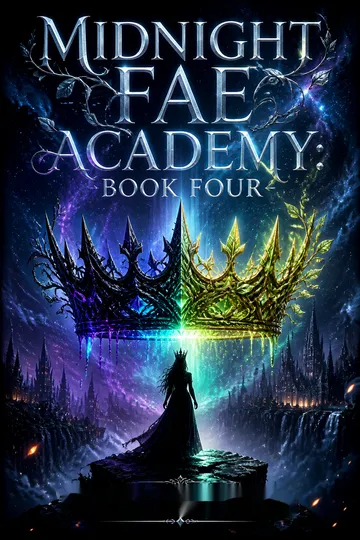
Midnight Fae Academy receives mostly positive reviews, with an average rating of 4.31 out of 5. Readers praise the intricate plot, world-building, and character development. Many enjoy the romance between Aflora and her three mates, though some feel it progresses too quickly. The book is described as action-packed, with twists and revelations that keep readers engaged. Some criticize the pacing or character choices, but overall, fans are eagerly anticipating the next installment, especially after the cliffhanger ending.
People Also Read

Characters
Aflora
Earth Fae in exileAflora is an Earth Fae royal held at Midnight Fae Academy, where she must learn to manage unfamiliar dark powers while living among people who distrust her. Her instinct is to protect others, even when doing so costs her safety, but repeated deception makes her wary of accepting help. Her intelligence is expressed through patient problem-solving: she studies the spells on her collar, learns how to reach her source, and questions the histories others present as settled truth. Aflora is also emotionally candid, with grief, anger, desire, and loyalty all visible rather than neatly separated. Her central struggle is to claim authority over her own identity and bonds in a world that treats her as a threat or a political instrument.
Shade
Cryptic Death Blood mateShade is a Death Blood who moves through shadows and prefers to influence events indirectly. He provokes the Council, hides information, and often disguises care as teasing or misdirection, making him difficult for Aflora and the other men to read. Beneath that evasiveness, he is intensely observant and willing to accept suspicion if it helps him steer events. His bond with Aflora is shaped by a paradox: he wants her trust, yet repeatedly decides what she is allowed to know. Shade’s private knowledge of history and possible futures makes him valuable, but also isolates him. He is most revealing when an action costs him something, because his explanations are rarely complete.
Kolstov
Heir under pressureKolstov, usually called Kols, is the Midnight Fae prince and Aflora’s Earth Fae mate. His upbringing has trained him to think in terms of succession, duty, and appearances, and his confidence can harden into arrogance when he feels powerless. He often responds to fear by taking control, a habit that damages his relationship with Aflora even when he believes he is protecting her. Yet he is capable of self-correction: he restores her room, offers a real apology, and gradually admits what he wants rather than hiding behind royal obligation. His conflict between the crown and personal loyalty makes him a measure of whether the Midnight Fae system can change from within.
Zeph
Warrior Blood guardianZeph, also called Zephyrus, is a Warrior Blood, Kols’s Guardian, and Aflora’s mate. He is disciplined, physically formidable, and most comfortable when he can solve a problem through planning or direct action. His decisions around Aflora’s arrest and collar are meant to shield her, but his failure to explain them reveals how readily he mistakes protection for permission. Zeph is less practiced at discussing emotion than at managing danger, and Aflora’s distrust forces him to acknowledge that weakness. He values loyalty and responsibility, sometimes to the point of self-denial. His growing tenderness appears in practical forms, such as teaching her magic, preparing food, and offering her a space to choose.
Ella
Aflora's fierce friendElla, also known as Isabella, is a Halfling and Tray’s mate. She befriends Aflora and challenges Kols and Zeph when their treatment of her crosses into control or cruelty. Ella is quick-witted, outspoken, and willing to risk reprimand rather than leave someone undefended. Her relationship with Tray is affectionate and playful, giving Aflora an example of intimacy that can include disagreement without erasing care. Ella’s loyalty is practical: she takes Aflora shopping, offers her a place to recover, and stands up to the Warrior Bloods searching their home.
Tray
Kols's loyal twinTray, whose formal name is Trayton Nacht, is Kols’s twin and Ella’s mate. He is socially capable and more openly affectionate than his brother, often easing tense situations with humor. That ease does not make him passive; he challenges Kols when the prince mistreats Aflora and later demands honesty from his twin. Tray’s loyalty is personal rather than merely political, and he is willing to share risk once he understands what Kols is hiding. His relationship with Ella supplies a warm counterpoint to the guarded, power-laden bonds surrounding Aflora.
Emelyn
Kols's political betrothedEmelyn is an Elite Blood promised to Kols through a political arrangement between powerful families. Proud, sharp-tongued, and quick to use magic as social leverage, she initially treats Aflora as a rival and a target. Her cruelty in the classroom exposes how easily she turns private pain into a weapon. Emelyn is also shaped by the expectations attached to her betrothal, which leaves her less free than her confidence suggests. Her adversarial relationship with Aflora is complicated by their shared danger and by the possibility that neither woman has chosen the role others assigned her.
Zakkai
The white-haired dreamerZakkai first appears to Aflora as a recurring white-haired figure in her dreams, a presence she assumes she has invented. He is connected to the strange magic surrounding the attacks and seems to know details of Aflora’s family and past that she cannot remember. His manner can be intimate and charming, but his attention carries an unsettling sense of possession. He speaks as if their histories are already intertwined, even while Aflora struggles to understand who he is. The mystery around him turns private fantasy into a question of memory, consent, and identity.
Tadmir
Malefic Council elderTadmir is a powerful Malefic figure within the Council’s circle, known for blunt judgments and a strong interest in preserving Midnight Fae authority. He is connected to the political expectations placed on Kols and Shade, and he speaks with the confidence of someone who believes history has already justified the present order. His opinions reveal the old hierarchy’s assumptions about power, bloodlines, and who may lead. Tadmir’s apparent certainty makes him an important counterweight to characters who question the Council’s account of the past.
Zen
Elder voice for reformZen is an elder woman whose authority rests on long experience and a careful understanding of consequence. She argues that the resistance should seek reform rather than answer past killings with new ones. Zen does not minimize the suffering that created the conflict; she challenges the belief that vengeance can repair it. Her measured presence contrasts with the urgency of younger resistance members, while her knowledge of possible futures gives her counsel unusual weight.
Dakota
Resistance voice for revengeDakota is an Elite Blood aligned with the Quandary Blood resistance and openly supports retribution against the Elders. Her anger is rooted in family losses she attributes to the Midnight Fae regime, and she sees force as a necessary answer to a system that has escaped accountability. She is strategically confident and treats Aflora as a potential leader, not merely a captive. Dakota’s position gives the resistance a human face while exposing the danger of turning justice into a new cycle of collective punishment.
Anrika
Tavern keeper and allyAnrika owns the village tavern and welcomes Aflora with food from home. Her youthful appearance contrasts with an unmistakable air of age and accumulated knowledge. She knows Tray and has ties to people outside the immediate Academy circle, including her son Seif and his mate Gina. Anrika’s warmth makes the tavern feel like a rare place where different kinds of fae can gather. Her caution around Aflora’s identity hints at the danger beneath that hospitality.
Sol
Earth Fae king and mentorSol is an Earth Fae king connected to Aflora’s upbringing and the wider Elemental Fae royal family. He is protective of her, but he has limited records of her ancestry and cannot explain the origins of her childhood song. His conversations with Kols reveal the gaps in Earth Fae history as well as the political value of old family ties. Sol’s authority is grounded in duty to his people, though his incomplete knowledge shows that even a king cannot answer every question about the past.
Cyrus
Elemental Fae allyCyrus is an Elemental Fae king who helps Kols approach Sol and supports cooperation when suspicion threatens to divide them. He is politically perceptive and willing to remind others of past alliances when tempers rise. Cyrus is not central to Aflora’s daily life, but his presence connects the Midnight Fae crisis to broader inter-realm relationships.
Exos
Elemental Fae royal allyExos is an Elemental Fae royal who supports Kols’s effort to learn more about Aflora’s family and encourages collaboration for her sake. He understands that protecting Aflora requires more than guarding her physically. His role is brief but important in pushing the political factions toward cooperation rather than leaving her isolated between them.
Ajax
Shade's loyal friendAjax is a Death Blood student and Shade’s friend, known for his blunt humor and physical confidence. He spars with Emelyn and is present when the resistance conflict breaks into open danger. His relationship with Emelyn is more complicated than their public antagonism suggests, and he acts decisively when she needs help. Ajax’s loyalty often shows itself through action rather than explanation.
Clove
Aflora's watchful falconClove is Aflora’s familiar, a black-and-white falcon who communicates through gestures and instinctive acts. She brings Aflora a stonepecker that becomes a crucial clue about the Academy breach. Clove is protective and observant, and her distrust of Zeph reflects Aflora’s own history with him. Their connection offers Aflora a source of companionship that does not depend on political permission.
King Malik
Kols's ruling fatherMalik is the Midnight Fae king and Kols’s father. He expects his son to fulfill royal duties and monitors Aflora as part of Kols’s ascension trial. Malik can appear measured rather than openly cruel, but his willingness to treat people as pieces in a political plan reveals the distance between paternal concern and state interest.
Constantine Nacht
The retired kingConstantine is Kols’s grandfather and a former king whose policies continue to shape Midnight Fae law and the Council’s treatment of mixed bloodlines. Though he appears only in moments of high political importance, his influence reaches into succession, gender rules, and the history of the Quandary Blood purge. He represents the enduring power of decisions made generations earlier.
Headmaster Irwin
Psychometry instructorHeadmaster Irwin teaches psychometry, the magical reading of an object's history. His lesson gives Aflora access to the rock that contains a memory of the attacker. His classroom authority becomes entangled with events beyond his control.
Kyros
Paradox Fae fixerKyros is a Paradox Fae with a time-wielding sword and a working relationship with Shade. He calls in Shade’s help with a week of tasks in the Human Realm, underscoring how useful and costly an alliance with time magic can be.
Seif
Anrika's Fortune Fae sonSeif is Anrika’s son, a Fortune Fae who has chosen a seer’s path despite his dark-magic heritage. His relationship with Gina connects Aflora’s earlier encounter in the Human Realm to the wider network of fated bonds.
Gina
Fortune Fae seerGina is a Fortune Fae Aflora met in a Human Realm coffee shop. She spoke as if Aflora’s future held several possible paths, leaving behind a clue that becomes more significant as the attacks and hidden bonds emerge.
Tray's father
Elemental royal patriarchAflora’s adoptive family connection and a powerful Elemental Fae figure, he helps Kols investigate her background. His limited knowledge of Aflora’s parents and ancestry reflects how much of her history has been concealed.
Plot Devices
The layered mating bonds
Intimacy with political costAflora’s bonds with Shade, Kols, and Zeph operate through different magical systems, each carrying distinct emotional and political consequences. The Midnight Fae bites create claims and help steady her dangerous power, while the Earth Fae connection depends on mutual agreement between souls. The concealed collar and wristbands hide some links from the Council, allowing the relationships to develop without immediate discovery. These bonds function as both refuge and constraint: they provide Aflora with anchors, yet the men’s secrecy and unilateral choices make her question whether connection can coexist with consent. The device drives the romance while also making private intimacy a matter of state security.
The forbidden ballad
A song carries buried historyAflora’s mother taught her a melody whose lyrics contain an ancient spell for realigning the source. Aflora remembers it as a childhood song, unaware that Midnight Fae authorities consider its knowledge dangerous. When she sings it in the village, Tray recognizes its meaning, and later the same word appears in fire above the destroyed Death Blood building. The song connects family memory to the attacks and makes Aflora an unwitting carrier of suppressed history. It also establishes that old knowledge can survive outside official archives, passed down through intimate relationships rather than written records.
The enchanted rock
Memory becomes evidenceDuring a psychometry exercise, Aflora touches a rock that carries a memory of the male who attacked the Death Blood Education Building. The spell forces her to experience his actions from inside his body, including his use of her mother’s ballad and his message for her. Because the object was deliberately placed among the lesson materials, the vision is both evidence and a calculated summons. The rock turns an abstract threat into an embodied memory, but it does not provide a simple explanation. Instead, it binds Aflora’s personal past to the attacker and raises the possibility that someone is directing her discoveries.
The stonepecker
A breach leaves physical evidenceClove brings Aflora a dead stonepecker, a creature capable of absorbing enchantments from the walls and wards it pecks. That ability can help an intruder bypass a protected place or construct a counterspell, offering a plausible means of entering the Academy before its attack. The stonepecker also gives the group tangible evidence at the moment the Council begins to suspect Kols. Zeph destroys it before the Warrior Blood search, protecting Aflora from immediate blame but making the investigation harder. The creature links the campus destruction to deliberate preparation rather than a spontaneous magical accident.
Repeated futures
Choice under time pressureThe epilogue reveals that Shade and Tadmir have lived through repeated versions of the events, with prior attempts ending in war. Tadmir uses time travel and Shade’s knowledge of possible outcomes to push the current sequence toward a different result. Their foreknowledge explains Shade’s evasions and the deliberate nature of several interventions, but it also exposes the ethical cost of treating Aflora’s life as a route to a preferred future. Repetition gives the characters more information without giving them certainty: their choices can alter events, but every alteration carries the risk of producing another disastrous path.
Midnight Fae Academy Series


About the Author



Download PDF
Download EPUB
.epub digital book format is ideal for reading ebooks on phones, tablets, and e-readers.








