

Plot Summary
Prologue
Zakkai watches Aflora sleep and admits that he has been her mate since childhood, though a spell hid their bond and memories from her. Years later, he found her again through dreams, then let Shade take her to the Academy instead of claiming her himself.
Now he has brought her to his hidden refuge, convinced she must learn to fight before the coming war. His father still expects him to break their bond when her protection is no longer needed. Zakkai no longer intends to obey. He wants Aflora beside him as queen, though his certainty about her future masks how little he has told her.
The prologue places desire beside political calculation. Zakkai’s tenderness is real, but so is his habit of deciding what Aflora needs without asking her. His account invites sympathy for a boy forced to erase his closest friend, then quietly exposes the adult version of that coercion: he hides information, controls her surroundings, and assumes she will eventually accept his cause. The story’s central romantic tension is therefore also an ethical one. Intimacy may soften power, but it does not automatically make power consensual. His hope that Aflora will become queen is both devotion and an attempt to script her.
The Council Wants Her Dead
After Emelyn attacks Kols during Warrior Magic, she and Aflora vanish into a magical paradigm in the LethaForest; Warrior Bloods then arrive, and Shade disappears with Aflora. At the Council hearing, Kols recounts the attack while Shade claims he cannot sense her through their bond.
The Council dismisses Kols’s defense of Aflora and orders Shade to locate her so the Warrior Bloods can seize or kill her. Their verdict makes Kols see the institution he hoped to lead as a machine that has already condemned his mate. Outside the chamber, Shade finally admits that Aflora is with Zakkai, a Quandary Blood. Kols’s search for her now pits him against both the Council and his own ignorance.
The opening turns a disappearance into a test of political allegiance. Kols has long understood duty as obedience to the institution that raised him; the Council’s willingness to kill Aflora forces him to distinguish loyalty from submission. Its language of public safety conceals a familiar practice: treating a politically inconvenient person as evidence of guilt. Shade’s evasiveness compounds the crisis, but his disclosure redirects the plot from a rescue mission toward a hidden history. Kols does not yet know what Zakkai wants. He does know that the Council’s preferred solution is destruction, and that knowledge begins his separation from the future it planned for him.
A Childhood Buried in Magic
Aflora wakes in Zakkai’s bed, angry that he has kept her from her mates and offered no clear account of their connection. When she attacks him with her growing magic, he absorbs the flames and binds her in an electric web, leaving her to work out how to escape.
The puzzle draws her into a memory of herself at seven, when her parents and Zakkai’s father arranged a protective bond between the children. She then recalls the later separation: Zakkai was made to erase her memories so the Elders would not find him through her. The recovered past explains why his Quandary power has been woven into her own, but it does not erase her anger at being kept uninformed.
Memory here is not a neutral archive. Aflora’s childhood was altered for protection, but the protective act also deprived her of the ability to understand her own body and history. Zakkai’s magical puzzle makes her recovery active rather than merely expositional: she has to interpret patterns and free herself, even as he controls the test. That combination captures the novel’s uneasy intimacy. He trusts her intelligence enough to challenge it, yet still determines the terms. Remembering the boy he was complicates her judgment of the man he has become; it does not settle whether his present choices are justified.
A Queen Refuses to Kneel
Once free, Aflora makes clothes with Zakkai’s wand and follows his magic into a crowded dining hall. She rejects his claim to rule her and demands that he sever their bond, so he turns her refusal into a formal duel. Aflora combines techniques learned from Zeph, Kols, and Shade, attacking with roots, colored fire, and shadow travel.
When she tries to escape, Zakkai’s hidden spell pulls her back. Dakota, an Elite Blood who resents Aflora’s place beside him, paralyzes Aflora with lightning. Zakkai retaliates against Dakota, carries Aflora away, and lets her hear his father admit that the Council used her as bait and expects her death. Aflora understands that Zakkai’s refuge is also a battlefield.
The duel makes Aflora’s resistance legible in the only language Zakkai’s society reliably recognizes: power. Her refusal to kneel is not simply romantic defiance; it challenges a hierarchy that converts rank into entitlement. Yet the scene also complicates her agency. Zakkai creates the duel’s rules, and Dakota’s intervention demonstrates how quickly a woman’s power can be recast as a threat to be restrained. Aflora’s combined magic is impressive but not yet controlled, making self-assertion dangerous to bystanders as well as to her opponents. The lesson is not that she should submit, but that freedom without command of her own abilities leaves others able to define its consequences.
Dreams Become Their Only Bridge
Zakkai allows Aflora to enter the dreams of Zeph and Kols after she asks for access to her other mates. In the first meeting, they learn that his spell has clouded her thoughts, and she warns them that he intends to kill Kols and the Nacht family. Rather than rush into Zakkai’s fortified refuge, Kols proposes that they protect Aflora from a distance, train her through dreams, and seek a political solution.
Zeph agrees to use the dream visits for combat practice, though he distrusts Zakkai’s motives. Shade joins them, and Aflora embraces him while making clear that she is still hurt by his decision to hand her over. Their fragile arrangement gives her contact, not freedom.
Dreams turn intimacy into infrastructure. The bonds let Aflora remain connected to her mates when geography, danger, and Zakkai’s barriers separate them, but every visit also carries surveillance and risk. Zakkai supervises the meetings, so even tenderness occurs within a bargain he can monitor. Kols’s proposal marks a shift from reflexive confrontation toward strategic cooperation; he accepts that an immediate rescue might expose Aflora to greater danger. Zeph’s suspicion, Shade’s remorse, and Aflora’s conditional affection show that trust is not a single decision. It is a practice negotiated under pressure, with each character trying to protect her without replacing one form of control with another.
A Garden Outside the Walls
Zakkai eventually takes Aflora beyond the castle corridors of his paradigm, a carefully constructed refuge hidden in a remote part of the Human Realm. Its changing light, gardens, and concealed inhabitants offer her a rare chance to use her Earth Fae senses without a collar or academy restraints.
Her familiar, Clove, follows her inside, and Aflora meets Zakkai’s white wolf, Zimney. Zakkai teaches her to listen to familiars, but their lesson turns toward two troubling objects: a rock from her Advanced Conjuring class and a dead bird Clove once carried to her.
Both incidents had been blamed on Zakkai. He cannot explain them, and Shade has handled the rock, leaving Aflora’s supposed captor with reasons to suspect someone else is shaping events.
The garden supplies more than a pleasant contrast to the Academy’s hostile terrain. It shows what Aflora’s powers feel like when they are not treated as a defect requiring containment. Her ease among living things offers a countermeasure to the story’s culture of suspicion: she learns by attending to relationships rather than imposing command. At the same time, the rock and dead bird prevent refuge from becoming proof of innocence. Zakkai’s version of events may be plausible, but the unexplained objects keep the reader and Aflora alert to manipulation beyond his control. The paradigm is both sanctuary and authored world, a place where safety depends on trusting its creator.
Two Revolutions, One Past
When Zakkai and Aflora meet Shade in the snow, Zenaida joins them with Shade’s grandparents, Vadim and Kodiak. Zenaida, the former Midnight Fae queen, argues for reform: a council that includes the factions the current rulers have excluded.
Zakkai favors retribution against the Nacht line. Their argument sharpens when Zenaida explains that the Elders killed Aflora’s parents after they helped Quandary Bloods survive, and that the killing severed her parents from the earth source.
Zakkai says he absorbed the dark magic that would otherwise have reached Aflora. He also identifies her uncle Tadmir as the creator of the class rock’s spell. Aflora rejects both mass revenge and easy faith in diplomacy, recognizing that each side avoids part of the truth.
The political conflict becomes personal when Aflora learns that her inheritance was shaped by her parents’ murder. Zenaida’s reformism protects life but risks asking victims to negotiate with rulers who have repeatedly chosen extermination. Zakkai’s revenge names that violence plainly, yet reproduces its logic by targeting a whole family line. Aflora’s response refuses the comfort of choosing a morally pure camp. Her judgment is consequential because it holds both injury and responsibility in view: past crimes cannot be softened into misunderstanding, but collective punishment cannot become justice merely because the injured now wield power. The rock’s connection to Tadmir also broadens the conspiracy beyond the obvious enemy.
Aflora Chooses the Gala
Before the Blood Gala, Aflora asks whether Zakkai warned Shade about her. He explains that they became close after Zakkai’s father forced him to erase her memories, and that he later urged Shade to protect her when the Council ordered the bite. He did not arrange the Council’s plan, though he knew it was coming.
The account does not undo the choices made for Aflora, but she recognizes that Zakkai was also shaped by orders he could not refuse. She chooses to trust him and agrees to attend the Gala, where he intends to show her how Midnight Fae celebrate the supposed defeat of Quandary Bloods. A necklace masks her power and bonds, and disguises conceal both their identities.
Aflora’s choice matters because it differs from compliance: she hears Zakkai’s account, weighs it against his conduct, and decides what risk to accept. The distinction is central to a novel where protection has repeatedly been used to justify decisions made on her behalf. Zakkai gains closeness not by claiming that his intentions excuse everything, but by explaining the coercive history behind some of his actions. Still, the bargain remains precarious. A hidden necklace, a false appearance, and the silence imposed by the Gala’s public setting make trust operationally fragile. Her willingness to go is neither absolution nor surrender; it is a deliberate attempt to see the evidence for herself.
The Heir Is Stripped
At Nacht Manor, Kols notices that the Malik greeting him behaves unlike his father, while the prepared Gala speech sounds designed to please his grandfather. Shade arrives and reveals that the Council knows about Aflora’s bonds and her refuge with Zakkai. The supposed Malik announces that Kols has been tried in secret for aiding Quandary Bloods and orders his immediate descension.
Kols is denied any chance to defend himself; Shade has spoken for him as his mate, using the bite that once seemed inexplicable. The false king tears Kols’s source power from him and drains his life. In the ballroom, Aflora and Zakkai are discovered by Constantine, who confirms the trap and strikes them with magic. Kols’s death reaches Aflora through their bond.
The trial exposes how procedure can become theater when the verdict precedes the accused’s participation. Kols is punished not through a fair hearing but through a performance staged to make violence appear lawful. The counterfeit authority and the corrupted speech echo one another: legitimacy is being manufactured through recognizable symbols while the source of power is abused. Shade’s bite, previously experienced as betrayal, becomes part of his effort to act within the system’s rules while undermining its outcome. The emotional shock arrives through Aflora’s bond, collapsing the distance between political spectacle and intimate loss. The Council’s violence does not merely threaten her ideals; it takes someone she chose from her life.
Life Answers the Gala
Kols’s death unleashes Aflora’s earth and Quandary powers across the ballroom. Burning trees erupt through the floor, their branches striking at the fae around her. Constantine encourages the panic, using her uncontrolled fury to portray her as proof that abominations must be destroyed and to justify taking power himself.
Zakkai reaches Aflora with Zeph, enclosing them in a protective barrier and urging her to see the civilians caught between her and Constantine. When her fire overwhelms Zeph’s defenses, Aflora recognizes the damage and uses her life-giving magic to heal him.
She then draws on Shade’s shadow power to transport herself, Zeph, and Zakkai to a hidden room in Shade’s paradigm. Shade arrives carrying Kols’s body and warns them that their next actions will decide whether Kols can be recovered.
Aflora’s eruption is both grief and political evidence, which is precisely why Constantine’s manipulation works. He does not need to invent her danger; he arranges circumstances in which real danger can be made to validate his existing ideology. Zakkai’s intervention is strategically important, but Aflora’s own recognition of Zeph’s injuries is what redirects her power from destruction to repair. The shift from blazing ballroom to hidden room changes the scale of action: they cannot win a public argument while their bodies and bonds are under attack. Her ability to move among life, death, and shadow becomes a means of refusing the role Constantine has assigned her, though the danger remains unresolved.
The Dead Return Together
Shade reveals that he has watched this crisis repeat across seven disastrous timelines, and that he used a Death Blood spell to keep Kols’s departing soul within reach. Aflora anchors the spell with her earth magic while Zeph, Zakkai, Shade, and eventually Kols give her their blood and power.
She draws Kols’s scattered essence back into his body and feeds him her own blood until his heart starts again. Kols returns changed, carrying traces of the different magics that saved him.
Zakkai adds his blood despite knowing the new bond will prevent him from killing Kols as planned. The group understands that Shade cannot reverse this version of events, so the five mates commit to confronting Constantine together. Their victory is survival, not safety.
The rescue transforms the novel’s competing powers into a shared act rather than a contest for control. Aflora does not simply overpower death; she coordinates the distinct capacities of her mates, using earth’s continuity to hold a soul in place while Death magic and blood restore its connection to the body. Zakkai’s contribution is especially consequential because it costs him the revenge he had treated as inevitable. Shade’s repeated timelines clarify that foresight does not equal mastery: each attempt to correct fate exacts a price, and some endings cannot be rewound. The group’s alliance is therefore not a neat reconciliation. It is a practical, costly commitment made after irreversible harm.
Epilogue
After Kols returns, Aflora falls asleep among her mates in Shade’s hidden refuge. Zakkai remains awake, strengthening the paradigm’s boundaries because he senses Constantine’s power moving beyond their immediate reach.
He warns Aflora that saving Kols will give the Midnight Fae another reason to hunt them, but she insists Kols is not the man who condemned him. As she drifts off, she sees Constantine in a blood-soaked nightmare. He has found a way into her sleep, and the story ends before she learns whether the threat is a vision or an intrusion.
The ending grants the lovers a brief physical refuge but refuses the emotional convenience of calling it resolution. Aflora’s circle of mates has survived its most devastating fracture, yet their bond now makes them more visible targets in a political war. Constantine’s appearance in the nightmare carries the conflict across the boundary that had seemed safest: even sleep can be entered by power. The uncertainty about whether the encounter is a vision or an actual intrusion suits a story in which prophecy, memory, and manipulation repeatedly overlap. The closing image preserves hope in their new alliance while making clear that survival has opened another trial rather than ended the war.
Analysis
The novel’s central conflict is not simply revenge versus forgiveness. It is a struggle over who gets to define safety, justice, and legitimate power after a history of extermination. The Council makes violence appear lawful by controlling trials, memory, and public ritual. Zakkai answers that violence with a proposed purge of the Nacht line, treating inherited guilt as a substitute for individual judgment. Zenaida offers reform, but her peaceful method risks asking survivors to trust institutions that have repeatedly used negotiation as delay. Aflora resists all three frameworks. Her refusal to accept either passive victimhood or indiscriminate vengeance is a political judgment, not a compromise between equally harmless positions.
Aflora’s magic gives this argument physical form. Earth creates and sustains; Quandary power can manipulate and destroy. She is not made whole by choosing one inheritance over the other. Her greatest act of power requires her to hold them together, first when she redirects destructive magic to heal Zeph, and later when she joins her mates’ abilities to reach Kols. The story locates leadership in coordination rather than purity. A ruler need not be free of dangerous capacities, but must understand their consequences and remain answerable to those affected by them.
The romances develop the same question at intimate scale. Each mate has protected Aflora through concealment, restraint, or force, and each must confront the possibility that care can become control. Aflora’s repeated demands for information and her conditional choices make consent part of the plot’s structure. The bonds matter because they enable tenderness, but also because they carry surveillance, vulnerability, and pain.
Shade’s altered timelines deepen the novel’s skepticism about mastery. Knowing possible futures has not allowed him to escape moral responsibility; it has made him responsible for choices no one else can see. The book ends with a precarious achievement: Kols has returned, former enemies have formed an alliance, and Constantine remains a threat. Their new path is not a happy resolution but a collective obligation to build a form of power that does not reproduce the violence they oppose.
Review Summary
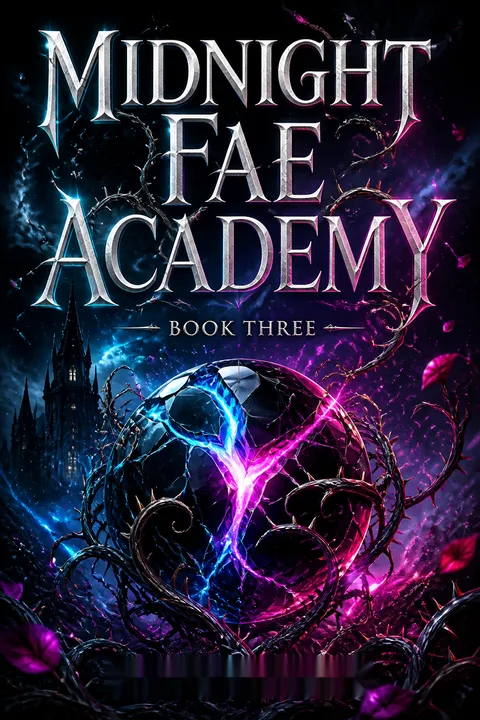
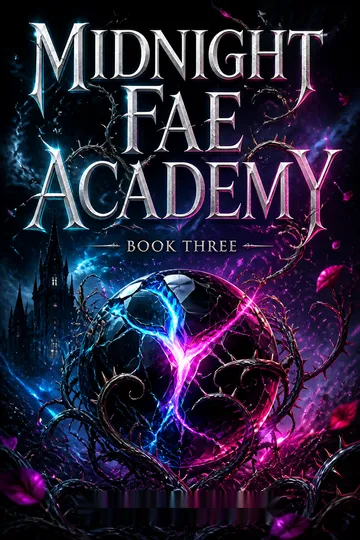
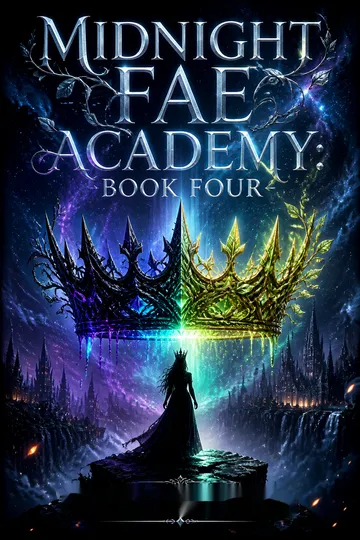
Midnight Fae Academy is a highly praised paranormal reverse harem series with an average rating of 4.39 out of 5. Readers love the intricate plot, complex characters, and steamy romance scenes. The third book in the series is particularly praised for its twists, revelations, and character development. Many reviewers express excitement for the upcoming fourth book, noting the cliffhanger ending. Some criticisms include pacing issues and plot holes, but overall, the series is recommended for fans of dark fantasy and reverse harem stories.
Characters
Aflora
Earth-born power catalystAflora is an Earth Fae royal whose instinct for growth sits uneasily beside the dangerous Midnight Fae magic within her. She is observant, stubborn, and increasingly unwilling to let others define her as a weapon, a pawn, or an abomination. Her bonds connect her to Zakkai, Shade, Kols, and Zeph, but affection does not make her unquestioning: she presses all four to explain what they have hidden and tries to distinguish protection from possession. Her ability to read living things and solve magical patterns reflects a mind that seeks connection before domination. Under pressure, her grief can overwhelm her control, making her compassion and her destructive potential inseparable parts of the same power.
Zakkai
Quandary Blood architectZakkai is the Source Architect, a powerful Quandary Blood who has spent much of his life preparing to answer the persecution of his people. He is strategic, disciplined, and inclined to conceal the full truth until he believes someone is ready to use it. His bond with Aflora reaches back to their childhood, giving his attraction the force of history while also sharpening his tendency to assume he knows what is best for her. He favors retribution because he sees negotiation as an invitation for the powerful to delay justice. Yet he is capable of patience and restraint around Aflora, which complicates the image of him as merely a ruthless revolutionary.
Shade
Shadowed keeper of fateShade is a Death Blood whose calm, irreverent manner conceals an intense private burden. He is Aflora’s mate and has a long, difficult relationship with Zakkai, whom he understands better than he usually admits. His shadow magic makes him an escape route and a guardian, while his willingness to withhold information often makes him appear untrustworthy. Shade believes that some choices must be made before others can understand their consequences, a conviction that repeatedly places him between care and manipulation. His ties to the Fortune Fae and his friendship with the Paradox Fae Kyros deepen his connection to prophecy and time, though neither grants him uncomplicated control over what happens.
Kols
Heir questioning his crownKols, also called Kolstov, is the Elite Blood prince and the expected successor to a throne built on strict hierarchy. He has been trained to value composure, political duty, and the approval of his father, Malik. Aflora’s presence forces him to confront the difference between inherited responsibility and moral choice, especially when the Council treats her as disposable. He is proud and quick to anger, but his instinct to protect the people he loves can make him reconsider strategies that once seemed obvious. His bond with Zeph is shaped by years of trust, rivalry, and physical closeness; his connection to Aflora further unsettles the identity he believed his future required.
Zephyrus
Warrior Blood protectorZephyrus, usually called Zeph, is a Warrior Blood and Kols’s Guardian. Defensive training and fierce loyalty make him quick to identify threats, though his desire to protect can harden into distrust of anyone he cannot control. He cares deeply for Aflora and is bonded to her, but he also shares a complicated emotional and physical relationship with Kols. Zeph’s directness contrasts with Shade’s riddles and Zakkai’s strategic omissions. He wants to act decisively, especially when Aflora is in danger, yet he is capable of accepting help and adapting when force would worsen the situation. His strength is not only combat skill; it is the discipline to remain with those he loves through uncertainty.
Constantine Nacht
Architect of the hierarchyConstantine is the ancient Nacht patriarch whose authority shapes the Council’s laws and the Midnight Fae’s treatment of women, mixed bloodlines, and political dissent. He presents harsh decisions as necessary protections for his people and expects obedience to preserve the hierarchy he built. His contempt for reform is rooted in a conviction that power must be centralized and that fear can be managed through punishment. He is a skilled political performer, able to turn public ritual into a demonstration of legitimacy. Even when he speaks of order, his actions reveal how readily he uses law, history, and spectacle to make violence appear inevitable.
Laki
Zakkai's stern fatherLaki is Zakkai’s father and a former Source Architect who helped shape the choices that bound the children together. He regards sacrifice as a necessary tool of survival and often treats painful experiences as tests that will strengthen those who endure them. His concern for Aflora is genuine, but it coexists with a willingness to make decisions for her. His relationship with Zakkai is affectionate in flashes and strained by competing ideas about duty, the mate bond, and the revolution’s goals.
Malik Nacht
Kols's politically bound fatherMalik is Kols’s father and the reigning Elite Blood King, responsible for preparing his son to inherit the throne. He is accustomed to speaking through the Council’s conventions and sees political stability as a duty that can outweigh private affection. Kols has spent much of his life seeking Malik’s approval, making their relationship a measure of how thoroughly the royal system shapes family life. Malik’s authority also places him at the center of the choices Kols must question.
Tadmir
Councilman with hidden tiesTadmir is a senior Midnight Fae Councilman and a relative within Zakkai’s family. He has access to political knowledge and magical skills that make him influential beyond his formal position. His actions are difficult for other characters to interpret, and his long view of events suggests that he may be pursuing an agenda not readily visible to the Council. Tadmir embodies the story’s recurring problem of trust: useful information often comes from people whose motives remain partly concealed.
Zenaida
Exiled reform-minded queenZenaida is the former Midnight Fae queen and Shade’s grandmother. A Fortune Fae with a long memory of the kingdom’s political failures, she favors rebuilding its institutions rather than answering old violence with new executions. She is warm in personal encounters, even baking for people she worries about, but her gentleness does not make her politically naïve. Her history with Constantine and the Quandary Bloods gives her perspective unavailable to younger characters. Zenaida believes that preserving life is an ethical obligation, though the story tests whether reform can succeed when those in power reject negotiation.
Kyros
Paradox Fae time-benderKyros is a Paradox Fae and Shade’s friend. His connection to time makes him a reluctant witness to repeated events and a potential ally when a moment must be approached differently. He is sardonic and impatient with conversations that circle the same questions, yet he recognizes the dangers his abilities create. Kyros’s presence gives the story a concrete link between foresight and the cost of changing events.
Dakota
Ambitious Elite BloodDakota is an Elite Blood who moves comfortably among the powerful and wants influence within Zakkai’s resistance. Her interest in Zakkai and her hostility toward Aflora are sharpened by ambition and jealousy. She is observant enough to recognize when others hesitate, and she acts decisively when she believes the moment favors her. Dakota’s presence reveals how political competition can disguise itself as loyalty or protection.
Tray
Kols's twin brotherTray is Kols’s twin and a member of the Nacht family. His closeness to Kols gives him an immediate stake in the succession crisis, while his relationship with Ella places him among the people trying to protect their household. Tray is candid and protective, often pushing for practical answers when others trade in magical riddles or political explanations. His loyalty to his brother exists alongside the family’s demands, a tension that makes him an important witness to the cost of the Nacht legacy.
Ella
Tray's steadfast partnerElla is Tray’s partner and a skilled user of protective magic. She is attentive to the people around her and does not need a formal title to recognize danger. Her concern for Kols and Aflora makes her a steady presence when the Nacht household is under pressure. Ella’s affection for Tray gives her an intimate view of the family’s conflicts, while her own readiness to act keeps her from becoming a passive observer.
Emelyn
Kols's volatile betrothedEmelyn is Kols’s betrothed and a formidable student of Warrior Magic. She is proud, emotionally intense, and unwilling to hide her displeasure when Kols fails to meet her expectations. Her position in the royal arrangement makes her personal conflicts politically consequential.
Anrika
Village ally and tavern keeperAnrika runs the village tavern and has longstanding ties to Zakkai’s family and the people who helped Quandary Bloods survive. She is perceptive, practical, and careful about what she says in public. Her connection to Aflora’s parents gives her a personal stake in the past the Council would rather keep hidden. Anrika’s welcome offers a glimpse of a community built on quiet acts of aid rather than official authority.
Ajax
Shade's candid confidantAjax is Shade’s friend and a familiar face at Anrika’s tavern. He is direct, quick to notice when Shade is hiding something, and willing to challenge him without ceremony. His concern for his family also connects him to the village’s political unrest.
Clove
Aflora's feathered familiarClove is Aflora’s black-and-white familiar, a bird whose presence reflects the bond between a fae and an extension of their own magic. She follows Aflora into Zakkai’s hidden refuge and gives Aflora a living connection to her familiar world.
Night
Kols's loyal crowNight is Kols’s crow familiar, a loyal creature tied closely to his magic and emotional life. His presence makes Kols’s royal identity feel personal rather than ceremonial, and his bond with his master reflects the story’s wider network of chosen and magical attachments.
Zimney
Zakkai's white wolf familiarZimney is Zakkai’s Arctic wolf familiar. His affectionate behavior offers Aflora a gentler introduction to Zakkai’s world and becomes part of her lesson in listening to familiars rather than treating them as ornaments or tools.
Chern
Tracker for the CouncilChern is a Council associate involved in locating Aflora and sensing the bonds connected to her. His tracking work gives the Council a way to turn private magical relationships into instruments of surveillance.
Vadim
One of Zenaida's matesVadim is one of Zenaida’s mates and Shade’s grandfather. He supports Zenaida’s efforts to protect her family and argues for hearing her out, even when Zakkai would rather leave. His presence connects Shade to a family history that crosses Midnight Fae and Fortune Fae politics.
Kodiak
Zenaida's other mateKodiak is Zenaida’s other mate and part of Shade’s extended family. His support for Zenaida’s political and personal work makes him a quiet counterweight to Zakkai’s more confrontational approach.
Plot Devices
Mating bonds
Intimacy with consequencesMating bonds connect characters through magic, emotion, and sometimes physical sensation. They allow Aflora and her mates to feel one another across distance and to enter dreams, but they can also expose thoughts, transmit pain, or give enemies a way to track someone. A bite may begin a bond without completing it, making the relationship’s status politically significant as well as intimate. The story uses bonds to ask whether connection is a refuge or another form of control. Each character’s decision to strengthen, hide, or respect a bond changes what the group can do and what they risk losing.
Paradigms
Refuge built from magicA paradigm is a magically constructed space that resembles a separate world while remaining connected to reality. Zakkai builds one as a hidden refuge, shaping its landscape, weather, and boundaries to shelter a community from hostile fae. Shade also maintains a protected paradigm of his own. These spaces allow characters to meet and train outside the Council’s reach, but their protection depends on the creator’s power and secrecy. They are not neutral settings: a paradigm reflects its maker’s priorities and can become a comfortable prison if its inhabitants cannot leave freely.
Dreamwalking
A bridge through barriersDreamwalking lets Aflora reach her mates while she is confined in Zakkai’s paradigm. Zakkai teaches her the spell after she negotiates for contact, allowing her to bring Zeph, Kols, and Shade into a shared dream. These meetings make it possible to exchange warnings, maintain affection, and practice skills without physically breaching Zakkai’s defenses. The dreams remain vulnerable to interference, however, and Zakkai can supervise or enter them. The device therefore preserves connection while keeping the imbalance of power visible: access to one another is possible, but not fully private.
Time manipulation
Foresight with a priceShade’s connection to the Paradox Fae Kyros allows him to revisit events and attempt different paths. The device explains his strange familiarity with conversations and his reluctance to disclose what he has seen. Yet repeated timelines do not give him unlimited control. A completed death cannot simply be undone, and changing events carries consequences for the people involved. The story treats time travel less as a clever escape hatch than as an ethical burden: Shade must decide how much deception and pain he will impose in the present to prevent a worse future.
Source ascension
Power as political legitimacyAscension connects a fae ruler to a magical source and is meant to establish both power and fitness to lead. Kols faces trials on his path to the Elite Blood throne, while Zakkai’s role as Source Architect gives him extraordinary command over Quandary magic. Constantine exploits the same idea of legitimacy, using political spectacle and force to claim authority without the balance the traditional process is meant to require. Ascension makes private magical capacity a public political question: whoever can command the source may rule, but command alone does not prove that the ruler deserves to.
FAQ
Synopsis & Basic Details
What is Midnight Fae Academy: Book Three about?
- Aflora's Fated Revolution: Midnight Fae Academy: Book Three plunges Aflora, an Earth Fae Royal, deeper into a complex war for the future of the Midnight Fae, where she discovers her childhood bond to Quandary Blood King Zakkai and navigates treacherous political landscapes. She is forced to confront hidden truths about her past, her powers, and the corrupt Council that seeks to control her.
- Uniting a Fractured Mating Circle: The narrative centers on Aflora's evolving relationships with her four Midnight Fae mates—Kols, Zeph, Shade, and Zakkai—as they move from suspicion and rivalry to a unified front. Through dreamwalking, shared trauma, and intimate connections, they forge an unbreakable bond, challenging the very definition of "abomination" in their world.
- The Spark of Rebellion: The story culminates in a dramatic confrontation at the annual Blood Gala, where the corrupt Council attempts to publicly execute Kols. This act of betrayal ignites Aflora's full power, leading to Kols's miraculous resurrection and the official beginning of a revolution against the tyrannical rule of Constantine Nacht.
Why should I read Midnight Fae Academy: Book Three?
- Deep Dive into Fae Politics: Readers who enjoy intricate world-building and political intrigue will be captivated by the layers of deception, ancient feuds, and power struggles within the Midnight Fae realm. The book meticulously unravels a history of prejudice and manipulation, offering a rich backdrop for the unfolding revolution.
- Intense Emotional & Relational Arcs: The story excels in its psychological and emotional depth, exploring themes of identity, betrayal, and the transformative power of love and chosen family. Aflora's journey from pawn to queen, alongside her mates' complex motivations and sacrifices, provides a compelling and emotionally resonant reading experience.
- Unique Reverse Harem Dynamics: For fans of why-choose romance, this installment pushes boundaries with its exploration of multiple, interconnected mating bonds. The mates' individual relationships with Aflora, and their evolving dynamic as a collective, offer a fresh take on shared intimacy, trust, and mutual empowerment.
What is the background of Midnight Fae Academy: Book Three?
- Ancient Quandary Blood Genocide: The core conflict stems from a millennium-old genocide orchestrated by Constantine Nacht, the Elite Blood patriarch, against the Quandary Bloods. This historical event, driven by fear of their inherent power and a desire to establish a male-dominated hierarchy, forms the bedrock of the ongoing revolution.
- Corrupt Midnight Fae Council: The current Midnight Fae Council, heavily influenced by Constantine and his Elite Blood lineage, maintains power through deception, violence, and the suppression of "abominations" (fae with mixed bloodlines). Their actions, including the murder of Aflora's parents and the manipulation of her destiny, fuel the mates' desire for retribution and reformation.
- Hidden Paradigms & Time Manipulation: The world features secret magical pocket realities called paradigms, used for sanctuary and strategic hiding, as well as the rare and dangerous ability of time manipulation, primarily wielded by Death Bloods and Paradox Fae. These elements create a complex, multi-layered setting where past, present, and future are constantly in flux, impacting character choices and the unfolding plot.
What are the most memorable quotes in Midnight Fae Academy: Book Three?
- "Retribution. Reformation. Two sides of a revolution, both vying for my allegiance. Well, I pick neither side.": This opening declaration by Aflora powerfully sets the stage for her journey, highlighting her refusal to be a pawn and her determination to forge her own path, embodying the central "Aflora motivation" for agency and self-determination.
- "Death isn't always the solution... Unless you want to take over the mantle of slaughtering and ending lives?": Aflora's sharp retort to Zakkai's call for retribution encapsulates the moral dilemma at the heart of the revolution. It questions the cycle of violence and challenges the idea that justice can only be achieved through further bloodshed, a key "themes in Midnight Fae Academy: Book Three" debate.
- "I'm a mixture of both. So let's see what happens when life marries death, shall we?": From the "About Book Four" section, this quote perfectly summarizes Aflora's transformation and the unique power of her "abomination" status. It signifies her acceptance of her dual nature and her readiness to wield both creation and destruction as the future Queen of the Midnight Fae, a powerful statement on "Aflora's identity explained."
What writing style, narrative choices, and literary techniques does Lexi C. Foss use?
- First-Person Multi-POV Narrative: The story primarily uses Aflora's first-person perspective, offering intimate access to her thoughts and emotions, but frequently shifts to the first-person perspectives of her mates (Zakkai, Kols, Shade, Zeph). This narrative choice provides a comprehensive, albeit sometimes conflicting, view of events, deepening character understanding and building suspense.
- Sensory-Rich & Evocative Language: Foss employs vivid, sensual descriptions, particularly in intimate scenes and magical displays, immersing the reader in the characters' experiences. The prose often focuses on tactile sensations, scents, and internal feelings, creating a highly immersive and emotionally charged atmosphere
Midnight Fae Academy Series
About the Author

Download PDF
Download EPUB
.epub digital book format is ideal for reading ebooks on phones, tablets, and e-readers.








