Plot Summary
Sisters, Secrets, and Sacrifice
Tori and Isoka, once street children, now live separate lives—Tori in the safety of the Second Ward, Isoka as a feared ward boss. Their bond is fierce, forged by hardship and Isoka's willingness to do anything to protect her younger sister. But both hide dangerous secrets: Tori's rare Kindre Well of Mind, and Isoka's lethal Melos Well of Combat. When Isoka is forced into a deadly mission by the Emperor's enforcer, Kuon Naga, to save Tori from a fate worse than death, the sisters' world is upended. Tori, sheltered but restless, sneaks into the city's underbelly to help fugitive mage-bloods, while Isoka is sent to capture the legendary ghost ship Soliton, setting both on paths that will test their love, loyalty, and the limits of their power.
Soliton's Haunted Voyage
Isoka awakens on Soliton, a monstrous, ancient vessel that collects mage-bloods as sacrifices. The ship is a labyrinth of danger, ruled by brutal packs and haunted by monstrous crabs and enigmatic angels. Isoka's Melos power makes her a leader, but she is haunted by guilt and the impossible task set by Naga: return with Soliton or Tori will be destroyed. Alongside Meroe, a princess with forbidden Ghul healing magic, and a ragtag crew, Isoka battles monsters, rival leaders, and her own heart. The journey is a crucible, forging alliances and love, but every victory is shadowed by the knowledge that time is running out for Tori.
City of Exiles
Soliton's journey ends at the Harbor, a hidden city encased in a magical dome, surrounded by ice and filled with the ruins of a lost civilization. Here, exiles from past Soliton voyages have built rival enclaves: the Imperial Cresos clan, the Jyashtani Minders, and the monstrous Prime. Isoka and her crew are forced off the ship by the angels and must navigate new alliances and dangers. The city is a puzzle of ancient magic, time distortion, and political intrigue, where the past refuses to die and the future is uncertain.
The Mind's Forbidden Touch
Tori's Kindre power grows, allowing her to sense and manipulate minds. She uses it to help Grandma Tadeka's sanctuary for fugitive mage-bloods, but every use feels like a violation. When the sanctuary is raided by Immortals, Tori is forced to use her power to save lives, crossing lines she swore never to cross. The guilt and horror of what she becomes—monster, manipulator, survivor—haunt her dreams, even as she is drawn into the city's growing unrest and the desperate search for her missing sister.
Rebellion in the Lower Wards
Draft riots and Imperial oppression push the Eleventh and Sixteenth Wards to the brink. Tori, Garo (a noble's son turned revolutionary), and their allies lead a rebellion, fueled by anger at the draft and the Immortals' cruelty. The uprising is chaotic, bloody, and ultimately doomed, as the Emperor's forces regroup and the city burns. Tori's leadership and power are both a blessing and a curse, as every victory comes at a terrible cost, and the line between savior and monster blurs.
The Ghosts of Power
Isoka and Tori are both haunted—Isoka by the ghosts of those she's killed and the impossible expectations of leadership, Tori by the minds she's broken and the family she's lost. In the Harbor, Isoka learns the truth of the city's creation and the ancient Eddicants who shaped it. In Kahnzoka, Tori's rebellion falters, and she is forced to use her power in ever more monstrous ways to survive. Both sisters are driven to the edge, forced to confront the darkness within themselves.
The Harbor's Arrival
Soliton's arrival at the Harbor triggers a cascade of events. The crew is forced off the ship and into a city ruled by ancient magic and divided by old grudges. Isoka must navigate the politics of the Cresos and Minders, while Prime's undead army threatens them all. The city's time-warping magic means every day lost is a month for Tori. Isoka's desperation grows, and alliances are forged and broken as the crew fights for survival and a way home.
Monsters in the Night
Prime unleashes his horde of walking corpses on the newcomers, forcing Isoka and her allies into a desperate retreat. The battle is brutal, with magic and steel barely holding back the tide. Losses mount, and Isoka is forced to make impossible choices, sacrificing her people to buy time. The cost of leadership becomes unbearable, and the line between hero and butcher blurs. In the chaos, Isoka glimpses the true nature of Prime's power—and the ancient evil at the heart of the Harbor.
The Price of Leadership
Isoka's failed assault on Prime's ziggurat leaves her broken, wracked by guilt over the deaths of her crew. Meroe, her lover and conscience, forces her to confront her responsibilities and the cost of command. Meanwhile, Tori's rebellion in Kahnzoka spirals out of control, as victory turns to horror and the city burns. Both sisters are forced to accept that to lead is to sacrifice—and that sometimes, survival means becoming the very thing you fear.
The Sanctuary Burns
The sanctuary is destroyed, Grandma Tadeka is killed, and Kosura is tortured. Tori's world collapses, and she is forced to flee through burning streets, pursued by Immortals. In desperation, she uses her Kindre power to turn innocents into weapons, crossing the final line. The Sixteenth Ward is set ablaze, a funeral pyre for the old world. Tori is left with nothing but guilt, rage, and the burning need to find Isoka—no matter the cost.
The Emperor's Bargain
Garo returns with an offer from the Emperor: amnesty and reform in exchange for surrender. The rebels are divided—some want peace, others want vengeance. Tori sees the futility of further bloodshed, but the mob turns on Garo, and the revolution collapses into chaos. Tori is left alone, hunted by both sides, and forced to use her power to survive. The old order reasserts itself, but nothing will ever be the same.
The Prime Eddicant
Isoka confronts Prime, the immortal Eddicant who has ruled the Harbor for centuries. Prime reveals the city's true history: a failed utopia, built by Eddica adepts to breed a new master race. His plan is genocide—use Soliton's power to wipe out the "lesser races" and restore the world of the ancients. Isoka feigns alliance, buying time as her friends attack from without and within. The final battle for the Harbor begins.
The Battle for the Harbor
The combined forces of the Minders, Cresos, and Soliton's crew assault Prime's stronghold. The battle is brutal, with magic and steel clashing against undead horrors. Isoka, aided by the ghosts of Silvoa and Hagan, fights her way to the heart of the ziggurat. In a final confrontation, she and Silvoa combine their power to destroy Prime, freeing the Harbor from his tyranny. The cost is high, but the city is saved.
The Monster Within
Tori, hunted by Immortals, is forced to use her Kindre power in monstrous ways—turning innocents into killers, breaking minds, and ordering deaths. The line between victim and monster vanishes, and Tori is left alone, haunted by what she's done. In the ashes of the rebellion, she resolves to do whatever it takes to find Isoka, even if it means becoming the very thing she fears.
The End of the Old World
The Sixteenth Ward burns, the rebellion is crushed, and the old order reasserts itself. In the Harbor, Prime is dead, and the city is free. Isoka, Meroe, and their friends prepare to return to Kahnzoka aboard Soliton, determined to save Tori and face whatever comes next. The world has changed, and nothing will ever be the same.
The New Order
With Prime gone, the Harbor's survivors must forge a new society. Isoka, Meroe, and their friends are hailed as heroes, but the scars of battle and loss remain. The city is a refuge for exiles, a place where the old rules no longer apply. Isoka's power is both a blessing and a burden, and the question of what comes next hangs over them all.
Reunion and Farewell
Isoka and Meroe set sail for Kahnzoka, determined to rescue Tori and face the consequences of all they have done. Tori, alone and hunted, clings to hope and the memory of her sister's love. Both have been changed by power, guilt, and sacrifice, but their bond endures. The story ends with the promise of reunion—and the knowledge that the world they return to will never be the same.
Characters
Isoka
Isoka is a survivor, forged by the brutality of Kahnzoka's streets and driven by a single purpose: to protect her younger sister, Tori, at any cost. Her Melos Well grants her lethal combat magic, making her both feared and isolated. Psychoanalytically, Isoka is haunted by guilt, trauma, and the fear of becoming a monster. Her journey on Soliton and in the Harbor forces her to confront the cost of leadership, the burden of sacrifice, and the possibility of love with Meroe. Isoka's development is a struggle between her violent instincts and her growing sense of responsibility—not just for Tori, but for everyone who depends on her. Her relationship with Tori is the emotional core of the story, and her willingness to do anything for her sister is both her greatest strength and her deepest flaw.
Tori
Tori is Isoka's younger sister, sheltered in the Second Ward but restless and determined to help others. Her rare Kindre Well allows her to sense and manipulate minds, a power she fears and loathes. Tori's psychoanalysis reveals a deep conflict between her desire to do good and the horror of violating others' autonomy. As the rebellion in Kahnzoka spirals out of control, Tori is forced to use her power in monstrous ways, blurring the line between savior and villain. Her relationship with Isoka is both a source of strength and a burden, as she struggles to live up to her sister's sacrifices while forging her own path. Tori's journey is one of lost innocence, guilt, and the desperate hope for reunion.
Meroe
Meroe is a princess of Nimar, exiled and hiding her forbidden Ghul Well of Life. Her healing magic is both a gift and a curse, as it marks her for death in most societies. Meroe is Isoka's lover and moral anchor, challenging her to be more than a weapon. She is calm, rational, and fiercely compassionate, but also haunted by her own traumas and the fear of losing those she loves. Meroe's development is a journey from exile and secrecy to leadership and self-acceptance, as she helps Isoka and the crew survive—and forces them to confront the cost of their choices.
Garo
Garo is the son of a powerful noble, drawn to the plight of the lower wards and inspired by Tori's courage. His journey from privileged outsider to revolutionary leader is marked by naivety, idealism, and the painful collision with reality. Garo's relationship with Tori is both romantic and tragic, as their love is tested by betrayal, violence, and the collapse of the rebellion. Psychoanalytically, Garo represents the hope for change—and the limits of good intentions in a corrupt world.
Grandma Tadeka
Grandma Tadeka is the heart of the Eleventh Ward, running a sanctuary for the sick, the mad, and fugitive mage-bloods. Her Ghul Well allows her to heal, but she is marked as unclean and lives on the margins of society. Grandma is wise, pragmatic, and fiercely protective, but her death in the rebellion marks the end of an era and the loss of innocence for Tori and the city. She represents the possibility of compassion in a brutal world—and the cost of standing up to power.
Prime
Prime is the ancient Eddicant who rules the Harbor through undead armies and fear. He is a relic of a lost civilization, obsessed with purity, control, and the restoration of a world that never truly existed. Psychoanalytically, Prime is the shadow self of Isoka and Tori—the monster that power can create. His defeat is both a liberation and a warning: the line between savior and tyrant is perilously thin.
Silvoa
Silvoa is the spirit of a long-dead Eddica adept, trapped in the Harbor's system and tortured by Prime. She becomes Isoka's ally and mentor, helping her navigate the complexities of the city's magic and ultimately sacrificing herself to destroy Prime. Silvoa's relationship with Catoria and Gragant is a tragic echo of lost love and the cost of hope. She represents the possibility of redemption and the enduring power of memory.
Catoria
Catoria is the last heir of the Cresos clan, exiled to Soliton and now ruler of one of the Harbor's enclaves. She is proud, formal, and haunted by the loss of Silvoa. Catoria's development is a struggle between duty and grief, as she learns to trust Isoka and embrace the possibility of change. Her relationship with Silvoa is the emotional heart of the Harbor's past, and her willingness to risk everything for a better future marks her as a true leader.
Gragant
Gragant leads the Minders, a Jyashtani monastic order exiled to the Harbor. He is disciplined, philosophical, and committed to the perfection of body and spirit. Gragant's relationship with Harak and his rivalry with Catoria are shaped by the loss of Silvoa and the struggle to find meaning in exile. He represents the possibility of unity and the challenge of reconciling faith with reality.
Jack
Jack is a Xenos Well user, master of shadows and mischief. She is fiercely loyal to Isoka and Meroe, using humor and bravado to mask her pain. Jack's development is a journey from comic relief to heroism, as she risks everything for her friends and helps forge the new order in the Harbor.
Plot Devices
Dual Narrative Structure
The novel alternates between Isoka's and Tori's perspectives, each facing their own trials in radically different worlds. This structure allows for deep emotional resonance, as the sisters' stories mirror and contrast each other—Isoka's external battles and leadership, Tori's internal struggles and moral dilemmas. The tension of their separation, and the looming threat to their reunion, drives the narrative forward and heightens every choice.
Wells of Sorcery
The Nine Wells structure the world's magic, each with unique powers and social consequences. The rarity and danger of certain Wells (Kindre, Ghul, Eddica) create both plot tension and psychological depth, as characters are forced to hide, exploit, or fear their abilities. The Wells also serve as metaphors for trauma, power, and the cost of survival.
The City as Character
Both cities are more than settings—they are reflections of the characters' inner lives and the broader themes of exile, oppression, and the possibility of change. The Harbor's time-warping magic and ancient ruins evoke the weight of history and the danger of nostalgia, while Kahnzoka's burning wards and shifting allegiances mirror the chaos of revolution and the fragility of hope.
Foreshadowing and Recurring Dreams
Tori's dreams of puppet strings and Isoka's blade foreshadow her growing power and the danger of losing herself. These dreams blur the line between reality and fear, preparing the reader for the moral ambiguity and psychological horror that unfolds.
The Monster Within
Both sisters are forced to use their powers in ways that horrify them, crossing lines they swore never to cross. The narrative repeatedly asks: what is the difference between a savior and a monster? At what point does survival become damnation?
Ancient Technology and Lost History
The Harbor's creation, Prime's ambitions, and the true nature of the Eddicants are revealed through exploration, ghostly visions, and the unraveling of ancient systems. The past is both a source of power and a warning, as the characters must decide what to preserve and what to destroy.
Analysis
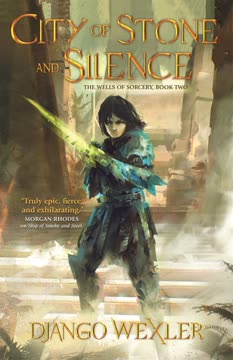
City of Stone and Silence is a masterful exploration of power, trauma, and the cost of survival, set against the backdrop of a world where magic is both salvation and damnation. Through the parallel journeys of Isoka and Tori, Django Wexler interrogates the nature of leadership, the burden of sacrifice, and the thin line between heroism and monstrosity. The novel's dual narrative structure allows for a rich psychological portrait of two sisters shaped by love, loss, and impossible choices. The Harbor, with its time-warping magic and haunted ruins, serves as both a literal and metaphorical prison—a place where the past refuses to die and the future is always at risk. The rebellion in Kahnzoka, the rise and fall of hope, and the ultimate confrontation with Prime all serve to underscore the novel's central lesson: that power, untempered by compassion and self-awareness, inevitably corrupts. Yet, in the end, the story is one of resilience and the possibility of redemption. Isoka and Tori are both changed—scarred, guilty, and uncertain—but their bond endures, and the promise of reunion offers hope that even in a world of stone and silence, love can survive.
Last updated:
Review Summary
City of Stone and Silence receives mixed but generally positive reviews, averaging 4.01 out of 5 stars. Readers praise the dual perspective between sisters Isoka and Tori, with many finding Tori surprisingly complex and compelling. The action sequences, world-building, and magic system earn consistent acclaim. Some reviewers note the second book feels less engaging than the first, citing slower pacing in Tori's early chapters and excessive teenage angst. A few readers express discomfort with romantic content involving the young protagonist. Overall, fans appreciate the character development and are eager for the trilogy's conclusion.