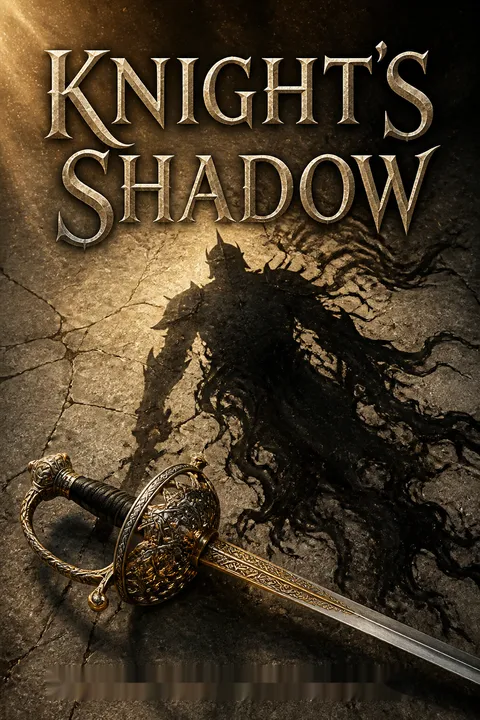


Plot Summary
Prologue
The Greatcoats are travelling judges who carry the King’s laws into Tristia’s duchies, where nobles would rather kill them than obey. A century earlier, the Dashini assassins devised the Greatcoat’s Lament, a punishment so terrible that no one dared take up the coat again.
King Paelis and Falcio revived the order, but the King is dead and the Greatcoats are hunted. The narrator, Falcio himself, reveals that the Lament is real. His account begins as he wakes from a poison-induced paralysis, unsure whether his body will ever obey him again.
The prologue makes the Greatcoats’ idealism feel precarious before the plot begins: their authority rests not on an army or a secure institution, but on the willingness of individuals to wear a dangerous coat and uphold laws the powerful reject. The Lament embodies the counterforce to that ideal, a method of terror designed to make courage appear futile. By revealing that Falcio is speaking from inside the punishment, the prologue turns the story into testimony as well as adventure. His survival is not assured, but his decision to recount events already resists the silence the Lament was meant to impose.
The Mist Takes Aline
Four weeks after Duchess Patriana poisoned him, Falcio wakes unable to move while his friends Brasti and Kest argue over whether he is alive. The missing village children and absent Trinistian troops alert him to danger. Villagers ignite nightmist, and Trin’s Knights attack the Greatcoats.
Falcio fights while still weak, finds a murdered child, and mistakes Valiana for Trin in the fog before she helps him survive. The Tailor then reveals that the captured girl is a decoy: Aline, Paelis’s daughter and heir, is hidden nearby. Valiana, unaware of the deception and sworn to protect Aline, has ridden after the decoy. Falcio abandons the Tailor’s plan and pursues her on Monster, the scarred Fey Horse.
The opening makes Falcio’s compromised body part of the tactical problem: his paralysis delays recognition, while his investigative habits still let him read the missing children as evidence. The village’s betrayal is not simple villainy; its people fear for their families under a Duchess’s power. The dead child makes that coercion concrete, leaving Falcio responsible for a danger he did not create but cannot dismiss. His mistaken attack on Valiana shows how grief and revenge can distort perception. The decoy plot also establishes the story’s recurring moral cost: protecting Aline repeatedly means placing other people in danger.
Valiana Chooses the Crown
Falcio catches Valiana after she helps the decoy escape her captors. The woman who killed the remaining Knight introduces herself as Dariana, a severe fighter with ties to the Tailor’s new Greatcoats. Back in the village, Aline admits she does not want the throne or the deaths that seem to follow her.
She considers fleeing south with Falcio to join Ethalia, the healer who once offered them refuge. Instead, Aline decides she must accept the crown if it prevents another child from inheriting the same danger. The next morning, the Tailor reveals that Duke Erris of Pulnam has switched sides to Trin. She sends Falcio, Kest, Brasti, Dariana, and Valiana south to secure other Dukes’ support.
Aline’s decision is not a triumphal embrace of power. She accepts the crown by reasoning that refusing it could transfer the burden to someone less prepared, a child’s attempt to make responsibility survivable. Falcio’s private longing to escape with her complicates his role: duty protects Aline, but it also keeps him from the ordinary life he wants with Ethalia. Valiana’s pursuit of the decoy similarly marks a shift from former privilege to chosen service. Dariana’s arrival adds a useful counterpoint: she understands violence as a practical skill, while Falcio and Aline continue asking what violence is for.
Trin Behind the Mask
As the company rides south, Valiana trains under Dariana, while Falcio’s morning paralysis grows longer and his hope of recovery fades. At a ruined chapel, a frightened girl called Cantissa wears a wooden apparatus that gives her Trin’s face. Trin speaks through the girl, taunts Falcio, and reveals that the frame is hurting its wearer.
Kest cannot enter the chapel’s consecrated boundary, a first sign that his new status as Saint of Swords has brought a curse as well as power. Trin claims to have taken Aline and gives Falcio a tooth belonging to his murdered wife. When Trin turns the screws in the frame, Cantissa dies in Falcio’s arms. The company continues toward Aramor, carrying the threat and Falcio’s grief with them.
Trin’s disguise literalizes the book’s concern with imposed identities: Cantissa’s face is overwritten until her body becomes a weapon against her will. Falcio’s restraint matters because attacking Trin’s image would kill the innocent girl beneath it. His helplessness is not abstract; he must hold Cantissa as she dies. The chapel also introduces a cost to Kest’s sainthood, complicating the fantasy of mastery with bodily and spiritual limits. Trin’s gift of Falcio’s wife’s tooth reaches beyond political threat, exploiting grief as a way to control his attention and provoke him into reckless action.
Isault Sets the Price
At the palace of Aramor, Sir Shuran prevents his Knights from killing the Greatcoats and brings them before Duke Isault. The Duke says Tristia needs a monarch and agrees to support Aline, but refuses to be moved by her claim alone. He makes his endorsement conditional on Falcio settling a tax rebellion in Carefal.
Isault wants the villagers to pay a wartime levy of half their harvest, although no war has formally begun. Falcio accepts because Aline needs allies. On the ride, Shuran explains that Carefal lies on the border with Luth and its inhabitants have been taxed by both duchies. The assignment forces Falcio to choose between securing political support and applying the King’s law fairly.
Isault turns a royal succession into a test of administration. He does not ask Falcio to defeat an army, but to demonstrate whether law can survive contact with a practical injustice. Shuran’s disciplined intervention distinguishes him from the other Knights and makes the mission seem potentially fair. Yet Isault’s demand exposes the trap: Falcio needs the Duke’s endorsement enough to accept a case shaped by political leverage. The conflict therefore begins before the trial itself. Aline’s claim is already being priced by men who treat justice, taxes, and loyalty as pieces to bargain over.
Carefal Rejects the Levy
In Carefal, armed villagers seize Isault’s tax collector and threaten the Knights accompanying Falcio. Vera, their leader, demands proof that the travellers are real Greatcoats. Valiana supplies the King’s law limiting taxes to a quarter of a harvest, while Shuran confirms the Duke has invoked wartime levies without a declared war.
Falcio rules that Carefal owes only the lawful share and that its rebellion must end. The villagers and Shuran accept the verdict, and Shuran pays them for confiscated weapons.
A tavern performance has already turned Falcio into a folk hero, though its storyteller invents details and mispronounces his name. Isault signs Aline’s support decree, but that night he, his wife, and their children are murdered. Winnow, a missing Greatcoat, is found dead beside him.
Falcio’s verdict is legally coherent and morally incomplete. It prevents immediate fighting, but the villagers still surrender their weapons and remain exposed to ducal power. Public storytelling magnifies the difference between what Falcio did and what people need him to have done; his reputation is already becoming a political force. The murders then destabilize every apparent success. Winnow’s presence invites the Greatcoats to suspect their own history, while the deaths of the children make succession more than a question of adult power. The episode tests whether law can protect people when its institutions are controlled by those with the force to ignore it.
Winnow Becomes the Suspect
Knight-Captain Heridos urges the Aramor Knights to arrest Falcio and his companions, but Shuran refuses to accept guilt based on their presence alone. Falcio, Kest, and Brasti examine the bodies and conclude the family and Isault were killed in a sequence that does not fit the simple accusation against Winnow.
A concealed passage leads them out of the palace, but the trail has been deliberately misdirected. Shuran lets them pursue it, despite the risk to his own authority. At the Inn of the Red Hammer, the Greatcoats find the Tailor and Aline. Aline is exhausted and drugged to help her sleep; the northern campaign is collapsing, and the Tailor says the effort to put her on the throne may already be lost.
Shuran’s decision to permit investigation makes him appear to place evidence above institutional convenience, while Heridos represents the faster political answer: blame the outsiders and restore order. Falcio’s forensic attention resists that shortcut, but the false trail emphasizes how easily truth can be staged. The reunion with Aline changes the scale of the crisis. Her physical exhaustion reveals that even when the plot keeps moving, a child’s mind and body cannot absorb endless pursuit without consequence. The Tailor’s pessimism is strategic rather than emotional: she is already calculating what might remain possible after the original campaign has failed.
The Greatcoats Refuse Retirement
The Tailor gives Falcio, Kest, and Brasti money and tells them to abandon the struggle, while she hides Aline. The three pretend to agree, then meet Valiana and Dariana at the inn. They choose to continue, and the two women join them. Before the group can leave, Luthan soldiers and concealed Knights attack the common room.
The five Greatcoats fight their way through, then pursue the troubadours who have been performing a distorted tale of Falcio’s exploits. Colwyn admits he has turned Falcio’s story into a crowd-pleasing legend, while Nehra warns that the changing tale can turn public faith against the Greatcoats. Falcio chooses the Duchy of Luth next, hoping its Duke may support Aline and may know who ordered Isault’s murder.
The false retirement is a small but decisive act of agency: Falcio and his friends reject the Tailor’s protective strategy without pretending they have a better guarantee of survival. The ambush confirms that the danger is not confined to one duchy. The troubadours then make narrative itself a political instrument. Colwyn’s distortion is opportunistic rather than malicious, but the result may be the same as a deliberate smear: the public can be taught to expect heroism, betrayal, or both. Nehra’s warning matters because the Greatcoats depend on trust as much as on weapons. Their next mission is consequently about reputation as well as evidence.
Luth’s Heirs Lie Dead
The Greatcoats reach Duke Roset’s palace and discover that Roset is already dead. Inside, they find Nile, the King’s Arm, mortally wounded while protecting the Duke. Nile says the King secretly ordered him to guard Roset, but he cannot identify the attacker before he dies. Roset’s young wife, Beytina, is also dying.
She tells Falcio that Roset sent Knights to punish Carefal after its rebellion, and that the violence was meant to frighten other villages into obedience. Her warning sends Falcio’s company back to the village. They find houses burned and nearly two hundred villagers dead, among them Vera. Brasti tries to bury the bodies with his bare hands, then turns his grief into a vow to teach villagers to fight Knights with bows.
Nile’s death binds the present conspiracy to the King’s unfinished instructions, but his final disclosure offers no comforting explanation. The lives he protected were entangled with the same political order that helped destroy his King. Beytina’s revelation makes Falcio confront the consequences of his lawful judgment: the verdict did not cause the massacre, but it gave the Duke’s response a public setting and left the villagers vulnerable. Brasti’s attempt to dig with his hands is grief refusing to remain passive. His decision to arm ordinary people marks a shift from relying on law to building their capacity to survive when law fails.
Garniol’s Burning Roof
At Garniol, black-tabarded Knights are herding villagers into the square before a massacre. Falcio divides his companions by task: Dariana organizes the people carrying spears, Brasti positions archers, Valiana leads the children away, and Kest holds the enemy’s flank.
The villagers’ rough line breaks the Knights’ formation long enough for the archers to strike. Brasti refuses to execute two Knights who surrender, insisting they face trial. The surviving captain then ties young children to himself and sets a barn alight, using them as human shields.
Falcio enters the smoke, leads the children into a game that pulls the captain off balance, and kills him. Sir Vezier dies after naming Rijou as the next target. Brasti stays behind to train the village, leaving Falcio’s group.
This battle converts Falcio’s tactical intelligence into collective action: villagers who have never fought together become effective because each group has a specific task. The victory is not clean. Children die, a barn burns, and Brasti’s restraint is tested by the villagers’ demand for immediate revenge. His insistence on a trial preserves a distinction between justice and retaliation even after atrocity. Falcio’s rescue of the children depends on imagination rather than force, showing that his gift is not simply swordsmanship or strategy. Brasti’s departure gives the story’s moral division a practical form: one Greatcoat stays to protect people locally, while the others continue toward the larger political crisis.
Mercy Points Toward Rijou
On the road to Rijou, Saint Birgid appears and confronts Falcio with the men he has killed. She explains that Kest’s sainthood binds him to the sword and that refusing its demands may consume him. Kest admits he became a swordsman because a prophecy said Falcio would die at the hands of the Saint of Swords.
Birgid also tells Falcio he is the world’s second-best swordsman, a fact he would rather dismiss. The group reaches Merisaw, where Ethalia helps them enter Rijou. Falcio asks her to guide them through the city, then enters the palace expecting arrest. There he reveals Parrick, another Greatcoat hidden among the Duke’s Knights, and warns Duke Jillard that an assassin is coming for him.
Birgid’s encounter reframes Kest’s skill as a burden undertaken for love: he has spent years mastering the sword to keep Falcio from a predicted death. That protection is now dangerous to Kest himself. Falcio’s resistance to being called exceptional reflects a deeper refusal to treat his survival as destiny; he would rather see himself as an ordinary magistrate than as a figure whose choices shape everyone around him. Ethalia’s return offers a possible life beyond duty, but Falcio uses her help to re-enter Rijou. The scene therefore places intimacy and obligation side by side without making either one false.
The Key Behind the Door
Jillard’s son Tommer is trapped in the lower dungeon behind an iron door, held by an assassin who demands the Duke’s life. Falcio recognizes his former torturer, Ugh, imprisoned for helping him escape years earlier.
Ugh remembers the King’s laws imperfectly but has held onto their prohibition against torture. Falcio persuades him to reveal a hidden duplicate key, and the group enters the dungeon. They find Tommer and Valiana inside a cell with the treacherous Sir Toujean.
When Toujean tries to kill the boy, Valiana fights through the Dashini dust’s terror and kills him. The wounded Parrick dies, while Ugh saves Jillard from the escaping assassin and suffers a fatal injury. Falcio gives Ugh Parrick’s Greatcoat, which Ugh accepts as a promise to oppose torture.
The dungeon brings the King’s laws into their most brutal setting. Ugh, once an instrument of torture, has retained a fragment of moral instruction more faithfully than the nobles who claim authority. The hidden key is a practical expression of that change: he chooses to act for a frightened child rather than remain the obedient dog others made him. Valiana’s fight similarly moves beyond inherited status. She protects Tommer not because he is a royal heir, but because he is a terrified child in danger. Falcio’s gift of the coat does not erase Ugh’s past; it gives his remorse a demanding task.
The Monastery Is Ashes
The surviving Dashini assassin leads Falcio, Kest, and Dariana into the mountains to the hidden monastery. They find the order already dead, its members burned in a pit, and a blind messenger who gives no clear explanation before killing himself. With no enemy left to confront, Kest’s Saint’s Fever surges. He attacks Falcio, forcing Falcio to let Dariana wound him so the pain will break his rage.
Kest leaves to seek a sanctuary. The remaining Greatcoats then surround Falcio, and Dariana admits they were sent by the Tailor. The Tailor reveals that she trained a new force of so-called Queen’s Blades and planned to use political chaos to make Aline’s eventual rule possible. She has Falcio captured for the Dashini’s Lament.
The monastery’s empty ruin removes the enemy Falcio expected and replaces certainty with a deeper political mystery. Kest’s crisis makes the cost of sainthood immediate: the power that once protected his friends now compels him to attack them. Falcio’s choice to let Dariana injure him is an act of trust under extreme pressure, but the trust proves vulnerable when she later helps capture him. The Tailor’s plan arises from maternal fear and political calculation, not simple malice. Yet her language of necessity cannot erase the bodies produced by her methods. The chapter’s betrayals are painful partly because each character believes their choice serves someone they love.
The Lament Begins
The Tailor explains that she arranged the Carefal rebellion to draw Isault’s attention and expected her own assassins to kill him while Falcio was elsewhere. She denies ordering the deaths of Isault’s children, but admits she used Falcio’s growing reputation to conceal her moves.
She also confirms that Aline knew about the plan and feared dying if she refused it. The Unblooded Dashini begin their nine-part torture, intending to make Falcio’s suffering a warning against reviving the Greatcoats.
They use compounds and needles to keep him conscious and make him relive his deepest grief. Trin arrives and joins the ritual, using a tooth from Falcio’s dead wife to force him to experience her murder again. Falcio survives by reciting the King’s laws, even as the torment continues.
The Tailor’s explanation refuses the comfort of a clean villain. She believes mass danger is the only way to keep Trin from power, and she has treated Falcio as expendable because she thinks he can bear more than others. Her calculation is not neutral: it converts people into instruments and calls the damage necessary. The Lament then attacks the precise foundation of Falcio’s resistance, his memory of Aline and his faith in law. Reciting the laws is not a clever escape from pain; it is an attempt to keep a moral vocabulary alive when his body and memories are being used against him.
Dariana Remembers Her Oath
As the Lament reaches its final stage, the Unblooded use Valiana’s suffering to push Falcio toward despair. A child’s remembered word, valour, gives him enough strength to resist. Dariana finally recognizes herself as Shanilla’s daughter, a Greatcoat the King had sent to infiltrate the Dashini when she was fourteen. She kills Heryn with one of the ritual needles, then frees Falcio and Valiana.
Kest returns with Ethalia, who treats Falcio as the neatha poisoning burns out of his body. The group learns that the poison had blocked the Dashini compounds, while those compounds had also helped destroy the neatha. Falcio wakes in the forest with his friends around him, but the Tailor is already moving toward Castle Aramor with her forces.
Dariana’s rescue turns memory into action. Her identity was not erased by a simple disguise; years of coercion had made her uncertain which loyalties belonged to her. Recovering the King’s command does not make her past disappear, but it gives her a choice about what to do with it. Falcio’s survival likewise depends on the collision of harms: the poison that was killing him and the compounds meant to destroy him counteract one another. The result is not a miraculous restoration to innocence. He wakes injured, dependent on others, and forced to decide whether he can keep fighting after the Lament.
Shuran Takes the Field
The company reaches Castle Aramor and finds the Tailor’s Greatcoats dead across the grounds, with a thousand Black Tabards waiting beyond them. The Tailor is wounded and Aline has been captured.
Falcio notices that a sword from Carefal bears the same maker’s mark as one carried by the Tailor, proving that someone returned the confiscated weapons to the villagers. He realizes Shuran engineered the fear of rebellion to make the Dukes appoint him Realm’s Protector.
Shuran admits his plan and reveals that Trin is using Aline’s body through the wooden face-frame. He offers to release the other Greatcoats if Kest fights him. Kest accepts, understanding that Shuran wants the Saint of Swords’ mantle and that the duel is the only opening they have.
The maker’s mark converts an earlier clue into proof: the weapons were not merely replenished by an unknown benefactor, but circulated through a deliberate scheme. Shuran’s plan depends on making every group afraid enough to accept a protector, even if that protector manufactured the danger. Unlike the Tailor, he does not claim to act from care for Aline; order and authority are his stated goals. His use of Trin’s possession of Aline also shows how political power can seize control of a person’s body as well as her public identity. Kest’s acceptance of the duel is strategic, not a return to the old heroic contest.
Kest Gives Up the Sword
Shuran proves faster and more skilled than Falcio, while Kest remains trapped inside a consecrated circle. Falcio keeps Shuran focused on their duel by fighting wildly, recreating the desperate movements of his wife’s last moments. When Kest forces his arm beyond the circle, Falcio cuts off his hand. Kest’s defeat passes the Sainthood to Shuran, who is enthralled by the power and momentarily stops guarding himself.
Falcio runs him through with a rapier. As Shuran dies, his Knights prepare to charge, but Valiana, Dariana, and Ethalia restrain Trin and remove the frame controlling Aline. Brasti arrives with trained archers, who break the Black Tabards’ charge. The immediate battle ends, and Kest survives, though he has lost his right hand.
The duel overturns the usual fantasy of victory through superior technique. Falcio wins time rather than a fair contest, and Kest sacrifices the hand that could have made him the greatest swordsman in the world. That sacrifice disrupts Shuran’s plan because the new Saint is briefly absorbed in the power he sought. Falcio’s frantic imitation of his wife’s death is not mastery of grief; it is an ugly, purposeful distraction that lets his friends act. The battle’s outcome depends on coordinated interventions by women and archers as much as on the duel, challenging the idea that a single champion can save a kingdom.
Valiana Holds the Concord
After the battle, the surviving Dukes convene in Castle Aramor. Falcio demands a year for the Greatcoats to restore justice across Tristia, then refuses to let the Dukes put Aline on the throne before she is ready. Instead, he proposes a temporary Realm’s Protector.
Valiana accepts only after Aline formally releases her from her oath to protect her, allowing Valiana to place the country’s needs first. The Dukes agree, despite their anger at choosing a peasant-raised former princess.
The Tailor is imprisoned, and Falcio later confronts her there, rejecting her claim that the torture saved his life. On the ramparts, Valiana and the others declare what they intend to do next. Ethalia returns Falcio’s Greatcoat, and he chooses to remain with her and the order.
The resolution refuses the simple reward of crowning the rightful heir. Aline is not treated as a symbol whose blood automatically makes her fit to rule; her fear and exhaustion are reasons to delay power, not proof of weakness. Valiana’s appointment unsettles the hereditary logic that has governed Tristia, while her need to be released from Aline’s oath makes consent central to the transfer of authority. Falcio’s final decision to wear his coat again is not a return to unquestioned loyalty. He chooses the work while seeing the King, the Tailor, and the Greatcoats as fallible people rather than sacred instruments.
Epilogue
Falcio visits the imprisoned Tailor, who insists her betrayals were necessary to protect Aline and claims the Dashini’s torture saved him from the neatha. Falcio refuses to mistake survival for forgiveness.
Later, he joins his companions beneath the stars, where Valiana accepts the work of governing, Dariana begins considering what the Dashini might have been before corruption, and Brasti describes his archers as a force that can keep growing. Ethalia returns Falcio’s Greatcoat and invites him to stop running from the life he wants. Falcio accepts the coat, stays with her, and asks Nehra to tell the world that the Greatcoats are coming.
The epilogue leaves the political settlement provisional. The Tailor has been contained, not morally absolved, and Valiana’s authority begins amid a country still full of ambitious Dukes and damaged people. Falcio’s acceptance of the coat is paired with his acceptance of Ethalia, challenging the idea that duty requires the destruction of private love. His final request to Nehra makes storytelling part of the Greatcoats’ work: their public meaning will be shaped by memory, but not wholly controlled by the powerful. The ending offers renewal without pretending that the wounds of the preceding violence have vanished.
Analysis
Knight’s Shadow asks whether justice can survive when the institutions meant to enforce it are controlled by the powerful. The Greatcoats carry laws into villages, but the Carefal trial shows that a correct ruling cannot alone protect people from armed retaliation. Falcio’s dilemma is therefore not simply whether to obey the law; it is how to prevent law from becoming a respectable name for force.
The novel also resists the easy division between idealists and monsters. The Tailor engineers suffering because she believes Aline cannot safely rule yet. Shuran manufactures disorder to make military rule appear necessary. Both understand that fear changes what people will accept, though their motives and desired futures differ. Their strategies turn human beings into political instruments: villagers become examples, children become leverage, and Falcio’s grief becomes part of the Lament.
Against that logic, the book places forms of courage that are deliberately ungrand. Valiana fights to protect a child; Brasti teaches villagers to use bows; Ugh acts against his former role; Kest gives up the hand that defines his mastery. These choices show that moral strength is not a permanent identity but a decision made under pressure, often with a real cost. Stories are another kind of power. The Dukes command armies, but the Greatcoats depend on what ordinary people remember about them. Colwyn’s distortions reveal how quickly memory can be reshaped, while Nehra’s attention to witness turns storytelling into a responsibility. Falcio’s final choice to continue is not confidence that he can fix Tristia. It is a refusal to let the powerful own the meaning of what happened. The ending offers neither a restored kingdom nor a clean victory. It offers a year, a provisional protector, and a group of people who know the cost of trying again.
Review Summary
People Also Read


Characters
Falcio val Mond
The law’s stubborn swordFalcio is the First Cantor of the Greatcoats, a travelling magistrate who enforces the King’s laws with a rapier, sharp observation, and a willingness to take personal risks. His wife’s murder left him carrying grief that often turns into reckless self-sacrifice. He is devoted to King Paelis’s ideals, but his loyalty is not blind: he questions decisions that force ordinary people to pay for political plans. Falcio’s instinct is to look for the story behind a crime, even when that means confronting evidence that unsettles his beliefs. He loves his friends fiercely, often protecting them by withholding how much danger he is in. His deepest struggle is learning that courage is not the same as courting death.
Kest
The unmatched swordsmanKest is Falcio’s oldest friend and one of the finest fighters in Tristia. He approaches danger through calculation, reading stance, terrain, and timing with almost unnerving precision. His reserve can make him seem detached, but his loyalty is intensely personal: he has spent much of his life watching for threats to Falcio. The sword gives Kest a language for order and mastery, and he is most comfortable when a problem can be tested through skill. His close friendship with Brasti and Falcio rests on trust rather than sentimentality; he offers support through practical acts and clear assessments. Kest’s story asks what happens when a discipline that once gave a person purpose begins to demand more than he can safely give.
Brasti Goodbow
The irreverent archerBrasti is a former poacher, a gifted archer, and Falcio’s closest companion alongside Kest. He uses jokes, flirtation, and vanity to keep fear at a manageable distance, but his attention is fixed on the people who bear the cost of noble decisions. Brasti distrusts grand political designs because he has seen how easily they forget individual lives. His bluntness can hurt his friends, especially when his anger gets ahead of his judgment, yet his loyalty is durable. He measures a plan by whether it protects actual villagers, not by how elegant it sounds. His practical knowledge of bows becomes a way to give ordinary people a defense against armoured Knights.
Aline
The reluctant royal heirAline is King Paelis’s young daughter, hidden from the Dukes and raised away from the throne. Intelligent, observant, and more serious than her years should require, she has learned to watch danger closely because assassins repeatedly target her. Aline does not crave power; she worries that claiming the crown will cause still more people to die for her sake. Her relationship with Falcio is shaped by trust and affection, though she is capable of challenging his habit of treating sacrifice as inevitable. She wants a life beyond fear, but also thinks carefully about what her choices may demand of others. Aline’s youth matters: the story treats her as a person still growing, not merely as a symbol of royal legitimacy.
Valiana
The peasant-born protectorValiana grows up believing herself a princess and is forced to rebuild her identity when that inheritance proves false. She begins with the training and habits of nobility, but gradually learns to fight, listen, and make decisions without relying on rank. Her loyalty to Aline is genuine, yet it does not prevent her from questioning what Aline wants or what the country needs. Valiana is brave, but her courage sometimes tips into a dangerous wish to prove that her life matters. Falcio’s blunt protection can frustrate her because she wants agency, not a place behind him. Her experience gives her rare insight into courtly expectations and the laws that ordinary people rarely get to invoke.
The Tailor
The hard-minded strategistThe Tailor is a veteran organiser of the Greatcoats and the mother of King Paelis. She hides her royal connection behind a rough manner and a practical, often merciless approach to political danger. Where Falcio hopes law and persuasion can hold the country together, she assumes that people in power respond only when the cost of ignoring them becomes too high. Her love for Aline shapes nearly every calculation she makes, but affection does not soften her methods. She can read people sharply and use their weaknesses as readily as their strengths. The Tailor’s central tension is between protecting one child and accepting the suffering her plans inflict on many others.
Dariana
The dangerous new fighterDariana joins the company as a compact, highly capable fighter with a taste for direct action and little patience for formal ideals. She trains Valiana by teaching her to read an opponent’s weaknesses and survive a real fight, not merely perform noble fencing. Her humour is sharp, her loyalties difficult to read, and her willingness to use violence unsettles Falcio. She often notices the emotional truths that others avoid, even while refusing to make those truths comfortable. Dariana carries anger rooted in loss, but she is not simply driven by revenge; she is trying to decide what kind of person can emerge from a life shaped by violence. Her presence tests the Greatcoats’ assumptions about who belongs among them.
Ethalia
The healer who offers refugeEthalia is a Sister of the Merciful Light and a healer who once sheltered Falcio and Aline. She offers compassion without mistaking it for passivity, and she can read when Falcio’s self-sacrifice is becoming a way to avoid imagining a future. Her love for Falcio is sincere, but she does not treat love as ownership or ask him to become someone else. Ethalia’s spiritual order gives her access to people and places that the Greatcoats cannot reach by force. She combines practical care with a capacity for decisive intervention, tending to bodies while also challenging the stories people tell themselves about duty. Her presence represents a possible life beyond the violence that has defined Falcio’s adult years.
Duchess Trin
The ambitious claimantTrin is Patriana’s true daughter and a politically ambitious young woman who has spent years concealing her identity. She is skilled at performance, manipulation, and reading what other people want to believe. Her cruelty is purposeful rather than random: she uses shame, desire, and fear as instruments of control. Trin understands that power depends on relationships and appearances as much as armies, and she is willing to exploit both. Her rivalry with Aline is personal as well as political, sharpened by the fact that one girl is treated as rightful heir while the other fights to claim the position. Trin’s confidence can disguise how much she depends on allies whose goals may not match her own.
Sir Shuran
The disciplined Knight-CommanderShuran commands the Knights of Aramor and initially appears to be an unusually disciplined, thoughtful leader. He values obedience, command, and the responsibilities a Knight owes to his men. His severe burns and outsider status have made him acutely aware of how quickly honour can become a label used to exclude. Shuran respects skill in others and is curious about the Saints, but his understanding of power is rooted in control and military order. He can be courteous without being gentle, and his willingness to make hard decisions gives him a compelling authority. The character embodies the attraction of a strong protector in a frightened country, along with the danger of trusting order without asking who it serves.
King Paelis
The dead idealist kingPaelis is the king who revived the Greatcoats and tried to bind Tristia’s rulers to a shared code of law. He is witty, awkward, chronically unwell, and more perceptive than his self-deprecating manner suggests. Paelis trusts his people with difficult missions but often withholds the larger plan, believing they must discover their purpose through action. That secrecy inspires loyalty and frustration in equal measure. Falcio sees him as the clearest embodiment of a better country, while the others remember a complicated man with private flaws. Paelis’s influence persists through the laws he taught and the people he sent into the world, even when none of them can be certain what he intended.
Duke Jillard
Rijou’s guarded rulerJillard rules Rijou from a fortified palace and relies on surveillance, punishment, and tightly controlled access to maintain power. He is vain, vindictive, and often casually cruel, yet his love for his son Tommer is unmistakable. That affection does not erase the harm he causes other families, but it complicates Falcio’s ability to see him as merely a monster. Jillard is a political survivor who can recognize when the balance of power has shifted. His distrust of the Greatcoats comes from history as well as personal grievance, and his relationship with Parrick reveals how loyalty can exist even across deception.
Ugh
The captive torturerUgh is a huge, scarred former torturer imprisoned in Jillard’s dungeon. He speaks roughly and struggles to remember the King’s laws, but the prohibition against unjust punishment has taken root in him. He once helped Falcio escape, despite having been one of the men who inflicted his pain. Ugh sees himself as a dog shaped by his masters, and his fear of punishment is bound up with a deep conviction that he is beyond redemption. Falcio’s respect unsettles that self-image. Ugh’s character explores whether a person trained to harm others can choose a different responsibility without pretending the past did not happen.
Nile Padgeman
The King’s hidden guardNile is a strong, warm-hearted Greatcoat who has spent years serving as a Knight under an assumed identity. He is practical about danger and able to adapt to a life very different from the one he expected. His humour survives even as he faces serious injury, and he remembers the King with affection rather than reverence. Nile’s loyalty is expressed through patient, unglamorous protection. His presence illustrates how Paelis’s final commands scattered the Greatcoats into roles that their friends could not see, leaving each person to carry a private duty.
Parrick Edran
The concealed GreatcoatParrick is a Greatcoat serving as a Knight-Captain in Rijou under a false identity. He is brave and reliable in battle, yet the secrecy of his assignment places him in situations that strain his friendships and his sense of honour. Parrick’s loyalty to the King’s orders can look like betrayal to those who do not know what he has been asked to do. His relationship with Falcio is marked by affection, guilt, and the difficulty of explaining an absence that was deliberate. He represents the cost of a mission carried out without the freedom to explain its purpose.
Saint Birgid
The voice of mercyBirgid is the Saint of Mercy, a figure whose beauty and authority can disarm people even as she challenges them. She is not permitted simply to solve human conflicts, so her interventions tend to arrive as questions, warnings, or moments of emotional pressure. Birgid sees the cost of Falcio’s violence more clearly than he does, but she also recognizes that mercy cannot be imposed as a command. Her connection to Kest gives her insight into the dangers of sainthood, while her relationship with Ethalia reflects a hope that compassion might take a different form in the world.
Nehra
The listening BardattiNehra is a Bardatti musician and collector of stories who travels with the less talented storyteller Colwyn. Her guitar can change the emotional shape of a room, and she listens more closely than she speaks. Nehra understands that stories do not merely record events; they influence what people believe is possible. She follows Falcio’s company to witness what happens, even when doing so places her in danger. Her quiet persistence contrasts with Falcio’s need to act immediately, while her attention to memory gives the Greatcoats’ deeds a future beyond the battlefield.
Tommer
Jillard’s adventurous sonTommer is Duke Jillard’s eleven-year-old son, curious enough to defy his father in order to see a Dashini prisoner. His love of stories, especially the work of the troubadour Bal Armidor, shapes how he understands courage and public life. Tommer is still a child, but he has a strong sense of who deserves protection and can speak with surprising authority when others dismiss someone he cares about. His connection with Valiana is immediate and affectionate, offering a glimpse of kinship that is chosen rather than inherited.
Duke Isault
Aramor’s bargaining DukeIsault rules Aramor with an appetite for food, blunt speech, and an opportunist’s instinct for leverage. Beneath his grotesque humour, he believes Tristia needs a monarch and some enforceable laws, partly because trade and security depend on them. He regrets the King’s fall without ever fully accepting his own role in it. Isault tests Falcio by attaching political support to a local dispute, making the Greatcoat prove that law applies beyond royal succession. His mixture of self-interest and genuine concern makes him difficult to reduce to a simple ally or enemy.
Duke Roset
The absent Duke of LuthRoset rules Luth, a duchy whose border disputes and military ambitions affect villages such as Carefal. His decisions shape the crisis even after he can no longer explain them himself. He is known through the political arrangements around him and through the young wife he has taken, rather than through a direct relationship with Falcio. Roset’s position illustrates how rulers can make ordinary people bear the costs of rival claims without ever meeting them.
Beytina
The dying Duke’s wifeBeytina is Roset’s young wife, formerly a student of healing. She understands both the fragility of the privileged and the limits of the court healers who serve them. Though she has little power over the decisions made around her, she is observant enough to recognize how fear drives the Duke’s actions. Beytina speaks plainly with Falcio, even when the truth is painful, and her reflections on beauty reveal how narrowly women in her position are allowed to secure their lives.
Winnow
The missing GreatcoatWinnow was a forceful Greatcoat known for her skill with a broadsword and her fierce loyalty to the King’s laws. Falcio remembers her as a fighter who met danger directly and resisted the Dukes’ abuses. Her absence from the order has become a source of uncertainty for the surviving Greatcoats. The gap between the woman Falcio remembers and the rumours told about her forces him to question how much of a person’s story can be trusted when she is no longer there to speak for herself.
Colwyn
The crowd-pleasing storytellerColwyn is a travelling storyteller who performs with Nehra. He adjusts Falcio’s history to make audiences laugh and pay, showing more interest in a successful performance than exact testimony. His inventions nevertheless reveal how eagerly ordinary people want heroes who can challenge the Dukes. Colwyn is not a reliable historian, but he understands the appetite for stories and the small opportunities that can keep a travelling performer alive.
Vera
Carefal’s defiant leaderVera organizes Carefal’s resistance to the Duke’s excessive levy. She is suspicious of Greatcoats and Knights alike because experience has taught her that both may arrive claiming to enforce justice while leaving villagers to suffer. Her anger is disciplined by practical concern for her community. Vera asks Falcio to prove that he understands the law and the people it is supposed to protect, not merely to recite its words.
Plot Devices
The King’s Laws
A standard for judgmentThe laws Paelis taught the Greatcoats give Falcio a way to judge disputes between villagers, Knights, and Dukes. They establish limits on taxation, punishment, and the treatment of children, and they make the Greatcoats more than skilled fighters. The laws also generate conflict: a verdict may be correct in principle yet fail to protect people when rulers control the weapons and the penalties. Falcio’s habit of reciting them under pressure preserves a moral framework when fear and pain threaten to erase his sense of self. The laws are not a magic solution; their force depends on people choosing to uphold them.
Neatha Poison
A body’s failing clockPatriana’s poison leaves Falcio increasingly paralysed after sleep, first slowing his limbs and then threatening his breathing. Its progression makes travel and combat more dangerous, while his friends monitor each episode and try to understand how long he has left. Falcio initially hides the worst of his fear, partly because he still hopes for a cure and partly because he does not want the others to change their plans around him. The poison makes vulnerability a practical condition rather than a metaphor: he may be unable to move at the exact moment his companions need him. Its interaction with the Dashini’s compounds later becomes central to his survival.
Saint’s Fever
Power with a costKest’s victory over the former Saint of Swords gives him extraordinary ability but also binds him to the Saint’s compulsions. He cannot enter certain consecrated places, and prolonged resistance to his sword-driven rage brings on a fever that can overwhelm his judgment. Sanctuary offers a way to contain the condition, though it requires Kest to submit to a ritual he does not initially understand. The device complicates the usual promise of power: Kest’s skill grows, but so does the risk that he will hurt the people he most wants to protect. His relationship with the sword becomes a struggle over agency, not just mastery.
The Dashini Lament
Terror aimed at memoryThe Lament is the Dashini’s method of torturing a Greatcoat until the survivor’s suffering discourages anyone else from taking up the coat. Its needles, compounds, and prolonged assaults attack both the body and the victim’s ability to remain mentally present. In Falcio’s case, Trin participates by forcing him to relive his wife’s murder, turning grief into a tool of political intimidation. The Lament is introduced in the prologue as a feared historical practice, then becomes the ordeal that tests whether Falcio can retain the laws and values he claims to serve. It frames endurance as more than physical survival.
Bardatti Storytelling
Memory becomes political forceThe Bardatti travel through Tristia collecting and performing stories. Their work can preserve acts of courage, but it can also distort facts to please an audience or influence public feeling. Colwyn turns Falcio into a comic folk hero, while Nehra understands the longer consequences of what the tale teaches listeners to expect. The changing story of the Greatcoats matters because their authority depends partly on whether ordinary people believe they stand for justice. By placing a musician and a storyteller beside the political plot, the book asks who controls a public memory and what a movement becomes when its legends no longer match its actions.
Greatcoats Series

About the Author


Download PDF
Download EPUB
.epub digital book format is ideal for reading ebooks on phones, tablets, and e-readers.








