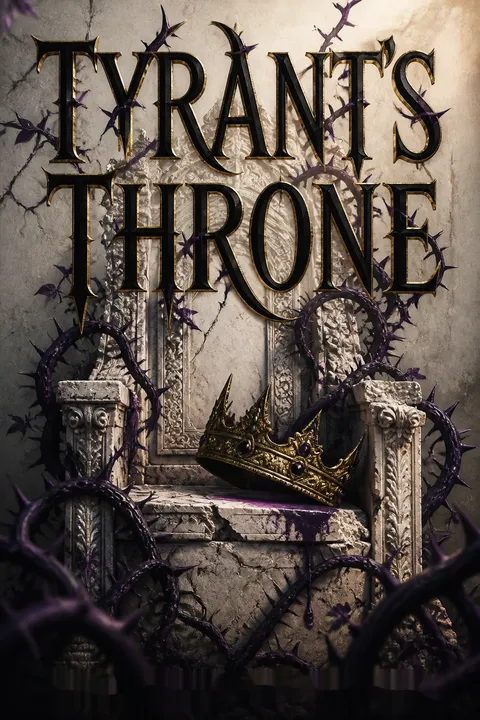


Plot Summary
The Wedding's False Rescue
At Margrave Evidalle's wedding, Chalmers, an eighteen-year-old in a shabby coat, tries to stop him from forcing Lady Cestina into marriage. Cestina abruptly reveals that the apparent victim is part of the plot: she supports Evidalle's rebellion against the Crown, and her sister Mareina is captive below deck.
Evidalle has baited a Greatcoat into arriving so he can make her arrest the opening of a war against the magistrates. When he discovers Chalmers has no official coat or jury coin, he thinks his trap has failed. Kest, disguised as a monk, claims a juror's coin and identifies himself. Brasti, hidden among the cooks, reveals his bow. Falcio, posing as a servant, joins them, turning the staged spectacle into a real fight.
Evidalle tries to make justice look like theater, with a captive woman cast as a willing bride and an attempted rescue recast as treason. Chalmers's inexperience makes her vulnerable, but her insistence on naming the abuse prevents the nobles from keeping the performance safely fictional. The Greatcoats enter under disguises, yet their authority depends less on their uniforms than on the people willing to recognize their verdicts. That distinction, between the visible symbols of law and the public's faith in it, becomes the novel's central political test.
Rhetan Rewrites the Verdict
Falcio, Kest, Brasti, and Chalmers fight through Evidalle's guards, free Mareina, and defeat Cestina, but a second Margrave arrives with a hundred disciplined soldiers. Rhetan, Evidalle's uncle, takes control without raising his voice.
When Evidalle threatens Falcio with a crossbow, Falcio declares him guilty of murder, unlawful confinement, and treason. Rhetan kills his nephew with a dinner knife, then annexes Evidalle's lands. Falcio forces him to compensate Mareina's family and establish her as Damina of Revancia, while Cestina transfers her inheritance to her sister by taking religious vows.
Rhetan accepts the terms because they preserve his political advantage. Falcio has rescued the captives, but the resulting settlement gives a calculating nobleman even more power.
Rhetan's entrance changes the scale of the danger. Evidalle is theatrical and impulsive; Rhetan understands that a verdict can be both legitimate and useful to a victor. Falcio secures concrete remedies for Mareina, but Rhetan converts the crisis into territorial gain. The episode refuses the comforting idea that justice and political success naturally coincide. A lawful outcome can restrain cruelty and still strengthen the machinery that produced it. Falcio's work is not simply to punish a guilty man, but to bargain for the vulnerable inside a system whose winners are rarely innocent.
Vois Calan Judges the Dead
On the stolen wedding barge, Falcio's party sees villagers dragging a broken body toward a cliffside gallows. The magistrate, Olise, explains that the man has already died by jumping from the gorge.
She and the women of Vois Calan hold trials for men who abandon their families through the Gorge Prayer, a suicide custom presented as sacrifice. The dead man's wife, Janelle, testifies that he spent the family's last coins on food and drink before leaving her and their child destitute.
Nehra explains that failed harvests, war, and absent men have left the village near collapse. Falcio wants to stop the execution, but accepts that the women use these trials to teach their children that desertion is not noble. The Greatcoats leave them supplies and money.
Olise's court is legally irregular, yet its purpose is painfully exact: it contests a story that makes abandonment seem virtuous. The village cannot restore its dead or repair the economy, so it uses public judgment to protect the meaning of responsibility for the next generation. Falcio's instinct is to intervene, but Nehra makes him see that rescuing people from a custom is not the same as removing the hardship that sustains it. The scene widens the book's concern beyond rulers and succession. The law matters most to people who have little power to make it work.
Ossia Counts the Cost
At Werta's Point, Duchess Ossia scolds Falcio for disrupting her quiet investigation of Evidalle's allies. Her extravagant pavilion conceals a graver problem: Baern is almost alone among the Duchies in still supporting the Crown, and Ossia cannot keep paying for Aramor's repairs, soldiers, and medicines indefinitely.
The lesser nobles may use the interregnum to break away. Chalmers rejects the Duchess's attempt to take charge of her, insisting that being a Greatcoat does not make her anyone's possession.
Ossia also reveals that the coming council vote on Aline's coronation could end in secession if the Dukes refuse to support a monarch. Falcio recognizes that heroics alone cannot secure the throne, but has no political skill to replace them.
Ossia's anger forces Falcio to confront the material costs hidden behind his moral victories. He has stopped plots, but neither a saved heir nor a dead conspirator automatically supplies food, weapons, or stable government. Chalmers's refusal to be managed echoes the very principle the Greatcoats claim to defend: authority must answer to the person it governs. Yet Ossia's practical realism is not a clean alternative to Falcio's idealism. Her plans depend on manipulating other nobles, and the novel keeps asking whether political survival can be purchased without quietly making justice subordinate to power.
Valiana's Reputation on Trial
After Valiana, the Realm's Protector and Falcio's daughter by choice, has her first sexual encounter with Lord Pastien, he panics at her intensity and claims that the poison Adoracia has made her insane.
Ethalia determines that the episode was not a relapse, but Pastien's story is already spreading among the nobles. Falcio wants to beat him for humiliating Valiana, while Valiana refuses because Aline needs the Luthian lord's support. Dariana secretly corners Pastien and frightens him into promising to correct the story.
The incident exposes the price Valiana pays for acting freely in a court that treats a young woman's desire as evidence against her. Her insistence on duty leaves Falcio unable to protect her in the way he instinctively wants.
The scene makes private intimacy a public instrument. Pastien's embarrassment becomes a story about Valiana's fitness to govern, while her own account of her experience matters less than the version that protects his status. Falcio's impulse to retaliate is affectionate but also paternalistic; Valiana insists that she must manage the political consequences herself. Ethalia's explanation separates genuine illness from convenient accusation, but cannot stop the rumor from doing its work. The episode shows how institutions regulate women through reputation, and how care can become another form of control when it refuses to respect a person's chosen risks.
Morn's Warning from Avares
The council demands that Aline marry to secure the succession, and Falcio loses his temper when the Dukes discuss her as a means of producing an heir. They send him to the dungeon, where he finds Morn, a Greatcoat long absent in the western mountains. Morn reports that Avares has begun forging steel, building cannons, and uniting its warbands under a leader called the Magdan.
He also saw Trin hiring an Avarean army. Valiana assigns Falcio to investigate the border villages and capture Trin alive, so she can face trial rather than be assassinated. Before he leaves, Aline asks Falcio to help her choose a husband, and he sees how frightened she is of the choice. He promises to advise her when he returns.
The mission joins two crises that Falcio would rather keep separate: an external military threat and the internal struggle over who may rule. Valiana insists that even Trin must be brought to trial, making the law a public demonstration rather than a private instrument of revenge. Aline's request turns succession from a debate among old men into a personal cost borne by a young woman. Falcio leaves with competing duties, to protect the country and to keep Aline from being reduced to a political arrangement. The promise he makes is tender, but it also deepens the stakes of his absence.
Den Chapier Stands Empty
Falcio's party reaches Den Chapier, an iron-mining village emptied of its people and supplies. After Falcio nearly wounds a hidden child named Tam, Tam's mother, Rhissa, confronts the Greatcoats with a bow. She explains that Duke Perault's death ended the deliveries of food and mining equipment that kept the settlement alive.
Avares supplied food during the winter, and most villagers have crossed the mountains to join the people who fed them. Rhissa stayed because she hopes her soldier husband may return, and because a wounded young Avarean lies near death in her care. Morn recognizes the injured man as Gwyn, a Rangieri apprentice who killed Morn's mentor, Yimris. Morn chooses to treat him rather than avenge the old man's death.
The abandoned village complicates the inherited story of Avarean barbarity. The people who crossed the border did so because food arrived from the country Tristia taught them to fear, while their own rulers let the mines and families go without support. Rhissa's decision to stay is not simple loyalty or foolish hope; she remains responsible for a child, a sick stranger, and the possibility that her husband might return. Morn's restraint toward Gwyn offers a contrasting form of justice: he refuses to let grief dictate punishment. In both cases, survival depends on obligations that official borders do not honor.
Morn Builds a New Nation
Crossing into Avares disguised as laborers, Falcio, Kest, Brasti, and Morn are captured and carried by pulley to a fortified camp. There they see Shan steel weapons, drilled formations, armed women, and cannons, evidence that Avares is changing faster than Tristia understands. Morn reveals that he has become the Magdan and gathered many Greatcoats around him.
He wants to annex Orison and Hervor, then build a country ruled by magistrates instead of Kings and Dukes. Forty-two of Falcio's fellow Greatcoats stand behind him. Falcio refuses to accept the plan, recognizing that replacing noble rule with a judiciary's rule would still concentrate power. Morn challenges him to prove that he remains fit to lead the Order.
Morn's proposal is dangerous because it grows from a real diagnosis. The old political order has failed ordinary people, and the Greatcoats have often been too small a force to repair it. His answer, however, turns the judges into rulers, confusing expertise in law with a right to command everyone. The forty-two Greatcoats make this more than a personal betrayal: they embody the temptation to choose effective power over constrained authority. Falcio's refusal is not a defense of the status quo. It is a refusal to let justice become a new name for rule without consent.
The Mountain Duel
Morn challenges Falcio in a formal duel, but the high altitude quickly robs Falcio of breath, balance, and clear sight. Morn exploits the disadvantage, first defeating him with the glaive and then beating him while keeping him upright, forcing Kest and Brasti to watch. He strips off Falcio's greatcoat and orders it burned, insisting that the Greatcoats have failed the country.
Falcio has spent the fight trying to find an opening, but Morn controls the terms and never lets the duel become a clean test of skill. He is taken to a cell, badly injured and without his coat. The loss leaves him physically helpless and makes his later refusal to abandon the law a harder, more costly choice.
The duel exposes the limits of Falcio's usual method. He reads opponents through terrain and tactics, but here the terrain is inside his own body: thin air defeats the reflexes and endurance on which he relies. Morn's decision to prolong the beating turns combat into political humiliation, asking the captive Greatcoats to witness their leader's powerlessness. The coat is more than equipment, yet its removal also warns against treating symbols as sufficient protection. Falcio's defeat does not prove Morn's ideology correct; it proves that skill and conviction can be manipulated when one side controls the conditions of the contest.
A King in the Cell
In the camp's cells, Falcio finds Trin imprisoned beside a battered teenage boy, Filian. Trin tells him that Filian is King Paelis's son, raised by Duchess Patriana as a reserve heir, and possibly older than Aline. Filian's resemblance to Paelis convinces Falcio that the claim may be true, though Trin's motives remain suspect.
Morn expects the Greatcoats to kill Trin, allowing him to blame them and win support from the northern Duchies. Falcio refuses both that trap and Brasti's suggestion to kill the boy. He remains a magistrate, he decides, and will bring Trin and Filian back for judgment. Trin offers to draw Morn's pursuit away so the others can escape, leaving Falcio unsure whether her sacrifice is another deception.
Filian's appearance turns a military mission into a constitutional crisis. The threat is not simply that Trin may seize power, but that the law may demand recognition of a claimant whose existence Falcio never knew. Trin understands that Morn wants her death for political theater, and uses that knowledge to bargain for escape. Falcio's choice to bring both captives home preserves due process while exposing him to danger and uncertainty. His decision matters because he cannot yet prove who deserves the throne. The law becomes meaningful precisely when it prevents him from choosing the outcome he personally prefers.
Escape, Then Recognition
Falcio, Kest, Brasti, Trin, and Filian escape by using a lockpick, a hidden blade, and a cannon loaded with amberlight to blast open the fort's gate. Gwyn, recovered from his fever, finds them on the road and warns them that Morn has prepared a second ambush. Trin stays behind to draw the soldiers after her, while the others flee with Filian; Gwyn's horse, Asshole, carries him to safety.
Trin survives the blizzard and returns to Aramor with troops from Orison and Hervor. At the castle, Filian meets Aline, who immediately recognizes their resemblance and welcomes him as her brother. The new claim cannot be dismissed as a rumor. Aline's crown, already contested by the Dukes, now has a rival with a plausible royal claim.
The escape depends on cooperation among people who distrust one another: Trin supplies a diversion, Gwyn brings warning, and Falcio chooses to protect Filian rather than simplify the crisis by killing him. Their return makes the hidden succession tangible when Aline recognizes her brother. The personal connection between the heirs briefly offers hope that they might share power, but the political structure is already primed to turn kinship into competition. Trin's survival also changes her from captive to military actor. The novel keeps its central question alive: whether people can use law to contain ambition, or whether every institution will be bent toward it.
Ossia's Poisoned Coup
The Dukes debate Filian's claim while preparing to exploit it. Falcio considers making a deal with Ossia, who secretly brings soldiers into Aramor and locks him in the dungeon. He realizes too late that she intends to kill her own son so Aline can rule. During the attack, Aline runs to protect Filian and takes Ossia's poisoned blade.
Duke Jillard tries to reach her and is mortally wounded. Aline dies in Falcio's arms after naming her last wish: burial beside her father in Pulnam. Her death destroys the balance Falcio thought he could negotiate. Filian is left alive, Trin remains beside him, and Ossia's attempted solution has turned a succession dispute into a murder that could provoke endless revenge.
Ossia acts from maternal love, but her plan treats murder as a manageable political instrument. Aline's intervention exposes the human cost concealed by that arithmetic: she refuses to let another person be sacrificed for her crown. Jillard's attempt to save her complicates his history of manipulation without absolving it. Falcio's failure to understand the coup is not merely a tactical mistake; he has begun to accept the same logic that makes lives expendable in the name of stability. Aline's final request redirects the story from succession to mourning, and leaves Falcio facing the consequences of the compromises he has made.
The Blade Stays Down
As Trin laughs over Aline's body, Falcio plans to kill her and Filian, despite knowing that doing so would destroy the last claim to lawful rule. Kest blocks him and wins their brutal confrontation, but Falcio turns the fight by proving he is willing to kill his closest friend. He is about to strike when Ethalia, now the Saint of Mercy, steps between him and Trin.
Falcio rejects her influence at first, then drives his rapier into the marble floor instead of a person. He asks to be imprisoned. In the dungeon, Kest reveals that Paelis had charged him with stopping Falcio if he abandoned the law. The King had feared that Falcio's devotion to justice could become tyranny.
Falcio's near-murder is the inverse of his earlier refusal to kill Filian: grief now makes revenge feel like justice. Kest does not defeat him through superior force alone; he represents the promise Falcio made to the law and to their friendship. Ethalia's mercy creates space for a choice, but she cannot make it for him. The planted sword marks the crucial distinction between feeling an urge and acting on it. Paelis's hidden instruction confirms that the danger was always internal as well as political: idealism without restraint can reproduce the coercion it opposes.
Coins for a Country
While Falcio is imprisoned, Nehra gathers representatives of the ancient Orders to put Tristia itself on trial. Witnesses describe a country whose nobles have failed, whose people are hungry, and whose soldiers may not fight for it.
Falcio refuses to decide the nation's fate while grieving and returns to his cell. Then a guard gives him a Greatcoat coin, kept unspent by a volunteer who wants Falcio shown kindness. Outside, Falcio discovers that hundreds of people in the ragged army carry similar coins, each received for serving on a Greatcoat jury.
Their coins were never merely payment; they preserve the memory of a verdict they once trusted. Falcio chooses to fight for the country because its people, not its rulers, have kept faith with the law.
The coins turn an abstract claim about public trust into a visible fact. They have traveled through hardship and stayed unspent because their owners understand them as evidence that ordinary people once had a voice in judgment. Falcio's decision emerges not from patriotic myth but from the people standing before him, many of whom are poor and frightened. The trial therefore changes direction: Tristia is not vindicated by its institutions, but by citizens who have preserved a practice of participation despite institutional failure. The scene gives the Greatcoats a constituency beyond their own vows.
A Traitor Leads the Army
Filian agrees to let Falcio lead the defense but formally names him a traitor, giving himself a possible excuse to negotiate with Avares if the battle fails. Falcio asks the King to promise a citizens' council if Tristia survives, limiting the Crown's power. The army's Generals demand land, titles, and ships, so Falcio replaces them with the returned Captain Feltock, who lost an eye and a leg but still knows how to command.
Duke Meillard tries to block the army from crossing Pertine. Falcio and Valiana threaten to defeat his troops, and Meillard relents, sending soldiers and supplies. The force reaches the border with a small but growing army, though its troops are exhausted and inexperienced.
The formal treason is a paradoxical act of loyalty: Filian protects a route to peace by disowning the very force trying to save his country. Falcio's demand for a citizens' council also shifts the objective beyond restoring a throne; survival should change who gets heard. The Generals' price exposes how quickly military leadership can become personal enrichment, while Feltock's return offers experience without glamour. Meillard's concession is won through coercive leverage, not persuasion. The scene acknowledges that even a just cause must use power, while asking whether that power can be placed under limits.
Chalmers Rides the Scorn
Before the armies fight, the Avareans perform the Scorn, sending a warrior down Tristia's ranks to provoke a response. One frightened soldier raises a weapon, and the Avarean kills him. Falcio chooses Chalmers for the return ride, though she is terrified and poorly armed. He tells her to show the enemy her fear without surrendering to it.
Chalmers rides the entire Avarean line, turns, and makes a second pass; warriors drag her from her horse and try to tear her limbs apart. Quillata and twelve other Greatcoats break ranks to rescue her, risking punishment for violating the ritual. Their return gives Falcio allies, but it also confirms that his gamble placed Chalmers's life in danger.
Chalmers's ride rejects the fantasy that courage means feeling no fear. Falcio asks her to make fear visible, but his plan also uses her as an instrument to influence the enemy and his estranged comrades. Her survival is not a simple triumph, because she is nearly killed and the Greatcoats must choose to violate the ritual to save her. Their intervention proves that loyalty has not vanished entirely, though it has fractured. The scene tests the moral limits of leadership: a successful gambit can still leave its commander responsible for the person who paid its price.
Aline's Name Becomes a Cry
During the prebattle oration, Morn exposes Falcio's deepest shame: years earlier, Falcio was helpless when Duke Yered's men took his wife, Aline, and killed her. Morn claims that the Greatcoats and the fight for Aline, the heir, are only extensions of Falcio's private revenge. The soldiers begin to doubt the reason they came.
Falcio does not deny his failure. Instead, he insists that the dead deserve names, not anonymity, and asks the troops to remember the people they love. He recalls Aline, the heir, facing a God, and the army takes up her name as a shared vow. Morn has meant to break their courage, but Falcio makes grief the source of their resolve.
Morn's attack works because it contains truth. Falcio cannot answer it with a denial, and his willingness to expose his shame deprives the accusation of its power to isolate him. He shifts the soldiers' attention from the leader's motives to the people whose lives they hope to preserve and remember. Naming the dead does not promise victory; it creates a form of solidarity that survives the likelihood of death. The speech also joins the two Alines without collapsing them: the wife whose loss shaped Falcio and the heir whose courage gave the country a future.
The Bardatti Break Formation
The first assault begins with Avarean troops advancing in disciplined formation to their drums and songs. Feltock sends riders carrying amberlight torches across the field; the torches melt hidden snow, releasing nightmist that obscures the Tristian repositioning.
Nehra's musicians then layer their rhythms against the Avarean beat, disrupting the patterns that keep the enemy coordinated. Archers fire from the fog, while Dariana and Gwyn sabotage the cannons Morn brought to the field.
The explosions wreck the weapons and throw the Avarean camp into confusion. Tristia loses hundreds in the first day's fighting, but the Avareans lose more. Rhetan and Pastien arrive with reinforcements, and even more villagers enlist, giving Feltock enough strength to meet the next assault.
The Bardatti's music becomes an instrument of war because it changes how bodies coordinate, not because it magically defeats an enemy. The strategy turns Tristia's cultural difference into a practical advantage: the Avareans rely on stable rhythm, while the Bardatti make that rhythm unstable. Nightmist and sabotage likewise exploit terrain and expectation rather than raw strength. Yet the losses remain terrible, and reinforcements only postpone the numerical imbalance. The battle refuses to turn clever tactics into a painless victory. Tristia's survival depends on collective labor, including musicians, scouts, nobles, and ordinary volunteers.
Seven Against the Horde
With Tristia's army near collapse, Falcio and six companions run toward the Avareans while the Bardatti perform the enemy's own song, Seven for a Thousand. The story describes a handful of warriors holding a narrow pass, so the seven pretend the open field has the same constriction. The Avareans respond to the song and attack within its imagined bounds.
Morn joins the fight when his warriors' admiration begins shifting toward Falcio. Dariana stabs him below the lung, but his order to kill the seven is interrupted by a horn from the watching horde. They kneel, then denounce Morn as a coward for breaking the song's rules. His bid for leadership collapses; the battle stops, leaving both armies alive enough to negotiate.
The final gambit works by asking the audience of Avarean warriors to participate in its own legend. The seven cannot defeat a thousand by strength, but they can make Morn choose between winning tactically and honoring the story that gives his authority meaning. His betrayal of the song exposes the gap between the courage he claims to embody and the conduct he displays. The horde's judgment overturns his military command without requiring Falcio to kill him. Story, previously a tool Morn used to manipulate people, becomes a standard by which his own community judges him.
A Truce and a New Cantor
The treaty gives Orison and Hervor to Avares, lets their people choose whether to leave, and halts war for three generations. Filian refuses Trin's decree abolishing the Greatcoats, sends her away, and restores the Order. Falcio returns Aline's body to Pulnam and buries her beside Paelis; the Gods briefly let her meet her father and embrace Falcio before she returns to death.
Falcio then resigns as First Cantor, and Filian appoints Chalmers to succeed him. At the burial, Ethalia reveals she is pregnant. Falcio leaves the future of the Order to his friends, while the child will be born into a world shaped by their choices. His life is no longer organized solely around the dead he failed to protect.
The resolution does not restore the old country intact. It accepts territorial loss, places a limit on future warfare, and leaves the new King responsible for honoring restraints he has agreed to. Filian's refusal of Trin's decree shows that love does not require obedience to the beloved's worst judgment. Falcio's resignation is neither surrender nor triumph; he recognizes that the Order must continue without his grief governing it. The burial gives him a final contact with Aline without undoing her death. Ethalia's pregnancy then shifts his attention toward a future that asks for care rather than vengeance.
Analysis
Tyrant's Throne tests whether law can survive the people who claim to serve it. Evidalle turns a wedding into a political performance, Morn turns a military campaign into a test of legendary courage, and Falcio repeatedly learns that public belief can be as consequential as weapons. The contrast is not between idealism and realism, but between two kinds of realism: the belief that power must be concentrated to repair a broken society, and the belief that unchecked power will reproduce the same injuries under a new name.
Falcio's deepest conflict is therefore not whether he can defeat an opponent. He can usually find a tactical opening. The harder question is whether love and grief entitle him to decide for other people. His near-murder of Filian and Trin shows how easily protection becomes domination when the protector treats his own pain as a mandate. Kest's resistance and Ethalia's intervention do not absolve him; they return the choice to him. His decision to stop makes restraint an action rather than a lack of courage.
The novel also refuses to equate national survival with the preservation of borders. Tristia loses Orison and Hervor, yet the final treaty limits future bloodshed and leaves people free to choose where they live. The citizens who kept their juror coins offer a different image of political continuity: not a perfect state, but a remembered practice of being heard. Likewise, the Dal Verteri's renewed cooperation is valuable only if their Orders serve communities rather than claim power over them.
At the close, Falcio's resignation matters as much as his victory. He can no longer make the dead King's dream the sole measure of his life. Chalmers inherits the office, while Falcio turns toward grief, love, and an approaching child. The ending argues that justice is not a monument built once by heroes. It is a difficult practice passed to others, revised by citizens, and sustained by people willing to live beyond their own legends.
Review Summary
People Also Read



Characters
Falcio val Mond
The law's wounded bladeFalcio is the First Cantor of the Greatcoats, a traveling magistrate who can turn a courtroom verdict into a duel when the powerful refuse to obey. His courage is inseparable from self-doubt: he keeps moving toward danger partly because action lets him postpone grief and uncertainty. He values law as a restraint on personal power, yet his protective love can tempt him to decide that his own judgment should overrule it. His dry humor keeps friends close and pain at a manageable distance. Beneath the swordsman's confidence is a man asking whether a good motive can excuse a terrible choice.
Kest Murrowson
The unflinching shieldKest is Falcio's oldest friend, a Greatcoat whose intelligence and fighting ability make him the group's most reliable counterweight to Falcio's improvisation. He notices details others overlook, calculates danger quickly, and rarely wastes words. His loyalty is not blind agreement: when Falcio's judgment turns dangerous, Kest is willing to oppose him directly. Having lost his right hand and his former status as a Saint, he has to understand himself beyond mastery and strength. His dry precision can sound cold, but it is one of the ways he expresses care.
Brasti Goodbow
The laughing bowmanBrasti is the Greatcoats' archer, a skilled shot whose appetite for jokes and flirtation disguises a remarkable tenderness. He is the first to soothe frightened children and the one most likely to make a grim situation bearable without pretending it is harmless. His humor can be selfish or ill-timed, but it also keeps despair from claiming the group's entire attention. Brasti's loyalty is practical and emotional: he fights, improvises, and stays near the people he loves. He resists solemnity, yet he knows when a joke must give way to compassion.
Aline, the heir
The unfinished queenAline is the young heir to Tristia's throne and a figure of unusual courage, curiosity, and political promise. She is still a child, but she understands that rulership is not simply a right to command; it carries obligations to people who may never meet the monarch. Falcio's devotion makes him protective, sometimes to the point of underestimating her ability to make hard choices. Aline wants advice, not control, and she can recognize when his loyalty becomes an effort to substitute his judgment for hers. Her insistence on dignity shapes the ideals of those around her.
Aline, Falcio's wife
The first lost homeFalcio's wife is the emotional origin of his longing for a more just world. He remembers her through intimate details, shared humor, and the life they imagined on their farm, rather than through public achievements. Her loss has left him vulnerable to confusing duty with self-punishment: he sometimes treats every later struggle as a chance to make amends for a moment he cannot change. The name she shares with the royal heir links Falcio's private grief to the country's future, but the two women remain distinct in his memory and in the story.
Valiana
The protector in waitingValiana is the Realm's Protector, a young woman balancing public responsibility with the effort to claim a life of her own. The poison Adoracia fidelis remains a danger she must continually contain, while political opponents treat her body, relationships, and reputation as matters for public judgment. Falcio loves her as a daughter and struggles not to turn protection into control. Valiana is perceptive and increasingly adept at navigating council politics, but she does not mistake compromise for moral clarity. Her strength comes from accepting responsibility without surrendering her right to choose.
Ethalia
Mercy with a human pulseEthalia is a healer who becomes the Saint of Mercy, but she resists being reduced to a divine emblem. She offers comfort without pretending pain can be erased, and she can oppose Falcio without condemning him. Their attraction is real, yet she wants him to see the woman rather than the salvation he hopes she represents. Her restraint is not passivity: she chooses when to use her authority and when to stand beside people as an ordinary person. Ethalia's compassion has boundaries, and those boundaries make her mercy more demanding than simple forgiveness.
Trin
The brilliant destabilizerTrin is a noblewoman, conspirator, and gifted strategist whose charm is often another instrument of control. She can read political motives with unnerving precision and enjoys testing Falcio's self-image. Yet she is not merely a calculating villain: her history has taught her that power is the only reliable protection against helplessness, and she can form genuine attachments even while pursuing ruthless ends. Trin understands how stories and public perception shape authority. Her mixture of intelligence, injury, ambition, and capacity for affection makes her difficult to dismiss as a single kind of person.
Morn
The rival idealistMorn is a Greatcoat whose years beyond Tristia give him a wider view of the country's military and political weaknesses. He is patient, physically capable, and persuasive, with a genuine desire to replace corrupt rule with a society built around law. His danger lies in believing that a just goal makes concentrated power acceptable. He sees Falcio's limits clearly and knows how to turn them into leverage. Morn's idealism has curdled into resentment toward the King's unfinished project, leaving him eager to prove that he can build what the King could not.
Filian
The boy raised for ruleFilian is an adolescent claimant to the throne, educated in law, history, economics, and the harsh decisions rulers may face. He is thoughtful and curious, but his formal manner can make him seem older and more assured than he is. His affection for Trin complicates his judgment, while his respect for the late King gives others a reason to hope he may govern differently from those who shaped him. Filian's central tension is whether he will treat duty as permission to sacrifice others or as an obligation to restrain himself.
The Tailor
The maker in the shadowsKnown as the Tailor, she creates and maintains the Greatcoats' protective clothing, but her practical craft is matched by an expert talent for schemes. She has spent years manipulating events from the margins, often deciding that people are pieces in a larger design. Her relationship with Falcio is abrasive, intimate, and built from long familiarity rather than easy trust. She conceals vulnerability beneath insults and control, and she understands how personal attachments can become political traps. The Tailor's deepest loyalties are difficult to read because she rarely separates love from strategy.
Nehra
The singer who remembersNehra is a respected Bardatti whose music carries history, argument, and political force. She refuses to let Falcio reduce song to decoration, and she pushes him to understand that a country's memory can shape what its people are willing to defend. Her manner is blunt, often impatient with heroics that ignore material suffering. Nehra sees the ruin in Tristia clearly, but she does not confuse clear sight with surrender. Her work connects people through the stories and rhythms they share.
Chalmers
The young King's QuestionChalmers is a young Greatcoat appointed by King Paelis, with a gift for following evidence and uncovering what others miss. She has far less training with a sword than the older magistrates, and she hates being dismissed because of her age or gender. Her bluntness can be mistaken for arrogance, but it comes from a deep commitment to being treated as an agent rather than a child. Chalmers is drawn to the Greatcoats not for glory but for the work of finding truth. She represents a new generation whose legitimacy must be earned under pressure.
Duchess Ossia
The strategist of BaernOssia is a politically experienced Duchess who understands that the Crown cannot survive on ideals alone. She tracks alliances, resources, and the fragile loyalties of lesser nobles, often speaking with the impatience of someone who has spent a lifetime managing crises. Her pragmatism can become ruthless, especially when family and state interests collide. Ossia is neither a simple ally nor a simple enemy to Falcio; she recognizes the value of law while believing that survival sometimes requires decisions he cannot accept.
Jillard
The polished grieving dukeJillard, Duke of Rijou, is an elegant political operator who hides his motives behind impeccable manners and controlled wit. He understands the nobility's appetite for power because he has long participated in its games. Personal grief has left a visible fracture beneath his composure, though he rarely allows others to approach it. Falcio distrusts him while recognizing that their conversations can expose truths neither would offer directly. Jillard's ability to distinguish a calculated performance from genuine feeling is one of the few qualities that can unsettle him.
Dariana
The knife behind the smileDariana is a former assassin whose competence makes her dangerous even when she is standing still. She is direct, impatient with sentiment, and fiercely protective of the small circle she considers hers. Her relationship with Brasti is a volatile meeting of his flirtation and her possessiveness, yet beneath the teasing is genuine attachment. Dariana knows how institutions train people to kill and is capable of questioning the role her own Order has played. She tends to express care through action, often in forms that frighten everyone around her.
Gwyn
The northern pathfinderGwyn is a young Rangieri trained to travel through dangerous borderlands and survive where ordinary soldiers would fail. He carries the discipline of his Order's traditions, including a belief that hatred is a burden a traveler should not carry. His history with Morn's mentor makes him personally connected to the political conflict, but he remains capable of restraint. Gwyn's knowledge of Avares gives the Greatcoats essential information, while his outsider's perspective reveals how little Tristia understands about the people beyond its borders.
Captain Feltock
The general who returnsFeltock is a veteran commander whose body bears the cost of earlier conflicts. He has lost an eye and a leg, but retains a practical grasp of troop movement, discipline, and what inexperienced soldiers can endure. His manner is blunt, frequently self-deprecating, and more honest than the polished confidence of the court's Generals. His affection for Valiana is deep, though he does not want her to see him as broken. Feltock's value lies in experience rather than promises of victory.
Lady Mareina
The survivor made a rulerMareina is Cestina's younger sister, a young noblewoman whose family has been caught in a coercive political marriage. She endures captivity and deprivation without losing her ability to read danger. Her survival depends on more than rescue: she must learn to speak and act within the political world that used her as leverage. Mareina's emerging authority is grounded in practical judgment rather than inherited confidence. She represents the people who are made collateral by noble schemes and then expected to accept the settlement quietly.
Quillata
The seventh CantorQuillata is a seasoned Greatcoat known for toughness, command, and a fierce reluctance to abandon her fellow magistrates. Her judgment leads her to support Morn's vision for a time, but she retains an attachment to the people whose choices she distrusts. She is not easily moved by speeches or pleas; acts of courage and loyalty matter more to her. Quillata's presence forces Falcio to confront the cost of losing the confidence of his own Order, even when some of its members remain unwilling to let him die.
Rhetan
The patient MargraveRhetan is a patient and politically observant Margrave whose unassuming manner conceals a strong grasp of timing and leverage. He prefers to let impatient rivals expose themselves before he acts. Rhetan treats soldiers well enough to earn their respect, a quality that makes his authority more secure than mere rank. He can make a humane concession when it benefits him, but he rarely forgets the advantage hidden inside a crisis.
Lord Pastien
The anxious young lordPastien is a young nobleman responsible for Luth, trying to hold the loyalty of a court that doubts his authority. His insecurity makes him prone to managing appearances before he has understood the consequences of his actions. He can be frightened, self-serving, and politically useful all at once. Pastien is not a hardened villain, but his instinct to protect his reputation can damage people with less power than he has.
Rhyleis
The teasing Bardatti spyRhyleis is a Bardatti performer and spy whose flirtation often doubles as a way to test what Falcio is hiding from himself. She uses charm as both craft and camouflage, leaving others unsure when she is playing a role and when she is sincere. Her musical knowledge belongs to a wider network that carries news and influence across Tristia. Rhyleis is drawn to Falcio but refuses to let his grief define every encounter. Her brightness offers him brief relief without pretending that relief solves anything.
Sir Elizar
The village-minded KnightSir Elizar is a young Knight who believes his Order should protect ordinary communities rather than serve whichever lord pays for its swords. He is earnest but not naive about how far the Knights have strayed from that purpose. His willingness to question inherited practices gives the old Order a possibility of reform. Elizar's importance lies less in personal power than in his effort to recover a tradition of service.
Plot Devices
The Greatcoat's Juror Coin
Proof of public trustThe Greatcoats pay jurors with coins that symbolize a promise to uphold a verdict. Evidalle tries to expose Chalmers as illegitimate because she lacks one, while the ending reveals that ordinary people have kept the coins as mementos of having participated in justice. The token changes meaning across the story: it begins as a procedural credential and becomes evidence that the law has reached people beyond the court. Its value is not the gold but the relationship between magistrates and citizens that it records.
The Dal Verteri
A scattered civic inheritanceThe Dal Verteri are the ancient service Orders that once protected Tristia through distinct roles, including magistrates, Knights, spies, scouts, and Bardatti. Their present forms are fragmented and often corrupted, but the surviving members can still cooperate when the country faces an existential threat. The concept gives the final defense a structure beyond the Greatcoats alone. It also raises the question of whether institutions can recover their purpose without simply reclaiming old titles and authority.
Bardatti Warsongs
Music as battlefield strategyThe Bardatti preserve songs as history and use musical skill to influence morale. During the battle, Nehra's musicians layer rhythms and harmonies against the Avarean songs, disrupting coordination and concentration. A remembered Avarean warsong later becomes the basis for the seven-person final gambit. The device makes culture materially active: songs do not merely describe courage after the fact; they shape how soldiers move, what they expect from one another, and whether an audience recognizes a violation of its own ideals.
The Adoracia Fidelis
A struggle for self-commandAdoracia fidelis is a poison that can drive its victim into madness. Valiana has learned to resist it, but that resistance requires constant effort and leaves her vulnerable when emotion or physical strain overwhelms her. The poison makes outside observers quick to interpret her as unstable, whether or not it is responsible for what they witness. It therefore functions both as a physical danger and a political weapon, exposing how easily illness and women's behavior can be turned into arguments against their authority.
Avarean Rokhan
Courage measured by actionRokhan is the Avarean measure of courage, daring, and faith demonstrated in danger. It shapes their Scorn ritual, their treatment of enemies, and the public judgment of their Warlords. Falcio's strategy depends on understanding that the Avareans care about how a fight is conducted, not only who wins. That belief is both a military vulnerability and a source of restraint. The plot uses it to make performance and conduct matter as much as weapons, while showing that a culture's ideals can be manipulated or honored.
Greatcoats Series

About the Author





Download PDF
Download EPUB
.epub digital book format is ideal for reading ebooks on phones, tablets, and e-readers.








