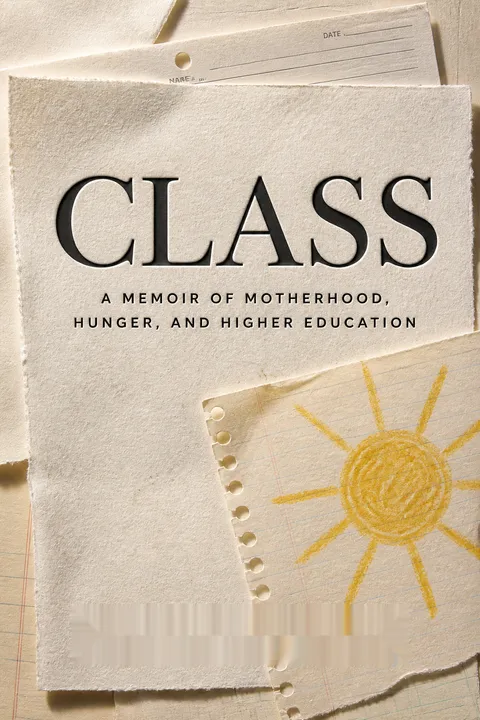


Key Takeaways
See poverty as a schedule of constraints, not merely a shortage of cash
Scarcity shapes the day. When Stephanie Land moves to Missoula with her young daughter, she is trying to create something ordinary and profound: a stable home and a school community. Their first kindergarten morning includes donated supplies, a free breakfast, and the knowledge that the school will send food home on Fridays. These details show how poverty reaches into time, transportation, childcare, and a child’s sense of security, not just the grocery budget.
Stability is built together. Land has moved with Emilia through fifteen homes and left an abusive relationship hundreds of miles behind. The kindergarten milestone does not erase those years, but it marks a place where they have found friends, services, and a chance to stay. The book treats safety as something assembled from reliable conditions, not a reward for being tough enough.
What's striking is how the opening refuses the familiar before-and-after story. A school breakfast can be both an ordinary meal and proof that a family’s survival depends on public infrastructure. This is a useful lens for understanding poverty: money matters, but so do predictable hours, safe housing, and people who can step in. The memoir also makes a careful distinction between reaching a milestone and being permanently secure. A stable moment deserves celebration without being mistaken for evidence that the underlying pressures have disappeared.
A college degree can be both an exit route and a debt trap
The price of access. Land sees a degree as a possible route to writing and a more secure future, but the route is expensive before it offers any payoff. When she first arrives in Montana, nonresident tuition is nearly three times the resident rate. Until she establishes residency, she can take only six credits a semester. Pell Grants and a scholarship help, but student loans also pay for rent and other necessities.
The arithmetic stays close. During her senior year, she estimates monthly income at $972 and fixed expenses at $1,300. She borrows to cover the gap, graduating with nearly $50,000 in debt. The degree is not a simple ladder out of poverty: it is a bet made while housing, food, and childcare remain immediate needs.
The memoir exposes a weakness in the usual human-capital story, the idea that education reliably converts into higher earnings. A degree may increase future options, but a student with dependents must finance the present while waiting for those options to materialize. Land’s experience also shows how tuition rules can make the same educational opportunity cost radically different amounts for different students. The ambition is not irrational because the payoff is uncertain. Still, the uncertainty is real, and institutions should not present education as a guaranteed escape hatch.
Make caregiving visible in every calculation of work and achievement
Hours have hidden owners. Land’s college schedule occupies only part of the day on paper. The rest is divided among housecleaning, childcare, school pickups, meals, homework, and the administrative work of maintaining benefits. Before classes, she cleans a gym to help cover her daughter’s preschool tuition. Later, roommates and friends become essential because classes sometimes run into the evening.
The work does not disappear. Land keeps a day planner filled with assignments, appointments, client schedules, and bills. Her education depends on people watching Emilia, and her ability to earn money depends on fitting paid work around school and parenting. What looks like free time from outside the household is often already spoken for. The memoir makes visible the labor required to keep a student, a child, and a household moving at once.
Care work is often treated as a private matter, while employment and study are counted as public achievements. Land’s account shows why that division misleads: childcare is part of the infrastructure that makes both paid work and education possible. The same logic applies to time poverty, where a person’s limited hours constrain choices even when the calendar appears flexible. Recognizing caregiving does not mean assuming every parent has the same needs. It means counting the actual work before judging someone’s productivity or commitment.
Question praise for resilience when a family needs reliable help
Endurance can disguise harm. Land uses resilience to describe the way people praise poor families for continuing to function under conditions they did not choose. She resents being celebrated for coping while facing food insecurity, housing instability, panic, and the constant risk that a car repair or missed paycheck could unravel the month. The praise can make hardship sound like character training instead of a problem requiring resources.
Benefits impose their own tests. When Emilia turns six, Land’s food assistance is cut because officials treat school age as evidence that she can work more. She is told she must meet a twenty-hour work requirement, even though she is taking fifteen credits, working, and parenting. In Land’s account, the hours spent studying do not count as work, and the demands of care remain invisible.
The memoir distinguishes coping from well-being. A person may keep meeting obligations while experiencing serious strain, so outward competence is a poor measure of whether support is adequate. This challenges a popular habit of praising resilience without asking what conditions make it necessary. At the same time, endurance can be a meaningful source of agency for people who have few options. The problem is not admiring perseverance. It is using admiration as a substitute for food, childcare, and rules that account for real responsibilities.
Turn lived experience into art without making suffering your only credential
Ordinary work contains stories. Land writes about cleaning other people’s homes, noticing details that reveal loneliness, neglect, and class difference. In one essay, the toilet, the furniture, and the traces of a client’s routines become part of a portrait of the person who lives there. A professor responds strongly to the piece and tells her it could become a book. A literary magazine later declines it but praises her narrative voice.
Craft gives experience shape. Land learns to turn memories of work, relationships, and motherhood into essays, while also confronting the discomfort of sharing intimate material in class. Some instructors support the work; another calls a long essay relentless. The memoir shows writing as both a way to interpret experience and a skill that requires revision, structure, and an audience willing to take the writer seriously.
Land’s writing does more than reveal private hardship. It changes the reader’s scale of attention, making a job often dismissed as unskilled labor into a source of observation and narrative knowledge. That shift is a strength of memoir: individual detail can challenge assumptions that abstract argument leaves untouched. There is also a risk when institutions reward stories chiefly because they contain pain. The important distinction is between treating hardship as the writer’s only value and recognizing the craft that turns lived material into art.
Claim reproductive choice, including the choice to parent without a partner
A decision made in uncertainty. Land discovers she is pregnant and initially schedules an abortion, unsure what she wants and uncertain who the biological father is. The man she asks for support reacts with anger and insults. After speaking with a crisis pregnancy center, she spends time alone considering what she wants rather than what others expect. She decides to continue the pregnancy and accepts that she may raise the child without a partner.
Autonomy is not ease. Land’s decision does not solve the financial problems around her. She worries about food, medical care, school, and how Emilia will respond to a new sibling. Still, she finds relief in making the decision herself, without a hostile partner directing the terms. She tells Emilia she will become a big sister, and the family later names the baby Coraline.
This section broadens reproductive choice beyond a single approved outcome. The account treats abortion and continuing a pregnancy as decisions that belong to the pregnant person, rather than as measures of virtue or responsibility. It also makes clear that autonomy operates within material limits: choosing freely does not mean having adequate money, healthcare, or support. The crisis center’s interest in steering the conversation toward parenting complicates the setting. Land’s central point remains personal authority over the decision, not a claim that one choice is right for everyone.
Watch how institutions turn precarious work into fictional earning power
A past job becomes a verdict. In a child-support hearing, a judge uses Land’s brief stint earning $15 an hour cleaning an office building to estimate what she could earn full-time. The calculation treats her as making about $2,600 a month, although the job was part-time, unsustainable, and had ended. The judge also questions whether her education is necessary for employment and whether childcare costs relate to work or schooling.
The ruling changes the household budget. The judge sets support at $432 a month rather than the $689 proposed by the child-support office. Land hires a lawyer and eventually reaches an agreement for $600 a month. The process requires time, documentation, and money she does not have, while the caregiving and schooling that limit her work options count against her.
Administrative decisions often depend on categories such as employed, unemployed, or voluntarily underemployed. Land’s story shows how those labels can flatten a complicated schedule into an imagined salary, then treat that imagined figure as evidence about someone’s choices. The point is not that courts can ignore earning capacity. It is that capacity should be assessed alongside childcare, job availability, and the actual duration of past work. When a model excludes those conditions, its arithmetic may look neutral while producing a distinctly unequal result.
Ask for practical help before isolation makes every setback harder
Useful help is concrete. When Emilia’s father cancels summer care, Land fears she may have to abandon a class or lose income. A local YMCA reviews her emergency application and reduces camp fees to $25 a week. Friends offer rides, childcare, and camp opportunities; professors let Emilia sit in class when childcare falls through. These acts do not erase poverty, but each solves a specific bottleneck that Land cannot solve alone.
Support is not always dependable. Land’s father does not call back after she asks for help, and a close friend withdraws from her birth support list days before the due date. The memoir refuses to pretend that community is automatically safe or reliable. It shows the work of accepting assistance, building new relationships, and discovering that a practical offer can matter more than general encouragement.
The strongest support in this account is specific: a reduced camp fee, a ride, a person available at pickup time. That specificity turns goodwill into usable capacity. Social connection matters not merely because it feels comforting, but because it can redistribute time, transportation, and care. Yet reliance creates vulnerability when a person has little backup. The lesson is not to trust everyone or to expect friends to function as a public safety net. It is to recognize practical help as legitimate, while building more than one path where possible.
Finish the degree without mistaking graduation for a happy ending
Achievement arrives amid uncertainty. Land graduates with Emilia beside her, heavily pregnant and carrying substantial student debt. She has not been accepted into the MFA program she hoped would lead to teaching and more secure work. Emilia earns Student of the Month after a difficult stretch at school, and Land makes sure to witness the ceremony. Neither event turns their circumstances into a neat success story.
The final arrival is physical, not symbolic. Coraline is born at a birth center after a rapid labor, weighing nearly nine pounds. Land experiences dangerous bleeding after delivery, and the medical team stabilizes her. The scene ends not with financial security or professional certainty, but with a newborn at home and the work of beginning again. The book honors progress while showing that a milestone is not the same as a resolved life.
The ending resists the tidy narrative in which education, grit, or motherhood settles every account. Graduation matters because Land has fought to reach it, and because Emilia sees her mother complete something difficult. But the uncertain work, debt, and need for care remain. This is not a rejection of achievement; it is a more honest account of what achievement can and cannot do. In memoir, a meaningful ending need not solve the protagonist’s life. It can reveal what remains at stake.
Analysis
Class is a memoir about the hidden price of trying to build an ordinary future while living with little margin for error. Its central tension is not simply poverty versus ambition. It is that ambition itself requires resources: time to study, someone to watch a child, reliable transportation, food, and the confidence that one setback will not cost a home. Land’s education offers a possible route toward work as a writer, but pursuing it also deepens debt and exposes her to institutions that do not consistently count caregiving or study as work.
The book’s strongest method is accumulation. A donated backpack, an empty bank account, a bureaucratic form, and a school call each seem small alone. Together, they show how private distress is produced by repeated negotiations with public systems and unreliable relationships. Land’s detailed account of budgets and schedules makes structural barriers legible without turning the memoir into a policy report. Its emotional force comes from showing how these pressures enter family life, including Emilia’s disappointments and attempts to understand adult instability.
The narrative also complicates the idea of resilience. Land is capable, resourceful, and determined, but the story refuses to treat those qualities as proof that hardship is beneficial or harmless. Her writing is not merely a record of damage: it is a practice through which she claims a professional identity and makes experiences that are often ignored available for public attention.
The memoir is not a representative study of all low-income students or single parents. It is one person’s account, and Land notes that some details are reconstructed, names changed, and events compressed. That limitation matters, but it does not diminish the book’s value as testimony. Its specific cases raise a broader question: when institutions reward work, education, and parenting rhetorically, do their rules actually make those things possible? The book’s answer is unsettling because the barriers are not dramatic exceptions. They are woven into the ordinary procedures of housing, benefits, schooling, and custody.
Review Summary
Class receives mixed reviews, with many readers criticizing Land's decision-making and perceived lack of self-awareness. Some find the narrative self-indulgent and lacking insight, while others appreciate Land's honesty in sharing her struggles. Critics argue that the book fails to fully address class issues and focuses too much on personal relationships. Supporters praise Land's raw depiction of poverty and single motherhood, emphasizing the importance of her perspective. Overall, the book sparks debate about privilege, personal responsibility, and societal expectations for those living in poverty.
People Also Read










Glossary
resilience
Endurance under imposed strainLand examines resilience as a quality often assigned to poor people who keep functioning under conditions created by economic and social barriers. In her account, praise for endurance can obscure the need for material support and make suffering more acceptable to observers. She does not deny personal strength; she challenges using that strength as a substitute for changing the conditions that demand it.
deserving poor
Poor people judged worthy of aidThe deserving poor is the idea that assistance should go to people who appear hardworking, compliant, and responsible enough to merit help. Land describes feeling judged by this standard when she uses food benefits, seeks childcare aid, or pursues a degree. The term captures how aid can become conditional not only on income, but also on whether recipients perform the expected version of need.
SNAP
Federal food assistance programThe Supplemental Nutrition Assistance Program, or SNAP, provides eligible households with funds for food. Land and Emilia rely on the benefits for groceries, and changes to eligibility and benefit amounts shape what they can eat. The memoir also shows that applying for or keeping assistance involves paperwork and work requirements that can conflict with school, parenting, and low-wage employment.
WISP
Scholarship for survivors and studentsThe Women’s Independence Scholarship Program is a scholarship Land receives while completing her undergraduate degree. It helps cover educational costs alongside grants and student loans. In the memoir, the scholarship is one part of a patchwork of funding that makes college possible, but it does not cover the living expenses, childcare, and other costs that continue to shape her education.
MFA
Graduate degree in creative writingAn MFA, or Master of Fine Arts, is a graduate degree that Land hopes will deepen her writing and help her enter college teaching. She sees the program as a path toward financial and professional security, though access depends on funding, childcare, and acceptance by faculty. The memoir also examines how creative-writing programs can favor applicants with more money, time, and institutional support.
About the Author
Other books by Stephanie Land

Download PDF
Download EPUB
.epub digital book format is ideal for reading ebooks on phones, tablets, and e-readers.








