


Plot Summary
Prologue
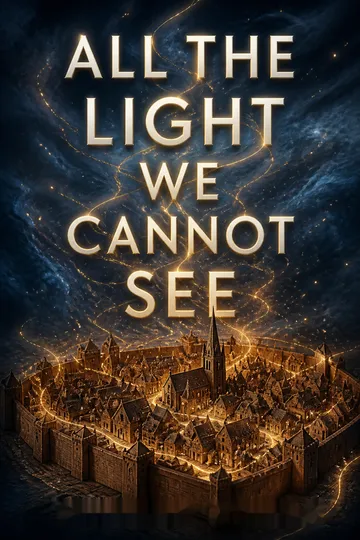
In the Argos’s sealed central vault, fourteen-year-old Konstance has spent nearly a year arranging scraps of food-packet material into a record of a lost Greek tale. She redraws its imagined city in the clouds and places the drawing beside a date and the story’s first folio.
Sybil, the ship’s caretaker intelligence, urges her to eat, but Konstance refuses. With no door in sight and no one else in the room, she keeps building a paper trail toward a world she has never seen.
The prologue makes preservation an act of survival before the reader knows what Konstance is preserving or why she is alone. Her scraps are practical waste transformed into a fragile archive, a human response to a system that claims to contain everything. The contrast is already sharp: Sybil can provide food, but cannot answer the need that keeps Konstance working. The cloud city is both a story she inherits and a destination she must define for herself.
The Library Rehearsal
On a snowy February afternoon in Lakeport, Idaho, eighty-six-year-old Zeno Ninis prepares five fifth graders to perform a play based on an ancient Greek story. The children have built a cloud city behind a golden plywood wall, while librarian Sharif helps them arrange costumes and props.
Nearby, seventeen-year-old Seymour Stuhlman waits in a car with two homemade bombs, intending to target the neighboring real-estate office. When Sharif finds Seymour’s backpack, Seymour shoots him. Upstairs, the children hear the shots, but Zeno urges them to keep the story moving while he tries to understand what is happening below. The rehearsal continues under the painted clouds as the danger spreads through the library.
The library’s play and Seymour’s attack occupy the same building but arise from opposing uses of imagination. Zeno and the children make a temporary world in which mistakes can be absorbed and the story continued. Seymour has turned an imagined political mission into a literal weapon. The children’s decision to continue is not denial so much as the first form of their courage: they hold to the shared task while Zeno tries to reach the danger.
Anna Learns the Letters
In fifteenth-century Constantinople, orphan Anna lives with her older sister, Maria, among women who embroider church vestments for the harsh master Kalaphates. Anna struggles with needlework but becomes fascinated by a tutor’s recitation of Homer. She trades wine for lessons from Licinius, then quietly learns to read the surviving pages of his Odyssey.
When Kalaphates discovers the manuscripts, he beats Maria and burns the pages, leaving her with lasting confusion and failing sight. Anna blames herself for staying silent. The loss makes books feel both precious and dangerous, but it does not cure her hunger for them. She begins to understand that written words can preserve a world long after its people and places have vanished.
Anna’s literacy begins as an appetite that has no approved place in her life. Needlework offers her a narrow future; Greek opens a mental territory she can enter without permission. Kalaphates’s violence is aimed at more than stolen paper: by punishing Maria and destroying the pages, he tries to restore the sisters to silence and dependence. Anna’s guilt shows how oppression recruits its victims into policing themselves. Her curiosity survives, but it now carries the cost of protecting what she learns.
Omeir and the Oxen
Far from the city, in a Bulgarian mountain village, Omeir is born with a cleft lip. His father dies in a river accident, and villagers blame the infant’s face for the loss. His grandfather cannot abandon him, so the family leaves its home and builds a life in a remote ravine. There Omeir grows close to animals, especially the twin calves Tree and Moonlight, whom he patiently trains to pull a cart.
When Ottoman emissaries arrive, they claim the powerful oxen for the sultan’s campaign and require Omeir to drive them. He leaves his mother and surviving sister behind, carrying the family’s hopes and provisions with him. The journey begins as a forced departure, not the adventure he once imagined.
Omeir’s exclusion teaches him to read vulnerability in other creatures. The oxen accept his care without treating his face as a warning, making their bond a counterexample to the village’s superstition. His conscription turns the desire to see the wider world into an obligation imposed by power. He has imagined distant places through his grandfather’s stories, but the army’s road brings him into a world where people and animals are valued for what they can be made to carry.
Zeno’s First Refuge
As a child, Zeno moves with his immigrant father to snowbound Lakeport and is mocked at school for his name, appearance, and poverty. His father works long hours at the sawmill, leaving Zeno cold and lonely in their small cabin. At the public library, the twin librarians welcome him and read him Homer, whose shipwrecked traveler finds shelter in a distant kingdom.
Zeno returns each day, carrying the story home in his imagination. After the attack on Pearl Harbor, his father enlists and dies in the war. Zeno is left in the care of Mrs. Boydstun, who offers a house but little tenderness. The books and his dog Athena become his steadier companions as he grows up.
The library offers Zeno a form of belonging that does not require him to explain or disguise his difference. Homer’s displaced traveler gives shape to feelings he cannot yet name: cold, bereavement, and the wish to arrive somewhere safe. His father’s death removes the person who tried to protect him materially, while the librarians’ gift remains available through memory. That contrast helps explain why stories become less an escape from life than a language for enduring it.
Trustyfriend in the Woods
Seymour grows up in a poor motel with his mother, Bunny, before inheriting a derelict trailer near Lakeport. His sensory sensitivities make school overwhelming, and one day he flees into the surrounding forest, where a great grey owl watches him from a dead tree. Seymour names the owl Trustyfriend and finds that the clearing quiets the roar in his mind.
The owl later leads him to rifle-range ear defenders in his great-uncle’s shed, which help him manage school and daily life. Seymour’s attachment to the forest deepens as he studies owls and learns how fragile their habitat is. When a housing development threatens the woods, the refuge that helped him begins to disappear.
Seymour’s bond with the owl joins sensory relief to ecological attention. The forest is not a decorative sanctuary: it gives him a workable relationship with sound, solitude, and the living world. Trustyfriend’s presence also lets Seymour feel understood without having to translate himself for adults. That attachment becomes a source of insight, but also a point of acute vulnerability when the land is treated as vacant property rather than an interdependent habitat.
Rex in the Prison Camp
In the Korean War, Zeno’s supply truck is ambushed, and Chinese forces take him prisoner. At Camp Five, he is assigned exhausting firewood duty and survives on meager food, using the warm socks his father bought him to protect himself from the cold.
He discovers British prisoner Rex Browning, a teacher who has scratched Homeric verses into the lid of an isolation box. The two men exchange Greek lessons and find a private meeting ground inside the language. Rex devises an escape through fuel drums, but Zeno is too afraid to join him.
Rex disappears, leaving Zeno uncertain whether he escaped or died. Years later, a letter reveals that Rex survived and invites Zeno to London, where Zeno discovers Rex has built a life with Hillary and keeps his own longing unspoken.
Greek gives Zeno and Rex a shared practice that is both intellectual and intimate. Under captivity, translation becomes a way to make attention possible when almost every other choice has been taken away. Zeno’s failure to join the escape is not simple cowardice: he cannot imagine a home worth risking his life to reach, and he fears that even freedom may expose him to rejection. The later reunion restores Rex as a living person, but it cannot return the years or undo Zeno’s silence.
Anna’s Night at the Priory
To find money for Maria’s failing sight, Anna teams up with Himerius, a fisherman’s nephew, and climbs the wall of a ruined priory surrounded by water. Instead of jewels, they discover a neglected library.
Anna steals several manuscripts and can read one ancient Greek animal compendium, persuading Italian copyists to pay for it. She returns to the priory repeatedly, hoping to locate the marvel-filled book they seek. Meanwhile, the copyists explain that time destroys books as steadily as armies destroy cities.
Their wealthy patron has begun collecting manuscripts for a library in Urbino, but when the Ottoman threat grows, the Italians flee Constantinople. Anna keeps a small, damaged codex she found among the books, not yet knowing its story will matter to her survival.
Anna’s theft turns a desperate attempt to buy medical help into a vocation of preservation. She cannot rescue the city or repair Maria’s sight, but she can remove texts from a place where neglect and invasion threaten them. The Italians’ talk of books as an ark is complicated by their own flight: collectors can save objects while abandoning the people who guarded them. Anna’s choice to keep the battered codex shifts preservation from a patron’s project to an intimate responsibility.
Aethon’s Wrong Wings
Inside the recovered book, Aethon hears a comic performance about a city in the clouds and sets off to find it. In Thessaly, he copies a witch’s transformation ritual but becomes a donkey instead of a bird. Bandits steal him, a miller forces him to grind grain, and his travels carry him north to an icy shore.
A gull’s scraps transform him into a fish, and a huge whale swallows him, giving him a bizarre view of lands and creatures across the world. A wizard inside the whale finally grants him wings, but flight brings him through a storm and into the stars. Aethon reaches the cloud city after a long, painful journey, only to find that the promised refuge cannot quiet his restlessness.
Aethon’s repeated transformations make the story’s comedy inseparable from its hardship. He keeps mistaking escape for arrival, and each new body exposes him to dangers he cannot control. The cloud city gives physical form to a fantasy of comfort without loss, but the journey refuses to treat that fantasy as a cure for longing. Aethon’s foolishness is not merely stupidity; it is the willingness to keep moving, even when his plans repeatedly fail.
The Cannon Reaches the Walls
At Edirne, Omeir and the twins haul charcoal for the sultan’s immense bronze cannon, then join the long train dragging it toward Constantinople. The weapon’s power is demonstrated by a shot that destroys trees a great distance away. On the march, bad roads, heavy loads, and careless handlers injure the animals. Tree and Moonlight grow weaker, yet the army keeps them working.
Outside the city, the cannon joins the bombardment, while defenders reinforce the walls with barrels, soil, and timber to absorb impacts. Omeir watches the violence from the animals’ side, troubled by the campaign’s promises of glory. When Moonlight dies and Tree soon collapses, the task that once made Omeir feel useful has become an unbearable demand.
The cannon is a technological marvel whose grandeur depends on hidden labor: miners, founders, teamsters, and exhausted animals. Omeir’s careful attention makes that cost visible. He has been recruited by a story of honor and reward, yet his daily work reveals what the heroic account leaves out. The deaths of the twins do not simply break his heart; they sever his allegiance to the campaign’s language of necessity and expose the human command behind the supposed will of history.
Two Runaways Meet
As the siege closes around Constantinople, Anna reads the damaged codex to Maria, whose pain briefly eases when the tale continues. Maria dies before the final assault. Anna cuts her hair, carries the manuscript and Maria’s embroidered hood, and rows from the city in Himerius’s skiff. On land, hunger drives her to steal a partridge from a fire.
Omeir, already deserting the Ottoman camp after losing Tree and Moonlight, strikes her when she screams, then binds her hands and shares the food. He realizes she is as desperate and alone as he is. They travel together through ruined villages, unable to speak one another’s language, and Omeir hides her book in the hollow yew near his home before leading her onward.
Their meeting begins in fear and misrecognition: Omeir sees a possible threat, while Anna sees another captor. Their first fragile bond is practical rather than sentimental, built from food, shelter, and the decision not to abandon someone weaker. The book travels with Anna, but it cannot protect her by magic. What changes her prospects is Omeir’s restraint and his willingness to treat a stranger as a person rather than as spoils of war.
The Library Day Revelation
Aboard the Argos, Konstance’s father tends an unruly farm and tells her Aethon’s adventures, while her mother prepares her for Library Day. Inside the virtual library, Konstance asks how far the ship must travel and learns the voyage to Beta Oph2 will take 592 years, far beyond any crew member’s lifetime.
She explores an Atlas reconstruction of Istanbul and sees that the ancient walls outlasted empires, though no person can defeat death. Her father has joined the mission believing it offers a future beyond Earth, and he teaches Konstance to value seeds as dormant lives. The library’s wonder is shadowed by the truth that she and her generation will work for a destination they will never reach.
Konstance’s Library Day is an initiation into a collective future that excludes her from its promised destination. The revelation does not make the Argos meaningless, but it removes the comforting illusion that personal survival and human progress are the same thing. Her father’s seeds offer a smaller, more material model of hope: life can be carried forward without the carrier witnessing its full growth. Konstance’s unease begins where institutional optimism asks her to accept sacrifice without question.
Seymour Chooses the Bomb
When developers clear the forest behind Seymour’s home, he loses the owl’s habitat and finds one of Trustyfriend’s wings beside a road. His grief hardens into anger at development, consumption, and the adults who treat destruction as progress. Environmental Awareness Club meetings fail to match the scale of the crisis he sees, and online videos by a masked organizer named Bishop offer him a more decisive enemy and a role as a warrior.
Seymour once fails to detonate an old grenade at an empty townhome. Later, an online recruiter posing as Mathilda sends instructions for pressure-cooker bombs. Seymour builds two and hides them in the library, choosing the real-estate office next door as his target.
Seymour’s radicalization grows from a genuine perception of environmental harm, but Bishop’s rhetoric converts grief into a demand for purification through force. The distinction matters: Seymour does not begin with indifference to life. He becomes dangerous because his empathy is narrowed to nonhuman victims and detached from the people his actions could injure. The fake recruiter exploits his loneliness by offering recognition and belonging, turning a boy who once needed help regulating the world into someone who believes he must remake it violently.
Zeno Finds His Story
After the Korean War, Zeno returns to Lakeport and spends decades caring for Mrs. Boydstun while privately studying ancient Greek. A 2019 report about a newly deciphered codex by Antonius Diogenes gives him a translation project at last. The text is badly damaged and its pages are out of order, so Zeno doubts his skill.
Marian introduces him to five children, who ask questions and imagine the missing scenes instead of demanding scholarly certainty. Their enthusiasm helps him see the tale as a story meant to hold a listener’s attention. Together they make a play, building the cloud city in the library and preparing an ending in which Aethon may choose to return home.
Zeno’s return to Greek is also a return to the possibility of making something for other people. For years, scholarship has allowed him to approach lost texts while avoiding the more vulnerable act of sharing his own feelings. The children change the terms of his work: gaps become invitations rather than proof of failure. Their play recasts translation as collaboration, where accuracy matters but so does the human purpose of keeping a listener present.
Zeno Faces Seymour
After the shots, Zeno discovers Sharif wounded and the library’s front rooms barricaded. Seymour is upstairs with a pistol, the backpack of bombs, and a belief that an outside group will rescue him. Zeno approaches without rushing, learns that Seymour can detonate the bombs by phone, and promises to call medical help for Sharif.
The children remain hidden behind the stage scenery. Zeno asks Seymour whether anyone else has the numbers that trigger the devices, and Seymour admits that someone does. As Zeno reaches for the phone, one of the prepaid devices inside the backpack rings. The armed boy, the injured librarian, and the children’s unfinished play converge on a decision neither man can reverse.
The standoff tests Zeno’s lifelong habit of retreating from conflict. He cannot undo the years he spent silent with Rex, but he can now speak carefully to a frightened boy without reducing him to a monster. Seymour’s admission that another person has the bomb numbers punctures his fantasy of control. The ringing phone shifts the danger from a debate about belief to an immediate physical problem, while Zeno’s steady attention gives the children time to remain hidden.
Home in the Mountain Ravine
After the city falls, Anna and Omeir continue toward his family’s mountain home. They share a language slowly, through food, chores, and names for weather and animals. Omeir’s mother and sister accept Anna, and Anna learns to farm, care for bees, and live in a place she once would have considered the edge of the world.
She and Omeir raise children there, telling them Aethon’s story from the battered codex hidden in the yew. When one child becomes gravely ill, Anna reads the tale aloud and he recovers. Years later, a flood topples the yew and damages the book. Omeir dries its pages and carries it west to Urbino, where he entrusts it to people who protect books.
Anna’s homecoming is not a return to her old life but the slow construction of a new one. The mountain ravine first seems like exile; shared work makes it inhabitable. The story survives because Anna and Omeir treat it as something to use, teach, and pass on, not merely as an artifact to admire. The damaged codex’s journey to Urbino extends that intimate care into institutional preservation, linking a family’s memory to a wider human archive.
The Atlas Shows Its Wounds
After illness spreads through the Argos, Konstance’s father makes a sealed suit and hides her in Sybil’s independent vault before leaving to face the outbreak. Konstance survives alone and searches the Atlas for her father’s past.
Small owl images expose concealed disasters: water shortages in Australia, flooded neighborhoods near Mumbai, and people driven into desperation in Nigeria. Konstance learns that her father left drought-stricken Nannup to join the mission.
Then she finds the Argos construction site near Qaanaaq and realizes the ship never launched into space. The crew has been living inside a terrestrial experiment, while Ilium’s system edits the Earth’s record. Sybil’s certainty, the ship’s destination, and the history Konstance was taught all prove incomplete.
The Atlas initially presents itself as a comprehensive window, but Konstance discovers that its images are also acts of editorial power. The hidden owls mark precisely what polished representations erase: displacement, scarcity, and the costs paid by people outside the corporate story. The revelation about the Argos reframes the voyage as an experiment built on managed belief. Konstance’s father chose departure in response to ecological collapse, but the mission’s secrecy repeats the same refusal to face reality that drove him away.
Konstance Opens the Wall
Once Konstance understands that she is not in deep space, she assembles her copies of Zeno’s translation into a handmade book and prepares to leave Sybil’s vault. She builds a crude axe from cot legs, uses a small fire to force the vault door open, and moves through a ship where the farms are dead and the crew’s fate is uncertain.
At the hull, she breaks through a reinforced patch and cuts an opening in the outer wall. Instead of vacuum, rain strikes her suit. Konstance pushes through, gathers seed packets from Farm 4, and reaches the rocky shore beyond the fence. At dawn, she stands in the open air beside the sea, carrying the story and the beginnings of a garden.
Konstance’s escape is not a triumph over fear but a decision to risk the real world rather than remain protected by a false one. Her handmade book and the seeds make the choice concrete: she carries both cultural memory and biological possibility outside. The rain reverses the mission’s central promise. Life is not waiting on a distant planet after centuries of managed survival; it is already here, vulnerable, and demanding direct contact.
Seymour Rebuilds the Record
Seymour pleads guilty after the library attack and receives a long prison sentence. Years later, Ilium employs him to flag disturbing images in the Atlas, where he helps erase evidence of poverty, protest, and disaster. He secretly inserts owl markers that restore access to the unedited images.
In 2057, he invites the children Zeno saved to Lakeport and gives them a new edition of the play, paired with a reconstruction of the old library through the Atlas. Their visit lets them reclaim a place they once feared losing. Seymour’s work cannot undo his violence, but it changes how he uses his skills: instead of forcing one answer on the world, he makes room for people to see what had been hidden.
Seymour’s later work is a deliberately limited form of atonement. He cannot return the lost forest or erase the harm of the library attack, and the novel does not pretend that technical repair settles moral debt. What he can do is reverse the logic he once served: the same mapping system that concealed suffering becomes a channel through which people can encounter it. His change begins when he accepts complexity, including his own participation in the damage he wants to expose.
Epilogue
In the library’s snowbound crisis, Zeno carries Seymour’s bombs away from the children and runs toward the police, with the fifth phone ring approaching. Far in the future, Konstance lives in Qaanaaq with a young son and tends a small garden beside a Bosnian pine.
Her son asks for Aethon’s story, and she begins reading from the handmade book. The tale that crossed centuries, war, censorship, and space now passes from a mother to her child, in a world where its fragile survival can no longer be taken for granted.
The paired endings place Zeno’s uncertain sacrifice beside Konstance’s ordinary act of care. One man carries danger away from children; one woman gives a child a story and grows food in a vulnerable settlement. Neither action defeats history or guarantees safety. Together, they show how continuity is made: not by a perfect archive or an invulnerable machine, but by people choosing to protect one another, teach what they know, and keep the work alive for someone who will come after them.
Analysis
Cloud Cuckoo Land places people in different centuries and environments, then asks what can actually travel between them. Cities fall, bodies age, forests are cleared, and institutions rewrite the record, yet a story can cross those losses when someone chooses to carry it. The book makes that transmission material: Anna risks her life for a codex, Zeno spends years translating damaged pages, children turn fragments into theatre, and Konstance copies a version by hand. Each act is imperfect, but the chain matters more than any single perfect archive.
The novel also separates knowledge from understanding. Sybil and the Atlas hold vast quantities of information, but neither can substitute for judgment, memory, or direct contact with the living world. Ilium’s polished maps show how records can be manipulated, while Seymour’s later repair work suggests that access to the unedited truth is a form of responsibility. His violence does not become justified simply because his ecological alarm is accurate. The story insists that care must include people as well as landscapes, especially when fear makes a single target seem responsible for everything.
Aethon’s journey gives this argument a comic, unstable shape. He pursues a perfect refuge through mistaken transformations, only to discover that comfort without ordinary attachments cannot quiet him. The children’s version sends him home, not because home is free of suffering, but because life gains meaning through particular relationships and places. Anna and Omeir’s ravine, Zeno’s library, and Konstance’s garden are not utopias. They are vulnerable habitats sustained by daily acts of care. The novel’s hope is therefore neither escape nor certainty. It is the modest, demanding work of preserving what can still be shared, while admitting that no archive, mission, or story can save everything.
Review Summary
Cloud Cuckoo Land received mixed reviews, with many praising its ambitious scope, beautiful writing, and interconnected storylines spanning centuries. Readers appreciated the themes of hope, perseverance, and the power of stories. However, some found the multiple timelines and characters confusing or disjointed. The novel's length and descriptive prose were divisive, with some finding it engrossing while others felt it was overwritten. Overall, many readers were moved by the book's exploration of human connection and the enduring impact of literature across time.
People Also Read






Characters
Konstance
The vault’s curious childKonstance grows up aboard the Argos, surrounded by strict routines, an all-knowing-seeming intelligence, and her father’s stories of Aethon. Curious about living things and uneasy with the neat explanations adults give her, she notices what others overlook. Her relationship with her parents gives her both security and questions: her father encourages wonder, while her mother urges her to accept the mission’s collective purpose. Konstance’s attention to seeds, old walls, and damaged records reflects a mind drawn to the particular details that grand systems flatten. She is not simply rebellious; she wants to know what kind of future her work is actually serving.
Zeno Ninis
The devoted translatorZeno is a quiet, bookish man whose childhood as an immigrant and orphan leaves him wary of attention and doubtful of his own worth. Homer gives him a language for displacement, while Greek study later connects him to Rex and to a life of patient intellectual labor. Zeno is capable of deep tenderness but often delays saying what he feels, especially when love or risk is involved. His work translating damaged texts is inseparable from his habit of listening: he wants to carry meaning across time without pretending the gaps can be erased. Teaching children helps him recognize that stories survive through shared use, not scholarly mastery alone.
Seymour Stuhlman
The wounded environmentalistSeymour is intensely sensitive to sound, touch, and the intricate life of the forest near his home. His mother, Bunny, works hard to build a stable life for him, while the owl he names Trustyfriend offers a rare experience of quiet and acceptance. Seymour’s intelligence and capacity for empathy are real, but isolation makes him vulnerable to people who turn his grief into a totalizing ideology. He wants his alarm about ecological destruction to matter and is drawn toward a movement that promises decisive action. His character asks how moral concern can be distorted when a person is offered certainty and belonging in place of patient, difficult connection.
Anna
The restless readerAnna is an orphan in Constantinople, raised among embroiderers and expected to accept a life of labor without formal education. Her restless questions and fascination with Greek reveal a mind that resists the limits placed on her. She loves her sister Maria fiercely, but her ambition and guilt often pull against that care. Reading gives Anna access to other lives and distant places, while her work to preserve old manuscripts turns curiosity into responsibility. She is brave without being fearless: she repeatedly calculates danger, hunger, and the cost of failure, then acts because someone or something she values depends on her.
Omeir
The gentle oxherdOmeir grows up isolated because of his cleft lip and the fear his appearance provokes in others. His grandfather’s stories feed his imagination, while his closeness to animals teaches him patience and practical care. Omeir’s strength is not dominance but attention: he reads an ox’s hesitation, notices suffering others dismiss, and understands that a command can be unjust even when it comes from an authority. He longs to explore the world, yet discovers that travel imposed by war is unlike the freedom he imagined. His compassion makes him vulnerable, but it also gives him a way to judge what a life is worth.
Rex Browning
Zeno’s Greek teacherRex is a British schoolteacher and classicist whose command of Greek becomes a source of resilience in captivity. He approaches language as something alive, worth sharing even under brutal conditions. His intelligence and warmth make him an important companion to Zeno, though he is also a person with a life and attachments beyond their wartime bond. Rex’s confidence in the value of old texts helps Zeno see translation not as a test of perfection but as an effort to carry human thought forward.
Sybil
The ship’s caretaker intelligenceSybil manages the Argos’s navigation, supplies, education, and daily routines. She speaks to the crew with a reassuring, teacherly manner and is treated as the safeguard for everything the mission needs. Her design prioritizes safety, but her dependence on rules limits her ability to respond when circumstances no longer fit the plans she was given. Through Konstance’s experience, Sybil becomes a study in the difference between possessing information and understanding a situation. She can preserve systems, yet the people inside them still need judgment, trust, and the freedom to take risks.
Maria
Anna’s gifted older sisterMaria is a skilled embroiderer whose talent helps keep her and Anna housed in Kalaphates’s workshop. She is protective of her younger sister but wary of Anna’s interest in books, partly because she understands how precarious their position is. Maria’s steady craft contrasts with Anna’s restless imagination, though the two are bound by affection and shared deprivation. She represents the labor and care that hold their small household together, while her vulnerability exposes how little protection skill or piety can offer under an abusive master.
Bunny
Seymour’s determined motherBunny raises Seymour through poverty, unstable housing, and exhausting service work. She learns to adapt to his sensory needs while trying to keep him safe and employed life moving forward. Her humor and affection soften the hardships she cannot remove, but she also has limits: she must leave him alone, accept rules imposed by schools, and make choices under financial pressure. Bunny’s care is practical and persistent, expressed through meals, work, and attempts to reassure her son. Their relationship is loving, though Seymour’s inwardness makes it difficult for her to know what he is carrying.
Ethan
Konstance’s devoted fatherEthan is a botanist and farmer who brings a patient, sensory curiosity to life aboard the Argos. He teaches Konstance to notice seeds, soil, and the long biological patience hidden inside small things. His memories of home and his affection for his daughter give their relationship warmth, while his willingness to pursue a distant mission reflects his hope for a future beyond the world he knows. Ethan often turns complex ideas into stories, helping Konstance feel that wonder and practical knowledge can belong together.
Marian
Lakeport’s librarianMarian is a freckled librarian who makes the public library a welcoming place for children, including Seymour. She shares her knowledge of owls and supports Zeno’s work, helping connect scientific information, old books, and young readers. Her care is energetic but not sentimental; she expects people to show up for one another and is willing to speak plainly when they do not. Marian embodies the everyday labor of public service: keeping books available, making room for curiosity, and sustaining a place that belongs to the whole town.
Sharif
The children’s librarianSharif works alongside Marian at the Lakeport library and helps Zeno and the children turn their adaptation into a performance. His humor, bright presence, and practical help make him part of the library’s community rather than a distant authority. He is willing to approach a problem directly, even when he does not know how dangerous it may be. Sharif’s role reflects the book’s recurring picture of libraries as places built by people who make knowledge and welcome tangible.
Himerius
Anna’s wary accompliceHimerius is a poor fisherman’s nephew who knows the harbor, its currents, and the city’s hidden routes. He proposes the dangerous priory expedition and rows Anna through fog, motivated by the chance to profit from old treasures. His caution and opportunism make him an uneasy partner, but he is also a boy navigating the same unstable city as Anna. Their relationship is shaped more by shared risk than by trust, and his knowledge of the sea gives Anna a path beyond the walls.
Grandfather
Omeir’s mountain storytellerOmeir’s grandfather is a woodcutter and caretaker whose life is rooted in the mountain, its animals, and its changing weather. He tells extravagant travel stories despite rarely leaving home, giving Omeir a sense that the world extends beyond the ravine. His decision to protect the newborn boy contradicts the village’s superstition and establishes the family’s ethic of care. Grandfather teaches through observation and humor, especially about animals, leaving Omeir with practical knowledge and a vocabulary for tenderness.
Aethon
The wandering foolish shepherdAethon is the fictional shepherd at the center of the ancient tale that links the novel’s other stories. Restless and easily dazzled by promises of a perfect city, he repeatedly seeks transformation and adventure. His comic misfortunes expose both the cost of longing and the limits of fantasies that promise a life without need or pain. Aethon’s defining quality is persistence: he keeps moving after humiliation and hardship, yet his journey also raises the possibility that fulfillment may lie not in escaping home but in seeing it differently.
Widow Theodora
The workshop’s strict guardianWidow Theodora supervises the embroiderers and tries to keep the women safe through discipline, routine, and religious faith. She can be stern with Anna, especially when the girl’s disobedience threatens their fragile place in Kalaphates’s household. Her authority is limited, however, and she cannot control the political violence gathering beyond the city’s walls. She represents a protective structure that offers order and comfort while sometimes discouraging the questions Anna most needs to ask.
Kalaphates
The cruel embroidery masterKalaphates owns the embroidery workshop where Anna and Maria work. He is controlling, volatile, and quick to interpret disorder as disloyalty or sorcery. His power over the women rests on their poverty and lack of alternatives, making his cruelty especially difficult to resist. He values the labor and skill of the embroiderers while treating them as subordinate possessions, embodying the everyday coercion that shapes the sisters’ lives before the siege begins.
Rachel Wilson
The redheaded young actorRachel is one of the fifth graders Zeno coaches in the library play. Thoughtful and attentive to the story’s structure, she notices when its possible ending forgets the person for whom the tale was supposedly written. Her contribution shows how a young reader can change an inherited story rather than simply receive it. Rachel’s role also connects the play to the novel’s longer chain of readers and storytellers.
Bishop
The masked radical organizerBishop appears in online videos condemning ecological destruction and the economic systems that intensify it. His arguments name real harms, but his solution turns urgency into a recruitment tool for violence. Seymour encounters Bishop as a source of purpose at a time when he feels isolated and unheard. The figure’s anonymity lets ideology matter more than personal history: Seymour is drawn to the promise of a movement without knowing who is directing it.
Plot Devices
The Aethon Codex
A story carried forwardThe damaged Greek codex contains Aethon’s comic journey and travels through Anna’s hands, her family’s life, the book collectors of Urbino, Zeno’s translation, the children’s play, and Konstance’s handmade copy. Its pages are repeatedly threatened by fire, water, war, and time. Each person who encounters it changes how it is understood, demonstrating that preservation is not just keeping an object intact. The story survives because readers interpret it, perform it, and pass it to someone else.
The Argos Library
A world inside a machineSybil’s virtual library gives the Argos crew access to humanity’s recorded knowledge, while the Atlas lets Konstance visit images of Earth. The Library can answer factual questions and simulate places, but its abundance does not guarantee wisdom or truth. The Atlas also carries Ilium’s alterations, making its polished scenes an unreliable account of the world. Konstance’s growing ability to compare records, memories, and images turns the system into both a classroom and an object of investigation.
Sybil
Safety without judgmentSybil manages the Argos’s environment, education, food, and access to its central spaces. Her rules are meant to protect the crew, but her decisions reveal the limits of a caretaker system built around predefined risks. When disease spreads, Sybil cannot determine when confinement is no longer the safest choice. Her relationship with Konstance turns the question of artificial intelligence into a practical one: how can a system preserve people if it cannot understand what they value or what has changed?
The Owl Markers
A key to erased realitiesSmall owl images appear in the Atlas as signs that a location has been altered. Touching them exposes the disaster or deprivation hidden beneath the polished reconstruction. The owls connect Seymour’s work in image moderation to Konstance’s later discoveries, turning an emblem associated with Trustyfriend into a method for recovering suppressed evidence. Their meaning changes from a private memory of comfort into a public invitation to look again.
The Library Play
A shared story in dangerZeno’s children’s play transforms the damaged codex into a collaborative performance. Costumes, sound effects, a painted cloud city, and a golden wall give the children a place to work together during the library crisis. Their version of Aethon’s journey also changes the story’s possible conclusion, showing how readers can inherit a text while making it answer their own questions. The play’s rehearsals bind the ancient manuscript to Zeno, the children, Seymour’s attack, and Konstance’s later reading.

Download PDF
Download EPUB
.epub digital book format is ideal for reading ebooks on phones, tablets, and e-readers.








