

Key Takeaways
Treat cold calling as appointment-setting, not a miniature sales presentation.
Win the next conversation. Schiffman’s central claim is that a call to someone who has not invited contact should aim to secure a meeting, not to explain the entire offer or close a sale. A salesperson cannot tailor a convincing solution before learning how the prospect works. The phone call has one job: open a door to that conversation.
Compete with routine. The book names the status quo, a prospect’s current way of doing business, as the main rival. Schiffman divides potential sales into three rough groups: business that comes through existing demand, business a salesperson will not win, and business that can be won through skillful prospecting. His cold-calling method targets that contestable share. The thirds are a motivational model, not a demonstrated law of markets.
The sharpest distinction here is between initiating a relationship and conducting the sale. It prevents a common category error: trying to make a complete argument before understanding the buyer’s situation. The status quo framing is especially useful because it shifts attention from rivals’ features to the effort and risk a customer associates with changing routines. Yet the three-part split should be treated as a heuristic, not a forecast. Some markets have little existing demand, and some prospects are legally or practically unreachable. A sound call strategy begins with relevance and a legitimate reason to meet, not persistence for its own sake.
Appointments create prospects, and prospects create sales: keep the pipeline replenished.
Follow the chain. Schiffman’s shorthand, A=P=S, describes the sequence from appointments to active prospects to sales. It does not mean the quantities are equal. The appointment pool must be larger than the prospect pool, which in turn must be larger than the number of sales. If new meetings stop, the shortage may not show up in revenue until the sales cycle has run its course.
Start before the slump. The book illustrates this lag with a company whose sales cycle and payment process could stretch to six months. A software business that stopped prospecting after a strong first half later found that new business had dried up. Schiffman also describes his own firm pausing prospecting during a busy assignment, then suffering a downturn. The practical lesson is to prospect continually, even when current work is going well.
This is a pipeline model with a time delay: today’s activity feeds a future outcome, not necessarily this week’s commission. That makes it valuable for planning, because it explains why a full calendar can conceal a coming revenue gap. In operations terms, the system needs a steady inflow, not occasional bursts of effort. The model is simplified, however. Referrals, renewals, changing budgets, and unusually long sales cycles can alter the timing. Tracking the lag in a particular business is more useful than copying a fixed prospecting quota from another one.
Track each conversion ratio, then improve the weakest link by one.
Count the transitions. Schiffman urges salespeople to track dials, conversations, first appointments, total visits, and sales. One example follows a representative over ten weeks: 293 dials produced 149 conversations, 49 first appointments, 83 total visits, and 10 sales. These figures help locate the constraint. Few conversations may point to contact timing; plenty of conversations but few meetings may point to the call itself.
Use your own baseline. Schiffman offers another working example: 15 calls a day reach about seven people, producing roughly one new appointment. Eight total appointments, including follow-through visits, yield about one sale. He also suggests five income levers: make more calls, reach more people, book more appointments, close more of those meetings, or increase the value of each sale. These are possibilities to test against actual results, not universal conversion standards.
The book turns sales improvement into a measurement problem rather than a character judgment. That is a meaningful shift: a low result can be investigated at the stage where it occurs instead of blamed on vague lack of drive. The funnel also clarifies that improving one conversion can matter more than simply increasing volume. Still, the example ratios are personal illustrations, not industry benchmarks, and a higher appointment rate is not automatically better if meeting quality falls. The useful discipline is to define consistent stages, record them honestly, and compare performance over enough time to distinguish a pattern from a lucky week.
Open with relevance and ask plainly for a specific meeting time.
Make the purpose clear. Schiffman’s call sequence moves from addressing the prospect, to identifying the caller and company, to giving a concrete reason for the call, then asking a relevant qualifying question and proposing a meeting time. A brief, truthful reference to work with comparable organizations can make the reason easier to understand. The caller should not pretend to know how the offer will help before learning about the prospect.
Ask for the calendar. Rather than asking generally whether the prospect might be interested, Schiffman recommends naming a particular day and time. A specific invitation gives the other person something concrete to accept, reject, or reschedule. He calls this the principle of responding in kind: the shape of the question influences the shape of the answer. A script is meant to be practiced until it sounds natural, freeing the caller to listen rather than improvise every sentence.
The strength of this structure is not a magic phrase but reduced ambiguity. The prospect learns who is calling, why the call matters, and what action is being requested. In communication research, questions shape the range of responses people consider; a clear invitation makes the decision easier to process than a vague expression of interest. But clarity is not a license to manufacture urgency or disguise a sales call. A relevant reason and an honest company description protect trust, while a direct time proposal should remain an invitation, not a presumption that the prospect owes a meeting.
Treat common refusals as information, but respect a clear final no.
Prepare for familiar replies. Schiffman identifies four common responses: the prospect is satisfied with a current provider, is not interested, is too busy, or asks for literature. His method is to avoid arguing. A satisfied prospect may have a setup that a new service could complement; a busy person may still consider a future meeting; someone requesting material can be asked whether a short meeting would be more useful. The caller can also use what the prospect says to ask a relevant question.
Listen for the real issue. In one story, a bank contact first said he was happy with his existing arrangement. After the salesperson responded without challenging him, the contact disclosed that the real obstacle was budget. The conversation could then address the actual constraint. Schiffman advises against endless rebuttals: after a few attempts, end politely and move on. A refusal can reveal context, but it is not an obligation to keep pressing.
The valuable idea is diagnostic listening. An initial response can be a conversational shortcut rather than a full explanation, so a calm, relevant follow-up may uncover the concern that actually matters. This resembles good interviewing: avoid defending a solution before understanding the problem. The important boundary is that not every refusal is an invitation to probe. Repeatedly reframing a direct rejection can create reactance, the impulse to resist when autonomy feels threatened. The approach works best when the next question serves the prospect’s understanding as well as the caller’s goal, and when a firm no ends the exchange.
Turn what prospects already do into a credible reason to meet.
Use the Ledge. Schiffman’s term for this maneuver is the Ledge: a question that gives the caller a foothold when the conversation stalls or the prospect asks for an immediate pitch. Instead of launching into a long explanation, the caller briefly answers, then asks about the prospect’s work, current process, or role. The answer becomes a basis for proposing a meeting that could connect the offer to the existing situation.
Ask before claiming fit. In one example, a prospect says the organization does not use formal sales training. The caller asks how new salespeople are prepared. Once the prospect describes the current approach, the caller suggests a meeting to discuss whether the proposed service might fit alongside it. The point is to learn enough to make a relevant invitation, not to trap someone with a clever question or claim that every existing arrangement can be improved.
The Ledge is strongest when understood as a transition from pitch to discovery. It converts a vague objection into a chance to learn about workflow, authority, and current practice, which are often more informative than a prospect’s first yes-or-no answer. This connects naturally to consultative selling, where diagnosis precedes recommendation. Its ethical quality depends on genuine curiosity. Questions designed only to maneuver every answer toward a meeting can feel like a script in disguise. The prospect’s information should materially affect whether the offer makes sense, including whether the right outcome is to stop pursuing the account.
Mine trusted networks, overlooked signals, and neighboring offices for leads.
Look beyond lists. Schiffman treats personal contacts as sources of introductions, not as a captive market to sell to. An accountant, physician, insurance agent, or barber may know people who could use a service, provided the salesperson has clearly explained what that service is. Civic organizations, conferences, directories, newspapers, existing accounts, and inactive customers offer other routes. He recounts a team finding 198 possible customers by examining a newspaper for businesses it had not considered.
Build outward from a meeting. A T call is the practice of looking for additional contacts near an appointment, such as other relevant people in the same office or nearby offices. The book also recommends a third-party endorsement approach: accurately mention successful work with another organization as context for requesting a meeting. A reference can establish relevance, but it should never imply that the prospect has been referred or that identical results are guaranteed.
Lead generation here is a form of social and informational search. People already embedded in a profession or community can reveal needs that purchased lists miss, while a visit can expose adjacent decision-makers who were invisible from a desk. The most durable asset is not a clever database but a clear explanation of what the salesperson does, easy for others to repeat. The book’s conference and newspaper counts are anecdotes rather than reliable expected yields. Referral relationships also carry reputational risk: permission, accuracy, and restraint matter more than borrowing a prestigious name.
Let voicemail open doors, email nurture ties, and phones serve logistics.
Match the channel to the job. Schiffman recommends leaving a concise voicemail that identifies the caller and company, gives a truthful reason for the call, and asks for a meeting or return call. He reports that messages referencing a company produced return calls in roughly 65 to 75 percent of his experience, and that referring to a former colleague produced nearly universal callbacks in one anecdotal campaign. Those results are not controlled evidence. He also advises against repeatedly leaving messages for a new contact.
Keep other tools in their lane. The book discourages cold calls from a cell phone when noise, dropped connections, or driving could undermine the conversation. It favors email for follow-through with people who already know the sender, using a brief note and a clear next action. During an appointment, silence the phone. The general principle is to choose a channel that supports attention and professionalism, rather than treating every new technology as a replacement for the sales conversation.
This channel advice is really about context and attention. A voicemail gives the prospect control over when to hear a short message; a meeting or follow-through email can support more complex exchange. A noisy call or distracted salesperson signals that the conversation is competing with everything else. The book’s callback percentages should be read cautiously because they come from the author’s experience, not a transparent experiment. Communication habits have also changed since publication, so outreach should respect current expectations, privacy rules, and each prospect’s preferred channel. Technology is useful when it lowers friction, not when it merely increases contact volume.
Make every conversation advance the sale, then rehearse until the method feels natural.
Move one step at a time. Schiffman’s Four-Step Sales Process consists of an opening, an information stage, a presentation, and a close. Each stage should create a sensible next step. The information stage matters because a presentation should respond to how the prospect works; a demonstration can reveal reactions, but is not itself a persuasive case. Schiffman says information-gathering should occupy about three-quarters of the selling process. His study of high-earning salespeople attributes 45 percent of success to prospecting and 20 percent to presentation skills, though the book does not provide enough detail to judge the study’s method.
Practice the unfamiliar. The golf lesson in the introduction supplies the book’s governing image: a correct technique can feel awkward before repetition makes it fluent. Schiffman recommends drafting a script, role-playing, tracking results, and putting a new method into use promptly. His 72-hour start and 21-day continuation are prescriptions, not proven universal thresholds. The point is deliberate practice, followed by review and adjustment.
The stepwise model protects against two costly habits: presenting before learning, and mistaking a pleasant meeting for progress. It treats a sale as a sequence of decisions, each requiring evidence and a defined next action. That logic resembles stage-based project management, where completion means an outcome has advanced, not merely that activity occurred. The emphasis on practice is equally sound: rehearsed language can reduce cognitive load and leave more attention for listening. Still, a fixed percentage for information-gathering or a 21-day schedule cannot fit every sale. Complexity, trust, and buyer preferences should determine the pace.
Analysis
Cold Calling Techniques is a practical sales manual built around one strategic correction: prospecting is not the sale, but the activity that makes a sale possible. Its structure moves from the economic logic of a pipeline to the mechanics of a call, then into objections, referrals, messaging channels, and the broader sales sequence. The recurring stories make an otherwise procedural book memorable: the seller who waits for inbound interest, the company that stops prospecting after a good run, and the salesperson who mistakes repeated visits for real progress.
The book’s most durable contribution is operational. It tells salespeople to define stages, count transitions, keep prospecting through busy periods, and make each interaction advance a relationship. This is more useful than exhortations to be confident because it turns performance into something observable and adjustable. Its appointment-first discipline also limits the temptation to deliver an unfocused pitch before understanding the buyer.
The framework carries assumptions that need care. The one-third allocation of sales, example conversion ratios, and reported callback rates are presented with more certainty than the evidence in the text supports. They work best as prompts for measurement, not promises or universal benchmarks. Several response-handling tactics also risk turning every objection into a route back to the seller’s desired outcome. A modern reading should distinguish an uncertain first reaction from an explicit refusal, and treat the latter as a boundary.
The book appeared in multiple editions, but much of its core advice comes from a phone-centered sales culture. Its deeper lesson survives the technology changes: use tools in service of a clear next step, and do not confuse activity with progress. The strongest contemporary version preserves the discipline of direct requests and continual prospecting while adding sharper standards for relevance, consent, and channel preference. Cold calling becomes more credible when the seller is not merely trying to get in the door, but can explain why the conversation might be worth the prospect’s time.
Review Summary
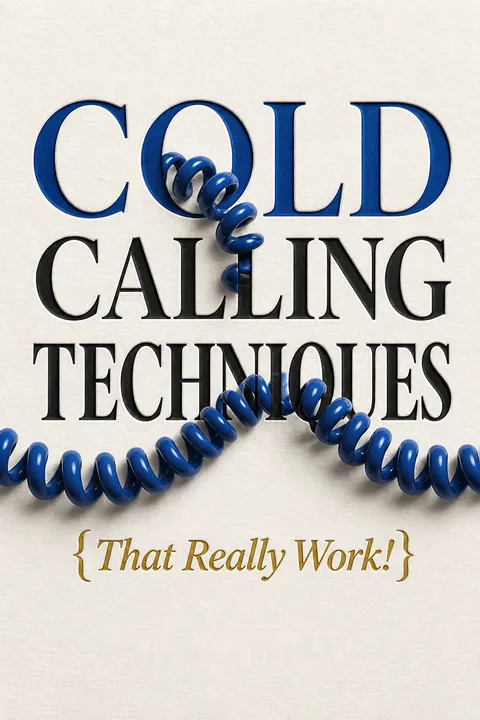
Cold Calling Techniques {That Really Work!} receives mostly positive reviews, with readers praising its practical advice and straightforward approach. Many find it helpful for improving sales skills, particularly for those new to cold calling. The book is commended for its motivational tone and easy-to-implement strategies. Some reviewers note that while the techniques may be basic for experienced salespeople, they provide a solid foundation for beginners. A few criticisms mention outdated examples and limited applicability to certain industries. Overall, readers appreciate the book's concise nature and focus on securing appointments rather than making sales over the phone.
People Also Read








Glossary
A=P=S
Appointment-to-sale pipelineSchiffman’s shorthand for the progression from appointments to prospects to sales. Each stage supplies the next, while the number of appointments must exceed the number of active prospects, and the number of prospects must exceed completed sales. It is a planning model for maintaining future business, not a claim that every appointment produces a prospect or sale.
The Ledge
Question-based conversational footholdA cold-calling technique for recovering direction when a prospect raises resistance or asks for an immediate pitch. The salesperson asks a relevant question about the prospect’s work, current provider, or process, then uses the answer to decide whether a meeting is worthwhile. Its intended purpose is discovery and a relevant invitation, not a trick that makes every answer support a sale.
T call
Nearby contact prospectingA method of finding additional leads around an existing sales appointment. After meeting one contact, the salesperson looks for other relevant people in the same office or nearby offices. The name evokes branching outward from the initial visit, turning travel and access to one organization into opportunities to identify additional contacts.
gerbil salesmanship
Busy work without progressSchiffman’s label for sales activity that repeatedly circles without moving toward a decision. His example is returning to the same contact many times without establishing a meaningful next step. The term contrasts effort with progress: repeated calls or meetings are not productive merely because they consume time.
Four-Step Sales Process
Opening through closing sequenceThe sales sequence of opening, information-gathering, presentation, and closing. The opening earns the next conversation, information shapes the presentation, and the presentation supports a decision. Each stage should advance the sale to a defined next step. The model emphasizes learning about the prospect before presenting an offer.
third-party endorsement approach
Relevant client proofA cold-call method that mentions accurate work with another organization to make the caller’s reason for reaching out concrete. The reference supplies context and a basis for requesting a meeting. It is not a promise that another customer’s results will repeat, and it must not imply an introduction or endorsement that did not occur.
product malleability
Adapting an offer to contextSchiffman’s term for applying or positioning a product or service to fit a prospect’s particular business and goals. It depends on understanding what the prospect does and how the work is done, rather than assuming the product’s general features speak for themselves. The concept makes discovery a prerequisite to a relevant presentation.
FAQ
What's "Cold Calling Techniques {That Really Work!}" about?
- Overview: "Cold Calling Techniques {That Really Work!}" by Stephan Schiffman is a guide to mastering the art of cold calling in sales. It provides strategies to turn prospects into meetings and meetings into sales.
- Purpose: The book aims to equip salespeople with effective techniques to overcome common obstacles in cold calling, such as dealing with voicemail, email, and gatekeepers.
- Target Audience: It is designed for sales professionals looking to improve their cold calling skills and increase their sales success.
Why should I read "Cold Calling Techniques {That Really Work!}"?
- Proven Success: With over 1 million copies sold, the book is a trusted resource for sales professionals seeking to enhance their cold calling skills.
- Expert Author: Stephan Schiffman, America's #1 Corporate Sales Trainer, shares his extensive experience and insights in the field of sales training.
- Practical Advice: The book offers actionable strategies and techniques that can be immediately implemented to improve sales performance.
What are the key takeaways of "Cold Calling Techniques {That Really Work!}"?
- A=P=S Formula: Appointments lead to Prospects, which lead to Sales. This formula emphasizes the importance of setting appointments as the first step in the sales process.
- Handling Objections: The book provides strategies for turning around common objections, such as "I'm not interested" or "I'm too busy," to secure appointments.
- The Ledge Concept: This unique technique helps salespeople regain control of conversations and turn them into opportunities for setting appointments.
What is the A=P=S formula in "Cold Calling Techniques {That Really Work!}"?
- Definition: A=P=S stands for Appointments = Prospects = Sales. It highlights the importance of setting appointments to generate prospects and ultimately close sales.
- Application: Salespeople are encouraged to focus on securing appointments as the foundation of their sales strategy.
- Outcome: By consistently setting appointments, salespeople can build a solid base of prospects, leading to increased sales success.
How does Stephan Schiffman suggest handling objections in cold calls?
- Common Objections: The book identifies four common objections: "I'm happy with what I have," "I'm not interested," "I'm too busy," and "Send me some literature."
- Turnaround Techniques: Schiffman provides specific responses to each objection, such as using the Ledge to pivot the conversation back to setting an appointment.
- Empathy and Truth: Instead of using empathy, Schiffman advises telling the truth and using real examples of how other clients benefited from the service.
What is the Ledge concept in "Cold Calling Techniques {That Really Work!}"?
- Definition: The Ledge is a technique used to regain control of a conversation during a cold call by asking a question that leads back to setting an appointment.
- Purpose: It helps salespeople handle extended conversations and objections without losing sight of the goal—securing an appointment.
- Implementation: By using the Ledge, salespeople can turn negative responses into opportunities to meet with prospects.
What are some effective cold call mechanics according to Stephan Schiffman?
- Five Elements: The book outlines five key elements of a cold call: getting the person's attention, identifying yourself and your company, giving the reason for your call, making a qualifying statement, and setting the appointment.
- Direct Approach: Schiffman emphasizes the importance of being direct and specific when asking for an appointment.
- Avoid Gimmicks: The book advises against using gimmicky openings, focusing instead on straightforward communication.
How does "Cold Calling Techniques {That Really Work!}" address the use of cell phones in sales?
- Limitations: Schiffman advises against using cell phones for cold calling due to issues like dropped calls and ambient noise.
- Professionalism: Making calls from a landline is recommended to ensure clear communication and convey professionalism.
- Appropriate Use: Cell phones can be used for staying in touch with the office or notifying clients of delays, but not for initial cold calls.
What are the best quotes from "Cold Calling Techniques {That Really Work!}" and what do they mean?
- "Appointments = Prospects = Sales": This quote encapsulates the core formula of the book, emphasizing the importance of setting appointments as the first step in the sales process.
- "People respond in kind": This highlights the idea that the way you communicate with prospects will influence their response, encouraging salespeople to be polite and direct.
- "The status quo is your number one competitor": This quote reminds salespeople that their biggest challenge is convincing prospects to change from their current solutions.
How does Stephan Schiffman suggest using voicemail effectively in cold calling?
- Leave a Message: Schiffman advises leaving a concise and compelling message that includes a reference to a mutual connection or successful case study.
- Follow-Up Strategy: He recommends following up on voicemail messages with a call that assumes the prospect is interested in setting an appointment.
- Frequency: Limit voicemail messages to one per week to avoid overwhelming the prospect and to maintain professionalism.
What are the principles of sales success according to "Cold Calling Techniques {That Really Work!}"?
- Next Step Focus: Each step in the sales process should lead to the next, with the ultimate goal of closing the sale.
- 72-Hour Rule: Implement new techniques within 72 hours to ensure they become part of your routine.
- Anticipate Objections: Prepare for common objections and have responses ready to keep the conversation moving forward.
How does "Cold Calling Techniques {That Really Work!}" suggest using email in sales?
- Follow-Up Tool: Email is best used for following up with prospects after initial contact has been made, rather than for cold calling.
- Professional Tone: Maintain a professional tone and ensure emails are well-written and free of errors.
- Clear Subject Lines: Use subject lines that clearly indicate the purpose of the email and encourage the recipient to open it.
About the Author
Other books by Stephan Schiffman
Download PDF
Download EPUB
.epub digital book format is ideal for reading ebooks on phones, tablets, and e-readers.








