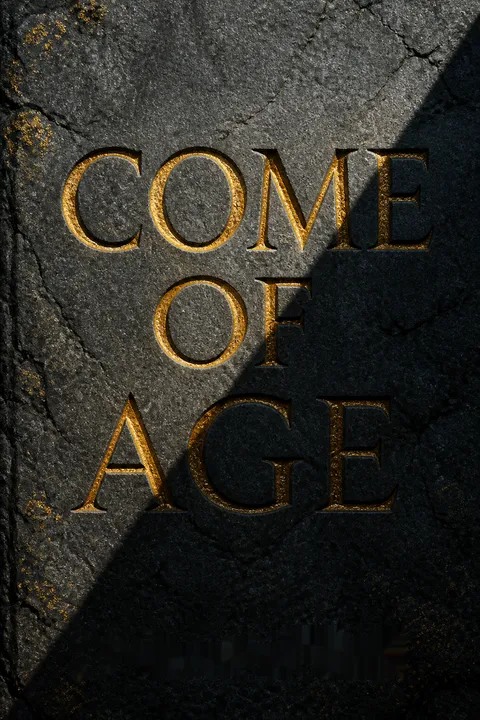


Key Takeaways
Do not confuse getting old with becoming an elder.
Age alone is insufficient. The book’s central distinction is between being old and practicing elderhood. Aging brings bodily change, but it does not automatically produce wisdom, steadiness, or service. Jenkinson argues that elders are made through a culture that gives experience a purpose and a place among generations. Without that shared role, older people may remain isolated, treated as burdens, or encouraged to imitate middle age for as long as possible.
A role, not a prize. Elderhood is not a personal achievement certified by peers, a retirement milestone, or a set of techniques. It is a communal function: an older person bears witness to time, accepts limits, and offers younger people the benefit of a life tested by difficulty. That is why the book asks not only how people age, but whether their society knows what to do with age.
What's striking is the shift from individual virtue to social design. A society can praise experience in principle while removing older people from public life, work, and ordinary intergenerational contact. The book makes elderhood a relationship, not a personality type, which helps explain why good intentions alone do not create it. Still, this distinction should not become a new hierarchy that romanticizes age. Older people vary as much as younger people do, and communities need ways to value experience without treating it as automatic authority.
Stop treating endless growth as proof that life is going well.
More is not always richer. Jenkinson challenges a culture that treats expansion, novelty, productivity, and longer life as obvious goods. In his account, these ideals make aging look like failure because age brings limits, dependence, and change that cannot be managed away. He compares growth without restraint to a tumor: it consumes the conditions that sustain it. The metaphor is aimed not only at economics, but also at self-improvement culture, which can turn personal growth into a permanent obligation.
Change has a cost. The book links accelerating technological and social change to the experience of both young and old. A middle-aged information-technology worker, for example, feels overtaken by tools changing faster than his expertise can keep pace. Meanwhile, older people are cast as obsolete. Jenkinson asks whether speed and innovation deserve unquestioned trust when experience has little time to guide them.
The critique is strongest when it asks who pays for a culture's appetite for novelty. Rapid change can bring real benefits, but its costs are often concentrated among people with less power to adapt, while institutions describe the disruption as progress. The tumor analogy clarifies the danger of growth detached from consequences, though it does not prove that every form of expansion is harmful. The practical question is not whether change should stop, but which changes deserve to be governed by memory, restraint, and public accountability.
Live so a younger person can ask what you did, not just what you knew.
The question arrives plainly. The book imagines a younger person asking an older one whether they understood what was happening, and what they did about it. This is not a request for a polished résumé or a comforting lesson. It asks whether the older generation noticed the damage of its time and accepted any responsibility for what it passed on. Jenkinson argues that the answer must be lived before it is spoken.
Make room beside them. A young Israeli man travels a long distance to meet Jenkinson, ostensibly to see a sustainable farm. He finally explains that, after serving in the army during a violent encounter involving children and civilians, he no longer knows what to do with himself. He wants to know whether the older man is genuine. The encounter shows eldering as presence: listening without demanding that the young person reassure or admire the older one.
This is an unusually demanding model of intergenerational care. It does not ask older people to solve every crisis or claim moral innocence; it asks them to become answerable to those who inherit the consequences. That resembles the idea of intergenerational justice, where present choices are evaluated partly by their effects on people not yet able to vote or consent. The burden must not fall on older individuals alone, however. Institutions and political leaders also need to answer for what they knew, what they did, and what they left undone.
Let learning unsettle your certainty before you turn it into advice.
Knowing can become storage. At Jenkinson’s Orphan Wisdom School, participants often arrive hoping to add insights to what they already believe. He distinguishes this accumulation from learning, which begins in wonder and may require giving up a cherished certainty. That can feel like failure rather than progress. The book compares knowledge to an overfilled storage unit: kept because it might be useful, even when it is no longer serving life.
Failure teaches balance. In a bicycle lesson, an adult promises not to let go of a child’s seat. Keeping that promise forever prevents the child from learning balance; letting go risks a fall and anger. Either choice can feel like betrayal, but the child cannot learn to ride while being held upright indefinitely. Jenkinson uses the story to argue that care sometimes means allowing a manageable failure, rather than guaranteeing comfort at the expense of learning.
The distinction between learning and accumulating information is useful in an era when access to facts can be mistaken for understanding. The bicycle story also captures a real tension in education: people need support, but they need room to test their own capacities. Its limit is that not every failure is instructive, and some risks are avoidable or unfairly imposed. Good guidance requires judgment about which discomfort opens a path to competence and which simply causes harm.
Treat the past as a living inheritance, not a country you have left.
Time need not be a straight line. Jenkinson contrasts a linear view, in which the past is over and the future holds all possibility, with a spiral view. In a spiral, earlier events return, but not as exact repetitions: people meet them with the knowledge and losses accumulated since. This model gives experience a role in the present and makes memory more than a tool for planning ahead.
Elders carry time visibly. The book describes elders as the past made present through a person’s way of living and ending. A poem by Alden Nowlan becomes an example: a dead poet continues to write for readers whenever they encounter his words. The point is not that the dead literally remain unchanged, but that their work and conduct still shape what others can see and do. Turning away from the past, Jenkinson argues, leaves younger generations with fewer guides for understanding their own moment.
The spiral is a compelling alternative to the familiar story of progress, especially for experiences that recur across family life and history. It helps distinguish repetition from learning: a pattern may return, while a person’s response changes. This does not mean the past should govern the present without question. Inherited practices can preserve wisdom, but they can also transmit injustice. Memory is most useful when it enables both gratitude and scrutiny, rather than nostalgia or automatic obedience.
Question universal stories that erase the places and people beneath them.
A historical diagnosis. Jenkinson argues that Western culture learned to prize universality, timelessness, limitless potential, and inevitability. He presents these four habits as stories that make local traditions and specific histories seem disposable. In his account, Roman imperial rule and later Christian conversion helped replace place-based belonging with universal identities. This is the book’s interpretation of a long and complicated history, not a neutral summary accepted by every historian.
Read what is missing. The Orphan Wisdom Forensic Audit Method is Jenkinson’s name for studying the traces left by suppressed or forgotten histories. On a nearby Indigenous reserve, an older man directs him by saying to turn where a schoolhouse once stood. The demolished building remains part of the place’s meaning. Etymology serves a similar purpose in the book: it can reveal how words changed, and invite questions about what those changes concealed.
The method asks readers to notice absences as well as official records, a valuable habit in historical inquiry. A demolished school, a changed place name, or a shifted word can point toward lives excluded from a dominant account. But word origins alone cannot establish why a society changed or what its members believed. Etymology is best treated as a source of questions, then checked against documents, archaeology, and the testimony of affected communities. The book’s historical claims are most persuasive when read as a challenge to investigate, not as a complete verdict.
Return from private awakening to the community that needs your changed perspective.
The wild is not a retreat product. In Jenkinson’s reading of the wilderness story about a young man driven away from home, the wilderness tests human beings against what is not human-centered or easily controlled. Its purpose is not to provide a permanent escape from ordinary life. The young person must return to town, where the insight can be tested in relationships and responsibilities.
Initiation needs a homecoming. The book warns that a weekend ordeal or imported ritual can become self-congratulation if the community has no way to recognize or use what participants learned. Jenkinson calls the temptation to stay in the wilderness the desire to inhabit a place where everything finally makes sense. Elderhood, by contrast, brings hard-won understanding back to the unsettled village. The work is not to remain pure outside society, but to help a culture live within limits.
This argument usefully separates transformation from private intensity. An experience gains social meaning when a person returns to changed relationships and accepts new obligations. That insight matters for retreats, therapy, activism, and leadership programs, all of which can reward personal revelation without asking what participants do differently afterward. At the same time, traditions of initiation belong to particular communities and should not be borrowed casually. The book’s emphasis on returning home offers a strong test: does the practice strengthen reciprocal responsibility, or mainly enhance the participant’s identity?
Understand ancestry as mutual dependence, not merely a family tree.
Life is sustained by relationships. Jenkinson describes the Indigenous concept he calls dodem as a relationship to an animal ancestor who helped sustain a people. The idea expands ancestry beyond human parentage: what keeps an ancestor alive can also count as kin. A deer, for instance, depends on plants for food and may be kept healthy as a population by predators. The point is not that every culture shares this exact belief, but that life can be understood through reciprocal dependence rather than human self-sufficiency.
Care includes difficult duties. On his farm, Jenkinson raises sheep and says that domestication removes predators from their lives. People must then take on responsibilities that a predator would otherwise perform, including selecting animals for slaughter. He presents this as a sorrowful obligation within a relationship of care, not as a simple celebration of farming. The example challenges the idea that people can benefit from nature while remaining innocent of its costs.
The idea of ancestry as sustenance broadens kinship beyond genes and invites attention to ecological dependence. It also makes responsibility concrete: receiving food, shelter, or care can create duties rather than simply rights. The sheep example is ethically difficult, and the author’s account should not settle debates about animal agriculture on its own. Different communities have different ecological conditions and moral commitments. Its strongest contribution is the demand to examine the relationships that make a way of life possible, including the costs hidden by convenience.
Let visible aging teach others how to live with endings.
Endings are part of the lesson. Jenkinson’s grandfather managed a town arena, but compulsory retirement removed his work and standing at sixty-five. After a stroke, he was placed in a care home, and the child who remembered his vitality saw him reduced to a forced wave through a window. The story shows that retirement and institutional care can remove a person from community life without honoring what that person has carried.
Age can become testimony. The book does not claim that illness or loss automatically makes people wise. It asks older people to stop treating every sign of age as an embarrassment to conceal. A person who accepts limits in public can help younger people imagine aging as part of a shared life, rather than as a private catastrophe. The practice involves grief, but also continued participation: remaining available to others, offering judgment without pretending to control the outcome, and making space for those who come next.
The grandfather’s story connects personal aging to social arrangements: retirement rules and care systems can determine whether experience remains visible or is pushed aside. That is a useful corrective to accounts that locate successful aging entirely in attitude. Yet public visibility should not become another demand placed on older people. Some need privacy, support, or distance from family and community. The ethical aim is not to make every older person perform wisdom, but to build institutions where people can contribute, receive care, and retain dignity as their capacities change.
Pass your craft, stories, and unfinished lessons into younger hands.
Transmission takes practice. Late in life, Jenkinson returns to carving and watches four younger men build a teaching house. His memory of working stone comes back through the feel of tools and wood, but the carving begins with uncertainty and a mess of chips. The scene makes elderhood less like delivering a finished doctrine and more like working alongside others, spending skills that might otherwise be hoarded.
Stories carry what advice cannot. In another episode, an Irish woodcarver whose son died by suicide tells Jenkinson to avoid harming poets, loving them, and becoming one. The warning becomes a story about grief, witness, and the cost of being changed by another person’s life. Jenkinson’s closing claim is practical: elders are not manufactured by calling oneself one. Younger people help call elderhood into being when they seek testimony, and older people answer by offering what they have learned.
Craft and story give transmission a form that is neither abstract advice nor a demand for obedience. A learner can watch a skilled person work, encounter the mistakes, and decide what to carry forward. This resembles apprenticeship, where knowledge lives partly in practice and judgment, not just in instructions. Still, access to mentors and meaningful work is uneven. A culture cannot simply exhort older people to pass things on; it must create shared places, time, and relationships in which generations can actually learn from one another.
Analysis
Come of Age is a philosophical argument built from memoir, language, history, and parable rather than a conventional guide to successful aging. Its central move is to redefine elderhood as a public and intergenerational function: older people become elders when their experience, limits, and grief are made available to a community, especially to the young. This framing makes the book’s stories work as more than illustrations. The farm, the dying patient, the Indigenous reserve, and the old man in Iceland each test what it means to live in relation to place, time, and others.
The book’s strongest insight is that an aging population does not automatically become a wiser society. Institutions can extend life while isolating older people, and cultures can celebrate experience while treating it as obsolete. Jenkinson also offers a powerful account of how narratives of limitless growth and linear progress make endings appear like failures rather than ordinary features of life.
Its method has limits. The argument often moves from suggestive word histories to broad claims about Western civilization, and its account of Rome, Christianity, Indigenous traditions, and modernity is sweeping. Etymology can illuminate a question, but it cannot by itself prove a historical cause. The book’s claims are therefore best approached as invitations to examine dominant stories and seek additional evidence, not as a definitive history.
The work offers no checklist for becoming an elder, and that refusal is consistent with its thesis: elderhood depends on relationships a person cannot confer on themselves. Its practical demand is still clear. Older people must remain answerable to the young, younger people must risk seeking guidance, and communities must create places where the exchange can happen. The result is less a program for aging than a challenge to redesign what generations owe one another.
Review Summary
Come of Age receives mixed reviews, with an average rating of 4.21/5. Readers praise Jenkinson's poetic language, profound insights, and thought-provoking ideas about elderhood. Many find the book challenging but rewarding, appreciating its exploration of aging, wisdom, and cultural issues. Some criticize the dense writing style and difficulty in following the author's logic. Several reviewers note the book's importance in addressing crucial societal issues, while others struggle with its complexity and occasional lack of clarity.
People Also Read





Glossary
Elderhood
Age made communal serviceA social and intergenerational role, not an automatic result of growing old. In Jenkinson’s account, elderhood emerges when an older person accepts the limits and endings of life and makes experience available to others, particularly younger generations. It depends on a community able to recognize and make use of that contribution.
Orphan Wisdom Forensic Audit Method
Reading traces of the omittedJenkinson’s method for investigating what an authorized account leaves out. It looks for clues in landscape, language, and ordinary details that preserve the effects of past events. The aim is not simply to replace an official story with a supposedly complete alternative, but to notice absences and recover questions that dominant accounts have obscured.
dodem
An ancestor who sustainsA term Jenkinson attributes to an Algonkian language and explains as a relationship to the one who helped keep an ancestor alive. In his account, this widens kinship beyond human family lines to include animals and other sources of sustenance. It expresses mutual dependence rather than a hierarchy of human command over nature.
welt
The boundary where worlds meetThe meeting zone between human culture and the wild. Jenkinson uses the term for the places from which a culture draws material and spiritual sustenance, such as fields, pastures, and river edges. The concept stresses that culture depends on limits and on the existence of a wild beyond its own domain.
The Fourth Temptation
The urge to remain outsideJenkinson’s name for the temptation to stay in the wilderness after a transformative ordeal, where a person may feel certain and understood. He argues that the initiated person must return to ordinary community life, where insight faces difficulty and can become useful to others. The test is whether change can be lived at home.
World Tree
A living bridge across realmsA mythic tree that connects human life with the divine while keeping the two at a survivable distance. Jenkinson interprets it as a living medium of reciprocal sustenance, not merely a symbol of divine protection. Its health depends on care, and its possible withering represents a breakdown in the relations that support culture.
Four Horsemen of the Apocalypse
Four cultural habits of certaintyJenkinson’s framework for four stories he believes carry the Western worldview: universality, eternality, potentiality, and inevitability. Together, they make local difference, historical change, limitation, and uncertainty seem secondary or unreal. He treats them as habits of thought sustained by language, rather than as literal apocalyptic figures.
spiral of time
Time that returns with depthA model of time in which the past is not simply left behind and recurring events are not identical repetitions. Experience returns in changed circumstances, carrying the effects of what has happened in between. Jenkinson uses the spiral to explain how memory and the presence of elders can shape the present without reducing it to fate.
FAQ
1. What is Come of Age: The Case for Elderhood in a Time of Trouble by Stephen Jenkinson about?
- Exploration of elderhood’s meaning: The book investigates the concept of elderhood as a vital, yet missing, cultural and spiritual role in modern Western society, especially in North America.
- Cultural critique and history: Jenkinson critiques the modern obsession with youth, growth, and control, tracing the loss of elderhood through historical, linguistic, and spiritual shifts.
- Call for cultural reckoning: The book is a plea for individuals and communities to confront aging, death, and limitation, and to restore elderhood as a communal, relational function rather than a personal achievement.
2. Why should I read Come of Age by Stephen Jenkinson?
- Profound rethinking of aging: The book offers a rare and challenging perspective on what it means to grow old, questioning common assumptions about wisdom, decline, and the value of elders.
- Cultural and spiritual depth: Jenkinson weaves together history, etymology, spirituality, and personal narrative, making the book a rich resource for those seeking deeper meaning in aging and community.
- Urgent contemporary relevance: In a time of ecological crisis and social fragmentation, the book’s call for elderhood is a vital contribution to how we might live wisely and responsibly across generations.
3. What are the key takeaways and concepts from Come of Age by Stephen Jenkinson?
- Elderhood as a cultural function: Elderhood is not simply a result of aging but a role defined by the needs of the times and the willingness to serve community and memory.
- Sacrifice and rupture: The book explores how the concept of sacrifice reflects a broken relationship with the sacred, and how elderhood seeks to heal this rupture.
- Ancestral memory and kinship: Maintaining a living connection to ancestors is essential for belonging and meaning, with elders serving as the living memory of the community.
- Critique of modernity: Modern culture’s focus on growth, novelty, and personal achievement undermines elderhood and ancestral wisdom, leading to cultural amnesia and spiritual homelessness.
4. How does Stephen Jenkinson define "elderhood" in Come of Age?
- Not automatic with age: Elderhood is not simply growing old; it is a state of being that arises from embracing mortality, limitation, and the lessons of life’s latter half.
- Communal and relational role: Elderhood is a social function involving stewardship, wisdom, and service to younger generations, rooted in ancestral and ecological relationships.
- Occasion-driven and grace-filled: Elderhood arises from the needs of the times and requires grace under pressure, with elders mediating between the living, the divine, and the past.
5. How does Come of Age explain the loss of elderhood in modern Western culture?
- Historical and spiritual roots: Jenkinson traces the loss to the Roman Empire’s universalism, Christianity’s abstraction of spirit from matter, and the Scientific Revolution’s focus on control.
- Language and modernism: Modern English, shaped by empire and industrialization, encourages separation and essentialism, undermining relational ways of knowing and the function of elders.
- Obsession with youth and growth: The cultural fetish for prolonging youth and mastery denies the natural limits and endings that give rise to elderhood, resulting in many old people but few true elders.
6. What is the Orphan Wisdom Forensic Audit Method in Come of Age by Stephen Jenkinson?
- Forensic attention to culture: This method involves reading the signs and portents of cultural and personal life, attesting to what was once so, including the presence of absence.
- Place literacy and memory: It emphasizes being "place literate," able to read the subtle signs of history, culture, and environment that shape a place and its people.
- Etymology and divination: The method uses etymology and linguistic history to uncover lost meanings and truths, helping to understand the deep currents behind elderhood’s decline.
7. How does Come of Age describe the relationship between aging and elderhood?
- Aging is not elderhood: Aging is a biological process, but elderhood is a qualitative transformation that requires embracing limitation, mortality, and the lessons of diminishment.
- Paradox of longevity: As people live longer, the cultural function of elderhood diminishes because society denies the limits and endings that elderhood requires.
- Deepening by diminishment: Elderhood involves surrendering mastery and embracing frailty, offering wisdom and sustenance to younger generations through humility and presence.
8. What role does language, especially modern English, play in the themes of Come of Age?
- Language as a vector of modernism: Modern English carries the historical forces of empire and rationalism, shaping Western culture’s worldview and its denial of elderhood.
- Essentialism and separation: The syntax of modern English encourages viewing existence as isolated and essentialist, separating body from soul and past from present.
- Etymology as recovery: Jenkinson uses etymology to challenge the "spell" cast by modern English, aiming to restore a language that can hold the complexity of elderhood.
9. What are the "Four Horsemen of the Apocalypse" in Come of Age and their impact on Western culture?
- Universality: The belief that all humans are essentially the same, eroding cultural diversity and local identities.
- Eternality: The idea that things have always been and will always be as they are now, promoting a static view of time and denying change.
- Potentiality: The fixation on future possibilities, burdening the young with endless striving and devaluing the present and the past.
- Inevitability: The sense that current crises are unavoidable, leading to resignation and passivity rather than engagement and change.
10. How does Come of Age by Stephen Jenkinson address the significance of ancestry and sustenance in elderhood?
- Ancestry as mutual sustenance: Ancestry is a web of mutual sustenance involving ancestors, place, and the living, not just a linear lineage.
- Totem and dodem: The book discusses indigenous concepts like dodem (totem) as “that one who kept the first ancestor alive,” emphasizing interdependence over command.
- Elders as living memory: Elders maintain the connection between past and present, sustaining culture and community through their presence and example.
11. What is the significance of the World Tree and the withering of elderhood in Come of Age?
- World Tree as mutual sustenance: The World Tree symbolizes the binding of heaven and earth, gods and humans, representing reciprocal care and the natural order.
- Withering as cultural loss: The withering of the World Tree reflects the loss of elderhood, memory, and the natural order in modern culture, leading to loneliness and spiritual poverty.
- Elders as antidote: Elders embody the living memory of the World Tree, sustaining culture and community by holding the past and present in balance.
12. What are the most memorable quotes from Come of Age by Stephen Jenkinson and what do they mean?
- “Maybe our sleep is practice for our death, and our lives the dreams our ancestors have.” This quote reflects the book’s meditation on life, death, and ancestral memory, suggesting a deep continuity across generations.
- “Sacrifice is probably the deification of profanation, practiced by a culture whose creation story is one of fallenness or rupture.” This challenges romanticized views of sacrifice, framing it as a symptom of cultural disrepair rather than sacredness.
- “Elderhood is learning the work of blessing, and with greater and greater courtesy, seeking it, and by asking for its bestowal—and by bestowing it thereby.” This highlights elderhood as a practice of grace, blessing, and mutual recognition.
- “You age. You are not aged.” This emphasizes aging as an active process or skill, not a passive condition imposed on one.
- “Never harm a poet. Never love a poet neither. Never be a poet.” A poignant piece of advice reflecting the precarious and challenging role of the poet (and by extension, the elder) in society.
Download PDF
Download EPUB
.epub digital book format is ideal for reading ebooks on phones, tablets, and e-readers.








