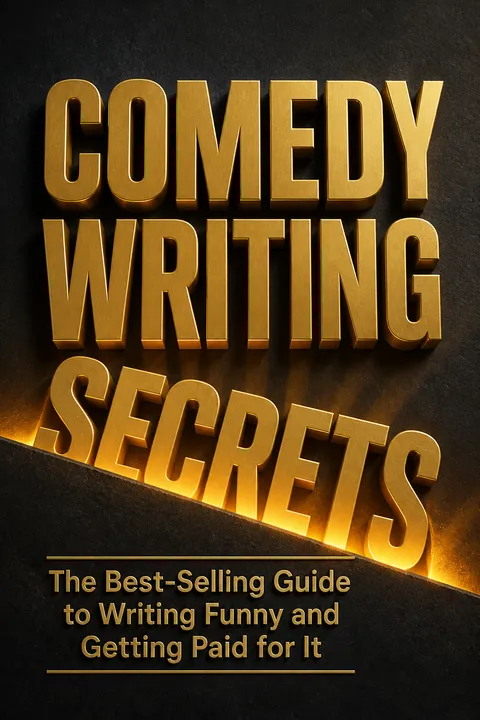


Key Takeaways
Treat ordinary objects as prompts for comic possibility
Start with possibility. The book’s first rule is to let imagination work before judgment does. A writer can take an everyday object and ask what else it might be, or imagine a familiar situation behaving in a surprising way. The point is not to produce a polished joke immediately. It is to make more raw material available by suspending practicality and self-censorship. A playful idea that seems ridiculous may contain the useful part of a joke.
Combine what seems unrelated. The game Angry Birds began with a premise that joined familiar game ingredients in an unexpected way: animals and combat. The example illustrates how a seemingly silly combination can become commercially successful. Keep a notebook or digital file for odd observations, overheard phrases, and possible premises, because comic ideas do not arrive on a writing schedule.
What's valuable here is the separation of invention from evaluation. Creative cognition often benefits from generating many associations before selecting among them; judging too early narrows the search. The advice also makes imagination concrete rather than mystical: it becomes a repeatable exercise. The useful limit is that novelty alone does not make a joke. A surprising association still needs a recognizable point, a suitable audience, and careful shaping. Free association supplies ingredients, not the finished meal.
Build laughter from surprise, while noticing whose dignity pays
Surprise changes the track. The book presents surprise and superiority as the two leading explanations for laughter. A joke steers listeners toward an expected interpretation, then redirects them at the end. Superiority explains another common response: people enjoy seeing someone powerful, pompous, or foolish brought down, or feel relieved that the misfortune is happening to someone else. Other proposed sources include instinct, incongruity, conflicting feelings, tension release, solving a puzzle, and playful regression.
A violation needs limits. The cited Benign Violation Theory proposes that humor emerges when something breaks a norm but still seems harmless. A banana-peel fall can be funny when the person is understood to be safe, but a serious injury changes the meaning. The book also describes Richard Wiseman's LaughLab, a global joke-rating project, as evidence that humor preferences vary across people and cultures.
The distinction between surprise and superiority gives writers two useful diagnostic questions: What expectation is being overturned, and what social position does the audience occupy? Contemporary humor research often treats laughter as dependent on context, not merely on a punchline's structure. A norm violation can feel playful to one group and threatening to another. Superiority is especially potent, but it can become cruelty when the target has less power than the audience. The framework works best as a map of possible responses, not a universal law of laughter.
Match material, audience, performer, and purpose before writing punch lines
Map the situation first. MAPP stands for material, audience, performer, and purpose. The four parts must fit together: a line suitable for a comedy club may fail in a classroom, and a joke that suits one speaker may sound false in another's voice. Begin by deciding what the humor is meant to do, such as entertain, persuade, or make a presentation easier to hear.
Give the joke a target. The book's THREES framework names six ingredients: target, hostility, realism, exaggeration, emotion, and surprise. A target gives the joke direction; hostility supplies friction; realism gives listeners something familiar; exaggeration and emotion build pressure; surprise delivers the turn. In the book's story of an elderly truck driver facing hostile bikers, the audience's initial judgment of the driver is reversed by his unexpected response.
MAPP resembles audience design in rhetoric: language works through the relationship among speaker, listener, occasion, and intention. THREES then makes the writing problem more inspectable. Together, the frameworks discourage the fantasy of a universally funny line. They also expose a tension: hostility can sharpen a joke, but a writer must decide whether the audience is laughing at an abuse of power or reinforcing one. The frameworks are most helpful as revision questions, rather than a checklist that every joke must satisfy mechanically.
Make familiar language misbehave through wordplay and double meanings
Words carry the joke. The book calls play on words, or POW, a broad family of techniques that bend familiar expressions, phrases, and sounds toward an unexpected meaning. A double entendre lets one phrase support two interpretations. A malapropism substitutes a similar-sounding but incorrect word, usually because the speaker appears not to notice. An oxymoron joins contradictory terms, while a pun exploits similar sounds or meanings.
Listen as well as read. Writers can draw material from clichés, names, places, products, and common phrases. The book notes that certain sounds, especially the hard k sound, can make some words seem comic, and that specific, vivid language gives the audience more to picture than general wording. Wordplay also depends on shared language knowledge, so a joke built on one culture's idiom may not travel cleanly into another language.
Wordplay makes comedy unusually sensitive to sound, memory, and cultural fluency. A listener must recognize the original phrase before enjoying its distortion, so familiarity is both the setup and the constraint. This resembles metaphor: two meanings briefly coexist, and the mind resolves their collision. The book's emphasis on phonetic effects is useful as a writer's ear-training prompt, but sound preferences are not guarantees. A clever pun may earn admiration rather than laughter, especially when the audience can predict the verbal trick before it lands.
Use literal readings, cliché twists, and reversals to engineer surprise
Choose the kind of turn. The simple truth finds humor by taking a phrase literally instead of applying its usual contextual meaning. A takeoff begins with a familiar saying and adds an unexpected comment on its intended meaning. A reverse sets up one point of view, then switches it near the end. The three forms all use audience expectations, but they redirect those expectations in different ways.
Protect the ending. In each form, the setup should make the audience anticipate a likely conclusion without revealing the key word or idea too early. The writer may need to begin with the punchline and work backward to find a natural setup. A reverse can also grow into a short anecdote, but its events need to feel plausible enough that the audience follows the wrong interpretation until the turn arrives.
These formats teach a central principle of comic timing: the audience's prediction is part of the material. The writer is not simply adding a funny sentence, but arranging information so that one reading feels natural before another becomes visible. This is close to suspense, though the payoff is a reinterpretation rather than danger. The limitation is predictability: once a listener recognizes a familiar template, the trick loses force. Formats are therefore best treated as structures for invention, not molds to fill with interchangeable jokes.
Give the third beat the laugh, after two believable steps
Build anticipation in threes. A triple groups actions, examples, or observations so that the first two establish a pattern and the third changes or intensifies it. The book describes a common structure as SAP: setup, anticipation, and punch line. The audience learns the rhythm, begins to predict what belongs next, and then encounters the most unexpected item at the end.
Keep the buildup purposeful. Three is a useful default, not a law. A sequence can be longer or shorter if that is what the effect needs, but extra items may delay the payoff. The book recommends making the final item the strongest and keeping its connection to the earlier items clear. Triples can also be combined with reversals, wordplay, or short anecdotes to give a familiar structure a fresh direction.
The triple works because pattern recognition creates expectation, while the final beat violates the pattern just enough to renew attention. Similar three-part rhythms appear in speeches, slogans, and storytelling because they are easy to remember and perform. The structure also helps writers manage pacing: each earlier beat earns the audience's readiness for the last one. Still, a third item is not automatically funny. If the escalation is weak or the ending merely repeats the setup, the pattern becomes a list rather than a joke.
Stretch a recognizable truth, not randomness, until it becomes funny
Keep one foot in reality. Effective exaggeration starts with a familiar frustration or observation, then distorts it far enough to surprise without losing the connection. The book compares realism and exaggeration to a balance: realism lets the audience recognize the situation, while distortion enlarges its absurdity. A father's trousers gradually rising is believable; the comic image of them reaching his head stretches that fact into a visual joke.
Use shock selectively. Profanity, taboo subjects, and extreme images can intensify a punchline, but they are not substitutes for comic structure. The right choice depends on the speaker, audience, purpose, and venue. The book notes that clean language can reach more markets, while shock humor can be effective in settings where the audience expects it. A word should earn its place by improving the joke, not merely by startling people.
Exaggeration is persuasive when the audience can reconstruct the ordinary fact beneath the distortion. That makes it a form of controlled inference: listeners supply the realistic baseline, then enjoy seeing it warped. The same mechanism explains why random absurdity often feels empty. The discussion of shock is also practical rather than puritanical: language has social costs and commercial consequences, so the writer should choose deliberately. One complication is that audiences do not share a single threshold for offense, making testing and contextual judgment essential.
Generate freely, then cut until every word earns its place
Make more than you need. The book describes humor writing as a high-rejection process: roughly one idea in ten may survive early drafting. When inspiration stalls, writers can break a subject into categories, list related phrases and clichés, then search for opposites, double meanings, and possible punchlines. Other ways to restart include working backward from an ending, speaking ideas aloud, or imagining a scene before trying to describe it.
Edit for the last word. A joke usually improves when unnecessary setup and explanation disappear. Keep key clues away from the punchline, save the strongest word or image for the end, and remove anything that follows it without adding value. The book calls the relationship between brevity and comic effect the Humor and Duration Principle: shorter routes to the joke tend to hold attention and strengthen its impact.
This process mirrors a useful distinction in creative work: divergent thinking expands the option set, while convergent thinking selects and refines. Treating both as necessary prevents two common failures, self-censorship before ideas form and attachment to weak material afterward. Compression also changes timing, not just word count; every unnecessary phrase gives the audience another chance to anticipate the turn. Yet extreme brevity can erase context. The craft lies in removing delay without removing the detail that makes the punchline intelligible.
Make the joke fit its medium, not just its subject
Different rooms need different jokes. A speech should use brief, speakable sentences, a clear message, and humor comfortable for both speaker and audience. The book advises keeping a speech around twenty minutes and tailoring material to the event and local audience. In print, anecdotes and one-liners can lighten serious subjects, while greeting cards need a compact setup and payoff shaped around the sender and recipient.
Teach with a purpose. Classroom humor should support learning rather than compete with it. It needs to suit students' age and background, avoid belittling them, and clarify or enliven course material. Online writing adds its own constraints: readers scan quickly, openings and headlines need to earn attention, and humor without a focused audience can become a diary. The core comic tools remain useful, but their form and risk change with the setting.
Medium is not packaging; it alters how humor is received. A live audience offers timing, facial expression, and immediate feedback, while print and online writing must create those effects through wording and layout. Educational humor adds another test: whether a laugh helps the lesson stick or distracts from it. This is a strong application of audience-centered writing. The caution is that tailoring can become overcaution. A writer still needs a distinctive voice, even while adapting pace, explicitness, and subject matter to a particular room.
Treat rejection as data, and build a daily practice around testing
Practice is the profession. The book argues that humor can be learned, but paid comedy demands sustained work, revision, and tolerance for rejection. Writers should observe everyday life, read and listen closely, keep a file of material, and test jokes with an audience suited to the task. The book estimates that about one in ten jokes may work on an initial attempt, and recommends revising weak material or dropping it after repeated failures.
Protect the work. A joke may circulate in many versions, and its original author can be hard to identify, but deliberate theft remains a violation of trust. Writers should credit material when possible and develop original work instead of relying on other people's lines. Collaboration can improve a draft by exposing it to fresh reactions, while performing or sharing work provides evidence about what actually lands.
The book's professional advice usefully replaces the myth of effortless comic talent with habits that can be practiced: collection, drafting, testing, and revision. Audience response is valuable evidence, though it is not a perfect measure. A room's mood, familiarity with a joke, and group dynamics can distort the signal, so one bad performance should not settle the question. The warning about theft is equally important in a culture where jokes travel quickly. Craft depends on both generating material and respecting the labor behind it.
Analysis
Comedy Writing Secrets treats humor less as a mysterious gift than as a craft that can be studied, practiced, and adapted. Its strongest organizing insight is that a joke is an interaction among expectation, language, target, performer, audience, and occasion. The MAPP and THREES frameworks make those relationships visible, while forms such as the reverse and triple turn them into usable compositional tools. Brainstorming and editing then supply a practical workflow: expand possibilities, find a structure, and revise toward a clean payoff.
The book's account of laughter is deliberately plural. Surprise and superiority explain many jokes, but the cited theories also include incongruity, release, puzzle solving, and regression. This plurality is an asset because it discourages a single formula for all humor. At the same time, the book sometimes speaks broadly about audiences enjoying superiority or hostility. That account fits satire and ridicule, but less comfortably explains humor based on affection, absurdity, shared embarrassment, or linguistic delight. Its own insistence on target and audience helps correct that limitation: a joke's social meaning cannot be inferred from its structure alone.
The most durable contribution is the joining of creativity with discipline. Uninhibited idea generation protects originality; precise editing preserves surprise; live and written testing helps the writer distinguish intention from effect. The commercial advice also recognizes that a joke has to work in a particular market, not merely on a page. Modern platforms make this even more consequential: material can circulate far beyond its first audience, so context and attribution are harder to control. The book's methods remain useful when treated as diagnostic tools rather than rules. They teach writers how to build and inspect a joke, while leaving taste, ethics, and judgment in human hands.
Review Summary
Comedy Writing Secrets receives mixed reviews, with an average rating of 3.67 out of 5. Many readers find it useful for understanding humor theory and techniques, praising its comprehensive coverage of comedy writing. However, some criticize its dry, textbook-like approach and question whether humor can be taught. The book's exercises and examples are generally well-received, though some find them outdated or too American-centric. Several reviewers note that while the book provides valuable insights, natural comedic talent remains essential for success in comedy writing.
People Also Read



Glossary
MAPP
Audience-fit planningA planning framework for matching humor to its situation. MAPP stands for material, audience, performer, and purpose. The writer considers what the joke is about, who will hear it, who will deliver it, and what the humor is meant to accomplish. A mismatch among these factors can make even a well-constructed joke fail.
THREES
Six joke ingredientsA framework naming six ingredients that can contribute to humor: target, hostility, realism, exaggeration, emotion, and surprise. The target gives the joke a subject, while the other elements create familiarity, tension, distortion, and a turn. The framework is presented as a practical way to examine why a joke may work or fall flat.
POW
Play on wordsAn abbreviation for play on words, a broad family of comic techniques that alter or exploit familiar language. POW can involve clichés, double meanings, puns, sound-alike words, and deliberate reformulations. Its effect depends on the audience recognizing the original expression and understanding how the wording shifts its meaning.
Simple truth
Literal reinterpretationA joke technique that takes a familiar phrase or expression literally rather than accepting its usual contextual meaning. The audience first applies the conventional interpretation, then the punchline reveals another plausible meaning. The effect often resembles a deliberate misunderstanding, and it commonly depends on a word with more than one sense.
Takeoff
Twist on a familiar sayingA joke built from a familiar saying, cliché, or expression, followed by an unexpected comment on its intended meaning. Unlike the simple truth, which treats the expression literally, a takeoff responds to the familiar idea itself. The saying often acts as a setup, and the new conclusion supplies the surprise.
Reverse
Unexpected viewpoint switchA comic structure that leads an audience toward one interpretation, then changes the point of view near the end. The setup may include misleading clues that make the initial reading seem natural. Reverses can be short lines or longer anecdotes, but the ending must remain hidden until the intended moment.
SAP
Setup, anticipation, payoffA structure for many comic bits, consisting of setup, anticipation, and punch line. The setup establishes the subject, the anticipation builds a pattern or expectation, and the punch line completes or overturns it. It is often used to explain why a sequence of examples, especially a triple, can build tension before the final beat.
The Humor and Duration Principle
Shorter route, stronger jokeA principle that the time and wording required to reach a joke affect its impact. Unnecessary setup, explanation, or extra words after the strongest phrase can weaken attention and reduce surprise. The principle encourages writers to shorten a joke while preserving enough context for the audience to understand the turn.
Benign Violation Theory
Harmless norm-breakingA theory discussed in the book that humor can arise when something violates an expectation or norm while still being perceived as harmless. A comic fall may amuse if the audience believes no serious injury occurred, but the same event can become distressing when real harm is apparent. Perceived safety helps determine the response.
LaughLab
International joke-rating projectA humor study created by British psychologist Richard Wiseman in which people submitted and rated jokes online. The book reports that it received more than 40,000 submissions from 70 countries and gathered several million ratings. Its international scope illustrates both the possibility of comparing preferences and the difficulty of identifying humor that works everywhere.
FAQ
What's "Comedy Writing Secrets" about?
- Comprehensive guide: "Comedy Writing Secrets" by Mark Shatz and Mel Helitzer is a comprehensive guide on how to think, write, and act funny, with the ultimate goal of getting paid for it.
- Humor techniques: The book covers various humor-writing techniques, including plays on words, reverses, triples, and exaggeration, providing a structured approach to creating comedy.
- Practical applications: It offers practical advice on writing humor for different markets, such as speeches, print media, social media, and educational settings.
- Historical context: The book also provides a historical perspective on humor, discussing its evolution and the theories behind why we laugh.
Why should I read "Comedy Writing Secrets"?
- Skill development: It helps aspiring humor writers develop their skills by providing detailed techniques and exercises to practice and refine their comedic writing.
- Market insights: The book offers insights into various markets for humor writing, helping readers understand where and how they can sell their material.
- Expert advice: With contributions from experienced humorists, the book provides valuable advice and anecdotes from professionals in the field.
- Versatile application: Whether you're a stand-up comedian, a writer, or someone who wants to add humor to speeches or teaching, the book offers applicable strategies.
What are the key takeaways of "Comedy Writing Secrets"?
- THREES formula: The book introduces the THREES formula (Target, Hostility, Realism, Exaggeration, Emotion, Surprise) as a foundation for creating humor.
- MAPP strategy: It emphasizes the importance of the MAPP strategy (Material, Audience, Performer, Purpose) to ensure humor is targeted and effective.
- Humor techniques: Readers learn various humor techniques, such as plays on words, simple truths, takeoffs, and reverses, to craft jokes and comedic narratives.
- Market adaptability: The book highlights the adaptability of humor writing across different platforms, from print to digital media, and the importance of tailoring content to specific audiences.
How does the THREES formula work in humor writing?
- Target: Identify a specific target for your humor, which can be a person, idea, or situation that resonates with your audience.
- Hostility: Incorporate a level of hostility or criticism, as humor often involves poking fun at something or someone.
- Realism and Exaggeration: Balance realism with exaggeration to create a believable yet surprising comedic effect.
- Emotion and Surprise: Use emotion to build tension and surprise to deliver the punchline, ensuring the humor is impactful and memorable.
What is the MAPP strategy in "Comedy Writing Secrets"?
- Material: Choose material that is relevant and relatable to your audience, ensuring it aligns with the purpose of your humor.
- Audience: Understand your audience's preferences and sensitivities to tailor your humor effectively.
- Performer: Consider the performer's style and strengths when crafting humor, as delivery is crucial to comedic success.
- Purpose: Define the purpose of your humor, whether it's to entertain, inform, or persuade, and ensure your material supports this goal.
What are some humor techniques discussed in "Comedy Writing Secrets"?
- Plays on Words (POW): Utilize wordplay, puns, and double entendres to create clever and witty humor.
- Simple Truths and Takeoffs: Use literal interpretations of clichés and common phrases to surprise and amuse the audience.
- Reverses: Employ unexpected twists in perspective or narrative to catch the audience off guard and elicit laughter.
- Triples: Structure jokes in threes to build anticipation and deliver a powerful punchline.
How can humor be used in speeches according to "Comedy Writing Secrets"?
- Engage the audience: Start with a humorous title and introduction to capture attention and set a lighthearted tone.
- Integrate humor: Use humor throughout the speech to maintain interest and emphasize key points without overshadowing the message.
- Self-deprecating humor: Employ self-deprecating humor to build rapport and make the speaker more relatable.
- Conclude with humor: End with a humorous remark or anecdote to leave a lasting positive impression.
What advice does "Comedy Writing Secrets" offer for writing print humor?
- Column writing: Focus on anecdotes, one-liners, and ironic truths to create engaging and memorable columns.
- Greeting cards: Use plays on words and takeoffs to craft concise and impactful messages for greeting cards.
- Abbreviated humor: Write short, punchy humor for bumper stickers, T-shirts, and fortune cookies, using double entendres and reformed clichés.
- Market research: Understand the target audience and tailor humor to fit the publication's style and readership.
How does "Comedy Writing Secrets" suggest using humor in social media?
- Twitter: Craft concise, punchy jokes within the 140-character limit, using word economy and hashtags to engage followers.
- Facebook: Use witty statuses and updates to connect with friends and followers, maintaining a balance between humor and personal sharing.
- Blogging: Write engaging and entertaining blog posts with catchy headlines and humorous openings to attract and retain readers.
- Online dating: Incorporate humor in profiles and headlines to stand out and attract potential matches, while maintaining authenticity.
What role does humor play in education according to "Comedy Writing Secrets"?
- Enhances learning: Humor makes learning more enjoyable, engaging, and memorable, helping students retain information.
- Reduces anxiety: It alleviates stress and anxiety, especially in challenging subjects, making difficult concepts more accessible.
- Promotes creativity: Humor encourages creativity, exploration, and critical thinking, fostering a positive learning environment.
- Instructional tool: Use humor strategically to support educational objectives, ensuring it is appropriate and relevant to the subject matter.
What are the best quotes from "Comedy Writing Secrets" and what do they mean?
- "Humor is a rubber sword—it allows you to make a point without drawing blood." This quote highlights humor's power to address sensitive topics in a non-threatening way.
- "Comedy is very controlling—you are making people laugh." Gilda Radner's quote emphasizes the control and influence a comedian has over their audience.
- "Analyzing humor is like dissecting a frog. They both die in the process." E.B. White's quote suggests that overanalyzing humor can strip it of its spontaneity and fun.
- "If you want to succeed as a humor writer, you must become a serious student of humor." This underscores the importance of studying and understanding humor to excel in writing it.
How can "Comedy Writing Secrets" help aspiring humor writers succeed?
- Skill development: The book provides exercises and techniques to practice and refine humor-writing skills.
- Market insights: It offers guidance on navigating various markets and understanding audience preferences.
- Professional advice: Readers gain insights from experienced humorists, learning from their successes and challenges.
- Versatile application: The book's strategies can be applied across different platforms, from stand-up comedy to digital media, broadening opportunities for success.
Download PDF
Download EPUB
.epub digital book format is ideal for reading ebooks on phones, tablets, and e-readers.








