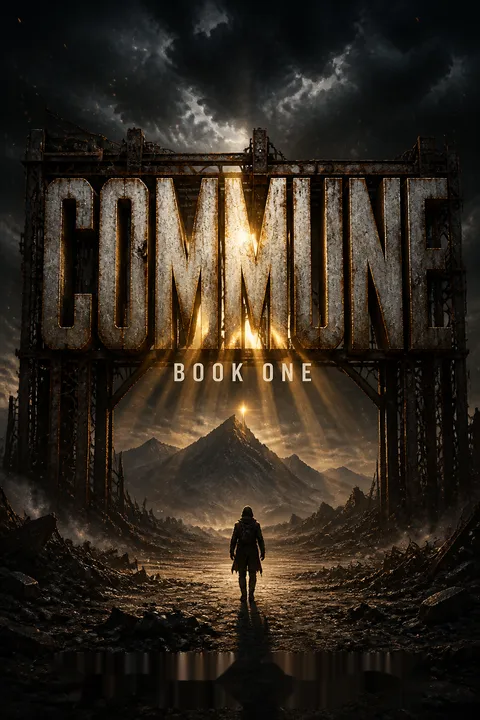


Plot Summary
Flare Claims the Grid
Jake Martin begins his account with a sky brightened by a historic solar storm. The Flare destroys much of the electrical grid, strands communications, crashes vehicles and aircraft, and leaves cities without reliable water or supplies.
Military crews restore some order, but before society can recover, a contagious respiratory plague spreads through the disrupted population. Its weeks-long incubation carries it across the country, then its rapid decline kills nearly everyone it reaches.
Jake loses his neighborhood and the world that once made ordinary life dependable. With the roads clogged and the future reduced to what one person can carry, he heads toward Las Vegas, hoping to find his parents. He survives, but has no plan beyond reaching them.
The catastrophe is not one disaster but a sequence in which each damage makes the next more lethal. The Flare disables the systems that would contain an epidemic; the delayed onset of the Plague then conceals its spread until rescue networks are already failing. Jake’s remembered faucet and empty streets make infrastructure tangible: civilization is not simply comfort, but coordinated labor that disappears when its many parts stop working. His journey begins with a personal hope, finding his parents, but the deeper pressure is the loss of any reliable future. Survival starts as logistics before it becomes a question of what kind of person those logistics will permit.
Amanda Loses Certainty
Before the road brings her to Jake, Amanda Contreras remembers the life the Plague erased. At seventeen, she becomes pregnant, and Eddie, her boyfriend, gives up his planned Marine career to marry her and build a steady life as an electrician.
Their daughter, Elizabeth, becomes the center of Amanda’s sense of security. The epidemic kills Eddie and carries Amanda and Elizabeth into a crowded quarantine camp, where soldiers and medical staff can offer little more than care and comfort as people die around them.
When the camp empties of authority, Amanda takes a rifle, basic medicine, food, and her daughter back to their ransacked apartment. She grieves for Eddie there, then leaves with Elizabeth, pushing their remaining belongings in a stroller and walking toward family in Beaver.
Amanda’s backstory makes certainty a lived relationship, not an abstract privilege. Eddie’s decision to reorganize his future around Amanda and their child gives her a dependable structure, while his work steadily turns that promise into ordinary security. The Plague destroys both the person and the systems that made care feel assured. Amanda’s departure from the camp is therefore a psychological threshold as much as a practical one: she moves from waiting for institutions to act to making decisions with incomplete knowledge. Elizabeth keeps her moving, but motherhood does not make Amanda fearless. It gives fear a direction and turns each scarce object into a choice about what her child may need next.
A Fire on the Highway
On the highway through Primm, Jake encounters a desperate stranger at a hotel and shoots him when the man sneaks into his room. The killing secures food, ammunition, and a pistol, but leaves Jake troubled by how quickly suspicion became lethal. The next day, he spots another traveler far ahead and keeps walking toward him, determined not to make every meeting end the same way.
The traveler, Billy, waits by a small desert fire with a shotgun across his knee. He is an older Cahuilla tribal leader, a seasoned prepper, and a man carrying a plan to reach his Wyoming property. Over whiskey and canned food, the two compare their destinations. Billy agrees to help Jake search Las Vegas for supplies and check on his parents.
Jake’s first meeting with Billy is shaped by a killing that has already happened, not by an uncomplicated desire for companionship. He cannot undo the shot at the hotel, so he seeks a different response to the next stranger. Billy’s careful welcome does not erase danger: the shotgun remains visible, and each man tests the other’s intentions. Their exchange of food and knowledge creates a provisional trust grounded in action. Billy offers more than survival expertise; he models a way to treat caution as compatible with hospitality. Jake’s willingness to approach him marks the beginning of a moral experiment, one that will be repeatedly tested by people who exploit generosity.
Vegas Turns Hostile
As Jake and Billy work toward Las Vegas, Billy teaches him to handle his M4, plan for water, and value practical equipment over impressive firepower. They find a van and a pickup, gather tools, and improvise a way to drain gasoline from abandoned cars. Outside an auto shop, two scavengers approach with a third man hidden nearby.
Billy recognizes the setup, but Jake has to fight through the unfamiliar rifle’s safety before he can fire. He kills the two men in front of him; Billy shoots the flanker. Afterward, Jake recoils from the damage his weapon caused, while Billy treats the attackers as threats that forced a decision. Their disagreement does not break the partnership, but it makes their different survival instincts plain.
The firefight turns technical instruction into moral consequence. The rifle Billy has explained is no longer an abstraction: Jake’s mistake with its selector nearly costs him his life, then its rapid fire kills men at close range. Billy’s ability to read the ambush protects them, but his unemotional response challenges Jake’s impulse to weigh every death. Neither position is simply a flaw. Billy has learned that hesitation can make a person vulnerable; Jake senses that treating violence as ordinary could hollow out the life they are trying to preserve. Their partnership works because they can disagree while still acting together, though the question of when violence is justified remains open.
Help Becomes a Trap
While walking with Elizabeth, Amanda flags down a motorhome caravan led by Dwight and accepts food and water when the pair are nearly exhausted. The group initially treats them kindly, and Amanda asks to help with chores so she will not become a burden.
Then Dwight summons her outside at night and reveals that the men expect sexual access in return for shelter. James, the most feared member of the group, makes the arrangement an order and threatens Elizabeth if Amanda resists. During the following days, Amanda submits to the men to keep her daughter safe.
When James later drags Elizabeth from the motorhome and throws her outside, Amanda attacks him, but he overpowers and rapes her while Elizabeth cries nearby. Amanda stays because escape without weapons or supplies could endanger them both.
The caravan’s betrayal is effective because it begins with a real need met in a recognizable way. Amanda accepts help while desperate, then discovers that the group has converted food and shelter into instruments of coercion. Dwight’s polite manner disguises his participation, while James’s open brutality reveals who actually controls the group. Amanda’s compliance is not consent or weakness; it is an effort to keep a child alive under a threat she cannot yet overcome. The scene also exposes the cost of treating survival as a private bargain: the powerful decide what the vulnerable must pay. Amanda’s attention remains fixed on Elizabeth, even when that focus forces her to endure harm.
The Motorhome Breaks
Jake and Billy have watched the caravan long enough to know its numbers, but Jake insists on finding out whether Amanda and Elizabeth are being held against their will. When one of the men offers Amanda as payment for ammunition, Jake signals Billy, who shoots a guard from a distant position.
Jake kills another guard and helps Amanda and Elizabeth escape, then confronts Dwight and James when they return. The fight leaves Jake badly injured and James bound rather than executed.
Jake gives Amanda a knife and a gun and leaves her alone with James, letting her decide what justice means. Amanda chooses the knife and kills the man who assaulted her and endangered Elizabeth. She and her daughter accept Jake and Billy’s offer to travel with them toward Wyoming.
The rescue makes the difference between protection and possession a central test. Jake refuses to assume that Amanda is safe merely because she is housed and fed; he observes and waits for evidence, then intervenes when her captivity becomes unmistakable. Afterward, he does not take control of her response to James. By giving Amanda the means and time to choose, he recognizes that rescue cannot restore agency if it immediately replaces one man’s authority with another’s. Her decision to kill James is specific to the harm he inflicted, not a general conversion to violence. The four-person group begins with shared danger, but its first bond is the recognition that each person retains a say.
Four Choose the Road
Billy offers Amanda and Elizabeth a place on his Wyoming property, while Jake makes clear they may leave without being forced to follow. Amanda sees that traveling alone with her daughter would mean facing dangers for which she is not prepared, so she accepts.
The group stops in Cedar City to find a vehicle and supplies. In a house they enter carefully, Amanda and Billy discover two bodies in a bedroom before locating a capable Jeep in the garage. Jake and Billy give Amanda body armor, a compact rifle, and patient instruction in how to operate it.
On the road, Jake quietly offers Elizabeth children’s books, and she begins to trust him. When breakfast and a safe camp finally loosen Amanda’s grief into laughter and tears, the four start to feel less like survivors traveling together and more like a household.
This turn establishes the commune as a choice rather than a refuge imposed by stronger people. Amanda evaluates the danger of traveling alone and accepts help without surrendering her judgment. The practical details matter: the Jeep gives her mobility, training gives her competence, and books give Elizabeth a relationship with Jake that is not based solely on rescue. The emotional release around breakfast shows how safety can make buried grief newly possible. The group’s closeness is accelerated by trauma, but the story does not reduce it to sentiment; it is built through useful acts, shared risk, and respect for boundaries. Their destination is a home, though the road first requires them to learn how to function as a team.
The Warehouse Ambush
While Amanda and Billy search for a vehicle in Cedar City, Jake stays with Elizabeth beside the group’s supplies. A local scavenging party surrounds them, takes the van, and carries Elizabeth away to force Jake’s cooperation.
He fights his way into the warehouse, killing two armed men before another attacker knocks him unconscious. When he wakes, Elizabeth is bound to a chair and Brenda, the group’s leader, holds a knife near the child’s face. Jake’s injuries leave him dizzy and unable to stand securely, but he charges Brenda when gunfire outside distracts her.
He knocks her down, retrieves the revolver, and kills her. Amanda and Billy return, shoot the two men guarding the warehouse, and free Elizabeth. Rather than risk another confrontation with the van’s absent driver, they leave with Jake and the rescued child.
The warehouse attack tests the new group’s trust at its weakest point: they have split up, and the child has been left with the person least able to recover quickly from an assault. Jake’s decision to protect Elizabeth has become personal, but his concussion makes every movement unreliable. Brenda uses the language of care while restraining a child and threatening her with a blade, exposing the gap between claimed intentions and observable conduct. The rescue depends on coordinated action, not one flawless hero: Jake buys time, Amanda and Billy fight their way in, and Elizabeth survives the ordeal. The stolen van costs the group equipment, but the immediate consequence that matters most is Elizabeth’s safe return.
A Trade at Barnes
After Jake recovers enough to travel, the group scavenges a Walmart for music, batteries, toiletries, and supplies for Elizabeth. They then stop at Barnes, an ammunition business Billy had marked as a likely cache, and find far more stock than they can carry.
Near Spanish Fork, Otis, a father traveling with his son Ben and two young companions, approaches with a request for ammunition and fuel advice. Jake recognizes that the strangers are risking an encounter rather than launching an attack.
The group trades a Bushmaster rifle, magazines, and ammunition for three flats of bottled water, and Billy helps Otis learn how to refuel his minivan. Otis shares what he heard in a newspaper about a possible engineered origin for the Plague. The groups share dinner, then part with directions and an invitation to find one another again.
The trade demonstrates Jake’s ethic in a form more durable than a speech: he gives away a useful weapon because the other group needs it and because his own group has enough to spare. That generosity is not naïve. They negotiate, assess one another, and exchange practical knowledge alongside supplies. Otis’s account of the National Dispatch introduces the possibility that the Plague was engineered, but the evidence remains uncertain; the survivors cannot turn speculation into control. The encounter instead offers something firmer: proof that strangers can cooperate without becoming family or enemies. Robert’s grief and defensiveness also hint that each traveling group carries private damage. Their farewell preserves connection without pretending that trust eliminates risk.
Billy’s Hidden Homestead
After another day of driving and a final refueling stop, Billy leads the group through a concealed mountain pass to his property near Jackson, Wyoming. Evidence around the cabin suggests someone has stayed there, so Jake and Billy clear the house before bringing Elizabeth inside.
The home is intact, and its library contains practical manuals on farming, repair, medicine, and traditional crafts. Billy’s separate garage has solar power, tools, stored fuel, and a diesel truck for the day gasoline fails.
His preparations turn the destination from a temporary shelter into a possible base for rebuilding. Amanda and Elizabeth claim rooms, while Jake helps unload supplies. At dinner, Billy explains that preparedness began as a hobby shaped by his work and values. Jake agrees to stay for a while and help make the property work.
Billy’s property is a material answer to the question that has governed the journey: what can survive after supply chains vanish? Its value comes not from luxury but from stored knowledge, repair capacity, energy, and land. Yet the cabin is not a self-sufficient solution handed down intact. A stranger has already used it, the pantry is limited, and its residents must decide how to allocate labor and resources. Billy’s preparation matters because it buys time for learning, not because it abolishes uncertainty. Jake’s willingness to stay is deliberately provisional, but it marks a shift from escorting Billy toward a destination to imagining a shared project. Shelter begins to become community when its inhabitants plan beyond the next night.
A Commune Takes Shape
In the first days at the property, the four survivors divide their work. Jake and Billy gather fuel and useful goods, Amanda and Jake search homes for clothing and food, and Billy studies his manuals to plan crops for Wyoming’s short growing season.
Amanda learns that scavenging can mean finding both necessities and the dead, so Jake takes over when a child’s body overwhelms her. At night, the group shares meals, board games, and candlelit conversation.
Jake teaches Elizabeth chess by asking her to explain her moves, then uses the same ideas to defeat Billy in a match. Amanda begins to process what she has endured, while the routines give Elizabeth room to be a child. The cabin becomes a home through repeated work and care, not merely through its walls.
The early commune is made through reciprocal competence. Billy supplies a store of references, Jake teaches and repairs, Amanda contributes judgment and practical labor, and Elizabeth participates in learning rather than being treated only as someone to protect. Their routine does not erase trauma: Amanda still needs solitude, and scavenging repeatedly confronts the group with death. Jake’s chess lessons are especially revealing because he helps Elizabeth reason without dictating each move. This is a model of the leadership the group needs, one that increases another person’s capacity rather than demanding dependence. The cabin’s warmth is thus both emotional and structural. Board games, crops, and fuel all belong to the same effort to make life more than an interval between threats.
The Valley Gunfight
The earlier visitors return in two trucks with seven armed men. Billy identifies himself as the property’s owner and offers a cautious way to get acquainted, but tension between their leader Howard and the aggressive Doug breaks into violence. Doug shoots Howard, and the cabin group returns fire.
Amanda kills Doug and another attacker from a window; Billy’s shotgun drops two more, while Jake pursues the men who flee. A survivor breaks into the house, where Jake kills him at close range, but Billy has been shot in the abdomen, thigh, and shoulder.
Jake packs the abdominal wound as Amanda guards the house, yet Billy’s injuries are too severe. Before he dies, Billy makes Jake promise to read the Iliad. His death leaves the others with the home he prepared and the work he began, but removes the person who first held their small group together.
The attack converts an argument about shared refuge into a contest over who can enforce a claim. Billy tries to slow the conflict because he knows neither group well, but Doug rejects negotiation and kills his own leader, making violence unavoidable. The survivors’ distinct roles, Amanda’s guarded firing position, Billy’s close-range defense, and Jake’s pursuit, emerge from earlier preparation. Still, competence cannot guarantee survival: Billy’s wounds exceed what Jake can treat with improvised pressure. His request about the Iliad ties the immediate crisis to the books he valued, making cultural memory part of his final concern. The commune survives the attack, but its founding ethic now has to continue without its founder.
The Tree Beside Home
Jake removes the attackers from the house and digs a grave for them, while Amanda checks their trucks for supplies. Together they bury Billy beneath a fir tree near the cabin. Jake brings Elizabeth to the burial and gives her Billy’s pocketknife, then shows her where she can sit if she wants to remember him.
Amanda sees that Jake is preparing to leave once the others are safe, so she asks him directly not to abandon them. He looks toward Elizabeth and the grave before agreeing to stay. The promise to Billy, the knife in Elizabeth’s hand, and Jake’s decision connect the old survival plan to a future shared by the three remaining founders. They have lost the person who prepared the refuge, but they do not leave it empty.
The resolution answers the opening journey’s loneliness without pretending that grief has been repaired. Billy’s grave establishes a place for mourning, while the knife gives Elizabeth a tangible link to the man who welcomed and protected her. Jake’s promise to read the Iliad carries forward Billy’s faith in inherited stories and knowledge. Amanda’s request matters because it asks for relationship rather than protection alone; she needs Jake to choose the group, not merely complete a duty and disappear. His agreement is modest, not triumphant. The ending’s hope rests in a decision to remain and in the unfinished labor of building a community, not in certainty that the danger has passed.
Epilogue
Farther north, Blake Gibson, known as Gibs, drives a school bus through the wreckage-choked Wyoming roads with fifteen other survivors aboard. The bus is a noisy, fuel-hungry burden, but moving a large group in one vehicle is easier than maintaining a convoy and refueling several cars.
After weeks of searching for a place to settle, Gibs spots a sign for Jackson, sixty-five miles ahead, and decides to investigate. He nearly loses control of the bus while swerving around a washout, then steadies it and keeps going. The history of the first commune closes just as another group approaches its valley, carrying the possibility of new allies and new strain.
The epilogue widens the story beyond its founders without resolving what the newcomers will find. Gibs’s bus makes collective survival visible as a logistical problem: fifteen people need transport, food, fuel, and a place that can hold them. His exhaustion and near accident keep the hopeful destination from becoming a simple promise. Jackson may offer shelter, but it will also bring the strain of incorporating strangers into a fragile community. By ending before the bus arrives, the book shifts its final emphasis from a completed refuge to a continuing process. The commune is not merely a place on a map; it is an experiment that other survivors may enlarge or unsettle.
Analysis
Commune: Book One treats the apocalypse as a test of social capacity, not merely individual toughness. The Flare and the Plague destroy systems people rarely notice until they fail: electricity, transport, medicine, sanitation, manufacturing, and the chains of labor connecting them. Billy’s preparations matter because they preserve tools and knowledge, but the novel refuses to make preparation equivalent to mastery. His library cannot supply missing seeds, his fuel will not last forever, and his refuge attracts people who need it. The future still depends on shared work.
Jake’s central conflict is ethical rather than tactical. He understands danger, yet he resists making suspicion the permanent rule of human contact. Billy’s caution, Amanda’s hard-earned vigilance, and Jake’s willingness to risk trust form a productive tension. The story does not present generosity as safe or violence as avoidable. Instead, it asks what kind of violence is necessary, who gets to decide, and whether survival can remain meaningful after a person becomes numb to killing. Amanda’s choice after her abuse and the later debate over strangers show that moral agency survives, although it is exercised under terrible constraints.
The novel also links care to competence. Amanda protects Elizabeth by learning new skills; Jake gives the child books and teaches her to reason; Billy turns his resources into a possible home for people he barely knows. These acts do not erase loss. They create repeatable practices that make a group more capable than its isolated members. Chess, meals, fuel runs, and farming plans are not decorative pauses in the survival plot. They are the foundations of an alternative social order.
The closing attack makes that order vulnerable, while Jake’s decision to stay prevents Billy’s death from ending the project. The arriving bus in the epilogue enlarges the question: can a small, trusting community absorb more survivors without reproducing coercion or collapsing under scarcity? The book answers only with a beginning, a place, and a choice to keep building.
Review Summary
Commune receives mostly positive reviews for its fresh take on post-apocalyptic fiction, with compelling characters and a unique storytelling format. Readers praise the realistic survival scenarios and character development. Some criticize the extensive gun descriptions and occasional tropes. The audiobook narration by R.C. Bray is highly regarded. While a few readers find the story predictable or lacking in action, many appreciate the focus on human interactions and survival challenges. Overall, it's considered a strong entry in the genre, leaving readers eager for the next installment.
Characters
Jake Martin
Reluctant moral centerJake is a physically powerful, guarded man who reveals little about his past and struggles with reading and writing. Those limits do not make him passive; he learns through observation, accepts instruction, and takes responsibility when plans fail. His first instinct is often to protect others, but he resists the idea that danger justifies treating every stranger as an enemy. That conviction can put him at risk, yet it also shapes the group’s choices about rescuing Amanda, welcoming newcomers, and teaching Elizabeth. Jake’s care tends to appear as action rather than explanation: he finds books for Elizabeth, helps her learn chess, and offers Amanda a say in what happens next. His quietness conceals intense feeling, not its absence.
Amanda Contreras
Mother turned strategistAmanda is Elizabeth’s mother, a practical and fiercely protective woman whose experience of loss has made security feel precious and fragile. Before the collapse, she relied on her husband Eddie’s devotion and work; after the Plague, she has to make decisions without institutions, supplies, or dependable help. Her first priority is keeping Elizabeth safe, but she is not simply defined by motherhood: she observes people closely, weighs risk, learns to use weapons, and contributes to the group’s survival. Amanda also recognizes the psychological costs of violence and questions what repeated killing may do to a person. Her need for solitude and her capacity for laughter coexist, making her strength a changing practice rather than a fixed trait.
Billy
Preparedness with a heartBilly is an older Cahuilla man, a former tribal leader in the casino business, and a longtime advocate of self-reliance. His preparation is practical rather than purely fearful: he gathers tools, manuals, fuel, and supplies because he wants his community to depend less on outside systems. He teaches Jake and Amanda survival skills while puncturing tension with dry humor and an appetite for books, whiskey, and good food. Billy can be cautious enough to avoid unnecessary risks, but he understands that survival without human connection may not be worth much. He recognizes Jake’s need for other people before Jake can admit it himself. His Wyoming property reflects both long planning and a desire to share what he has made.
Elizabeth
The young learnerElizabeth, usually called Lizzy, is Amanda’s daughter. She is observant, quiet when frightened, and capable of surprising directness when she feels adults have overlooked her needs. The upheaval has taken away ordinary childhood protections, yet she still finds comfort in books, drawing, rope-making, games, and the attention of people who treat her as a participant. Her relationship with Jake grows through small acts, especially his effort to find books and teach her chess. Elizabeth wants to feel useful and to have some control over her own safety, even when her mother must set limits. She brings the group’s responsibilities into focus: every choice about risk, supplies, and trust has consequences for a child who is watching.
Brian Chambers
Keeper of the recordBrian is the commune’s recorder, tasked with preserving the accounts of Jake and the other members. His shorthand skill makes him useful in a world where public records and digital archives have vanished. He is observant about the group’s habits and careful to distinguish what he has witnessed from what others have told him. Brian’s narration gives the community a perspective beyond its central survivors, including uncertainty about Jake’s past and the reasons people trust him. He also understands the record as evidence that ordinary people existed, even if no future reader is guaranteed.
Eddie
Amanda’s steadfast partnerEddie is Amanda’s high-school boyfriend and Elizabeth’s father. When Amanda becomes pregnant, he reorganizes his future around their family rather than pursuing the military career he had planned. He trains as an electrician and works steadily to give Amanda and Elizabeth a dependable home. Amanda remembers him as loving, practical, and committed, a person whose reliability helped her feel that the future could be planned. His choices remain an important measure of care in her later life.
Otis
The generous fatherOtis is a father traveling with his son Ben and two young companions. Originally from Atlanta, he is warm, sociable, and willing to make contact with strangers even when caution would be easier. He seeks ammunition and fuel because his group’s transportation is becoming unreliable, but he also shares news from the region and offers food. His account of the quarantine camps carries the perspective of someone who saw both civilians and military staff face the Plague’s collapse. Otis wants to protect his son while maintaining a humane way of dealing with other survivors.
Ben
Otis’s hopeful sonBen is Otis’s young son, polite and attentive to the people his father meets. He shares games and food with Elizabeth, helping the adults see that a cautious encounter can become friendly. His instinct to offer the group more water than they ask for cuts through the negotiations with an uncomplicated generosity. Ben’s presence also underscores how survival decisions affect children, who need friendship and play as much as protection.
Robert
A grieving young guardRobert is one of the young companions traveling with Otis and Ben, alongside his sister Samantha. He is angry, wary, and quick to interpret unfamiliar actions as threats. His hostility is connected to the loss of his parents, though he does not readily explain what happened. Robert’s grief makes him difficult company, but it does not erase his vulnerability or his capacity to listen when someone addresses him plainly. His presence shows how pain can harden into suspicion even among people seeking safety.
Samantha
Robert’s steady sisterSamantha travels with her brother Robert and relies on Otis’s group after losing their parents. She is reserved and careful, often monitoring Robert’s temper and trying to prevent it from worsening a tense moment. Her quiet manner is not indifference; she is attentive to the emotional weather around her and understands how quickly conflict can endanger everyone. Samantha’s presence gives Robert’s anger a family context and adds another young survivor to the group’s fragile network of care.
Dwight
The polished exploiterDwight leads the motorhome group that initially offers Amanda and Elizabeth food, water, and shelter. He is talkative and presents himself as reasonable, but his concern for the group’s comfort does not prevent him from enforcing its coercive arrangement with Amanda. His behavior shows how exploitation can be wrapped in the language of compromise and shared survival.
James
The group’s enforcerJames is the most intimidating member of Dwight’s caravan. He speaks bluntly, dominates the other men, and uses physical force to establish control. His presence changes the group’s apparent hierarchy: Dwight may manage conversation, but James determines what others are allowed to refuse. He represents the danger of power without accountability.
Hugo
The reckless opportunistHugo is one of Dwight’s younger companions. He is impulsive, easily bored, and more interested in immediate convenience than in the consequences of his plans. His decision-making reflects the caravan’s casual assumption that weaker people and their resources can be treated as bargaining tools.
Richard
The caravan cookRichard is a member of Dwight’s group who handles much of its cooking and scavenging. He follows the group’s routines and contributes practical labor, but he does not challenge the coercive rules imposed on Amanda. His role illustrates how ordinary tasks can coexist with participation in an abusive system.
Howard
The faltering negotiatorHoward leads the larger group that reaches Billy’s property. He prefers negotiation and tries to keep his companions from turning a dispute over shelter into a fight. His difficulty controlling the more aggressive men shows how fragile leadership becomes when it depends on persuasion but lacks shared rules or trust.
Doug
The impatient hardlinerDoug is a confrontational member of Howard’s group who sees force as a faster answer than negotiation. He is impatient with delays and willing to override the group’s leader. His approach brings the simmering division within the visitors into the open.
Blake Gibson
The weary bus driverBlake Gibson, known as Gibs, is an exhausted survivor driving a school bus with a much larger group than Jake’s original party. He dislikes the bus’s size and fuel demands but accepts it because it is the most workable way to move everyone together. His rough humor and persistent practicality show a leader carrying more responsibility than he would prefer. His route toward Jackson brings the commune’s story to a wider human world.
Plot Devices
The Flare and the Plague
Collapse in two blowsThe solar storm disables much of the electrical infrastructure, disrupting transport, communication, water, and public order. Before recovery can take hold, a highly contagious respiratory illness spreads through the weakened population. Its slow incubation makes containment difficult, while the collapse of transportation and medical systems magnifies its death toll. Together, the disasters create the world Jake and Amanda must cross and explain why individual survival skills become urgent.
The Roadside Economy
Scarcity drives every choiceFood, clean water, ammunition, fuel, medicine, and vehicles become finite resources that people must carry, trade, repair, or defend. The need for each item creates practical tests of judgment: Billy devises ways to recover gasoline, the group chooses what to carry, and Jake gives ammunition to Otis in exchange for water. Because manufacturing and supply chains have stopped, scavenging can only postpone the need to produce necessities themselves.
Billy’s Prepared Property
A refuge built from knowledgeBilly’s Wyoming property brings together a cabin, solar-powered garage, tools, stored supplies, fuel, and a library of practical manuals. These resources turn the destination into a base from which the group can plan for farming and repairs. The property does not solve survival on its own: the group still needs to secure it, organize work, and learn skills. Its deeper function is to give them time and materials with which to replace dependence on vanished systems.
Weapons and Training
Power with a moral costFirearms and protective equipment provide defense in a world where roads and buildings can conceal armed strangers. Billy teaches Jake and Amanda how to use weapons safely, while the characters repeatedly face the consequences of firing them. The gear is not a simple symbol of strength: it can prevent an ambush, make a child safer, or turn confusion into irreversible violence. The characters’ different attitudes toward lethal force keep the question of survival connected to conscience.
The Commune Record
Memory against erasureBrian’s written account frames the survivors’ memories as a record for a future that may not know them. He gathers stories from Jake and Amanda, preserving the collapse, the choices made on the road, and the community’s early history. The frame emphasizes that survival includes more than staying alive: it also means retaining knowledge, relationships, and a truthful account of how people behaved when familiar institutions disappeared.
FAQ
Synopsis & Basic Details
What is Commune: Book One about?
- A World Undone: Commune: Book One plunges readers into a post-apocalyptic America, where a devastating solar flare (The Flare) and a subsequent pandemic (The Plague) have wiped out 99% of humanity, leaving behind a shattered society and a landscape littered with the remnants of a lost civilization. The story follows Jake Martin, a solitary survivor, as he navigates this brutal new reality, constantly seeking supplies and avoiding the desperate, often violent, few who remain.
- Unlikely Bonds Forged: Jake's isolated existence is transformed when he encounters Billy, an elderly, wise prepper, and later, Amanda Contreras and her daughter, Lizzy, held captive by a ruthless gang. Their daring rescue forms the nascent "commune," a small group of survivors who must learn to trust and rely on each other to face the relentless challenges of their new world.
- A Quest for Home: The narrative centers on the group's perilous journey to Billy's secluded, well-prepared cabin in Wyoming, a place envisioned as a sanctuary where they can rebuild their lives and establish a self-sustaining community. Along the way, they confront external threats and internal struggles, grappling with the psychological toll of survival and the redefinition of what it means to be human.
Why should I read Commune: Book One?
- Deep Character Evolution: The novel offers a compelling exploration of how extreme circumstances forge and transform individuals. Readers witness Jake's evolution from a stoic, isolated survivor to a reluctant but committed leader, and Amanda's journey from victim to a fiercely capable protector, making their personal growth a central draw.
- Gritty, Realistic Survival: Joshua Gayou meticulously details the practicalities and harsh realities of post-apocalyptic life, from the constant struggle for water and fuel to the psychological impact of violence. The book avoids romanticizing survival, instead presenting a grounded, often brutal, yet ultimately hopeful vision of humanity's resilience.
- Thought-Provoking Themes: Beyond the action, Commune: Book One delves into profound questions about the nature of humanity, the importance of community, the cost of survival, and the re-establishment of moral codes in a world without rules. Billy's philosophical discussions, particularly on the act of killing, add significant intellectual depth to the narrative.
What is the background of Commune: Book One?
- The Flare's Devastation: The initial catastrophe, "The Flare," is described as the "single greatest solar flare/CME ever encountered in history," crippling the overburdened power grid globally. This event caused widespread electrical failures, car crashes (especially newer models with electronic braking), and planes falling from the sky, leading to immediate societal breakdown, riots, and martial law.
- The Plague's Eradication: Following the Flare, "The Plague" emerges, a highly communicable virus with a near 100% mortality rate, acting like a common cold for weeks before rapidly escalating to fatal respiratory failure. This airborne pandemic, possibly a "chimera" or man-made bioweapon, finished what the Flare started, reducing the global population by 99% and eliminating most organized government and military presence.
- A World of Scarcity: The combined events create a world of extreme scarcity where all digital knowledge is lost, manufacturing ceases, and basic utilities like water and sewage are non-existent. Survival hinges on scavenging, self-reliance, and the ability to adapt to a primitive, hostile environment, forcing survivors to confront the fragility of their former civilization and the necessity of relearning fundamental skills.
What are the most memorable quotes in Commune: Book One?
- "It's amazing how everything breaks when you don't have an army of people staring at it." (Jake, Chapter 1): This quote encapsulates the fragility of modern society, highlighting how complex systems rely on constant human oversight and maintenance. It sets the tone for the book's exploration of societal collapse and the unexpected ways infrastructure fails when the "army of people" is gone, emphasizing the theme of self-reliance.
- "Long-term survival will depend on our ability to wean ourselves from the dependency on that loot." (Billy, Chapter 4): Billy's profound insight shifts the focus from immediate scavenging to sustainable living, underscoring the critical transition from consuming remnants of the old world to building a new, self-sufficient existence. This quote defines the core challenge and long-term vision for the commune, emphasizing the themes of adaptation and rebuilding.
- "Regardless of intent, the one thing you never do is fuck with a kid." (Jake, Chapter 8): This powerful line, spoken by Jake after executing Brenda, reveals a core moral boundary he upholds in a lawless world. It highlights his protective instinct, particularly towards Lizzy, and establishes a clear, non-negotiable ethical line that defines his evolving character and leadership, even amidst the brutal necessities of survival.
What writing style, narrative choices, and literary techniques does Joshua Gayou use?
- Shifting First-Person Perspectives: The novel employs a unique narrative structure, primarily told through the first-person accounts of Jake and Amanda, transcribed by Brian Chambers, the commune's designated chronicler. This allows for intimate access to each character's internal thoughts, emotions, and biases, providing a multi-faceted view of events and deepening character analysis.
- Pragmatic and Direct Tone: Gayou's prose is largely unadorned and functional, mirroring the harsh realities of the post-apocalyptic setting. Descriptions are often utilitarian, focusing on practical details of survival, weaponry, and the environment, which lends an authentic, grounded feel to the narrative and immerses the reader in the characters' immediate concerns.
- Dialogue-Driven Characterization: A significant portion of character development and world-building occurs through dialogue. Conversations reveal personalities, past experiences, and philosophical stances, often with a natural, conversational flow that includes colloquialisms and pauses, as noted by Brian Chambers in "A Note on the Narrative," enhancing the realism and distinct voices of Jake, Billy, and Amanda.
Hidden Details & Subtle Connections
What are some minor details that add significant meaning?
- Jake's Dyslexia and Adaptability: Brian Chambers' observation that Jake "can bull through reading things, mostly through patient willpower alone, but he is not willing to make us wait for him" and his inability to write coherently, reveals a hidden vulnerability that Jake has learned to navigate with humility and pragmatism. This detail underscores his adaptability and willingness to rely on others, contrasting with his otherwise self-sufficient image, and highlights the theme of diverse skills being crucial for survival.
- Lizzy's Cordage Making: Early in Amanda's chapter, Lizzy is described "happily making cordage by twisting together the shredded leaves of cattails." This seemingly simple activity is a subtle yet powerful symbol of the new generation's innate adaptability and the return to fundamental, primitive skills. It foreshadows the commune's long-term goal of self-reliance and thriving beyond scavenging, connecting Lizzy to the theme of rebuilding.
- The "Magic Lever" of Water: Jake's nostalgic reflection on the "magic lever" (a kitchen faucet) that provided endless water before the Flare emphasizes the profound loss of taken-for-granted conveniences. This detail highlights the shift in human priorities, where water becomes the "first thing you consider in a truly natural world," underscoring the theme of societal regression and the re-evaluation of basic necessities.
What are some subtle foreshadowing and callbacks?
- Jake's "Do-Over" Desire: After killing the transient in Primm, Jake reflects, "I was in the process of figuring out that I wasn't terribly interested in living that way; killing whoever I came across because they might be dangerous. It didn't sound like much of a life worth holding onto as far as I was concerned." This internal conflict subtly foreshadows his later, more principled stance against unnecessary violence and his willingness to engage with Otis's group, demonstrating his evolving moral compass and the theme of redefining humanity.
- Billy's "On Killing" Discussion: Billy's detailed explanation of Lt. Col. Dave Grossman's "On Killing" to Amanda, particularly the "euphoria" and subsequent "remorse" phases of killing, directly foreshadows and explains Amanda's later psychological reaction to her own acts of violence. This callback provides a framework for understanding the characters' internal struggles with their actions, deepening the psychological complexities of survival.
- The "Asshole" Motif: The recurring use of "asshole" (or variations like "wiseass," "shithead") by Billy and Jake, often in affectionate or humorous contexts, subtly tracks the evolution of their trust and camaraderie. From Jake's initial "Are you an asshole, Billy?" to Billy's "You're a dirty player, Whitey," the term transforms from a potential threat to a sign of genuine connection, highlighting the development of their found family.
What are some unexpected character connections?
- Jake and Lizzy's Unspoken Bond: Despite Jake's initial stoicism and difficulty with emotional expression, his interactions with Lizzy reveal a surprising tenderness and protective instinct. His willingness to teach her chess, find her books, and his immediate concern for her safety during the warehouse ambush ("Get her. Can she run?") demonstrate a deep, unspoken connection that anchors his commitment to the group, highlighting his hidden motivations and the theme of found family.
- Amanda's Mirroring of Jake's "Dangerousness": Amanda's internal realization that she is "every bit as dangerous, if not more dangerous, than Jake" after her act of vengeance on James, creates an unexpected parallel between their characters. This connection highlights how the apocalypse forces individuals to confront their capacity for violence, blurring traditional moral lines and showcasing their shared journey of adaptation and survival.
- Billy's "Professor" Persona: Billy, initially presented as a "backwoods bumpkin" with a "blue collar education," unexpectedly reveals a profound intellectual depth when discussing Homer, ancient Greek poetry, and military psychology. This dual nature connects him to Jake's own hidden complexities and underscores the idea that pre-apocalypse identities, no matter how seemingly disparate, can hold unexpected value in the new world, enriching the group's collective knowledge.
Who are the most significant supporting characters?
- Brian Chambers, The Chronicler: Brian's role as the commune's designated historian provides the meta-narrative framework for the entire book. His "Note on the Narrative" reveals his subjective influence on the storytelling, acknowledging his "small liberty in the narrative flow" for readability. This makes him a crucial, albeit unseen, character who shapes the reader's perception of Jake, Amanda, and Billy, adding a layer of interpretive debate about the reliability of the accounts.
- Otis and His Group (Ben, Robert, Samantha): This family unit serves as a crucial foil and mirror to Jake and Billy's nascent commune. Their encounter allows for a direct comparison of leadership styles (Otis's patience vs. Doug's aggression), the psychological impact of loss (Robert's anger), and the potential for cooperation versus conflict in the new world. Their presence highlights the broader societal challenges of rebuilding trust and community.
- Robert, The Angry Youth: Robert, a member of Otis's group, embodies the raw, unchanneled anger and distrust that can fester in the post-apocalypse, stemming from his personal loss. His confrontational nature and Jake's direct, firm handling of him ("Shut the fuck up, Robert") demonstrate the necessary, often harsh, lessons in group dynamics and leadership required for survival, showcasing the psychological complexities of trauma.
Psychological, Emotional, & Relational Analysis
What are some unspoken motivations of the characters?
- Jake's Search for Redemption/Purpose: Beneath his stoic exterior, Jake is driven by an unspoken need to atone for past failures or losses, hinted at by his "emotional shutdown" when discussing his family. His willingness to risk his life for strangers and his later commitment to the commune suggest a deep-seated desire to find purpose and protect others, filling a void left by his pre-apocalypse life. This motivation fuels his transformation into a leader.
- Amanda's Quest for Control: Having been a victim of circumstance (unplanned pregnancy, the Plague, Dwight's captivity), Amanda's fierce drive for self-reliance and her quick adaptation to violence are motivated by a profound need to regain control over her life and protect Lizzy. Her "inner scavenger" is born from this necessity, and her later insistence on learning combat skills reflects a determination to never be powerless again.
- Billy's Legacy Building: Billy's extensive preparations and his desire to establish a thriving commune are driven by more than just personal survival; they reflect a deep-seated motivation to rebuild society and leave a legacy, particularly after losing his own daughter, Mary. His philosophical discussions and mentorship of Jake and Amanda suggest a desire to pass on knowledge and values, ensuring that humanity's best aspects endure.
What psychological complexities do the characters exhibit?
- Jake's Emotional Numbness as a Shield: Jake's "flat, emotionless stare" and his description as a "void" during intense moments like the chess game reveal a profound psychological complexity: a deliberate suppression of emotion as a coping mechanism for trauma. This "reptilian disregard" allows him to make brutal decisions necessary for survival without being overwhelmed, but it also creates a barrier to deeper connection, highlighting the psychological cost of adaptation.
- Amanda's "Euphoria" of Violence: Amanda's confession that she felt "excited" and an "intense rush" after killing the man in the warehouse, followed by deep remorse, illustrates the complex psychological impact of violence on a "normal" person. This internal conflict, which Billy helps her process through Grossman's theory, showcases the struggle to maintain one's humanity while engaging in acts necessary for survival, exploring the theme of moral ambiguity.
- Billy's Pragmatic Idealism: Billy embodies a fascinating psychological duality: a hardened survivalist who can discuss the brutal realities of the new world with unflinching honesty, yet also a man who insists on "good manners," reads ancient poetry, and believes in the inherent goodness of people. This blend of pragmatism and idealism allows him to navigate the harsh present while still holding onto a vision for a better future, providing a moral compass for the group.
What are the major emotional turning points?
- Amanda's Post-Rape Numbness and Vengeance: The night of Amanda's rape by James and his group marks a profound emotional turning point. Her initial "completely numb" state, followed by her calculated act of vengeance, signifies a hardening and a shift in her perception of self and others. This moment, where she "took all from him that I wanted," is a brutal but pivotal step in her transformation from victim to empowered survivor, highlighting the theme of resilience forged through trauma.
- Jake's Decision to Stay with Amanda and Lizzy: After freeing Amanda and Lizzy, Jake's internal debate about whether to continue his solitary journey or commit to the
Commune Series



About the Author
Other books by Joshua Gayou
Download PDF
Download EPUB
.epub digital book format is ideal for reading ebooks on phones, tablets, and e-readers.








