


Plot Summary
Prologue
A later historian assembles this account of the Jackson Commune from interviews with its residents. The record follows a group of survivors as they join Jake Martin1 and Amanda Contreras3 in a secluded mountain valley called the Bowl, then face the practical and moral costs of turning refuge into a community.
Because the story is reconstructed through different witnesses, events arrive through changing perspectives: Gibs2 recalls the road, Amanda3 observes the household, and others fill in losses and disagreements. The account preserves uncertainty as well as memory, especially when its residents cannot agree on what survival should permit.
The frame makes communal memory part of the story's survival machinery. No single character owns the whole account, so testimony supplies a form of shared evidence: one person's blind spot can be corrected by another's recollection. Yet interviews also reveal how people narrate guilt and authority. Gibs remembers losses as failures of leadership; Amanda attends to household risk and the children; Jake remains difficult to read even to those closest to him. The historian's arrangement gives these conflicting memories order without erasing their disagreements, suggesting that a community is built not only through labor and shelter but through the stories its members can bear to tell.
Gibs Takes the Strays
Marine veteran Blake Gibson, known as Gibs,2 is driving a school bus across Colorado with a small band of survivors when his young companion Tom Davidson6 finds eight people barricaded inside a grocery store.
Their food and water are nearly gone, and Wang,4 a practical architecture student, wants to leave, while Edgar12 argues that hiding is safer. Gibs2 loses patience with their hesitation, but when he turns to go, the whole group follows, Edgar12 included. His own people accept the newcomers, and Wang4 finds an abandoned school bus that can carry everyone together.
Oscar,5 a former construction foreman, gets its ignition working. The larger vehicle solves their immediate transport problem, but it consumes precious fuel and leaves the group dependent on finding supplies soon.
Gibs's leadership begins as an act of responsibility rather than a claim to authority. He takes in strangers because abandoning them would violate his own standards, then discovers that compassion creates logistical consequences: more passengers, less food, and a harder journey. Wang's practical initiative helps convert that moral choice into a workable plan, while Edgar's caution shows how fear can disguise itself as sound accounting. The bus makes the group physically one unit before they have learned to trust one another. Its cramped interior becomes a test of whether shared danger can produce cooperation faster than suspicion can undo it.
Denver's False Payday
Near Denver, Gibs2 hopes an abandoned military tent city will yield the food his enlarged group needs. It has been burned and stripped, so he sends a small team into the city to search for more. Kyle Montgomery8 spots a sandbagged outpost, and Gibs2 approaches with Kyle8 and Jessica Collins,7 a capable newcomer hoping eventually to find her daughter.7
Someone hidden behind the sandbags fires. Kyle8 falls at once; Jessica7 is shot in the thigh as she runs toward him. Gibs2 returns fire, but shots from a nearby building expose their position on two fronts. He throws smoke and drags Jessica7 toward an office for cover. The hoped-for resupply becomes a desperate escape, with the group already missing two people before it reaches safety.
The failed search strips away the fantasy that discipline can make danger predictable. Gibs uses training to assess the outpost and still cannot protect the people beside him; the ambush is not a test he can pass through skill alone. Kyle's death arrives at the moment his confidence and promise are beginning to emerge, while Jessica's injury transforms the mission from scavenging into rescue. The destroyed camp also matters: the institutional storehouse they counted on has already been consumed by violence. From here, every plan must reckon with human hostility, not merely scarcity.
Jessica's Last Mile
Inside the office, Gibs2 packs Jessica's7 wound and makes a makeshift tourniquet while Alish Rouhani18 and the Page brothers, Greg and Alan, help move her through back rooms and alleys. Their pursuers find the blood trail, and motorcycle engines close in. Gibs2 orders the others to carry Jessica7 between them, then races her toward the bus.
Oscar5 starts driving before they are all aboard; Fred Moses13 hauls Jessica7 inside as gunfire strikes the vehicle. Gibs2 uses the M203 grenade launcher recovered from a dead soldier's Humvee to drive off the attackers. When he checks Jessica,7 she has no pulse. He later buries her beside a field and carries the guilt of losing both her and Kyle.8 With food almost gone, he drives north without a clear plan.
The escape changes Gibs's private code of protection into a source of torment. He has made the right tactical choices by ordinary standards, yet the two people he was responsible for are dead, and his mind converts that outcome into personal blame. The improvised medical care and the bus's moving departure show how survival depends on imperfect action taken under pressure. Jessica's burial gives the group a ritual when there is no larger society to recognize their grief. Gibs's subsequent drift is not simple indecision; it is the collapse of the purpose that had kept him moving.
Jake Finds the Caravan
As the damaged bus reaches Jackson, Wyoming, Gibs2 notices that cars have been pushed aside and marked with tape, a sign that someone has worked these streets systematically. Jake Martin1 appears unarmed, calmly explains the markings, and allows Gibs2 to restrain him before revealing his fuel-laden truck and trailer.
Rather than exploit the desperate travelers, Jake1 offers diesel and a place to eat. He leads them through mountain roads to a secluded valley with a cabin, a garage, a well, and a narrow entrance.
Amanda Contreras,3 who lives there with her daughter17 Elizabeth,17 is wary of the busload of strangers, but welcomes them to dinner. Jake's1 invitation gives Gibs's2 exhausted group a possible home, though neither side yet knows what living together will demand.
Jake's arrival reverses the pattern established on the road: for once, a stranger approaches a vulnerable group with resources rather than a weapon. His calm makes him difficult to assess, and Gibs's decision to follow is less trust than exhaustion joined to a rational need for fuel and shelter. The Bowl's geography promises protection, but its isolation also makes it a finite world with finite supplies. Amanda's reservations introduce a necessary counterweight to Jake's generosity. The refuge is not simply given; it must be negotiated among people whose safety, privacy, and expectations are already in conflict.
Nineteen Mouths
After dinner, Amanda3 confronts Jake1 for bringing so many strangers home without consulting her. They count the cost: provisions meant for three people will not last long among nineteen, and the cabin cannot house everyone. Jake1 proposes that the newcomers stay the night while the group considers the offer.
Around the tables, Gibs's2 people debate the risks of becoming dependent on Jake,1 but the valley's water, defensible entrance, and room to build outweigh the uncertain alternatives. Gibs2 accepts the invitation.
Jake1 then lays out urgent needs: food, shelter, sanitation, and supplies before snow closes the roads. He intends the residents to share responsibility, while keeping the cabin a private home for Amanda3 and Elizabeth.17 The newcomers have shelter, but their survival now depends on organizing quickly.
The decision to stay is neither a simple rescue nor an uncomplicated act of trust. Amanda's challenge forces Jake to recognize that generosity toward strangers can impose risk on the people already living in the valley. The newcomers, meanwhile, weigh the danger of dependence against the danger of continued displacement. Their choice creates a political problem before anyone names it: who has authority, who owns the land, and whether work will be shared fairly. Jake's distinction between communal territory and private home offers a tentative boundary, while the short food supply makes clear that goodwill alone cannot sustain the arrangement.
A Commune Takes Shape
The residents divide into scavenging and building crews, with Oscar5 using his construction experience to turn shipping containers into homes. He and Fred13 cut windows, fit doors, add insulation and plumbing, and improvise rainwater collection; Oscar5 also finds campers to house people sooner.
Gibs2 and Fred13 dig pit latrines away from the well and future crops. Meanwhile, Gibs2 begins firearms instruction, insisting that even inexperienced residents learn safety before handling weapons.
When Greg and Alan point rifles at each other, he makes them carry sticks until he trusts them again. The work gives people roles, but it also exposes how much remains to learn. With winter approaching and food arriving too slowly, the commune is gaining structure without yet securing its future.
The Bowl becomes a community through visible, practical labor. Oscar's ability to imagine usable homes where others see freight containers gives the newcomers a stake in their surroundings, while Gibs treats weapons training as collective responsibility rather than personal expertise. His harsh correction of the brothers exposes the cost of that approach: safety requires fear and discipline, but those can also alienate the people he hopes to protect. The sanitation plan is equally revealing. Even basic waste demands foresight, distance, and shared rules. The commune's first institutions arise from necessity, and each solution quietly establishes expectations about who works, who teaches, and who decides.
The Bank's Empty Guns
To keep scavenging teams in contact, Gibs2 takes Amanda3 and Wang4 to search Jackson for two-way radios. At a bank, they find four survivors and discover the radios, but one armed man, Teddy,25 demands food and water and insists one of Gibs's2 people remain as security. Amanda3 has put down her rifle, yet Teddy25 cocks his revolver. She shoots him before he can raise it.
His weapon is empty, a fact Gibs2 discovers only afterward. The others refuse comfort and leave the bank; when Gibs2 returns with food and water, they have vanished. He leaves the supplies behind rather than reclaiming them. The working radios are a practical gain, but the encounter leaves Amanda3 shaken and Gibs2 facing the limits of what aid can accomplish.
The bank standoff exposes the moral ambiguity of readiness. Amanda's shot prevents a likely threat, yet the empty revolver means the danger cannot be proven in hindsight, leaving her with a decision that was necessary in the moment and painful afterward. Gibs's later food delivery does not repair the encounter; the survivors' departure denies him the reassurance of knowing whether his generosity helped. The radios embody a more modest kind of security: communication can coordinate people but cannot guarantee trust. The scene also marks the group moving from merely acquiring tools to confronting the irreversible human consequences of using them.
Otis Comes Home
A Suburban carrying Otis,20 his son Ben,21 and Samantha22 arrives at the Bowl, reuniting them with Jake1 and Amanda,3 whom they met earlier in their travels. Otis20 reports that the group searched Utah, then settled near his late wife's family in Portland.
After a gang marked with red armbands began controlling streets and demanding tribute, they tried to leave. The gang captured Otis20 and Robert,23 a young companion who had become a trusted protector.
During a fight with soldiers attacking the gang, Robert23 was shot while helping Otis20 escape, then stayed behind to cover the others' flight. Otis20 brings grief as well as company into the valley. Around the evening fire, the newcomers begin learning how the commune assigns work and turns old skills into shared resources.
Otis's return links the Bowl to a wider and more organized world of competing groups. The Portland gang's claim to territory is a harsher version of the commune's own question about belonging, but its tolls and coercion show how quickly protection can become extraction. Robert's sacrifice gives Otis and Ben a grief that cannot be folded neatly into the commune's practical routines. The gathering around the fire offers a contrasting social model: residents introduce themselves through skills and losses, not through enforced allegiance. Their welcome does not erase danger beyond the valley; it makes those dangers part of the community's common memory.
The Valley's Powder Keg
Food scarcity and exhaustion boil over when Wang4 taunts Fred13 about eating too much, and Fred13 attacks him. Jake1 stops the fight with a single body blow, then warns Fred13 that another assault could cost him his place in the group. Gibs2 urges Jake1 to address morale as well as supplies. Two days later, Jake1 stages a dance in the garage, serving scarce food and cold drinks while Gibs2 helps bring Fred13 back into the gathering.
Jake1 announces a high-yield supply expedition to Utah and possibly Las Vegas, despite the risks. Edgar12 challenges the plan, but Jake1 argues that refusing to act is also a gamble. The residents choose to proceed. Their brief celebration does not solve hunger; it gives them a reason to face the danger together.
The fight reveals how scarcity turns ordinary irritation into a threat to communal membership. Jake's intervention prevents the conflict from becoming a permanent split, but his warning alone cannot restore trust. The dance works differently: music, food, and apology let people experience themselves as companions rather than competing consumers. Jake's argument about risk reframes the expedition without promising success. This is psychologically astute because the group already faces danger through inaction, though it also places enormous weight on hope. The party is not escapism; it is a deliberately created interval in which people can remember what their labor is meant to preserve.
The Truck Becomes Armor
Gibs2 selects Wang,4 Davidson,6 and Greg for the supply run, balancing combat skill against the Bowl's need for workers at home. He and Fred13 test a school-bus leaf spring, then bolt its steel strips behind the Ford's rear window. Gibs2 also builds a heavy barrier for the trailer from plywood, fiberglass, metal, epoxy, and ceramic tile.
The team plans stops at a Utah tent camp and an ammunition warehouse, with a possible final search in Las Vegas. The armored truck can carry food in its bed and weapons on the trailer, but its added weight threatens fuel economy. Before departure, Amanda3 warns Gibs2 not to stop for anyone on the road. The four men leave knowing the commune's winter supply may depend on their return.
The vehicle is a material expression of the group's changing relationship to danger. The school bus that once carried refugees becomes a source of armor, repurposed from mobility to protection; salvaged goods are no longer only provisions but components of a defense system. Gibs's planning is technically resourceful, yet his selection of the young Greg shows how leadership continually trades immediate communal labor for mission capability. Amanda's warning acknowledges a cruel necessity: compassion on the road can be exploited as a trap. The expedition thus begins with a conflict between the group's sustaining values and the precautions required to keep those values alive.
Maria's Secret
Two or three days after Gibs's2 team leaves, Rose15 tells her mother Monica14 that Jeff Durand,19 who has been helping teach the children, has touched Maria16 inappropriately. Oscar5 starts to attack Jeff,19 but Amanda3 stops him at gunpoint and Jake1 separates the child from the accused man.
Jake1 questions Jeff,19 then tests Maria's16 account against a distinctive birthmark Jeff19 could not plausibly have shown her innocently. He concludes the accusation is credible. The adults debate execution, vengeance, and the danger of sending Jeff19 elsewhere.
Jake1 refuses to make the decision for them and walks out of the Bowl. His departure leaves the community to decide whether protecting a child requires killing a man, and what kind of rules can hold when no outside court remains.
The accusation turns the commune's central ideal into a concrete test. The group has built cooperation around the belief that life should remain precious, but that belief becomes difficult when a child may be in danger and no institution exists to contain the accused. Jake's investigation seeks evidence rather than relying on either Oscar's rage or Jeff's denial. His decision to leave the final judgment to the group is both an ethical refusal to dominate and a burden placed on people already in pain. The crisis reveals that shared values are not proven by agreement in easy circumstances; they become real only when justice threatens to fracture belonging.
The Roadside Decoy
Gibs's2 team finds plentiful supplies in Utah and Las Vegas, loading the Ford and trailer with food, ammunition, weapons, and protective gear. The return journey is slow because the heavy cargo and trailer shield drag down fuel economy.
On a Nevada highway, a woman waves desperately while clutching what appears to be a baby. Gibs2 remembers Amanda's3 warning and drives past. The bundle is a doll; the woman fires a flare, summoning a long convoy of armed pursuers from behind the hills.
Gibs2 recognizes the trap and orders the team to prepare for a fight. He slows enough to conserve fuel, then sends Davidson6 and Greg to the trailer's armored barrier. Their pursuers close in, turning the valuable cargo into a liability and the road home into a battlefield.
The decoy weaponizes the group's strongest instinct: stopping for someone who appears helpless. Amanda's warning proves perceptive, but obeying it does not leave Gibs untouched; he must watch the woman and fake infant recede while accepting that rescue has been staged against him. The abundance in the truck changes the tactical problem. Supplies represent the commune's chance to survive winter, yet their weight and drag prevent a clean escape. The convoy's arrival converts moral vigilance into combat readiness. Gibs must protect not only the people in the cab but the future represented by the food and equipment behind him.
The Pass of Fire
The pursuers open fire, and the improvised armor behind the trailer absorbs a storm of bullets until shots begin to punch through. Gibs2 is hit in the leg; Wang4 is wounded in the hip, and Greg takes the wheel when Wang4 cannot continue. The attackers try to flank the Ford, but Wang4 uses two pistols to drive off one truck while the others fight from the trailer.
Near the Virgin Mountains, Gibs2 slows in the narrow pass and pretends to surrender. When the convoy approaches, he and Davidson6 attack with rifles, the M203 launcher, shotguns, and a long-range rifle, disabling vehicles and forcing the assault to end. As they emerge, an Army helicopter contacts them. Soldiers evacuate Wang4 to medical care and guide the battered team toward a base.
The climax pays off tools and skills introduced throughout the story: the leaf-spring armor, the trailer shield, the recovered grenade launcher, and Gibs's tactical training all become necessary under sustained fire. Yet the defense is not a solo triumph. Wang's improvised action, Greg's driving, and Davidson's steadiness keep the mission alive as Gibs is wounded. The mountain pass narrows the enemy's numerical advantage, turning terrain into a final instrument of survival. The Army's unexpected appearance complicates the meaning of rescue: the old institutions have not entirely vanished, but the commune's immediate fate still depends on the choices its own members made.
Epilogue
The commune chooses exile rather than execution for Jeff.19 Amanda3 marks his forehead so other people may recognize the danger, then abandons him outside the territory without food. Jake1 returns after several days away, offering no explanation. After the first snow, Gibs2 comes back on crutches with Davidson,6 Greg, and Army vehicles behind his battered truck; Wang4 is alive and receiving care.
The soldiers keep their hands visible and arrive unarmed, but their presence brings the outside world to the Bowl's threshold. Amanda3 goes inside to summon Jake.1 In the final image, she sees him turn from his desk with his hands clasped and his face unreadable.
The ending refuses a clean restoration. Exiling Jeff preserves the group's rule against execution, but Amanda's branding and abandonment create a punishment outside any formal process. Her action is protective, vengeful, and deliberately public, a compromise that cannot make the moral problem disappear. Jake's return restores routine without explaining his absence, while the Army's arrival introduces a new relationship between the secluded commune and surviving institutions. Gibs returns with supplies and injuries, yet the final image belongs to Jake: the man who has repeatedly framed choices for others remains opaque himself. The community has survived the immediate test, but its rules and alliances remain unfinished.
Analysis
Commune: Book Two asks what survival means after the first emergency has passed. Its answer is not simply stockpiled food, weapons, or a defensible valley. The Bowl's residents must make systems: sanitation, shelter, teaching, security, farming, and a way to distribute labor. Those systems matter because each one turns an individual's skill into a shared resource. Oscar's5 construction knowledge becomes housing; George10 and Alish's18 teaching experience becomes continuity; Gibs's2 military training becomes a common defense. The novel's repeated calculations of food and fuel give this work a hard material limit. Good intentions cannot create another month of provisions, and winter will not wait for the group to agree.
That pressure makes leadership a psychological problem as much as a practical one. Gibs2 assumes responsibility because he trusts his own training more than other people's judgment, then interprets casualties as evidence of his failure. Jake,1 by contrast, can see beyond immediate logistics, but his opacity and sudden absences make his authority difficult to understand. Amanda3 supplies a different kind of judgment: she tracks the cost of decisions to the people already at home, especially children. Their competing strengths prevent leadership from settling into one simple model, while Edgar's12 challenges show that dissent can be useful even when it is irritating.
The crisis around Maria16 gives the novel its clearest ethical question. The survivors must decide whether protecting a child requires execution, exile, or another form of punishment, with no court or state left to transfer responsibility to. Jake1 argues that killing can become easy through accumulated justifications; Amanda's3 branding of Jeff19 shows that refusing execution does not erase violence or anger. The book does not make the commune's choice morally clean. Instead, it suggests that a community is defined by what it is willing to punish, who bears the cost of that punishment, and whether its members can live with the precedent they create.
The expedition makes these ideas physical. The armored truck carries a chance at winter survival, but its weight slows the team and attracts armed pursuers. Cooperation, improvisation, and terrain keep the mission from ending in defeat; the Army's appearance offers help without resolving the commune's future. The survivors can build a refuge, but they cannot make it self-sufficient by declaring it so. Their achievement is narrower and more demanding: they keep choosing how to live together while scarcity and fear try to choose for them.
Characters
Jake Martin
The unreadable founderJake is the quiet, physically powerful man who shares the Bowl with Amanda3 and her daughter17. He watches people closely, offers help before demanding loyalty, and thinks in long horizons: food stores, farming, shelter, skills, and the rules a community will need when old systems fail. His calm can make him seem kind or unnerving, sometimes both at once. He does not fit the familiar image of a leader who relies on speeches or force; instead, he asks questions, notices small details, and lets others reveal their motives. His relationship with Amanda3 is intimate and trusting, though not conventionally romantic. Jake is driven by the possibility that survivors can deliberately build a humane society rather than merely endure.
Blake Gibson, Gibs
The Marine protectorGibs is a former Marine and the security-minded leader of the traveling group. He is restless, funny, profane, and quick to take responsibility for people who have not yet earned his trust. His military habits give the survivors discipline and practical skills, but also make him prone to treating every loss as his personal failure. He wants to protect others without turning them into dependents, a tension that shapes his training and leadership. His bluntness can wound, yet he is capable of revising his judgments and accepting help. What drives him is a durable sense of duty: he cannot ignore people in danger, even when rescuing them enlarges the burden he already carries.
Amanda Contreras
The valley's defenderAmanda shares the Bowl with Jake1 and raises her daughter, Elizabeth17, in a world where safety depends on constant attention. Direct, capable, and protective, she is often quicker than Jake1 to identify the practical or emotional cost of a decision. She knows how to use a weapon and has a strong instinct for danger, but her deepest commitment is to her child17 and the vulnerable people around her. Her guardedness comes from experience, not indifference; she can welcome newcomers while remaining alert to what their presence may demand. Amanda also has a life beyond vigilance, including a love of dancing. She is driven by the need to make a home that can defend its people without losing its humanity.
Wang
The candid plannerWang is a young architecture student who joins Gibs's2 caravan after surviving in a Colorado Springs grocery store. He is observant, strategic, and willing to speak when others hesitate, qualities that make people follow him even before he recognizes himself as a leader. His humor can turn sharp under pressure, and his arguments sometimes land harder than he intends. Wang's education is not obsolete in the valley: it trains him to think about structures, systems, and the practical consequences of a plan. He is also willing to learn physical skills and accept correction. His central drive is to make clear thinking useful in a world that no longer rewards credentials in familiar ways.
Oscar
The builder and fatherOscar is a former construction foreman and the devoted father of Maria16. He is warm, irreverent, physically capable, and especially good at turning an improvised idea into something people can use. In the Bowl, his practical intelligence becomes essential to housing and repair. He approaches younger survivors with a protective instinct, offering instruction and a sense of belonging rather than simply assigning labor. His humor and easy camaraderie can coexist with grief and a fierce temper when family is threatened. Oscar's identity is rooted in the people he loves and the things he can build for them. He wants to give his daughter16 stability in a world that has taken away almost every ordinary guarantee.
Tom Davidson
The eager riflemanDavidson is a young survivor who once hoped to become a Marine officer. He admires Gibs2 and absorbs military instruction eagerly, sometimes adopting its language before he has earned the experience behind it. That eagerness can make him seem boyish, but he is attentive, teachable, and increasingly reliable under pressure. Gibs's2 expectations both guide and burden him, as the older man tries to turn enthusiasm into discipline. Davidson's bond with the group grows through shared work and risk, and his closeness with Rebecca9 adds a gentler thread to his otherwise tactical role. He wants to become useful in a world that has erased the career he once imagined.
Jessica Collins
The searching motherJessica is a capable, tattooed survivor who joins Gibs's2 group with a private goal: finding her thirteen-year-old daughter, Pinch, last believed to be near a FEMA camp. She has endured a controlling marriage and is wary of being treated as helpless or valuable chiefly for her appearance. Her humor and directness let her challenge Gibs2, while her resolve makes her willing to take the road with strangers if it improves her chances. Jessica measures trust through competence and honest conversation. Her daughter gives her journey its emotional direction, but she also wants to reclaim an identity beyond marriage and motherhood, one grounded in the backbone she has had to build for herself.
Kyle Montgomery
The young hunterKyle is an eighteen-year-old from Wang's4 group who has learned firearm safety and hunting from his father. He is eager to prove himself, but listens carefully when Gibs2 explains the responsibilities that come with carrying a rifle. Beneath his confidence is a young man still measuring himself against the family and future he has lost. His kindness toward the children and willingness to take on lookout work show that he wants to contribute, not merely appear brave. Gibs2 recognizes in him a promising student and offers him a place on the search team. Kyle's presence links practical skill with the painful passage into adulthood that the collapse has forced on the young.
Rebecca Wheeler
The survivor seeking purposeRebecca is a striking redhead whose flirtatious, carefree manner leads others to underestimate her. Beneath that persona are grief and guilt from escaping men who captured her friends, Wanda and Emily. She resents being valued as decoration or treated as someone who needs rescuing, and she begins asking to take on work that will make her more than an object of protection. Rebecca can be perceptive, funny, and emotionally brave, though she does not always reveal her deeper concerns directly. Her relationship with Davidson6 grows through mutual affection rather than spectacle. She wants agency over how others see her and, more importantly, over what she is able to do.
George Oliver
The teacher with a caneGeorge is an older, retired history teacher whose injured leg requires a cane. Though he cannot keep pace with the younger scavengers, he sees how education, memory, and steady judgment can help the group prepare for a future beyond scavenged goods. He encourages discussion and reminds people that community decisions affect everyone, not only those able to act physically. His gentle manner does not prevent him from challenging Gibs2 or speaking up when he believes a question has been dismissed. George values continuity: he wants children to inherit knowledge rather than grow up in a world that has forgotten how to teach itself.
Barbara Dennings
The nurturing elderBarbara is an older survivor who brings warmth, flirtation, and practical kindness to a group often governed by fear. She helps newcomers clean up, notices who is being left out, and understands that morale is not a luxury. Her years of gardening and reading give her useful knowledge as the commune starts planning crops. Barbara's affection for her late husband remains part of her inner life, even as she builds new connections. She often acts as a quiet emotional barometer, sensing when people are troubled before they say so. She wants the group to remain humane without mistaking kindness for weakness.
Edgar Muller
The anxious accountantEdgar is a former accountant who argues from caution, calculation, and a strong concern about unequal power. His habit of challenging plans irritates Gibs2 and can make him seem self-important, yet his questions often identify real weaknesses that enthusiasm overlooks. He is particularly wary of newcomers becoming a labor force without an equal share in the community. Edgar's difficulty is that he wants influence and security while fearing the risks required to earn either. Under stress, his confidence can become defensiveness, but his analytical skill and attention to resources make him valuable to the group.
Fred Moses
The powerful welderFred is a large, strong man whose experience as a welder and fabricator makes him vital to the commune's building projects. He is generous with his labor and quick to laugh, but his temper can surface unpredictably, leaving others unsure how far a joke may go. His physical size amplifies the consequences of that volatility. Fred is not simply a threat or a workhorse; he is a person trying to belong while managing a weakness that can damage trust. He wants to be accepted for his contributions, but must learn that strength carries obligations to the people who live beside him.
Monica Dempsey
The watchful motherMonica is Rose's15 mother and a former prison guard. She is practical, no-nonsense, and attentive to the safety of children, both her own and those in the larger group. The collapse leaves her without an obvious use for her old profession, so she contributes through scavenging, protection, and steady judgment. Monica is not quick to trust, but she can work with people whose motives are clear. Her experience has taught her to take behavior seriously and to protect the vulnerable without sentimentalizing danger. She wants Rose15 to grow up with a chance at education and community, not merely survival.
Rose Dempsey
The outspoken studentRose is Monica's14 fourteen-year-old daughter, caught between childhood and the adult responsibilities forced on her by the new world. She attends lessons with the other children and wants attention, recognition, and room to be taken seriously. Her willingness to tell her mother14 when something feels wrong shows both her courage and her understanding that some secrets cannot safely be kept. Rose is observant, socially alert, and still in need of protection. She wants to belong among the adults without losing the security of being a child.
Maria
Oscar's young daughterMaria is Oscar's5 nine-year-old daughter, a quiet child whose presence often softens the adults around her. She has survived the loss of her mother and depends on her father5 for safety, but she also forms connections with other residents, including Jeff19, who helps with the children. Her age makes the adult world around her especially consequential: she needs trustworthy protection, routine, and room to remain a child. Maria's small gestures and companionship affect decisions across the commune, reminding the adults that their rules must be measured by what they make possible for the young.
Elizabeth, Lizzy
Amanda's growing daughterElizabeth, usually called Lizzy, is Amanda's3 eight-year-old daughter. She is bright, perceptive, and increasingly aware of the danger and responsibility surrounding her, sometimes seeming older than her years. Her mother3 works to keep her safe, while Jake1 offers another steady presence in the household. Lizzy likes games and time with the other children, but the adults' choices shape her understanding of what strength and survival mean. She needs protection without having her childhood entirely replaced by fear.
Alish Rouhani
The guarded teacherAlish is a former sixth-grade teacher who joins the commune after surviving the road with the Page brothers. She tends to keep to herself, partly because her background and experiences do not always fit easily with the group's assumptions. Her teaching experience gives her a role in the children's education, while her cultural knowledge offers a different perspective on justice and social order. Alish is thoughtful and restrained, but she speaks plainly when she believes a vulnerable person is at risk. She wants to contribute without surrendering the complexity of her identity.
Jeff Durand
The quiet caretakerJeff is a reserved former employee at a self-serve ceramics shop who often helps supervise the children. He is not comfortable with firearms or scavenging, and searches for a useful place in a community whose most visible work involves building and defense. His patience with young people seems to offer him a meaningful role, while his shyness makes him easy to overlook among louder personalities. Jeff wants to be helpful and accepted, though the commune's dependence on trust makes his conduct and judgment especially consequential.
Otis
The returning barbecue ownerOtis is a warm, reflective survivor and the father of Ben21. Before the collapse, he owned a barbecue restaurant, and his knowledge of cooking and meat preservation may become useful as the commune looks beyond canned food. He carries grief for his wife and a deep protective love for his son21. Otis is sociable without being careless, and his stories connect the Bowl to people and places the group has lost. He wants Ben21 to remember his mother and to have more family than the two of them alone.
Ben
Otis's thoughtful sonBen is Otis's20 son, a young survivor who has endured the loss of his mother and the long uncertainty of life on the road. He is observant, quick to notice what knowledge the commune lacks, and still drawn to the company of other young people. His relationship with Otis20 is affectionate, though the two carry grief differently. Ben wants to understand the past without being trapped by it, and to become capable in a future that offers few familiar paths.
Samantha
A quiet road survivorSamantha travels with Otis20 and Ben21, a cautious young woman who has survived a dangerous journey without becoming comfortable around weapons or strangers. She is observant and reserved, often listening before she speaks. Her presence broadens the family-like group around Otis20 and Ben21, though she carries her own experience of loss and upheaval. Samantha wants a place where she can contribute without being forced into a role for which she is not prepared.
Robert
Otis's steadfast companionRobert is a young man who travels with Otis20, Ben21, and Samantha22. As the journey continues, he becomes someone Otis20 trusts to protect the others and make hard decisions under pressure. He is resourceful, brave, and increasingly mature, though still young enough that Otis20 feels protective of him. Robert's loyalty is practical rather than theatrical: he acts when others are in danger and accepts the consequences of those choices.
Mike
The gang's persuasive recruiterMike is a talkative member of a large Portland group that controls streets and demands travelers check in. He presents the group's rules as practical necessity and describes its hierarchy in appealing terms, blending humor with the confidence of a practiced salesman. His casual manner obscures the coercion behind the arrangement. Mike believes organization justifies control, or at least finds it easier to defend the system than to question it.
Teddy
The bank's armed survivorTeddy is one of the survivors occupying the Jackson bank. He is suspicious of Gibs's2 group and presses for food and a hostage as the price of access to radios. His posture turns a negotiation into a threat, reflecting how quickly fear and scarcity can harden into coercion. Teddy's importance lies less in his background than in the dangerous choice he forces Amanda3 to make.
Plot Devices
The interview chronicle
Shared memory, contested truthA later resident compiles the history from interviews with people in the commune. The account shifts among Gibs2, Amanda3, Wang4, Otis20, and others, allowing one witness to correct or deepen another's recollection. The frame also makes the characters' self-understanding part of the plot: Gibs's2 guilt, Amanda's3 attention to family, and Jake's1 opacity emerge through what each person chooses to remember. The device gives the narrative a communal voice without pretending that everyone interprets events alike. It also preserves the uncertainty that survivors face when there is no public record beyond what they can tell one another.
The Bowl
Shelter with a boundaryThe secluded valley outside Jackson is naturally protected by mountains and reached through a narrow passage. Its cabin, garage, well, stream, and surrounding land make it a plausible refuge, while its limited acreage and harsh winter impose strict constraints. The Bowl's isolation protects residents from casual intrusion but intensifies their dependence on one another and makes outside contact consequential. As the group builds container homes, latrines, and future cabins, the valley becomes both a physical place and a test of whether common ownership can coexist with private boundaries.
The repurposed bus
Refuge becomes transportGibs's2 school bus gathers the road survivors into one moving household. It is difficult to maneuver, consumes scarce fuel, and offers little protection, but its capacity lets the group travel together and carry the supplies they recover. A dead soldier's equipment, including an M203 launcher, later gives the group a way to defend the bus during the Denver escape. The vehicle's changing role mirrors the group's growth: first a desperate shelter on wheels, then a platform from which they must learn to cooperate, and finally a reminder that movement alone cannot replace a safe home.
The supply countdown
Scarcity sets the deadlineJake1, Amanda3, and Edgar12 track how long the group's food can last, while winter threatens to close the roads and old fuel grows unreliable. The accounting prevents the commune from treating scavenging as an endless solution. Its residents must weigh daily calorie needs against storing enough for later, and each new arrival changes the arithmetic. When local searches yield too little, the numbers justify a long expedition to Utah and Las Vegas. The countdown raises the stakes without guaranteeing that the mission will work; it turns uncertainty into a concrete deadline the group cannot simply ignore.
Improvised armor
Time bought in steelGibs2 and Fred13 adapt leaf springs from the abandoned school bus into steel strips behind the Ford's rear window. They also build a trailer barrier from plywood, fiberglass, metal, epoxy, and ceramic tiles. The materials are scavenged rather than designed for combat, so the defense is imperfect and heavy, reducing fuel efficiency. Still, it gives the team a chance to survive gunfire long enough to use terrain and return fire. The armor pays off during the convoy attack, but the damage it sustains shows that ingenuity can buy time without making anyone invulnerable.
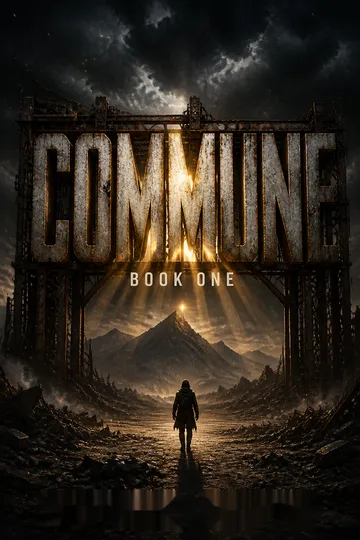
Commune Series


Download PDF
Download EPUB
.epub digital book format is ideal for reading ebooks on phones, tablets, and e-readers.








