

Key Takeaways
Understand the confidence man as a lifelong performer, not a political novice
Fame came first. The book’s central argument is that Trump did not suddenly discover politics in 2015. From early adulthood, he imagined himself as a national star, using real estate, tabloid coverage, and public flirtations with presidential campaigns to build an audience. A 1988 pollster’s report already treated him as a possible political figure. At the 1988 Republican convention, Trump watched the spectacle and told an aide that this was the world he wanted to enter.
The role became the product. Trump’s political instincts grew from decades of performing success, testing what audiences would accept, and adjusting his message to hold attention. His background mattered less as preparation for governing than as rehearsal for command of the spotlight.
This framing shifts the question from whether Trump was a serious politician to what kind of public figure he had practiced being. Media studies often distinguish the person from the persona assembled through repeated performances. The distinction helps explain why apparent inconsistency could coexist with a remarkably durable public identity: the constant was not a detailed platform, but the starring role. The frame also has limits. Performance alone cannot explain why audiences respond, or why institutions amplify some performers more than others. Haberman’s account is strongest when it connects personal ambition to the media and political settings that rewarded it.
Check the origin story: grievance can be manufactured as well as remembered
Memory became a weapon. Trump repeatedly recast past events as lessons in how others might cheat or humiliate him. His account of the Verrazano-Narrows Bridge dedication, which he attended as a teenager, became an origin story about an overlooked engineer and a rainy ceremony. Contemporary reporting described clear weather, and the engineer was publicly recognized. The story’s inaccuracies did not stop Trump from using it to explain his suspicion of being made a fool.
The pattern endured. Trump’s public and private accounts often blurred remembered details, exaggeration, and invention. By presenting himself as the injured party, he could make retaliation sound like self-defense. That framing appeared in business disputes, media fights, and his claims after the 2020 election.
Personal narratives do more than preserve memory. They organize experience into a moral map, assigning heroes, offenders, and justified responses. Once a grievance becomes part of someone’s identity, contradictory evidence can feel like another attack rather than a correction. This is especially potent in politics, where supporters may adopt the story as a shared account of their own treatment. The caution is not to treat every disputed recollection as deliberate deception. The book’s account is persuasive because it checks a specific memory against contemporaneous records, while also showing how the story functioned regardless of its accuracy.
Use the counterattack carefully, or it can replace accountability
Cohn supplied a model. Roy Cohn, Trump’s lawyer and mentor, taught him to meet accusations with attack, delay, and blame rather than concede wrongdoing. When the federal government sued the Trump family’s company for alleged housing discrimination, Trump countersued for $100 million and framed the government as the aggressor. The company eventually accepted a consent decree promising nondiscrimination, but Trump emphasized that it contained no admission of guilt.
The tactic traveled. In disputes over a hotel tax break, financial claims, and later political investigations, Trump often combined legal action, public complaint, and personal pressure. His preferred measure of success was not necessarily proving the accusation false. It was surviving the fight without surrendering the appearance of strength.
This is a strategy of agenda control: if an accused party makes the accuser defend their motives, public attention shifts from the original claim to the conflict itself. That can be effective when institutions are slow, fact-finding is complex, or audiences distrust authorities. It also carries a civic cost. If every investigation is recast as persecution, the public loses a shared way to distinguish genuine abuse from legitimate oversight. Haberman’s examples show why tactics learned in a commercial dispute do not remain merely commercial when the same person gains the authority of the presidency.
A famous name can outlast a business empire’s balance sheet
The numbers turned bleak. Trump’s 1980s expansion relied heavily on borrowing. By 1990, his businesses faced enormous debt, the Taj Mahal casino struggled to meet its obligations, and Fred Trump secretly helped his son meet payments. Several Trump properties entered bankruptcy or debt restructuring. Yet the public image of Trump as a financial titan remained valuable, even when his companies were in trouble.
Television restored the image. The Apprentice presented Trump as a decisive executive, although producers found chipped furniture and a company far less polished than the show suggested. Contestants and viewers nevertheless treated the program as evidence that they had watched him run a real business. The television persona renewed his fame, helped sell his name, and provided a route back to national prominence.
The contrast illustrates the difference between an asset’s value and a brand’s value. A building can be inspected, mortgaged, or repossessed. A public image can generate licensing deals, attention, and perceived authority even when the underlying business is strained. Reality television made that gap unusually visible by turning a curated workplace into proof of competence. The broader lesson is not that image always defeats evidence. It is that audiences often use familiar stories as shortcuts when they cannot evaluate complex financial records directly. That shortcut becomes risky when entertainment is mistaken for independent verification.
Keep opponents answering your provocation, not setting the political agenda
Outrage bought attention. Trump’s campaign relied on statements that provoked opponents, journalists, and party leaders into responding. In 2011, his birther claims about Barack Obama pushed a false question about the first Black president’s citizenship into national coverage. In 2015, his shifting remarks about a possible Muslim registry left reporters debating whether he had endorsed the idea, while he criticized their descriptions of his words.
Ambiguity kept options open. Trump often spoke vaguely enough for different listeners to hear what they wanted, then treated objections as proof that he was being unfairly attacked. The resulting controversy could keep him at the center of the news even when he had not offered a workable policy. His account also shows that these tactics drew on racial and religious suspicion already present in public life.
In a crowded attention market, provocation can function as a substitute for agenda-setting: rivals spend their limited time responding to the provocation rather than introducing their own priorities. Ambiguous language strengthens the tactic because it complicates efforts to pin down a position. But attention is not the same as persuasion, and the book does not imply that every controversy helped Trump equally. Some alienated voters or created political risk. The deeper problem is that repeated fact-checking can still circulate the original falsehood. A response is most useful when it corrects the claim and makes clear what evidence would settle the question.
A court of loyalists cannot replace a functioning organization
Conflict became a management tool. Trump repeatedly placed advisers in competition, gave overlapping instructions, and relied on personal access rather than clear roles. In the White House, rival centers of influence formed around people such as Reince Priebus, Steve Bannon, and Jared Kushner. Even a transition team’s binders on appointments and early decisions were discarded after the election, leaving incoming officials scrambling to rebuild plans.
Agreement crowded out capacity. Trump often valued visible loyalty over experience, while aides tried to avoid becoming the next target of his anger. The result was a workplace where bad news could be delayed, policy responsibilities could blur, and staff spent energy reading the president’s moods. This was not simply disorder around one leader. It weakened the government’s ability to gather information and act coherently.
Organizational research distinguishes loyalty to a leader from loyalty to a mission. When personal favor becomes the main currency, employees learn to manage impressions and compete for access rather than share information. That can make a leader feel central while making the organization less capable. It also explains why a strong chief of staff can matter: the role creates routines for filtering requests, assigning responsibility, and protecting attention. Such structures are not automatically wise or neutral, however. The question is whether they improve decision quality and accountability, not whether they make the workplace look orderly.
Treat public office as a system of limits, not a personal business
The governing model came from New York. Trump often approached government as if it were a local political machine: a boss should control the territory, reward allies, and make opponents yield. Yet a presidency distributes power among agencies, courts, Congress, and states. Trump showed little interest in learning how those boundaries worked, and often treated legal or administrative constraints as obstacles to overcome.
The mismatch produced repeated clashes. He pushed staff to use government power against perceived enemies, expected officials to protect him personally, and reacted angrily when they refused. He also relied on outside friends to address public problems, as though a government department could be managed like a construction project. The presidency gave him enormous influence, but it did not give him unilateral command over every institution.
The presidency is powerful, but its authority is distributed and procedural by design. That can frustrate voters who want fast, visible action, yet the friction also limits arbitrary rule and creates channels for correction. Haberman’s account makes the mismatch concrete: a leader used to private control encounters a public system built to resist it. Still, institutional resistance is not inherently virtuous. Agencies can be slow, and procedural rules can protect entrenched interests. The useful test is whether a limit serves a legitimate public function, and whether the leader accepts that explanation rather than treating every limit as personal sabotage.
When loyalty outranks expertise, policy becomes improvisation with public costs
Personal judgment displaced process. Trump often preferred advice that matched his instincts or came from someone he trusted, even when agency experts warned of practical or legal problems. He treated the proposed border wall as a construction challenge, entertained extreme measures against migrants, and supported a policy that separated thousands of children from adults at the border. The separations caused lasting harm, and the administration reversed course only after intense public pressure.
The same pattern appeared elsewhere. Trump’s reactions to protests, foreign policy, and government appointments could shift with the latest adviser or news coverage. His choices were not always reckless: some initiatives, including the Jerusalem embassy move and criminal justice reform, achieved meaningful results. The recurring concern is that policy often lacked stable reasoning, preparation, or consistent responsibility.
Expertise is not a guarantee of good judgment, and elected leaders should not surrender decisions to specialists. The risk comes when evidence is treated as merely one more factional opinion, and when loyalty determines which advice counts. In public administration, predictable rules help officials coordinate across agencies and allow the public to identify who is responsible for an outcome. The book’s examples reveal what happens when those links weaken. A fair assessment must also distinguish the method from each result: a policy can produce a consequential achievement while still being reached through a process that is fragile or ethically troubling.
A crisis tests whether a leader can abandon the performance
The pandemic exposed the cost of denial. Trump received warnings about the coronavirus in January 2020, but publicly minimized the threat and resisted measures that might disrupt the economy or his campaign. His televised address on March 11 confused basic details about travel restrictions. He later promoted unproven remedies and turned briefings into political performances, often competing with the medical experts beside him.
The campaign sought spectacle anyway. The Tulsa rally in June drew far fewer people than Trump expected, despite inflated online signups and warnings about infection risk. By autumn, Trump had tested positive himself, yet continued to campaign and resisted showing vulnerability. His personal fear of illness did not produce consistent public-health behavior. The episode shows how a leader’s need to project invulnerability can interfere with crisis communication.
Crisis communication depends on credibility, clarity, and a willingness to update as evidence changes. Leaders do not need certainty to be useful; they need to distinguish what is known, what remains uncertain, and what action follows. The book shows how minimizing a threat can briefly protect a political narrative while making later corrections less believable. That does not mean every public warning should be dramatic. Excessive alarm can also erode trust. The harder discipline is to communicate proportionately, accept inconvenient facts, and avoid making expert guidance appear to be a contest for attention.
When defeat threatens the image, a grievance can become an attack on democracy
The election loss was a breaking point. After losing the 2020 election, Trump claimed widespread fraud without evidence sufficient to change the result. His campaign filed 65 lawsuits and lost 64, while he pressured Georgia’s secretary of state to find enough votes to reverse the outcome. He also pushed Mike Pence to claim powers the vice president did not have during the electoral count.
The fight moved from rhetoric to action. Trump promoted the Stop the Steal campaign, urged supporters toward the Capitol on January 6, and did not promptly act to stop the ensuing violence. The book traces a familiar pattern, denial of defeat, blame, and pressure on institutions, but shows its stakes changing when the presidency itself was involved.
Democratic systems rely not only on election rules but on losing candidates accepting that rules apply to them too. Contesting a result through evidence-based legal channels is legitimate; trying to make officials invent votes or claim powers they do not possess is not. The distinction matters because vague accusations can weaken trust without ever producing proof. Haberman’s account also shows how personal grievance can recruit allies and create escalating pressure. A democratic safeguard therefore needs more than a correct count. It requires transparent procedures, officials willing to resist coercion, and political leaders who do not frame compliance as betrayal.
Analysis
Confidence Man is a political biography organized around a long arc: a Queens real-estate heir learns how power works in New York, turns himself into a nationally legible brand, and carries those habits into the presidency. The strongest analytical move is to connect the private businessman to the public official without claiming that the 2016 campaign created him from scratch. His political method, spectacle, counterattack, grievance, and tactical ambiguity, appears as an adaptation of behavior that had helped him survive earlier financial and reputational crises.
The book is also an account of systems that reward those habits. Tabloid journalism, reality television, partisan media, and campaign coverage repeatedly converted provocation into attention. That does not make the press solely responsible for Trump’s rise. The narrative instead reveals a feedback loop: Trump supplied conflict, media organizations supplied reach, and audiences supplied recognition. The loop became more consequential when partisan identity made criticism feel like an attack on supporters themselves.
Haberman’s reporting is especially valuable where it juxtaposes public claims with documents, contemporaneous reporting, and accounts from people inside Trump’s orbit. It also resists a simple portrait of a uniformly cold operator. Trump could be charming, solicitous, and entertaining, and those qualities helped secure loyalty from people who later experienced his volatility. The contrast matters because a leader can create genuine personal bonds while behaving destructively toward institutions.
There are limits to the book’s explanatory reach. A richly reported portrait of personality can make structural causes seem secondary, even though Haberman explicitly notes that polarization predated Trump. The account is strongest when it treats his conduct as an accelerant, not the original source, of national division. It is also useful to separate policy outcomes from decision-making quality: conservative judicial appointments, tax changes, Middle East agreements, and criminal justice reform existed alongside improvisation, coercion, and disregard for constraints. The central warning is therefore not merely that a flawed man gained power. It is that institutions and political coalitions can normalize personal rule when spectacle and loyalty become more rewarding than evidence, competence, or peaceful transfer of authority.
Review Summary
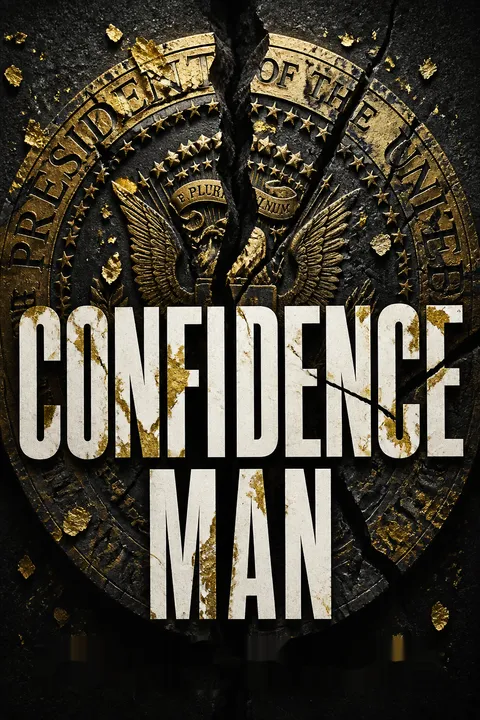
Confidence Man by Maggie Haberman offers a comprehensive look at Donald Trump's life and presidency. Readers appreciate Haberman's insider perspective and detailed reporting, though some criticize her for withholding information. The book explores Trump's business dealings, political rise, and tumultuous presidency. Many find it well-researched and insightful, while others see it as repetitive of existing Trump literature. Reviews are mixed, with some praising its thoroughness and others finding it too long or biased. Overall, it's viewed as a significant contribution to understanding Trump's impact on American politics.
People Also Read

Glossary
Birtherism
False claim about Obama’s birthplaceA conspiracy theory claiming that Barack Obama was not born in the United States and was therefore ineligible to be president. Trump promoted the claim publicly in 2011, despite the release of evidence of Obama’s birth in Hawaii. The episode illustrates how a false allegation could attract sustained coverage and help Trump gain attention among Republican voters.
Catch and kill
Buy and suppress a storyA tabloid practice described in the book in which a publication buys the rights to a potentially damaging story, then prevents it from appearing. David Pecker’s National Enquirer used this approach on behalf of Trump, purchasing material about alleged affairs and burying it. The technique can shape political coverage without requiring a public denial or a conventional legal threat.
central casting
Looks suited to a roleTrump’s recurring way of judging whether someone visually fit a public role, especially a cabinet or White House position. The phrase reflected his tendency to view politics as a show with characters who should look the part. In the book, appearance could matter to him as much as, or more than, experience or policy expertise.
Stop the Steal
Campaign against election certificationA slogan used to claim, without substantiated evidence, that the 2020 election had been stolen from Trump. Roger Stone had used the phrase in 2016 in efforts to protect Trump’s convention delegates. After the 2020 loss, Trump and his allies used it to organize protests and pressure officials to challenge certified results.
the steady state
Internal resistance to TrumpA label used by former Homeland Security official Miles Taylor for senior administration officials who, according to his anonymous essay, worked from inside the government to frustrate parts of Trump’s agenda and restrain his worst impulses. The phrase captured Trump’s suspicion that officials were resisting him, while critics saw their actions as an effort to preserve institutional norms.
zero tolerance
Prosecute all unauthorized crossingsThe Trump administration’s 2018 policy of referring adults detained for unauthorized border crossings for criminal prosecution. Because children could not be held with adults in the same way, the policy led to widespread family separations. Officials disputed responsibility for the consequences, and the policy was ended after public outrage and pressure on Trump.
Download PDF
Download EPUB
.epub digital book format is ideal for reading ebooks on phones, tablets, and e-readers.








