

Key Takeaways
Treat division as a governing strategy, not a side effect
Division became the method. Trump entered office framing America as broken and its leaders, immigrants, and foreign partners as culprits. His inauguration set a combative tone, while strategist Steve Bannon explicitly rejected the idea that winning meant bringing the country together. Trump did not invent the nation’s racial and political fractures, but he repeatedly used them to define who belonged to his America and who counted as an enemy.
Every crisis became a wedge. During the pandemic, even face masks became markers of political identity. During protests after George Floyd’s killing, Trump emphasized disorder and threats rather than reconciliation. The through-line is not simply harsh language: division repeatedly helped Trump mobilize supporters, redirect attention, and treat criticism as proof that his side was under attack.
What's striking is how division functions here as both message and management tool. It simplifies a complicated world into loyalists and enemies, making policy disagreement feel like betrayal. That can energize a base, but it also makes compromise harder to recognize as legitimate. The approach is not unique to Trump, and the book does not claim he created polarization. Its sharper point is that a president can intensify existing fractures while personally benefiting from the inability to bridge them.
When attention becomes the job, spectacle crowds out statecraft
The presidency became a stage. Trump’s first question in the Oval Office concerned its lighting. He arranged rooms, flags, photographs, and public appearances around how he would look on camera. He disliked long written briefings, watched television for hours, and used Twitter to set the day’s agenda, attack critics, and test messages. In his first days, he averaged about nine tweets a day.
The feedback loop mattered. Fox programming often shaped what Trump discussed; White House aides watched the network to anticipate his next fixation. A count cited by the authors found 657 tweets in one year responding to Fox News or Fox Business. Trump also turned the phrase fake news against the press and described critical coverage as an attack on him. Attention was not merely a byproduct of governing. It became a central measure of whether governing was working.
The chapter suggests a feedback loop: media attention rewards provocation, provocation generates more coverage, and the coverage becomes fresh material for political combat. In organizational terms, this is a measurement problem. If visibility is treated as the main indicator of success, quieter work such as preparation, coordination, or accurate communication becomes easy to undervalue. The account also leaves room for a broader question: media outlets benefited from the attention they criticized, making the cycle difficult for either side to escape.
Build decision rules before factional chaos becomes the operating system
Improvisation had consequences. Trump’s transition planning was discarded, inexperienced aides competed for access, and different factions often issued competing instructions. The book calls this an adhocracy: a system in which the president assigns work informally and chooses whom to hear, instead of relying on regular procedures. Trump favored the arrangement because it left him as the central decider, but it also produced confusion over who had authority and whether an order was final.
A temporary repair followed. Chief of staff John Kelly and staff secretary Rob Porter required papers, proposed events, and executive orders to pass through formal channels. They also said a presidential decision needed written approval before agencies acted. The rules helped slow some impulsive moves, but Trump continued to bypass them, including by obtaining an unmonitored phone. Procedure could restrain his staff only while he allowed it to matter.
The account makes a useful distinction between flexibility and the absence of process. Informal systems can help leaders move quickly, but they also make responsibility hard to trace and give the most powerful person unusual control over which advice counts. The memos show that process is not empty bureaucracy: it creates checkpoints where legal, operational, and ethical concerns can be raised. Its limit is equally clear. Rules cannot reliably constrain a leader who can ignore them and punish those who enforce them.
Keep public powers from becoming instruments of private revenge
Personal loyalty shaped public authority. Trump repeatedly treated the Justice Department and FBI as institutions that should serve him. He demanded personal loyalty from FBI director James Comey, pressured him about the investigation of Michael Flynn, then fired him while the Russia inquiry was under way. Trump’s public explanation emphasized Comey’s handling of Hillary Clinton’s emails, but Trump later acknowledged that the Russia investigation was on his mind.
The pattern extended beyond one firing. Trump pressed officials to investigate political opponents, complained when prosecutors acted against allies, and sought to influence matters affecting his business and media grievances. His repeated question about where his Roy Cohn was invoked the lawyer who had taught him to fight relentlessly. The book does not establish that every demand became a crime. It shows how presidential power was repeatedly treated as a personal weapon rather than an office bound by institutional limits.
This is a problem of public trust as much as legal interpretation. The president controls powerful institutions, but their credibility depends on the appearance and reality of impartiality. When their work seems to track a leader’s private enemies or friends, people can lose faith even where a specific action is lawful. The distinction matters: documenting pressure and conflicts is not the same as proving every alleged offense. The book’s strongest case rests on the repeated attempts to blur public duty and personal interest.
Guardrails fail when officials stay only to manage the next crisis
Resistance was real, and compromised. Cabinet officers, generals, lawyers, and aides blocked or slowed demands they considered dangerous, from withdrawing troops to prosecuting opponents. Some ignored an instruction once or twice, hoping Trump would move on. Staffers called this the informal Third Time Rule: if he repeated an order a third time, they had to comply or confront him directly.
Staying carried a cost. Officials often said they remained because a worse replacement might do more damage. Some formed informal pacts to resign together; others stayed to protect their agencies or pursue their own policy goals. Yet many also defended Trump publicly, enforced his policies, or waited for him to go too far. Turnover in the White House exceeded 40 percent by March 2018. As experienced dissenters left, Trump increasingly chose people less likely to resist.
The moral tension is more useful than a simple story of heroes and villains. Staying can preserve expertise and prevent immediate harm, while departure can make complicity harder to avoid. But repeated rescue attempts may also teach a leader which obstacles to remove next. This resembles a principal-agent problem: officials have duties to the institution and public, while the person who appointed them demands loyalty. The book shows how difficult that conflict becomes when career, access, and policy achievements are all at stake.
Treat alliances as security infrastructure, not invoices or photo opportunities
Trump often saw allies as owing him money. He misrepresented NATO’s 2 percent defense-spending goal as a debt owed to the United States and repeatedly threatened withdrawal. At a 2017 NATO meeting, he omitted language affirming the alliance’s mutual-defense commitment. His advisers spent much of their time reassuring allies while trying to prevent the president from undermining them.
Personal diplomacy offered no reliable substitute. Trump praised autocrats including Vladimir Putin, Xi Jinping, and Kim Jong-un, while sometimes distrusting allied leaders. At Helsinki, he publicly gave Putin’s denial of election interference more weight than American intelligence findings. In Singapore, he agreed to suspend major U.S.-South Korean military exercises without consulting his own team. Some advisers blocked the worst outcomes, but their ability to do so depended on access and persuasion, not a stable policy process.
The book shows why alliance commitments are more than accounting arrangements. They coordinate expectations across governments, and those expectations shape deterrence even when no crisis is underway. Pressure to increase allied defense spending can be a legitimate policy position; the destabilizing move is to misstate the agreement and cast doubt on whether support will endure. Personal rapport can help diplomacy, but it is a fragile substitute for shared procedures, credible commitments, and consultation with partners.
Never turn public health precautions into tests of political loyalty
Warnings arrived before the emergency was visible. Officials discussed the new virus in January 2020, and some advisers urged travel restrictions and preparation. Trump initially praised China’s response and worried about disrupting a trade agreement. The government then lost crucial time on testing and supplies. Once infections surged, Trump alternated between acknowledging danger and claiming the virus would disappear, while insisting the response should not damage the economy or his re-election prospects.
Prevention became partisan. Trump resisted masks and treated them as a political signal. He publicly promoted hydroxychloroquine before evidence supported its use, and later cast doubt on health experts who contradicted him. By late May, the U.S. death toll had reached 100,000. The same instinct shaped his response to racial protests: rather than unify the country around shared harms, he used law-and-order rhetoric to intensify political conflict.
A public-health response depends on shared credibility: people must believe that guidance reflects risk, not partisan advantage. Once a precaution becomes a symbol of group identity, even simple protective behavior can provoke resistance. The book’s account also warns against treating early mistakes as equivalent to sustained denial. Experts revised their positions as evidence changed; Trump often continued to minimize the danger after its scale was clearer. That difference matters when judging both competence and responsibility.
Impeachment can expose abuse without overcoming party allegiance
The investigations produced different kinds of evidence. Robert Mueller documented Russian interference in the 2016 election and extensive contacts involving Trump’s campaign, but did not find enough evidence to prove a criminal conspiracy. His report described potential obstruction episodes and did not exonerate Trump. In 2019, a separate Ukraine inquiry found that Trump withheld $391 million in security assistance while seeking investigations that could help him politically.
The House impeached him, twice. The Senate acquitted Trump in the Ukraine trial, 52 to 48, with Mitt Romney the only Republican voting to convict on the abuse-of-power article. After January 6, the House impeached him again. Seven Republican senators voted to convict, but the 57 to 43 result fell short of the two-thirds needed. The proceedings documented serious conduct, but partisan loyalty prevented accountability from becoming removal.
The distinction between evidence, legal standards, and political judgment is essential here. Mueller’s inability to prove a criminal conspiracy beyond a reasonable doubt did not erase documented interference or make the investigation meaningless. Conversely, a grave political accusation is not automatically a criminal conviction. Impeachment is designed as a constitutional remedy, but the book shows how its effectiveness depends on legislators willing to place institutional duty above party advantage. That dependence is both a feature of representative government and a vulnerability.
Defend election procedures before a defeated leader attacks the handoff
The refusal to concede was not an isolated finale. Biden won 306 electoral votes to Trump’s 232 and received more than 81 million votes. Trump received more than 74 million, but repeatedly claimed the result was stolen without evidence sufficient to change the outcome. His allies pursued lawsuits, pressured state officials, and promoted alternate electors. Trump asked Georgia’s secretary of state to find enough votes to reverse the result.
The pressure reached the Capitol. Trump demanded that Mike Pence reject electoral votes, then summoned supporters to Washington on January 6 and urged them to fight. The mob broke into Congress while lawmakers were counting the votes; Pence and legislators were evacuated, and five people died in connection with the attack. The House impeached Trump again. The Senate acquitted him, though seven Republicans voted to convict. The peaceful transfer depended on officials refusing to bend, but it came perilously close to failure.
The sequence matters because democratic breakdown often begins before the dramatic image of a breached building. It starts when routine procedures are portrayed as illegitimate, officials are threatened for administering them, and political allies treat evidence as optional. The book’s narrative makes January 6 legible as the culmination of sustained pressure, not a sudden interruption. At the same time, it shows that institutions held because people inside them made choices. Procedures need public legitimacy, but they also need officeholders willing to enforce them.
Analysis
The book’s central claim is that Trump’s presidency made division an instrument of power and that January 6 followed from, rather than contradicted, the habits visible from his first day. Its narrative strength lies in tracing that continuity through specific mechanisms: an attention economy that rewarded provocation, a White House organized around personal access, the political use of federal authority, and repeated tests of whether officials would obey or resist. The resulting portrait is not simply of one volatile leader. It is also of a party, media system, and executive branch that often adapted to him because doing so offered access, policy gains, or protection from political costs.
The most revealing tension is between resistance and complicity. Generals, lawyers, cabinet secretaries, and aides sometimes slowed dangerous decisions, yet many remained, defended the president, or waited for a clearer line to be crossed. The account refuses a clean division between institutional heroes and political villains. That complexity strengthens its explanation of how guardrails erode: not only through dramatic abuses, but through many small accommodations that make the next breach easier.
The authors’ interpretation is forceful, and its evidentiary distinctions matter. They report that Mueller found no sufficient proof of a criminal conspiracy, while documenting Russian interference, campaign contacts, and episodes that raised obstruction concerns. The distinction prevents political suspicion from being mistaken for a legal finding. The book also records consequential achievements, including tax legislation and the Abraham Accords, while showing that Trump often supplied less of the policy work than the credit-taking suggested. A fuller assessment must hold both facts together.
The book ultimately presents democratic survival as neither automatic nor purely procedural. Courts, Congress, elections, and professional norms mattered, but each depended on people willing to use them under pressure. The warning is not that every norm violation leads to catastrophe. It is that repeated attacks can normalize the next one, especially when political incentives reward denial and punish dissent. January 6 was therefore a close-run test of institutions and of the individuals asked to defend them.
Review Summary
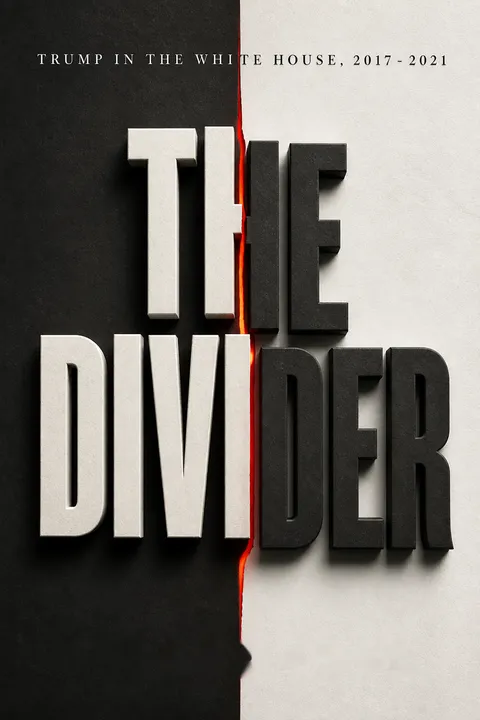
The Divider is widely praised as a comprehensive, well-researched account of Trump's presidency. Readers appreciate its detailed narrative, sourced from interviews and insider information. The book highlights Trump's chaotic leadership style, his focus on loyalty over competence, and the challenges faced by staff trying to manage him. Many reviewers found it revealing despite being familiar with the events. Some critics view it as biased, but most consider it an essential historical record of a tumultuous period in American politics.
Glossary
adhocracy
informal, president-directed governanceA governing arrangement that relies less on regular procedures and more on the president assigning work, choosing whom to consult, and making decisions informally. The book applies the term to Trump’s White House, where overlapping factions and direct access to the president often displaced clear reporting lines and established review processes.
Axis of Adults
senior officials seeking restraintA nickname for senior foreign-policy figures, especially Jim Mattis, Rex Tillerson, and H. R. McMaster, whom observers hoped would temper Trump’s impulses and preserve traditional alliances. They did not form a unified team, and they disagreed about how to advise or constrain the president. Their influence diminished as Trump replaced them with more compliant officials.
Third Time Rule
repeated orders demand actionAn informal practice among some Trump aides: ignore or delay an erratic or potentially improper presidential instruction once or twice, hoping he will forget or move on. If he raised it a third time, aides believed they had to comply or try to persuade him otherwise. The practice reveals how staff adapted to repeated orders without a dependable decision process.
Middle East Strategic Alliance (MESA)
proposed regional security coalitionA proposed arrangement intended to connect the United States with Egypt, Jordan, Saudi Arabia, Oman, Qatar, Bahrain, and the United Arab Emirates in a regional security framework. Jared Kushner supported the idea as a way to align Sunni Arab states against Iran. The proposal encountered resistance over its unclear obligations and never developed into the alliance its advocates envisioned.
Operation Warp Speed
accelerated vaccine development effortA Trump administration initiative, supported by $18 billion, to speed the development and eventual distribution of a Covid vaccine. The book traces the original idea to Peter Marks, an FDA official, and describes Trump’s desire to present a vaccine before the 2020 election. FDA officials and drug companies resisted pressure to compromise safety standards for political timing.
FAQ
1. What is The Divider: Trump in the White House, 2017-2021 by Peter Baker about?
- Comprehensive Trump presidency account: The book provides a detailed chronicle of Donald Trump’s four years as president, focusing on his leadership style, key events, and the internal dynamics of his administration.
- Emphasis on division and conflict: It explores how Trump’s approach deepened political, social, and institutional divisions in the United States, culminating in the January 6 Capitol attack.
- Behind-the-scenes insights: Drawing on hundreds of interviews and documents, the authors reveal the chaos, rivalries, and decision-making processes inside the Trump White House.
- Coverage of major crises: The narrative covers pivotal moments such as the Mueller investigation, impeachment, the COVID-19 pandemic, and efforts to overturn the 2020 election.
2. Why should I read The Divider by Peter Baker and Susan Glasser?
- Unprecedented access and reporting: The authors, both seasoned journalists, conducted about 300 exclusive interviews and accessed key documents, offering fresh insights and untold stories.
- Nuanced understanding of Trump’s presidency: The book goes beyond headlines to provide context and analysis of Trump’s impact on American democracy and global politics.
- Essential for understanding polarization: It explains how Trump’s presidency intensified political and social divisions, which remain highly relevant today.
- Lessons on leadership and democracy: The book serves as a cautionary tale about the fragility of institutions and the importance of principled leadership.
3. What are the key takeaways from The Divider: Trump in the White House, 2017-2021?
- Divisiveness as a hallmark: Trump’s presidency was defined by deepening divisions within America and between the U.S. and its allies, exploiting societal fissures for political gain.
- Chaos and personalization of power: The administration was marked by disorder, loyalty tests, and Trump’s efforts to control reality through media and personal relationships rather than institutions.
- Enduring impact of Trumpism: The book argues that Trumpism has reshaped the Republican Party and American politics, making the Trump era not just history but a continuing influence on the country’s future.
- Limits of accountability: Investigations and impeachments revealed the challenges of holding a sitting president accountable, highlighting the fragility of democratic checks and balances.
4. How does The Divider by Peter Baker and Susan Glasser portray Donald Trump’s leadership style and decision-making?
- Chaotic and impulsive: Trump’s presidency was marked by erratic behavior, impulsive decisions, and a disregard for traditional norms and processes.
- Loyalty over competence: He valued loyalty above expertise, often surrounding himself with family members and loyalists, which led to dysfunction and instability.
- Media manipulation: Trump weaponized social media and friendly outlets to shape narratives, attack opponents, and maintain his image.
- Personalization of power: He often bypassed institutional channels, running the administration like a family business with himself as the central decision-maker.
5. What does The Divider reveal about the internal dynamics and staff of Trump’s White House?
- Team of amateurs and loyalists: Many staffers, including family members like Ivanka Trump and Jared Kushner, lacked government experience but held significant influence.
- Factional infighting: The White House was divided among competing groups—establishment Republicans, ideologues, and family members—leading to constant power struggles.
- High turnover and turmoil: Frequent firings, resignations, and scandals created a “Hunger Games vibe” and contributed to a chaotic work environment.
- Loyalty tests and mistrust: Trump’s demand for personal loyalty led to mistrust and dysfunction, with competence often taking a back seat.
6. How does The Divider by Peter Baker and Susan Glasser describe Trump’s relationship with the media?
- War on the media: Trump demonized mainstream outlets as “fake news” and “the enemy of the American people,” undermining trust in independent journalism.
- Dependence on Fox News: He relied heavily on Fox News for validation and information, creating a feedback loop between the network and the White House.
- Strategic media manipulation: Trump’s attacks on the press were both defensive and attention-seeking, aiming to discredit critics while dominating the news cycle.
- Craving for coverage: Despite his hostility, Trump was obsessed with media attention and image management.
7. What insights does The Divider provide about Trump’s handling of the COVID-19 pandemic?
- Downplaying and misinformation: Trump minimized the virus’s severity, made misleading statements, and often contradicted health experts, contributing to public confusion.
- Internal conflicts: The pandemic response was hampered by rivalries among advisers and the sidelining of scientific voices like Fauci and Birx.
- Operation Warp Speed: The administration facilitated rapid vaccine development but failed to promote vaccination effectively, especially to Trump’s base.
- Political over public health: Trump prioritized economic and political considerations over strict public health measures, politicizing the pandemic response.
8. How does The Divider by Peter Baker and Susan Glasser cover the events of January 6, 2021, and their significance?
- Detailed account of the attack: The book provides a minute-by-minute narrative of the Capitol riot, highlighting the chaos, delayed response, and threats to lawmakers.
- Trump’s inaction and complicity: Trump failed to act decisively to stop the violence, instead watching events unfold on television and issuing delayed, insincere statements.
- Political and institutional fallout: The attack led to deaths, injuries, and a second impeachment, exposing vulnerabilities in American democracy and deepening partisan divides.
- Military and security concerns: Officials feared Trump might misuse military power or nuclear codes, prompting unprecedented security measures for the inauguration.
9. What does The Divider reveal about Trump’s efforts to overturn the 2020 election?
- Coordinated legal and political campaign: Trump and his allies pursued lawsuits, alternate electors, and pressured state officials to subvert the election outcome, despite lacking evidence.
- Internal White House divisions: Some advisers, like Jared Kushner and Ivanka Trump, distanced themselves, while others enabled or encouraged the efforts.
- Resistance from institutions: The Justice Department and military leaders resisted political interference, and Vice President Pence ultimately upheld constitutional duties.
- Foundation for January 6: Trump’s refusal to accept defeat and claims of a “rigged” election laid the groundwork for the Capitol attack.
10. How does The Divider by Peter Baker and Susan Glasser portray the role of Trump’s family members and close allies?
- Ivanka Trump and Jared Kushner: Both held significant official and unofficial roles, often bypassing normal channels and creating tensions with other staff.
- Donald Trump Jr.: He was a zealous promoter of election fraud claims and encouraged efforts to overturn the results, reflecting the militant wing of Trump’s base.
- Family rivalries and influence: The book details conflicts among Trump’s children and their varying degrees of involvement and influence on the president.
- Blending of business and government: Their roles raised questions about conflicts of interest and the merging of family business with state affairs.
11. What are the most notable quotes from The Divider by Peter Baker and Susan Glasser, and what do they mean?
- Milley’s resignation letter draft: “I believe that you were doing great and irreparable harm to my country.” This reflects the profound constitutional crisis and the internal struggle of military leaders.
- Trump on the election: “We will never let them do it. Votes cannot be cast after the Poles are closed!” This tweet exemplifies Trump’s refusal to accept electoral defeat and his efforts to delegitimize the process.
- Giuliani at January 6 rally: “So let’s have trial by combat…” This statement highlights the incendiary rhetoric that fueled the Capitol attack.
- McConnell on Trump’s responsibility: After the second impeachment, McConnell said Trump was “practically and morally responsible” for the attack, underscoring the gravity of Trump’s actions.
12. How does The Divider by Peter Baker and Susan Glasser analyze the long-term impact of Trump’s presidency and Trumpism?
- Enduring influence on the GOP: Despite losing the 2020 election and facing two impeachments, Trump continues to dominate the Republican Party and shape its direction.
- Polarization and institutional fragility: The book warns that the divisions and challenges to democratic norms during Trump’s presidency have lasting consequences for American politics.
- Trumpism as a movement: Trump is portrayed as both the avatar and hostage of Trumpism, with his rhetoric and tactics continuing to influence political discourse.
- Ongoing relevance: The authors argue that the effects of the Trump era will persist, making understanding this period essential for anyone concerned about the future of American democracy.
About the Author
Download PDF
Download EPUB
.epub digital book format is ideal for reading ebooks on phones, tablets, and e-readers.








