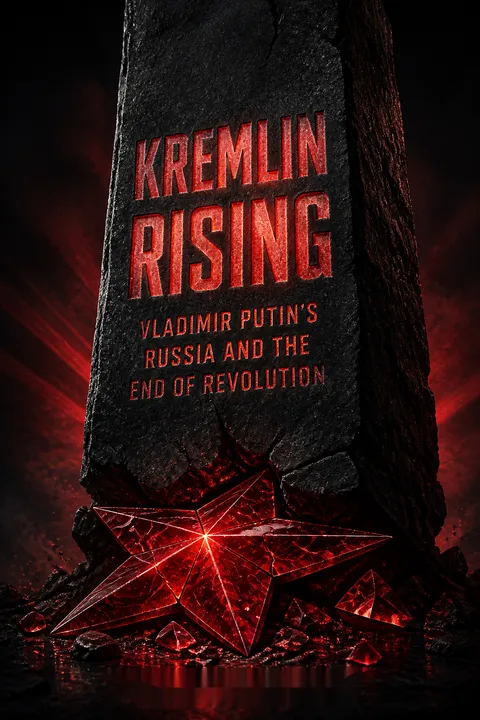


Key Takeaways
Russia's transition split families between new choices and Soviet-era dependence.
Two lives, one country. The book opens with Tatyana Shalimova, who left her provincial hometown of Mokshan for Moscow, and her brother Misha, who stayed. She earned about $1,500 a month and traveled abroad; he earned roughly $70 and relied on a garden to help feed his family. Their divide captures a country no longer Communist, but not securely capitalist or democratic either.
Opportunity was uneven. Moscow offered a tenuous middle-class life, consumer goods, and room to change careers. In Mokshan, rusting factories, scarce jobs, low wages, and lingering fear of the security services shaped daily life. Tatyana's freedom to make choices was real, but it was not the national norm.
What's striking is how a political transition becomes legible through family economics. The wage gap is not merely a statistic: it shapes whether a person can leave, take risks, or imagine a different future. In political science, that difference is often described as unequal capacity for exit and voice. Tatyana can exit a failing environment; Misha has little leverage to change his. The contrast complicates any claim that market freedom automatically produces shared opportunity. It also prevents the story from reducing Russia to a single public mood: people in Moscow and the provinces experienced the same transition as radically different worlds.
Putin made stability the popular vehicle for ending Russia's democratic experiment.
Order beat uncertainty. After the economic crash, unpaid wages, corruption, and political turmoil of the 1990s, many Russians wanted a leader who seemed sober, energetic, and capable of restoring state authority. Boris Yeltsin's circle selected Putin, then a little-known former KGB officer, as successor. Television and campaign strategists built his public image around decisiveness, while the war in Chechnya gave him a chance to look forceful.
The project widened. Putin's team called its effort Project Putin: first, create a winning political figure; then, gather power back into the Kremlin. Voters had reasons to welcome stability, but the promise also helped normalize weaker competition, fewer independent institutions, and a president who could be all things to different constituencies.
The book's central insight is that democratic retreat can ride on a legitimate public demand. Stability is not inherently authoritarian. People facing unpaid wages, economic shocks, and a visibly failing state may reasonably value predictability. The critical distinction is whether order is built through trustworthy institutions or through one leader's control of them. This resembles a broader problem in political development: citizens may exchange participation for performance when institutions cannot deliver security. That exchange can appear voluntary while steadily reducing the means to reconsider it. The account is strongest when it treats Putin's appeal as a response to real hardship, not simply as a trick imposed on a passive population.
Keep elections competitive by protecting the media that tells voters what is happening.
Television shaped the contest. In the 1999 and 2000 campaigns, state-aligned television helped build Putin's image and attack his rivals. After he became president, the Kremlin moved against NTV, Russia's only independent national television network. Its owner, Vladimir Gusinsky, was jailed and pressured to give up the company. In April 2001, security officers seized the network's offices, and its journalists lost control of the broadcast.
The form remained. Elections continued, but state television favored the president and Kremlin parties, while campaign access and coverage became unequal. In the 2003 parliamentary election, 56 percent of Channel One's coverage in November concerned Putin or United Russia, according to international monitors. The ballot still offered choices; the information environment increasingly shaped which choices could thrive.
A ballot is only one part of an election. Voters also need independent channels to compare claims, learn about failures, and discover alternatives. Media capture matters because it changes the informational conditions of choice without requiring the abolition of voting. That is a subtler form of political control than outright censorship, and often more durable because it can look like routine news management. The book also shows that independent outlets were not always neutral: oligarch owners had used them in business and political feuds. That history matters. The answer is not to romanticize private media, but to prevent either state or private power from monopolizing public information.
Military brutality and political dead ends fed Chechen radicalization and wider terror.
A conflict with deep roots. Chechnya's struggle with Russian rule stretched back centuries. After the Soviet collapse, Chechens declared independence; the first war ended in a fragile ceasefire, and Putin launched a second invasion in 1999. Russian forces destroyed Grozny and conducted raids in which civilians were abducted, tortured, or killed. Rebel attacks on civilians were also brutal and increasingly distant from the battlefield.
Violence narrowed the choices. The murder of eighteen-year-old Elza Kungayeva by Russian colonel Yuri Budanov became a test of whether Russian justice could hold an officer accountable. His trial shifted with political pressure, and most other abuses went unpunished. The authors argue that repression, failed negotiations, and impunity helped radicalize the conflict, while attacks such as the 2002 Moscow theater seizure brought its consequences into ordinary Russian life.
The section is best read through the logic of a security dilemma: each side interprets the other's force as proof that more force is necessary, which deepens fear and retaliation. That framework does not excuse attacks on civilians or erase differences among actors. It does clarify why military superiority can fail to produce political control. The Budanov case makes the institutional cost visible: selective accountability can signal that violence is tolerated when committed by state agents. A caution is necessary, however. The conflict's many factions and long history resist a single-cause explanation. The book's argument is about how state policy worsened and prolonged the danger, not about a simple equivalence between the sides.
Beslan exposed official failure, then grief became cover for centralizing power.
The state obscured the crisis. In September 2004, terrorists seized a school in Beslan, holding more than 1,200 people. Officials initially told the public there were only 354 hostages. During the final battle, Russian television stayed with entertainment programs, and confusion over the assault and emergency response contributed to the deaths of hostages. Survivors and relatives were left without clear answers about what had happened.
A prepared policy gained urgency. Within days, Putin proposed ending direct elections for regional governors and changing how parliament was elected, presenting centralization as an antiterrorism measure. The book reports that these proposals had been under discussion before Beslan. The tragedy gave a pre-existing political plan its public justification, while independent scrutiny of the government's handling was rejected.
Beslan shows how crisis politics can convert grief into permission. When people are frightened, a promise of unified command can feel more persuasive than a slow investigation into institutional failure. Yet centralizing authority is not the same as improving emergency competence. The distinction matters because the government's response to a crisis should be judged by whether it fixes operational weaknesses, shares reliable information, and accepts accountability. This case also illustrates a general risk of emergency powers: measures introduced as temporary safeguards can reshape political rules long after the immediate danger. The book's strongest point is not that security concerns were imaginary, but that the proposed electoral changes did not explain how they would make a school siege less likely or a rescue safer.
KGB veterans rebuilt the state around loyalty, not public accountability.
The security elite returned. Putin appointed former security and military officials, known as siloviki, to influential government posts. By the end of his first term, they made up about one-quarter of Russia's political elite, compared with 3 percent under Gorbachev, according to research cited in the book. Presidential envoys, ministers, and regional officials increasingly came from the security services or military.
Central control expanded. The Kremlin installed envoys to oversee regions, brought local agencies back under federal supervision, and used security-linked officials to challenge governors and media outlets. Many appointees described themselves as servants of the state and saw discipline as a cure for the disorder of the 1990s. But the same closed networks that promised efficiency also made oversight harder and encouraged loyalty to the leadership over independent scrutiny.
The rise of security-service veterans is more than a story about individual biographies. Closed organizations cultivate shared language, trust networks, and a belief that insiders understand threats better than outsiders. Those traits can help coordinate a state, especially after institutional collapse. They can also turn public oversight into a perceived security risk. The key question is not whether former officers should serve in government, but whether their authority is balanced by transparent rules and independent review. The book emphasizes that Putin's cohort treated state strength as a priority. That can be a coherent governing philosophy, but it becomes dangerous when the state is treated as an end in itself rather than an instrument accountable to citizens.
Oil wealth made Moscow glitter while public systems and provinces decayed.
Prosperity had a bright center. Rising oil revenues helped revive Moscow after the 1998 crash. Malls, restaurants, cars, and a consumer-oriented middle class multiplied. But the capital's boom sat beside provinces with shuttered factories and poverty. In Ivanovo, once a major textile center, many mills stood idle and 63 percent of residents were officially considered poor.
Basic capacity remained weak. The military still relied on conscripts facing abuse, and 54 soldiers once deserted together after alleged beatings. Meanwhile, Russia's fastest-growing HIV epidemic was met by a Health Ministry team of only five people working on AIDS, according to the book. Oil income strengthened the federal budget, but visible spending power did not reliably translate into competent services, healthy citizens, or a modern army.
A resource boom can improve household expectations while concealing weak institutions. Consumer growth is vivid and immediate; health systems, military reform, and regional employment require sustained investment and are less visible. This creates a political accounting problem: a government may claim success because incomes and shopping options rise, even while the public infrastructure that protects people remains fragile. The book's contrasts are persuasive, though its Moscow reporting naturally makes the capital's consumer culture especially vivid. The deeper measure of state capacity is not how many luxury cars a city can absorb, but whether ordinary residents can access reliable health care, safe public institutions, and a future beyond a single commodity cycle.
Courts cannot protect citizens when judges and prosecutors answer upward.
Procedure did not guarantee justice. When Putin took office, Russian judges convicted defendants in 99.6 percent of cases. Jury trials were introduced in Moscow only in 2003, and the first case exposed the old habits: a judge interrupted defense arguments and instructed jurors to treat disputed evidence as true. The jury acquitted the defendant of murder but convicted him of assault, showing that citizen participation could matter, though it remained limited.
Power still shaped outcomes. In the Yukos case, prosecutors revived privatization and tax disputes that had previously been settled, while other companies that used similar practices were not targeted in the same way. The broader lesson is that laws on paper cannot secure rights if officials can selectively enforce them, courts cannot resist pressure, and citizens lack confidence that a fair hearing is possible.
The rule of law is not simply the presence of statutes, courts, or formal hearings. It depends on whether rules bind powerful actors as consistently as ordinary people. The contrast between a new jury trial and a politically charged corporate prosecution shows why institutional design must include independence, review, and limits on selective enforcement. The jury's partial acquittal is important evidence that reform was not wholly cosmetic; citizens could sometimes disrupt the expected outcome. But one case cannot establish a reliable system. The book's account invites a useful distinction between legal process and legality: the first can be staged, while the second requires authorities to accept adverse decisions.
Khodorkovsky's prosecution taught business that wealth survives by staying apolitical.
An oligarch challenged the boundary. Mikhail Khodorkovsky had built Yukos through the rough privatizations of the 1990s, then tried to remake himself as a corporate reformer and fund political parties. He openly criticized corruption, financed opposition groups, and discussed gaining influence in parliament. In October 2003, masked security agents arrested him at an airport. Prosecutors brought charges rooted in disputed privatization and tax practices.
The company followed him into danger. The state imposed enormous back-tax claims and sold Yukos's main production unit, Yuganskneftegaz, to a shell company that was then acquired by state-owned Rosneft. The episode did not end oligarchic wealth; it clarified the conditions under which it could endure. Tycoons could prosper, but independent political power carried a price.
Khodorkovsky is a deliberately uncomfortable figure because he was both a product of rigged privatization and a target of selective prosecution. That duality strengthens the case against treating the affair as a simple contest between a pure dissident and a corrupt state. His public ambitions threatened a system in which private wealth could influence politics, but the state's response did not establish impartial accountability. It established a new boundary set by the Kremlin. In political economy, this resembles a shift from oligarchic capture toward state-directed patronage, not a clean restoration of public ownership. The question is not whether the tycoons deserved scrutiny, but whether the same standards applied to loyal and disloyal ones.
National pride repackaged Soviet nostalgia as a substitute for democratic purpose.
The past became a brand. As the 1990s' imported culture lost appeal, Russian music, products, and Soviet symbols returned to fashion. The word nashe, meaning ours, became shorthand for cultural belonging. Putin revived the Soviet anthem and military symbols while also embracing imperial history, offering a hybrid identity that let Russians feel proud without settling what kind of political system they wanted.
Memory shaped the future. In one classroom, teenagers debated whether Lenin or Stalin had been right, even though they had never lived under Soviet rule. A 2003 survey cited in the book found that 47 percent of respondents viewed Stalin positively, and 31 percent said they would want to live under his leadership. The nostalgia did not mean everyone wanted dictatorship; it reflected disappointment, insecurity, and a search for national coherence.
Collective memory is not a neutral archive. It is a resource people use to explain present hardship, recover dignity, and decide who belongs. The book shows how selective remembrance can make authoritarian symbols feel like cultural repair, especially when the recent democratic period is remembered chiefly as chaos and inequality. That does not mean nostalgia is inherently reactionary: people may cherish shared achievements, family histories, or social protections without endorsing repression. The political risk arises when pride requires silence about victims or exclusion of dissenters. A usable national story needs room for both accomplishment and damage, otherwise belonging becomes conditional on accepting the state's preferred version of the past.
Treat personal diplomacy as temporary when national interests diverge.
A friendship opened doors. After the September 11 attacks, Putin offered intelligence and logistical support to the United States, including approval for temporary American access to Central Asian bases. President George W. Bush embraced him as a partner, even after campaigning against Russian brutality in Chechnya. Their rapport helped reduce tensions and enabled cooperation on terrorism and nuclear arms.
Shared warmth had limits. Russia and the United States diverged over missile defense, NATO, and especially the 2003 Iraq War. Putin opposed the invasion partly because of Russian economic interests in Iraq and his view of global power, while Washington had not delivered many of the trade and investment gains Moscow expected. The relationship was useful, but it did not erase competing strategic goals or Putin's domestic political direction.
Personal chemistry can lower the transaction costs of diplomacy: leaders speak more freely, share information, and keep disagreements from becoming crises. But personal trust is a poor substitute for understanding institutions and incentives. Bush's confidence in Putin's character made it easier to overlook evidence about Russian domestic policy; Putin's cooperation after September 11 did not imply alignment on every strategic issue. The section therefore offers a general lesson in statecraft: assess a partner's actions issue by issue, and distinguish cooperation from convergence. The book also complicates any portrait of Putin as simply anti-Western. He pursued Western ties when they served Russian interests, while resisting pressure he viewed as constraining them.
Analysis
The book's organizing claim is that Putin's Russia was neither a straightforward return to Soviet rule nor a completed democratic transition. It was a hybrid: market life, travel, and public debate persisted, while the Kremlin steadily weakened the institutions that could limit presidential power. The reporting makes that argument through contrasts rather than a single abstract model. Tatyana and Misha show how opportunity depended on geography and class. NTV and the election campaigns show how formal competition can survive while meaningful choice shrinks. Beslan then reveals the human cost of a state that prizes command and image over transparency and accountability.
The strongest interpretive move is to treat public consent seriously. Many Russians had experienced economic collapse, corruption, unpaid wages, and a weak state. Putin's promise of order answered genuine needs. The danger was not that stability was inherently illegitimate, but that citizens were offered stability through concentrated power while the channels for correcting failure were being closed. The stories of conscripts, AIDS patients, Chechen families, and bereaved theatergoers test the state's claims against its capacity to protect people.
The book is also careful, at its best, not to make Putin's rise appear inevitable. It documents choices by Kremlin strategists, oligarchs, media owners, Western governments, and Russian voters. Its limitation is the same feature that gives it force: the reporting stops in 2005 and centers on dramatic episodes, so it offers a close view of a political turn rather than a complete account of Russian society or a final verdict on every actor's motives. Its enduring value is diagnostic. Democracy can be hollowed out without cancelling elections, prosperity can coexist with state incapacity, and national pride can help citizens endure change while also making scrutiny feel disloyal.
Review Summary
Kremlin Rising is highly regarded for its comprehensive and insightful look at Putin's rise to power and the transformation of post-Soviet Russia. Readers appreciate the authors' firsthand reporting and detailed analysis of key events like the Beslan siege and Chechnya conflict. The book is praised for its accessible writing style and rich portrayal of Russian society and politics in the early 2000s. While some find parts repetitive or dated, most consider it an essential read for understanding modern Russia and Putin's authoritarian tendencies.
People Also Read








Glossary
Project Putin
managed rise and consolidationThe effort by Yeltsin-era insiders and political strategists to turn the little-known Vladimir Putin into a viable successor, using media, a new pro-Putin party, and the Chechen war to build support. Under Putin, the project widened into a campaign to gather authority in the Kremlin and weaken independent political centers.
managed democracy
controlled political competitionA political system that keeps democratic forms such as elections and multiple candidates while restricting genuine competition through state influence over television, candidate access, and administrative resources. The book uses the term for Putin-era politics, where voters still cast ballots but the Kremlin increasingly shaped the available choices and the information surrounding them.
siloviki
security and military officialsA Russian term for people associated with the power ministries, especially the security services, military, and law-enforcement agencies. In the book, it refers particularly to Putin's former colleagues and fellow veterans who gained senior government positions. Their rise strengthened central control and created a political elite linked by institutional backgrounds and loyalties.
vertical of power
presidential chain of commandPutin's stated approach to governance: a hierarchical structure in which authority flows from the president through federal officials and regional representatives. It answered the genuine problem of governors ignoring federal laws and withholding taxes, but also reduced the independence of regional leaders and other potential centers of political power.
pokazukha
display without substanceA Russian term for a staged presentation designed to look successful or convincing without reflecting underlying reality. The book applies it to political performances, official announcements, and carefully arranged appearances. It captures a gap between what the state showed on television and conditions on the ground, from managed elections to ostensible reconstruction.
nashe
the label for oursA Russian word meaning ours, used in the book as a cultural and political marker of belonging. It became a popular label for Russian music, products, and identity after the 1990s turn toward Western imports. The term could express a desire for cultural confidence, but it could also divide the world into insiders and outsiders.
dedovshchina
abuse by senior conscriptsA system of physical and psychological abuse in the Russian conscript army, practiced by longer-serving soldiers against newer recruits. The term literally evokes the senior soldiers as grandfathers. Victims could become perpetrators as they gained seniority, reproducing a cycle of humiliation that contributed to desertion, injury, and deaths.
imitation democracy
democratic forms without accountabilityA label used in the book for institutions that retain democratic appearances while losing much of their capacity to constrain power. Elections, courts, and parliaments continue to exist, but media control, predetermined political outcomes, selective law enforcement, and weak opposition make them unreliable checks on the executive.
About the Author



Download PDF
Download EPUB
.epub digital book format is ideal for reading ebooks on phones, tablets, and e-readers.








