

Key Takeaways
Treat technological power as an ethical responsibility, not permission to dominate
A new kind of choice. Hubbard calls the emerging human role conscious evolution: understanding that human choices and technologies can alter the future of life, then using that power deliberately and ethically. It is not a claim that people stand outside nature and control it. Rather, people are nature becoming aware of its own influence, with the capacity to support life or damage it.
Power changes the job. The 1945 atomic bombings made the danger unmistakable: humans had acquired power once associated with gods, while still acting through competition and narrow self-interest. Biotechnology, artificial intelligence, and other technologies raise the same question. The task is not simply to invent, but to guide invention toward purposes that sustain life and expand human possibility.
What's striking is the move from scientific capability to moral responsibility. Technology is not ethically neutral in its consequences, even when its makers intend only a narrow use. This resembles the precautionary principle: when an intervention could cause large-scale harm, uncertainty is a reason for care, not complacency. The book's useful correction is that restraint need not mean rejecting knowledge. Its more difficult question is governance: who gets to define a life-enhancing future, and how can affected communities influence decisions before risks become irreversible?
Give humanity a future story that turns anxiety into shared direction
Stories organize societies. In Hubbard's account, a shared story gives people a picture of who they are and what their efforts mean. She traces cultural shifts from Greek myths, to Christianity, to Renaissance faith in knowledge and human freedom. In 1948, after the atomic bombings, she asked a young artist, Earl Hubbard, what good purpose new powers could serve. His answer, that artists must imagine a human being equal to those powers, helped shape her lifelong search for a new public story.
A longer timeline. The Evolutionary Spiral is Hubbard's image of creation unfolding from the universe's beginnings through matter, life, and human culture. It places current humanity inside an ongoing history, rather than depicting the future as either inevitable decline or a return to a lost golden age. The story is a compass for action, not proof that evolution has a predetermined destination.
A shared narrative can make distant risks emotionally legible and give scattered efforts a common frame. That is a real coordination advantage: people are more likely to invest in change when they can explain what it is for. Yet stories can also conceal disagreement or turn a preferred future into a supposed law of nature. The strongest use of Hubbard's cosmic narrative is therefore provisional. It can invite cooperation while leaving room for competing visions, evidence, and democratic debate about whose future is being built.
Read crises as pressure for change, never as proof of progress
Breakdown can open options. Hubbard compares social change to a caterpillar's metamorphosis. Imaginal discs, biological structures that develop into adult body parts, become a metaphor for emerging social innovations that may look unfamiliar to established institutions. Environmental damage, resource limits, and the threat of self-destruction can expose the failure of old arrangements and create pressure to organize differently.
Birth is not guaranteed. The metaphor reframes crisis as a potentially transformative passage, not merely a catastrophe. Hubbard calls the current generation “Generation One” because humanity must face global dangers without an earlier human society to copy. But she explicitly treats evolution as contingent: breakdowns can reinforce one another, and a system can fail rather than reorganize. The useful question is not whether a crisis is secretly good, but which changes it makes necessary and possible.
The metaphor gives people a way to see innovation amid institutional failure, much as disaster researchers distinguish the shock of a crisis from the capacity to recover and adapt. Its emotional value is substantial: fear can become inquiry about what needs redesign. The limit is equally important. Biological metamorphosis follows a species-specific developmental process; societies have no equivalent guarantee of a butterfly phase. Treating every calamity as a birth can minimize preventable suffering. The metaphor works best as a prompt to organize, not as reassurance that events will resolve well.
Move beyond personal growth by redesigning the systems people share
From self to society. The human potential movement focuses on developing individual capacities. Hubbard's Social Potential Movement extends that concern to the institutions and systems that shape collective life. It looks for social innovations in areas such as health, education, economics, and governance, then asks how they might contribute to a healthier whole. Personal growth matters, but people also need social structures that let them use their abilities constructively.
Purpose needs a place. Drawing on Abraham Maslow, Hubbard argues that once basic needs are met, many people seek meaningful work and self-expression. She cites research reporting 44 million “cultural creatives” in the United States in 1995 and 80 million by 2008, describing people concerned with ecological and social issues and more participatory relationships. Those figures reflect the cited surveys, not a timeless measure. Her central point is that private aspiration needs channels for public contribution.
This distinction helps correct a familiar blind spot in self-help: individual resilience cannot compensate indefinitely for institutions that distribute risk and opportunity unfairly. The idea also connects to organizational psychology, where environments shape whether motivation becomes useful performance or frustration. Still, the book's reliance on a hierarchy of needs can make development appear more orderly than it is. People pursue meaning amid insecurity, and access to purposeful work is uneven. A social potential agenda therefore needs both empowerment and material reforms, not the expectation that inspiration alone will overcome structural barriers.
Find what works, then connect innovations before scaling another grand plan
Build a Peace Room. Hubbard's proposed Office for the Future, also called the Peace Room, would coordinate positive social innovations rather than track enemies. Its four functions are to scan for useful projects, map them by purpose and place, connect people who can help one another, and communicate their results. In 1984, Hubbard ran for vice president to promote this idea and was formally nominated at the Democratic convention, though her speech did not receive prime-time coverage.
Look for transferable successes. The approach favors “golden innovations”: projects that address significant needs, embody humane values, show measurable results, and can be sustained and adapted elsewhere. The aim is not to assume that every promising idea works everywhere. It is to make useful work visible, learn what enables it, and connect its creators with communities that could benefit.
The Peace Room is compelling as a piece of civic infrastructure: a society needs ways to notice, compare, and share solutions, not only to diagnose failure. It anticipates the logic of knowledge networks, where value comes from making expertise discoverable and linking people across organizational boundaries. The selection problem deserves attention. A catalogue can favor well-funded projects, polished storytelling, or easy-to-measure results. Credible mapping needs transparent criteria, independent evaluation, local knowledge, and honest reporting of failures, or “what works” risks becoming a popularity contest.
Use structured circles to turn scattered goodwill into coordinated projects
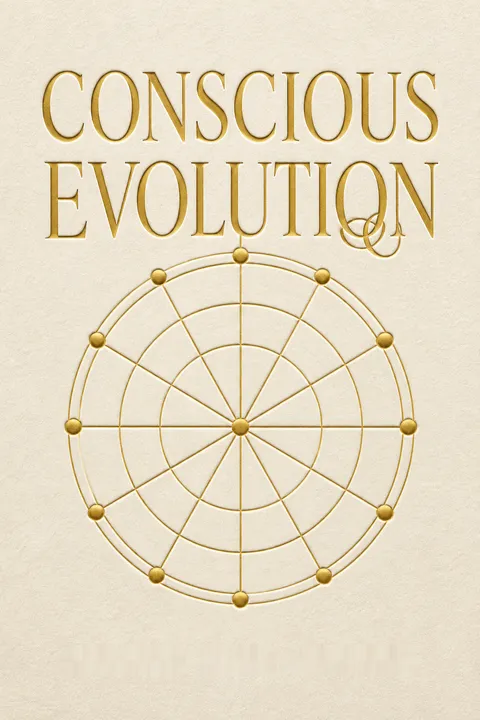
Give collaboration a shape. The Wheel of Cocreation represents society as twelve connected functions, including education, health, justice, media, economics, environment, and governance. Its premise is that a community works better when these areas are treated as interdependent rather than isolated. The Wheel gives participants a shared map for locating needs, resources, and possible partners.
Make the meeting practical. Hubbard's SYNCON process, short for synergistic convergence, brings people with different interests together to identify what they want to create, what they lack, and what they can contribute. Participants form circles around areas of work, then look for overlaps and joint projects. The Committee for the Future held twenty-five such conferences in the 1970s. The method aims to replace purely adversarial bargaining with a search for common goals and mutually useful contributions.
The value here is procedural: goodwill is fragile unless a group has a way to turn conversation into commitments, ownership, and follow-up. A shared map can help participants see dependencies that departmental thinking hides. But circles are not automatically egalitarian. People differ in confidence, time, expertise, and authority, and a meeting can reproduce those differences while appearing harmonious. Strong facilitation should make disagreement safe, record who decides, and specify the next steps. Cooperation is not the absence of conflict; it is a method for making conflict productive.
Make breakthroughs visible, and teach people how to join them
Report more than breakdowns. Hubbard proposes NewNews, a form of media that gives sustained attention to successful responses to social problems, explains how they work, and invites others to participate. In a Los Angeles meeting involving gang leaders, police, businesspeople, and others, participants objected when a television crew appeared poised to frame the gathering through familiar negative images. The organizers instead recorded moments of cooperation and shared them as news.
Connect information to learning. Education for conscious evolution would place students within the long history of the universe and help them study current social innovations across disciplines. Students would examine what is failing, identify responses that show promise, and discover where their own abilities might contribute. Media makes practical examples visible; education gives people the knowledge and relationships to test, adapt, and improve them.
The proposal recognizes that attention is a resource: repeated coverage of violence can make a society's problems feel permanent, while visible examples of effective action can widen the sense of what is possible. This connects to solutions-oriented journalism, which reports evidence and limits alongside responses. The challenge is not to replace bad news with good news. Publics need scrutiny of harms, power, and failed interventions as much as inspiring examples. A mature NewNews would make success stories accountable, explain context, and avoid presenting isolated wins as proof that a systemic problem is solved.
Turn your calling into useful work with partners, not private self-improvement
Let purpose become practice. Hubbard describes a cocreative person as someone who develops personal abilities and expresses them through work that contributes to others. She recalls raising five children while feeling an unmet desire for meaningful work. Maslow's account of self-actualization helped her interpret that desire as a call to use her capacities, not as a rejection of family life.
Join talents to needs. The book names the surge toward meaningful contribution “vocational arousal.” In this account, people seek collaborators and projects as well as personal fulfillment. The shift from procreation to cocreation is Hubbard's broad cultural metaphor: creative energy can be directed toward chosen work and social contribution, not only biological reproduction. It is an invitation to ask what abilities are underused, what needs matter, and who could help turn those abilities into lasting work.
The connection between purpose and contribution gives the book's spiritual language a practical test: does an inner calling become work that helps someone beyond the self? Research on motivation similarly distinguishes meaningful activity from external reward, though meaningful work still needs fair pay, manageable workloads, and supportive institutions. Hubbard's account is rooted in her own life and in a specific mid-century model of family and gender. The insight travels more widely than that model: caregiving, paid work, civic action, and art can all express purpose, without implying that everyone must convert a passion into a career.
Hold a vivid future lightly: possibility guides action, not prediction
Imagine, then organize. Hubbard's vision of a “planetary birth” imagines people recognizing their interdependence and acting as members of one human community. In 2012, she and collaborators organized Birth 2012, with 537 registered hubs across multiple countries and online broadcasts. The event showed that people could coordinate a shared celebration across locations; it did not establish that humanity had undergone a sudden, lasting transformation.
Keep the vision useful. Afterward, Hubbard describes realizing that the event announced a possibility rather than completing a birth. She reframes the awakening as an ongoing process built through gatherings, projects, relationships, and public communication. Her term “potentialists” captures the stance: neither confident optimists nor resigned pessimists, but people who notice possible futures and act to increase the chance of the one they value.
A vivid future can function like a destination in strategic planning: it helps people choose priorities before every detail is known. The crucial discipline is to keep vision separate from forecast. Birth 2012 offers a concrete example of coordination and shared meaning, not evidence that a planetary consciousness has emerged. That distinction protects hope from becoming a claim that cannot be tested. The most useful visions invite measurable experiments, welcome revision, and make room for people who disagree about the destination while still cooperating on urgent, concrete needs.
Analysis
Conscious Evolution is both a spiritual manifesto and an argument for civic coordination. Its central wager is that humanity's growing capacity to affect life creates a new responsibility: people should become deliberate participants in shaping social and technological change. Hubbard links that wager to a sweeping creation narrative, then translates it into organizational proposals: identify innovations, connect practitioners, make results visible, and teach people to contribute. The book's most durable contribution may be this bridge between inner purpose and public infrastructure. It refuses to treat personal transformation as sufficient when institutions remain fragmented, and it refuses to treat social design as sufficient when people lack meaning, motivation, or trust. The evolutionary story is evocative, but its scientific status needs careful boundaries. Natural selection does not guarantee a trend toward greater consciousness, moral progress, or human flourishing. Complexity can grow in some systems while others collapse, and biological metamorphosis does not establish that social breakdown precedes a better order. Prigogine's work on self-organizing systems can inspire questions about social change, but analogy is not evidence that connected innovations will produce a beneficial phase shift. Hubbard's more defensible claim is conditional: crises create pressure, while organized choices can influence outcomes.
That conditional reading also clarifies the book's tension between universal purpose and pluralism. A shared human story can coordinate action, but it can also make one group's preferred future seem cosmically ordained. The proposed practices are strongest when they remain democratic and evidence-sensitive: communities define what counts as success, outcomes are measured, harmful effects are reported, and participants can contest priorities. The future-facing spirituality then operates as a source of motivation rather than a substitute for public reasoning.
The book's optimism is therefore most useful when treated as disciplined possibility, not prophecy. Its practical legacy is a question readers can apply now: what promising work is isolated, what relationships would make it more effective, and what evidence would show that the connection helped?
Review Summary
Conscious Evolution receives mostly positive reviews, with readers praising its mind-expanding ideas and vision for humanity's future. Many appreciate Hubbard's approach to societal transformation and personal growth. The book is seen as inspiring and thought-provoking, offering a unique perspective on human potential and conscious co-creation. Some readers find it repetitive or overwritten, while others consider it essential reading. The concept of "potentialism" and the idea of humanity being on the cusp of a major shift resonate with many reviewers.
People Also Read








Glossary
Conscious Evolution
intentional evolutionary participationHubbard's term for humanity's deliberate, ethical participation in shaping its future, made possible by knowledge and technologies that affect life and society. It treats humans as part of nature rather than outside it, and asks people to direct their influence toward greater life, awareness, freedom, and cooperation.
Social Potential Movement
collective capacity for changeA movement that extends personal-growth work into social systems. It identifies promising innovations in fields such as health, education, economics, and governance, and seeks to connect them into arrangements that support collective wellbeing and human creativity.
Evolutionary Spiral
image of unfolding creationHubbard's visual model of the history of creation, moving from the origins of the universe through matter, life, animal life, and humanity toward a possible next phase. The Spiral places human choices within a much longer history, while serving as a guiding image rather than a scientific prediction of a fixed destination.
noosphere
Earth's shared thinking layerA term associated in the book with Teilhard de Chardin, meaning the collective sphere of human thought and communication. Hubbard uses it to describe the social body formed by language, culture, science, technology, institutions, and networks, whose combined capacities allow people to affect the planet on a large scale.
Peace Room
innovation coordination officeHubbard's proposed Office for the Future, designed to coordinate constructive social change. It would scan for useful innovations, map them by field and location, connect people and projects, and communicate results so others could learn from and adapt promising work.
Wheel of Cocreation
map of social functionsA model of society divided into twelve connected functions, including health, education, environment, economics, media, justice, and governance. Participants use it to locate innovations, identify gaps, and understand how work in one social area may depend on or support work in others.
SYNCON
synergistic convergence processShort for synergistic convergence, SYNCON is a facilitated group process for discovering shared goals and matching needs with resources. Participants identify what they want to create, what they need, and what they can contribute, then explore collaborations across different areas of a community.
Golden innovations
measurable, transferable solutionsProjects that address important social needs and embody humane values, while showing evidence of impact. Hubbard's criteria also emphasize long-term cost effectiveness, a track record, sustainability, and the potential to be replicated without depending entirely on a single charismatic leader.
NewNews
media for constructive changeHubbard's proposed form of journalism and public communication that reports on social innovations, explains how they work, and invites participation. It does not require ignoring breakdowns; it frames problems alongside practical responses and gives sustained attention to evidence of constructive change.
vocational arousal
renewed drive toward purposeHubbard's phrase for the growing desire to discover and express one's abilities through meaningful work. In her account, people seek not only individual fulfillment but also collaborators and projects through which their talents can address needs in the wider community.
Download PDF
Download EPUB
.epub digital book format is ideal for reading ebooks on phones, tablets, and e-readers.








