

Key Takeaways
Design ideas for ordinary people to pass along, not just influencers
The message travels. A Philadelphia steakhouse needed attention in a crowded market, so it created a $100 cheesesteak with ingredients such as lobster and truffles. The sandwich became a story people repeated, whether or not they ate it. Blendtec found a similar angle for an ordinary blender by filming it pulverizing unexpected objects. The lesson is that spread can be designed into the idea or its presentation, rather than left to luck or a celebrity endorsement.
Conversation has reach. Berger cites research estimating that word of mouth influences 20% to 50% of purchasing decisions, while only 7% of word of mouth occurred online in the study he discusses. Friends can make recommendations persuasive and direct them to people likely to care. A social platform alone is not a strategy: someone still needs a reason to share.
What's striking is the shift from searching for a powerful messenger to making the message easier to transmit. That is a more democratic account of influence: a quiet customer can carry a memorable idea just as effectively as a prominent advocate. It also suggests that reach is not the only useful measure. A trusted recommendation to a few relevant people may matter more than broad exposure. The limitation is that a well-designed story cannot overcome a poor product indefinitely. Conversation can create trial, but the experience itself determines whether people have anything good to say afterward.
Give people a reason to feel clever, early, or unusually well connected
Sharing shapes identity. Berger calls the reputational benefit people gain by discussing something social currency. A hidden cocktail bar behind a phone booth inside a hot-dog restaurant gave visitors a secret worth revealing. Snapple placed surprising trivia beneath bottle caps, turning an ordinary purchase into a small discovery people could share. In both cases, the information offered a way to seem interesting or in-the-know.
Make status legible. Game mechanics, the points, levels, and visible rewards used in games, can make achievements worth mentioning. Airline customers chased status tiers even when the perks were modest, partly because a clear rank made progress visible to others. Scarcity and invitation-only access can also make customers feel like insiders. These devices work best when people understand what the status means and can share it without being paid to do so.
Identity signaling helps explain why a recommendation is often also a small performance: the teller is sharing information and presenting a version of themselves. The strongest design gives that performance a genuine reward, such as discovery, expertise, or earned achievement. This connects to the broader behavioral insight that people value relative standing, not only material gain. There is a boundary, though. Status systems can motivate participation while making newcomers feel shut out, and artificial exclusivity can look manipulative. The experience must justify the insider feeling, or the clever signal becomes a cheap trick.
Attach your idea to cues people encounter every day
A reminder creates repetition. A trigger is a cue in the environment that brings a related idea to mind. The planet Mars received extensive news coverage during NASA's Pathfinder mission, and sales of Mars bars rose, despite the candy having no connection to the mission. Cheerios also received more word of mouth than Disney World in Berger's comparison: breakfast happens often, while visits to the theme park are relatively rare.
Build a useful habitat. Products and ideas have an idea habitat, the set of cues that remind people of them. Kit Kat's campaign paired the candy with coffee, a common daily cue. Sales rose 8% by the end of the campaign year and were up by about a third after twelve months. This kind of repeated pairing can sustain ongoing word of mouth, rather than producing only a short burst of attention after something novel happens.
This principle connects memory to context: people do not retrieve every idea equally, and a familiar cue can make one option easier to recall at the moment it matters. That makes routine settings strategically important. A reminder near the behavior can be more effective than a brilliant message encountered far away from it. The distinction between immediate and ongoing discussion is useful here: novelty can prompt a quick conversation, while recurring cues provide repeated chances for the idea to return. Still, an overused cue can become noise, and a reminder is not the same as a reason to choose.
Choose emotions that energize action, not merely emotions that feel strong
Activation matters. Physiological arousal is the body's state of readiness for action, such as the heightened energy of excitement, anger, or anxiety. In an analysis of thousands of New York Times articles, awe-inspiring pieces were more likely to be shared, while sadder pieces were less likely. Anger and anxiety also increased sharing. The pattern was not simply that positive feelings spread and negative ones did not. Energizing feelings tended to prompt action; sadness and calm contentment tended to slow it.
Tell people why to care. Denise Grady's article about making a cough visible through photography gave readers a startling image, not just technical information. Musician Dave Carroll turned anger over United Airlines damaging his guitar and refusing compensation into a song that spread widely online. Emotion helps convert passive attention into sharing, but different emotional tones can have different effects.
Separating emotional pleasantness from activation is a useful correction to the assumption that cheerful content always travels best. It explains why a troubling story can circulate when it leaves people energized to respond, while a sad one may invite sympathy but little action. This distinction also has practical value in public communication: a vivid image or personal narrative can make an abstract risk feel consequential. Yet arousal is morally neutral. Anger can mobilize accountability, but it can also amplify outrage before facts are checked. Effective communication should motivate attention without treating intensity as proof.
Make desired behavior visible, but never advertise the harmful norm
People copy what they see. Public visibility makes behavior easier to imitate and gives people evidence about what others choose. Movember made support for men's health visible by inviting participants to grow moustaches during November. The moustaches drew questions, which opened conversations about the cause. At the University of Arizona, a campaign that showed students most peers were not binge drinking helped correct mistaken assumptions and reduced heavy drinking by almost 30%.
Visibility can backfire. Anti-drug campaigns sometimes described drug use as common, potentially making it seem normal to young viewers. A park sign that explained many visitors stole petrified wood increased theft, while a sign focused on preserving the forest reduced it. Publicizing a behavior can lend it social proof, even when the campaign intends to discourage it. Make the desired action observable, and avoid presenting harmful behavior as widespread.
The crucial distinction is between describing what people do and communicating what a group approves. When those signals conflict, people may mistake visible behavior for accepted behavior, even if most privately object. Making a quiet majority's actual preferences visible can correct that misreading and help people act on views they already hold. But public signals are not neutral: campaigns, metrics, and testimonials can normalize the very conduct they condemn. Communication designers therefore need to ask not only whether a message is visible, but what behavior it makes look typical, admired, or socially safe.
Package useful advice as a deal readers can instantly recognize
Useful information travels. Ken Craig's video showed how to remove corn silk by microwaving an ear of corn and cutting off its base. The practical demonstration reached millions of viewers, including many older adults. People pass along information that can save someone time, money, or frustration. Clear packaging helps: a concise tip or focused list is easier to forward than a dense bundle of unrelated advice.
Frame value carefully. People judge a discount against a reference point, the price or expectation they use for comparison. In Berger's grill example, more people preferred a $100 reduction from $350 than a $15 reduction from $255, even though the latter price was lower. The Rule of 100 says percentage discounts tend to look larger below $100, while dollar savings tend to look larger above it. Useful information can spread even when false, so check claims before passing them on.
Practical sharing resembles everyday cooperation: a useful tip lets someone help a friend without needing a formal opportunity or grand gesture. The framing lesson also shows why perceived value is psychological, not just arithmetic. People respond to comparisons and expectations, which marketers can clarify or exploit. That creates an ethical responsibility to make the actual benefit easy to verify. The book's warning about false vaccine claims illustrates the stakes: people may share misinformation precisely because they believe it protects others. Helpfulness is a powerful motive, but good intentions do not guarantee accurate advice.
Make your product essential to the story, not decorative
Stories carry information. People naturally recount events with a beginning, a problem, and an outcome. Those narratives can carry product information without sounding like advertisements. Berger calls this a Trojan horse: a shareable story that carries a message inside it. A tale about a winter coat company replacing a broken zipper conveys warmth and customer service through one customer's experience.
Tie the brand to the plot. Dove's film showing how makeup, photography, and digital editing transform a model became a conversation about beauty standards, with Dove part of the discussion. By contrast, a publicity stunt at the Olympics displayed a casino's name but gave the casino no meaningful role in the story. In telephone-style retellings, many details disappear; the details central to the plot are more likely to survive. The brand or idea should be one of those essential details.
Narrative is a delivery system because it gives listeners a reason to stay engaged and a structure for remembering what happened. It can also lower skepticism: a specific account feels different from a company's self-praise. That advantage carries risk. A compelling story may persuade through vividness even when it is unusual or unrepresentative. The most responsible version makes the relevant benefit central while keeping the claim accurate. A memorable tale should help people understand what a product does, not smuggle in a promise the evidence cannot support.
Measure behavior after sharing, because a million views can sell nothing
Attention is not impact. Berger's framework, STEPPS, is a mnemonic for six design dimensions that can make ideas more likely to be discussed and repeated. They need not all appear in every campaign. Blendtec's blender videos attracted hundreds of millions of views and the company reported a 700% increase in retail sales within two years. Evian's roller-skating baby video received enormous attention, yet the book reports that sales fell nearly 25% that year.
Track the real outcome. A campaign should be judged against its purpose: purchases, adoption, donations, or a change in behavior, not views alone. The useful question is whether the shareable element also communicates the intended benefit. A practical test is to identify the behavior sought, choose one or two relevant design levers, and compare audience response with a meaningful outcome. Spread is a means, not proof of success.
This is the framework's most important discipline: separate transmission from conversion. A million views can indicate that a clip is entertaining without showing that viewers remember its sponsor, trust its claim, or take action. The contrast between Blendtec and Evian makes that distinction concrete. It also invites experimental thinking: campaigns can be tested against outcomes rather than celebrated on reach alone. Virality remains partly unpredictable, and results depend on context, audience, and product quality. A practical framework should therefore generate hypotheses to test, not promises that any particular idea will catch fire.
Analysis
Berger's central achievement is turning the vague ambition of going viral into a set of observable design questions. What does sharing do for the speaker? What reminds people of the idea? What feeling moves them to act? Can they see others doing it? Is there useful information to pass on? Does a story carry the message intact? The framework is strongest when it links these questions to distinct psychological mechanisms instead of treating popularity as a mysterious property of content.
Its examples also expose an important distinction: attention, conversation, adoption, and commercial success are different outcomes. Blendtec's videos are not merely popular; the book links them to increased sales because the demonstrations reveal the blender's strength. An unrelated spectacle can attract views yet leave the brand behind. This makes message integration and outcome measurement more important than raw reach.
The evidence varies in strength. Some claims draw on experiments or large datasets, such as the analysis of news sharing and the voting-location study. Other lessons come from vivid business cases whose success has multiple possible causes. A striking example makes a mechanism memorable, but does not by itself establish how much that mechanism caused the result. The framework is best used as a map for generating and testing ideas, not a guaranteed formula.
The ethical implications are equally central. Visibility can normalize harmful conduct, emotional arousal can spread inaccurate claims, and scarcity can turn access into status theater. The same tools that help a public-health message travel can also magnify bad information. Responsible application therefore asks two questions at once: what will people repeat, and what behavior or belief will that repetition reinforce? Contagion is a communications outcome, not a moral endorsement. The enduring practical insight is to design for a specific useful action, then verify that the story people share still carries the truth that action depends on.
Review Summary
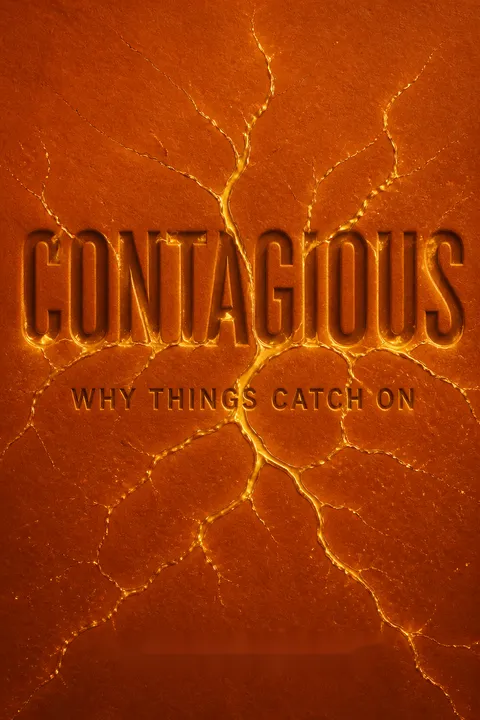
Contagious: Why Things Catch On explores why certain ideas and products become popular. Reviewers find it informative and entertaining, praising Berger's accessible writing style and use of real-world examples. Many appreciate the practical marketing insights, though some feel the content is basic or repetitive. The book's STEPPS framework (Social Currency, Triggers, Emotion, Public, Practical Value, Stories) is highlighted as a useful tool. While some critics argue it lacks depth, most readers find value in its analysis of viral trends and social influence.
People Also Read






Glossary
STEPPS
Six sharing design leversBerger's mnemonic for six characteristics that can increase the likelihood that an idea is discussed and passed on. The framework groups mechanisms involving personal status, environmental reminders, emotional activation, visibility, usefulness, and narrative. The dimensions can work independently, so a campaign does not need to use all six.
Social Currency
Reputational reward for sharingThe social benefit people gain when talking about something improves how others see them. A surprising fact, an exclusive discovery, or a visible achievement can make the person sharing it seem entertaining, informed, or successful. Designing for social currency gives people a personal reason to mention an idea while they spread it.
Triggers
Cues that prompt recallEnvironmental stimuli that bring a related product, idea, or behavior to mind. A common event, object, or routine can repeatedly cue an idea, creating opportunities for conversation and action. A strong trigger is frequent enough to recur and closely connected enough to the idea to prompt recall rather than competing associations.
Game mechanics
Structures that reward progressFeatures such as points, levels, rankings, and badges that make progress measurable and engaging. They can motivate people through a sense of achievement and through comparison with others. When accomplishments are easy to understand and display, people may share them, spreading awareness of the activity or organization that awarded them.
idea habitat
A set of recall cuesThe surroundings, routines, and associated concepts that can prompt people to remember an idea. A product with many naturally occurring reminders has a larger habitat and more chances to come to mind. Marketers can expand that habitat by repeatedly pairing an idea with a frequent, relevant cue.
behavioral residue
Visible traces of behaviorPhysical or digital evidence that remains after someone has used a product or taken an action. A wristband, a reusable shopping bag, an event sticker, or a public online review can keep signaling participation after the original behavior ends. These traces make private choices more observable and can prompt conversation or imitation.
valuable virality
Sharing that benefits its sourceA form of spread in which a shareable story is tightly connected to the product, organization, or idea it is meant to promote. If people repeat an entertaining event but omit the sponsor, attention may not create value for that sponsor. The message works best when the intended benefit is necessary to the story.
Rule of 100
A way to frame discountsA discount-framing guideline based on the original price. For products priced below $100, a percentage reduction often appears larger than the same saving stated in dollars. Above $100, the dollar amount can seem more substantial than the percentage. The rule concerns perceived value, not which offer is objectively cheaper.
FAQ
What's Contagious: Why Things Catch On about?
- Explores social epidemics: The book examines why certain products, ideas, and behaviors spread like viruses through social networks.
- Introduces STEPPS framework: Jonah Berger presents six principles—Social Currency, Triggers, Emotion, Public, Practical Value, and Stories—that make content contagious.
- Real-world examples: The author uses case studies, such as Blendtec's "Will It Blend?" videos, to demonstrate these principles in action.
Why should I read Contagious: Why Things Catch On?
- Understand virality: Gain insights into why certain ideas and products catch on, valuable for marketers and entrepreneurs.
- Actionable strategies: Learn practical advice on applying the STEPPS framework to make your ideas or products popular.
- Engaging storytelling: The book is filled with captivating stories and research findings, making complex concepts accessible.
What are the key takeaways of Contagious: Why Things Catch On?
- Six principles of contagion: The STEPPS framework guides creating shareable content.
- Importance of social influence: Word of mouth is a powerful driver of consumer behavior, often more effective than traditional advertising.
- Emotional connection matters: Content that evokes strong emotions is more likely to be shared and discussed.
What is the STEPPS framework in Contagious: Why Things Catch On?
- Social Currency: People share things that make them look good or feel special, enhancing social status.
- Triggers: Associating products with frequent cues keeps them top of mind, leading to more discussions.
- Emotion: Content that evokes strong feelings, especially positive ones, is more likely to be shared.
- Public: Making behaviors observable increases the likelihood of imitation and sharing.
- Practical Value: Useful information is often shared, as people like to help others.
- Stories: Narratives that incorporate products or ideas can enhance their shareability.
How does Social Currency work in Contagious: Why Things Catch On?
- Enhances perceived value: Sharing remarkable or exclusive information boosts one's social status among peers.
- Creates insider feelings: People enjoy feeling like they are part of an exclusive group, encouraging them to share unique experiences.
- Example from the book: The $100 cheesesteak at Barclay Prime became a conversation piece, enhancing social currency.
What role do Triggers play in making ideas contagious in Contagious: Why Things Catch On?
- Stimuli for recall: Triggers are cues that remind people of a product or idea, increasing its accessibility.
- Example from the book: The song "Friday" by Rebecca Black gained popularity due to frequent triggers by the day of the week.
- Habit formation: Associating products with common activities can create lasting habits and discussions.
How does Emotion influence sharing according to Contagious: Why Things Catch On?
- Emotional engagement: Content that evokes strong emotions, particularly awe or excitement, is more likely to be shared.
- Physiological arousal: High-arousal emotions drive people to take action, including sharing information.
- Negative emotions: While sadness decreases sharing, emotions like anger can increase it, as seen in Dave Carroll's viral song.
What is the significance of Public visibility in Contagious: Why Things Catch On?
- Imitation drives behavior: When people see others using a product, they are more likely to imitate it.
- Example from the book: The decision to flip the Apple logo on laptops ensured it was visible to others, enhancing brand visibility.
- Social proof: Observing others can motivate individuals to try new products or behaviors.
How can Practical Value enhance the shareability of content in Contagious: Why Things Catch On?
- Useful information: People are more likely to share content that provides practical benefits or solutions.
- Example from the book: Articles offering tips or advice, like saving money, are often shared because they help others.
- Highlighting value: Making the practical benefits of a product clear can encourage sharing among consumers.
How do Stories function as vessels in Contagious: Why Things Catch On?
- Definition of Stories: Stories carry information and ideas, making them more engaging and memorable.
- Embedding messages: A well-crafted story can embed a product within a narrative, allowing it to be shared naturally.
- Examples of effective storytelling: Berger discusses Dove’s “Evolution” campaign, which used storytelling to address beauty standards.
What are some effective strategies for making ideas contagious according to Contagious: Why Things Catch On?
- Leverage the STEPPS framework: Incorporate Social Currency, Triggers, Emotion, Public visibility, Practical Value, and Stories into marketing strategies.
- Create remarkable content: Focus on making products or ideas that stand out and are worth talking about.
- Encourage sharing through visibility: Make behaviors and products observable, creating opportunities for social proof and imitation.
What are the best quotes from Contagious: Why Things Catch On and what do they mean?
- “When we care, we share.” Emphasizes the importance of emotional engagement in driving word of mouth.
- “Top of mind means tip of tongue.” Highlights how frequent triggers can keep products accessible, leading to more discussions.
- “Remarkable things are worthy of remark.” Underscores that standout products or ideas are more likely to be shared.
About the Author



Download PDF
Download EPUB
.epub digital book format is ideal for reading ebooks on phones, tablets, and e-readers.








