

Key Takeaways
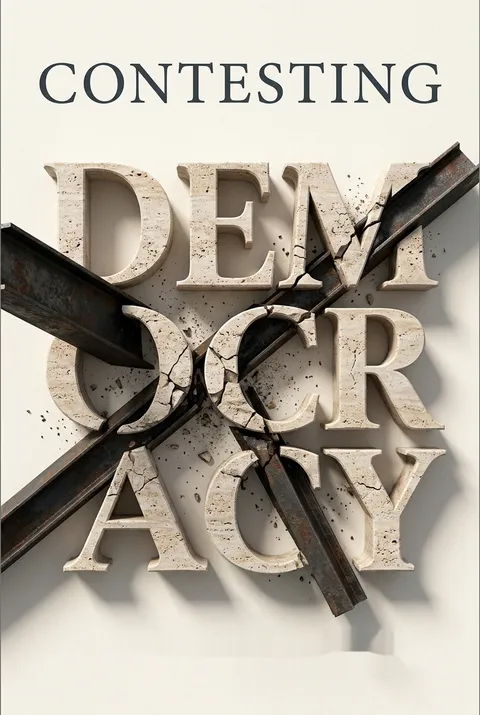
Treat democracy as a contested promise, not a settled institutional label
Democracy became the prize. Twentieth-century Europe was not simply a contest between democracy and its enemies. Fascists and Communists often claimed that liberal parliamentarism was false democracy, promising instead deeper equality, fuller participation, and a unified people able to shape its fate. Mussolini’s philosopher Giovanni Gentile even described Fascist rule as democracy at its fullest, despite its dictatorship and suppression of opposition. Such claims were not credible descriptions of how these regimes worked. Their importance is that rulers felt compelled to use democratic language.
Ideas entered institutions. Müller follows the people who translated political doctrines into constitutions, parties, and government practice. Ideas mattered not because they floated above events, but because they helped justify institutions and give them meaning. To understand a regime, therefore, ask not only who holds power, but what kind of people it claims to represent and what it promises them.
Make rulers explain who counts as the people, not just who governs
Old legitimacy broke down. Before the First World War, monarchs, inherited rank, and tradition could still support political authority. The war discredited dynasties and empires, while mass suffrage and expanded state power brought new groups into politics. Rulers could no longer assume obedience; they had to explain their right to govern to millions of citizens.
A new justification emerged. Müller calls this pressure for explicit, large-scale explanations of political rule “mass justification.” It extended even to leaders who claimed personal charisma or promised effective administration: neither a magnetic personality nor public services explained themselves. Political movements also had to define the people they represented, whether a socialist class, a purified nation, or a population following a vanguard party. The battle over democracy became a battle over political membership.
After 1918, national self-rule often meant making populations dangerously uniform
Self-determination had a sharp edge. The collapse of the German, Habsburg, Russian, and Ottoman empires made national independence seem like the democratic answer to imperial rule. But the new states often contained large minorities. One third of Poland’s population did not speak Polish, and postwar Romania included about a million Hungarians. The ideal of a nation governing itself did not settle who belonged to that nation.
Homogeneity became a state project. Leaders sometimes treated mixed populations as a problem to be solved through pressure, deportation, or population exchange. In Turkey, Atatürk’s government used schools, law, language reform, and state power to remake society in the name of progress and national unity. These efforts show how a principle associated with popular sovereignty could license coercion when political leaders presumed that a real people had to be manufactured.
Build cultural alliances before demanding power, but do not mistake preparation for victory
Socialism needed a people. After the postwar wave of workers’ councils faded, left-wing thinkers debated whether socialism could be won through parliament, patient education, or revolution. Antonio Gramsci argued that a movement needed “hegemony,” meaning intellectual and moral leadership broad enough to unite groups beyond its original base. In Italy, he looked for an alliance between workers and peasants, not merely control of factories or government.
Culture could prepare and displace action. Red Vienna built working-class education, recreation, and social services, but its cultural project did not prevent the defeat of Austrian socialism in 1934. Sweden’s Social Democrats had greater success by allying with farmers and building a broad welfare settlement. That consensus also carried a dark cost: more than 60,000 people, mostly women, were sterilized under eugenic policies. A shared political culture can stabilize reform, but it can also define some citizens as unfit for belonging.
Fascism made national unity and permanent struggle its answer to mass politics
Myth mobilized people. Georges Sorel argued that political myths could move people to action without being tested like ordinary factual claims. Italian Fascists redirected this idea from class conflict toward national struggle. They promised unity across workers and employers through corporatist organizations, while presenting sacrifice, discipline, and war as sources of national renewal. Fascism was not merely conservative rule: it mobilized mass parties and sought to remake society.
The Nazi version was harsher. National Socialism made racial membership the basis of its imagined community, the German “Volksgemeinschaft.” Those excluded from it could be stripped of protection and ultimately targeted for elimination. Italian Fascism retained more traditional institutions, including the monarchy and Catholic Church, and never achieved its total-state ambitions. The Nazi regime, by contrast, fused personal loyalty to Hitler with racial rule, while its competing agencies helped produce a chaotic, violent state.
Postwar Europe secured democracy by limiting what majorities could do
Democracy was rebuilt with restraints. After fascism, Western European leaders feared politics based on unlimited popular sovereignty and a unified mass acting without constraints. The new settlement strengthened executives, constitutional courts, and rights protections, while limiting the power of parliaments to hand authority to a dictator. European integration added another layer of institutions above national governments.
The result was a new kind of democracy. It was not simply a return to nineteenth-century liberalism. Christian Democrats, especially in continental Europe, helped build welfare states and European cooperation, often using religious and moral traditions to justify new institutions. The welfare state offered security, while constitutional courts could block elected governments. These arrangements helped protect democracy from self-destruction, but they also narrowed the range of decisions voters could make directly.
May 1968 changed everyday authority more than it changed the state
A revolt against managed life. Students and workers challenged universities, workplaces, families, and political systems they saw as paternalistic and bureaucratic. The Situationists criticized a society in which lived experience was replaced by images and consumption; feminists exposed how revolutionary groups reproduced male authority at home and in their own organizations. The demand for autonomy brought private life into political debate.
Cultural gains outlasted the revolt. The movements did not create the direct democracy or workers’ self-management many activists wanted. Nor did they overthrow the constitutional order. But they helped weaken deference and opened space for changes in gender relations, family law, abortion rights, and personal autonomy. The book’s important distinction is between political institutions, which largely endured, and social norms, which changed substantially.
Treat deregulation as a political project, not the withdrawal of politics
The market required advocates. In the 1970s, inflation, unemployment, and economic stagnation weakened faith in state planning. Thinkers such as Friedrich Hayek argued that central authorities could not manage dispersed knowledge without imposing a single vision of the good life. His campaign relied on a network of scholars, policy institutes, and intellectual intermediaries, not on spontaneous market forces alone. Margaret Thatcher’s effort to reshape society through economic policy made the political ambition explicit.
Power did not disappear. Niklas Luhmann argued that modern institutions operated through distinct systems and that governments could not steer society as a whole. Michel Foucault, from a different political position, examined how states and institutions shape people’s conduct even without constant direct coercion. Both perspectives challenge the idea that less visible government means less power. Human-rights advocacy gave diverse critics a shared language, though rights alone could not supply a complete programme for collective action.
The 1989 revolutions won pluralism, not a new political blueprint
Dissidents turned official promises into pressure. In Eastern Europe, activists used the regimes’ own laws and human-rights commitments to expose the gap between public claims and actual rule. Charter 77 joined people with different beliefs in a campaign for civic rights. Other groups built a “parallel polis,” independent associations that provided services and connections outside official institutions. These efforts helped workers and intellectuals act together without staging a conventional armed revolution.
Power returned without one unified people. In 1989, round-table negotiations, civic forums, and public demonstrations helped end Communist rule. The revolutions were deliberately limited: they sought pluralist government rather than a single party claiming to embody history. Their successors largely adopted familiar liberal-democratic institutions, while many dissidents’ hopes for self-management faded. Müller’s final point is that democracy cannot promise final certainty. Its openness to contest is a strength, but it also leaves political outcomes unsettled.
Analysis
Müller’s central achievement is to treat twentieth-century political thought as part of institutional history, rather than as commentary added after power has been won. That approach explains why regimes that crushed elections still borrowed democratic language, why socialists argued about education and national identity as much as ownership, and why constitutional courts could become instruments of democratic reconstruction. Political ideas mattered because they helped people interpret institutions and decide whether those institutions deserved loyalty.
The narrative also resists a comforting account in which liberal democracy simply returns after fascism. Postwar Europe produced a distinct settlement: welfare provision, judicial review, European integration, and limits on popular sovereignty. This model helped prevent democratic majorities from dismantling democracy, but the protection came with a cost. Citizens gained security and rights while some major decisions moved away from electoral politics. The book makes that tradeoff visible without treating either unrestrained popular rule or elite restraint as an uncomplicated good.
The account is strongest when it shows political concepts changing through conflict. “The people” can mean a class, a nation, or a supposedly unified racial community, and those definitions allocate both voice and vulnerability. Yet the European frame also exposes a limit: the histories of empire and decolonization appear, but they remain less central than the struggles within Europe. That imbalance matters because European democracy’s self-image was shaped by relations with societies it ruled abroad.
The final image of democracy as institutionalized uncertainty offers a useful standard, not a guarantee. Uncertainty protects disagreement from being permanently settled by one leader or party. It does not by itself ensure equal participation, prevent bureaucratic exclusion, or make political choices intelligible. The book’s history therefore invites a double question: how can democracies resist projects that claim final truth, and how can they remain genuinely answerable to the people whose sovereignty they constrain?
Review Summary
The reviews for Contesting Democracy are mixed. Many praise it as an insightful, detailed exploration of 20th-century European political thought, highlighting lesser-known events and figures. Readers appreciate its depth and coherent presentation of complex ideas. However, some critics find it scattered, shallow, or overly basic. The book is noted for its dense content, requiring careful reading. It's seen as valuable for understanding modern democracy's development, though potentially challenging for beginners. Overall, it's regarded as an important work on European political history, despite some limitations.
People Also Read







Glossary
mass justification
Public explanation of ruleThe expanded need to explain political authority to large populations once dynastic legitimacy and inherited tradition lost credibility. It applies not only to elected governments but also to dictatorships, charismatic leaders, and states promising public benefits. In Müller’s account, mass politics forced rulers to justify institutions and to define the people in whose name they acted.
ethics of responsibility
Judgment by consequencesMax Weber’s account of political conduct that requires leaders to consider the foreseeable consequences of their actions and accept responsibility for them. It contrasts with an ethics of conviction, in which the actor prioritizes the purity of principles or intentions. Weber does not make responsibility mere opportunism: political action still involves commitments and moral limits.
leadership democracy
Competitive rule by leadersWeber’s model of mass democracy, in which citizens gain political influence chiefly by choosing among competing leaders. Parliaments train and supervise political elites, while party organizations mobilize voters. Weber regarded delegation and bureaucracy as unavoidable in large states, and considered the central problem how to restrain bureaucratic power without pretending that citizens could govern directly.
hegemony
Leadership across social groupsIn Gramsci’s political thought, hegemony is a movement’s ability to lead a broader coalition through intellectual and moral influence, not merely to dominate through force. It requires shared ways of interpreting society and connecting the interests of different groups. Gramsci believed socialist change depended on building such alliances, particularly between industrial workers and peasants.
Volksgemeinschaft
Racial national communityA Nazi concept of a unified German people, defined by racial membership rather than simply citizenship or shared political institutions. It promised solidarity and equality among those classified as members while excluding people deemed alien to the community, especially Jews and others targeted by Nazi racial policy. The concept joined social unity to persecution and ultimately mass murder.
constitutionalist ethos
Democracy constrained by rulesThe postwar political outlook that treats constitutional limits, rights protections, and institutions beyond direct electoral control as safeguards for democracy. It developed in reaction to fascism and the fear that popular sovereignty could enable dictatorship. The ethos strengthened courts and other checks, while also limiting the authority of parliaments and majorities.
militant democracy
Democracy defending itselfA theory associated with Karl Loewenstein that argues democracies may need legal restrictions against movements using democratic procedures to destroy democracy. Proposed measures include banning anti-democratic parties and limiting certain political freedoms. The idea responds to interwar fascism, but it raises a lasting problem: defenders of democracy may misuse emergency powers against legitimate opposition.
autogestion
Self-management by participantsA French term for self-management, used by left-wing thinkers and activists to describe democratic control of workplaces and other institutions by the people involved in them. In post-1968 debates it opposed both centralized state socialism and managerial authority. Its supporters saw it as a route to autonomy, though they often disagreed about how it could work at scale.
antipolitics
Civil society against state controlA dissident approach in Communist Central and Eastern Europe that sought to limit the reach of state power by strengthening independent social life. Rather than immediately seizing government, activists emphasized truth-telling, civic rights, and associations outside official control. The strategy treated everyday conduct and independent institutions as potential sources of political change.
parallel polis
Independent civic institutionsVáclav Benda’s name for networks and organizations created alongside official institutions in Communist states. These could include workers’ defence groups, underground education, cultural organizations, and services for people in need. Their aim was to fill functions the state failed to perform, support independent cooperation, and make social life less dependent on official authority.
post-totalitarianism
Rule sustained by ritual complianceA term used by dissidents to describe Communist regimes that retained extensive political control after the most intense periods of mass terror had passed. Their stability depended partly on citizens repeating official formulas and participating in public rituals without belief. Dissident strategies sought to expose this hollow compliance by encouraging people to act and speak truthfully.

Download PDF
Download EPUB
.epub digital book format is ideal for reading ebooks on phones, tablets, and e-readers.








