

Key Takeaways
No moral calculator can settle whether stained art remains worth loving.
Contradictions stay put. Claire Dederer begins with Roman Polanski: he directed films she considers extraordinary, including Chinatown, and raped thirteen-year-old Samantha Gailey. Knowing the crime did not erase the films’ beauty, and loving the films did not make Dederer forgive the crime. She searches for an authority or formula that could tell audiences what to do, but the opposing truths refuse to balance neatly. Her question shifts from judging the artist to examining the audience: what happens when someone loves a work made by a person they condemn?
A response is not a verdict. People may reach different conclusions because their histories differ. For one survivor, refusing all art by abusive men may be necessary; for another viewer, art may have offered refuge. The book investigates these responses rather than prescribing a single rule.
The refusal of a universal rule is not moral surrender. It distinguishes two tasks that are often collapsed: assessing wrongdoing and describing an aesthetic response. Neither can cancel the other. That distinction also explains why a private viewing decision cannot substitute for justice or institutional accountability. Still, the absence of a calculator leaves a practical question open: when money, attention, or prestige benefits a living creator, audiences may reasonably weigh those consequences alongside their feelings.
A creator's history can alter art before you choose what to do.
Biography changes perception. Dederer calls this change the stain: the way knowledge of an artist’s conduct colors the audience’s experience of the work, often without a deliberate choice. A Jackson 5 song playing in a diner can still be catchy, yet reports and allegations concerning Michael Jackson’s treatment of children intrude on the listener’s pleasure. The music has not changed, but the moment of hearing it has.
The stain travels through time. New knowledge can reshape how earlier work and earlier versions of an artist appear. Dederer finds she can more easily watch Polanski’s films from before his crime, yet cannot simply separate the young filmmaker from the older criminal. This does not establish a universal rule about which works to avoid. It names an experience that commands cannot switch off.
The stain offers a useful distinction between choosing a judgment and undergoing a changed perception. That matters because calls to separate art from artist often treat memory as a light switch. But the metaphor can also make influence sound total: audiences may interpret the same work differently, and knowledge does not erase every other source of meaning. The concept is strongest as an account of reception, not as a claim that biography determines a work’s value.
Read from your own history, not an imaginary view from nowhere.
Criticism has a point of view. Dederer revisits Woody Allen’s Manhattan, where Allen’s forty-two-year-old character dates a seventeen-year-old. She finds the film’s treatment of the relationship too casual, while male critics insist it should be judged by aesthetics alone. Their supposedly neutral position also reflects a history and a perspective, even when they do not recognize it. Dederer’s discomfort is not proof that her reading is the only correct one; it is part of what the film means to her.
Feeling can inform judgment. As a critic, Dederer learned to acknowledge the person encountering the work, rather than pretend to speak for every viewer. Her response is shaped by being a woman who experienced predatory behavior, just as another audience member’s response may be shaped by race, sexuality, memory, or nostalgia. Naming that context makes a reading more honest, not automatically infallible.
This approach replaces false neutrality with accountable perspective. It resembles situated knowledge: conclusions become more credible when their conditions are visible. The method also protects disagreement, since different histories can produce different, intelligible responses to the same film. Its limit is important: personal experience should not become a veto over every other interpretation. Subjectivity improves criticism when it is examined and argued, rather than treated as self-validating.
Fandom makes an artist's betrayal feel personal because taste becomes identity.
Fans invest beyond the work. Dederer distinguishes an audience member, who consumes art, from a fan, who also builds part of an identity around it. A parasocial relationship is the felt bond with a public figure who does not know the fan personally. Social media and celebrity coverage can intensify that imagined intimacy, making an artist’s biography feel like something happening inside one’s own life.
Harry Potter shows the stakes. The books gave young readers a shared imaginative world, a sense of belonging, and a community that extended into fan fiction, performances, and online spaces. When J. K. Rowling made statements about transgender people that excluded many former readers, their anger carried grief for a world that had once felt welcoming. The injury was not simply disagreement with an author. It was the rupture of an identity and a community partly built through her work.
Fandom can provide genuine connection even when the bond with a celebrity is one-sided. The distinction helps explain why the loss of a beloved fictional world can feel like more than a consumer preference. Yet intimacy is also commercially useful: platforms and entertainment businesses can turn attachment into attention, data, and sales. Recognizing that does not make fans’ feelings fake. It does help separate the real community readers create from the market that profits from their closeness to a famous person.
Question artistic genius when its freedom depends on other people's care.
Genius is a cultural permission slip. Dederer describes it not just as exceptional ability, but as a status that can excuse behavior ordinary people would not be allowed to get away with. The ideal artist is both master of materials and servant to an uncontrollable creative force. That combination makes self-indulgence look like a necessary price of great work.
The ideal has a gender. Picasso and Ernest Hemingway became public models of the energetic, virile, rule-breaking artist. Their work and personas reinforced each other, while women’s labor and the harm done to people around them could disappear from view. The contrast becomes clear in ordinary life: an artist’s solitude often depends on someone else handling children, schedules, and domestic work. Creative freedom may be real, but its costs are not distributed equally.
The key question is not whether artists need freedom, but who supplies it and who pays for it. Treating creative impulses as sacred can conceal ordinary labor and turn privilege into apparent genius. The argument also usefully resists a simple reversal: disciplined, formally constrained artists can be transformative, and bad behavior is not evidence of talent. The cultural story of genius shapes whose work receives attention and whose sacrifices are counted as part of the price.
Don't call injustice inevitable just because the past called it normal.
The past had dissenters. Audiences often excuse old prejudices by saying people then did not know better. Dederer challenges that comfort with Richard Wagner, whose anti-Semitic writing argued against contemporary efforts to reject anti-Semitism. His case shows that a person can recognize an opposing moral position and still choose hatred. Historical context explains conditions; it does not make every choice unavoidable.
Progress is not guaranteed. Dederer also examines racism in familiar books such as My Antonia and Little House on the Prairie. Their depictions of white settlers’ lives can offer warmth while portraying Black or Indigenous people as less fully human. Readers may cherish a childhood book and still recognize what its imagined freedom excludes. The point is not to declare the present morally pure, but to look for present-day injustice instead of treating it as safely past.
Historical context is most useful when it explains how a belief gained power, not when it absolves people who held it. Attention to dissenters prevents the lazy conclusion that everyone was equally blind. At the same time, hindsight can inflate confidence: identifying an injustice now does not prove that contemporary readers have escaped their own era’s assumptions. The chapter’s strongest demand is modest and difficult: read the past without pretending to stand outside history.
Judge dark subject matter by what a work reveals, not merely depicts.
A story is not a crime. Dederer returns to Vladimir Nabokov’s Lolita, a novel narrated by Humbert Humbert, a man who abuses a young girl. Reading it as a teenager, she was disturbed that the girl seemed to vanish beneath Humbert’s elaborate descriptions. As an adult, she reads that absence as part of the book’s effect: the reader experiences how a predator’s account can crowd out a victim’s personhood.
The narrator’s story is suspect. Humbert presents his desire as singular and extraordinary, but the novel repeatedly exposes him as an ordinary abuser. Small glimpses of the girl’s fear and grief reveal the life his narration obscures. This interpretation does not make the book comfortable, or require readers to praise it. It distinguishes depicting harmful desire from committing harm, while asking what the narrative makes visible or keeps hidden.
The reading takes formal choices seriously: point of view is not a neutral container, but a way of directing attention. A narrator who monopolizes the story can make a victim’s absence itself meaningful. That is a powerful possibility, though it requires careful reading rather than assuming every offensive depiction is secretly critical. The relevant question is what the work does with its subject, including whether it challenges the perspective it initially invites.
Give silenced artists institutional space, not just attention to notorious men.
Absence has a history. Ana Mendieta was a Cuban-born artist whose work used her body and the landscape to confront violence, identity, and displacement. She died after falling from the thirty-fourth-floor apartment she shared with artist Carl Andre, who was tried and acquitted of her murder. The case, its treatment of Mendieta, and the attention given to Andre illustrate how an artist can be overshadowed even in discussions of her own death.
Protest can restore attention. Activists repeatedly asked where Mendieta was in museums and organized a public cry-in at a major Andre exhibition. Their deliberately emotional action made her absence difficult to ignore. Dederer argues that cultural institutions need to support artists who have been excluded, not merely keep revisiting the most famous men. This does not mean that marginalized artists are automatically virtuous. It means fairer institutions give more people a chance to be seen.
The shift from notorious creators to missing creators changes the scale of the question. A scandal-centered conversation can keep powerful figures at the center, while neglecting the systems that decide who is collected, exhibited, and remembered. The protesters’ unconventional performance also shows that access is not secured by merit alone; attention sometimes has to be demanded. Institutional inclusion is not a guarantee of good art or good conduct, but it broadens whose work can enter public memory.
Measure mothers' artistic choices without standards artists' husbands escape.
Care changes the cost of making art. Dederer considers Doris Lessing, who left two children in Africa when she moved to London to pursue writing, and Joni Mitchell, who placed a baby for adoption as a young musician. Their choices are not identical, and neither woman’s story yields a simple verdict. Together they expose how women artists are judged through motherhood in a way male artists often are not.
Abandonment is treated as a continuum. A mother may be criticized for closing a workroom door, using childcare, traveling for work, or leaving a family. The line between ordinary care arrangements and moral failure is often drawn through feeling, not a consistent standard. Dederer describes the conflict between artistic work and family care as a real material problem, shaped by money, time, and available support, not merely by individual willpower.
The chapter makes visible the hidden infrastructure of creative work. A writer’s protected time may rest on paid childcare, a partner’s labor, or a family arrangement that is rarely mentioned in the story of individual genius. The comparison also needs care: unequal expectations do not make every parental choice equivalent, and children’s needs remain real. The useful challenge is to ask why artistic ambition is often treated as admirable in men and selfish in women.
Turn outrage toward institutions, because individual boycotts cannot reform an industry.
Consumers inherit the ethical burden. Dederer argues that cultural industries can profit from an artist’s work while leaving audiences to decide whether enjoying it is morally acceptable. Choosing not to stream a film or buy an album may express a real personal boundary, but it does not by itself change the structures that enabled abuse or distributed profit.
Individual choices have limits. Drawing on the example of recycling, Dederer shows how institutions can shift responsibility onto individuals while remaining difficult to see or challenge. The audience is invited to treat every purchase as a complete ethical decision, even when it has little power over the system producing the work. This is not a reason to ignore personal choices. It is a reason to ask who holds decision-making power, who benefits, and what collective or institutional changes would address the harm.
This argument distinguishes symbolic action from structural leverage. A boycott can matter when it coordinates pressure, changes revenue, or supports a broader campaign; it is weaker when treated as a private ritual that settles the whole issue. The same distinction applies beyond entertainment: ethical consumption can inform politics, but cannot replace regulation, workplace protections, or institutional reform. The chapter is most convincing when it widens responsibility without claiming that individual decisions are meaningless.
Let love remain complicated without turning affection into acquittal.
People exceed their worst acts. Dederer’s own recovery from alcoholism made the idea of redemption personal: she had harmed herself and others, and could not reduce a whole life to its worst behavior. Raymond Carver’s movement from destructive drinking toward sobriety and more generous writing offers a parallel, though the story is complicated by editor Gordon Lish’s extensive revisions to some early work.
Love is not a pardon. In Pearl Cleage’s essay about Miles Davis, admiration for Kind of Blue exists alongside anger over Davis’s abuse of women. Cleage later acknowledged that she still listened to the album. That continued love does not undo the abuse or require anyone else to listen. The book’s final claim is not that affection makes harm harmless, but that human attachment often survives knowledge, disappointment, and contradiction.
The distinction between empathy and exoneration is essential. Empathy can recognize a wrongdoer’s full humanity without reducing the victim’s harm or canceling accountability. Recovery communities offer one model: people can name damaging behavior, accept support, and work toward change without being told they are permanently defined by their worst act. Yet not every relationship is safe or repairable. The value of this insight is permission to hold complexity, not pressure on harmed people to forgive.
Analysis
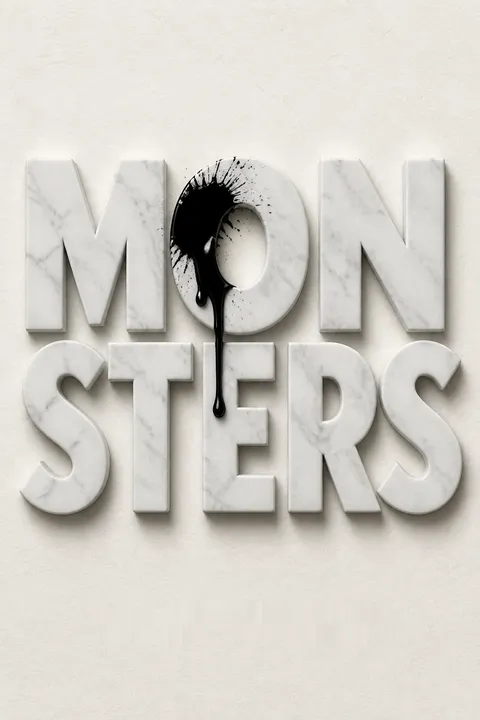
Monsters: A Fan's Dilemma is less a guide to consuming controversial art than an inquiry into what audiences are being asked to do. Dederer begins with a seemingly private puzzle: whether she can love Roman Polanski’s films while condemning his rape of a child. The question expands into criticism, celebrity culture, gender, historical memory, motherhood, recovery, and the institutions that control cultural attention. Its form is deliberately essayistic. Personal scenes are not decorative anecdotes; they demonstrate how biography enters aesthetic experience through memory, identification, and feeling.
The book’s most useful distinction is between describing a response and issuing a universal prescription. Knowledge of an artist’s conduct can alter how a work feels, but audiences do not receive that alteration uniformly. This view challenges criticism that disguises a historically situated perspective as objective authority. It also makes room for readers whose attachment to a work is connected to survival, identity, or community, rather than mere taste.
The argument’s political turn is equally important. If audiences are told to resolve institutional failures through individual purchases, responsibility is pushed down to people with little control over production, employment, or cultural prestige. The book therefore asks readers to look beyond the celebrity and the consumer toward systems that enable abuse and narrow whose work is visible. Its accounts of Ana Mendieta and artist-mothers make that redistribution of attention concrete.
A limitation follows from the book’s strength. Refusing a universal answer can leave readers unsure what to do when money, reputation, or safety is at stake. The answer is not to reinstate a rigid formula, but to distinguish the questions: What harm occurred? What does the work do? What is the audience’s relationship to it? Who profits, and who has power to change the conditions? Emotional honesty can sharpen those inquiries, but it cannot replace evidence, accountability, or collective action. The book ultimately treats contradiction not as a puzzle to solve, but as a condition that responsible audiences must learn to examine.
Review Summary
Monsters: A Fan's Dilemma explores the ethics of consuming art by problematic creators. Dederer's writing is thoughtful, nuanced, and personal, examining the dissonance between loving art and disliking the artist. While some readers found the book insightful and thought-provoking, others criticized its meandering structure and lack of concrete answers. The audiobook narration by Dederer herself was praised. The book's exploration of gender dynamics in art and creativity was particularly well-received. Overall, readers appreciated Dederer's refusal to provide easy solutions to complex moral questions.
People Also Read








Glossary
stain
biography coloring the workDederer’s term for the way knowledge of an artist’s conduct changes an audience’s experience of the artist’s work. The effect is not simply a chosen moral judgment: a song, film, or book may feel different once the audience knows more about its creator. The stain can reshape perception of earlier work as well as later work.
autobiography of the audience
the listener's story of receptionDederer’s description of an account centered on the audience rather than a catalogue of artists’ wrongdoing. It follows what happens in the ordinary places where people watch films, hear music, or read books, and examines how artistic pleasure interacts with moral knowledge, personal history, memory, and identity.
parasocial relationship
felt bond with a public figureA perceived personal connection between an audience member and a public figure who does not know that audience member personally. Dederer argues that celebrity coverage and social media can intensify this one-sided sense of intimacy. When fans build identity around an artist, new information about the artist can feel like a personal betrayal.
art monster
artist focused only on artA term Dederer takes up from Jenny Offill’s fiction for an artist who gives art priority over ordinary responsibilities and relationships. The idea can feel liberating, especially to women constrained by expectations of care. It also exposes the unequal arrangements that make such artistic self-absorption possible, including other people’s unpaid or overlooked labor.
genius
cultural status granting licenseDederer uses genius to mean more than outstanding ability. It is also a cultural status that can grant certain artists, especially men, unusual freedom from ordinary expectations. The ideal genius is imagined as both masterful and governed by creative forces beyond personal control, a combination that can make selfishness or harmful conduct seem necessary.
anti-monster
artist risking monstrous identificationDederer’s description of an artist who enters the perspective of a monstrous character without committing that character’s crimes. She uses the term for Vladimir Nabokov’s work in Lolita, arguing that the novel’s narration risks making author and predator seem alike in order to expose the victim’s erasure and the ordinariness of abuse.
FAQ
What's Monsters: A Fan's Dilemma about?
- Artistic Morality Exploration: The book examines the complex relationship between art and the moral failings of its creators, questioning whether it is possible to separate the art from the artist.
- Personal Narrative: Claire Dederer intertwines her personal experiences with broader cultural critiques, focusing on her struggles with enjoying works by artists like Roman Polanski and Woody Allen.
- Cultural Context: It situates discussions within contemporary movements like #MeToo, highlighting evolving societal attitudes toward artists and their misdeeds.
Why should I read Monsters: A Fan's Dilemma?
- Thought-Provoking Questions: The book challenges readers to reflect on morality, complicity, and the nature of genius in art consumption.
- Unique Perspective: Dederer offers a personal and relatable perspective, making philosophical discussions accessible and engaging.
- Cultural Relevance: It is timely and relevant, encouraging critical thinking about artistic choices in a socially aware world.
What are the key takeaways of Monsters: A Fan's Dilemma?
- Art and Morality: Appreciation of art is complicated by the artist's moral failings, a crucial understanding for modern audiences.
- Subjectivity in Criticism: Personal feelings and experiences are valid in art criticism, leading to deeper understanding.
- The "Stain" Concept: Knowledge of an artist's misdeeds can taint the enjoyment of their work, impacting their legacy.
What are the best quotes from Monsters: A Fan's Dilemma and what do they mean?
- “The heart wants what it wants.”: Reflects the tension between desire and morality when loving art by flawed individuals.
- “I wanted to write an autobiography of the audience.”: Highlights the importance of understanding the audience's perspective in art critique.
- “The stain is simply something that happens.”: Illustrates the unavoidable impact of an artist's actions on their work.
How does Claire Dederer define "monsters" in Monsters: A Fan's Dilemma?
- Artists with Moral Failings: "Monsters" are artists who have committed serious ethical violations, like sexual abuse or racism.
- Cultural Reflection: The term reflects societal issues, challenging readers to confront their idolization of flawed figures.
- Personal Connection: Dederer’s exploration is personal, adding complexity to her definition as she grapples with her feelings about admired artists.
How does Monsters: A Fan's Dilemma relate to the #MeToo movement?
- Cultural Context: The book is framed within the #MeToo movement, highlighting shifts in societal attitudes toward sexual misconduct.
- Accountability in Art: Raises questions about accountability for artists who have committed acts of violence or abuse.
- Personal Reflection: Dederer’s experiences with the #MeToo movement inform her narrative, adding depth to her analysis.
What is the significance of the "stain" metaphor in Monsters: A Fan's Dilemma?
- Impact of Knowledge: The "stain" metaphor shows how knowledge of an artist's misdeeds alters our perception of their work.
- Emotional Resonance: Captures the emotional turmoil of loving an artist's work while abhorring their actions.
- Cultural Commentary: Serves as a reminder that art engagement is both personal and societal.
How does Dederer address the concept of genius in Monsters: A Fan's Dilemma?
- Genius vs. Morality: Explores how genius often comes with moral exemption, challenging the notion that brilliance justifies unethical behavior.
- Cultural Constructs: Critiques cultural constructs that celebrate individuals despite their flaws, reflecting societal values.
- Personal Reflection: Dederer’s admiration for flawed artists adds depth to her exploration of genius.
What role does the audience play in Monsters: A Fan's Dilemma?
- Active Participants: Audiences are active participants in the cultural conversation surrounding art, not passive consumers.
- Moral Responsibility: Raises questions about the moral responsibility of audiences in consuming art by flawed individuals.
- Collective Experience: Highlights shared experiences and feelings that shape relationships with art.
How does Dederer’s personal narrative influence Monsters: A Fan's Dilemma?
- Intertwined Experiences: Dederer shares her struggles with motherhood, identity, and societal pressures, providing relatable context.
- Empathy and Understanding: Her vulnerabilities foster empathy for both herself and the artists she critiques.
- Cultural Critique: Her experiences serve as a microcosm of larger societal issues, enriching the book's exploration.
How does Monsters: A Fan's Dilemma challenge traditional views of artists?
- Reframing Genius: Challenges the notion that genius excuses personal failings, arguing many celebrated artists reflect ordinary human flaws.
- Critique of Idolization: Critiques the tendency to idolize artists without acknowledging their problematic behaviors.
- Humanizing the Monstrous: Invites readers to reconsider perceptions of morality and accountability by exploring the humanity of "monsters."
What is the significance of the title Monsters: A Fan's Dilemma?
- Duality of Fandom: Reflects the tension between admiration for artists and recognition of their flaws.
- Personal and Collective Implications: Suggests a broader societal challenge, encouraging reflection on fandom and accountability.
- Exploration of Monstrosity: Emphasizes the central theme of exploring what it means to be a monster in art and culture.
Download PDF
Download EPUB
.epub digital book format is ideal for reading ebooks on phones, tablets, and e-readers.








