

Key Takeaways
A knife can reopen the past, but it cannot own the whole life.
An old threat returned. On August 12, 2022, Salman Rushdie was attacked onstage at Chautauqua, where he had come to discuss safe places for writers. The assault reopened the shadow of the 1989 death order against him, even though his attacker had read only a little of his work. Rushdie lost sight in one eye, suffered severe injuries to his hand and internal organs, and came close to dying.
The story remained his. The attack briefly threatened to reduce a life of books, family, and chosen freedom to a single public identity: the man targeted for his writing. The memoir’s central struggle is not only to survive the knife, but to resist letting it become the author of everything that follows.
The distinction between surviving an event and being defined by it is especially sharp here. Public attention often compresses a complicated person into one legible episode, whether that episode is a crime, illness, or public controversy. Rushdie’s insistence on the rest of his life is not denial of injury; it is a refusal to let injury monopolize interpretation. That refusal has limits, since the body and public record cannot simply be reset. Its value lies in keeping those facts from becoming the only facts.
When violence breaks the frame, freezing is not a moral failure.
The rules vanished. Rushdie later wondered why he had not run or fought back. His explanation is that people carry an ordinary picture of what a place is for: a stage is for speaking, a school for learning, a shop for shopping. Sudden violence shatters that picture. In the seconds available, the mind may lose its sense of what action is possible, and fear can displace deliberate thought.
Self-blame misreads the moment. Rushdie stood facing the attacker and raised a hand, but afterward judged himself harshly for not doing more. Friends reminded him that he was seventy-five and unarmed. He does not claim to know exactly why he froze. Instead, he describes how violence can make reality itself feel incomprehensible, a useful alternative to treating a victim’s response as a character test.
This account shifts attention from courage as a personality trait to perception under extreme threat. The striking point is that action depends on a usable map of the situation, and violence can destroy that map before a person has time to reason. That does not make every response predictable, nor does it turn the memoir into a guide to what someone should do in an attack. It does caution against judging a victim by the calm standards of a safe, retrospective observer.
Survival depends on people willing to act before certainty arrives.
Strangers moved first. Some in the Chautauqua audience initially struggled to recognize the attack as real. Then Henry Reese, Rushdie’s fellow speaker, rushed the attacker, and audience members joined him to restrain the young man. A retired firefighter pressed on Rushdie’s neck wound until medical help could take over. Rushdie recalls the crowd as a heap of bodies, but understands that these people helped keep him alive.
Care continued under pressure. Surgeons at UPMC Hamot operated for about eight hours on injuries to his neck, eye, hand, liver, and abdomen. His wife, Eliza, and her family raced to the hospital, while staff treated him in a trauma unit. The rescue was not one heroic act but a chain: intervention, emergency care, surgery, and people refusing to leave.
The episode complicates the familiar lone-hero story. Help came from people with different roles and different kinds of competence, some trained and some simply unwilling to stand by. The memoir credits instinct, but also calls attention to character: Reese and the audience acted in keeping with the people they were. That account makes courage concrete without pretending it is easy to predict. It also reveals a practical truth: survival can depend on institutions and collective response, not just an individual’s will.
Treat recovery as a sequence of small freedoms, not one triumphant comeback.
Ordinary acts became milestones. After eighteen days at Hamot, Rushdie moved to a rehabilitation hospital in New York. He had to relearn how to sit, walk, shower, and manage daily tasks with one usable hand and one functioning eye. Leaving the hospital bed, walking a corridor, and caring for himself each restored a measure of independence. His body had survived, but its capacities had changed.
Progress stayed uneven. His severed hand tendons required months of painful therapy before he could make a fist, type, or hold a glass more reliably. The right eye could not be saved, and he adjusted to a reduced field of vision. The one-eyed cricket player Nawab of Pataudi became an example of adaptation, not a promise of cure. Recovery meant building a workable life around lasting damage.
This slow account resists the clean arc of injury, effort, and complete restoration. Rehabilitation is presented as regained agency in specific tasks, while some losses remain permanent and some outcomes uncertain. That distinction matters: encouragement becomes more credible when it does not require pretending that everything returns to its previous state. The memoir also shows how independence is relational. Therapists, nurses, and family members support the patient while he gradually takes more control of his own body.
Let private love shelter you without turning it into public performance.
A shared life came first. Rushdie met the poet, novelist, and photographer Eliza Griffiths in 2017. Their romance began after an awkward accident at a party, and they built a close life together, married in 2021, and kept their relationship largely off social media. Their privacy was not secrecy: family and friends knew them, and they lived an ordinary life in New York without making it a public exhibit.
The crisis tested both partners. Eliza rushed to the hospital after being told Rushdie might not survive, then stayed beside him while managing doctors, security, and plans for rehabilitation. She also carried her own fear and grief, which she initially hid to care for him. Rushdie sees love as an answer to hatred, but their story shows it as daily attention and mutual support, not a magic shield against pain.
The memoir’s defense of privacy is more subtle than a simple retreat from public life. The couple are open with people they trust while declining the idea that intimacy needs an audience to be real. Their crisis also reveals the hidden labor inside care: Eliza’s competence sustains Rushdie, while her own distress still requires attention. Love here is neither sentiment nor cure. It is a relationship that helps people endure what it cannot undo.
Do not mistake survival for proof that suffering made you stronger.
A cliché cannot explain trauma. Rushdie questions the comforting claim that catastrophe automatically improves the person who survives it. In the hospital, his immediate concern was staying alive and recovering enough to return to his life. He had nightmares, and both he and Eliza struggled with the psychological aftermath in different ways. A survival story, he insists, need not turn pain into a lesson or pretend that damage was worth its cost.
Take the next day seriously. Rushdie and Eliza adopted what he calls short-term-ism: judging what to do by how they felt now, rather than forcing a distant plan onto an uncertain future. Time, therapy, and writing helped the assault weigh less heavily, but none delivered perfect closure. Writing gave Rushdie a way to take possession of the event as material for his work, not a guarantee that writing itself would heal him.
This is a useful counterweight to narratives that demand transformation from every survivor. Meaning can be made from an experience without implying that the experience was necessary or beneficial. The day-by-day approach also fits the actual problem: after severe injury, the future is difficult to forecast, and small decisions may be more honest than grand resolutions. At the same time, a personal practice cannot substitute for skilled care. Rushdie’s account explicitly places therapy alongside time and creative work.
Defend art’s freedom to offend, and reject violence as its answer.
Art invites argument. Rushdie rejects the demand that art be protected from criticism, disagreement, or rejection. He argues instead that artists must be free to challenge orthodoxies, including religious and political ones, and that violence is not a legitimate response to a work. He recalls Naguib Mahfouz, the Egyptian novelist whose allegorical book about the origins of monotheistic religions was banned and whose defense of Rushdie preceded a knife attack on Mahfouz himself.
Ideas can outlast power. Rushdie points to writers such as Ovid, Osip Mandelstam, and Federico García Lorca, whose work endured beyond the rulers or regimes that harmed them. This is not a claim that a poem stops a blade. It is a claim that art preserves ways of seeing that coercive power tries to suppress, and that defending writers is part of defending the freedom to think and speak.
The distinction between protecting art from criticism and protecting artists from violence is essential. It makes room for vigorous disagreement without allowing the threat of physical harm to settle an argument. Rushdie’s historical examples support the endurance of art, though endurance should not be confused with immediate safety or justice. A writer’s work may survive a regime while the writer suffers greatly. The claim is strongest when cultural memory and practical protection are treated as complementary responsibilities.
Separate private faith from public power before belief becomes coercion.
The target is weaponized belief. Rushdie describes himself as an atheist, but distinguishes private religious faith from political movements that use religion to control other people. A person’s personal belief, in his view, is their own concern; once religious authority is used to restrict speech or rights, it becomes a public matter. He connects this concern to the history of church power in Europe, India’s secular founding after Partition, and political religious movements in the United States and elsewhere.
Criticism must remain possible. Rushdie argues that no belief system should be insulated from satire or disagreement in public life. His attack gives this conviction personal force, but he does not claim every religious person is violent or coercive. His concern is the conversion of faith into political authority that treats dissent as an offense. The distinction protects both individual freedom of belief and the freedom to question what institutions demand.
The private-public distinction helps avoid a false choice between respecting believers and scrutinizing institutions. It also clarifies why criticism of religiously framed policy is not automatically an attack on private devotion. The argument depends on attending to power: who can impose rules, whose speech is restricted, and what happens to dissenters. Its care is especially important because broad claims about religion can erase differences among traditions, institutions, and believers. Rushdie’s focus on coercion provides a narrower and more defensible target.
Ask who benefits when propaganda turns a real person into a demon.
The attacker knew an image. In a newspaper interview, Rushdie’s assailant said he disliked him as a person, despite having read only a couple of pages and watched some online videos. Rushdie found the stated motive thin, and could not know the attacker’s full inner life. Rather than claim certainty, he imagines conversations with him, exploring possible influences such as isolation, online preaching, and a worldview divided between believers and enemies.
Stories shape targets. Rushdie connects this imagined inquiry to a wider contest over reality: political actors and ideologues spread stories that make opponents seem evil, dangerous, or less than human. Writers can challenge those accounts by describing complexity and naming falsehoods. The memoir also recognizes the limits of that work. A better story cannot stop a knife by itself, and an imagined explanation of an attacker is not the same as verified knowledge of his motives.
This section is strongest where it separates explanation from excuse. Social isolation, online influence, and ideological certainty may help readers ask how violence becomes thinkable, but none removes the attacker’s responsibility. Rushdie’s imagined dialogue is openly a literary act, not a transcript or a clinical diagnosis. That honesty matters because a compelling invented portrait can otherwise be mistaken for evidence. The wider lesson is to notice how repeated descriptions of a person can displace the person’s actual complexity.
Return to the scene on your terms, then keep living beyond it.
The return changed the place. Thirteen months after the attack, Rushdie went back to Chautauqua with Eliza. He visited the jail where his attacker was held, then stood on the amphitheater stage where he had fallen. Reconstructing the event for Eliza brought painful memories, but the visit also made the scene less imaginary for her and allowed Rushdie to feel that a burden had lifted.
Closure was imperfect. He describes a sense of lightness and wholeness, not a return to the untroubled life of the night before the attack. Their happiness had been rebuilt, but it carried a shadow. Rushdie had once wanted to confront the attacker in court; by this point, the desire mattered less than his work and the people he loved. The visit did not erase the past. It helped him decide how much space the past would occupy.
The return works not as a universal prescription but as a choice made with support and preparation. The presence of Eliza matters: the visit is shared, and she can see the place she had previously known only through frightening reports. The resulting sense of closure remains provisional, since loss and memory persist. This makes the scene more credible than a tidy recovery ritual. Moving forward does not require declaring the wound finished; it requires having other places to go.
Analysis
Knife is structured as a movement from rupture toward a livable, if altered, future. The opening attack is not only a sequence of physical injuries. It disrupts Rushdie’s understanding of ordinary reality, revives a decades-old threat, and returns his public identity to a controversy he had tried to leave behind. The memoir then widens its focus: first to the people who save him, then to the intimate work of care, rehabilitation, and rebuilding a shared life, and finally to art, religion, political storytelling, and the meaning of freedom.
Its form is part of its argument. Rushdie moves through memory by association, connecting the knife to earlier books, films, myths, and personal histories. These connections do not produce a single explanation for the attack. Instead, they demonstrate how a writer makes experience intelligible without pretending to master it. The imagined conversations with the assailant are particularly revealing. Rushdie acknowledges that they are inventions, and that admission keeps speculation from masquerading as evidence while allowing him to examine the ideas that may have shaped his attacker.
The book also resists two familiar endings: that survival proves invulnerability, and that trauma must yield a redemptive lesson. Rushdie keeps permanent loss visible, especially his damaged eye, and treats recovery as partial, effortful, and relational. Love matters, but it does not cancel injury; art matters, but it cannot stop a weapon. The memoir’s most persuasive claim is therefore modest and demanding: a violent event can change a life without becoming the whole meaning of that life. Reclaiming authorship is not erasure. It is the continuing work of placing the event among other truths, including friendship, family, creative labor, and the freedom to disagree.
Review Summary
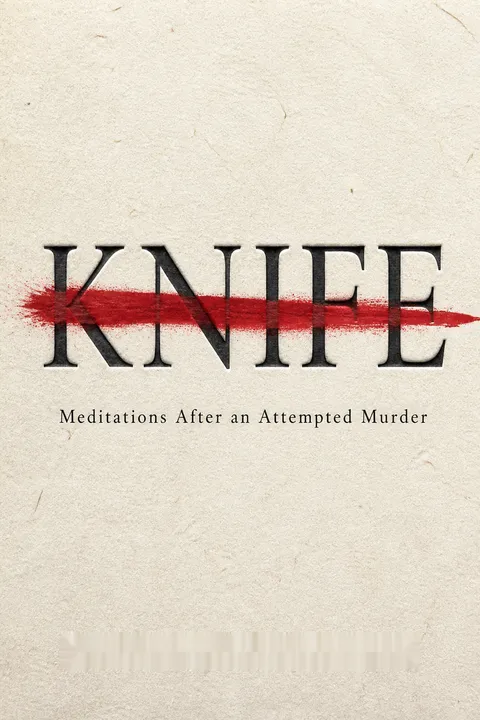
Knife by Salman Rushdie recounts the author's experience of surviving a near-fatal stabbing attack in 2022. Readers praise Rushdie's resilience, wit, and reflections on art, free speech, and religion. Many find the book moving and inspirational, appreciating Rushdie's openness about his recovery process. Some criticize portions as self-indulgent or tedious. Overall, reviewers commend the book's powerful message and Rushdie's ability to transform a traumatic event into a thoughtful meditation on life, literature, and survival.
People Also Read









Glossary
the A.
The assailant’s shorthandRushdie’s deliberately chosen label for the man who attacked him. It withholds the assailant’s name while allowing the memoir to discuss him directly. The letter carries several associations in the book, including attacker, assassin, and the assumptions he made about Rushdie. The label also limits the fame that naming the assailant might grant.
gumption
Creative initiative and spiritA term Rushdie draws from Robert Pirsig’s Zen and the Art of Motorcycle Maintenance. In the memoir, gumption describes the energy and initiative that arise when a person connects with what Pirsig calls Quality. Rushdie applies the idea to writing and self-reconstruction: creative work helped him recover a sense of direction after periods when he felt disconnected from himself.
night language
The logic of dreamsA phrase Rushdie attributes to James Joyce for the strange, associative language and logic of dreaming. Rushdie uses it while describing recurring violent nightmares after the attack. His dreams were not straightforward replays of the assault; instead, they transformed fear into images of pursuit, blindness, violence, and danger.
short-term-ism
Living by the present dayRushdie and Eliza’s name for a practical approach they adopted after the attack. Rather than make distant plans while the future felt uncertain, they asked how they were doing now and what seemed manageable that day. The term does not mean indifference to the future; it describes choosing near-term steps while recovery and emotional needs remain unsettled.
iatrogenic disorder
A condition caused by treatmentA medical term for illness or injury caused by medical care, including a medication’s unintended effects. Rushdie uses it after prescribed drugs contributed to urinary problems and, later, high blood pressure. The episodes show why medication effects need review and clear follow-up instructions, especially when a patient moves between hospital care and recovery at home.
FAQ
What's "Knife: Meditations After an Attempted Murder" about?
- Memoir of Survival: "Knife" is a memoir by Salman Rushdie that recounts his experience of surviving a brutal knife attack in 2022. It explores the physical and emotional aftermath of the incident.
- Themes of Violence and Recovery: The book delves into themes of violence, the randomness of such attacks, and the long road to recovery, both physically and mentally.
- Exploration of Identity: Rushdie reflects on his identity as a writer and public figure, and how the attack has affected his life and work.
- Philosophical Meditations: The book includes meditations on fate, the nature of evil, and the resilience of the human spirit in the face of adversity.
Why should I read "Knife: Meditations After an Attempted Murder"?
- Insight into Resilience: The book offers a profound insight into human resilience and the ability to overcome life-threatening challenges.
- Understanding of Public Life: It provides a unique perspective on the challenges of living a public life, especially when faced with threats and violence.
- Literary Reflection: Readers interested in literature will appreciate Rushdie's reflections on his work and the role of a writer in society.
- Philosophical Depth: The book's meditations on life, death, and the human condition offer deep philosophical insights.
What are the key takeaways of "Knife: Meditations After an Attempted Murder"?
- Survival and Recovery: The importance of resilience and the long, difficult journey of recovery after a traumatic event.
- Impact of Violence: An exploration of how violence can abruptly change one's life and the struggle to reclaim normalcy.
- Role of Art and Literature: Rushdie emphasizes the power of art and literature to challenge orthodoxy and provide solace.
- Personal and Public Identity: The book examines the intersection of personal identity and public persona, especially under the scrutiny of media and public opinion.
How does Salman Rushdie describe the attack in "Knife"?
- Detailed Account: Rushdie provides a detailed, moment-by-moment account of the attack, describing the assailant's approach and the subsequent violence.
- Emotional Impact: He shares the emotional turmoil and fear experienced during and after the attack, highlighting the psychological scars.
- Physical Consequences: The book details the physical injuries he sustained, including the loss of sight in one eye and damage to his hand.
- Reflection on Mortality: Rushdie reflects on the fragility of life and the suddenness with which it can be threatened.
What are the best quotes from "Knife: Meditations After an Attempted Murder" and what do they mean?
- "In death we are all yesterday’s people, trapped forever in the past tense." This quote reflects on the finality of death and the importance of living in the present.
- "Art is not a luxury. It stands at the essence of our humanity." Rushdie emphasizes the fundamental role of art in human life and its power to challenge and inspire.
- "The knife defines me. I’ll fight a battle against that, but I suspect I will lose." This quote captures Rushdie's struggle with being defined by the attack rather than his life's work.
- "Living was my victory." A powerful statement of resilience and the triumph of life over the threat of death.
How does "Knife" explore the theme of identity?
- Public vs. Private Self: Rushdie examines the tension between his public persona and private identity, especially after the attack.
- Impact of Trauma: The book explores how trauma can alter one's sense of self and the journey to reclaim one's identity.
- Cultural and Personal Identity: Rushdie reflects on his cultural heritage and personal beliefs, and how these have shaped his response to the attack.
- Literary Identity: He discusses the role of a writer and how his literary identity has been affected by the events.
What philosophical insights does Salman Rushdie offer in "Knife"?
- Nature of Evil: Rushdie contemplates the nature of evil and the motivations behind violent acts, questioning the existence of pure malice.
- Fate and Free Will: The book explores the concepts of fate and free will, particularly in the context of surviving a seemingly random attack.
- Resilience and Hope: Rushdie emphasizes the importance of resilience and maintaining hope in the face of adversity.
- Art and Humanity: He reflects on the role of art in understanding and expressing the human condition, and its power to transcend violence.
How does "Knife" address the concept of freedom of expression?
- Defense of Free Speech: Rushdie reaffirms his commitment to free speech and the importance of defending it against threats and violence.
- Art as Resistance: The book highlights the role of art and literature in challenging oppressive ideologies and promoting freedom.
- Personal Experience: Rushdie's personal experience with censorship and threats underscores the ongoing struggle for free expression.
- Global Perspective: He discusses the global challenges to free speech and the need for solidarity among writers and artists.
What role does love play in "Knife: Meditations After an Attempted Murder"?
- Support System: Love is portrayed as a crucial support system during Rushdie's recovery, providing strength and comfort.
- Romantic Love: Rushdie reflects on his relationship with his wife, Eliza, and how their love has helped him heal.
- Family and Friends: The love and support of family and friends are depicted as vital in overcoming the trauma of the attack.
- Love vs. Hate: The book contrasts the destructive power of hate with the healing power of love, emphasizing love's triumph.
How does Salman Rushdie view his future after the events in "Knife"?
- Optimism and Resilience: Despite the attack, Rushdie expresses optimism about his future and a determination to continue living fully.
- Focus on Writing: He remains committed to his work as a writer, viewing it as a way to reclaim his life and identity.
- Living in the Present: Rushdie emphasizes the importance of living in the present and appreciating each day as a gift.
- Acceptance of Change: He acknowledges the changes in his life and identity but is determined to move forward with strength and hope.
What is the significance of the title "Knife: Meditations After an Attempted Murder"?
- Symbol of Violence: The knife symbolizes the violence of the attack and the physical and emotional wounds it inflicted.
- Meditative Approach: The title suggests a reflective, meditative approach to understanding and processing the traumatic event.
- Focus on Recovery: It emphasizes the journey of recovery and the contemplation of life's fragility and resilience.
- Personal and Universal: The title reflects both Rushdie's personal experience and the broader themes of violence and survival.
How does "Knife" relate to Salman Rushdie's previous works?
- Continuation of Themes: The book continues themes present in Rushdie's previous works, such as identity, freedom, and resilience.
- Personal Reflection: Unlike his novels, "Knife" is a deeply personal reflection on a real-life event, offering insight into Rushdie's life and thoughts.
- Literary Style: The book maintains Rushdie's literary style, blending narrative with philosophical and meditative elements.
- Context of His Career: "Knife" provides context for understanding Rushdie's career and the impact of external events on his life and work.
About the Author
Download PDF
Download EPUB
.epub digital book format is ideal for reading ebooks on phones, tablets, and e-readers.








