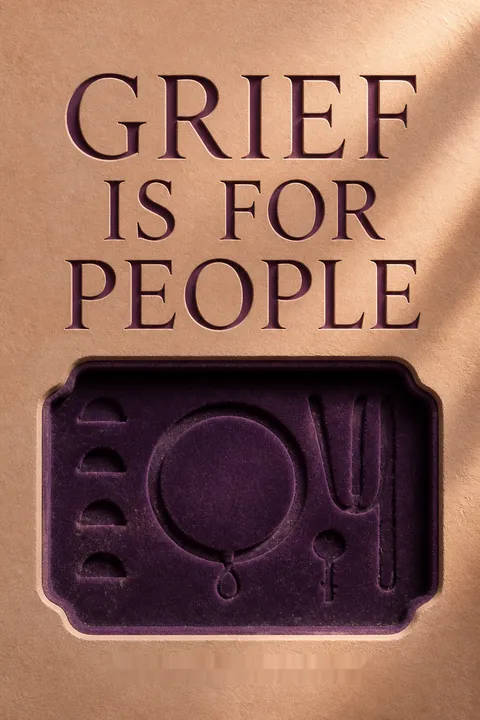


Key Takeaways
Grief can attach to a stolen ring and a dead friend at once
Two losses collide. In June 2019, a burglar enters Sloane Crosley’s apartment and takes jewelry, including pieces inherited from a cruel grandmother. A month later, her close friend Russell dies by suicide. The losses are different in scale and kind, yet they become entangled: the thief damages a cabinet Russell helped her find, and his absence changes what the missing jewelry means. What begins as a crime story becomes a memoir about trying to hold two absences in one mind.
No required lesson. Crosley resists the expectation that every loss must yield wisdom. She writes from inside confusion, where an ordinary object can carry family history, friendship, and the shock of violation. The book’s central claim is not that a ring equals a person. It is that grief does not obey a tidy ranking system.
The collision of losses shows how memory works through associations, not neat categories. A damaged cabinet can recall a friend as vividly as a photograph, while a missing heirloom can reopen questions about family inheritance and cruelty. This makes the book’s structure emotionally persuasive: the burglary is not a lesser prelude to the death, but one strand in the same lived experience. The distinction between material loss and human loss still matters, though. Recognizing the emotional life of objects need not imply that objects and people are interchangeable.
Treat denial as temporary shelter, not evidence of stupidity
A mind buys time. Crosley describes denial as a state that resembles foolishness from the outside. She knows the jewelry is gone and Russell is dead, yet her mind cannot fully absorb either fact. Writing the burglary in the present tense lets her approach what happened as if it might still be interrupted. She also finds the present moment more bearable than either replaying the past or guessing at the future.
No forced insight. The book rejects the demand that a newly bereaved person immediately find meaning, remember the good times, or turn pain into a lesson. Denial does not solve the loss, and Crosley does not present it as a virtue. It is one way the mind holds reality at a distance when the full weight of it cannot yet be carried.
This account is compatible with a broader view of coping as flexible rather than linear. People often move between confronting painful facts and temporarily turning attention elsewhere; neither response, by itself, proves failure or recovery. The present-focused writing also offers a practical boundary: attending to what is happening now can reduce the burden of inventing a future that cannot yet be known. That approach should not become a rule. Some people need facts, ritual, or conversation more than present-moment attention, and the book leaves room for such differences.
Let objects hold family history without redeeming their owners
Inheritance is complicated. The stolen jewelry came from Crosley’s grandmother, a woman who had abused her children. The pieces were valuable, but their emotional significance was not a simple tribute to a loving ancestor. Crosley had treated them as both inheritance and burden, even wondering whether they were cursed. Their theft reveals attachment she had not fully recognized, without making the grandmother kinder in retrospect.
Objects gather meaning. Russell loved flea-market finds and helped Crosley buy the Dutch cabinet where she kept her jewelry. The thief’s rough handling of the cabinet becomes part of the loss because it bears the trace of their shared life. In the book, objects are not magical substitutes for people. They are physical prompts through which relationships, memories, and family histories become easier to touch.
Objects can act as external memory: they give abstract relationships a visible, handleable form. That role can be especially powerful when family inheritance contains both connection and harm. Keeping an heirloom does not require endorsing the person who passed it down, just as discarding it does not erase the past. The book is strongest when it allows these contradictions to remain unresolved. Its emphasis on objects could be misread as sentimentality, but the narrative makes clear that meaning comes from human history, not from the material itself.
Let grief stay specific; comparison can turn comfort into a contest
Loss is not a leaderboard. After the burglary, acquaintances tell Crosley about stolen car radios, childhood homes, and missing dorm-room possessions. Their stories are meant to create solidarity, but she experiences them as attempts to minimize what happened. The violation matters, yet so do the particular pieces of jewelry and the family history attached to them.
Recognition can travel. At dinner with a friend’s parents, Crosley hears a woman describe a brooch stolen decades earlier. The woman eventually tracked down the thief in prison, not to demand punishment, but to learn what had happened to the piece. Her grief gives Crosley unexpected company. The connection works because the story is specific, not because the two losses are identical. Comfort begins with listening to what this loss means to this person.
Social support often fails when it moves too quickly from listening to comparison. A related experience can create recognition, but only if it does not become a claim that the listener now understands everything. The distinction resembles good clinical practice: validate the person’s account before offering interpretation or advice. There is also a limit to the book’s resistance to comparison. Shared experiences can help people feel less isolated, as the stolen-brooch story demonstrates. The task is not to avoid connection, but to let similarity open a conversation rather than close it.
Do not mistake a solvable mystery for grief’s actual cure
The search becomes a bargain. Crosley investigates the burglary by contacting pawnshops, reviewing security footage, and searching online listings. She buys back the tiger’s-eye ring from an eBay seller for $68, which gives her a return address but no clear route to the thief. Months later, she tracks the amber necklace to a Manhattan jewelry operation and persuades a dealer named Dimitri to return it.
Recovery is not reversal. The necklace’s return matters, but it cannot restore the jewelry’s original history or bring Russell back. Crosley recognizes that she had treated finding the necklace as a way to reverse time, as though one repaired absence could undo the others. The object comes home changed by what happened, and so does she. The investigation offers a concrete task in the middle of helplessness, not a cure for grief.
A mystery gives distress a target, a sequence, and a possible ending. That can be psychologically useful when loss feels limitless, because searching creates decisions that can be acted on. But action and control are not the same. The book carefully distinguishes recovering property from repairing the life around it, a distinction relevant to many forms of crisis response. The successful return of the necklace brings relief and a small measure of fairness, yet its emotional power depends on not pretending it settles the larger questions.
Let friendship count, even when grief’s official categories overlook it
A relationship without a label. Russell had been Crosley’s boss, mentor, friend, and something like family. Their bond crossed professional and personal boundaries, making it hard to describe in the standard categories used by support groups and advice books. Crosley finds spaces organized around the death of a spouse, parent, child, or sibling, but struggles to find one that recognizes the death of a close friend.
Support is not automatic. She briefly joins an online suicide-loss group and finds both genuine care and the risk of being absorbed by a shared atmosphere of suffering. The experience helps her see that a group can offer recognition without fitting every mourner. Friendship is not a lesser relationship because it lacks a formal title, shared household, or legal status. Its importance has to be judged by the life people actually shared.
Institutions often organize care around legible roles: spouse, parent, child. Those categories can guide services, but they can also make significant relationships harder to recognize. Friendship may involve daily reliance, mentorship, and a chosen sense of family without the paperwork that makes a bond visible to systems. The book’s account argues for broader recognition without suggesting that every mourner needs the same kind of group. Peer support can be powerful, but a person should be able to enter, leave, or seek another form of care without treating that choice as a failure.
Do not turn love into responsibility for another person’s unknowable choice
Hindsight searches for clues. After Russell’s suicide, Crosley replays a conversation in which his partner had urged him not to harm himself. She wonders whether she should have understood more, asked different questions, or acted differently. The question “Did you know?” can turn grief into an investigation of the survivor’s attentiveness, as if enough insight could have guaranteed a different ending.
Certainty is unavailable. Crosley does not claim to know exactly what Russell felt or why he died. She questions the idea that a person’s distress is always visible, or that friends can reliably distinguish ordinary unhappiness from imminent danger. Her account neither dismisses warning signs nor treats them as a puzzle with an obvious answer. It shows how love can produce guilt without proving responsibility.
After a death, hindsight makes earlier details look more predictive than they were. This cognitive bias can turn ambiguous remarks into a seemingly clear sequence, even when no one had access to the full picture at the time. The book’s refusal to offer a neat verdict is ethically important: survivors deserve compassion without being assigned impossible powers of prediction. At the same time, uncertainty should not discourage people from taking direct expressions of danger seriously or seeking professional help. Care can be urgent without implying that one friend controls another person’s outcome.
Remember the flawed person, not a purified story of the dead
Russell was more than his loss. He was a gifted book publicist who championed authors, mentored colleagues, collected antiques, and filled weekends in Connecticut with friends. Crosley also remembers his impatience, sharp jokes, and difficulty adapting as publishing changed. The industry’s media landscape narrowed, a major literary scandal put publicists under intense scrutiny, and changing workplace expectations made some of Russell’s behavior a liability. His professional world and his personal life both became more constricted.
Love does not require editing. Crosley’s mourning includes anger, admiration, jealousy, guilt, and tenderness. She does not turn Russell into a saint to justify loving him, nor reduce him to the worst parts of his conduct. The relationship mattered partly because of its imperfections, and telling the truth means keeping those contradictions visible.
This portrait resists a common memorial habit: converting a complicated person into a morally frictionless symbol. It also places individual conduct inside a changing institution without using institutional change to excuse harm. That balance matters. Organizations shape what behavior is rewarded or tolerated, while individuals remain accountable for how they treat colleagues. The memoir’s perspective is necessarily partial, especially around Russell’s private relationship and workplace conflicts. Acknowledging that limit strengthens the portrait: affection can testify to what someone meant without claiming to explain every part of who they were.
Shared catastrophe does not cancel the shape of private grief
A city becomes another loss. During the COVID-19 lockdown, New York empties out as businesses close, streets quiet, and fear settles into daily life. Crosley is already mourning Russell and the stolen jewelry. The pandemic adds collective danger to personal sorrow, while also making ordinary routines and public places feel unfamiliar. She imagines Russell in the city he loved and wonders how he would have responded to its transformation.
The losses overlap, not merge. The city’s emergency gives Crosley company in distress, but it does not replace her particular grief or make it easier to explain. She revisits Grand Central, fills an empty train with imagined acquaintances, and senses Russell beside her. A public crisis can change the setting in which grief is lived, without making each person’s experience interchangeable.
Collective crises make private suffering more visible, but visibility does not guarantee understanding. Shared disruption can create common language and mutual aid; it can also encourage people to compete over whose experience is most legitimate. The book captures both possibilities by linking the city’s stillness to Crosley’s mourning while preserving the specificity of each. This distinction is useful beyond pandemics: social context shapes what people can do, where they can go, and whom they can reach, but it cannot fully explain what a particular relationship meant.
Keep living without requiring grief to disappear first
An ending without closure. Years after the burglary, Crosley travels to a cliff near Sydney, carrying half of a gold chain snapped during the theft. She cannot make herself jump, and the trip does not reveal where Russell is or what he experienced. Later, she finds the chain’s other half tucked inside a copy of a book Russell loved. The fragments connect two moments, but they do not solve the loss.
The image points downward. Crosley reflects on Walter de Maria’s The Vertical Earth Kilometer, a brass rod driven deep into the ground with no matching object at the other end. The artwork becomes a model for grief that reaches into the unknown without receiving an answer. She chooses to live with questions and carry grief as part of her life, rather than wait for it to vanish.
The ending resists the idea that healing must mean detachment. In contemporary grief theory, continuing bonds describes how people maintain an inner relationship with someone who has died through memory, ritual, or objects. That can coexist with participation in life; remembrance need not be a refusal to accept reality. The book also avoids making one ritual universal. A chain, a locket, or a private conversation may matter to one mourner and mean little to another. The durable insight is permission to continue living while grief remains present.
Analysis
Grief Is for People is a memoir shaped by two losses that refuse to stay in separate compartments. The burglary provides a concrete mystery: a thief, missing jewelry, security footage, online listings, and eventually the return of an heirloom. Russell’s suicide offers no equivalent trail to follow. Crosley’s effort to recover the necklace therefore becomes both a real investigation and an emotionally understandable attempt to make at least one absence answerable.
The book’s distinctive subject is not simply grief for a person or attachment to possessions. It is the problem of how relationships become legible. Family heirlooms carry the history of relatives who were not necessarily lovable. A mentor becomes a friend and near-family without fitting an official category. A professional life supplies community, identity, and daily contact, even as the institution itself changes and makes old habits newly damaging. These ties cannot be summarized by a single role or moral judgment.
The narrative’s recurring objects give its ideas a physical structure. The cabinet links Russell to the burglary; the jewelry connects Crosley to family history; the split chain becomes a small, literal image of separation. Yet the book refuses the easy symbolism of an object that repairs everything. The necklace returns, but the past does not. The chain is reunited in the imagination, but no explanation arrives with it. Material recovery creates a moment of agency without pretending to restore what has been lost. The memoir is also careful about what survivors cannot know. It examines guilt, warning signs, and anger without claiming that hindsight can produce certainty. Its account of Russell remains partial, and that limitation is part of its honesty. The result is a book less interested in prescribing a route through grief than in showing how a person can keep living inside unresolved attachment. The title’s argument is not that grief belongs only to people. It is that grief is particular, embodied, sometimes inconvenient, and never obliged to become a lesson on schedule.
Review Summary
Grief Is for People is a raw and poignant memoir exploring the author's grief following her friend's suicide. Readers praise Crosley's honest, witty writing and her ability to capture the complexities of loss. The book intertwines the theft of her jewelry with her friend's death, creating a unique narrative structure. While some found it disjointed, most appreciated its emotional depth and humor. Crosley's portrayal of her friend and their relationship resonated with many, offering insights into grief's unpredictable nature. The book is seen as a worthy addition to grief literature.
People Also Read







Glossary
Object permanence
Absence does not mean nonexistenceA developmental concept describing the understanding that an object continues to exist when it is out of sight. Crosley uses the idea as a metaphor for grief and longing: a person or treasured object can remain vivid in the mind despite being physically absent. The book also explores the wish that what is lost might somehow return.
cumulative grief
Grief intensified by multiple lossesA term Crosley uses for the strain of experiencing several losses in close succession, especially losses of different kinds. In her account, the burglary and Russell’s death overlap, and the COVID-19 pandemic adds another layer of disruption. The losses do not become identical, but their accumulation changes how each one is felt.
The Vertical Earth Kilometer
A rod descending without a visible counterpartWalter de Maria’s public artwork in Kassel, Germany, consists of a brass rod extending nearly a kilometer into the earth, with only its small top visible at ground level. Crosley uses the installation as an image for grief and unanswered questions: something reaches deep below the surface, without an accessible explanation or a matching object above.
FAQ
What's "Grief Is for People" about?
- Exploration of Grief: "Grief Is for People" by Sloane Crosley is a memoir that delves into the author's personal experiences with grief following the burglary of her home and the suicide of her close friend, Russell.
- Stages of Grief: The book is structured around the stages of grief—denial, bargaining, anger, depression, and acceptance—providing a framework for Crosley's reflections and experiences.
- Interconnected Losses: Crosley explores how different types of loss, both personal and global, intersect and affect her life, offering a narrative that is both personal and universal.
- Search for Meaning: The memoir is also a quest for understanding and meaning in the face of profound loss, as Crosley navigates her emotions and memories.
Why should I read "Grief Is for People"?
- Relatable Exploration of Grief: The book offers a deeply personal and relatable exploration of grief, making it a valuable read for anyone who has experienced loss.
- Unique Narrative Style: Crosley's writing is known for its wit and humor, even when tackling heavy subjects, providing a unique and engaging reading experience.
- Insight into Human Emotions: The memoir provides insight into the complexities of human emotions and the process of healing, making it both thought-provoking and comforting.
- Cultural and Literary References: The book is rich with cultural and literary references, adding depth and context to Crosley's personal story.
What are the key takeaways of "Grief Is for People"?
- Grief is Complex: Grief is not a linear process and can manifest in various ways, often unexpectedly, as Crosley illustrates through her experiences.
- Interconnectedness of Loss: Personal losses are often intertwined with larger, global events, affecting how we process and understand our grief.
- Importance of Memory: Memories play a crucial role in the grieving process, serving as both a source of comfort and a reminder of what has been lost.
- Acceptance and Moving Forward: Ultimately, the book emphasizes the importance of acceptance and finding a way to move forward, even when answers are elusive.
How does Sloane Crosley structure "Grief Is for People"?
- Stages of Grief Framework: The book is structured around the five stages of grief—denial, bargaining, anger, depression, and acceptance—providing a clear framework for the narrative.
- Personal Narratives: Each section is filled with personal anecdotes and reflections that illustrate Crosley's journey through each stage.
- Interwoven Themes: Themes of memory, loss, and healing are interwoven throughout the book, creating a cohesive and engaging narrative.
- Nonlinear Storytelling: While the book follows the stages of grief, Crosley employs a nonlinear storytelling approach, reflecting the unpredictable nature of grief.
What are the best quotes from "Grief Is for People" and what do they mean?
- "A dark gift of delineation": This quote reflects the idea that loss can provide clarity and a new perspective on life, even as it brings pain.
- "Denial is humankind’s specialty": Crosley highlights the human tendency to avoid confronting difficult truths, particularly in the face of loss.
- "The miracle of life is not that we have it, it’s that most of us wake up every day and agree to fight for it": This quote underscores the resilience and determination required to continue living in the face of adversity.
- "We must learn to be on the side of the living": This emphasizes the importance of focusing on life and moving forward, even as we mourn those we have lost.
How does Sloane Crosley address the theme of denial in "Grief Is for People"?
- Initial Reaction to Loss: Crosley begins the book with her initial denial following the burglary and her friend's suicide, illustrating how denial serves as a protective mechanism.
- Denial as a Human Trait: She discusses denial as a uniquely human trait, highlighting how it can mimic stupidity but is an unavoidable part of the grieving process.
- Denial and Memory: Crosley explores how denial affects memory, often leading to selective recollection or avoidance of certain memories.
- Transition from Denial: The book shows Crosley's gradual transition from denial to acceptance, emphasizing the importance of confronting reality.
What role does memory play in "Grief Is for People"?
- Connection to the Past: Memory serves as a connection to the past, allowing Crosley to revisit moments with her friend and the objects lost in the burglary.
- Source of Comfort and Pain: Memories provide comfort but also highlight the absence of loved ones, creating a duality in the grieving process.
- Narrative Structure: Crosley uses memories to structure her narrative, weaving past experiences into her present journey through grief.
- Preservation of Identity: Memories help preserve the identity of those lost, keeping their presence alive in the minds of the living.
How does Sloane Crosley explore the concept of bargaining in "Grief Is for People"?
- Desire to Reverse Loss: Crosley illustrates bargaining through her desire to reverse the losses she has experienced, particularly in her quest to recover stolen items.
- Illogical Reasoning: The book highlights the illogical reasoning often present in bargaining, as Crosley attempts to negotiate with the past.
- Symbolic Actions: Crosley's actions, such as searching for her stolen jewelry, symbolize the bargaining stage, reflecting a refusal to accept reality.
- Transition to Acceptance: The narrative shows Crosley's eventual realization that bargaining cannot change the past, leading to a gradual acceptance of her losses.
How does "Grief Is for People" address the theme of anger?
- Anger at Injustice: Crosley expresses anger at the injustice of her losses, both personal and global, as she navigates the grieving process.
- Anger as a Motivator: The book illustrates how anger can serve as a motivator, driving Crosley to take action in her search for answers and resolution.
- Complex Emotions: Crosley explores the complexity of anger, acknowledging its role in grief while also recognizing its limitations.
- Resolution of Anger: The narrative shows Crosley's journey toward resolving her anger, emphasizing the importance of finding peace and moving forward.
How does Sloane Crosley depict depression in "Grief Is for People"?
- Overwhelming Sadness: Crosley describes the overwhelming sadness and hopelessness that accompany depression, particularly in the wake of her friend's suicide.
- Isolation and Loneliness: The book explores feelings of isolation and loneliness, as Crosley grapples with her grief in a world that continues to move forward.
- Impact on Daily Life: Depression affects Crosley's daily life, influencing her thoughts, actions, and interactions with others.
- Path to Healing: The narrative highlights the slow and challenging path to healing, as Crosley works to overcome her depression and find meaning in her experiences.
What is the significance of the title "Grief Is for People"?
- Universal Experience: The title emphasizes that grief is a universal human experience, affecting everyone at some point in their lives.
- Focus on Humanity: By focusing on people, the title underscores the book's exploration of human emotions and the complexities of the grieving process.
- Contrast with Objects: The title contrasts with the idea of grieving for objects, highlighting the deeper emotional impact of losing loved ones.
- Invitation to Empathy: The title invites readers to empathize with Crosley's experiences and reflect on their own encounters with grief.
What are the cultural and literary references in "Grief Is for People"?
- Stephen Sondheim's "Into the Woods": The book opens with a quote from Sondheim, setting the tone for the exploration of life's moments and their significance.
- Joan Didion's "The Year of Magical Thinking": Crosley references Didion's work, drawing parallels between their experiences of grief and loss.
- Classic Literature and Film: The memoir is rich with references to classic literature and film, reflecting Crosley's background in publishing and her love for storytelling.
- Philosophical and Poetic Insights: Crosley incorporates philosophical and poetic insights, adding depth and context to her reflections on grief and healing.

Download PDF
Download EPUB
.epub digital book format is ideal for reading ebooks on phones, tablets, and e-readers.








