

Key Takeaways
A death threat can turn a novelist into a symbol overnight
The first blackbird. On Valentine’s Day 1989, a BBC reporter told Rushdie that Iran’s Ayatollah Khomeini had called for his death over The Satanic Verses. Within hours, his home was besieged by journalists, police were planning his protection, and he was unable to see his son as usual. His private identity was rapidly replaced by a public caricature: “Rushdie,” the supposed enemy of a religion, rather than a novelist with a complicated life and a book to defend.
A label takes flight. The memoir’s blackbird image captures how one event can become a symbol only after crowds repeat and enlarge it. The fatwa was not a court sentence, but that distinction mattered less than the danger and the story spreading around him.
What’s striking is how quickly a political label can overtake a person’s biography. The transformation is not merely media shorthand; it changes what others believe is permissible to do to someone. Social identity can offer belonging, but a hostile public identity can also make an individual seem like a stand-in for an entire group or idea. The memoir’s blackbird image helps explain how a singular threat becomes a public narrative. It also cautions against treating the first incident as destiny: the story’s meaning is made by how institutions and audiences respond.
Treat inherited stories as shared tools, not untouchable property
A childhood of stories. Rushdie’s father retold tales from the Thousand and One Nights, the Panchatantra, and other traditions. The lesson was not that stories were factual, but that imaginative invention could reveal truths and that stories belonged to everyone who received them. His parents also raised their children in an atmosphere of skeptical inquiry, even discussing whether the Qur’an could be studied as a human text shaped by history.
A name with an argument. His father chose the family name Rushdie in admiration of Ibn Rushd, the philosopher known in the West as Averroës. For his son, the name came to represent reason, debate, and freedom from literalism. That inheritance helped him understand fiction as a way to question religious and political authority, not as an attack on every believer.
The memoir treats storytelling as both inheritance and permission: a tradition survives because people can reinterpret it, not because every version is frozen. That idea connects cultural memory to living practice. A story can belong to a community without being immune to criticism from inside or outside it. The argument is strongest when it protects the right to inquire; it is less persuasive if skepticism is treated as the only intellectually serious response to faith. The book’s own family history offers a useful distinction: respect for religious culture can coexist with disagreement about religious authority.
Use migration’s fractures to make a larger, truer art
The self in transit. After leaving Bombay for England, Rushdie felt he had lost three of the four roots that had once steadied him: place, community, and culture. He still had language, but he felt caught between worlds and unsure what kind of person he had become. He came to ask whether a migrant could be not simply rootless, but connected to more than one place.
Turning displacement into form. That question helped him write Midnight’s Children. He joined the intimate story of Saleem Sinai, born at the moment of Indian independence, to the nation’s public history. His earlier novels had failed to find a form; the breakthrough came when he drew on his own Bombay memories and let personal life and political history meet. The book’s success helped him reclaim a connection to India through art, even as his parents’ move to Karachi had left him bewildered.
The book makes migration more than a subject: it becomes a method of composition. A divided perspective lets the novel connect private memory to national events without pretending either is complete on its own. That approach can produce genuine insight, but it should not imply that displacement automatically enriches people. The memoir is candid that migration can also bring alienation, economic hardship, and loss. Its useful distinction is between celebrating rootlessness and building multiple attachments. Identity can be formed by origins and by the journey, without requiring a single, pure version of belonging.
Defend the actual book, not only abstract free speech
A novel becomes an accusation. Rushdie saw The Satanic Verses as a work of fiction about migration, transformation, and revelation. Opponents recast it as a direct insult to Islam, while headlines and public claims circulated before many people could read it. India banned the book before publication there, and in Bradford demonstrators burned a copy. He worried that defending only free expression, without discussing the novel itself, left the text and its author undefended.
Keep responsibility clear. His central distinction was that a reader may criticize or dislike a book, but violence against its author, translators, publishers, or booksellers is the responsibility of those who commit or threaten it. The book was not beyond criticism; it was being denied the ordinary possibility of being read and judged as a novel.
The distinction between defending a work and endorsing it is essential to pluralistic debate. A right to publish protects works that readers find offensive, trivial, or mistaken, not just works later judged important. The memoir’s insistence on defending the specific novel also matters because censorship often begins by replacing a complex text with a simplified allegation. At the same time, literary merit cannot be the price of free expression: if only respected art receives protection, the principle becomes a prize awarded by cultural gatekeepers. The strongest defense is procedural and specific: examine the work, argue about it, and reject coercion.
Accept help, but resist becoming a prisoner of protection
Safety had a cost. The British police provided armed protection, but at first they offered no safe house and expected him to find places to live. He moved repeatedly, hid from tradespeople, and could not freely visit his son. To protect his family and make daily life possible, friends lent homes, kept secrets, and arranged meetings. The Special Branch officers themselves often broke restrictive rules to help him see Zafar.
A name for hiding. In 1989 he chose “Joseph Anton,” combining the first names of Joseph Conrad and Anton Chekhov, as a pseudonym for himself and his protectors. The name made concealment practical, but it also marked a loss of ordinary identity. He understood that no protection could make life perfectly safe, and resisted letting security rules become the only description of what life could be.
This memoir shows protection as both care and control. A security system can reduce some dangers while creating dependence, isolation, and indignity. The officers’ practical kindness matters, but so does the difference between a frontline team trying to help and senior officials treating the protected person as a problem. The narrative also makes a hard point about risk: safety is not a switch that can be turned fully on. Yet the author’s ability to challenge restrictions depended on money, public visibility, and loyal friends. His resistance is compelling, but it is not a universal template for people facing threats.
Do not trade your convictions for the hope of approval
The wrong bargain. In December 1990, Rushdie met a group of Muslim leaders at London’s Paddington Green police station. They asked him to distance himself from passages in his novel, suspend paperback publication, and affirm the Muslim declaration of faith. He signed a revised statement and publicly described himself as a Muslim, hoping the gesture might help end the crisis. The Iranian leadership did not lift the fatwa, and the British Muslim leaders soon backed away from their agreement.
Approval is not control. Rushdie later called this his mistake. He had hoped that explaining himself and making concessions would make his critics see him as a good person. Instead, he felt he had betrayed his own beliefs without gaining safety or acceptance. He then publicly reasserted his irreligion and his defense of the book, a difficult reversal that began the work of reclaiming his voice.
The episode is a sharp study in how coercion can work without immediate force: the target is invited to perform the concession that will supposedly restore peace. The memoir’s insight is not that compromise is always wrong, but that concessions made to secure love or approval can fail when the other party controls the terms. Its retrospective judgment also deserves care. The choice was made under fear and concern for others, not in a calm seminar room. The more useful lesson is to distinguish a tactical compromise from a public renunciation of the beliefs and responsibilities one still intends to uphold.
Make room for ordinary life without pretending danger is gone
Risk is not certainty. The police warned that there was no such thing as absolute security. Their job was to reduce risk, not eliminate it. Yet their worst-case approach could make every outing seem unacceptable. Rushdie pushed to attend readings, visit friends, and spend time with Zafar, arguing that a life organized entirely around danger would become another kind of imprisonment.
Freedom in increments. He challenged restrictions on public appearances, and in 1995 gave a reading at Waterstone’s in Hampstead after a dispute with senior officers. The event drew a full audience but no demonstrators. A few years later, after the threat assessment was lowered, the police withdrew their protection. The memoir’s point is not that the threat vanished overnight, but that a person cannot wait for perfect certainty before reclaiming any part of life.
Risk management can become self-perpetuating: restrictions make ordinary life look dangerous, while prolonged confinement makes the outside world feel less familiar and more threatening. The memoir offers a valuable counterweight to the fantasy that safety requires eliminating every uncertainty. Still, the lesson must be bounded. A person with family responsibilities cannot treat risk as a purely individual choice, and this case involved professional protection, political attention, and substantial resources. The practical question is not whether to be fearless, but how to weigh real danger against the costs of surrendering all agency to the people who assess it.
Build coalitions that defend people, books, and dissent
No one fought alone. Friends such as Deborah Rogers, Bill Buford, and Jane Wellesley offered homes and practical help. Editors, publishers, writers, booksellers, and organizations including Article 19 defended the right to publish. Some publishers accepted threats and costs rather than withdraw The Satanic Verses. Their support mattered not as sentiment alone, but as a network that kept the author housed, connected to his son, and able to keep working.
Pressure can change policy. Public campaigns and allies abroad helped push governments to act. In 1998, British Foreign Secretary Robin Cook announced an agreement with Iran: the Iranian government would neither encourage nor permit action to kill Rushdie. The fatwa itself was not formally rescinded, and the security services remained cautious. Still, the agreement marked a significant shift after years of political evasion.
The memoir’s account of solidarity is unusually concrete: allies supplied rooms, legal help, publication, political access, and the simple confidence that someone would answer the phone. This resembles resilient infrastructure more than a chorus of supportive statements. The political settlement also shows the limits of coalition work. It reduced the government’s stated role in the threat without erasing the underlying decree or all danger. A successful campaign may therefore deliver a partial, measurable change rather than a clean moral victory. That is still meaningful, especially when sustained pressure keeps a person and a contested book in public life.
Own the harm you cause, even while resisting harm done to you
Victimhood did not explain everything. The fatwa disrupted Rushdie’s marriages, separated him from his son, and made ordinary family life difficult. But the memoir also records his own infidelity, his hurried marriage to Marianne Wiggins, and the pain his choices caused Elizabeth West and Clarissa. He does not present himself as blameless simply because he was targeted by political violence.
Parenthood kept its own claims. He had promised Zafar a children’s book, and while in hiding he wrote Haroun and the Sea of Stories. His son’s clear editorial note that the draft needed more “jump” helped him revise it. Later, Zafar’s childhood struggles, his mother’s cancer, and their father-son closeness became central concerns. The public crisis did not cancel private duties; it made them harder to fulfill.
The memoir is most trustworthy when it holds two truths together: the author is the target of an unjust threat, and he also makes choices that wound people he loves. That complexity resists the tidy roles of hero and villain. It also clarifies that courage in public life does not automatically confer virtue in intimate life. A useful readerly question is whether self-awareness changes behavior, not merely whether it produces a compelling confession. Here, the memoir gives evidence of regret and repair, but also leaves visible the limits of what regret can restore.
Keep writing as a return to life, not merely survival
Work restored his bearings. After years in which campaigning and security consumed his attention, Rushdie struggled to write. He eventually returned to fiction through memories of India and the work that became The Moor’s Last Sigh, then The Ground Beneath Her Feet. His prose repeatedly turns experiences into stories, but the books are not merely records of persecution; they are attempts to make new worlds, characters, and forms.
The door finally opened. On March 27, 2002, the police ended the round-the-clock protection that had shaped his life for more than thirteen years. At the Halcyon Hotel, he watched the officers leave, then stepped onto Holland Park Avenue and hailed a cab. The ending is modest by design: freedom begins not with certainty about the world, but with the ability to choose where to go next.
The final image matters because it measures freedom through an ordinary action rather than a grand declaration. The memoir’s artistic thread also complicates the idea of survival: writing is not simply therapy or evidence that the author endured. It is a demanding practice of attention that claims time and imagination back from politics. Yet no ending can erase the dead, the years lost, or the relationships damaged. The book offers something narrower and more credible than triumph: a return to work, family life, and movement, under conditions that are no longer wholly dictated by fear.
Analysis
Joseph Anton is a memoir about the collision between a writer’s inner life and the public machinery that turns a book into a political symbol. Its central tension is not simply liberty versus censorship. It is the gap between the freedom a person claims in principle and the practical freedom institutions allow: where he can sleep, whether he can see his child, which airline will carry him, and whether he may tell his own story without being recast as a villain.
The book’s structure reinforces that tension. It opens with the first threat as a single blackbird, then follows the multiplication of danger, rumor, and public identity. Its use of “Joseph Anton,” the protective pseudonym, makes the split between private person and public target literal. The narrative’s first-person distance is also revealing: by referring to himself as “he,” Rushdie can examine the person he was without pretending to possess a neutral view of him. The result is not a simple heroic arc. He admits that fear led him to make concessions he regretted, and that his own infidelity and indecision damaged the people he loved.
The memoir is strongest when it joins political argument to lived detail. A debate about freedom becomes a missed birthday, a hidden house, a frightened child, or a publisher deciding whether to print a paperback. These concrete costs prevent the defense of free expression from becoming abstract. The book also shows that institutions are not uniform: frontline officers sometimes bend rules to help, while senior officials restrict him; publishers sometimes stand firm, while others retreat; governments move only when pressure accumulates.
There is a tension in the memoir’s broad claims about religion. Its sharpest argument concerns coercive authorities and violent movements that demand immunity from criticism. At moments, however, its language about Islam risks blurring distinctions among believers, traditions, and political actors. The memoir’s own accounts of Muslim friends and defenders make that distinction essential. Its lasting insight is not that faith is inherently dangerous, but that no institution should control who may question its stories.
Review Summary
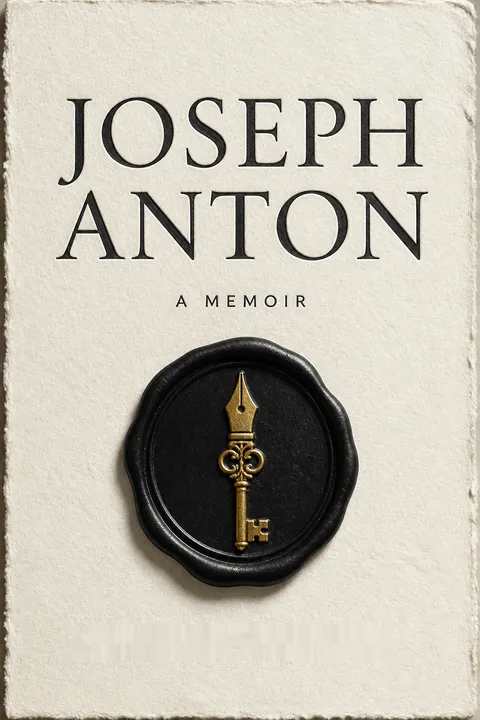
Joseph Anton is a memoir recounting Salman Rushdie's decade in hiding following the fatwa issued against him for The Satanic Verses. Reviews are mixed, with some praising Rushdie's candid account of his experiences and reflections on freedom of speech, while others criticize the book's length, perceived arrogance, and score-settling tone. Many readers found the third-person narrative style intriguing, though some felt it created emotional distance. The memoir provides insight into Rushdie's personal life, relationships, and the impact of living under constant threat.
People Also Read

Glossary
Operation Malachite
Rushdie’s police protection operationThe Metropolitan Police Special Branch codename for the protection operation created after the 1989 fatwa. It involved rotating protection officers, drivers, security assessments, and repeated changes of residence. The operation made it possible for Rushdie to survive and maintain some contact with family and friends, but it also placed restrictions on his movement and privacy.
Joseph Anton
Rushdie’s protective pseudonymThe name Rushdie chose when police protection required him to conceal his identity. He combined the first names of two writers he admired, Joseph Conrad and Anton Chekhov. The name was used by the protection team and in practical arrangements, but it also represented the split between the writer known to friends and the public figure targeted by the fatwa.
multiple rooted
Belonging across several placesRushdie’s response to the idea that migration leaves a person simply rootless. He asks whether a migrant can instead become attached to several places, communities, and cultures at once. The phrase describes identity as both origin and journey, rather than as a single, pure connection to one homeland.
the city visible but unseen
Ignored immigrant LondonRushdie’s description of immigrant communities that were plainly present in London but largely ignored in public discussion. His antiracist work in the Camden Committee for Community Relations introduced him to this city of deprivation and prejudice. The phrase captures a form of chosen blindness: people see a community’s streets and residents but avoid recognizing their conditions.
Actually Existing Islam
Islam as political practiceA critical phrase Rushdie uses for the political and institutional forms of Islam he sees operating in the world, especially when religious authorities support censorship, violence, or restrictions on dissent. It contrasts lived political practice with an idealized “true faith.” The phrase is his polemical formulation, not a neutral description of Islam or of Muslims generally.
the Rushdie Affair
The global controversy over his novelThe name commonly given to the international crisis following publication of The Satanic Verses and Khomeini’s 1989 fatwa. It encompasses book bans, demonstrations, threats, attacks on translators and publishers, police protection, and political negotiations. Rushdie repeatedly objects to the label when it reduces a literary and human-rights conflict to a personality scandal.
the fatwa
Khomeini’s death decreeIn the memoir, the term refers to Ayatollah Khomeini’s 1989 order calling for Rushdie’s death because of The Satanic Verses. Rushdie notes that a fatwa is not inherently a court sentence, although the public often used the word as if it meant a legal death sentence. The order was not formally rescinded, even after Iran later said it would not encourage or permit its implementation.
FAQ
What's Joseph Anton: A Memoir about?
- Personal Journey: The memoir details Salman Rushdie's life following the fatwa issued against him after publishing The Satanic Verses. It explores his experiences of living in hiding and the impact on his personal and professional life.
- Cultural Commentary: Rushdie reflects on the clash between freedom of expression and religious fundamentalism, examining identity, migration, and literature's role in society.
- Literary Exploration: The book serves as a meditation on storytelling and the power of words, illustrating how narratives shape our understanding of the world.
Why should I read Joseph Anton: A Memoir?
- Insightful Perspective: The memoir offers a unique insight into the life of a prominent author under extraordinary circumstances, highlighting the challenges faced by writers in oppressive environments.
- Richly Detailed: Rushdie's engaging and lyrical writing provides vivid descriptions and reflections on his life and the literary world, making the memoir compelling and thought-provoking.
- Cultural Relevance: Themes of censorship, identity, and artistic freedom resonate in today's global context, encouraging readers to reflect on defending free expression.
What are the key takeaways of Joseph Anton: A Memoir?
- Courage in Adversity: Rushdie emphasizes standing firm in one's beliefs despite threats and violence, serving as an inspiration for those facing challenges.
- The Power of Literature: The memoir illustrates literature's ability to provoke thought, challenge norms, and inspire change, highlighting writers' responsibility to engage with the world.
- Complexity of Identity: Rushdie explores identity's multifaceted nature, particularly in migration and cultural displacement, showing how personal and collective histories shape us.
What are the best quotes from Joseph Anton: A Memoir and what do they mean?
- “Man was the storytelling animal.”: This quote underscores the human need to tell stories to understand ourselves and our experiences, reflecting Rushdie's belief in narrative's transformative power.
- “To write a book is to make a Faustian contract in reverse.”: Rushdie suggests authors seek immortality through their work but often sacrifice personal lives, highlighting the tension between artistic ambition and well-being.
- “How fragile civilization is.”: This statement reflects Rushdie's awareness of the delicate balance between freedom and oppression, reminding us of the need to protect civil liberties.
How does Joseph Anton: A Memoir address the theme of censorship?
- Personal Experience: Rushdie recounts his experiences with censorship, particularly the fatwa, illustrating its impact on creativity and expression.
- Cultural Critique: The memoir critiques censorship's broader societal implications, especially regarding religious fundamentalism, arguing it stifles dialogue and understanding.
- Call to Action: Rushdie encourages defending free expression and resisting attempts to silence dissenting voices, emphasizing standing against censorship.
What impact did the fatwa have on Salman Rushdie's life?
- Life in Hiding: The fatwa forced Rushdie into hiding, drastically altering his daily life and relationships, with constant police protection and the reality of being a target.
- Psychological Toll: The threat of violence took a significant psychological toll, leading to feelings of isolation and fear, affecting his mental health and sense of self.
- Resilience and Growth: Despite challenges, Rushdie demonstrates resilience and growth, using his experiences to fuel his writing and advocacy for free expression.
How does Joseph Anton: A Memoir explore the concept of identity?
- Exploration of Self: Rushdie reflects on his identity as a writer, Muslim, and immigrant, examining how these aspects intersect and influence his work and experiences.
- Cultural Displacement: The memoir addresses cultural displacement challenges and the search for belonging, sharing struggles to reconcile Indian heritage with life in the West.
- Multiplicity of Identity: Rushdie highlights identity's complexity in a globalized world, advocating for embracing multiplicity rather than seeking a singular identity.
How does Joseph Anton: A Memoir depict the literary world?
- Literary Community: Rushdie portrays the support and solidarity from fellow writers during the crisis, emphasizing community importance in adversity.
- Critique of the Industry: The memoir critiques the publishing industry's response to controversy, reflecting on pressures faced by publishers and commercial interests' impact on artistic integrity.
- Celebration of Literature: Despite challenges, Rushdie celebrates literature's power to provoke thought and inspire change, sharing anecdotes about literary friendships and storytelling joy.
What role does family play in Joseph Anton: A Memoir?
- Support System: Rushdie's family, especially his sons, provide emotional support throughout his ordeal, highlighting family bonds' importance in crisis.
- Strained Relationships: The fatwa strained relationships, particularly with his ex-wife, revealing challenges of maintaining connections under extreme stress.
- Legacy and Responsibility: Rushdie expresses a desire to create a better future for his children, emphasizing responsibility as a father to instill resilience and courage.
How does Joseph Anton: A Memoir reflect on the nature of courage?
- Courage in the Face of Fear: The memoir illustrates the courage required to confront threats to life and freedom, showcasing Rushdie's determination to continue writing and speaking out.
- Solidarity as Courage: Support from fellow writers and intellectuals is portrayed as courageous, emphasizing standing together against oppression.
- Personal Acts of Defiance: Rushdie recounts personal acts of defiance, such as public readings, demonstrating courage in both public and private forms.
What is the significance of the title Joseph Anton?
- Pseudonym Choice: Rushdie adopted "Joseph Anton" to protect his identity during the fatwa, combining names of literary heroes Joseph Conrad and Anton Chekhov.
- Symbol of Transformation: The title represents Rushdie's transformation from a public figure to a man living in hiding, reflecting his dual existence during this period.
- Exploration of Identity: By choosing a pseudonym, Rushdie explores identity's fluidity and how individuals adapt to circumstances, raising questions about self and masks we wear.
How does Joseph Anton: A Memoir depict the relationship between art and politics?
- Art as Resistance: Rushdie illustrates art as resistance against oppressive regimes, using his writing to challenge the status quo and advocate for freedom.
- Political Consequences: The memoir discusses political ramifications of his work, particularly The Satanic Verses, and literature's power to provoke reactions from those in power.
- Solidarity Among Artists: Rushdie highlights solidarity among artists and intellectuals against political oppression, showcasing collective efforts to defend artistic freedom.
About the Author
Download PDF
Download EPUB
.epub digital book format is ideal for reading ebooks on phones, tablets, and e-readers.








