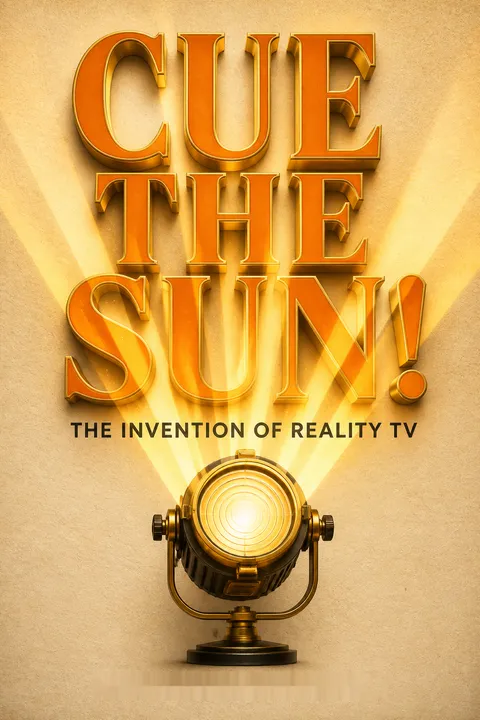


Key Takeaways
Reality TV turns documentary raw material into repeatable commercial story machinery
A hybrid, not a genre of truth. Emily Nussbaum calls reality television “dirty documentary”: documentary techniques mixed with a durable format, such as a game, soap opera, or talent contest. Real people are placed inside a tight structure, where their lives can be filmed, shaped, and sold. The result is neither straightforward documentary nor scripted fiction. It borrows the credibility of the first and the reliable plot engine of the second.
The recipe is old. The book traces the form to postwar radio and television, not the internet age. Its makers discovered that ordinary people could be compelling when put under pressure, even as critics dismissed the programs as cheap imitations or passing fads. The format kept returning because it gave audiences spontaneity, and networks a flexible way to package it.
The hybrid definition helps explain why debates about whether a show is real or fake often go nowhere. Reality television can preserve genuine reactions while arranging the circumstances that produce them. That resembles a laboratory experiment more than an untouched window: the setup is designed, but the response is not fully predictable. The key question is therefore not whether a moment is authentic, but who created the conditions, controls the footage, and benefits from the resulting story.
Follow the money: amateur confession undercut expensive scripted radio
Ordinary voices were cheaper. In the 1940s, radio programs invited listeners to share personal problems, compete for prizes, and take humiliating dares. Their popularity alarmed critics, who heard vulgarity and exploitation. But the business logic was plain: scripted programs required writers, actors, and costly production; participation shows could be made with a host, volunteers, and sponsors. One early advice program, John J. Anthony’s Good Will Hour, reached more than 700 stations by 1939.
Exposure had a double edge. Queen for a Day turned women’s hardship into a contest. Four contestants described their troubles, and an applause meter helped choose a winner who received a robe, a throne, and a pile of sponsored goods. The spectacle exploited distress, yet it also let working-class women speak publicly about lives television usually ignored.
The format’s commercial advantage is also a labor story: reducing the need for professional performers shifts both costs and risk onto participants. Yet calling these shows only strikebreaking misses what their economics made possible. They created a public space for voices excluded from polished entertainment, including women discussing poverty and family strain. The useful distinction is between access to the microphone and power over the microphone. Participants could speak, but producers and sponsors still decided how their speech became a product.
Give the prank a reveal, or humiliation has no exit
Funt added a third act. Allen Funt’s Candid Microphone, later Candid Camera, began with hidden recordings and situations designed to unsettle strangers. He learned that observation alone was dull: people revealed more when their routine was disrupted. The show’s later structure added a reveal, when Funt told the unsuspecting person they had been filmed. That turn could transform a target into a participant, giving them a chance to laugh, object, or refuse.
The release did not erase the intrusion. The reveal also reassured viewers that the prank had an acceptable ending. But Funt’s crew often recorded first and sought permission afterward, sometimes pressing people to sign releases. A person’s eventual amusement could make the scene feel communal without making the original deception consensual.
The reveal works like a miniature renegotiation of power: the filmed person learns the rules and gets a chance to respond. That makes it a meaningful design feature, not just a punchline. But consent after the fact is not equivalent to consent before the event, especially when the person has already been embarrassed in public. The distinction matters beyond television. An apology, a disclosure, or a comic ending may repair a relationship, but none automatically cancels the conditions that made the harm possible.
A camera doesn't simply witness a family; it changes who owns its story
The Louds became the story. In 1971, documentary producer Craig Gilbert filmed the affluent Loud family for seven months. The project captured the breakdown of Pat and Bill Loud’s marriage, including Pat’s decision to ask Bill to leave. The family had expected a brief social experiment; instead, their private tensions became a national event, and critics treated them as evidence about American life. Promotion and commentary often encouraged viewers to judge the family rather than examine the program’s choices.
Visibility brought both harm and recognition. Lance Loud, a gay young man, became a rare public figure whose style and relationship with his mother mattered to viewers. Pat’s candor about marriage and women’s lives also resonated. The same cameras that exposed them gave them a platform, but they did not control how the footage was edited, marketed, or interpreted.
The Louds’ experience makes the observer effect feel intimate: a camera does not merely change how people behave, it changes the audience and institutions that surround them. Once a family becomes public material, the edit can outweigh the subjects’ own explanations. Still, treating all exposure as damage would miss the value of recognition, especially for people rarely represented. The ethical problem is not visibility itself. It is the unequal ability to shape the meaning, distribution, and afterlife of what becomes visible.
Create a contained world, then real people generate the unscripted plot
The Real World tested the boundary. MTV’s 1992 series placed seven young artists in a New York loft and filmed their interactions. When the cast’s lives seemed too quiet, creators Mary-Ellis Bunim and Jon Murray planted a photo book that exposed model Eric Nies’s nude work. The cast objected, and production paused while the crew argued over whether prompting events violated the show’s premise. MTV executive Lauren Corrao ultimately backed the cast’s demand for clearer limits.
The setup itself was already artificial. Strangers lived together in a designed space, with microphones, cameras, interviews, and producers tracking their lives. Editors then shaped footage into stories. The format’s lasting tools included the direct-to-camera interview and, later, the confessional, a private-looking space where cast members spoke to the lens about what was happening.
The show reveals a productive middle ground between pure observation and scripted drama. A designed environment can create conditions for real relationships without dictating every outcome. But the difference between a useful prompt and an exploitative trap depends on transparency and the participants’ ability to say no. The crew’s disagreement was not a technical quibble. It exposed the central ethical question of social experimentation: how much can a researcher or producer intervene before the people being observed become instruments of the project?
Survivor's rules made strategic behavior itself the season's drama
The game supplied the plot. British producer Charlie Parsons developed the island competition that Mark Burnett brought to American television as Survivor. In Borneo, sixteen strangers faced challenges, formed tribes, voted one another out, and competed for a million-dollar prize. Immunity contests and Tribal Council created clear stakes, while scarcity and isolation added pressure. The rules encouraged alliances, betrayal, and argument without requiring a written script.
This was situationalism. The term describes building an artificial, self-contained setting whose constraints produce unpredictable human behavior. Survivor’s first season grew into a drama about whether alliances were fair and what counted as deserving a win. The finale drew 57.3 million viewers. Its production was also physically harsh, with hungry cast and crew working in dangerous, difficult conditions.
Survivor’s formal innovation is that it makes procedure generate character. A vote is simultaneously a game move, a social judgment, and a public performance. This resembles institutional settings where rules shape behavior more powerfully than stated intentions, such as workplaces or courts. Yet the game’s apparent autonomy can conceal producer influence: producers control the rules, rewards, and edit, and allegations that Burnett nudged an early vote show that the system was not as neutral as it appeared.
Editing can manufacture motives from footage that never showed them
Postproduction can rewrite events. The Bachelor wrapped competition in a glossy romance, isolating contestants from ordinary routines while producers encouraged emotional disclosure. On its first season, a contestant’s panic after elimination was edited into a portrait of neediness. Joe Millionaire pushed the method further: editors combined unrelated audio from Sarah Kozer’s earlier massage to imply a sexual encounter with bachelor Evan Marriott in the woods.
A Frankenbite makes a new sentence. This specialized edit joins fragments of different speech to create dialogue the speaker did not deliver as one statement. Reality editors learned to build motives, reactions, and character arcs from scattered footage. Such choices can make an episode easier to follow and more entertaining, but viewers may mistake narrative clarity for evidence that the depicted event happened as shown.
Editing is not a neutral finishing step; it is a form of authorship with unusual power because the subjects may never see the discarded material. The book’s examples show how visual continuity and sound can persuade viewers to infer a motive or event that the footage does not establish. That is an epistemic problem, not merely a matter of taste. A useful standard is to ask whether an edit compresses a real pattern or invents a consequential fact, especially when the subject bears the reputational cost.
Once the audience entered the feed, contestants performed for a crowd
Big Brother made watching continuous. The Dutch version put strangers in a camera-filled house and streamed their lives online around the clock, alongside edited television episodes. Viewers could follow events as they unfolded, then vote to evict contestants. In the first American season, audiences removed several of the most disruptive participants, leaving a house dominated by cautious niceness. Producers changed the voting rules for season two, and Will Kirby learned to work with the production, using the Diary Room to build his on-screen character.
The camera became a feedback loop. Contestants could no longer assume that only the edited episode mattered. They were watched by television audiences, online viewers, and producers who watched them watching themselves. The format anticipated a culture where public visibility is constant, and where people adjust their behavior to the expectation of being seen.
Continuous surveillance changes the object being observed. A contestant responds not only to housemates but to an imagined audience, while that audience’s choices alter the environment. This is a feedback system, closer to social media than to traditional documentary. It can make spectators feel unusually involved, but involvement is not the same as accountability: viewers can shape a person’s public fate without knowing the full context or bearing the consequences. The format’s novelty lies as much in this relationship as in its cameras.
Visibility can widen representation while leaving control in producers' hands
Reality television opened doors. Queen for a Day put working-class women’s hardship at the center of television. The Real World brought gay people and racial conflict into young viewers’ homes, and Pedro Zamora’s season made a Cuban American gay man living with AIDS a nationally known figure. Queer Eye for the Straight Guy later made gay men’s expertise and style its central attraction. These programs gave audiences images and stories that mainstream scripted television often lacked.
Representation still had a market shape. Producers cast people into recognizable types, and networks chose which parts of identity became the story. Bravo’s polished lifestyle shows made reality television feel upscale and ironic, while The Real Housewives and the Kardashian series turned wealth, femininity, and self-presentation into ongoing spectacle. More visibility did not automatically mean more control for the people on screen.
Representation is not simply a count of who appears. It also concerns who gets complexity, who is reduced to a type, and who can profit from the image. Reality TV can make a person familiar before scripted entertainment is willing to do so, which has genuine cultural force. Yet the format’s commercial incentives favor legible identities and easily repeated conflict. The strongest reading holds both truths: visibility can expand social recognition, while the machinery that distributes it can still reproduce hierarchy.
Reality television's low cost depended on workers absorbing the risk
The bargain reached behind the camera. Reality production created new jobs, including field producers, story editors, and preditors, workers who both produced and edited material. Many worked long hours without union protection, benefits, or clear job boundaries. Stunts injured participants, and harassment or unsafe conditions could be treated as part of the grind. The genre’s ability to produce large amounts of television cheaply often depended on crews accepting conditions that scripted workers were more likely to challenge.
Organizing proved difficult. Writers Guild leaders and reality workers tried to organize the field, citing unpaid overtime, low pay, and unsafe practices. Workers on America’s Next Top Model were fired during an early strike effort, and the WGA later dropped reality-worker protections from its negotiating demands. Some postproduction teams eventually unionized, but most reality jobs remained precarious.
The book’s production history complicates the familiar claim that reality television is cheap because it uses no writers. The labor has not disappeared; it has been renamed, redistributed, and often made less visible. This is a classic cost externality: savings for networks can become instability for workers and risks for participants. A genre should be assessed not only by what appears on screen but by its labor arrangements. Creative innovation and exploitative employment can coexist, and neither cancels the other.
The Apprentice sold Trump's television character as evidence of real competence
A role became a reputation. The Apprentice presented Donald Trump as a decisive business authority, staging tasks, boardroom confrontations, and dramatic firings around his brand. Producers knew they were building television, but many viewers and contestants treated the persona as proof of business skill. Product placement also turned Trump’s own properties and products into part of the show’s world. The series gave a financially troubled public figure a polished stage on which to perform success.
The consequences exceeded entertainment. Trump’s television celebrity helped establish a political identity, but the book does not treat the show as the sole cause of his election. Producers, broadcasters, news outlets, and political institutions all shaped his public rise. The Apprentice demonstrates how entertainment can lend authority to performance when audiences encounter a character repeatedly, in a format that presents judgment and competence as visible facts.
The show’s political significance lies in a transfer of credibility: a confident television performance can be mistaken for evidence of the underlying ability it depicts. This is not unique to reality TV, but the genre intensifies the effect by presenting constructed behavior as access to the person behind the brand. The case also resists a simple blame story. A program can help build a persona without controlling every audience interpretation or political outcome. The sharper question is how institutions convert spectacle into authority.
Analysis
Cue the Sun! is a history of television, but its deeper subject is the unstable boundary between observing people and producing them. Its chronology shows that reality television did not arrive with smartphones or social media. Postwar radio already discovered the commercial and dramatic value of ordinary people speaking without scripts. Across decades, creators refined the same problem: how to make unscripted behavior legible, repeatable, and profitable without making it look manufactured.
The book’s strongest contribution is its refusal to settle for either the defense that reality TV is authentic or the dismissal that it is fake. The genre engineers circumstances, then captures responses that can exceed the plan. That combination explains its power and its ethical difficulty. A participant’s emotion may be real even when the situation is designed, the edit selective, and the public meaning imposed afterward. The central unit of analysis is therefore not a supposedly pure moment, but the whole chain: casting, setting, production, editing, marketing, and audience response.
The history also links formal innovation to economic pressure. Audience-participation shows offered a cheaper alternative to unionized scripted radio. Later, low-cost formats flourished during strikes and schedule crises. This makes reality TV both an art form and an industrial strategy. Its new camera techniques, confessionals, fast edits, and competition structures changed television, while its labor force often worked without protections. Cultural influence and workplace exploitation are not contradictory findings; they are intertwined features of the same system.
The book is especially persuasive when it treats subjects as neither helpless victims nor fully empowered collaborators. Some participants used the camera to make themselves visible or build careers. Others were misrepresented, traumatized, or left without control over footage that shaped their reputations. Consent matters, but so do bargaining power, contractual rights, editing access, and the ability to leave without forfeiting livelihood or dignity.
The Trump story is the sharpest demonstration of the stakes. A television character can become a public credential, particularly when repeated exposure makes performance feel like evidence. Yet the account rightly resists blaming one genre for a complex political outcome. Its broader warning is more useful: in a media culture fluent in spectacle, viewers and institutions need to distinguish a compelling portrayal from a verified capacity.
Review Summary
Cue the Sun! is a comprehensive history of reality TV, tracing its origins from 1940s radio to modern shows. Reviewers praise Nussbaum's thorough research, engaging writing style, and insightful analysis of the genre's cultural impact. Many found the book fascinating, even those not typically interested in reality TV. Some critiqued its length and occasional political commentary. Overall, readers appreciated the book's exploration of reality TV's influence on society, media, and politics, though some wished for more coverage of recent shows or cultural analysis.
People Also Read






Glossary
dirty documentary
documentary inside commercial formatsEmily Nussbaum’s description of reality television as documentary-style filming combined with commercial structures such as games, competitions, talent contests, or serialized personal drama. Real people provide unpredictable behavior, while the format supplies repeatable stakes and a path through the story. The term emphasizes that reality TV is neither unshaped documentary nor scripted fiction.
the reveal
the prank's disclosureA structural turn developed on Candid Camera in which the prankster tells an unsuspecting participant that hidden cameras recorded the encounter. The reveal can let the person react to the deception, reclaim some agency, and join the joke. It also reassures viewers, although disclosure after filming does not undo the initial lack of consent.
situationalism
plot generated by constraintsA production approach in which makers construct a bounded situation, such as an isolated island, a shared house, or a competition, then allow its rules and pressures to generate behavior and story. The structure is artificial, but participants’ reactions are not fully scripted. Survivor became the clearest example because its challenges and elimination rules generated alliances and conflict.
confessional
private-looking direct-to-camera interviewA dedicated space where reality cast members speak directly to a camera about events, feelings, or strategy. The room is presented as private, even though it is part of a production designed for public viewing. The device helps editors clarify a story and gives participants a way to narrate their own experience, while also shaping what they say.
Frankenbite
dialogue assembled from fragmentsAn edit that joins separate pieces of recorded speech to create a new sentence or a smoother response. Reality editors use the technique to make dialogue clearer or stories more coherent, but it can change what a person appears to have said or meant. The term highlights how postproduction can move from compression into misrepresentation.
zhuzh
glamorous reality-show polishLisa Levenson’s term for the glossy, aspirational styling that helped distinguish The Bachelor: candles, luxurious settings, elaborate dates, spa treatments, and romantic spectacle. The look made a dating competition feel like a premium fantasy rather than a casual game show. It was also a commercialized form of wish fulfillment, where romance and consumer luxury reinforced one another.
invitational show
production filmed with police accessJohn Langley’s description of Cops as a program made with police departments’ permission and cooperation. That access enabled camera crews to ride along and film arrests, but departments could influence what was shown, and people encountering police could feel pressure to consent to filming. The term names a practical arrangement with major ethical and editorial consequences.
product integration
brands built into program contentA form of sponsorship in which a product or company is woven into a show’s tasks, dialogue, setting, or story rather than appearing only in a separate commercial. On The Apprentice, contestants completed challenges involving named brands and Trump properties. The method can fund production, but it also turns editorial decisions into advertising obligations.
emotainment
emotion-driven television entertainmentA term used by Dutch producer John de Mol for programming that turns heightened emotion into entertainment. It captures formats built around confession, surprise, romance, conflict, or personal revelation, rather than relying only on conventional scripted plots. The term reflects an industry effort to describe reality television in a way that sounded more polished and less stigmatized.
Download PDF
Download EPUB
.epub digital book format is ideal for reading ebooks on phones, tablets, and e-readers.








