

Key Takeaways
QAnon spread by soothing needs that fact-checks cannot reach.
Belief has a function. Matt did not begin as a committed conspiracy theorist. A polished video offered him a story that joined familiar concerns about corruption to a secret struggle with a hopeful ending. QAnon’s more extreme claims came later. Across the families, the beliefs offered something emotionally useful: purpose, belonging, reassurance, or an explanation for pain. By late 2023, a quarter of Americans agreed that satan-worshipping pedophiles controlled government and media, according to polling cited in the book.
Facts still matter. The point is not that evidence is irrelevant, but that evidence alone may not address why a person wants to believe. When a claim provides comfort or identity, a correction can feel like an attack on the person, not just the idea.
What's striking is the shift from asking whether a belief is irrational to asking what job it performs. That question resembles functional approaches in psychology, which study how a behavior meets a need before trying to change it. It can make relatives less contemptuous and more effective. Yet understanding a belief's emotional usefulness must not excuse its consequences. False claims can endanger health, stigmatize groups, and rupture families. Compassion explains the pathway into belief; it does not make the belief harmless.
Notice when isolation and powerlessness make a total explanation feel like rescue.
Vulnerability has a context. Emily was alone after her children left home and her husband died. Matt spent years immobilized by unexplained pain, losing parts of his family role and sense of self. Doris's cancer misdiagnosis damaged her trust in medicine, while retirement and limited mobility narrowed her world. Alice encountered QAnon amid pandemic fear and uncertainty. Kendra's distrust grew from poverty, racism, and repeated experiences of disadvantage.
Risk is not destiny. These different paths show how grief, stress, social isolation, and loss of control can make sweeping explanations attractive. They do not prove that every lonely or traumatized person will believe conspiracies, or that belief is simply a medical disorder. They show why timing and circumstance matter when trying to understand a person's turn toward them.
The book's cases suggest a vulnerability model rather than a single personality profile. That is useful because it avoids treating believers as a strange, fixed category and directs attention to changing conditions: isolation, fear, and diminished agency. It also invites caution. Personal stories illustrate mechanisms but cannot establish how common each mechanism is or which one matters most. A sound response therefore asks what has changed in a person's life without assuming that hardship automatically explains, or excuses, harmful choices.
Give people meaningful roles before online movements claim their purpose.
A mission can captivate. Matt's QAnon community gave him a role as a digital soldier: he watched streams, searched for clues, shared content, and felt enlisted in a consequential struggle. Decoders interpreted Q's cryptic posts, called Q Drops, turning vague messages into puzzles for followers to solve. When promised arrests failed to happen, believers reframed the failure as evidence of a secret strategy rather than a reason to reconsider.
Pattern-finding fuels the game. The book calls apophenia the tendency to perceive meaningful connections in unrelated or random information. Anons searched for clues in typos, numbers, and ordinary events. The activity could feel collaborative and rewarding, even when the supposed evidence did not support the conclusion. Matt's online mission became more compelling than his ordinary roles at home.
The appeal here is not merely a set of answers, but participation. A puzzle gives people tasks, teammates, and feedback, much like a game; a crusade adds moral importance. This helps explain why debunking one claim may leave the underlying attraction intact. Communities, workplaces, and civic groups can offer real contribution without requiring an enemy or secret plot. Still, not every intense online interest is a substitute for purpose. The warning sign is the combination of escalating commitment, closed interpretation, and damage to ordinary responsibilities.
Watch how personalized feeds and trusted influencers turn suspicion into certainty.
The route can feel personal. Doris first sought support online after a frightening medical misdiagnosis. Facebook groups validated her anger, while YouTube and Facebook recommendations introduced her to alternative-health influencers and increasingly extreme claims. She came to trust one vlogger as if she knew her personally. This one-sided sense of closeness is called parasocial attachment. Such trust can make speculation sound like advice from a friend.
Attention has a price. Platforms personalize feeds around users' activity, while creators can gain reach and revenue from engaging content. The book describes how fear-driven videos and QAnon decoding became profitable, and how related claims spread through wellness and parenting communities. Algorithms were not the only cause: Doris's concerns and choices shaped what she watched, while platform design helped keep the material coming.
This account connects media design to ordinary social trust. A familiar face can carry more persuasive weight than an unfamiliar institution, especially when the creator speaks directly to viewers and mirrors their worries. The result is not simply an echo chamber imposed from outside; users and platforms continually reinforce one another. That distinction matters for solutions. Platform changes can reduce amplification, but they cannot replace trust, expertise, or community in people's lives. Nor should every recommendation system be treated as a radicalization machine.
Separate real grievances from the totalizing stories built around them.
A kernel can open the door. Matt already distrusted drug companies and elites who seemed insulated from financial hardship. Alice had legitimate reasons to criticize corporate power and remembered evidence of Democratic Party favoritism toward Hillary Clinton in 2016. Kendra had lived with racism and economic inequality. Those experiences made anti-establishment narratives feel plausible, but did not establish claims about child-eating cabals, election plots, or vaccines as tools of mass control.
Distrust has a history. For Black Americans, suspicion of medical institutions has real roots, including the Tuskegee Study, in which the federal government deceived Black men with syphilis and withheld treatment. The book also describes political disinformation aimed at communities of color. Treating all distrust as ignorance erases history; treating historical abuses as proof of every new allegation lets propagandists exploit that history.
This distinction is essential to public reasoning. Institutions have genuinely abused trust, so blanket appeals to authority can fail for good reasons. But a justified suspicion about one institution or event does not validate an unrelated accusation. A useful habit is to preserve the original grievance while testing each new claim independently: What is documented, what is inferred, and what is being added without evidence? That approach respects lived experience without allowing it to become a universal license for unfalsifiable explanations.
Treat conspiracy content at home as a relationship and safety issue.
The damage enters daily life. Dale's wife Doris rejected masks and vaccines, frightening friends and isolating the couple. After years of relying on online remedies for a painful arm wound, she delayed medical care until it became a serious open sore. In another family, Kendra's young son Jonah became afraid that child-eating villains were waiting outside a supermarket. When his uncle Buck died after a heart attack, Kendra blamed vaccination, and Jonah repeated that accusation to his grieving aunt.
Children absorb more than claims. Jonah watched frightening videos beside his mother and repeated her interpretations. The book warns that sustained severe stress in childhood can harm emotional and cognitive development. For a child, a parent's conspiracy narrative may feel less like an argument to assess than a lesson about whether the world is safe.
The family stories show that misinformation is not just a public debate about accuracy. It can change caregiving, medical decisions, and a child's sense of security. This makes exposure and developmental stage important, especially when children cannot independently evaluate complex claims. At the same time, the book does not offer a tested program for helping children in these households. Its strongest practical implication is modest but urgent: protect children from frightening material where possible, keep trusted adults present, and address their fear without shaming them.
Use curiosity to open doubt, while setting firm limits on harmful behavior.
Argument alone often failed. Adam gathered evidence against his mother's claims, but Emily rejected his sources and sent more videos. Alice's father, Ted, took a different route. Through motivational interviewing, he tried to help her identify her own reasons to reconsider, rather than forcing a verdict on each claim. Christopher used Socratic questioning: open-ended questions that invite someone to examine assumptions and uncertainty. Together, they checked a misleading video and found that its translation was false.
Listening is not agreement. Christopher also set a boundary: one evening each week for QAnon discussions, with other days reserved for their shared life. That reduced constant conflict and gave Alice focused attention. The approach worked through respect and limits, not through pretending dangerous claims were true or harmless.
These methods draw on a broader principle of change: people often examine an idea more honestly when they do not first have to defend their dignity. Questions about confidence, evidence, and personal costs can create room for reflection. The method is not a universal cure, and it can be exhausting for relatives to provide ongoing support. Boundaries therefore matter as much as empathy. A loved one can remain curious while refusing threats, medical danger, harassment, or endless conversations that consume their own life.
Expect recovery to be uneven, and rebuild belonging beyond the conspiracy community.
Leaving does not erase the need. Alice gradually stepped away from QAnon by reducing online exposure, returning to painting and gardening, and accepting that she could not control the future. But after feeling rejected by old friends, she later found herself drawn to a New Age event and conspiracy content again, craving community. Matt, too, struggled after leaving QAnon: he continued to monitor its forums, gamble, and doubt himself. His recovery required treatment, a new job, and renewed time with his children.
Family members need support too. Adam became consumed by attempts to save Emily, then had to step back as his own mental health deteriorated. His sisters found different ways to set distance and grieve. The book presents no clean reunion: Emily eventually reached out, but Adam did not reply.
Recovery is better understood as rebuilding an identity than simply abandoning a list of claims. If a movement supplied friends, purpose, and certainty, leaving it creates a social and emotional vacancy. Peer support and ordinary routines can help fill that space, while counseling can help families manage grief and boundaries. The stories also resist a sentimental rule that family bonds must always be repaired. Reconnection may be desired, but safety and accountability are legitimate conditions, not failures of compassion.
Pair fact-checking with stronger mental health, media literacy, and community support.
No single intervention is enough. The book argues that fact-check labels and media literacy cannot solve a crisis rooted partly in loneliness, anxiety, grief, and loss of agency. It points toward wider access to mental health care, emotional resilience education for children, and contact across social groups to reduce hostility. It also describes the need for trained clinicians and peer support for people leaving conspiracy movements.
Keep the information environment in view. These approaches do not replace accountability for influencers, political figures, or platforms that profit from falsehoods. Nor do they make evidence-based education optional. The central proposal is to address both sides of the problem: the incentives that circulate conspiracies and the human needs that make them feel compelling.
The strongest policy insight is its refusal to choose between platform reform and human support. One without the other is incomplete: resilient people still face manipulative systems, while better moderation cannot repair bereavement or social isolation. The challenge is implementation. Mental health services and school programs require resources, trust, and local adaptation, while interventions must avoid labeling political dissent as illness. A balanced response protects open inquiry, improves the quality of information, and makes credible support available before a false community becomes someone's only community.
Analysis
The book's central achievement is to move QAnon from the spectacle of bizarre claims into the intimate scale where belief becomes consequential. Its five family narratives show distinct entry points: grief, isolation, disability, medical betrayal, racial inequality, and pandemic uncertainty. The comparison makes the argument stronger than a single case could. People did not need identical politics or biographies to be drawn toward a story promising hidden order, moral purpose, and eventual vindication.
The most useful distinction is between a belief's factual content and its emotional function. That distinction explains why a stack of corrections can fail when the believer experiences correction as rejection, or when the conspiracy supplies a role and a community. It also clarifies why interventions based on patient questions, boundaries, and renewed relationships can help without endorsing falsehoods. The book's humane approach is not an argument for neutrality: its accounts make clear that misinformation can cause medical danger, prejudice, family estrangement, and acute distress.
There are limits to what the cases can establish. Narrative reporting reveals mechanisms and consequences, but it cannot measure the relative importance of loneliness, personality, platform exposure, or political identity across the population. The book's proposed remedies are plausible and consistent with its stories, yet the narratives do not constitute evidence that any one method reliably reverses radicalization. Individual cases also risk making a broad political phenomenon look primarily psychological. The author partly counters this by tracing commercial incentives, elite amplification, and real institutional failures.
The resulting lesson is both personal and structural. Families need ways to preserve dignity without surrendering boundaries; societies need to repair trust without asking people to accept every institution uncritically. A durable response must offer truthful information, meaningful belonging, and practical help for uncertainty. Otherwise, conspiracy movements retain an advantage: they deliver emotional certainty immediately, while healthy alternatives are often slow, fragmented, and difficult to access.
Review Summary
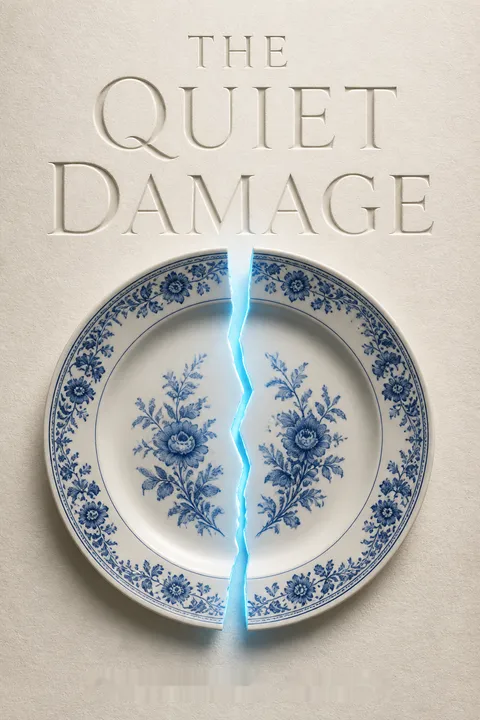
The Quiet Damage by Jesselyn Cook explores the impact of QAnon on five families, detailing how individuals from diverse backgrounds fell into conspiracy theories. Readers found the book compelling, compassionate, and well-written, praising Cook's storytelling and empathy. Many appreciated the humanizing approach to a complex issue. Some felt the organization could be improved, and a few wanted more scientific context. Overall, reviewers found the book timely, important, and deeply moving, despite its heavy subject matter.
People Also Read








Glossary
Q Drops
Cryptic posts attributed to QShort messages posted by the anonymous figure known as Q on online message boards. Followers treated them as classified clues about a hidden political operation and tried to interpret their wording, numbers, and references. Their ambiguity allowed decoders to attach many different claims to them, including predictions that did not come true.
The Storm
Predicted mass arrests and reckoningQAnon's promised moment when powerful members of an alleged hidden cabal would be arrested and the public would awaken to the movement's supposed truth. Predictions about its timing repeatedly failed. Followers and influencers often explained the failures as deliberate deception or misunderstood clues, preserving belief rather than treating the missed events as disconfirmation.
The Great Awakening
Promised public revelationA QAnon vision of a coming transformation in which the public would recognize an alleged secret struggle between good and evil, the supposed cabal would be defeated, and society would be renewed. The promise offered hope and a sense of historical purpose. In practice, it helped sustain followers through repeated failed predictions.
digital soldiers
Online movement activistsA label used within QAnon for followers who saw themselves as serving the movement through online activity. Tasks included sharing narratives, recruiting others, searching for supposed clues, and targeting critics or journalists through memes and posts. The role made ordinary internet use feel like participation in a consequential political and spiritual mission.
apophenia
Seeing meaning in random patternsThe perception of meaningful connections among unrelated or random events. The book uses the term to explain how QAnon followers could interpret typos, numbers, news stories, and ordinary coincidences as evidence of a hidden plan. Because followers were encouraged to search for clues, the process could feel like independent discovery even when the connections were unsupported.
parasocial attachment
One-sided bond with a public figureA perceived relationship in which an audience member feels personally connected to a media figure who does not know them. Online creators can build this sense of intimacy by speaking directly to viewers and sharing personal material. The book describes how such trust can make a creator's unsupported political or medical claims feel like guidance from a familiar friend.
conformation bias
Choosing information for group defenseA term used in the book for seeking information that defends one's political or social group regardless of whether the information is accurate. It describes how people can change political communities without becoming more open-minded: they may leave one group while adopting the assumptions and preferred evidence of another. The term is attributed to social psychologist Péter Krekó.
tribal epistemology
Group identity governs accepted truthA pattern in which judgments about what is true depend heavily on loyalty to one's group. Information from insiders is trusted, while evidence from outsiders, such as journalists or scientists, is dismissed because of its source. In the book, this explains why visible counterevidence could fail to change a claim when accepting it would threaten a person's political identity.
motivational interviewing
Eliciting personal reasons for changeA conversational approach that helps a person identify their own motivations for changing rather than relying on pressure or confrontation. In Alice's case, her father used it to encourage reflection on the personal costs of QAnon and whether the movement fit her stated values. The aim was to support self-directed reconsideration, not to win an argument.
Socratic questioning
Questions that examine assumptionsA method of using open, curious questions to help someone inspect the evidence, assumptions, and contradictions behind an idea. Christopher used it with Alice instead of responding to every conspiracy claim with a direct rebuttal. The approach sought to make room for doubt while preserving respect and avoiding the defensive reaction that can follow ridicule.
FAQ
What’s The Quiet Damage: QAnon and the Destruction of the American Family by Jesselyn Cook about?
- Explores QAnon’s family impact: The book investigates how the QAnon conspiracy theory has fractured American families, using real-life stories to illustrate the emotional and psychological toll.
- Blends narrative and research: Jesselyn Cook combines hundreds of hours of interviews with historical, psychological, and sociological analysis to provide a nuanced understanding.
- Highlights broader societal issues: The narrative situates QAnon within the context of American democracy, public health, and the information ecosystem, arguing that the crisis is about more than just misinformation.
- Emphasizes empathy and solutions: Cook calls for addressing the emotional needs and vulnerabilities that make people susceptible to conspiracy theories, advocating for compassion over confrontation.
Why should I read The Quiet Damage by Jesselyn Cook?
- Insight into radicalization: The book offers a rare, intimate look at how ordinary, intelligent people become drawn into conspiracy theories, challenging stereotypes about believers.
- Understanding family dynamics: By focusing on families, it reveals the personal and often painful consequences of conspiracy belief, making the issue relatable and urgent.
- Guidance for intervention: Cook provides practical advice and new approaches for helping loved ones, emphasizing empathy, patience, and addressing root causes.
- Broader societal relevance: Readers gain a deeper understanding of how misinformation, mental health, and social isolation intersect, equipping them to respond more effectively.
What are the key takeaways from The Quiet Damage by Jesselyn Cook?
- Conspiracy belief is complex: It’s not just about ignorance; emotional needs, social isolation, and cognitive biases play major roles.
- Families suffer profound harm: The book documents the deep trauma, alienation, and lasting psychological damage caused by conspiracy beliefs within families.
- Traditional interventions fall short: Fact-checking and confrontation often backfire; effective help requires empathy and addressing underlying vulnerabilities.
- Hope through understanding: Recovery is possible but complex, requiring support, new sources of meaning, and a compassionate approach to those affected.
Who are the main families and individuals featured in The Quiet Damage by Jesselyn Cook?
- Adam and Emily Porter: A Tennessee family where Emily’s QAnon beliefs create a painful rift with her son Adam, highlighting the struggle to reconnect and deprogram.
- Matt and Andrea: A Missouri couple whose marriage unravels as Matt becomes a “digital soldier” for QAnon, leading to financial and emotional turmoil.
- Dale and Doris: An elderly Alabama couple facing strain as Doris descends into conspiracy and Covid-19 denial, exploring aging and loneliness.
- Alice and Christopher: A progressive California couple whose relationship fractures when Alice embraces QAnon, showing how conspiracies cross political lines.
- Tayshia and Kendra: Two Black sisters with divergent paths—one a progressive activist, the other a QAnon believer—illustrating the movement’s impact on minority communities and family bonds.
How does The Quiet Damage by Jesselyn Cook explain the psychological appeal of QAnon?
- Sense of purpose and belonging: QAnon offers followers a mission and community, fulfilling deep needs for meaning and identity.
- Emotional gratification: The movement provides emotional highs through grievance, outrage, and a sense of fighting evil, which can be addictive.
- Cognitive biases at play: Concepts like apophenia and confirmation bias make people more susceptible to seeing patterns and accepting conspiracy narratives.
- Tribal epistemology: QAnon’s echo chambers reward loyalty and punish dissent, reinforcing group identity and resistance to outside information.
What impact does QAnon have on children and families, according to The Quiet Damage by Jesselyn Cook?
- Trauma and toxic stress: Children exposed to frightening conspiracy theories can experience toxic stress, affecting brain development and emotional health.
- Family division and alienation: Beliefs can isolate children from peers and family, leading to loneliness and disrupted education.
- Intergenerational cycles: The book links conspiracy susceptibility to historical and familial adversity, perpetuating harm across generations.
- Challenges in recovery: There is a lack of research and resources for helping children and families recover, highlighting the need for compassionate, non-confrontational approaches.
What methods and advice does The Quiet Damage by Jesselyn Cook offer for helping loved ones caught in conspiracy theories?
- Avoid direct confrontation: Aggressively challenging beliefs or fact-checking often causes defensiveness and deeper entrenchment.
- Use compassionate communication: Techniques like motivational interviewing and Socratic questioning help individuals reflect on their beliefs without feeling attacked.
- Set boundaries: Scheduling discussions and limiting conspiracy talk can help manage emotional overload and maintain relationships.
- Provide alternative meaning: Engaging loved ones in new activities or communities can gradually shift focus away from conspiracies.
- Seek professional help: Mental health clinicians with experience in conspiracy beliefs can offer specialized support, though such resources are limited.
How does The Quiet Damage by Jesselyn Cook connect mental health and conspiracy theory belief?
- Mental health crisis as root: The book emphasizes that depression, anxiety, and social isolation—worsened by the pandemic—make people more vulnerable to conspiracy beliefs.
- Conspiracies as coping mechanisms: Many use conspiracy theories to manage uncertainty, lack of control, and social disconnection, finding emotional comfort in false narratives.
- Toxic stress effects: Prolonged exposure to fear-inducing conspiracies, especially in children, can cause lasting psychological disorders.
- Wellness-focused interventions needed: Addressing mental health and building emotional resilience are crucial for reducing susceptibility and aiding recovery.
What role do social media and influencers play in the spread of QAnon, according to The Quiet Damage by Jesselyn Cook?
- Algorithmic amplification: Platforms like Facebook and YouTube recommend increasingly extreme content, creating echo chambers where conspiracies thrive.
- Influencer parasocial relationships: Influencers build one-sided emotional bonds with followers, making them more receptive to misinformation and less skeptical.
- Cross-platform ecosystem: QAnon content spreads across multiple platforms, evading moderation and reaching diverse audiences.
- Monetization of disinformation: Influencers profit from spreading fear and distrust, turning conspiracy promotion into a lucrative industry.
What are the key concepts and terms explained in The Quiet Damage by Jesselyn Cook?
- Q Drops: Cryptic messages from “Q” that followers decode, fostering a sense of insider knowledge and collective interpretation.
- Digital soldiers: QAnon followers who actively spread conspiracy content online, seeing themselves as part of a special mission.
- Folie à deux: A psychological syndrome where delusions are shared between closely connected individuals, relevant to family-based radicalization.
- Parasocial attachment: One-sided emotional bonds with online influencers, increasing trust and reducing skepticism toward conspiracy content.
How does The Quiet Damage by Jesselyn Cook portray the process of leaving QAnon and recovering?
- Slow and non-linear exit: Leaving conspiracy beliefs is gradual, involving doubt, emotional turmoil, and risk of relapse.
- Importance of support networks: Family and friends use empathy and motivational interviewing to gently guide loved ones toward reconsidering their beliefs.
- Rebuilding identity and community: Recovery involves finding new sources of meaning and connection outside conspiracy circles.
- Ongoing vulnerability: Even after leaving, individuals remain susceptible to returning without continued support, highlighting the need for recovery groups and mental health care.
What are the most powerful quotes from The Quiet Damage by Jesselyn Cook and what do they mean?
- “Because the world’s an evil place, baby.” This line from Kendra to her son Jonah shows how conspiracy theories instill fear and fatalism in children, bonding them through shared anxiety.
- “The truth is that the truth is almost beside the point.” Cook emphasizes that conspiracy belief often serves emotional needs more than a quest for factual accuracy, explaining why debunking fails.
- “Just like moons and like suns, With the certainty of tides, Just like hopes springing high, Still, I’ll rise.” This Maya Angelou excerpt symbolizes resilience and hope, reflecting Tayshia’s journey toward healing.
- “When you leave, you’re more vulnerable than when you got in.” Diane Benscoter’s insight highlights the difficulty of exiting conspiracy movements and the need for ongoing support.
- “Whoever can supply them with illusions is easily their master; whoever attempts to destroy their illusions is always their victim.” Gustave Le Bon’s quote explains the psychological power of conspiracy narratives and the challenge of confronting them.
Download PDF
Download EPUB
.epub digital book format is ideal for reading ebooks on phones, tablets, and e-readers.








