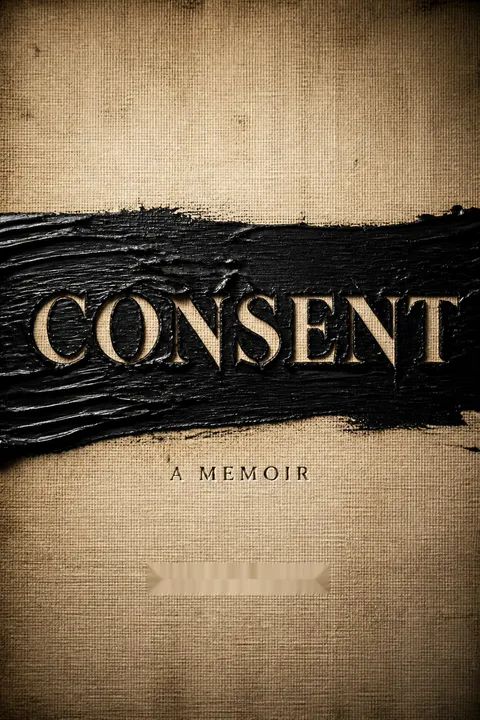


Key Takeaways
Do not let a lifetime of love settle the ethics of its first kiss
A beginning remains complicated. Jill Ciment met Arnold when she was a teenager taking his art class and he was a married, forty-seven-year-old teacher. They stayed together for decades, built a shared artistic life, and cared for one another as they aged. Yet the memoir keeps returning to the first kiss: she had long fantasized about it, but he was the adult with authority, experience, and responsibility for the boundary between teacher and student.
Love is not a verdict. Ciment’s central question is not whether the marriage was real or whether she wanted him. It is whether a later lifetime of intimacy can resolve the unequal conditions under which the relationship began. Her answer is not a simple yes or no.
The memoir separates two questions that are often collapsed: whether a relationship later became loving, and whether its beginning respected the younger person’s interests. That distinction is useful wherever a long, meaningful bond is used to defend an earlier breach of responsibility. At the same time, the book resists replacing one simplified label with another. A person can have wanted an encounter and still have faced an adult’s unequal power. A careful ethical account must hold both facts without treating either as a complete explanation.
A teenager's desire does not cancel an adult teacher's power
Wanting is not the whole story. Ciment remembers being drawn to Arnold: his attention made her feel talented, grown-up, and desirable. She also recalls that he praised and criticized her work, gave her special attention, and eventually kissed her in his private studio. She was seventeen; he was her teacher, married, and old enough to be her father. Later, he wrote to her indirectly and phoned when she did not reply.
Power shapes the available choices. Ciment does not pretend she was without agency. She pursued him, too. But her eagerness cannot transfer responsibility for the professional boundary from the adult teacher to the student. The memoir keeps both her desire and his authority in view.
This account avoids a false choice between agency and vulnerability. Developmental research often distinguishes the adolescent capacity for intense motivation from the still-maturing capacity to weigh long-term consequences, but biology alone cannot explain this relationship. The more visible asymmetries are social: teacher and student, adult and teenager, sexual novice and experienced adult. Those conditions matter even when desire is sincere. The memoir’s restraint is valuable because it does not make the young narrator’s feelings unreal in order to recognize the adult’s greater responsibility.
Treat memoir as a shaped argument, not a recovered recording
Memory changes in the telling. Ciment wrote an earlier memoir decades after the events. In it, she described herself as initiating the first kiss. While revisiting that account, she notes that Arnold once remembered himself as the initiator, then agreed that her version might be right. The scene is not a recording recovered intact. It is a reconstruction shaped by memory, later knowledge, and the needs of the story being written.
The narrator changes, too. The teenager remembers yearning; the middle-aged writer builds a story of first love; the older writer questions what those earlier versions left out. Ciment calls these contrasting perspectives the young voice and the old voice: immediate reaction set beside later reflection.
Memoir’s uncertainty is not a defect to be hidden; it can be part of the evidence. Cognitive research on autobiographical memory describes recollection as reconstructive, which helps explain why confidence and accuracy do not always travel together. Ciment adds a literary insight: each retelling also reveals what the writer can bear to see at that moment. Still, reconstruction has limits. Readers cannot use the instability of memory to declare that nothing happened, or to treat a vivid scene as a transcript. The form calls for humility, not disbelief.
Read the silences that make a story easier to accept
Omission shapes the picture. Ciment identifies details missing from her earlier memoir: Arnold’s other mistress, the restaurant where the lovers often ate, and the moment she told her mother about their kiss. She also notices how the earlier scenes made Arnold seem passive, as if the teenager appeared and seduced him. Those choices helped the relationship read as romance rather than as an adult teacher crossing a boundary.
Silence has structure. Ciment borrows the art term negative space for what writing leaves unsaid. In painting, the empty areas around a subject help define its shape. In memoir, omissions can do similar work: what is excluded influences how readers understand the people and events that remain.
The idea of negative space makes omission legible without assuming every gap is deliberate deception. Writers leave things out for many reasons: privacy, focus, shame, or simply because they do not yet recognize what matters. But exclusions still guide a reader’s moral attention. This is especially important in stories about power, where a polished romance can obscure the surrounding context. The useful question is not merely what the author concealed, but what interpretation the chosen details make easier, and whose experience remains outside the frame.
Ask children direct questions, then make safety an adult responsibility
A child may not know how to answer. When Ciment’s seven-year-old brother Pete was spending time with a neighbor, their mother worried that something was wrong. At first, she asked questions that implied the answer she hoped for, such as whether the man did not touch him. Later she asked directly. Pete disclosed that the neighbor had sexually abused him. Police found evidence that the man was part of a group exploiting children.
Adults must carry the burden. Ciment’s mother blamed herself for not acting sooner, while her older son wondered whether he should have protected Pete. The memoir shows how a child can be drawn in by attention and outings without understanding the danger. Protecting children cannot depend on their ability to interpret an adult’s motives or volunteer a clear account.
The episode gives a practical lesson in trauma-informed communication: open, direct questions are less likely to steer a child toward a preferred answer than leading questions. It also shows why disclosure cannot be treated as a child’s sole responsibility. Young people may lack language, may fear consequences, or may experience an abuser as both kind and frightening. The memoir cannot provide a complete safeguarding protocol, and direct questioning is not a substitute for trained support. Its deeper point is sound: adults must create safety and respond without making a child responsible for preventing the abuse.
A private romance still alters the lives around it
The couple was not alone. Arnold left his wife and children to live with Ciment, who was still a teenager. His daughter Michelle, an adult with significant learning and mental health difficulties, had to encounter the young woman who had become her father’s partner. Ciment remembers Michelle visiting their bare bungalow, asking to stay the night, and breaking into bewildered laughter during dinner. She also remembers seeing Arnold’s wife at a psychiatric hospital when Michelle was admitted.
Consequences outlast secrecy. Ciment recognizes that she had entered another woman’s life and that Arnold’s choice affected his daughter as well as his wife. Their eventual bond does not make those earlier losses disappear. A relationship can be intimate and sincere while still being built amid other people’s pain.
Romantic stories tend to focus the camera on the couple, turning everyone else into obstacles or background. Ciment resists that narrowing by giving the wife and daughter distinct emotional realities, including suffering that cannot be reduced to their relationship with her. This resembles a systems view of family life: one person’s choice redistributes strain, attention, and security across a network. That does not mean every consequence makes a relationship illegitimate. It does mean that sincerity between two people cannot serve as a moral accounting of everyone affected.
Measure love by acts of attention, not declarations alone
Care becomes visible in choices. At CalArts, Ciment discovered that Arnold’s name had appeared among applicants rejected with a form letter. She quietly made sure he received a more personal response, then chose not to tell him she had done so. Years later, when she struggled to write, he taught her to use a typewriter, explained punctuation through drawing, and kept gathering pages she had torn up.
Affection is practiced. Ciment describes love not simply as a feeling but as attention expressed in action. The examples are modest beside dramatic declarations: protecting someone’s dignity, teaching patiently, or taking another person’s work seriously. They show how love can become a daily practice, although they do not settle the ethical questions surrounding the relationship’s start.
The distinction between feeling and action connects to care ethics, which treats attentiveness and responsiveness as moral practices rather than private sentiments. Ciment’s examples make that idea concrete: love appears in the unglamorous work of noticing what would help another person. The qualification matters. A loving act can be real without making the giver wholly good, or erasing harm elsewhere. That is why the book’s model is stronger than a redemption story. It allows acts of care to count without asking them to function as absolution.
Let a portrait complicate a label, but never serve as proof
Art can offer another angle. When Arnold painted Ciment as a young woman, she saw a version of herself that did not fit the labels she feared: victim, seductress, or ambitious student. The figure appeared assured and aware of being loved. Much later, Arnold drew his troubled daughter Michelle as more confident than she felt, and Ciment recognized the depth of his affection for her.
Seeing is not settling. These portraits change how Ciment understands the people in them, but they cannot establish what happened in the past or decide whether the relationship began ethically. Art offers a perspective shaped by its maker. It can reveal tenderness and possibility while leaving the central questions open.
The portraits illustrate how representation can expand a person beyond the role assigned by a story. In psychology, perspective-taking can help people revise rigid judgments by making another inner life imaginable. Yet an artwork is not neutral evidence: it reflects the artist’s choices, desires, and blind spots. Ciment’s use of the paintings is strongest when they complicate her understanding rather than certify it. A portrait can show what someone saw, or hoped to see. It cannot by itself prove that the relationship was safe, equal, or consensual.
A gallery called Arnold too old; he kept painting for decades
The market has its own clock. At sixty, Arnold carried a large painting across New York to meet a gallery owner. She admired his skill but judged him too old to invest in. Younger artists in the East Village responded differently: they watched him study their work closely and explain how he handled paint. He found a new gallery and exhibited there.
Work can outlast fashion. Arnold continued painting for decades, even as styles changed and he grew deaf, blind in one eye for a time, and increasingly frail. At eighty, he transformed a 760-page FBI file into an illuminated artwork, turning documents about surveillance into a visual project. The recognition did not erase years of obscurity, but his work continued beyond the market’s predictions.
Arnold’s career exposes a tension between artistic value and the institutions that allocate attention. A dealer may assess risk rationally within a market, yet the judgment that an artist’s best work must be behind him can become self-fulfilling when age closes doors. His later work also complicates the idea that persistence alone guarantees recognition. He had a long practice, a committed partner, and a new community of younger artists. The lesson is not that every rejected artist will be rediscovered, but that market timing is not the same thing as artistic capacity.
As Arnold's body failed, care became their final form of collaboration
The balance changed with age. Ciment had once been the younger student seeking Arnold’s approval. As he lost hearing, balance, strength, and eventually his ability to leave bed, she became his guide and caretaker. She helped him move through the world and worried that her identity as the younger woman would vanish when he died. Their age difference did not disappear; its practical meaning shifted over a lifetime.
The last work remained shared. After Arnold learned he had aggressive leukemia, he returned to his studio and drew the lake and trees as his strength faded. Near the end, he asked Ciment to help choose which paintings should be destroyed. She found his first portrait of her instead. The memoir closes on that image and the last kiss, where memory, art, care, and unresolved ethics meet.
Long-term care can be both an expression of attachment and a demanding transfer of labor. Ciment sees the devotion in helping Arnold navigate ordinary spaces, but also asks what the arrangement costs her and what her youth had seemed to promise. That question keeps caregiving from becoming a sentimental proof of virtue. The ending’s artistic collaboration is moving precisely because it does not solve the earlier moral problem. It shows what the relationship became, not that every part of its history was therefore right.
Analysis
Consent is a memoir about the difficulty of telling a relationship truthfully when its beginning and its long aftermath seem to demand different moral vocabularies. Ciment’s teenage self experienced desire, ambition, and the thrill of being chosen by an older artist. Her later self recognizes that Arnold was not merely an attractive man: he was a teacher with adult authority, sexual experience, a wife, and children. The book’s force comes from refusing to make either perspective cancel the other.
Its form enacts that conflict. Ciment revisits an earlier memoir, notices how its scenes distribute initiative, and names the omissions that helped a difficult history read as an uncomplicated romance. The revised account does not promise a definitive transcript. Instead, it asks readers to examine how memory, genre, and cultural language shape the story. The distinction between a remembered event and a written scene is especially important: a memoir can be emotionally honest while remaining factually uncertain in its reconstructed details.
The book also widens its moral frame. The relationship’s consequences reach Arnold’s wife and daughter, Ciment’s mother, and her abused younger brother. These parallel stories prevent the central romance from claiming all the narrative space. They show different forms of vulnerability and different duties of care, without equating a teacher’s pursuit of a teenager with the sexual abuse of a child.
Art supplies the memoir’s strongest metaphor for seeing, but not a final judgment. Arnold’s portraits help Ciment imagine herself and others differently; his late work gives shape to persistence and mortality. Neither art nor devotion can retroactively certify consent. The book’s most durable achievement is this disciplined coexistence: desire can be genuine, harm can remain possible, love can endure, and a truthful account may still refuse a verdict that simplifies any of them.
Review Summary
Consent: A Memoir explores Jill Ciment's relationship with her much older husband, revisiting her earlier memoir through a post-#MeToo lens. Readers found the book thought-provoking, honest, and nuanced, praising Ciment's unflinching examination of power dynamics and memory. Some criticized the lack of depth in certain areas and questioned the author's motivations. The memoir sparked discussions about age gaps, consent, and how societal perspectives change over time. Overall, it was seen as a complex, often unsettling reflection on love, power, and personal narrative.
People Also Read










Glossary
negative space
Meaning shaped by absenceIn visual art, negative space is the area around or between the depicted subjects. Ciment extends the term to memoir, where omitted details and silences help define the account readers receive. What is left out can change the apparent shape of a relationship, even when the details that remain are true.
scene
Reconstructed remembered momentCiment uses scene for a memoir passage that recreates an event through remembered action, setting, and dialogue. A scene can convey how an event has been understood, but it is not necessarily a verbatim record. The distinction matters because a writer’s later memory and storytelling choices can become intertwined with the original experience.
young voice and old voice
Immediate and reflective perspectivesThese are the two perspectives Ciment identifies within memoir: the younger self’s direct reactions and the older writer’s reflective interpretation. The young voice experiences events without knowing what follows; the old voice can question what those reactions meant, notice omissions, and reconsider earlier explanations. Their tension makes the memoir’s changing understanding visible.
bildungsroman
A story of formationA bildungsroman is a story tracing a protagonist’s development through experience and missteps. Ciment distinguishes this from merely reaching adulthood: the form implies education and a movement toward a sense of direction. She also examines the gendered tradition in which a woman’s formative story commonly concludes with marriage, leaving little room for the long realities that follow.
nudity and nakedness
Body seen, body livedCiment distinguishes being naked, which she associates with simply being oneself, from being nude, which involves being seen as a body by others. Her distinction grows from her experience modeling in art classes and learning to draw the human form. It also points to the difference between embodied intimacy and the body presented for another person’s gaze.
FAQ
What’s "Consent: A Memoir" by Jill Ciment about?
- Coming-of-age and power dynamics: The memoir recounts Jill Ciment’s relationship with her much older art teacher, Arnold, beginning when she was a teenager, and explores the complexities of consent, agency, and power imbalance.
- Revisiting the past: Ciment re-examines her earlier memoir and her memories, questioning the narratives she constructed about her relationship and the language used to describe it.
- Family and trauma: The book also delves into Ciment’s family history, including her father’s emotional distance, her mother’s struggles as a single parent, and her brother’s experience with sexual abuse.
- Art, love, and aging: The memoir traces Ciment and Arnold’s decades-long partnership, their artistic collaborations, and the challenges of growing older together, set against the backdrop of changing cultural attitudes.
Why should I read "Consent: A Memoir" by Jill Ciment?
- Nuanced exploration of consent: The book offers a candid, self-critical look at the gray areas of sexual consent, especially in relationships with significant age and power differences.
- Literary and artistic insight: Ciment’s reflections on art, writing, and creativity are woven throughout, providing a unique perspective on the intersection of life and artistic practice.
- Intergenerational and cultural context: The memoir situates personal experience within broader social changes, including the sexual revolution, feminism, and the MeToo era.
- Emotional honesty: Ciment’s willingness to interrogate her own motives, memories, and complicity makes for a deeply honest and thought-provoking read.
What are the key takeaways from "Consent: A Memoir" by Jill Ciment?
- Memory is unreliable: Ciment demonstrates how memoir is shaped by the time in which it’s written, and how memories can shift or be reinterpreted over decades.
- Consent is complex: The book challenges simplistic notions of victim and perpetrator, showing how agency, desire, and power can be entangled, especially for young women.
- The impact of family dynamics: Ciment’s family history, including her father’s emotional absence and her brother’s abuse, shapes her understanding of love, vulnerability, and risk.
- Art as both refuge and battleground: The creative process is depicted as a means of survival, self-definition, and sometimes, as a site of struggle and collaboration within relationships.
How does Jill Ciment define and explore "consent" in "Consent: A Memoir"?
- Questioning agency: Ciment repeatedly asks whether her teenage self truly had the agency to consent to a relationship with a much older man, given her age and circumstances.
- Shifting language and context: She examines how the words used to describe her experience—victim, survivor, bimbo, vixen—change meaning over time and reflect cultural attitudes.
- Power imbalance: The memoir scrutinizes the inherent power differential between teacher and student, adult and adolescent, and how this affects the possibility of genuine consent.
- Ongoing self-interrogation: Ciment does not offer easy answers, instead inviting readers to sit with the discomfort and ambiguity of her story.
What is unique about Jill Ciment’s writing style and structure in "Consent: A Memoir"?
- Meta-memoir approach: Ciment reflects on her previous memoir, "Half a Life," and the act of writing itself, blurring the lines between memory, fiction, and self-revision.
- Dual narrative voices: She distinguishes between her younger and older selves, showing how perspective and self-understanding evolve.
- Use of negative space: Ciment employs the concept of "negative space" from art to describe what is left unsaid or omitted in memoir, giving shape to her story through both what is told and what is silent.
- Blending personal and cultural history: The memoir is rich with references to art, literature, and historical context, situating the personal within the collective.
How does "Consent: A Memoir" by Jill Ciment address the impact of family and childhood?
- Father’s absence and influence: Ciment’s emotionally distant, possibly autistic father shapes her longing for attention and validation from older men.
- Mother’s struggles and advice: Her mother’s experiences as a single parent and her warnings about dependence on men inform Ciment’s choices and self-perception.
- Sibling trauma: The memoir includes the harrowing account of her younger brother’s sexual abuse, highlighting the vulnerability of children and the failures of adult protection.
- Intergenerational echoes: Ciment draws parallels between her own choices and those of her mother, as well as the patterns of secrecy and silence in her family.
In what ways does "Consent: A Memoir" by Jill Ciment engage with art and creativity?
- Art as identity: Ciment’s ambition to be an artist is central to her sense of self and her attraction to Arnold, her art teacher.
- Artistic collaboration: The memoir details the couple’s creative partnership, including mutual critique, modeling, and the influence they have on each other’s work.
- Art as metaphor: Concepts like negative space, perspective, and the act of seeing are used to illuminate emotional and narrative truths.
- The struggle for recognition: Arnold’s career trajectory, from social realist painter to marginalized artist, mirrors broader questions about value, aging, and legacy in the arts.
How does "Consent: A Memoir" by Jill Ciment reflect on aging, marriage, and long-term partnership?
- Shifting power dynamics: As Ciment and Arnold age, the balance of care and dependence changes, challenging their earlier roles.
- The reality of growing old: The memoir is frank about the physical and emotional realities of aging, illness, and caretaking within a marriage with a significant age gap.
- Enduring love and regret: Ciment explores the complexities of loving someone over decades, including moments of doubt, jealousy, and the fear of loss.
- The question of legacy: The couple’s later years are marked by concerns about artistic legacy, memory, and what remains after death.
What role does the MeToo movement and changing cultural attitudes play in "Consent: A Memoir" by Jill Ciment?
- Re-examining the past: Ciment revisits her relationship with Arnold through the lens of contemporary conversations about consent, abuse of power, and sexual predation.
- Language evolution: She notes how terms like "sexual offender" or "victim" have shifted in meaning, and how these changes affect her understanding of her own story.
- No easy absolution: The memoir resists both self-exoneration and self-condemnation, instead modeling the ongoing process of reckoning with the past.
- Broader implications: Ciment’s story is positioned as part of a larger cultural reckoning with the ways women’s stories have been told, silenced, or distorted.
What are the most powerful quotes from "Consent: A Memoir" by Jill Ciment and what do they mean?
- “There is a long time in me between knowing and telling.” — Grace Paley (epigraph): Highlights the gap between experience and the ability to articulate or process it, a central theme of the memoir.
- “A memoir is closer to historical fiction than it is to biography.”: Ciment underscores the constructed nature of memory and the influence of the present on how we narrate the past.
- “Does a story’s ending excuse its beginning?”: Raises the question of whether a happy or enduring relationship can retroactively justify its problematic origins.
- “Can a love that starts with such an asymmetrical balance of power ever right itself?”: Encapsulates the memoir’s central inquiry into the possibility of redemption, equality, and genuine connection.
How does Jill Ciment’s "Consent: A Memoir" compare to her earlier memoir "Half a Life"?
- Revisiting and revising: "Consent" is both a continuation and a critique of "Half a Life," with Ciment interrogating the choices she made in telling her story the first time.
- Greater self-awareness: The new memoir is more explicit about the ambiguities and discomforts of her relationship, as well as the limitations of memory and narrative.
- Contextual shift: "Consent" is written in the wake of the MeToo movement, which influences Ciment’s language, perspective, and willingness to question her own complicity.
- Expanded scope: While "Half a Life" focused on Ciment’s youth, "Consent" encompasses her entire adult life, marriage, and the process of aging and loss.
What are the main concepts and methods Jill Ciment uses in "Consent: A Memoir" to interrogate memory and truth?
- Scene vs. memory: Ciment distinguishes between "scenes" in memoir and actual memories, noting that both are subject to distortion and reconstruction.
- Negative space: Borrowed from art, this concept refers to what is left unsaid or omitted, and how absence shapes narrative meaning.
- Dual voices: The memoir alternates between the "young" and "old" voices, showing how reflection and immediacy produce different truths.
- Ongoing reconsideration: Ciment models a method of continual self-questioning, refusing to settle on a single, definitive version of her story.
Download PDF
Download EPUB
.epub digital book format is ideal for reading ebooks on phones, tablets, and e-readers.








