

Key Takeaways
Use yoga to meet your real self, not manufacture a better-looking one
The mat reflected life. Dederer begins yoga hoping it will ease her back pain and turn her into a calmer, more virtuous person. Instead, even a simple posture makes her body’s anxiety visible. In camel pose, she feels frightening tightness in her chest; her teacher identifies it as fear, something Dederer had not recognized beneath her busy thoughts. A home video leaves her confused and sore, while a more attentive teacher explains triangle pose through the position of the hips and gives her a useful physical cue.
Practice changes the question. Yoga does not reveal a serene, improved self waiting underneath. It shows Dederer what is happening now: tension, self-consciousness, effort, and occasional discovery. Better instruction helps, but the deeper shift comes when she stops treating difficulty as evidence that she is defective.
The memoir’s central move is from self-improvement to self-recognition. That distinction matters: a practice framed as a route to a superior identity can turn every awkward moment into another verdict. Physical instruction offers a more grounded alternative because a concrete cue can replace vague self-criticism with observation. Still, bodily sensation is not automatically self-explanatory. A teacher’s interpretation can help, but students need permission to stop, question, or adapt a pose rather than accept every explanation as truth.
Perfectionism can disguise fear as good parenting
Care became a scorecard. In Dederer’s North Seattle community, mothers pursued nursing, organic food, cloth diapers, baby slings, and carefully chosen toys as signs of responsible parenting. The standards felt morally urgent, even when no one could say exactly who had set them. Dederer’s own fear had a devastating source: her daughter Lucy was born with severe breathing trouble, spent time in intensive care, and went home temporarily attached to oxygen. Dederer pumped milk every three hours because it was one thing she could do for her child.
The bargain persisted. She came to believe that perfect care could prevent disaster. Later, that belief made ordinary choices, such as when to wean Lucy, feel like moral failures. Her back injury finally forced the decision, bringing relief along with guilt. The memoir does not dismiss caregiving standards; it shows how love can become tangled with an impossible promise of control.
This account distinguishes genuine responsibility from the fantasy that a parent can eliminate risk through flawless decisions. That distinction is valuable wherever care is moralized, from feeding choices to schooling. Communities can offer useful knowledge, but a dense list of best practices can make uncertainty feel like personal negligence. The opposite danger is also real: rejecting every shared standard may leave families without support. The more humane question is not whether a parent followed every rule, but whether a rule serves this child and household.
Let stillness uncover what constant caretaking keeps buried
Silence brought the past forward. During a quiet seated practice in cobbler’s pose, Dederer unexpectedly begins to cry. The posture, called baddha konasana, brings the soles of the feet together while the knees open outward. Her teacher asks the class to watch the breath without trying to control it. In that stillness, Dederer remembers Lucy’s birth, the days of watching oxygen readings, and the terror of not knowing whether her baby would survive.
The body kept the fear. Dederer had resumed daily life and acted cheerful, but the memory remained close beneath the surface. She recognizes that her vigilance and perfectionism grew from the crisis. She also sees why quiet can be difficult: without chores and conversation to occupy her, grief becomes harder to avoid. Pranayama means yogic breath practice; pratyahara refers to turning attention inward, away from external distraction.
Stillness can reveal feelings that activity has postponed, but revelation is not the same as resolution. The scene makes meditation concrete: attention changes what becomes noticeable, rather than magically removing distress. That insight fits a broader understanding of emotional awareness, in which naming a feeling can make it easier to respond deliberately. Yet people with painful memories may need support, pacing, and choice. A practice that invites inward attention should not be treated as a substitute for care or as proof that everyone ought to confront difficult material alone.
Stop treating poses as proof of virtue; learn from their limits
A beautiful shape can mislead. Dederer becomes captivated by lotus, a formal seated posture associated in her mind with spiritual achievement. She keeps trying despite pain in her knees and ankles because she likes how the pose looks. Her teacher warns that copying an ideal can make practitioners ignore what they feel. Crow, an arm balance, offers a different lesson: it depends on shifting weight and accepting the possibility of falling, not holding a flawless shape.
Yoga has many histories. Asana means physical posture or posture practice. The eight limbs of yoga form a traditional map that includes ethical conduct, posture, breath, inward attention, concentration, meditation, and absorption. Dederer finds that yoga texts and traditions do not fit neatly into one account, and that modern studio yoga is not identical to every historical form. She keeps practicing without pretending she has solved that complexity.
This is a useful critique of turning a discipline into an aesthetic product. A pose can be physically impressive while being poorly suited to a particular body, and the appearance of spiritual seriousness can obscure that mismatch. At the same time, personal benefit does not erase cultural history. The memoir’s strongest position is neither to claim ownership nor to declare all Western practice illegitimate. It is to remain curious about origins, differences, and teachers, while refusing to confuse cultural borrowing with complete understanding.
Recognize inherited family rules before repeating them as your own
A childhood pattern became a rule. Dederer grew up amid her parents’ separation, her mother’s long relationship with Larry, and a family structure that remained difficult to explain. As a child, she and her brother were told that their parents were still married, even though they lived apart. As adults, both siblings tried to build unusually careful, stable nuclear families. Dederer’s strictness about parenting and marriage was partly a response to the disorder she remembered.
Research offered no single verdict. Dederer discusses Judith Wallerstein’s study of 131 children and families in Marin County, which was often summarized as evidence that divorce harms children, and E. Mavis Hetherington’s research, which presented a less uniformly negative picture. The contrast helps expose how complicated family outcomes are. Dederer’s story suggests that a child may carry a parent’s choices into adulthood as rules, even when those rules no longer fit.
Family history often functions less like a fixed cause than a set of interpretations passed down through behavior and silence. Dederer’s response is recognizable: a child who experienced instability may seek safety through control. That response can be adaptive in one period and restrictive in another. The caution is that no single memoir can settle what divorce does to children. Research samples, family circumstances, and individual experience differ. The personal history is most persuasive as a prompt to ask which inherited rules still protect someone, and which merely keep an old fear in charge.
Choose a pace that lets you notice what you are avoiding
Speed matched her striving. Vinyasa links postures into a flowing sequence, often coordinating a movement with each breath. Dederer is drawn to its intensity and its promise of improvement. The pace suits her urge to keep advancing, but it also gives her fewer chances to stay with a feeling. While attempting a difficult pose with her foot behind her head, she has to pause and breathe. The discomfort stops being an obstacle to rush past and becomes information about her life.
Different tempos serve different needs. Slower classes had once helped Dederer attend to individual sensations; faster sequences offered exertion and momentum. Neither style is inherently superior. The problem comes when she assumes that harder or more advanced practice must be better. Dharana, a yoga term for concentration, describes directing attention toward one chosen object. In a pose, that focus can make a small physical experience absorbing rather than tedious.
The distinction here resembles the difference between productive immersion and compulsive busyness. A demanding rhythm can sharpen attention, but it can also become a socially approved way to avoid noticing fatigue or dissatisfaction. Dederer’s experience argues for matching method to need instead of treating intensity as a universal measure of progress. Still, a pause does not guarantee insight, and movement is not always avoidance. The useful test is whether a practice expands awareness or simply rewards the familiar impulse to do more.
Tell the truth about a marriage before cheerfulness becomes concealment
Good manners hid real trouble. As Bruce struggles with money worries and depression, Dederer tries to preserve a cheerful household. She encourages him, handles practical problems, and avoids asking directly what is wrong. His mood becomes something she fears will expose a failure in their marriage. Yoga teachers sometimes use bandhas, internal muscular locks that help stabilize the body during a posture. Dederer sees a parallel in her own habit of holding the household together through effort and concealment.
The marriage was more than its ideal. A public moment in Texas, when Bruce thanks her for helping edit his work, reveals a form of partnership she had overlooked. Their relationship does not match her preferred picture of romance, but it contains real mutual support. When she eventually tells a friend that Bruce is depressed, the admission does not end their marriage. It makes the problem speakable rather than turning it into a private test of whether the relationship is doomed.
The memoir resists two easy stories: that a spouse can rescue a depressed partner through enough cheerfulness, and that difficulty proves a marriage has failed. Naming a problem can reduce the isolating burden of pretending it is not there. Yet candor is not a complete treatment plan, and one partner cannot be made responsible for managing the other’s mental health. The larger insight is relational: affection becomes more durable when it can coexist with an honest account of limits, work, money, and sadness.
Notice the freedoms your parents won at a cost
Her mother’s choice became her daughter’s latitude. Dederer’s mother left her husband in the early 1970s and built a life with Larry, while raising Dederer and her brother through an unconventional family arrangement. As a young adult, Dederer delayed marriage, traveled, worked casually, and spent years choosing her own direction. She did not initially connect that freedom to her mother’s departure or to the wider changes in women’s lives.
Freedom was neither simple nor free. The memoir notes that the U.S. divorce rate doubled between 1967 and 1977. It also cites research suggesting that first marriages beginning when women were at least twenty-six were more likely to succeed than those beginning at twenty-one. Those patterns do not prove that divorce caused later freedom or that one life path suits everyone. Dederer’s point is more personal: her mother’s generation helped loosen expectations, while their children inherited both opportunity and unresolved hurt.
Generational change is often experienced unevenly. One generation’s act of refusal may create options for the next, while also imposing instability on children who did not choose the experiment. That complexity prevents the story from collapsing into either blame or celebration. The cited marriage comparison is an association, not a guarantee or a universal prescription. Its relevance is to widen the imaginable timeline for adulthood. Social progress can enlarge choice without making every consequence painless or every individual choice equally available.
Choose where to live by desire, not by proving you are good
Leaving created room to choose. In Seattle, Dederer and Bruce feel trapped by work pressures, family expectations, and the routines of a tightly managed household. They move to Boulder with their children, where mountain trails, unfamiliar weather, and time away from relatives change the rhythm of family life. The move is not a clean escape: Bruce’s depression and Dederer’s anxiety travel with them. But distance gives the family a chance to discover what they want beyond the expectations they have inherited.
Returning is also a choice. The family eventually leaves Boulder for Bainbridge Island, closer to the people and waters that matter to them. Dederer no longer treats returning as a failure or staying away as proof of independence. Even yoga changes meaning: after years of trying to improve, she finds relief in a practice that remains imperfect. Her life is not perfected; it is chosen with more awareness.
The move outward and return inward offer a model of autonomy that is less dramatic than total escape. Distance can interrupt habitual roles, while reconnection can be deliberate rather than automatic. This is especially useful for people who confuse independence with permanent separation or belonging with surrender. The memoir also resists presenting geography as a cure: the same anxieties and relationship strains can accompany a new address. A place can create conditions for change, but the more lasting shift lies in how a person understands choice.
Analysis
Poser is a memoir organized around yoga postures, but its real subject is the effort to become a good woman without disappearing inside the performance. Dederer begins with a familiar promise: practice will fix pain, calm anxiety, and produce a more admirable self. The narrative steadily complicates that bargain. Her body does not become a polished emblem of serenity. Instead, it reveals fear, grief, ambition, and the limits of her control.
The book’s strongest structural choice is to let physical practice carry the emotional argument. A pose is not merely an illustration for an already formed lesson. It supplies a situation in which the lesson can be felt: lotus tests the difference between ideal form and bodily warning; crow requires play rather than rigid control; stillness brings the memory of a child’s dangerous birth into view. The reader moves between these moments and the larger histories of parenting, marriage, and the cultural expectations inherited from the 1970s.
Dederer is especially sharp about how goodness becomes competitive. In her Seattle community, practices intended to care for children acquire moral force. Her own family history intensifies the impulse to get everything right, since she wants to protect her children from the instability she remembers. The book does not resolve this tension with a formula. It instead shows that striving can conceal fear, and that inherited responses can be examined without condemning the people who formed them.
The account also recognizes yoga’s cultural complexity. Studio practice is not presented as a simple continuation of a single ancient tradition, nor as meaningless exercise. Dederer encounters conflicting histories and remains uncertain, which is more intellectually honest than claiming easy authenticity. A limit of the memoir is that its personal discoveries cannot serve as universal evidence about divorce, parenting, or yoga. Its value lies elsewhere: it makes ordinary contradictions legible. Care can be loving and exhausting; freedom can be inherited and costly; a marriage can contain depression and genuine companionship. The final change is not mastery. It is a less punitive relationship to reality.
Review Summary
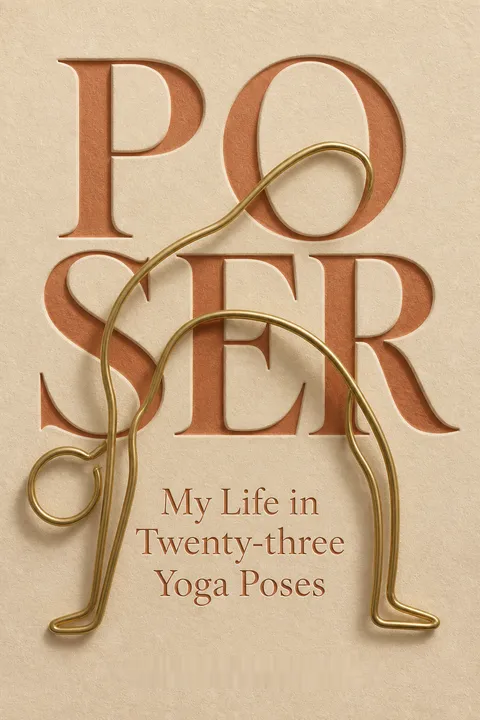
Poser: My Life in Twenty-Three Yoga Poses received mixed reviews. Some praised Dederer's writing style, wit, and relatable experiences as a mother and yoga practitioner. Others found the book self-indulgent, privileged, and lacking depth. Many appreciated her insights on perfectionism and motherhood, while some felt the yoga theme was forced. The book resonated particularly with readers who shared similar backgrounds. Critics noted the author's struggle with "goodness" and her journey to find authenticity. Overall, the book's reception varied widely based on readers' personal experiences and expectations.
People Also Read







Glossary
Asana
Yoga posture practiceAsana refers to the physical postures practiced in yoga. In Dederer’s account, postures are not only exercises or shapes to perfect. They provide occasions to notice effort, balance, discomfort, and bodily habits. The book also distinguishes modern studio asana practice from the wider range of historical and philosophical traditions grouped under yoga.
Pranayama
Yogic breath practicesPranayama is the yoga of breath, practiced through techniques that regulate or observe breathing. Dederer describes alternate-nostril breathing, staged breathing through different areas of the torso, and forceful rhythmic exhalations. In her classes, breath practice supports concentration and can accompany movement, though the memoir also treats breathing as a basic way to return attention to present sensation.
Pratyahara
Turning attention inwardPratyahara is one of yoga’s eight limbs and refers to turning the senses or attention away from external distractions. Dederer’s teachers describe it as an inward orientation: noticing experience from within rather than judging the body by its appearance or comparing it with others. The concept becomes more practical when a teacher gives a concrete instruction, such as keeping one’s gaze near the mat.
Koshas
Layers of the selfKoshas are described in the book as sheaths or layers of human experience. The teacher names layers associated with the physical body, breath or energy, identity and emotion, intellect and judgment, and bliss. During pigeon pose, students are invited to consider whether these different dimensions of experience can be noticed. Dederer receives the framework as both suggestive and difficult to verify.
Vinyasa
Breath-linked movement sequenceVinyasa links yoga postures into a flowing sequence, commonly coordinating each movement with an inhale or exhale. Dederer first experiences it as a fast, physically demanding style in which poses pass quickly and are joined by repeated transitions. The flow can build strength and concentration, but in her case its pace also fits an existing desire to advance and improve.
Bandhas
Internal energy locksBandhas are muscular engagements described in yoga as locks or bindings that help contain and direct energy. Dederer’s teacher explains three: mula bandha, involving the pelvic floor; uddiyana bandha, involving the lower abdomen; and jalandhara bandha, involving the throat and neck. Engaging them can change how a pose feels and provide stability, though Dederer also recognizes her tendency to use muscular effort to hold herself together.
Drishti
Focused point of gazeDrishti is a focal point for the eyes used to support balance and concentration in yoga. In half moon pose, Dederer fixes her gaze on one spot so she can extend her limbs and maintain the posture. The focus illustrates how a narrow, deliberate attention can make an unstable movement possible without eliminating its physical demands.
Dharana
Concentrated attentionDharana is the yoga limb of concentration, in which attention is directed toward a chosen object or point. Dederer connects it to holding a steady gaze during a balance and to the way intense attention can make a pose engaging rather than boring. In the traditional sequence described in the memoir, concentration is distinguished from meditation, which involves a more sustained absorption of attention.
The loathing of the half degree
Judging near-identical peersDederer uses this phrase for the tendency to resent, envy, or judge people who are almost like oneself but differ in a small, visible way. Among the mothers around her, minor differences in food, sleep, clothing, or schooling become charged signs of who is doing parenting correctly. The phrase captures how insecurity can turn similarity into competition.
Attachment parenting
High-contact parenting approachAttachment parenting is the name Dederer gives to a parenting approach prominent in her North Seattle community. It involves practices such as breast-feeding on demand, co-sleeping, and carrying a baby close to the body. The memoir focuses not on evaluating the approach as a whole, but on how its local popularity could make mothers feel that any different choice signaled insufficient devotion.
The Unexpected Legacy of Divorce
Wallerstein’s divorce studyJudith Wallerstein’s book reports long-term observations of 131 children and families from Marin County, California. Dederer describes its findings about later difficulties among some children of divorce and notes that public discussion often reduced the study to a broad claim that divorce harms children. She also emphasizes that the sample and its interpretations became contested.
For Better or for Worse
Hetherington’s divorce studyE. Mavis Hetherington’s book presents findings from a larger population and longer period of study than Wallerstein’s Marin County research. In Dederer’s account, its conclusions are less uniformly negative about divorce. The contrasting studies illustrate how different research populations and interpretations can produce competing public narratives about family change.
FAQ
What's Poser: My Life in Twenty-three Yoga Poses about?
- Personal Journey Through Yoga: Claire Dederer uses her experiences with yoga to explore her life as a mother, wife, and individual. Each of the twenty-three poses serves as a metaphor for different aspects of her journey.
- Intertwined with Motherhood: The memoir reflects on Dederer’s experiences as a mother, discussing the challenges and joys of parenting alongside her yoga practice.
- Humor and Honesty: Dederer’s sharp wit and candid observations about life, motherhood, and yoga make the narrative relatable and engaging.
Why should I read Poser: My Life in Twenty-three Yoga Poses?
- Relatable Experiences: Dederer’s candid reflections on motherhood and personal growth resonate with many readers, especially women.
- Insightful Yoga Philosophy: The book offers insights into yoga philosophy and practice, appealing to both seasoned yogis and newcomers.
- Thought-Provoking Themes: Themes of identity, freedom, and family life encourage readers to reflect on their own experiences.
What are the key takeaways of Poser: My Life in Twenty-three Yoga Poses?
- Embrace Imperfection: Dederer emphasizes that perfection is not the goal in yoga or life, encouraging readers to accept their flaws.
- Value of Stillness: The importance of being present and embracing authenticity is highlighted throughout the book.
- Connection to Community: The narrative illustrates the significance of community and support in personal growth.
What are the best quotes from Poser: My Life in Twenty-three Yoga Poses and what do they mean?
- “Yoga is to still the fluctuations of consciousness.”: This quote encapsulates yoga’s aim to calm the mind and find inner peace.
- “The universe is made of stories, not atoms.”: It emphasizes the importance of storytelling in understanding our identities.
- “What if the opposite of good wasn’t bad? What if the opposite of good was real?”: This challenges conventional notions of good versus bad, advocating for authenticity.
How does Poser: My Life in Twenty-three Yoga Poses explore the relationship between yoga and motherhood?
- Yoga as a Coping Mechanism: Dederer uses yoga to cope with the stresses of motherhood, finding solace and clarity on the mat.
- Reflections on Identity: The memoir delves into how motherhood reshapes Dederer’s identity and her relationship with yoga.
- Community and Support: Dederer emphasizes the importance of community among mothers and fellow yogis for support and understanding.
How does Claire Dederer connect yoga to personal growth in Poser: My Life in Twenty-three Yoga Poses?
- Yoga as a Metaphor: Dederer uses yoga poses to symbolize different life experiences and challenges, making yoga a powerful metaphor for personal growth.
- Physical and Emotional Release: Yoga allows Dederer to confront her emotions and release pent-up feelings, helping her process experiences.
- Community and Support: Connections with teachers and fellow practitioners foster growth and provide a sense of belonging.
What specific yoga poses are discussed in Poser: My Life in Twenty-three Yoga Poses?
- Camel Pose: Represents facing fears and vulnerability, serving as a metaphor for confronting personal challenges.
- Triangle Pose: Illustrates Dederer’s journey toward acceptance and understanding of her body, symbolizing life balance.
- Child’s Pose: Represents surrender and introspection, allowing Dederer to connect with her inner self and find peace.
How does Dederer’s background influence her perspective in Poser: My Life in Twenty-three Yoga Poses?
- Childhood Experiences: Her upbringing and parents’ divorce shape her understanding of family dynamics and personal fulfillment.
- Cultural Context: Navigating societal expectations for women in the 1970s and 1980s influences her narrative.
- Literary Influences: Her background as a writer informs her storytelling style, blending humor and introspection.
What role does family play in Poser: My Life in Twenty-three Yoga Poses?
- Complex Relationships: Dederer examines her relationships with her parents, husband, and children, revealing family life intricacies.
- Support and Strain: The narrative highlights both the support and strain that family can bring, illustrating challenges in maintaining healthy dynamics.
- Legacy of Choices: Dederer reflects on her parents’ choices and their influence on her decisions as a mother.
How does Claire Dederer address the theme of freedom in Poser: My Life in Twenty-three Yoga Poses?
- Personal Liberation: Dederer’s journey reflects her quest for personal freedom amidst societal expectations.
- Cultural Commentary: The book critiques the notion of freedom as it relates to women’s roles in society.
- Finding Balance: Dederer seeks to balance freedom and responsibility, learning that true freedom comes from embracing her authentic self.
How does Poser: My Life in Twenty-three Yoga Poses address the commercialization of yoga?
- Critique of Yoga Culture: Dederer offers a critical perspective on the commercialization of yoga in America, questioning authenticity.
- Personal Connection to Yoga: Despite critiques, she emphasizes her personal connection to yoga as a meaningful practice.
- Cultural Appropriation: The memoir touches on cultural appropriation complexities, reflecting on her position as a white woman practicing yoga.
What insights does Poser: My Life in Twenty-three Yoga Poses offer about yoga practice?
- Mind-Body Connection: Dederer emphasizes connecting the mind and body through yoga for greater self-awareness.
- Embracing Vulnerability: The book encourages practitioners to embrace vulnerability, suggesting discomfort can lead to growth.
- Community and Belonging: Connections with others in yoga practice enhance personal growth and foster a sense of belonging.

Download PDF
Download EPUB
.epub digital book format is ideal for reading ebooks on phones, tablets, and e-readers.








