

Key Takeaways
Read the whole recipe, then treat it as a model you can test.
Know the intended route. Recipes are shorthand for what worked in one kitchen, not guaranteed scripts for every oven, ingredient, or cook. Read the entire recipe before starting, and notice why steps appear in a particular order. In the book's hot chocolate example, turning off the heat before adding chocolate lets the warm liquid melt it without scorching.
Experiment with context. The first time, follow the recipe closely; after that, make a deliberate change and record the result. Comparing several pancake recipes can reveal which ingredient ratios stay steady and which vary. Cooking also serves aims beyond producing a plate: health, saving money, expressing care, and sharing time with others.
Recipes resemble procedures in engineering: they encode experience, but their instructions cannot anticipate every local condition. Treating them as hypotheses invites learning without dismissing the craft behind them. The key is to distinguish informed adaptation from random deviation. A cook who understands the intended outcome can recover when a step goes wrong, while a cook who only memorizes steps has fewer options. This approach also makes room for personal purpose: the best result depends partly on whether the meal is meant to nourish, impress, comfort, or bring people together.
Make a small failed batch your cheapest cooking lesson.
Lower the cost of learning. Cooking is iterative: taste a dish, make a small adjustment, and compare the result with what came before. If a whole pot of stew feels risky to season, put a few spoonfuls in a separate bowl and test a pinch of spice there. For cookies, bake one before committing the tray. These small trials make mistakes less expensive and easier to interpret.
Question your assumptions. Functional fixedness is the habit of seeing an object only in its usual role. In the classic candle puzzle, people overlook that the box holding nails can become a shelf. In a kitchen, the same mental flexibility can turn a mug into a bag holder or prompt a cook to reuse leftovers in a new dish.
Small tests turn cooking into practical inquiry. They also resemble prototyping: a rough version exposes constraints before time and ingredients are invested at full scale. The book's encouragement to accept failure is most useful when paired with this discipline. Failure is not automatically informative; it becomes a lesson when the cook can identify what changed and what the result revealed. Low-cost experiments preserve curiosity while avoiding the romantic idea that waste, frustration, or unsafe improvisation are necessary prices of learning.
Choose ingredients with flavor before asking technique to create it.
Start with strong inputs. Flavor is the brain's combined experience of taste and smell, with texture and other sensations contributing too. A ripe peach that smells fragrant is more promising than one that is hard and nearly odorless. The same principle applies to tomatoes: if they taste like little, elaborate cooking cannot make them taste vividly tomato-like.
Use your senses, carefully. Smell can help judge freshness and ripeness, while tasting during cooking reveals how ingredients change. A flavorless item can sometimes be replaced with a better-tasting relative, such as a fresh, sturdy green when the kale available looks tired. Smell is not a safety test, however: some harmful microbes leave no noticeable odor.
This is a useful version of the computing principle that poor inputs constrain the output. It also shifts attention from recipe compliance to the quality of the materials at hand. Sensory judgment has limits: produce varies by variety, growing conditions, storage, and the taster's own sensitivity. That variability is not a reason to ignore the senses. It is a reason to treat them as evidence, then combine them with sound handling practices and personal experience.
Taste for the dish's missing contrast, not just for more seasoning.
Balance the basic tastes. The book describes five central tastes: salty, sweet, sour, bitter, and umami, the savory quality associated with ingredients such as mushrooms and aged cheese. A little salt can soften bitterness and make other flavors seem fuller. Lemon juice or vinegar can brighten a flat dish, while umami-rich ingredients can add depth. Add small amounts, taste, and adjust; excessive salt or acid is difficult to undo.
Remember that palates differ. People vary in how intensely they experience bitterness, sweetness, heat, and other sensations. A cook's perfectly seasoned dish may taste too salty to a guest. Leave some adjustments, such as lemon or salt, for the table when appropriate, and do not assume that one person's preferred balance is universal.
Thinking in contrasts gives seasoning a diagnostic purpose. Instead of adding ingredients by habit, the cook asks what the dish lacks: brightness, depth, sweetness, or restraint. This resembles color correction in visual design, where one adjustment can reveal qualities already present. The framework remains a guide, not a formula. Taste adaptation, cultural habits, and individual biology complicate any universal idea of balance, so tasting should include awareness of who will eat the food.
Borrow flavor logic from seasons and cuisines before inventing from scratch.
Use several routes to inspiration. Start with a familiar dish and change one ingredient. Look at regional traditions for combinations that have long been used together, such as tomato, basil, and mozzarella. Choose produce in season, when it is more likely to be flavorful and less costly. Or look for ingredients that commonly appear together across recipes. The book calls these approaches adaptation, regional cooking, seasonal cooking, and analytical pairing.
Treat patterns as clues. A combination that works in one dish does not guarantee success in another, and traditions differ across cultures. Still, culinary patterns give experiments a sensible starting point. In winter, pantry staples and slow-cooked dishes may suit the available ingredients better than a summer salad built around out-of-season tomatoes.
Tradition and seasonality function as accumulated knowledge, not merely nostalgia. They narrow the number of possible combinations and help a cook work with ingredients at their best. The analytical approach adds a different lens by spotting recurring pairings, but ingredients are more than their aroma compounds: cooking method, texture, and timing matter too. The strongest use of these methods is generative. They offer a first guess, while tasting and judgment decide whether the guess belongs in the final dish.
Control food temperature, because doneness is a chemical state.
Measure the food, not just the oven. Heat changes proteins and starches, and the food's internal temperature is more informative than the setting on the appliance. In meat, myosin begins changing before actin; cooking far enough to alter both can produce a tougher, drier texture. The book gives approximate ranges rather than universal cutoffs, since the food type and time at temperature also matter.
Treat the timer as a prompt. A timer estimates when to check, but a thick roast and a thin fillet will not heat at the same rate. A probe thermometer can verify internal temperature, while sight, smell, touch, and sound help identify browning, setting, or a sauce thickening. Food continues cooking after removal as hotter outer layers transfer heat inward.
The shift from clock time to food state is a powerful mental model because it links technique to cause. A timer reports elapsed time; it cannot report whether the center of a roast has reached the desired condition. The chemistry is more gradual than a simple temperature chart suggests, however. Proteins change over time, and foods are structurally diverse. Thermometers are therefore valuable instruments, but they work best when combined with sensory observation and an understanding of what the cook wants to happen.
Brown ingredients separately when you want flavors boiling cannot produce.
Choose heat for the reaction. The book describes the Maillard reaction as browning between amino acids and certain sugars, becoming noticeable around 310°F / 154°C. Sugar caramelization becomes visible around 356°F / 180°C. Boiling liquid stays near the boiling point of water, far below those markers, so a stew cannot create the same browned crust as a sear or roast.
Build flavor in stages. Brown meat and onions in a pan, then add them to a stew or sauce. Dry heat, including roasting and searing, encourages browning; wet heat is useful for gentle cooking and tenderizing. Do not overcrowd a pan when browning vegetables, because released moisture can make them steam instead. The aim is not maximum heat everywhere, but the right heat for each component.
Separating browning from simmering is an example of decomposing a complex task into controllable stages. It lets a cook create roasted aromas without demanding that every ingredient tolerate the same treatment. The distinction also clarifies why a dish can be properly cooked yet taste flat: doneness and flavor development are related but different goals. Browning is not always desirable, and the book's temperature markers are approximate, but they give cooks a practical reason to change methods rather than simply turn up the heat.
In baking, measure ratios and manage the air that gives structure.
Air needs a framework. Baking relies on gas from yeast, baking powder or soda, whipped eggs, or steam. Gluten, formed when wheat proteins interact and link together, creates an elastic network that can hold bubbles in bread and other baked goods. More gluten generally supports stretchier textures; less suits crumbly cakes and pastries. Fat can limit gluten formation, while water, agitation, and time encourage it.
Measure for repeatability. Baking has tighter error tolerances than many savory dishes. In the book's comparison, ten cooks' cups of flour ranged from 124 to 163 grams, a 31% spread. Weighing flour gives a more consistent starting point. Baking powder and baking soda are not interchangeable in every recipe: soda needs acid to react, while baking powder includes its own acids.
Baking makes visible a broader principle: structure depends on both ingredients and process. Gas alone does not make a light loaf; a batter or dough also needs a network capable of retaining it. Weight measurements reduce one source of uncertainty, though they cannot eliminate differences in flour, ovens, or humidity. Precision is useful when the chemistry is sensitive, but it should not become a reason to fear baking. Understanding the structural job of each ingredient makes deviations more intelligible.
Organize the kitchen so preparation is ready before the heat is on.
Set the work up first. Mise en place, French for putting things in place, means preparing ingredients and arranging tools before cooking begins. It helps a cook find missing ingredients early and avoid searching for a strainer while a sauce cools. For a complicated dish, measure, chop, and group ingredients in the order they will be used.
Buy function, not display. A sharp knife, cutting board, a few dependable pans, a scale, and a thermometer cover much ordinary cooking. A scale matters especially for baking; a thermometer helps with doneness and safety. Organize frequently used tools near where they are needed, and keep raw meat separate from ready-to-eat food. The point is not a perfect kitchen, but fewer interruptions and safer work.
Kitchen organization is a form of cognitive support. When tools and ingredients are easy to retrieve, less attention is spent on logistics and more remains for observing the food. This parallels interface design: a well-arranged workspace prevents predictable errors rather than demanding constant vigilance. The book's advice also resists equipment consumerism. A specialized tool can be useful, but buying it before identifying a recurring need often adds clutter rather than capability.
Prevent cross-contamination before trusting smell, appearance, or the clock.
Control contact and temperature. Foodborne risks can come from contaminated ingredients or from transferring microbes between raw and ready-to-eat foods. Wash hands, clean tools, keep raw meat below other foods in the refrigerator, and use separate surfaces for raw and cooked items. A thermometer is safer than judging poultry or ground meat by color. Freezing can kill some parasites in fish, but it does not reliably kill bacteria.
Know the limits of shortcuts. The book presents the 40°F to 140°F range and two-hour rule as a simple model for limiting bacterial growth, while noting that real growth depends on the organism and conditions. It also urges extra care when cooking for young, elderly, pregnant, or immunocompromised guests. Food safety guidance changes, so current local recommendations should take precedence over an older cookbook's simplified thresholds.
Food safety is an invisible process problem: contaminated food can look and smell normal, and the consequences may arrive well after the meal. That makes routines more reliable than intuition alone. The book's insistence on preventing cross-contamination is especially useful because a clean ingredient can become risky through handling. Its numerical rules simplify a complicated field, so readers should treat them as teaching devices rather than timeless regulations and consult current public-health guidance.
Use sous vide when precise, even doneness matters more than speed.
Hold the target temperature steady. Sous vide means cooking food in a controlled-temperature bath, usually sealed in a bag. Because the bath is set near the desired final temperature, the food can reach a more even doneness from edge to center than it usually does in a hot pan or oven. The book uses an egg held at about 145°F / 63°C for an hour to show how controlled heat can set some proteins while leaving others softer.
Pair precision with safety. Low-temperature cooking does not automatically make food safe. The necessary time at temperature depends on the food and its thickness, and handling matters before and after cooking. Sous vide also does not brown food, so meat is often seared briefly afterward. For many home cooks, a conventional thermometer and sensible methods are enough; specialized equipment is useful when the technique solves a real problem.
Sous vide makes the book's central emphasis on temperature control unusually tangible. Instead of applying excess heat and trying to stop at the right moment, the cook holds the food near its intended endpoint. This is particularly valuable for delicate proteins, though it trades speed for control and requires careful food-safety practice. The technique is not inherently superior to roasting or searing. Its value lies in matching the method to the desired texture and level of precision.
Use food chemistry to expand the menu, not to perform novelty for its own sake.
Understand the job of an additive. Modern cooking ingredients can thicken, stabilize, emulsify, or reshape texture. Lecithin can help create a flavored foam; sodium alginate can form a thin gel around a liquid when it meets calcium; maltodextrin can turn some fats into powders that dissolve in the mouth. These tools extend ordinary kitchen chemistry, rather than replacing ingredients or flavor.
Let the dish lead. The book distinguishes molecular gastronomy, the scientific study of transformations during cooking, from culinary applications that use new techniques to create dishes. Such methods can surprise diners, but surprise is not the same as pleasure. Use food-grade materials, accurate measurements, and careful handling. A clear soup, a stable sauce, or a new texture is worthwhile when it serves the intended eating experience.
The most persuasive case for culinary technology is not that it looks futuristic, but that it gives cooks control over properties that ordinary methods handle poorly. Texture can carry flavor and memory as powerfully as aroma, so a foam or gel can be more than decoration. At the same time, technical novelty can distract from ingredient quality and hospitality. The useful question is not whether a method is advanced, but whether it makes the dish more coherent, delicious, or meaningful to its audience.
Analysis
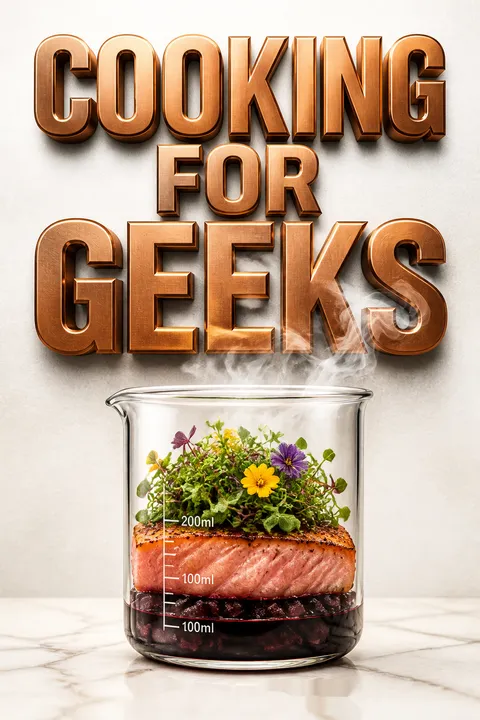
Cooking for Geeks is a practical science book organized around a shift in stance: stop treating the kitchen as a mysterious place where recipes either work or fail, and treat it as a system whose outcomes can be observed, tested, and improved. Its distinctive audience is the curious nonexpert who may be comfortable with technical reasoning but uneasy with cooking. Potter makes that audience's habits useful: compare versions, isolate variables, take measurements, and keep notes. But the book also insists that cooking cannot be reduced to laboratory control. Ingredients vary, taste is personal, and a meal's success includes the experience of the people eating it.
That tension is the book's strength. Measurement makes some processes legible, especially baking ratios, food temperatures, and the formation of browned flavors. Sensory attention handles what instruments cannot fully capture: whether a sauce tastes flat, whether produce is vivid, or whether a dish feels balanced. The result is not a rigid scientific method but a cycle of prediction, intervention, and judgment. Its practical message is that technical knowledge should increase a cook's freedom, not replace it.
The book also has an important boundary. Its dense treatment of chemistry, additives, equipment, and food safety can make ordinary cooking seem more complicated than it needs to be. Some claims and safety recommendations reflect the book's 2010 publication context, so current food-safety guidance should govern practice. The central lessons remain useful even where details change: measure when variation matters, use senses when measurements are incomplete, and understand a method before improvising with it. The ideal reader is not an aspiring laboratory chef, but someone willing to cook, pay attention, and learn why the result changed. In that sense, the book is both a manual and a permission slip: curiosity belongs at the stove, and a failed dinner can still produce valuable knowledge.
Review Summary
Cooking for Geeks receives mostly positive reviews, praised for its scientific approach to cooking and engaging explanations of kitchen chemistry. Readers appreciate the blend of recipes, experiments, and food science, finding it helpful for understanding cooking principles. Some criticize the organization and occasional overly-detailed sections. The book is particularly appealing to those interested in the "why" behind cooking techniques. While some find it too basic or too complex, many readers enjoy its unique perspective on culinary arts.
People Also Read



Glossary
Functional Fixedness
Seeing only familiar usesA cognitive habit of viewing an object only in terms of its customary purpose. Potter uses Duncker's candle problem to illustrate it: people may overlook that the box holding nails can serve as a shelf for a candle. In cooking, overcoming this habit encourages cooks to reconsider ingredients, tools, and leftovers as resources with more than one use.
Mise en place
Prepare before cookingA French kitchen practice meaning putting things in place. Ingredients are measured or prepared, and needed tools are assembled before the main cooking begins. This can reveal missing ingredients early and reduce delays during time-sensitive steps. It is especially useful for complicated dishes or cooking for a group, though simple meals may not require full preparation.
Maillard reaction
Browning from sugars and proteinsA complex set of reactions between amino acids and certain sugars that produces brown color and many aromatic compounds. In cooking, it contributes to the flavors of seared meat, browned bread, and roasted foods. Potter gives about 310°F / 154°C as a practical marker for noticeable browning, while noting that moisture, pH, ingredients, and time also affect the reaction.
FAT TOM
Six conditions for bacterial growthA memory aid for factors that affect microbial growth in food: Food, Acidity, Temperature, Time, Oxygen, and Moisture. It helps explain why dry grains, acidic pickles, or refrigerated foods behave differently from moist foods kept warm. The acronym is a simplified guide, not a complete food-safety assessment or a substitute for current public-health recommendations.
sous vide
Controlled-temperature bath cookingA cooking method in which food, commonly sealed in a bag, is held in a precisely controlled water bath. Setting the bath close to the desired final temperature can produce more even doneness than cooking in a much hotter environment. Because safety depends on temperature, time, food size, and handling, sous vide requires reliable procedures, not just a water bath.
molecular gastronomy
Science of cooking transformationsIn Potter's usage, the scientific investigation of physical and chemical phenomena that occur during cooking. It is distinct from simply applying scientific findings or using modern ingredients to create a dish, though the ideas can inform those applications. The term is used in different ways in culinary culture, so Potter favors a narrower meaning focused on understanding cooking processes.
transglutaminase
Enzyme that bonds proteinsAn enzyme used in food preparation to catalyze bonds between certain amino acids in proteins. It can join pieces of meat or fish, or help form a larger piece from smaller ones. In the book's examples, the joined food is held together while the reaction develops, then cooked normally. The enzyme is a technical ingredient and should be handled according to food-grade instructions.
FAQ
What's Cooking for Geeks about?
- Exploration of Cooking Science: Cooking for Geeks by Jeff Potter explores the science behind cooking, offering insights into how ingredients and techniques interact. It aims to demystify the cooking process for those who may feel intimidated by traditional cookbooks.
- Target Audience: The book is designed for "geeks"—hackers, makers, and tech enthusiasts—who are curious about how things work, including cooking. It encourages readers to experiment and think critically about their culinary practices.
- Practical Recipes and Experiments: It includes a variety of recipes and experiments that illustrate the scientific principles discussed, allowing readers to apply what they learn directly in the kitchen.
Why should I read Cooking for Geeks?
- Unique Perspective: The book offers a fresh take on cooking by combining culinary arts with scientific principles, appealing to those who enjoy understanding the "why" behind processes.
- Encourages Experimentation: Jeff Potter emphasizes curiosity and experimentation, encouraging readers to adapt recipes and try new combinations, leading to greater enjoyment and creativity in the kitchen.
- Accessible for All Skill Levels: Whether you’re a novice or an experienced cook, the book provides valuable insights and techniques that can enhance your cooking skills.
What are the key takeaways of Cooking for Geeks?
- Understanding Cooking Fundamentals: The book stresses the importance of grasping basic cooking techniques and principles before attempting more advanced methods.
- Flavor Combinations: Potter discusses how to recognize and create flavor combinations, emphasizing the joy of cooking as much as the technical aspects.
- Science of Ingredients: It explains how different ingredients interact chemically, which can significantly affect the outcome of a dish.
How does Cooking for Geeks explain the science behind cooking?
- Chemical Reactions: The book discusses various chemical reactions that occur during cooking, such as the Maillard reaction and caramelization, helping cooks achieve better results.
- Temperature and Time: Potter highlights the importance of controlling time and temperature in cooking, providing guidelines for achieving optimal results.
- Ingredient Interactions: It explains how different ingredients interact with each other, affecting flavor and texture, allowing cooks to make informed decisions.
What is the Maillard reaction, and why is it important in cooking according to Cooking for Geeks?
- Browning Reaction: The Maillard reaction is a complex chemical reaction between amino acids and reducing sugars that occurs when food is cooked at high temperatures, responsible for browning and flavor development.
- Temperature Sensitivity: This reaction typically becomes noticeable around 310°F (154°C), crucial for achieving desirable flavors and colors in cooking.
- Flavor Development: It contributes significantly to the flavor profile of many dishes, enhancing the overall eating experience.
What is molecular gastronomy as discussed in Cooking for Geeks?
- Scientific Approach to Cooking: Molecular gastronomy involves applying scientific principles to cooking, understanding the physical and chemical transformations during cooking processes.
- Innovative Techniques: The book discusses techniques like spherification and emulsification, allowing chefs to create unique textures and flavors.
- Tools and Ingredients: Potter introduces specialized tools and ingredients used in molecular gastronomy, expanding a cook's repertoire significantly.
How does Cooking for Geeks address flavor profiles?
- Basic Tastes Explained: The book outlines the five primary tastes: salty, sweet, sour, bitter, and umami, helping cooks balance flavors effectively.
- Experimenting with Ingredients: Potter encourages experimenting with different ingredients to discover new flavor combinations.
- Cultural Flavor Families: It discusses how different cultures have unique flavor profiles and ingredient pairings, inspiring cooks to explore new cuisines.
What role does gluten play in baking according to Cooking for Geeks?
- Structure and Texture: Gluten provides structure and elasticity to baked goods, helping trap air and contributing to the rise and texture of bread and pastries.
- Flour Selection: Different types of flour have varying gluten content, affecting the final product, with bread flour having a higher gluten content than cake flour.
- Controlling Gluten Development: The book explains how to control gluten development through kneading, hydration, and ingredient selection.
What are some practical cooking techniques mentioned in Cooking for Geeks?
- Mise en Place: Potter advocates for preparing and organizing all ingredients before cooking, streamlining the process and reducing mistakes.
- Calibrating Your Oven: The book suggests checking your oven's accuracy using sugar to ensure it’s at the right temperature for cooking.
- Knife Skills: Proper knife techniques, including how to hold a knife and the best ways to cut ingredients, are emphasized for efficiency and safety.
How does Cooking for Geeks encourage creativity in the kitchen?
- Experimentation Mindset: The book promotes a mindset of experimentation, encouraging readers to adapt recipes and try new combinations of flavors.
- Understanding Ingredients: By explaining the science behind ingredients, Potter empowers cooks to make informed decisions about substitutions and modifications.
- Playful Cooking: Potter emphasizes that cooking should be fun and playful, encouraging exploration and creativity.
What are some common cooking mistakes and how can they be avoided according to Cooking for Geeks?
- Not Reading Recipes Thoroughly: Potter stresses the importance of reading through an entire recipe before starting to cook to prevent confusion.
- Overcrowding the Pan: The book warns against overcrowding pans, which can lead to uneven cooking and steaming instead of browning.
- Ignoring Ingredient Quality: Using low-quality ingredients can lead to disappointing results, so Potter advises prioritizing fresh, high-quality ingredients.
What are the best quotes from Cooking for Geeks and what do they mean?
- "The secret to a good meal is having fun making it and enjoying the entire experience!": This quote encapsulates the book's philosophy that cooking should be enjoyable and not just a chore.
- "If you can’t yet imagine what a pickle/strawberry wrap would taste like... use the methods for combining ingredients described in this chapter.": It highlights the importance of imagination and experimentation in cooking.
- "The key to learning how to cook is to define success as a chance to learn rather than as a perfect meal.": This quote reinforces the idea that mistakes are part of the learning process in cooking.
Download PDF
Download EPUB
.epub digital book format is ideal for reading ebooks on phones, tablets, and e-readers.








