

Key Takeaways
Train your attention to see dangers official assurances leave hidden.
The danger was invisible. In Flint, people noticed water that smelled bad, looked discolored, or irritated their skin. Officials repeatedly said it was safe. Lead itself gives no reliable warning to the senses, and exposure may not cause immediate symptoms. A pediatrician, Mona Hanna-Attisha, had even reassured a mother that tap water was fine for mixing infant formula. She changed course only after her friend Elin, an environmental engineer, explained that Flint had switched water sources without proper corrosion control.
Knowledge changes the view. Hanna-Attisha’s guiding idea is that people often fail to notice what they have not learned to look for. Once she understood how corrosive water could pull lead from pipes, earlier complaints and test results took on new meaning. The crisis was not a sudden mystery so much as a pattern that institutions and individuals had overlooked.
What's striking is that the failure begins before anyone falsifies a result: it begins when routine assurances make contradictory evidence seem unimportant. This resembles signal detection in medicine, where a rare or unfamiliar danger can be missed because the observer lacks a mental model for it. The practical lesson is not to distrust every expert, but to ask what evidence would change an official conclusion. Complaints about taste or color do not prove lead exposure, yet they are reasons to investigate rather than dismiss. Trust is strongest when institutions explain how they tested, what they did not test, and how they respond to new evidence.
Treat a child's environment as part of the medical chart.
Health has a setting. A child may arrive with a rash, trouble focusing, or a routine checkup, while the causes of risk sit outside the exam room. Hanna-Attisha describes Flint children facing poverty, unsafe housing, violence, and underfunded schools, alongside environmental hazards. In her account, children in Flint could expect to live about fifteen fewer years than children in a neighboring suburb.
Adversity can shape development. Adverse childhood experiences, or ACEs, are harmful experiences such as poverty, racism, and violence that can affect health, especially in early childhood. The book cites a study of more than 17,000 people associating greater numbers of ACEs with worse health; six or more were associated with a twenty-year reduction in life expectancy. Chronic toxic stress can disrupt developing brain systems. Stable, caring adults and supportive communities can help buffer that harm.
This perspective links clinical care to social epidemiology, the study of how living conditions shape patterns of health across populations. It asks clinicians to look beyond the symptom without pretending that a conversation can repair poverty, unsafe housing, or violence. That distinction matters: identifying social causes should lead to practical support and policy change, not to labeling children as damaged. The account also treats resilience as something communities can cultivate, not a virtue demanded of children left alone with adversity. A useful check is whether services reduce the source of stress, strengthen dependable relationships, or do both.
A water source switch without corrosion control can turn pipes toxic.
A cheap change carried a cost. Flint had long received treated Great Lakes water through Detroit. In April 2014, officials switched to the Flint River as a temporary, cost-saving source while a new pipeline was planned. The river water was more corrosive. Without corrosion control, it could wear away protective deposits inside pipes and release lead into household water. The danger was not necessarily visible at the treatment plant or in every glass. It depended on the pipes water traveled through.
Regulation did not guarantee safety. The book says corrosion control would have cost about eighty dollars a day, yet it was not added when the source changed. Flint’s old pipes and the new water chemistry created a hazardous combination. General Motors stopped using the river water at its engine plant after corrosion problems, months before the public was warned about lead in household water.
The episode shows why infrastructure is more than concrete, metal, and pipes. It is a public health system whose safety depends on maintenance, expertise, and continuous monitoring. A budget decision can appear efficient while shifting hidden costs onto residents, especially when those residents have little power to challenge it. The engineering lesson is equally important: a water source cannot be judged in isolation from the distribution system it flows through. Still, identifying the technical mechanism does not by itself establish who knew what, or when. Accountability requires records, independent testing, and a clear chain of responsibility.
When agencies ignore complaints, connect individual cases into population evidence.
Patterns need a population. A doctor may notice a child with an elevated blood-lead result, but separate clinics cannot easily see whether many children are affected by the same source. Hanna-Attisha worked with research coordinator Jenny LaChance to compare blood tests before and after the water switch. Their analysis covered 1,746 children under five. The share with elevated blood-lead levels rose from 2.1 percent to 4 percent; in the zip codes with higher water-lead readings, it rose from 1.7 percent to 5.3 percent.
Geography strengthened the signal. Geographic information systems, or GIS, helped researchers map children’s results against where Flint water was delivered and where water-lead levels were highest. The strongest increases appeared in high-risk areas. The book connects this method to John Snow’s nineteenth-century cholera map, which helped reveal that cases clustered around a contaminated London water pump.
This is a powerful example of surveillance turning scattered clinical encounters into a public signal. The geographic comparison adds explanatory force: it is more persuasive when the strongest health changes occur where the suspected exposure is greatest. But population-level association does not identify which child was harmed by which source, and it cannot prove every individual outcome. That limitation is not a reason to wait for impossible certainty. Public health decisions often must weigh converging evidence, the severity of potential harm, and the cost of precaution. Transparent methods make that judgment more credible.
Make evidence rigorous enough to survive the backlash.
Scrutiny was predictable. After Hanna-Attisha presented her findings, state officials attacked the study, calling its data manipulated and suggesting seasonal changes explained the increase. She and LaChance revisited their methods, matched comparable seasons, removed duplicate tests, and checked results using different choices about which blood test to count. A more precise GIS analysis supported the same basic conclusion. The study was later peer-reviewed and published in the American Journal of Public Health.
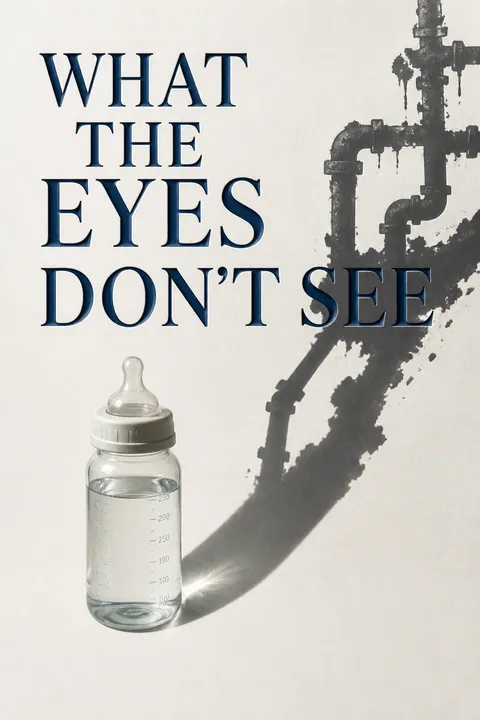
Urgency changed the usual sequence. The team made its early findings public before peer review because children were still drinking the water and publication could take months. That choice exposed the research to criticism, so careful methods and clear explanations mattered. At the press conference, Hanna-Attisha held up a baby bottle filled with Flint water to make the abstract data tangible. The image helped audiences understand what contaminated water meant for infants fed powdered formula.
The episode captures a real tension between scientific procedure and emergency response. Peer review can improve reliability, but its usual pace may be poorly suited to a hazard unfolding in real time. A defensible response is neither to abandon standards nor to treat publication as the only legitimate threshold for action. It is to label preliminary findings clearly, show the analytic choices, invite independent scrutiny, and update conclusions as evidence improves. The baby bottle illustrates another form of rigor: communication must make the human stakes visible without overstating what the data can establish.
Build coalitions across science, medicine, journalism, and residents.
No single expert saw everything. Resident LeeAnne Walters pushed officials to investigate her family’s water. EPA scientist Miguel Del Toral documented concerns about lead and flawed sampling. Engineer Elin Betanzo understood corrosion control. Hanna-Attisha and LaChance analyzed children’s blood tests, while Marc Edwards and his Virginia Tech team tested household water. Local reporters kept complaints and findings in public view. Community health leaders, pediatricians, elected representatives, and residents added reach and credibility.
Different skills created leverage. The researchers could produce evidence, doctors could explain risks to children, journalists could scrutinize official claims, and community organizers could help residents act. When officials resisted, this network kept the problem from being confined to a technical dispute. A press conference brought the evidence together, and residents, clinicians, and advocates pressed for warnings, filters, bottled water, and a return to the Great Lakes source.
The coalition works because its members are not interchangeable. Scientists can test a mechanism, clinicians can interpret developmental risks, and affected residents can identify problems that formal systems have missed. This is a form of distributed knowledge: the people closest to a hazard may know its patterns before agencies do, while specialists can help test those observations. Coalitions can also create accountability by making it harder for one institution to quietly dismiss a concern. Their vulnerability is coordination. Shared goals, trusted communication, and clear roles help prevent disagreement from becoming fragmentation.
Austerity becomes dangerous when residents lose power over essential services.
Budget rules shaped the crisis. Flint’s state-appointed emergency managers were tasked with addressing the city’s financial distress and could override elected local officials. The state’s austerity drive influenced the decision to leave Detroit’s treated water for the Flint River. Hanna-Attisha notes that, during Michigan’s emergency management period, about half of the state’s Black residents lived in cities under emergency managers, compared with about 2 percent of white residents.
Unequal power has consequences. Flint had endured industrial decline, racial segregation, and shrinking public resources. Residents complained about the water, but their complaints did not carry the force of a functioning democratic response. A state task force eventually connected the crisis to race and the emergency manager system. The book’s argument is not that one decision alone created Flint’s vulnerability, but that long-running disinvestment and limited political voice made the consequences more likely and the response slower.
The crisis demonstrates that public infrastructure and democratic representation are linked. When decision-makers are insulated from the people who rely on a service, financial targets can eclipse local knowledge and immediate health risks. The racial disparity described here is especially consequential because it shows that exposure and political power were not distributed evenly. At the same time, a serious account should distinguish documented disparities from proof of any one official’s intent. Structural injustice can operate through rules and incentives even when no individual describes their actions as discriminatory. That makes institutional design, not only personal blame, essential to reform.
Invest in child development even when lead damage cannot be reversed.
Exposure is not the end of the story. Lead has no known safe level, and there is no simple antidote that undoes harm already done. Hanna-Attisha argues that care must therefore extend beyond identifying exposure. Children need dependable medical care, nutritious food, early education, quality childcare, family support, literacy programs, and help with stress. An ecobiodevelopmental approach considers how biology, relationships, and a child’s surroundings interact over time.
Build protection around families. The proposed response included medical homes, home visits, nutrition support, school health services, and mental health resources. The Flint Child Health and Development Fund was created as a long-term source of support for programs intended to help children thrive. These measures cannot make the original exposure harmless. They can strengthen conditions for development and help families navigate the aftermath rather than leaving them to manage a public disaster alone.
This response joins environmental health to developmental science: exposure matters, but so do the relationships, nutrition, education, and stability surrounding a child. The approach resists a narrow medical model in which a test result is treated as the whole problem. It also avoids making resilience a substitute for accountability. Supportive adults and services can buffer adversity, but they do not absolve governments of preventing toxic exposure or repairing infrastructure. The most ethical framing is additive: reduce the hazard, provide sustained care, and expand opportunity, while recognizing that none of those steps can promise an identical outcome for every child.
Treat all 8,657 Flint children as exposed, not only those tested.
A test can miss exposure. When state officials cited a count of only forty-three children, Hanna-Attisha objected that it represented a narrow slice of the population and a late period. Many young children were never screened, and lead levels in blood can fall over time even when exposure occurred. The city had an estimated 8,657 children under six, many of whom had encountered Flint water at home, school, or elsewhere. The author argued that the whole group should be considered exposed, regardless of a child’s current test result.
Prevention must come first. Blood testing can help identify risk, but it cannot replace safe water, careful monitoring, and removal of lead hazards before children encounter them. The crisis also shows why public guidance must account for babies fed formula, pregnant people, and families with limited access to bottled water or transportation. A population should not have to prove individual injury before receiving basic protection.
The distinction between exposure and measured injury is central to responsible public health. A screening program observes only those tested, at particular times, using measures with limits. Treating the tested subset as the whole affected population risks turning gaps in surveillance into false reassurance. The reverse error also matters: population exposure does not mean every child will experience the same outcome. A sound response can hold both ideas at once, offering protection and follow-up to the full cohort while tailoring clinical care to individual needs. Prevention is stronger when residents help shape how risks are identified and addressed.
Analysis
This is a memoir of a public health investigation, but its deeper subject is how institutions decide what counts as evidence and whose warnings deserve attention. The Flint crisis unfolded across several linked systems: water engineering, medical surveillance, emergency management, local journalism, and the unequal political power of residents. Hanna-Attisha’s narrative makes those connections legible by following a specific chain of discovery. A mother’s complaint leads to an engineer’s explanation; the explanation leads a pediatrician to search clinical records; the data then helps assemble a coalition capable of forcing public attention.
The book’s strongest methodological insight is that no single kind of evidence was sufficient. Household testing showed dangerous lead levels, but could be challenged as selective. Blood tests showed a population change, but required careful comparison and could not establish each child’s individual cause of harm. Mapping the two patterns together strengthened the case. The process also reveals a difficult ethical problem: waiting for ideal evidence can itself cause harm when exposure is ongoing. Hanna-Attisha chose to disclose preliminary findings, then subjected them to further analysis and peer review. Her account makes clear both the necessity and the risk of that choice.
The memoir also complicates the familiar story of a lone whistleblower. Hanna-Attisha’s medical position and access to records mattered, but so did Walters’s persistence, Betanzo’s technical knowledge, LaChance’s analytical work, Edwards’s water expertise, local reporters, and organized residents. The successful response depended on combining forms of credibility that institutions had kept separate. That is a useful model for other crises, though it is not a guarantee: coalitions need resources, protection for dissent, and channels through which evidence can trigger action.
The narrative’s moral force comes from linking preventable exposure to Flint’s racial and economic history. Its limitation is also worth noting: a first-person account offers a situated perspective, not a complete institutional investigation. The book acknowledges that narrowness. Its lasting argument is broader than blame: public safety requires competent infrastructure, transparent science, democratic voice, and sustained care for people after the cameras leave.
Review Summary
What the Eyes Don't See is a compelling account of the Flint water crisis by pediatrician Dr. Mona Hanna-Attisha. Readers praise her engaging writing style, passion for justice, and ability to explain complex scientific concepts. The book interweaves the crisis with her family's immigrant story, which some found distracting while others appreciated. Many reviewers were moved by her dedication to exposing the truth and fighting for Flint's children. Overall, it's seen as an important, inspiring read that sheds light on environmental injustice and government negligence.
People Also Read



Glossary
Adverse childhood experiences (ACEs)
Harmful early-life experiencesACEs are difficult or harmful experiences during childhood, including poverty, racism, violence, and household disruption. The book uses the term to explain how repeated adversity during early development can affect health and behavior across a lifetime. Research cited in the text links greater numbers of ACEs with higher risks of physical and behavioral health problems.
Toxic stress
Prolonged stress affecting developmentToxic stress describes the effects of prolonged, intense, or repeated stress during childhood, especially when a child lacks stable, supportive relationships. The book explains that sustained stress responses can affect developing brain and body systems. Caring adults and nurturing environments can help reduce these effects and support a child’s recovery and development.
Primary prevention
Prevent harm before exposurePrimary prevention means stopping exposure or injury before it occurs. In the Flint story, it means making water safe and removing lead hazards before children encounter them, rather than waiting to find elevated lead in a child’s blood. The author presents this as a basic public health responsibility and contrasts it with screening after exposure.
Kehoe Paradigm
Safe until harm is provenThe Kehoe Paradigm, also called the Kehoe Rule in the book, is an approach that allows a potentially dangerous product or practice to continue until harm is proven. Hanna-Attisha traces it to industry arguments about leaded gasoline. She contrasts it with the Precautionary Principle, which places more responsibility on manufacturers and decision-makers to demonstrate safety.
Precautionary Principle
Require evidence of safetyThe Precautionary Principle holds that a product or chemical should be treated as unsafe unless its safety can be demonstrated. The book uses it as an alternative to waiting for definitive proof of harm, a delay that can expose people to preventable risks. In Flint, the principle supports protective action when credible evidence points to lead in drinking water.
Lead and Copper Rule (LCR)
Federal drinking-water lead regulationThe Lead and Copper Rule is a federal regulation under the Safe Drinking Water Act that governs monitoring and control of lead and copper in public water systems. The book criticizes its action level and sampling practices as inadequate protections, and describes how testing procedures can underestimate lead when samples are collected or selected improperly.
Geographic information systems (GIS)
Maps linked to dataGIS software organizes and maps information tied to locations. Hanna-Attisha’s research team used it to compare children’s blood-lead results with neighborhoods receiving Flint water and with areas where water testing found greater lead levels. This spatial analysis helped show where health changes were most pronounced, strengthening the population-level evidence.
Environmental justice (EJ)
Fairness in environmental protectionEnvironmental justice examines how environmental hazards and public health burdens are distributed across communities, especially by race, income, and place. In the book, the concept helps explain why Flint’s residents faced both greater exposure risks and weaker political influence. It also emphasizes community control over decisions that shape local environments.
ecobiodevelopmental approach
Development across connected systemsAn ecobiodevelopmental approach considers how biology, relationships, and a child’s physical and social environment interact across development. The book applies this perspective to recovery after the water crisis, recommending connected supports such as health care, nutrition, education, family services, and mental health resources rather than relying on a single medical intervention.
aeb
Culturally enforced shameAeb is an Arabic cultural concept Hanna-Attisha describes as shame brought not only on an individual but also on their family or community when they violate social expectations. She explains that it can be used to police behavior, particularly for children and girls. Her fear of public failure during the crisis reflects the concept’s emotional force.
Download PDF
Download EPUB
.epub digital book format is ideal for reading ebooks on phones, tablets, and e-readers.








