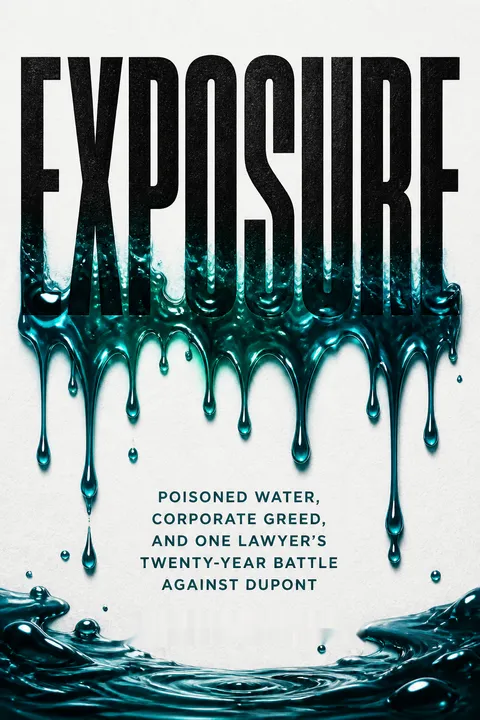


Key Takeaways
Treat a witness's evidence as a lead, not a verdict
A farmer kept records. Wilbur Earl Tennant filmed foaming water flowing from a DuPont landfill into Dry Run Creek. His cattle were wasting away: over two years he lost more than one hundred calves and fifty cows, while wildlife also died nearby. Officials and local lawyers had not helped, and some attorneys declined once they learned DuPont owned the landfill.
The lawyer changed sides. Robert Bilott, a corporate environmental lawyer who usually defended companies, was initially doubtful. But Earl arrived with videos, photographs, animal remains, and documents. The evidence persuaded Bilott that something was wrong, though it did not yet prove what had caused it. He and his firm took the case on a contingency basis, risking unpaid work to investigate.
What's striking is how Earl’s documentation converts a dismissed complaint into a question that institutions must answer. His footage is not a chemical analysis, and dead animals alone cannot establish cause. Its value is different: it records a pattern, preserves observations, and points investigators toward a place and time to test. This is a useful distinction in public disputes. Firsthand evidence can be a powerful alarm without being the final explanation. Bilott’s initial skepticism also matters: taking a witness seriously need not mean accepting every conclusion. It means allowing evidence to change what deserves investigation.
Name the unknown before the system can measure it
The mystery had an alias. Bilott first searched landfill permits and government files for regulated substances that could explain the creek’s foam. The records yielded no convincing answer. A document from DuPont’s Washington Works plant eventually identified APFO, a surfactant used in Teflon production, and acknowledged that plant waste containing it had gone to Dry Run Landfill.
One substance, several names. Bilott’s research established that APFO, PFOA, FC-143, and DuPont’s C8 referred to the same chemical or closely corresponding forms of it. Since PFOA was not listed or regulated, ordinary permits and standard tests had largely missed it. In a lawsuit, identifying the chemical gave Bilott grounds to demand DuPont’s internal studies and records about its use, emissions, and toxicity.
The search exposes a structural blind spot: measurement depends on knowing what to look for. A laboratory cannot reliably identify every unknown compound in a sample simply by running a standard test, and legal discovery initially mirrored that limitation by focusing on permitted chemicals. The lesson extends beyond pollution investigations: categories shape what institutions can see. Still, naming a suspect compound is only the beginning. It must be distinguished from related substances, measured with valid methods, and connected to exposure. The book shows how a change in vocabulary can open doors, but not how vocabulary alone proves harm.
Persistent chemicals make low-level exposure cumulative, not fleeting
The body did not readily clear it. Bilott learned that PFOA was biopersistent, meaning it remains in the body for a long time, and bioaccumulative, meaning repeated exposure can build up faster than the body removes it. DuPont’s own scientists had set an internal community drinking-water guideline of about 1 part per billion, yet its documents showed PFOA in Dry Run Creek at levels as high as 1,600 parts per billion.
The measuring stick shifted. In 2002, a state and industry-linked team set a screening level of 150 parts per billion, far above DuPont’s earlier guideline. The water itself had not changed; the threshold had. Bilott argued that this new number could make real contamination appear harmless without reducing anyone’s exposure.
This account makes time part of toxic exposure. A brief dose and repeated contact with a slowly cleared substance are not equivalent, even if each measurement looks small. It also illustrates why a safety threshold is not a natural fact discovered intact in a sample. It depends on data, assumptions, and choices about uncertainty. A threshold can be useful for public decisions, but it deserves scrutiny when the organization benefiting from a high limit helped produce it. The caution is that persistence alone does not establish a particular disease; it makes careful exposure assessment and long-term study more important.
Audit who defines safety when the polluter supplies the science
The first investigation narrowed the question. EPA’s 1997 ecological investigation found harm to wildlife around Dry Run Creek but could not identify the cause. DuPont then proposed a Cattle Team focused on the herd. Its report blamed the cattle’s poor condition on nutrition, flies, and management, without discussing PFOA. One DuPont veterinarian on the team had worked on internal PFOA studies.
A new panel set a striking limit. After the community water contamination became public, the CAT Team, which included DuPont scientists and consultants, declared 150 parts per billion a safe screening level. Bilott challenged the process and later found that state toxicologist Dee Ann Staats and DuPont toxicologist Gerry Kennedy had destroyed notes related to it. A court ordered the state to preserve records and allowed deleted files to be recovered.
The case is not an argument that scientists who work with industry are automatically unreliable. Expertise often resides inside companies, and collaboration can make technical work possible. The harder question is governance: who selects the experts, controls the data, records decisions, and can challenge conclusions? Here, destroyed notes and a company-linked process undermined confidence even before the threshold itself was examined. Independent review needs more than good intentions; it needs traceable methods and preserved records. At the same time, allegations of influence should be supported by evidence, not inferred from affiliation alone.
Read the records around the official conclusion
The paper trail changed the case. Bilott read tens of thousands of pages, then more than one hundred thousand, arranging records chronologically to find missing links. DuPont initially limited production to landfill permits and listed chemicals. After Bilott identified PFOA, court orders forced the company to produce internal toxicology studies, water tests, employee records, and communications.
The timeline revealed knowledge. Records showed animal toxicity findings, PFOA in workers’ blood, contaminated local water, and internal debate over the risks. A 1984 executive meeting discussed the community contamination and the cost of replacing PFOA. The documents did not merely contradict public assurances. Together, they showed what different parts of the company knew, when they learned it, and how business decisions shaped the response.
Chronology is an unusually powerful investigative tool here. A single memo can be ambiguous; arranged beside earlier studies, later decisions, and public statements, it becomes evidence of a pattern. This is close to systems analysis: the important event is not always one villainous decision, but the interaction of incentives, departments, and delayed feedback. The approach is labor-intensive, and a document trail can still be incomplete or open to interpretation. Its strength comes from triangulation, where independent records and actions support the same account, rather than treating any one striking document as conclusive.
Seek protection before exposure becomes a diagnosis
The usual lawsuit came too late. Residents had been exposed to contaminated drinking water but were not all sick. Traditional injury claims generally require a diagnosed harm, and no government standard for PFOA offered an easy benchmark. Bilott found a recent West Virginia legal precedent allowing a medical-monitoring claim: exposed people could seek testing if the substance was hazardous, raised the risk of serious disease, and doctors would reasonably recommend tests that existed.
The remedy was preventive. Bilott used this route to represent Joe Kiger and thousands of neighbors. Their class action sought clean water and medical monitoring, not simply compensation for diagnosed illness. Courts in other states later rejected similar claims or class certification, showing that this approach depended heavily on the jurisdiction and the legal theory available there.
Medical monitoring addresses a gap between exposure and illness: people may have reason to seek early detection before they can prove an injury in the conventional sense. That is a public-health logic translated into a legal remedy. It can distribute the cost of precaution toward the party alleged to have created the risk. The difficult boundary is determining which exposures justify testing, especially when evidence is incomplete and medical screening has costs and possible harms of its own. The book’s account makes the remedy compelling, while the different court outcomes show that it is not a universal legal entitlement.
Make the affected community part of the evidence
The settlement made science actionable. Rather than end the case with cash alone, Bilott negotiated clean-water systems and an independent Science Panel to assess disease links. The panel’s work required a large, reliable record of exposure and health histories. A separate project, the C8 Health Project, invited residents to complete detailed questionnaires and provide blood samples.
Incentives built the dataset. The settlement used payments of up to $400 to encourage participation. Nearly 69,000 people took part in a class estimated at 70,000 to 80,000. After years of analysis, the Science Panel found probable links between PFOA exposure and six diseases: kidney cancer, testicular cancer, ulcerative colitis, thyroid disease, high cholesterol, and preeclampsia. It did not find probable links for birth defects, miscarriage, or several other conditions.
The project turns residents from subjects of an argument into contributors to a shared evidence base. Its scale made questions about community exposure answerable in ways that company worker studies could not, because workers differed from the wider population in age, health, and circumstances. The independent panel and agreed decision rules also gave the findings a defined role in the settlement. Large participation does not eliminate bias or uncertainty, and a probable link is not proof that exposure caused every individual case. The design’s value lies in making the limits and consequences of the evidence explicit.
Use a verdict to turn corporate knowledge into liability
The science was not the whole case. In the personal-injury trials, plaintiffs still had to show that DuPont had a duty of care, breached it, caused damage, and substantially contributed to a particular person’s disease. The Science Panel had resolved general causation for the six linked diseases, but each plaintiff still faced the question of specific causation.
Juries imposed consequences. Carla Bartlett won $1.6 million for kidney cancer. David Freeman won $5.1 million in compensatory damages and $500,000 in punitive damages for testicular cancer. A third bellwether plaintiff won $12.5 million. As more trials approached, DuPont agreed in 2017 to pay $670.7 million to settle more than 3,500 claims. Individual awards still depended on each claimant’s illness and losses.
The distinction between general and specific causation is crucial. A chemical may be capable of causing a disease without explaining why one person developed it, and trials must confront that difference rather than collapse it. The agreed Science Panel narrowed one debate, allowing juries to focus on individual claims and corporate conduct. Verdicts also create pressure through precedent, publicity, and financial exposure, though they cannot restore lost health or guarantee that every exposed person receives compensation. The settlement’s scale reflects both a legal achievement and the limits of resolving widespread harm case by case.
Compare prevention costs with the human price of delay
The company had options. At trial, plaintiffs pointed to DuPont records describing possible alternatives to PFOA, including a substitute chemical and methods to destroy or recover PFOA waste. One destruction option was estimated to require about $1 million up front and $1 million in annual operating costs. Washington Works had an annual operating budget of about $650 million.
The tradeoff was visible. Internal discussions weighed possible risks to people against the expense and commercial importance of changing production. Executives worried that eliminating PFOA could threaten the Teflon business. The jury heard that decisions made to preserve manufacturing economics left workers and nearby residents exposed, while contamination and illness carried costs that did not appear on the company’s balance sheet.
This is the logic of externalized costs: a firm can improve its own accounts by leaving health and cleanup burdens to workers, neighbors, and the public. Comparing prevention expenses with a large operating budget makes that choice concrete, though the comparison cannot by itself establish which alternative was technically effective or safe. The deeper decision test is whether a company treats uncertainty as a reason to investigate and reduce exposure, or as permission to continue until harm is proven. That choice is ethical as well as economic, especially when the people bearing the risk cannot consent.
A production phaseout cannot remove chemicals already released
Ending use did not erase the past. DuPont and EPA eventually agreed to a program aimed at sharply reducing PFOA emissions and phasing out production. But the chemicals already in water, soil, products, and people remained. The book describes contamination spreading beyond Parkersburg, including other states and countries, while newer compounds such as GenX raised fresh questions.
The unfinished problem is systemic. EPA’s promised assessments and regulatory steps repeatedly stalled. By the book’s account, PFAS contamination had been identified at hundreds of US sites, and affected drinking water reached more than 100 million Americans. Bilott’s final proposal was to make chemical companies fund independent research into PFAS in human blood, so the public could learn what exposure means rather than wait for regulators to complete work that had been delayed for years.
A phaseout is a control on future inputs, not a remedy for accumulated contamination. That distinction separates prevention from remediation and explains why voluntary production targets cannot substitute for monitoring, cleanup, and public disclosure. The book’s global frame also reveals a challenge of chemical governance: regulation organized around one compound or one site can lag behind related substances and dispersed sources. Its proposed research remedy is ambitious, but science can clarify risk only if paired with enforceable decisions about water and exposure. Otherwise, better knowledge may document harm without preventing it.
Analysis
Exposure works as memoir, investigative history, and legal case study at once. Its narrative engine is a change in scale: a farmer’s failing herd leads a corporate defense lawyer from a local landfill to contaminated municipal water, hidden toxicology, a seventy-thousand-person community, and finally a global class of persistent chemicals. The book’s deepest argument is not simply that one company concealed risk. It is that public protection can fail when chemical oversight depends heavily on information held by the same firms whose products may be restricted by that information.
Bilott’s method is a form of institutional forensics. He combines documentary chronology, scientific interpretation, discovery rules, public communication, and litigation pressure. The documents become powerful because they connect knowledge to decisions: what was measured, which results were shared, what alternatives were considered, and what public claims followed. The independent Science Panel is a particularly consequential design choice. It translates a legally negotiated settlement into a large human study, then makes its findings binding for general causation. The C8 Health Project demonstrates that community participation can produce research at a scale that neither a small expert team nor isolated lawsuits could readily achieve.
The story also deserves careful reading as advocacy. Bilott is both narrator and litigant, and much of the account rests on his interpretation of records, regulatory behavior, and corporate intent. The book reports powerful evidence of concealment, but its accusations should not be confused with a complete history of every scientific uncertainty or every actor’s motives. Its account of the Science Panel illustrates this tension: the panel found links with six diseases but not birth defects, despite deeply troubling individual cases. That difference between compelling personal evidence and population-level inference is not a weakness to hide. It is the difficult terrain where science, law, and justice meet.
The lasting lesson is practical: disclosure, preserved records, independent methods, and clear exposure standards are not bureaucratic extras. They are the infrastructure that lets the public test assurances made by powerful institutions. When that infrastructure is weak, persistence and accountability may depend on witnesses, lawyers, scientists, journalists, and communities forcing the evidence into view.
Review Summary
Exposure is highly praised for its compelling story and clear explanations of complex legal and scientific issues. Readers appreciate Bilott's tenacity in fighting DuPont's corporate malfeasance and the book's eye-opening revelations about PFAS contamination. Many find it riveting and well-written, though some note it can be heavy on technical details. The book elicits strong emotions, with readers expressing anger at corporate greed and gratitude for Bilott's efforts. Overall, it's viewed as an important work that raises awareness about a critical environmental and health issue.
People Also Read



Glossary
PFOA
Teflon-processing chemicalPerfluorooctanoic acid, also called C8 by DuPont, was used as a surfactant in manufacturing Teflon. In the book, records show that it escaped from plants and waste sites into water and air. The author describes it as persistent in the environment and in the human body, and recounts evidence and studies linking community exposure to several diseases.
PFAS
Related fluorinated chemicalsPer- and polyfluoroalkyl substances are a broad family of manufactured chemicals that includes PFOA and PFOS. The book uses PFAS to describe a wider problem than the original Parkersburg contamination: many related compounds have been used in products and industrial processes, and some can persist in the environment. The author emphasizes that replacing one compound does not automatically resolve risks from others.
Biopersistence
Long bodily retentionBiopersistence describes a substance’s tendency to remain in the body for a long time rather than being quickly broken down and eliminated. In the book, PFOA’s persistence helps explain why exposure could matter beyond the moment of contact. Repeated exposure may leave the chemical circulating in the body, making past as well as current contact relevant to assessing internal levels.
Bioaccumulation
Build-up through repeated exposureBioaccumulation occurs when a substance enters an organism faster than the organism can remove it, so the amount in the body builds over time. Bilott describes PFOA as both bioaccumulative and biopersistent. Together, these qualities mean that repeated low-level exposure may contribute to increasing bodily levels, rather than each exposure disappearing before the next one.
Community Exposure Guideline
Company drinking-water limitDuPont’s Community Exposure Guideline, or CEG, was an internal benchmark intended to address continuous exposure through community drinking water, including exposure among vulnerable residents. The book reports that company scientists recommended about 0.6 parts per billion and rounded the guideline to 1 part per billion. It was not a government regulation, but it became important evidence against much higher later safety claims.
CAT Team
State-industry risk panelThe C8 Assessment of Toxicity Team was established under a West Virginia agreement to develop a drinking-water screening level for PFOA. It included state, company, and consultant participants. In 2002 it set a level of 150 parts per billion. Bilott challenged both the result and the process, including the destruction of notes by the state toxicologist and a DuPont toxicologist.
Medical monitoring
Testing after toxic exposureMedical monitoring is a legal remedy that can provide diagnostic testing to people who have been exposed to a hazardous substance and face an increased risk of serious disease, even if they have not yet been diagnosed. In Bilott’s case, a West Virginia court precedent offered a basis for seeking this remedy for the exposed community. The settlement later created a medical-monitoring program for qualifying class members.
C8 Health Project
Community blood and health studyThe C8 Health Project collected blood samples and health histories from nearly 69,000 residents affected by PFOA contamination near Washington Works. A settlement-funded payment encouraged participation, and the resulting data supported the work of the independent Science Panel. The project’s scale allowed researchers to examine community exposure and health outcomes far beyond the smaller worker studies conducted by chemical companies.
Science Panel
Independent disease-link reviewersThe Science Panel was a group of three epidemiologists jointly selected by the plaintiffs and DuPont under the 2004 settlement. It reviewed the C8 Health Project data and other available research to determine whether PFOA exposure was probably linked to specific diseases among class members. Its findings governed later claims about general causation under the agreement.
Probable link
More likely than notUnder the settlement, a probable link meant that the weight of available scientific evidence made a connection between PFOA exposure and a particular disease among class members more likely than not. The Science Panel applied this standard to the community data and identified six diseases. The finding established general causation for the class under the agreement, but did not prove that PFOA caused every individual member’s illness.
FAQ
What is Exposure: Poisoned Water, Corporate Greed, and One Lawyer's Twenty-Year Battle against DuPont by Robert Bilott about?
- Central narrative: The book follows Robert Bilott’s twenty-year legal battle against DuPont over the contamination of water supplies with PFOA, a toxic “forever chemical.”
- Key events: It begins with a West Virginia farmer’s dying cattle and expands to a class-action lawsuit representing 70,000 people exposed to PFOA.
- Themes explored: The story delves into corporate greed, environmental contamination, regulatory failures, and the personal and professional toll on Bilott and his clients.
- Broader implications: The book highlights the global impact of PFOA pollution and the challenges of holding powerful corporations accountable.
Why should I read Exposure by Robert Bilott?
- Uncovering hidden truths: The book exposes a real-life environmental scandal, revealing how a dangerous chemical contaminated water and people’s bodies for decades.
- Legal and scientific insight: Readers gain a rare inside look at the intersection of law, science, and corporate ethics in environmental justice cases.
- Inspiration and accountability: Bilott’s perseverance against overwhelming odds is a testament to the power of persistence and ethical responsibility.
- Public health awareness: The story raises awareness of a crisis affecting millions and the importance of fighting for clean water and health protections.
What are the key takeaways from Exposure by Robert Bilott?
- Corporate concealment: DuPont knew about PFOA’s toxicity and environmental persistence but concealed this information, leading to widespread harm.
- Legal innovation: Bilott’s use of internal documents and independent science set legal precedents for medical monitoring and environmental justice.
- Regulatory shortcomings: The book reveals how regulatory agencies were slow to act and sometimes influenced by industry, allowing contamination to continue.
- Global relevance: The issues with PFOA contamination extend beyond the U.S., highlighting the need for stronger oversight worldwide.
Who is Wilbur Earl Tennant and what role does he play in Exposure by Robert Bilott?
- Catalyst for the case: Earl Tennant is a West Virginia cattle farmer whose herd began dying after drinking contaminated water, prompting the initial investigation.
- Symbol of resistance: Despite being dismissed as “an old dumb farmer,” Tennant documented the pollution and fought for answers, inspiring Bilott’s involvement.
- Personalizes the crisis: His story brings a human face to the environmental and health disaster caused by DuPont’s actions.
- Motivation for legal action: Tennant’s suffering and determination were the driving force behind the lawsuit that would eventually impact thousands.
How did Robert Bilott, a corporate defense lawyer, become involved in suing DuPont in Exposure?
- Unexpected connection: Bilott was contacted by Earl Tennant through a family connection, despite his background in defending corporations like DuPont.
- Initial skepticism: Bilott was hesitant but was convinced by Tennant’s evidence and passion to investigate further.
- Turning point: After reviewing the documentation and facing DuPont’s resistance, Bilott decided to represent the Tennants, shifting his career focus.
- Beginning of a crusade: This decision marked the start of Bilott’s transformation from corporate defense to environmental advocacy.
What is PFOA (perfluorooctanoic acid) and why is it significant in Exposure by Robert Bilott?
- Chemical background: PFOA is a synthetic chemical used in manufacturing Teflon, known for its persistence in the environment and bioaccumulation in humans and animals.
- Health and environmental impact: PFOA contamination led to widespread pollution of water supplies, causing health problems such as cancer, birth defects, and other diseases.
- Regulatory loophole: At the time, PFOA was unregulated and not listed as hazardous, allowing DuPont to dispose of it with little oversight.
- Central to the legal battle: The fight to prove PFOA’s dangers and hold DuPont accountable is at the heart of the book.
How did DuPont respond to allegations and legal actions regarding PFOA contamination in Exposure by Robert Bilott?
- Denial and deflection: DuPont initially denied wrongdoing, blaming the farmer’s practices and disputing the presence and effects of PFOA.
- Manipulation of science: The company set up internal teams and hired consultants to downplay risks and produce favorable safety guidelines.
- Obstruction tactics: DuPont delayed discovery, destroyed or withheld documents, and used public relations campaigns to shape public perception.
- Eventual settlements: Despite years of denial, DuPont ultimately settled thousands of claims after court verdicts found them liable.
What legal strategies and challenges did Robert Bilott face in Exposure by Robert Bilott?
- Discovery battles: Bilott fought prolonged disputes to obtain internal DuPont documents, often facing claims of privilege and document destruction.
- Scientific complexity: He had to master toxicology and risk assessment to challenge DuPont’s inflated safety guidelines and prove health risks.
- Class action innovation: Bilott pioneered the use of medical monitoring claims for those exposed to PFOA, navigating uncharted legal territory.
- Resistance and delays: DuPont’s aggressive legal tactics and regulatory inertia made the case exceptionally challenging.
What is the significance of the Science Panel and Medical Panel in Exposure by Robert Bilott?
- Science Panel’s role: Established by the class-action settlement, the Science Panel of independent epidemiologists determined probable links between PFOA exposure and specific diseases.
- Medical Panel’s function: After the Science Panel’s findings, the Medical Panel recommended appropriate medical monitoring for affected individuals.
- Binding findings: The panels’ conclusions were binding, preventing DuPont from disputing causation in future claims.
- Legal and scientific breakthrough: This approach set a precedent for using independent science to resolve complex toxic tort cases.
What health effects and diseases are linked to PFOA exposure according to Exposure by Robert Bilott?
- Confirmed links: The Science Panel found probable links between PFOA exposure and kidney cancer, testicular cancer, ulcerative colitis, thyroid disease, high cholesterol, and preeclampsia.
- Other concerns: The book discusses additional suspected effects, such as birth defects, liver damage, and developmental issues, though not all were confirmed.
- Persistence in the body: PFOA accumulates in human blood with a half-life of 20-25 years, leading to chronic exposure.
- Ongoing health risks: The chemical’s persistence raises concerns about long-term health impacts even after exposure stops.
How does Exposure by Robert Bilott portray the role of government agencies and regulators in the PFOA contamination case?
- Regulatory failures: Agencies like the EPA and state regulators are depicted as slow to act and sometimes complicit, often deferring to DuPont’s data.
- Industry influence: The creation of joint teams with DuPont scientists illustrates regulatory capture and conflicts of interest.
- Limited enforcement: Bilott’s efforts highlight the limitations of regulatory enforcement and the need for private legal action.
- Call for reform: The book underscores the necessity for stronger oversight and accountability in environmental regulation.
What personal and professional sacrifices did Robert Bilott describe in Exposure?
- Work-life imbalance: Bilott recounts long hours and the toll on his family life, missing critical moments with his wife and children.
- Career risk: Taking on DuPont jeopardized his standing at a corporate defense firm and risked professional isolation.
- Emotional and physical toll: The stress of the case led to health issues, including neurological symptoms, and moments of despair.
- Enduring commitment: Despite these challenges, Bilott’s sense of responsibility and pursuit of justice kept him going.
What are the best quotes from Exposure by Robert Bilott and what do they mean?
- On corporate responsibility: “Punitives weren’t just about the dollars; they were about holding a company responsible for consciously doing wrong.” This emphasizes the role of punitive damages in ensuring accountability.
- On the power of science: “Only impartial science could implicate—or exonerate—PFOA. Only science could answer our class members’ questions.” This highlights the central role of unbiased scientific inquiry.
- On the human cost: “I want to show you everything I gave to DuPont, and everything they have taken from me.” This personalizes the devastating impact of corporate negligence.
- On persistence: “I was still infected with Earl’s stubborn faith. Regulators just needed to see all the data, I told myself.” This reflects the relentless determination required to confront powerful interests.
Download PDF
Download EPUB
.epub digital book format is ideal for reading ebooks on phones, tablets, and e-readers.








