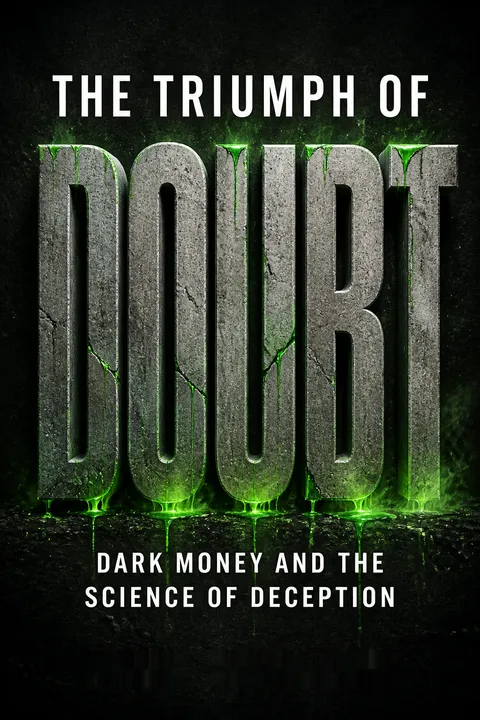


Key Takeaways
Treat manufactured doubt as a business strategy, not a scientific stalemate.
Delay is the objective. Michaels calls the practice manufacturing uncertainty: companies fund experts, reports, and publicity that make evidence of harm seem unsettled. The aim is often not to prove a product harmless, but to postpone regulation, lawsuits, and lost sales while the product remains in use. Tobacco supplied the template, later reused across chemicals, food, alcohol, pharmaceuticals, and pollution.
The opening example is small. In the NFL's Deflategate investigation, the league hired Exponent to produce a technical report useful to its case against Tom Brady. The report was later challenged by outside researchers. Michaels uses this comparatively minor dispute to introduce a larger pattern: when an organization faces threatening evidence, it may seek a favorable scientific narrative rather than an independent answer.
What's striking is that delay can produce value even when a defense ultimately fails. Public policy has a timing problem: exposure and illness continue while evidence is debated, whereas the company benefits immediately from continued sales. That asymmetry helps explain why a weak argument can still be strategically effective. It also calls for care in evaluating accusations: sponsorship alone does not prove a study wrong. The stronger test is whether methods, data, and conclusions withstand independent scrutiny.
Judge studies by their design, funding, and data trail, not polish.
Peer review is not a seal. Scientific journals provide one checkpoint in a longer process of testing and replication. A paper can pass peer review and still be weak, especially when its reviewers share the author's assumptions or financial interests. Product-defense consultants have published lengthy reviews and reanalyses in journals that look authoritative to nonexperts, then used those papers in regulatory debates and courtrooms.
Follow the choices. Epidemiological research requires decisions about populations, exposure estimates, comparisons, and statistical methods. Reanalysts who already know the original result can change those choices and make an association appear weaker. Michaels calls this data dredging. The same funding pressure can shape research questions before data are collected, or influence how ambiguous results are interpreted. Disclosure helps readers assess these risks, but it cannot undo them.
This approach is useful because it replaces a crude question, whether a study is peer-reviewed, with a sequence of better ones: Who chose the question? Were methods specified before results were known? Can others inspect the data? Do independent studies point in the same direction? Yet methodological criticism is not automatically sinister. A genuine reanalysis can uncover mistakes. The distinction depends on transparency, reproducibility, and whether the same standard of scrutiny is applied to evidence that favors either side.
PFAS contamination outlasts the company decisions that caused it.
The chemicals persist. PFAS are a large family of manufactured compounds used in products such as nonstick coatings, stain-resistant fabrics, and firefighting foam. Their chemical bonds resist breakdown, allowing them to spread through water, food, and human bodies. Near DuPont's Washington Works plant, about 2.5 million pounds of PFOA were lost during processing or released into the environment.
Documents changed the picture. Farmer Wilbur Tennant suspected DuPont waste was killing his cattle. His lawyer, Rob Bilott, uncovered internal records showing that the company had information about worker exposure, possible birth defects, and contaminated water. A later independent study of about 69,000 residents linked PFOA exposure to several health effects. The EPA's 2016 drinking-water advisory of 70 parts per trillion was more than 2,000 times lower than a state safety level set with industry-linked advice.
PFAS makes the difference between a temporary product defect and a persistent environmental liability vivid. The exposure does not end when production stops or a company changes its name. This shifts the policy question from whether each affected person can prove individual injury to how contamination can be prevented, monitored, and paid for. The story also shows why independent research matters: a large exposed population can reveal patterns that are difficult to detect in isolated cases.
Demand independent medical oversight when employers control injury data.
Football's first committee reassured the league. After questions arose about concussions, the NFL created its Mild Traumatic Brain Injuries Committee. Its members included team doctors and other professionals with ties to the league, and its name framed the injuries as mild before the research had established their long-term effects. The committee's studies often minimized the possibility of lasting damage and were criticized for methodological flaws.
Autopsies raised the stakes. Neuropathologist Bennet Omalu reported chronic traumatic encephalopathy, or CTE, in former player Mike Webster's brain. The NFL committee challenged his findings and sought a retraction. A later Boston University study found CTE in 110 of 111 donated NFL players' brains. That selected group cannot establish the disease's prevalence among all players, but it added to evidence demanding independent investigation.
The case illustrates a governance problem, not simply a medical one. When an employer controls injury records, medical access, and the public message, its internal review can appear reassuring without being independent. Similar conflicts can arise anywhere a sponsor has authority over both the evidence and the people affected. The donated-brain study also demonstrates the need for precision: a striking finding can raise urgent concern without answering how common the condition is across the full population.
A five-sentence letter helped sell opioids as safer than evidence allowed.
A tiny source gained outsized influence. In 1980, a brief letter in the New England Journal of Medicine reported few addiction cases among hospitalized patients who received narcotics. It was not a long-term study of chronic pain treatment, and it offered no follow-up after discharge. Yet it was repeatedly cited as evidence that addiction was rare when opioids were prescribed.
Marketing filled the evidence gap. Purdue Pharma introduced OxyContin in 1995, promoting its extended release as less addictive. The company also promoted the idea of pseudoaddiction, the unsupported claim that drug-seeking behavior can reflect inadequately treated pain rather than addiction, and that more opioids may be the answer. Paid physician speakers and industry-backed groups reinforced the message. In 2017, opioid overdoses killed nearly 48,000 people in the United States, although many later deaths involved illicit fentanyl and heroin.
The episode shows how scientific claims travel beyond their original scope. A narrow observation can become a general rule once repeated in articles, lectures, and marketing. The lesson is not that short studies or letters are useless, but that claims must stay proportional to the evidence they actually provide. It also matters that social and economic conditions contributed to the opioid crisis. Corporate conduct was a major part of the story, not a complete explanation of every overdose.
Do not mistake a J-shaped alcohol chart for proof of benefit.
The comparison group matters. The alcohol industry's J-shaped curve suggested that moderate drinkers had lower mortality than abstainers and heavy drinkers. But abstainers can include people who quit because of illness, as well as people with other health habits that affect longevity. Heavy drinkers may also differ in smoking and diet. Those differences can make moderate drinking look protective even when alcohol is not the cause of the apparent advantage.
Benefits and harms differ. Michaels describes evidence for a small reduction in heart-attack risk among some current drinkers, alongside increased risks of cancers and other conditions. One drink a day does not make alcohol harmless. A planned federal trial, the Moderate Alcohol and Cardiovascular Health trial, was designed with industry input and a population and duration that could miss important harms, including cancer. A federal review concluded that its framing appeared biased toward finding benefit, and the trial was canceled.
The J-curve is a useful reminder that observational studies can mislead when groups differ in more than the exposure being studied. It also illustrates how a real, limited benefit can be used to distract from a broader risk profile. The scientific challenge is to communicate trade-offs without turning them into an all-or-nothing verdict. Uncertainty remains part of nutrition and alcohol research, but uncertainty does not erase established risks or justify presenting a selective outcome as an overall health gain.
A soda's calories became a distraction from its sugar.
Coca-Cola backed a different frame. The Global Energy Balance Network promoted exercise as the key to addressing obesity, shifting attention away from sugary drinks and diet. Internal documents showed Coca-Cola helped establish and fund the group. Its leaders presented the energy-balance idea as an alternative to public-health arguments for regulating specific foods, while the company's funding of the effort was initially difficult for the public to see.
Research sponsorship predicts conclusions. In one review of 60 studies on sugar-sweetened beverages, 25 of 26 studies finding no link with obesity were industry-funded, while only one of 34 studies finding a harmful relationship had industry funding. These counts do not prove any individual paper wrong, but the pattern raises concern. Taxes on sugary drinks have reduced sales in places including Mexico, where purchases fell further in the second year after a one-peso-per-liter tax.
The energy-balance message can sound reasonable because exercise does affect health and energy use. Its weakness is treating a true statement as a complete explanation. A public-health problem can have several causes, and the existence of one does not make another irrelevant. The chapter also makes a broader point about framing: research can influence policy before it settles a scientific question, simply by directing attention toward some causes and away from others.
Test products on real roads, not just compliant laboratory conditions.
Volkswagen's clean-diesel claim failed outside the test station. U.S. emissions rules were stricter than those in Europe. Volkswagen installed software that detected official testing and temporarily increased pollution controls. On the road, some cars emitted nitrogen oxides at levels about 40 times higher than during testing. Independent researchers using portable equipment helped expose the gap, and the company ultimately disclosed defeat devices in about 11 million cars worldwide.
Even research was manipulated. A vehicle-industry group funded a laboratory study using monkeys exposed to exhaust from an old Ford truck and a newer Volkswagen Beetle. The Beetle was equipped with the same type of defeat software, and company personnel helped prepare the test setup. When results did not favor the new engine, researchers changed how they described and presented them. The study was never published as a full paper. Volkswagen later paid more than $32 billion in penalties, compensation, and restitution through 2018.
This case reveals two different vulnerabilities: tests can fail to represent real-world use, and sponsors can influence research itself. Independent measurement outside a controlled setting is therefore not a technical afterthought; it is a check on the system being tested. The animal experiment also raises ethical questions beyond its scientific flaws. When a study is designed to reassure a sponsor, the animals bear the cost of a project that may have little genuine value.
A strong rule can survive pressure when evidence and workers are heard.
Silica shows regulation is possible. OSHA spent years developing a standard to reduce exposure to respirable crystalline silica, a dust that causes silicosis and increases lung-cancer risk. The new limit lowered the general-industry level from 100 to 50 micrograms per cubic meter and the construction level from 250 to 50. OSHA estimated the rule would prevent about 700 deaths and 1,600 cases of lung disease each year, with annual costs of about $637 million.
Public input improved the rule. Fourteen days of hearings and more than 2,000 comments produced a record of roughly 34,000 pages. Workers with silicosis described what the disease meant in daily life, while experts and employers addressed science and feasibility. Courts rejected industry's challenges to the standard. Once the rule took effect, inexpensive dust-control tools became common on construction sites, and the feared wave of layoffs or unaffordable costs did not materialize.
The silica story counters the idea that regulation is either effortless or futile. It takes time, expertise, and a public record detailed enough to withstand legal attack. That process can be frustrating, but it also exposes claims about cost and feasibility to scrutiny. The workers' testimony matters because technical risk estimates can obscure what exposure means in a body and a household. The case also demonstrates that some businesses welcome common standards when competitors otherwise gain an advantage by neglecting safety.
Climate denial inherited tobacco's tactics and scaled them through dark money.
The playbook moved from smoke to greenhouse gases. The George C. Marshall Institute and related organizations questioned evidence on issues including acid rain, ozone depletion, secondhand smoke, and climate change. Fossil-fuel interests and wealthy donors supported organizations that presented opposition to regulation as a defense of freedom and limited government. Dark money made it difficult to identify who was paying for some campaigns.
The argument changed as the evidence grew. Climate messaging moved from denying warming to disputing human causes, exaggerating uncertainty, or arguing that action would cost too much. Political identity and media repetition helped make a scientific question a loyalty test. The result is not simply disagreement about climate projections: it is a fight over whether public institutions should act on evidence before all uncertainty disappears.
The climate example shows that scientific controversy can be manufactured without persuading everyone that the opposite claim is true. It may be enough to weaken trust, make policy look partisan, and keep decision-makers inactive. That is especially potent for a slow-moving risk whose costs are distributed across places and generations. Still, describing the debate as settled should not imply that every local projection or policy choice is certain. Sound policy must distinguish confidence about causes from uncertainty about particular impacts.
Make manufacturers fund safety research without choosing its questions or scientists.
Separate payment from control. Michaels argues that producers should pay for testing, as they do in other systems where product safety is a condition of doing business. But independent scientists, not manufacturers or their lawyers, should set research questions, select investigators, and publish results. Pooled funding through independent institutions could make this possible. Full disclosure of sponsors and restrictions on attorney-controlled studies would make it easier to identify hidden interests.
Use more than one safeguard. The book also supports evaluating related chemicals as classes when individual testing is incomplete, and preserving litigation as a check when regulation fails. Lawsuits can uncover internal records, compensate injured people, and deter concealment. But litigation is costly and arrives after harm. Scientists, workers, unions, and communities can strengthen public pressure by organizing and making evidence accessible through public document collections.
The proposal addresses a structural problem: the party with the most to gain from a result should not control the production of evidence about that result. Pooled funds and independent governance can reduce that pressure, though they cannot remove political influence or guarantee sound methods. The broader design principle is to distribute authority: funders pay, researchers investigate, regulators evaluate, and affected communities can challenge decisions. Accountability improves when no single institution gets to write the question, grade the answer, and keep the file.
Analysis
The book's central contribution is to treat manufactured doubt as an institutional strategy rather than a collection of isolated bad studies. Its strongest evidence comes from the pattern across industries: recurring consultants, similar arguments, concealed funding, and campaigns that target the agencies responsible for interpreting research. The examples make clear that uncertainty itself can be economically valuable. A company need not win the scientific argument forever; it may only need to delay a rule until profits are secured and responsibility becomes harder to assign.
That argument also requires a careful boundary. Science is provisional, and regulators should not treat every industry-funded result as false or every independent study as correct. The book's own strongest cases are not based on motive alone. They show how data were withheld, methods were distorted, or conclusions outran the evidence. This distinction matters because a blanket suspicion of research can reproduce the very cynicism the book opposes. The right response is not to replace trust in evidence with trust in the author's preferred institutions, but to demand transparent methods, disclosure, replication, and independent review.
The most important policy insight is that public protection cannot depend on proving every injury beyond doubt after exposure has occurred. For chemicals and other persistent hazards, waiting for perfect certainty can transfer the cost of uncertainty to workers, consumers, and communities. At the same time, precaution must be paired with credible procedures, so that action is explainable and revisable as knowledge improves. Michaels's account of silica regulation shows the value of a detailed public record; PFAS shows the price of delayed disclosure; and the opioid story shows how misleading evidence can travel through professional networks into ordinary prescribing.
The book is also a democratic argument. Scientific expertise alone cannot force action if donors shape politics, media reward false balance, and affected people remain unorganized. Its proposed remedies therefore combine independent research, stronger disclosure, regulation, litigation, and community pressure. No single safeguard is enough. Together, they make it harder for private interests to control both the evidence and the public's interpretation of it.
Review Summary
The Triumph of Doubt receives mostly positive reviews for exposing how industries manipulate science to protect profits at the expense of public health. Readers praise Michaels' expertise and clear writing, finding the book informative and disturbing. Many appreciate the detailed case studies across various industries. Some criticize it as one-sided or repetitive. Overall, reviewers consider it an important work highlighting corporate tactics to sow doubt about scientific evidence, though a few find the political stance too partisan.
People Also Read








Glossary
manufacturing uncertainty
Creating doubt to delay actionA strategy in which companies or their allies contest evidence of a product's harms to slow regulation, lawsuits, or public response. It can involve funding research that favors the sponsor, attacking contrary studies, emphasizing gaps in knowledge, or presenting a settled question as an even debate. The objective may be delay rather than lasting scientific victory.
product defense
Science prepared for corporate defenseThe book's term for a professional service in which consultants provide research, analysis, expert testimony, or communications intended to defend a company's product or activity. Such work may support litigation or regulatory arguments. Michaels emphasizes that the field's financial structure can reward conclusions useful to clients, making transparency and independent scrutiny essential.
funding effect
Funding shapes research conclusionsThe observed pattern that studies funded by an interested sponsor are more likely to reach conclusions favorable to that sponsor than studies without the same financial interest. The effect does not prove that every funded study is false. It reflects how sponsors can influence research questions, methods, interpretation, publication, or the choice of researchers.
motivated reasoning
Interests shape interpretationA process in which a person's goals, commitments, or financial relationships influence how evidence is interpreted, often without conscious deception. In the book, scientists can look at ambiguous data and sincerely favor the interpretation that benefits a sponsor or fits prior beliefs. This helps explain why disclosure alone cannot eliminate the effects of conflicts.
data dredging
Searching data for a desired resultA post hoc approach to analysis in which researchers change comparisons, exposure categories, or statistical choices after seeing the results. Because the analyst already knows the original findings, these choices can make an association weaken or disappear. The term is especially relevant when reanalyses are commissioned to challenge studies with implications for regulation or liability.
weight-of-the-evidence analysis
Weighing studies collectivelyA review method that assesses multiple studies to judge what their combined evidence suggests about a hazard. It is needed because a single study rarely settles complex questions. The judgment depends on how much weight is assigned to each study, so the method can be vulnerable to bias when reviewers have financial ties to companies affected by the conclusion.
pseudoaddiction
Claimed pain-driven drug seekingA term promoted in opioid prescribing debates for the idea that behavior resembling addiction, such as seeking more medication, may be caused by undertreated pain rather than addiction. The book describes the concept as resting on very limited evidence and notes that industry-backed materials used it to support additional opioid prescribing.
J-shaped curve
Claimed moderate-drinking advantageA graph used to argue that mortality is higher among abstainers and heavy drinkers than among moderate drinkers, whose risk appears lowest. Michaels explains that the pattern can be distorted by differences between groups, including illness-related abstention and other health habits. The curve does not by itself establish that alcohol improves overall health.
C8 Studies
Independent PFOA health researchA large research project examining health effects among residents exposed to PFOA, also known as C8, in communities near DuPont's Washington Works plant. The studies involved about 69,000 people and produced findings linking exposure to several health outcomes. They were funded through a legal settlement but conducted by independent epidemiologists selected jointly by claimants and the company.
Diesel Exhaust in Miners Study
Study of miners and diesel exposureA major investigation of lung cancer among underground miners exposed to diesel exhaust. Planned over many years and delayed by political and legal challenges, it examined exposure histories and other risk factors. Its findings showed increased lung-cancer risk, particularly among miners with the greatest cumulative exposure, strengthening evidence that diesel exhaust is carcinogenic.
control banding
Regulating chemical groups togetherAn approach to worker protection that sets controls for classes of similar chemicals rather than waiting for complete hazard data on every individual substance. Michaels proposes it as a way to address the large number of chemicals in commerce, including related compounds whose safety has not been established. It favors precaution when evidence is incomplete but related hazards are known.
Download PDF
Download EPUB
.epub digital book format is ideal for reading ebooks on phones, tablets, and e-readers.








