

Key Takeaways
Treat zero waste as a practical system, not a purity test
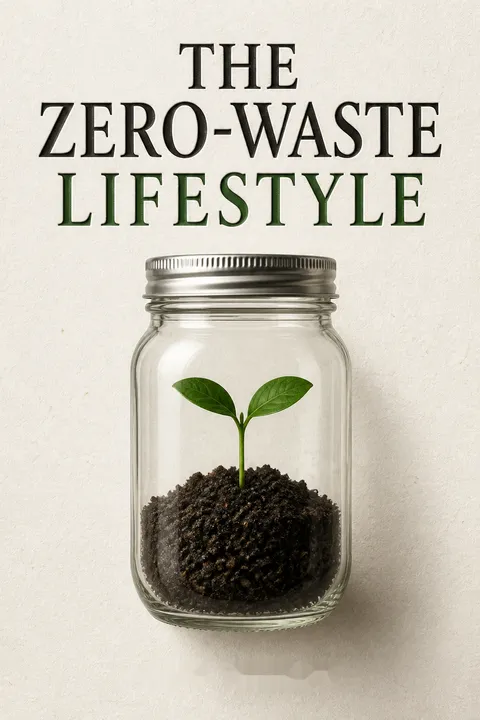
The project began at home. Amy Korst and her husband, Adam, started paying attention to the rubbish accumulating in their five household bins. They committed to a year of sending nothing to landfill. At the end, their combined landfill-bound waste fit inside a shoebox. The experiment did not require abandoning ordinary life. It required building routines for shopping, sorting, and reusing things that had once gone straight into the trash.
Progress has several definitions. Some households may aim to cut their weekly rubbish, while others pursue a near-zero total. Korst argues that the useful goal is the one a household can sustain. She also warns against letting waste reduction dominate every decision: health, safety, time, and family circumstances matter more than a perfect tally.
The project makes an abstract environmental problem visible by giving it a household-scale measure. That resembles behavioral approaches that turn distant outcomes into observable feedback: a bin is easier to act on than a planetary emissions curve. The flexibility is equally important. A strict purity test can turn a useful practice into a source of shame, especially when people have little control over local services or product choices. The strongest interpretation is not that every household can produce exactly the same result, but that each can identify avoidable waste and make its own system better.
Measure your household's waste before deciding what to fix
Start with a baseline. Korst recommends a home-waste audit: track what each room produces for a week, then sort and weigh it as food scraps, recyclables, and landfill-bound waste. The kitchen often stands out because it generates food scraps and packaging. A list of actual discards is more useful than a general promise to be greener because it shows where changes can have the greatest effect.
The contents matter. The book cites 2010 figures of 4.43 pounds of municipal solid waste generated per person per day, with 1.51 pounds recycled or composted. It also recounts the Garbage Project, which found food and yard waste still recognizable in landfills after decades. Landfills can produce methane and leachate, while littered plastic breaks into smaller particles and threatens wildlife.
An audit is a modest form of diagnosis: it prevents effort from being spent on conspicuous but low-volume items while larger streams go unnoticed. It also shifts the question from whether someone is a good environmental citizen to what a particular household can change. The landfill evidence supports that shift by challenging the comforting idea that discarded material simply disappears. Still, weight is only one indicator. Toxicity, persistence, and the availability of safe disposal can matter more than mass, so the audit should guide attention rather than become the sole measure of impact.
Prevent waste first: buy less, reuse, then recycle
The order changes the calculation. The waste hierarchy ranks preventing purchases first, extending the useful life of things second, and recycling what remains after that. Recycling can recover material, but it takes energy and does not erase the impacts of extraction, manufacturing, and shipping. The book uses toilet paper to illustrate this full product life cycle, from cutting trees and processing pulp to packaging and transport.
Consider waste before checkout. Korst calls this precycling: judging a product's need, packaging, and likely disposal before buying it. Practical moves include replacing single-serve snacks with larger packages, carrying a refillable bottle, borrowing infrequently used equipment, and waiting before buying an impulse purchase. The book also emphasizes that buying fewer goods reduces waste created upstream, not only the rubbish visible in a home bin.
This framework usefully broadens environmental accounting beyond the moment an item is thrown away. It aligns with life-cycle analysis, which asks where impacts occur across production, use, and disposal rather than treating the consumer's bin as the whole story. The emphasis on fewer purchases also counters a common substitution trap: replacing every conventional item with a supposedly greener new product can preserve high consumption. The approach has limits where durable alternatives cost more or are unavailable, but the hierarchy remains a strong decision rule when practical choices exist.
Don't trust the recycling symbol; learn your local system
A symbol is not a promise. The number inside a plastic recycling logo identifies a resin type, not whether a local facility accepts that item. Communities differ in what they collect, and some materials require delivery to a special drop-off site. Korst advises checking with the local waste department or recycling facility, and asking manufacturers what their packaging contains when the answer is unclear.
Recycling has real limits. A Materials Recovery Facility sorts collected material before selling it to manufacturers. Some materials, especially paper and plastic, lose quality as they are processed again, a process called downcycling. Many plastic bottles become lower-grade products rather than new bottles. Mixed-material packaging is particularly difficult to recover. The practical lesson is to recycle correctly, avoid contaminating collection streams, and reduce packaging before relying on recycling.
The chapter replaces a misleadingly simple icon with a view of recycling as an industrial system with local constraints and markets. That is valuable because correct sorting depends on infrastructure, not merely consumer intention. It also avoids the opposite error of concluding that recycling is pointless: recovering metals, glass, and other accepted materials can still displace some virgin production. The details are time- and place-sensitive, so a guide written in 2012 cannot settle today's local rules. The durable insight is to verify current acceptance rather than infer it from packaging design.
Compost food scraps instead of entombing nutrients in landfills
Food needs a different route. Composting keeps organic matter out of landfills, where poor access to oxygen can slow decomposition and contribute to methane production. It returns nutrients to soil instead of burying them with mixed rubbish. Korst calls composting essential to a genuinely low-waste household, but offers more than one way to do it.
Match the method to your home. A backyard pile can be managed casually, while a hot pile uses a deliberate balance of carbon-rich browns and nitrogen-rich greens. People without yards can use a worm bin, and some cities collect food scraps curbside. Meat, oils, and pet feces require special care and are excluded from many home systems. Finished compost can enrich garden soil or be given to someone who can use it.
Composting is not just a disposal trick. It reconnects food waste with soil fertility, making a household's discarded material useful to another part of a living system. The range of methods also acknowledges that housing and municipal services shape what is feasible. There is no single household recipe that suits every climate, pest risk, or collection program, and local instructions should govern what enters a bin. That qualification strengthens, rather than weakens, the central point: organic waste is a resource when a suitable process exists to recover it.
Replace disposable defaults with durable routines across home and work
Make reuse ordinary. Korst's practical changes begin with common routines: take cloths instead of paper towels, use sturdy dishes instead of throwaways, carry a container for leftovers, and shop with reusable bags. Bulk shopping can reduce packaging further when a store accepts customers' own containers. In the bathroom, options include a reusable razor handle, refillable products, and menstrual cups or cloth pads. Homemade cleaners based on familiar ingredients can replace a shelf of specialized bottles.
Extend the idea beyond the kitchen. Repair or donate clothes and equipment, choose durable toys, reuse paper on both sides at work, and return printer cartridges through take-back programs. An audit helps identify which swaps matter most. The aim is not to make every item at home; it is to replace disposable defaults with systems that are convenient enough to keep using.
The strength of these examples is their attention to defaults. A reusable cup kept in a car or work desk is more likely to be used than one that must be remembered at the last minute. This is a form of choice architecture: arranging surroundings so the lower-waste action is also the easier action. Yet homemade goods and repeated washing take time, and not everyone has equal time, mobility, or access to bulk stores. A sound application treats these tactics as a menu, not a moral ranking of households.
Keep waste goals flexible enough to survive real life and relationships
Preparation reduces friction. Travel, office events, children's needs, and holidays create situations where disposables are the default. Korst's countermeasures include packing snacks and a reusable kit, asking restaurants to skip straws and packaged extras, using real dishes at celebrations, and choosing secondhand or experience-based gifts. Families can involve children through simple projects, while workplaces can reduce paper use and provide reusable supplies.
Keep perspective. Korst and her contributors set rules for unavoidable medical supplies, gifts, and work materials rather than pretending every circumstance is controllable. On a trip, she recommends balancing personal goals with being a considerate guest. After their yearlong project, Amy and Adam allowed each person in the household a weekly luxury item. Their approach treats waste reduction as a lasting practice, not a demand to refuse every pleasure or need.
These cases show that sustainable behavior is social as well as technical. A reusable container can prevent packaging, but a respectful conversation with a host or server can preserve goodwill and make the practice more acceptable to others. Research on social norms broadly supports the importance of visible, nonjudgmental modeling, although a single person's example cannot remove structural barriers. Flexibility is therefore not a loophole. It protects the relationships and health needs that make a practice sustainable over time.
Move beyond personal bins and make producers pay for packaging
Households cannot redesign products. Korst argues that manufacturers choose packaging and often leave consumers and municipalities to manage it. Extended Producer Responsibility, or EPR, assigns producers financial or operational responsibility for products and packaging after use, creating an incentive to design for recovery and use less material.
Policy can change the system. The book describes European packaging rules, deposit-based bottle bills, and electronics take-back programs as examples of shifting disposal responsibility upstream. It also recounts a farmers' market that used reusable metal cutlery and volunteers to sort recycling and compost. Individual choices still matter, but they are not a substitute for better product design, collection services, or public rules. The book closes with a tire on a remote beach, a reminder that even wilderness is not beyond the reach of throwaway culture.
This is the book's necessary move from household ethics to political economy. EPR addresses an externality: companies can make packaging choices while disposal costs fall elsewhere. Assigning those costs to producers can encourage simpler, recoverable design, though effective policy must define responsibility, verify outcomes, and avoid shifting costs onto workers or low-income consumers. The beach tire gives the argument emotional force, while the policy examples show how responsibility can be institutionalized. Personal restraint is meaningful, but producer and government decisions determine the options available at scale.
Analysis
Korst's book combines memoir, practical reference, and environmental argument. Its organizing movement is from the household bin outward: first notice the waste, then build routines to prevent or recover it, and finally ask why product systems make disposal the consumer's problem. The yearlong project supplies a narrative engine, while checklists and room-by-room advice make the argument usable rather than merely symbolic.
The book's most durable contribution is its change of unit. Waste is not only a bag at the curb. It is evidence of decisions made across extraction, manufacturing, retail, household habits, and public infrastructure. The distinction between preventing waste and managing it after purchase is especially important. It explains why recycling, despite its value, cannot by itself answer a problem rooted in throughput and packaging design.
The approach also has a productive tension. Korst makes near-zero waste feel achievable, yet the book's most demanding practices depend on time, nearby bulk shops, compost access, supportive family members, and retailers willing to accommodate reusable containers. That tension should not be resolved by blaming people with fewer choices. Rather, it points toward the book's own institutional argument: households can demonstrate demand, while policy and producer responsibility must broaden access to better options.
Some of the book's statistics and recycling guidance are tied to 2010 data and a 2012 publication. They are valuable historical context, not current universal instructions. Local collection rules, product materials, and available take-back programs can change. A reader should preserve the method of verification, not memorize outdated lists. The strongest practical takeaway is a layered ethic: prevent what can be prevented, reuse what remains useful, recover materials through systems that actually accept them, and press institutions to redesign the stream at its source.
Review Summary
The Zero-Waste Lifestyle received mixed reviews, with an average rating of 3.61 out of 5. Readers appreciated the practical tips and information on reducing waste, but some found the suggestions extreme or unrealistic. The book was praised for its comprehensive approach and easy-to-moderate-advanced categorization of tips. Critics noted outdated information, questionable statistics, and a focus on recycling over reducing consumption. While inspiring for many, some readers felt the author's tone was preachy or naive. Overall, it was considered a good introduction to zero-waste living, despite its flaws.
People Also Read








Glossary
zero-waste lifestyle
Minimize landfill-bound discardsKorst uses this term for a way of living that aims to send as little as possible to landfill, ranging from substantial reductions to producing almost no landfill-bound waste. It involves changing purchasing habits, reusing goods, sorting accepted recyclables, and composting suitable organic material. The book treats the goal as adaptable to household circumstances rather than a single universal threshold.
waste hierarchy
Priority order for wasteThe waste hierarchy ranks waste strategies by their preferred order: prevent or reduce consumption first, reuse products next, and recycle materials after their useful life is exhausted. Korst places composting alongside material recovery as another way to return resources to use. The framework emphasizes that recycling has impacts and should not excuse unnecessary consumption.
precycling
Assess waste before buyingPrecycling means considering whether an item is needed and what will happen to its packaging before purchasing it. It shifts waste reduction to the point of choice, where a consumer can refuse an overpackaged or hard-to-recover product. In Korst's approach, it is a practical expression of prevention, not a separate form of recycling.
Materials Recovery Facility
Sorts collected recyclablesA Materials Recovery Facility, commonly abbreviated MRF, receives collected recyclable materials and sorts them into categories for sale to manufacturers. Sorting may use workers, magnets, air, and machinery. A MRF's capabilities and accepted materials vary, so a product's recycling symbol does not establish that the local facility can process it.
downcycling
Recycling into lower-grade materialDowncycling occurs when a recovered material loses quality or usable properties during processing and is turned into a less demanding product rather than an equivalent new one. Korst contrasts paper and plastic, which can lose quality, with glass and metal, which can retain material value through repeated recycling. Downcycled material may still be useful, but it does not create a fully closed loop.
lazy composting
Low-effort backyard compostingLazy composting is Korst's informal method of placing suitable food scraps and yard material in a backyard pile without carefully measuring ingredients or frequently turning it. The pile decomposes over time, and finished compost can be harvested for soil. The method requires an appropriate outdoor space and must follow local rules and safe guidelines for what materials to include.
vermicomposting
Worm-based organic waste recoveryVermicomposting uses composting worms, usually red wigglers, in a contained bedding system to break down suitable food scraps and paper. It is presented as an option for people without a yard, including apartment residents. The bin must be managed so worms receive appropriate food and moisture, and the resulting castings can be used to enrich plants.
Extended Producer Responsibility
Producers manage product end-of-lifeExtended Producer Responsibility, or EPR, is a policy approach that makes manufacturers financially or operationally responsible for collecting, recycling, or disposing of products and packaging after use. The aim is to place end-of-life costs closer to the organizations that design and market goods, giving them an incentive to reduce packaging and design products for recovery.
cradle-to-cradle
Design for material circulationCradle-to-cradle describes a product system in which materials can return to productive use after a product's useful life, rather than being discarded as final waste. Korst uses the term to describe design that allows products to be reused, dismantled, or recycled into resources for new production. It contrasts with a one-way system that ends in disposal.
Download PDF
Download EPUB
.epub digital book format is ideal for reading ebooks on phones, tablets, and e-readers.








