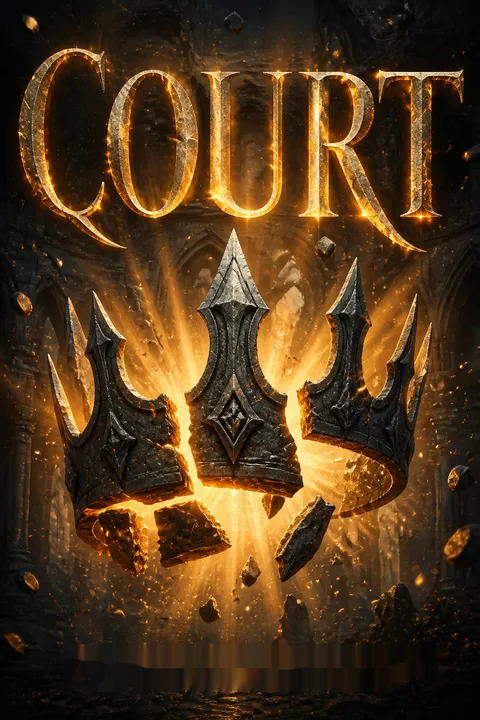


Plot Summary
Prologue
After the battle on the island, Hudson finds Grace silent in his room while the school waits to learn whether Flint will keep his leg. Their return to Katmere has revealed a bloodied, ruined campus and a missing student body.
Hudson tries to comfort Grace, but grief and the accusation that he could have saved Luca have made him question his restraint. He believes his refusal to surrender to his father’s design helped cause the losses. As Grace reminds him she loves him, Hudson realizes that Cyrus’s next move may force him to accept the destiny he has resisted.
The opening places love beside culpability before the plot has explained either. Hudson’s fear is not simply that Grace will die; it is that his own power and choices make him dangerous to the people he wants to protect. Grace’s quiet declaration of love briefly steadies him, but it cannot erase the dead or the missing students. The fragment also frames the novel’s central ethical problem: restraint can preserve a soul, yet inaction can leave others to suffer. Hudson’s coming decision will be shaped by both dangers.
Luca’s Unfinished Goodbye
In the ruined infirmary, Grace, her friends, and the injured Flint learn that Luca died and Flint’s leg could not be saved. Luca must be sealed in his family crypt within a day, so Jaxon insists his parents be told despite Hudson’s fear that the Vampire Court may be compromised.
Flint’s grief sharpens into blame: he believes Hudson held back the power that might have saved Luca. When nurse Marise reports overhearing wolves discuss using the students’ young magic, the group realizes the children may be more than hostages. The revelation turns their mourning into a race against Cyrus, while the accusations leave Grace and Hudson facing a divided team.
The immediate crisis joins grief to political uncertainty. Luca’s burial customs make mourning urgent and public, while Hudson’s battlefield restraint becomes a moral accusation before anyone can know whether it was wrong. Flint’s anger is understandable, but it also exposes how loss seeks a person to blame when the true enemy is absent. Grace’s role shifts from soothing her mate to recognizing that Cyrus has achieved something even without being present: he has made the survivors distrust one another.
The Nurse’s Betrayal
Luca’s parents arrive at Katmere and find the Order has prepared a candlelit room for their son. The fragile ceremony ends when Luca’s mother kills Marise and his father reveals that the nurse had been loyal to Cyrus and had alerted him to the students’ return. The parents disappear after warning that Cyrus is coming.
Dawud, a young Syrian wolf, arrives next: their brother Amir is among the kidnapped students, and a pack is closing in. When wolves flood the school, Hudson disintegrates them to protect Grace. The effort leaves him shaken, and Jaxon brings down Katmere’s walls so the survivors can escape through Macy’s portal before the pack overruns them.
The scene makes trust a survival problem rather than an abstract virtue. Luca’s parents appear compromised, yet their son’s death has changed their loyalties; Marise’s familiar presence concealed a threat. Dawud’s arrival gives the mass kidnapping an intimate face in Amir, while Hudson’s response protects Grace at terrible psychic cost. Katmere’s destruction is both tactical and emotional: the students escape, but lose the home that had held their new community together. Each rescue demands another sacrifice.
A Court Refuses Shelter
Macy portals the survivors to the Witch Court, where the guard refuses sanctuary because the king and queen fear Cyrus will punish their captive children. Grace reveals the Crown marked on her palm and the emerald ring she received from the former gargoyle king. The royal couple agree to aid the fight only if their children are freed.
After the group is expelled into an Italian piazza, Viola, the queen’s sister, warns Macy that her missing mother is alive at the Vampire Court. She also explains that the Crown can strip a paranormal of power, making Grace’s new authority frightening as well as useful. Viola then warns that Cyrus plans to capture Grace and that his intended fate for her is worse than death.
The Witch Court’s refusal shows how hostage-taking converts parental love into political paralysis. Grace does not persuade the rulers by winning their trust; she offers them a concrete bargain that makes action possible. Her Crown complicates the offer because it is not merely royal insignia but the power to alter another person’s identity. Viola’s disclosures deepen the stakes while exposing how little Grace knows about her own inheritance. The scene links authority with the question of whether power can be used without reproducing coercion.
The King Behind the Chessboard
At Katmere, the Unkillable Beast presses Grace to hurry and warns her about the vampire queen. When their hands touch a chess piece, both turn to stone and arrive in the Gargoyle Court as it existed a millennium earlier. The Beast becomes Alistair, the former gargoyle king, and tells Grace she brought them there.
He recognizes her as his descendant and explains that the emerald ring makes her queen of a hidden army. Grace meets Chastain, Alistair’s stern general, as soldiers train in the magnificent castle. But the visit lasts only minutes in Katmere. When she later flies to Ireland with her friends, she finds the same court in ruins, learning that her earlier journey touched a place frozen outside ordinary time.
Grace’s inheritance becomes tangible through movement rather than exposition: a touch opens a court she did not know existed, and a ring gives her a title she does not feel prepared to hold. The beautiful castle and its disciplined soldiers embody a possible home, but the ruined present keeps that promise unstable. Alistair’s belief in Grace precedes her belief in herself. The time distortion also establishes a practical danger: she can reach a hidden world without knowing what the journey costs or what might be altered by returning.
The Bloodletter’s Buried Army
At a lighthouse Hudson rents as a refuge, Grace learns how deeply he fears his destructive gift: he asks her to remove his powers after the deaths on the island, and admits each use seems to dim his inner light. Her green string leads them to the Bloodletter, who reveals she is the God of Chaos and that Grace descends from her and Alistair.
Cyrus poisoned the Gargoyle Army through its shared magical connection; the Bloodletter froze the soldiers in time to keep the poison from killing them. Grace learns that her mother’s line carries dormant demigod power. The God of Time, Jikan, warns that careless use of it can tear time and directs the group to St. Augustine for the Tears of Eleos, the only known cure.
Family history becomes a mechanism of both concealment and inheritance. Grace’s parents hid her gargoyle nature to protect her, but that protection also denied her knowledge of herself. The Bloodletter’s sacrifice preserved the army while trapping its members in suspended life, making rescue inseparable from risk. Hudson’s request that Grace remove his power echoes the same anxiety: power can protect, but it can also deform the person who carries it. Grace is asked to inherit a world built from other people’s attempts to control danger.
Monster Taffy’s Deadly Terms
In St. Augustine, the group finds the Tears hidden behind Monster Taffy, where Tess explains that seekers must survive four Impossible Trials to reach the elixir. No one has completed them, and Tess warns Grace that her unstable new power makes the attempt especially dangerous. Before they can begin, the Order and Dawud report that Cyrus is draining students of their magic.
The news sends the group back toward Ireland, but Macy, Flint, and Mekhi secretly leave for the Vampire Court to rescue Macy’s parents and the captives. Grace, Hudson, Jaxon, and Eden follow through Hudson’s concealed tunnel beneath his old London home, where bribed guards reveal prisoners are held in the dungeons and the wells.
The quest’s rules arrive with a blunt threat: success has never been recorded, while delay has immediate human costs. That creates a conflict between preparation and rescue, and the group fractures under the pressure. Macy’s decision to seek her parents is not betrayal so much as a competing definition of what must be saved first. Hudson’s hidden tunnel signals a different kind of power, patient and private rather than spectacular. Yet the route leads directly into Cyrus’s territory, where secrecy cannot protect them once the enemy knows they are there.
The Soul Siphon’s Bargain
Inside the Vampire Court, the four rescuers meet Isadora, a knife-wielding young vampire who claims to be Hudson and Jaxon’s sister, then watches guards capture them. The prisoners are thrown in with the students, where Grace reunites with Macy and discovers that their uncle Finn and Macy’s mother, Rowena, are also confined.
Cyrus impales Liam with metal rods, and Isadora drains his magic until he dies. Cyrus reveals that he wants the God Stone, which lies in the frozen Gargoyle Court, and threatens to kill the captives if Grace refuses. He allows Grace and a small party to retrieve it, while keeping the Order as leverage and sending Isadora with them.
Cyrus turns kinship into a weapon at every scale: he holds children against their parents, uses Isadora’s abilities against prisoners, and makes his sons watch his rule operate. Liam’s death demonstrates that the enemy’s threat is not rhetorical. Grace’s agreement to retrieve the Stone is therefore coerced, but not passive; she recognizes that Cyrus underestimates her and begins shaping the terms of a larger plan. Isadora’s presence adds uncertainty because she is both a danger and a person whose own loyalties have been cultivated through fear.
The Army’s Nightly Dead
Grace takes the group into the frozen Gargoyle Court, where Chastain accepts their story that they have come to prepare for war. Each night, a bone army attacks the walls. Grace discovers the creatures are dead gargoyles returning in distorted form, and Hudson disintegrates them to save the living soldiers.
He can do so only by entering each creature’s mind, experiencing its death as he destroys it. As Hudson’s distress compounds, Grace refuses to let him become their automatic weapon. Their friends train with Chastain, and Dawud proves that speed, strategy, and physics can defeat a larger opponent. Meanwhile, Grace and Hudson’s bond strengthens as they face the cost of his power together.
The nightly attacks turn the frozen army’s history into a repeated present. The dead cannot rest because the time bubble has made death itself impossible, so Hudson’s intervention is both rescue and renewed trauma. His power does not operate at a clean distance; it requires intimate contact with the minds he destroys. Grace’s refusal to treat that cost as an acceptable tool marks an important shift in their relationship. Dawud’s training demonstration offers a countermodel to brute force, emphasizing intelligence and adaptation.
The Ring in Chastain’s Hand
Grace discovers the God Stone is set in Chastain’s ring, then challenges him for it. During their fight she uses her green string to freeze him, but his soldiers rush in to defend their general. To reach the ring, she freezes the entire court, including its inhabitants, and Jikan appears furious that she has torn time around people already trapped in stasis.
He moves the group into the ruined present. Chastain tells Grace to turn to stone so the poison cannot kill her, but he stays conscious to guard the ring. Refusing to abandon the children at risk, he finally gives Grace the ring, then turns to stone as the poison takes hold.
Grace’s tactical success produces a moral cost she cannot avoid. She uses the very power Jikan warned her against, because the ordinary rules of challenge and honor leave the Stone out of reach. Chastain’s final choice complicates his earlier hostility: he is willing to die rather than surrender his duty, but he ultimately trusts Grace with the ring. Her leadership is tested not by a clean victory but by a decision that saves one group while placing another in danger.
Cyrus Keeps the Bargain’s Loophole
Grace returns the God Stone to Cyrus, who refuses to release the captives because Isadora, not Grace, physically delivered it. While frozen with Cyrus in one of his memories, Grace overhears him plotting world domination and planning to use a demigod child as the route to godhood. Back in the present, the group fights but is overwhelmed.
Grace persuades Delilah, the vampire queen, that Cyrus has treated her as a weapon and that revenge is possible if she helps them escape. Delilah kills the guards and opens the cells under a magical agreement: Grace must return to help her punish Cyrus. Rowena, however, cannot leave because she still owes the Crone a favor.
Cyrus’s contract exposes the difference between a promise’s words and its intended effect. Grace’s surrender is an attempt to save lives, but the king exploits the gap between delivery and fulfillment. Her time-slip gives her knowledge, though not enough to undo the trap immediately. The alliance with Delilah is built not on affection but on a shared recognition of exploitation. Grace offers revenge because it is the only motive likely to move the queen, while Delilah’s bargain makes escape possible at a price that will remain binding.
A Daughter Returned to the Crone
When Rowena cannot leave the dungeon, Grace learns her unpaid favor is to bring the Crone’s daughter to her. The group lures Isadora away from Cyrus and takes her to the Crone’s island, where she discovers that the Crone is her mother, not a dead stranger as Cyrus claimed.
The reunion is furious rather than tender: Isadora rejects her mother and refuses to leave Cyrus. Grace asks the Crone for the poison’s antidote, but the God of Order refuses because she wants Cyrus to become a false god she can destroy herself. With no other way to free the army, Grace chooses the Impossible Trials, and Rowena is finally free to go with her family.
The reunion does not instantly repair a stolen childhood. Isadora’s anger is a defense against the sudden collapse of the story she has lived by, while the Crone’s regret cannot erase her choices. Grace sees that both women are entangled in Cyrus’s manipulations, yet does not excuse the Crone’s refusal to help. The scene distinguishes explanation from absolution. The antidote remains unavailable, forcing Grace to accept a greater risk rather than wait for powerful adults to choose cooperation.
The Arena’s Falling Bricks
At Monster Taffy, Grace returns with eleven companions and enters the first Trial. The arena divides, leaving her and Jaxon in a narrow section as enchanted blocks rain down, releasing darts, shocks, and choking gas. On the other side, the others fight a pack of hybrid creatures. Grace spots a goblet outline beneath the debris and realizes the blocks must fit its shape.
She and Jaxon work together despite his instinct to shield her and her insistence on contributing equally. Once they complete the pattern, the falling stops and the wall retracts. Their friends are battered but alive, and the first Trial teaches them that survival depends on reading the arena, not simply overpowering it.
The first Trial literalizes the group’s central problem: danger arrives faster than anyone can fully understand it. Jaxon’s protective reflex helps at first but becomes an obstacle when it prevents Grace from acting. Their eventual solution requires observation and cooperation rather than strength. The division of the arena also makes their relationships physically visible: each side must trust strangers to survive a threat they cannot see. Their reunion is a small victory, but it offers no assurance about the next round.
The Fountain’s Living Shadows
The next Trial separates the group again. Grace’s side faces crawling insects and shadows that drag people toward a fountain statue, while the others confront potion effects and a rising sandstorm. Hudson notices Grace drawn toward the statue and tackles her away before she touches it. When shadow tendrils seize their friends, Grace realizes light may repel them.
Macy shatters a potion into a field of brightness, driving the shadows back, but the insects surge from the fountain in response. Grace then identifies the source and urges Eden to freeze the water. The trapped insects die, and the arena reunites the groups, leaving everyone shaken and more dependent on one another’s strengths.
This Trial tests attention as much as physical endurance. Grace is nearly lured by an image that promises relief, while Hudson recognizes the danger before she does. Their bond functions as mutual vigilance, not simply romance. The solution emerges through collaborative inference: Grace identifies what might work, Macy supplies light, and Eden changes the environment. Success is collective rather than attributable to one heroic act. The Trial’s sequence also teaches them that solving one threat may provoke another.
The Potion-Filled Sandstorm
In another divided round, colored potions distort each drinker: Calder moves in slow motion, Macy sees imaginary attackers, Flint behaves like a chicken, Mekhi reverts to babyish helplessness, and Hudson moves backward while Dawud loses control of one side of their body. A sandstorm then fills Grace’s section, and the floor begins rising with the sand.
Grace directs her friends to dig, turns to stone, and sinks through the sand until she can reach the arena floor. She channels earth magic to remove cobblestones, opening a drain beneath the floor. The sand pours away and buys time for the other side to solve its puzzle, allowing the groups to reunite alive.
The potion effects strip the fighters of the identities they rely on: speed, control, judgment, and dignity become unreliable. Grace’s leadership is practical rather than commanding; she assigns tasks, adapts to the new conditions, and risks being buried to create an exit. Her choice to use stone form turns a defining part of her identity into a tool for collective survival. The scene also shows her learning not to carry every solution alone, even as she takes the greatest physical risk.
Mercy Frees the Beast
The last Trial releases an enormous translucent beast immune to their magic. It kills Byron, Rafael, and apparently Mekhi, then tears one of Grace’s wings away. When the injured creature lies helpless, Grace refuses to kill it, recognizing fear and pain behind its violence. She cuts away its harness and, with her friends’ combined magic, heals it instead.
The beast transforms into Alwin, Tess’s young son, cursed for fifteen hundred years after Tess killed a god’s child. Grace’s tears of compassion become the Tears of Eleos, the elixir that can cure the poisoned gargoyles. Tess confirms the group has won, but the victory leaves three friends dead and Mekhi infected by a bug bite.
The final Trial overturns the assumption that victory means killing the obstacle. Grace’s compassion is not sentimental blindness; she has seen the beast’s helplessness and refuses to turn advantage into execution. That moral choice reveals the Trial’s actual measure of worth. Yet mercy does not cancel cost. Byron and Rafael are dead, Mekhi’s condition is worsening, and Grace loses a wing. The elixir is earned through a refusal to reproduce the violence that has shaped every faction’s history.
A Queen Without Her Army
Grace coats the gargoyle network with the Tears of Eleos, freeing the soldiers from poison and returning them to the ruined Court. Chastain refuses to recognize her authority, accusing her of using the army and sacrificing it for her friends. Grace doubts herself, but Hudson and the others remind her that they chose to stand with her.
They portal to Katmere, where Cyrus is preparing to use the God Stone beneath the blood moon. Grace’s friends agree to follow Hudson’s plan: destroy the power domes, reach the altar, and keep Cyrus from completing the ritual. They know they have little chance against his thousands of followers, but they go together anyway.
The cure solves a physical problem without resolving the political one. The army is alive, but its general rejects Grace’s legitimacy, forcing her to distinguish a title from earned trust. Her friends’ support matters because it is chosen, not commanded; they follow her even while acknowledging her mistakes. The move to Katmere transfers the story from rescue to confrontation. Grace’s authority is now tested by whether she can keep acting without confusing confidence with certainty.
The God Stone’s Price
Hudson’s plan takes the group through the three witch barriers, but the assault costs them dearly. Calder sacrifices herself to shield Remy from a warlock’s attack. Outnumbered and grieving, the survivors are captured when Grace surrenders to Cyrus, hoping to protect them. Cyrus reveals that he intended her arrival and has manipulated events so she would deliver the God Stone.
He straps the group to the altar and channels their magic into his ascension. The ritual strips their powers and makes Cyrus appear godlike. Grace believes she has failed, until she realizes her demigod string survived the Blacksmith’s restraints and can still connect her to the power that remains within her.
The apparent defeat is built from choices that were reasonable in isolation: Grace surrenders to save friends, while Cyrus has engineered the terms to exploit that instinct. Calder’s sacrifice sharpens the cost of loyalty, and the ritual literalizes extraction as political rule. Cyrus’s rise depends on treating people as fuel, not citizens. Grace’s remaining power is not a conventional weapon but a relationship to her inherited magic. The turning point asks whether she can stop defining herself by failure long enough to use it.
The Crown Judges Cyrus
Grace embraces her chaos power, restores her friends’ magic, breaks the machine, and grows a living green wing. She and Isadora seize Cyrus’s stolen power, while Grace heals her own wing and stands against him. The gargoyle army arrives after Chastain accepts her call. With the Crown, Grace judges Cyrus for his crimes and strips away his powers, leaving him immortal but human.
The battle ends, though twenty-seven gargoyles and Calder are dead, and Mekhi still needs treatment. Grace returns the Crown to the Bloodletter, freeing her to leave the cave with Alistair, while Delilah takes Cyrus into captivity. The survivors turn toward rebuilding, mourning, and a future they must make together.
The climax resolves the novel’s competing models of power. Cyrus takes strength by extraction; Grace gains command by accepting connection, restoring rather than hoarding what was stolen. Her judgment does not kill him, but it removes the capacities that enabled his tyranny and leaves his punishment to those he harmed. Victory remains morally costly: the dead are not restored, and the survivors must live with the consequences. Grace’s authority finally rests not on ancestry alone but on her willingness to protect without becoming another ruler who treats lives as instruments.
Epilogue
Three months later, Grace and Hudson are studying in San Diego while planning a new Gargoyle Court. Hudson worries Grace chose the city for his sake, but she tells him it is also her home and that her wings let her travel freely. Their ordinary afternoon is interrupted by news that a cure may exist for Mekhi’s lingering curse, so the group prepares to leave again.
Before they go, Hudson finally explains the promise behind Grace’s ring: he intends to love her for as long as the sun and stars endure. Grace answers that she remembers the words, and the two realize her lost memories of their time together have returned.
The epilogue does not pretend that defeating Cyrus restores everything. Grace and Hudson begin building institutions and education into the future, while the news about Mekhi makes clear that healing remains unfinished. The promise ring closes a quieter emotional arc: Hudson’s vow predates Grace’s ability to choose him, yet she now remembers the history that made the vow painful and precious. Their intimacy rests less on destiny than on recovered knowledge and ongoing consent. The final departure keeps the ending open to responsibility without returning the characters to the same helplessness.
Analysis
Court asks what leadership means when every available choice costs someone. Grace inherits a Crown capable of stripping power, yet she recoils from using authority as punishment until Cyrus’s repeated violence leaves no safe alternative. Her development is not a simple ascent into confidence. She makes impulsive choices, misjudges allies, and sometimes puts friends in danger; the narrative allows those errors to remain consequential. What changes is her willingness to accept responsibility without confusing responsibility with solitary control.
Cyrus and Grace represent opposed political logics. He converts intimacy, family, and belief into instruments for accumulating power. His followers are not all monsters; many accept his promises because they want visibility and security. Grace’s answer is not to defeat every believer by force, but to offer a different account of belonging, then use the Crown against the ruler who has made others expendable. Her judgment leaves Cyrus alive, denying him both his abilities and the clean escape of death.
The Trials sharpen this moral distinction. Their apparent demand is that contestants endure increasingly spectacular violence, but the decisive act is Grace’s refusal to kill a helpless enemy. The tears that result become medicine because the story treats empathy as disciplined perception: Grace sees the child beneath the monster when fear and vengeance would make that impossible. This does not undo the deaths of Byron, Rafael, Calder, or others. Mercy is not a magic eraser; it is a refusal to let pain dictate the next act.
The novel’s most intimate conflict belongs to Hudson, whose power makes protection psychologically costly. Grace cannot cure that burden by taking his abilities away, and Hudson cannot heal by pretending their effects are harmless. They move toward partnership when each allows the other to witness fear and grief without claiming ownership over the other’s choices. In the end, the book imagines power as most legitimate when it is shared, answerable, and used to protect people who cannot protect themselves.
Review Summary
Court receives mixed reviews, with ratings ranging from 1 to 5 stars. Many readers find the book unnecessarily long and repetitive, with pacing issues and underdeveloped characters. Some criticize Grace's character development and the overuse of tropes. However, fans praise the world-building, plot twists, and romance between Grace and Hudson. The book's diversity and representation are appreciated by some readers. Overall, opinions are divided, with some loving the series and others feeling disappointed by this installment.
People Also Read




Characters
Grace Foster
Reluctant gargoyle queenGrace is an eighteen-year-old student whose human life has been overturned by discovering that she is a gargoyle. She loves art, old movies, and her friends, but the supernatural world keeps demanding decisions from her before she feels ready. Her instinct is to protect people, sometimes so quickly that she mistakes self-sacrifice for responsible leadership. Anxiety and grief remain part of her inner life rather than obstacles she simply conquers. Grace is drawn to connection, but she also fears the power she cannot fully understand. Her growth comes from learning to share responsibility, accept all parts of herself, and distinguish mercy from passivity.
Hudson Vega
Guilty vampire protectorHudson is a centuries-old vampire, Jaxon’s older brother, and Grace’s mate. His wit and polish are forms of armor built around a childhood shaped by isolation and his father’s attempt to turn him into a weapon. He possesses terrifying destructive abilities, yet he fears what using them does to his sense of self. Hudson often assumes responsibility for every loss around him and hides distress until it becomes impossible to contain. His relationship with Grace gives him a place where vulnerability is possible, though accepting comfort is not easy for him. His loyalty is fierce, especially toward Grace and Jaxon.
Jaxon Vega
Vampire prince and brotherJaxon is Hudson’s younger brother, a powerful vampire prince, and Grace’s former mate. Controlled, commanding, and quick to put himself between danger and other people, he often expresses care through protection rather than openness. His history with Grace is complicated, but it develops into a durable bond of affection and family. Jaxon carries grief deeply and can become reckless when someone he loves is threatened. His rivalry with Hudson masks a genuine attachment that neither brother learned how to express easily. He values loyalty, even when old hurts make trust difficult.
Macy Foster
Witch and Grace’s cousinMacy is Grace’s cousin, a witch whose bright humor and generous nature make her a grounding presence in the group. She is both emotionally perceptive and magically inventive, capable of building portals and improvising under pressure. Her optimism is not ignorance; it is a way of keeping fear from becoming the only truth in a room. Macy is deeply attached to her family and struggles when adults conceal painful information from her. She supports Grace while retaining her own priorities, especially when her parents are in danger. Her warmth is a source of strength, not a lack of seriousness.
Flint
Grieving dragon shifterFlint is a dragon shifter and one of Grace’s closest friends. His boisterous humor often conceals how deeply he feels loss, shame, and fear. He is fiercely loyal, proud of his people, and unwilling to be treated as fragile. Grief can make him sharp with others, particularly when he thinks they have failed someone he loves. Yet Flint’s courage is not merely physical: he keeps showing up even when he is hurting and must learn to accept help. His connection with Jaxon carries tension, trust, and unresolved tenderness.
Isadora Vega
Knife-wielding vampire rebelIsadora is a young-looking vampire with formidable knife skills, a cutting wit, and an instinct to treat kindness as a trap. She is fiercely self-reliant and responds to vulnerability with aggression, which makes her difficult to approach but not impossible to understand. Her relationship to the Vega family is complicated by the world Cyrus has built around her. She measures safety through usefulness and loyalty through survival. Beneath her menace is a person who has had little reason to believe that another life is available. Grace sees both the danger Isadora poses and the hurt that shaped her.
Cyrus Vega
Power-hungry vampire kingCyrus is a calculating vampire ruler who treats power as the only reliable form of safety. He is charismatic enough to recruit believers, but his private dealings reveal a man who sees people as instruments. He manipulates family, courts, and old grievances to secure his ambitions, and he uses fear as a political language. His confidence depends on assuming that everyone else is weaker or more predictable than he is. The harm he causes is not an accidental byproduct of leadership; it is part of how he maintains control.
The Bloodletter
Ancient vampire strategistThe Bloodletter is an ancient and formidable vampire who lives in an ice cave and commands respect through both power and danger. Her past includes war, political leadership, and choices she considers necessary to protect paranormal life. She is withholding, strategic, and accustomed to controlling the information others receive. Her long separation from Alistair has shaped her isolation, while her history with Cyrus and the Crone gives her reasons to distrust nearly everyone. Beneath her harshness is fierce attachment, though affection does not erase the damage her decisions cause.
Alistair
Lost gargoyle kingAlistair is the former king of the Gargoyle Court and the only other living gargoyle Grace has known. A thousand years of imprisonment left him confused and overwhelmed by the voices of his people, but glimpses of his former authority reveal a proud, capable ruler. He loves the gargoyle army and his mate deeply, and the separation has shaped his urgency. Alistair believes in Grace before she understands her inheritance. He can be both a source of history and a reminder that leadership may survive even when its institutions have been destroyed.
Chastain
Gargoyle army generalChastain is Alistair’s longtime general and a disciplined commander who has kept the gargoyle soldiers training through an impossible stretch of history. He values duty, preparation, and protection above personal comfort. His strict standards can look like contempt, particularly to someone who has not earned his trust. Chastain measures leadership through service and sees the army as guardians, not merely fighters. His loyalty to the soldiers is profound, but he is also shaped by grief, exhaustion, and the burden of keeping a lost community alive.
Delilah
Vampire queen and survivorDelilah is the vampire queen, a powerful figure who has survived by attaching herself to the strongest available protection. Her composure conceals a history of violence and constrained choices. She has harmed her sons and enabled Cyrus’s rule, yet her position is also shaped by a world that offered women little safety outside political marriage. Delilah is neither simply victim nor simple villain. She is intelligent, proud, and capable of recognizing a bargain when it offers leverage, though she remains focused on her own reckoning.
Remy
Warlock and future seerRemy is a powerful warlock and one of Grace’s allies from the prison. His humor and theatrical confidence can make danger seem manageable, but he carries the difficult burden of glimpsing possible futures. He does not treat foresight as omniscience; he understands that choices can alter outcomes and that warnings can become traps of their own. Remy is generous with his power and loyal to friends, though his knowledge often leaves him more cautious than he appears. He helps the group by creating portals, reading situations, and reminding Grace to rely on the people beside her.
Calder
Glamorous manticoreCalder is a manticore whose confidence, vanity, and theatrical humor are matched by real courage. She enjoys beauty and attention, but neither makes her shallow; she is perceptive about the people around her and willing to enter danger for them. Calder’s self-possession contrasts with the group’s habit of turning every crisis into self-blame. She values pleasure and style in a world that often offers only pain, and she refuses to apologize for either. Her friendship with Remy is affectionate, teasing, and deeply loyal.
Dawud
Strategic young werewolfDawud is a young Syrian werewolf who comes to Katmere to save their younger brother. They are observant, scientifically minded, and calmer than many older fighters, though that calm should not be mistaken for timidity. Dawud uses strategy and physics to compensate for differences in size and strength, and they want to build a pack that values intelligence over brute force. Their loyalty is rooted in family responsibility, but they are also willing to risk themselves for people they have only recently met.
Eden
Dragon shifter and allyEden is a dragon shifter with a practical mind, a sharp tongue, and an instinct for action. She can recognize when a plan is failing and is willing to make hard choices, even when those choices make her unpopular. Her friendship with Grace rests on candor rather than constant reassurance. Eden is protective of Macy and committed to the group, but she also pushes Grace to examine her motives instead of assuming that good intentions are enough.
Mekhi
Loyal member of the OrderMekhi is one of Jaxon’s closest friends and a steady member of the Order. He brings humor to tense moments without losing sight of the danger, and his loyalty to the group is matched by a willingness to challenge its plans. Mekhi cares deeply for his friends and is often one of the first to notice when confidence has become recklessness. His bond with Jaxon is long-standing and intimate, built on shared risks and mutual trust.
Rowena
Macy’s missing motherRowena is Macy’s mother and Grace’s aunt, a witch whose history is entangled with the efforts to protect Grace. She is kind, resourceful, and protective, but her instinct to shield younger people from painful truths has consequences of its own. Rowena’s relationship with Macy is marked by deep affection and the ache of lost time. She is also a friend to Grace’s mother and part of the family network that helped Grace reach Katmere.
Finn
Headmaster and protective uncleFinn is Macy’s father, Grace’s uncle, and the headmaster of Katmere. He is protective to a fault, often withholding information because he believes it will spare the young people he loves. His care is genuine, but his secrecy can leave them unprepared and excluded from their own lives. Finn is responsible for a school full of students and treats that duty seriously, even when his family is at risk. He is a steady presence whose affection is warmer than his caution allows him to show.
The Crone
God of OrderThe Crone presents herself as a witch but is an ancient god who opposes the Bloodletter and seeks the destruction of paranormal creatures. She is calculating, patient, and adept at turning favors into obligations. Her sense of order is not benign; it can justify cruelty when she believes her larger purpose demands it. She is connected to several characters through old bargains and hidden family history, yet she rarely offers information without a motive. Her apparent fragility should never be confused with helplessness.
Jikan
Keeper of timeJikan, who prefers the title Historian, is the god associated with time. He is theatrical, irritable, and protective of the continuity he maintains, while remaining capable of intervening when temporal damage threatens the world. His manner makes it difficult to know whether a warning is a joke or a serious boundary. Jikan treats time as a system with rules, not a toy, and sees Grace’s developing power as a genuine risk. Beneath his bluster is a guardian who has carried his work for ages.
Tess
Keeper of the TrialsTess runs Monster Taffy and oversees the Impossible Trials in St. Augustine. She is sharp, commercially minded, and blunt about the danger facing anyone who enters her arena. Her warnings are not empty theatrics; she has watched countless contestants fail. Yet Tess is also waiting for someone to succeed, and her hard exterior hides a personal stake in the final challenge. She measures people by what they do when they can choose between force and mercy.
Luca
Beloved member of the OrderLuca is one of Jaxon’s closest friends and a cherished member of the Order. His place in the group is defined by loyalty, warmth, and the brotherhood he shares with the other vampires. Even when he is not present, his importance shapes the survivors’ grief and their disagreements about what could have been done differently. Luca’s absence becomes a measure of how costly the conflict has become for the people who once thought they could keep one another safe.
Plot Devices
The Crown
Judgment made tangibleThe Crown is marked on Grace’s palm and represents the authority of the gargoyle ruler. With the Gargoyle Army, it can strip a paranormal of some or all of their power as punishment for wrongdoing. Cyrus wants it because it threatens the power he has accumulated, while Grace fears the moral weight of deciding who deserves to lose an essential part of themselves. Its use turns the climax into a judgment rather than a simple killing.
The Colored Strings
Connections reveal hidden powerGrace perceives colored strings linking her to people and parts of her identity. They make emotional bonds visible, allow her to channel power from allies, and connect her to gargoyles across the world. The green string carries her dormant demigod power and affects time, while the silver threads represent the wider gargoyle network. The strings turn relationships into both emotional realities and practical instruments, while reminding Grace that using power never makes her independent of other people.
The God Stone
Ambition’s stolen keyThe God Stone is hidden in the ring worn by the gargoyle general. It helps preserve the poisoned army and can enable a path toward godhood when combined with the right ritual. Cyrus’s pursuit of it drives the capture, the journey into frozen time, and the bargain that traps the heroes. Its power is not enough by itself; the blood moon, the stone apparatus, and stolen magic are also required.
The Tears of Eleos
Mercy becomes medicineThe Tears are presented as an antidote powerful enough to reverse the god-killer poison infecting the gargoyles. Reaching them requires surviving the Impossible Trials, whose apparent goal is combat and endurance. The final test overturns that expectation: Grace earns the elixir by refusing to kill the wounded beast and healing it instead. Her compassion produces the cure that can free the frozen army.
Magical Contracts
Promises bind the desperateDeals create visible marks and enforce obligations, making words dangerous in a world of hostile courts and strategic lies. Grace uses contracts to bargain for the captives’ safety and later for Delilah’s cooperation. Cyrus exploits a delivery loophole to deny that Grace fulfilled her promise, while the agreement with Delilah creates a continuing obligation to help her seek revenge. The contracts externalize the novel’s concern with consent: a promise can be freely chosen, coerced, or manipulated by someone who controls its wording.
Crave Series


About the Author


Download PDF
Download EPUB
.epub digital book format is ideal for reading ebooks on phones, tablets, and e-readers.








