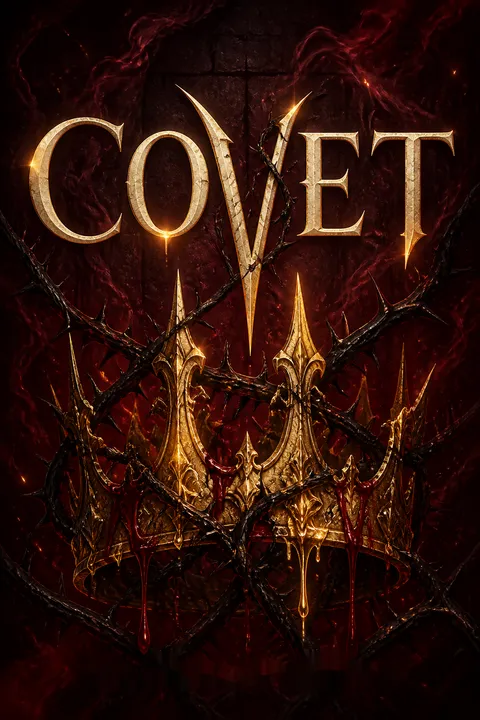


Plot Summary
Prologue
Five days after the Ludares challenge, Grace Foster dresses for Xavier's memorial while bruises from the fight are still fading. Xavier is dead, Cole has been expelled, and the spell that severed Grace's bond with Jaxon has left both of them reeling.
Her cousin Macy, grieving too, has dyed her bright hair black for the service. Grace comforts her, then finds Jaxon, Hudson, and their friends waiting in the hall. Their loyalty steadies her, but the brothers' wounded faces show that the challenge has changed every bond between them.
The memorial makes survival feel less like victory than an obligation carried by the living. Grace turns from her own grief to comfort Macy, reversing the care her cousin once gave her, while Macy's black hair makes mourning visible in a school where magic can glamour away almost anything. The gathered friends offer a temporary structure around their loss, but Jaxon's and Hudson's presence signals that the central crisis is not only bereavement. Grace has survived the challenge, yet the relationships that gave her strength have been altered by it.
After Xavier's Funeral
Three weeks after the memorial, Grace tries to keep her senior year intact while avoiding the emotional wreckage of the severed bond. She still loves Jaxon, feels responsible for Hudson's hurt, and has no idea how to handle being mated to one brother after loving the other.
Macy urges her to stop hiding, but Grace admits she is overwhelmed by schoolwork, her new gargoyle identity, and an impending seat on the paranormal Circle. Researching mating bonds gives her one firm fact: they are not supposed to break while both partners live. That makes her own experience an impossible case, and raises a more frightening question: if the break is unprecedented, who knew how to cause it?
Grace's avoidance is not simple indecision. Her life has repeatedly made private feelings public property, so delay becomes a way of preserving a small area of control. Yet the bond's supposed permanence turns her personal confusion into evidence of a larger violation. Macy's practical support matters because it reframes dependence as connection rather than failure. The opening movement establishes the book's central tension: Grace wants to make her own choices, but supernatural institutions and other people's decisions keep shaping the choices available to her.
The Bond's Wrong Color
At dinner, Jaxon finally gives Grace his attention, but their familiar tenderness collapses when Hudson arrives and the brothers refuse to speak plainly around her. Jaxon later ends their relationship, arguing that the broken bond has made their closeness painful for all three of them.
Grace retreats to the library, where Hudson helps when a song triggers her panic, then challenges her about avoiding him. He remembers the four months they spent together while Grace was trapped in stone, including the small confidences she has forgotten.
More troubling, he says her former bond with Jaxon looked green and black, unlike the clear blue bond now linking them. He has been researching a way to break it, forcing Grace to face what she has postponed.
The color difference turns an invisible relationship into something Grace can inspect, but it does not give her certainty. Hudson's memories create an asymmetry: he knows a shared past she cannot access, while she must decide whether to trust the person who remembers it. Jaxon's breakup is an act of care as well as retreat, an attempt to stop their pain from injuring Hudson too. The section complicates the idea that love can be validated by magical signs. The bond may explain attraction, but only honest conversation can reveal what either person wants.
The Bloodletter's Bargain
Grace and Hudson fly to the Bloodletter's cave using directions Jaxon sends from London. The Bloodletter confirms that she created Grace's bond with Jaxon after Grace's parents and a coven asked her to bring a gargoyle child to Katmere and bind the girl to the vampire prince, provided both remained open to the match.
The green-and-black bond was therefore engineered, and its severing cannot be undone by ordinary magic. The Bloodletter says the missing Crown may be the only way to repair it and might also help them free the Unkillable Beast, who could know where the Crown is hidden. To reach him, they must find the Blacksmith who forged his enchanted chains. Grace leaves with a route, not a solution.
The revelation destabilizes Grace's memories without declaring them false. The Bloodletter arranged the meeting, but Grace's affection for Jaxon was still experienced as real; coercion and genuine feeling coexist. That distinction prevents a tidy emotional reset and forces Grace to reckon with agency under compromised conditions. The Crown also converts romantic uncertainty into political urgency. A private wish to restore one bond now depends on freeing an ancient prisoner and confronting a ruler who has spent centuries accumulating power.
Cyrus Moves the Pieces
Back at Katmere, Grace's friends are assaulted by vampires, wolves, witches, and dragons, while the school's enchanted cuffs multiply as Headmaster Finn tries to contain the violence.
Comparing the targets and timing, Grace and her friends conclude that Cyrus is using factional clashes to isolate his opponents and prepare another attack on Katmere. Hudson explains that Cyrus once planned to seize the school and threaten the ruling families by targeting their children.
Jaxon returns from the Vampire Court with confirmation that Cyrus has obtained a Circle arrest order against Hudson, who could be sent to the Aethereum once graduation ends the school's protection. The group decides they need the Crown before Cyrus acts, and the Bloodletter's lead sends them toward the giants.
The school turns political strategy into bodily risk. Students who should be protected by Katmere become instruments in a contest among ruling factions, while cuffs meant to prevent harm also symbolize the institution's dwindling ability to govern. Hudson's account of the earlier hostage plan recasts his past violence as an intervention whose moral cost remains unresolved. The friends are not simply choosing adventure over school. They are responding to a state apparatus that can criminalize an opponent and use procedure to make persecution look legitimate.
The Forest Opens
Macy opens a portal to the giants' territory, but it deposits the group in an apparently empty forest. Hudson recognizes that Grace's gargoyle nature may connect her to earth magic, so she finally asks how he knew burying her could heal her after Cyrus's bite. His answer teaches her to see her power as a way to channel the elements, not merely resist them.
Macy then uses enchanted blades to locate the city's concealed entrance. When one embeds in a colossal redwood, Grace touches the wounded tree and sends earth magic through it, healing the trunk and awakening a ring of wildflowers. The forest's illusion falls away, exposing the hidden settlement and giving them a way to seek the smith.
Grace's power develops through a choice to ask a frightening question rather than through a sudden mastery montage. Hudson supports her by preparing knowledge in advance, then lets her make the discovery herself. The redwood makes that learning reciprocal: Grace heals the tree, and the tree reveals the city. Her magic is therefore not only force but relationship, dependent on attention and exchange. This moment gives the quest its first concrete success and revises Grace's view of herself from endangered anomaly to participant in the world's living systems.
Falia's Waiting House
In the Firmament, the giant princess Erym welcomes the visitors and shows them the city's metalwork. A jeweler directs Grace and Hudson toward Falia, a craftswoman whose missing husband made magical cuffs. Falia's moving treehouse reacts to her grief, and she explains that Cyrus persuaded her husband, Vander, to forge chains for a supposed world-threatening monster, then imprisoned him for treason once the work was done.
A ring keeps Falia waiting because Vander promised to return. Before the group can plan further, the Watch arrives with an arrest warrant for Hudson. Erym guides them through a secret exit, and they flee the city with a clearer target: reach Vander in the Aethereum and bring him home.
Falia's house gives grief an architecture: the tree rearranges its rooms to protect her and preserves carvings of family life for the man who is absent. Her account exposes Cyrus's method of rule as more than violence. He manufactures a crisis, recruits someone through fear for loved ones, then discards that person when the work is done. Falia's ring and Grace's emerging promise ring echo one another, making commitment feel both sustaining and dangerous. The Watch's arrival turns the story from inquiry into pursuit.
A Ring and a Choice
After returning to Katmere, Grace tries to finish school while factional attacks spread and her friends begin to treat Hudson as one of their own. On her eighteenth birthday, they surprise her with a party in Hudson's undercroft, where he gives her poetry and later crushes carbon into a diamond.
Their closeness deepens during a trip to New York for the Dragon Court's Wyvernhoard festival: Hudson buys her a magical promise ring, dances with her, and finally tells her he loves her. Grace is frightened by the force of her feelings, but she stops treating their attraction as something she can dismiss as magic alone. They spend the night together, and she begins to acknowledge that choosing Hudson could be a real choice.
The gifts in this section differ in what they ask of Grace. The diamond is a gesture she can accept without deciding their future; the promise ring carries a meaning she does not yet know; Hudson's declaration asks for honesty without demanding an answer. His restraint makes intimacy possible because he does not convert desire into entitlement. Grace's fear is not evidence that she feels nothing. It reflects the cost of trusting a relationship after bereavement, manipulation, and a previous bond's abrupt destruction.
The Dragon Court Trap
At Wyvernhoard, Nuri welcomes the group to the Dragon Court but has guards seize Hudson, accusing him of killing her son Damien. Grace and her friends refuse to abandon him, and Hudson removes the power-dampening cuff to force Nuri to take the threat seriously. She imprisons him anyway.
Grace confronts Nuri over the double standard, then accepts a bargain: Nuri gives her the key to Hudson's cell and identifies the Crone, a witch rumored to know how to escape the Aethereum. Grace frees Hudson, who had already weakened his cell, and the pair return to Katmere with a dangerous route forward. The festival's splendor has become cover for a political betrayal.
Nuri is neither a simple ally nor a simple antagonist. She grieves Damien and fears Hudson's power, but she also uses imprisonment as leverage in a political negotiation. Grace's refusal to let royal authority end the conversation marks an important shift: she argues as someone with a stake in governance, not merely as a girl asking for her boyfriend back. Hudson's hidden ability to neutralize his cuff reveals how survival skills can resemble deception, especially when institutions make vulnerability dangerous.
The Crone's Price
Nuri's directions lead the group to the Crone, who tells them a creation myth in which gargoyles were made to balance human order and paranormal chaos. She says Cyrus lost much of his own magic long ago and that a traitorous gargoyle once taught him how to kill their kind.
The Crone warns that the Aethereum cannot be escaped by ordinary force, then offers a method involving altered butterfly weed: the flowers make prisoners appear dead long enough for guards to carry them outside. Grace accepts a future favor from the Crone, with limits against harming anyone, and receives the flower pattern as a tattoo. Her choice creates an escape plan, but its cost and reliability remain uncertain.
The Crone's myth gives Grace's existence a political purpose, but purpose is not the same as destiny. She has repeatedly been treated as a solution to other people's crises, from her parents' bargain to the Crone's proposed favor. Grace negotiates boundaries before accepting help, an important change from simply absorbing others' plans. The flowers embody the book's uneasy relationship with power: the promised escape depends on a dangerous deception, and even a rescue can place someone else's future under obligation.
Thunder Between Brothers
After the Crone's visit, Jaxon admits that the bond's violent severing also fractured his soul; a healer believes the pieces are dying, while Hudson's bond is holding Grace's soul together. Grace realizes that restoring Jaxon's soul may require restoring their bond, and Hudson leaves rather than force her to choose.
In the additional Hudson viewpoint, he visits Jaxon and discovers that his brother still keeps a small wooden horse Hudson carved for him as a child. Jaxon had not known who made it. The discovery breaks through their hostility: Hudson apologizes for killing him, Jaxon acknowledges the wound between them, and the brothers run together, not healed but willing to begin again.
The wooden horse makes memory material: Jaxon has preserved evidence of a bond that his conscious account of childhood had erased. Their reconciliation does not erase murder, separation, or the present crisis. Instead, it gives them a shared fact from before those injuries and lets each speak without using Grace as the only bridge between them. The scene also clarifies Hudson's sacrifice. He can love Grace and still step aside when Jaxon's survival appears to depend on her, though the cost to him is real.
Graduation Without Freedom
On graduation day, Grace's friends gather around her, but celebration lasts only until Nuri arrests Hudson under a new Circle law that strips Katmere's protection from students once they graduate. Grace claims her right to accompany her mate, and Nuri's guards cuff them both. Cyrus then produces a separate writ for Flint, accusing him of attempting to kill Grace.
Finn cannot stop the arrests without risking a larger confrontation. The three are sent through a portal to the Aethereum, where intake officers strip away their belongings and bind their powers. Grace keeps Hudson's promise ring, one of the few objects the prison allows her to retain, and enters the institution that has threatened them since the opening crisis.
Graduation usually marks a transition into chosen futures; here it becomes the precise instant institutional protection expires. Cyrus does not need to defeat Grace and Hudson in combat. He changes the rules around them, then invokes those rules to make capture appear lawful. Grace's decision to enter prison with Hudson is both an act of love and a political refusal to let the state isolate him. The promise ring becomes a small continuity object in a place designed to strip identity away.
Remy Knows the Routes
The intake process binds Grace's gargoyle power and sends the group to a cell with Remy, a sharp-witted warlock born inside the prison, and Calder, a formidable manticore. They explain that the Aethereum is built from nested magical cuffs: the walls, cell blocks, and bracelets each suppress a prisoner's abilities. Vander works in the Pit, forging the very restraints that keep everyone confined.
Remy knows the routes and warns that reaching the Pit requires repeated risks in the prison's rotating Chamber, where inmates relive their worst deeds as supposed rehabilitation. Grace learns that escape will demand both money and endurance, while Remy's bond with the prison's inhabitants complicates his desire to leave.
Remy and Calder show that the prison is not a single locked door but a whole ecology of coercion, from the cell's construction to the social economy outside it. Remy's familiarity is a survival adaptation, not consent. He has built attachments among people who helped raise him, making freedom emotionally costly as well as physically risky. The Chamber's promise of rehabilitation is especially revealing: the prison turns guilt into an instrument while claiming moral neutrality, obscuring who benefits from keeping prisoners broken.
Six Nights in Hell
The group risks the Chamber repeatedly, and the prison sends them into it six nights in a row. Remy can shield Grace, but Hudson, Flint, and Calder endure the punishment. Hudson is forced to relive compelling students to kill their classmates; Grace eventually uses Remy's magic through their mating bond to enter the nightmare and stop Hudson from killing her imagined self again.
She helps him recognize both the harm he caused and the impossible circumstances he faced. Later, she tells Flint that acknowledging his attempt on her life is necessary, but endless suffering is not atonement. Their bodies remain exhausted, yet her intervention gives them a way to reach the Pit without surrendering to the prison's judgment.
The Chamber converts memory into state violence: it does not invite reflection but compels repetition until the prisoner can no longer distinguish accountability from self-annihilation. Grace's entry into Hudson's nightmare matters because she does not absolve him or deny the students' deaths. She restores context and agency, letting him face the act without being reduced to it. Her counsel to Flint extends the same distinction: remorse can motivate repair, but pain alone does not make anyone morally better.
Gold for the Escape
In the Hex, the prison yard's games offer a way to gather the money Remy says an escape will require. Hudson enters fighting contests and defeats inmates until he is badly bruised but has several sacks of gold. Grace, stung by Calder's assumption that her only asset is charm, recognizes a rigged marble game from childhood practice with her friend Heather's father.
She wins against the Nightbloom witches, then doubles her winnings despite their attempt to threaten her. Her success proves useful beyond pride: the group can now approach the Pit's gatekeeper with substantial funds. It also gives Grace a concrete way to contribute while her gargoyle powers remain trapped beneath layers of prison magic.
The games turn status into currency, but Grace succeeds by reading the mechanism rather than overpowering the people running it. Her childhood experience, often unrelated to supernatural danger, becomes a practical resource. This counters the prison's assumption that power belongs only to those who can fight. Hudson's willingness to absorb injuries and Grace's quiet mathematical skill give the group complementary forms of leverage, though both victories attract attention and increase the risk of retaliation.
The Price of Passage
Vander agrees to forge the key needed to free the Unkillable Beast, but a Crone flower does not kill him as expected, so Calder takes one and collapses instead. Remy takes the group to Charon, the childlike owner of the prison, who raises the price and demands a fight against two giants. Grace and Hudson survive by dropping the ballroom chandeliers onto their opponents.
Charon's bargain releases five prisoners, while Remy stays behind because his own vision still points toward escape by flower. Before they leave, Grace channels Remy's hidden magic back to him through her tattoo. Remy then removes the cuffs from Grace and her companions, restoring their powers and sending them toward the surface with Vander and his key.
The prison's corruption becomes explicit when Charon turns promised rehabilitation into a spectacle and a changing price. Grace and Hudson win not through strength alone but by noticing the room's architecture and using the chandeliers as a weapon. Their escape is incomplete: Remy's choice to stay honors the future he trusts, even as it separates him from the new family he helped. The tattoo's role transforms Grace from a conduit into a collaborator, while the returned magic signals that survival has become collective work.
The Island Turns Red
The escaped prisoners emerge in a cemetery, where Grace's friends have waited for them, then return to the island to use Vander's key. Cyrus's forces attack before they reach the cave. Grace channels borrowed power to close Flint's severed leg wound, while Luca dies protecting the others and Jaxon suffers Cyrus's eternal bite.
Hudson unleashes his destructive magic against the attackers, erasing the surrounding terrain and scattering the force rather than killing everyone. He has only his father's line of fire to answer for, but chooses restraint when his enemies flee. The victory costs dearly: Flint is gravely injured, Luca is dead, and Jaxon is dying as Grace's power drains away.
The island battle tests whether Hudson's power must reproduce Cyrus's rule. He can destroy the field and every person on it, yet he uses force to end the assault and stops when the threat retreats. Grace's healing makes her vulnerability active rather than passive, but it cannot prevent every loss. Luca's death and Flint's injury expose the cruel limits of competence: love and skill may save some people, not everyone. The battle makes the moral cost of restraint visible without pretending restraint is painless.
A Heart Returned
After Hudson drives off Cyrus's forces, Jaxon succumbs to the eternal bite and dies with his soul already damaged by the broken bond. Nuri gives him her dragon heart, surrendering her ability to transform, and the magic brings him back. She asks Jaxon to protect Flint, who has lost his lower leg, while the group mourns Luca.
The sacrifice changes Nuri from a calculating political ally into someone who accepts a permanent personal cost to save her son. Aiden carries her and the surviving dragons away, leaving the friends to face their losses and continue toward the cave, where the freed gargoyle may still know how to find the Crown.
Nuri's choice answers her earlier bargain with an act that cannot be undone. She has used people as leverage, but now she accepts the loss herself rather than demanding another sacrifice from someone else. The dragon heart also makes kinship literal: Jaxon survives through a gift from a mother who once participated in the politics that endangered him. The scene refuses easy restoration. Jaxon lives, but Luca is gone and Flint is maimed, so mercy arrives alongside grief rather than replacing it.
The Crown's Mark
Grace unlocks the ancient gargoyle's four cuffs, and he shifts back into a human man after a thousand years in stone. He is disoriented, so Macy offers water and cookies while Grace gradually establishes trust. Asked about the Crown, he cannot describe it clearly, but insists it belongs to his mate and must be protected.
When Grace promises to find the woman and deliver the Crown after saving her friends, the gargoyle accepts by clasping her hand. A crown-shaped mark appears in Grace's palm. The promised object is now tied to a person rather than a throne, and the group has gained a clue without learning who its intended guardian is.
The freed gargoyle's first needs are water, food, and safety, not political strategy. Grace recognizes that the thousand-year prisoner must recover personhood before he can become an informant. The crown mark arises through a promise, linking political power to relational obligation rather than entitlement. Yet the identity of the mate remains unknown, so Grace's promise could become another trap. Her caution about what she promises reflects hard-won awareness that good intentions do not prevent others from exploiting commitments.
Katmere's Empty Halls
Back at Katmere, the friends find the school wrecked and nearly empty. Marise, the wounded infirmary worker, explains that Cyrus used the island battle as a diversion while his forces seized the students and staff. The group has saved the freed gargoyle and obtained the Crown's mark, but the children they meant to protect are now hostages.
The gargoyle suddenly turns back to stone, leaving Hudson to reveal a further clue: he saw an emerald-green string connected to Grace and wants to tell her what it means. The book ends before they can respond to the abduction or identify the Crown's intended owner, turning victory into a larger emergency.
The final reversal exposes how narrowly the friends defined success. They focused on the cave, the key, the Crown, and the immediate fight, while Cyrus used their attention to empty the school. The abduction makes political violence intimate again: the hostages are not abstractions but the community Grace has begun to call home. The green string also destabilizes the apparent resolution of her bond story. The ending deliberately leaves both the external conflict and Grace's supernatural identity unresolved, showing that one victory can reveal the scale of the next danger.
Analysis
Covet treats power as a problem of consent as much as capacity. The Bloodletter can manufacture a bond, Cyrus can use law to disguise vengeance, and the Aethereum can name torture rehabilitation; in each case, authority claims to act for a larger good while deciding other people's lives for them. Grace's development runs in the opposite direction. She begins by postponing questions because each answer seems likely to produce another crisis, then learns to ask, negotiate, and accept help without surrendering judgment. Her magic makes this ethic physical: she channels power from others rather than owning it, and healing becomes an act of attention that still cannot undo every loss.
The romantic conflict tests whether love is a feeling, a bond, or a choice. Grace's relationship with Jaxon contains real tenderness even though the Bloodletter arranged its conditions. Her connection with Hudson begins in antagonism and shared memory, then grows through his respect for her agency. The novel refuses to treat one relationship as fraudulent simply because another may be more enduring. Jaxon's damaged soul makes the cost of choosing especially severe, while Hudson's willingness to let Grace decide exposes the difference between sacrifice and control.
The Aethereum extends the book's critique of power into a closed system. Its repeated Chamber does not repair harm; it manufactures despair while rewarding those who profit from confinement. Grace's intervention in Hudson's nightmare offers a countermodel: accountability requires seeing the harm clearly, but endless punishment is not moral growth. The final abduction at Katmere confirms that private victories cannot end a structure built on coercion. Freeing the Beast, rescuing Jaxon, and obtaining the Crown matter, but Cyrus still controls the next battlefield. The ending therefore makes hope conditional on collective action, not on one miraculous object or one heroic person.
Review Summary
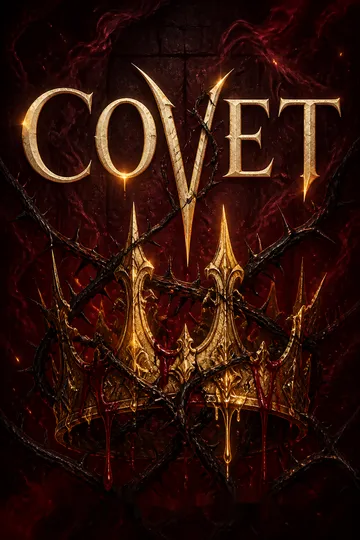
Covet received mixed reviews from readers. Many praised its engaging plot, character development, and romantic tension between Grace and Hudson. Fans appreciated the world-building and new magical creatures introduced. However, some readers were disappointed by Grace's character development and the shift away from her relationship with Jaxon. Critics found the book too long and felt certain plot points were unnecessary. Despite divided opinions, many readers eagerly anticipate the next installment in the series.
People Also Read





Characters
Grace Foster
Reluctant gargoyle heroineGrace is a newly discovered gargoyle raised in the human world and still trying to finish high school at Katmere. After her parents' deaths, she often manages fear by postponing difficult questions, but her instinct to protect others repeatedly draws her into danger. She is observant, funny, and more resourceful than she believes, using school lessons, emotional honesty, and emerging elemental abilities as readily as supernatural force. Her conflict is not simply choosing between two brothers; she is learning how to distinguish her own wishes from magical arrangements and other people's expectations. Loyalty matters deeply to her, yet she is gradually learning that caring for others does not require erasing herself.
Hudson Vega
Guarded vampire princeHudson is Jaxon's older brother, a vampire with formidable destructive and persuasive powers and a habit of hiding tenderness behind sarcasm. His polished clothes, literary knowledge, and controlled manner conceal a childhood shaped by manipulation and isolation. He is protective, but unlike Jaxon, he tries to strengthen Grace's independence rather than shelter her from every risk. His guilt over past choices makes him wary of his own power, even when others fear him for it. Grace's attention challenges his expectation that anyone who knows him fully will leave, while his loyalty to Jaxon complicates his desire to build a life with her.
Jaxon Vega
Wounded vampire princeJaxon is Hudson's younger brother and the vampire Grace first loves at Katmere. Quiet, guarded, and capable of devastating force, he tends to protect people by taking danger onto himself and withholding what he feels. His bond with Grace gives their relationship an immediate intensity, but his fear of hurting her becomes as consequential as his devotion. Jaxon's history with Hudson and the Vampire Court leaves him wary of intimacy, even when he longs for connection. He is not simply a rival for Grace's affection; his brotherhood, political responsibilities, and struggle to trust his own choices form a parallel emotional story.
Macy
Grace's steadfast cousinMacy is Grace's cousin, Finn's daughter, and one of the first people to make Katmere feel survivable. Funny, colorful, and socially fearless, she uses humor to care for people without making them feel managed. Xavier's death dims her usual brightness, but her friendships and her developing magical skill help her find ways forward. She supports Grace through grief and romantic confusion, while also carrying losses of her own. Macy's willingness to create portals, confront danger, and include others reflects a generous temperament that is not the same as naivety. Her warmth is a practical form of courage.
Flint Montgomery
Dragon prince and loyal friendFlint is a dragon prince whose charm and jokes can make him seem carefree, but he is shaped by family loyalty, fear, and a history of making desperate choices. He belongs to Grace's close circle and shares a complicated history with Hudson, Jaxon, and the people at Katmere. His confidence in flight and social ease contrast with moments when guilt makes him withdraw. Flint values friendship and belonging, even when he struggles to admit how much he needs both. His bond with Luca brings out a gentler side, while his position as a royal heir keeps him entangled in the political conflict around the school.
Cyrus Vega
Power-hungry vampire kingCyrus is the Vampire Court's ruler and father to Hudson and Jaxon. He treats power as something to secure through fear, favors, and the calculated use of other people. His political reach allows him to make personal vendettas look like lawful decisions, and his history with the Circle extends far beyond his sons' immediate conflicts. Cyrus's authority is formidable, but his need to dominate leaves him unable to recognize how many enemies his methods create. For Hudson, resisting him means confronting both a public tyrant and the parent who shaped his earliest understanding of love and obedience.
The Bloodletter
Ancient vampire strategistThe Bloodletter is an exceptionally powerful vampire who raised Jaxon and has long-standing ties to the Vega family. She can appear grandmotherly one moment and dangerously calculating the next, keeping control through selective truths and an unsettling confidence in her own judgment. Her affection for Jaxon is real, but it does not stop her from making choices for other people. She believes intervention can protect those she cares about, even when it overrides their agency. Her knowledge of ancient magic makes her a source of crucial information, while her motives remain difficult for Grace and Hudson to trust.
Nuri
Strategic dragon queenNuri rules the Dragon Court with her husband, Aiden, and is Flint's mother. Regal and politically alert, she has learned to survive by calculating what alliances and concessions can preserve her people. Her suspicion of vampires is rooted in painful experience, not simple prejudice, though that history can make her misjudge individuals. Nuri's relationship with Flint blends maternal love with the demands of leadership, and her decisions reveal the tension between protecting a family and protecting a kingdom. She is formidable because she understands how power works, but she must also confront the consequences of using the same political tools as her enemies.
Finn Foster
Protective headmaster and uncleFinn is Macy's father, Grace's uncle, and the headmaster of Katmere Academy. A warlock who prefers care and stability to intimidation, he offers Grace a home after her parents' deaths and treats her as family. His warmth does not mean he is powerless; when the school is threatened, he can act decisively. Finn wants to protect his students, but the crisis repeatedly puts him in conflict with political authority beyond the academy. He represents a form of leadership rooted in responsibility for particular people rather than abstract status.
Remy
Prison-born warlock guideRemy is a warlock who has spent his entire life inside the Aethereum. He sees possible futures, understands the prison's routines, and has built relationships with the guards and inmates who raised him after his mother died. His Cajun charm and teasing bravado hide a cautious mind shaped by confinement. Remy weighs risk differently from Grace because escape is not a hypothetical adventure for him; it could mean losing the only community he has known. He becomes a guide and collaborator, but his loyalty is complicated by the future he believes he has already seen.
Calder
Bold manticore inmateCalder is a powerful manticore with a dramatic sense of style, fierce self-confidence, and a talent for turning prison life into a game she can survive. She is Remy's closest companion and treats her beauty as a source of pleasure rather than apology. Beneath the bravado, she has adapted to a system that offers few choices, learning to bargain, compete, and protect the people she claims as family. Her directness unsettles Grace at first, but her loyalty becomes clear through action. Calder's humor is both personality and armor.
Vander Bracka
Enslaved giant blacksmithVander is a giant craftsman whose skill in enchanted metalwork has made him valuable to the prison and to powerful rulers. He once made an extraordinary set of chains after being persuaded that they would prevent a catastrophe. His craft is inseparable from his sense of duty, a quality others have exploited. The man Falia remembers is also a husband and father, not merely a legendary smith or a useful prisoner. His story reveals how fear can turn an honorable person's work into a tool of oppression.
Falia
Grieving giant craftswomanFalia is Vander's wife and a craftswoman whose home is built into a living redwood. She has spent an immense stretch of time waiting for her husband, preserving family memories in a house that moves to protect her and her daughters. Her grief makes her guarded, but she remains capable of welcoming visitors and trusting them with a painful history. Falia's ring represents both a promise and the burden of waiting. Through her, the cost of separating mates becomes concrete rather than merely magical.
The Crone
Unsettling prison witchThe Crone is an isolated witch who knows old stories and dangerous forms of magic. Beautiful, theatrical, and difficult to read, she controls conversations by deciding what to reveal and when. Her interest in Grace seems personal, though she frames her assistance as a transaction. She offers knowledge about the Aethereum but never presents help as free or uncomplicated. The Crone tests whether Grace can negotiate without surrendering her moral boundaries, and her charm makes it harder to tell where generosity ends and manipulation begins.
The Unkillable Beast
Ancient imprisoned gargoyleThe Unkillable Beast is a gargoyle bound in a remote cave, so long imprisoned that he communicates in fragments and warnings. He is both a person in need of rescue and a living connection to the nearly vanished gargoyle past. His limited speech makes every message feel urgent, but his knowledge is difficult for Grace to interpret. He does not function only as a source of information: his captivity embodies what happens when rulers turn fear into permanent confinement.
Luca
Gentle vampire and friendLuca is a member of Jaxon's Order and Flint's romantic partner. He is patient, affectionate, and often more perceptive about Flint's feelings than Flint is willing to be. His quiet kindness helps make Hudson's uneasy place in the group feel possible, even when old resentments remain. Luca also provides a contrast to the political violence around him: he values tenderness and steadiness without mistaking them for weakness. His bond with Flint gives the ensemble a relationship built on mutual regard rather than rivalry.
Mekhi
Vampire strategist and friendMekhi is a trusted member of Jaxon's circle, quick to assess danger and willing to make space for Grace among people who once treated her as an outsider. His humor keeps tense gatherings from collapsing into conflict, but he is also attentive to the practical needs of the group. Mekhi's loyalty is demonstrated through action more than declarations. He helps turn a collection of powerful, wounded classmates into a working team.
Eden
Fierce dragon friendEden is a dragon shifter with blunt humor, a competitive streak, and a strong instinct to defend her friends. She is often the first to challenge someone who mistakes politeness for permission. Beneath her toughness is a capacity for tenderness, especially toward Macy and the people who need practical care. Eden's confidence makes her useful in a fight, but her loyalty matters just as much when the group is grieving or afraid.
Xavier
Wolf friend and lost classmateXavier is a wolf shifter whose friendship with Macy and the others helps make Katmere feel like a community rather than a school full of factions. He stands apart from the cruelty of some wolves and offers Grace evidence that species does not determine character. His absence shapes the grief surrounding the story's opening and leaves Macy struggling to recover her former brightness.
Delilah Vega
Vampire queen and motherDelilah is the mother of Hudson and Jaxon and the queen beside Cyrus. Her relationship with her sons is shaped by court politics, unequal attention, and the compromises she has made to remain near power. She is difficult to read because her care is entangled with choices that have hurt her children. Delilah's influence matters even when she is absent, since both brothers continue to interpret their childhood through what she did and failed to do.
Aiden
Dragon king and fatherAiden is Nuri's husband and Flint's father, a ruler whose humor and flamboyant style soften but do not erase the responsibilities of kingship. He works beside Nuri to maintain the Dragon Court and support their son. His steady partnership with Nuri contrasts with the fractured family dynamics surrounding the Vega brothers.
Charon
Aethereum's childlike ownerCharon is an immortal child who controls access to the Aethereum and its supposed path to freedom. He dresses like a miniature monarch and treats rules as privileges he can change whenever it suits him. His childish manner does not make him harmless; he understands how to exploit prisoners' desperation for profit. Charon represents the prison's corruption concentrated in one small, self-satisfied authority.
Erym
Welcoming giant princessErym is the young princess of the Firmament, a curious and outgoing host who welcomes strangers when her guards would rather keep them out. Her enthusiasm gives the group access to giant society and helps them navigate a city built to conceal itself.
Heather
Grace's human best friendHeather is Grace's longtime friend from San Diego. Their shared history includes music, jokes, and childhood games that later help Grace recognize a rigged gambling trick. Distance and secrecy strain their friendship, but Heather remains a reminder of Grace's human life before Katmere.
Plot Devices
The Broken Mating Bond
Love under magical pressureMating bonds appear as colored strings within Grace, making connections visible and sometimes allowing magic or emotion to pass between partners. Her bond with Jaxon is severed by a spell, although neither dies, an event that should be impossible. Its unusual green-and-black appearance eventually exposes the Bloodletter's intervention. Grace's new blue bond with Hudson complicates the loss rather than replacing it cleanly: she must separate genuine affection from magical pull while confronting what the broken bond has done to Jaxon.
The Crown of Balance
Power with political stakesThe missing Crown is believed to grant immense power and to restore balance among the paranormal Circles. The Bloodletter points Grace and Hudson toward the Unkillable Beast, then toward Vander and the key needed to free him. The Crown becomes the group's best hope of countering Cyrus and repairing the damage around Jaxon's soul. Its presence also raises the question of who should wield power and who has the right to decide. The beast's promise gives Grace a direct, unresolved obligation concerning the Crown's intended recipient.
The Aethereum
Punishment disguised as justiceThe Aethereum is a prison built from nested magical restraints. Its outer structure, cell blocks, and inmate bracelets each suppress supernatural abilities. Prisoners are sent through a rotating Chamber that forces them to relive guilt as supposed rehabilitation, while the Pit offers money and the appearance of a path to freedom. In practice, Charon changes the price and turns escape into a spectacle. The system's language of atonement conceals a machinery of coercion, making the prison a political weapon rather than a neutral institution.
The Crone's Flowers
A dangerous escape keyThe Crone's altered butterfly weed can make someone appear dead long enough for prison guards to remove the body beyond the Aethereum. She imprints the flowers onto Grace's arm as a tattoo, so they can be called when needed rather than carried through intake. The plan initially fails when one flower has no effect on the giant Vander, and Calder uses another to feign death. The flowers remain useful, but they cannot free everyone, forcing the group to combine the Crone's trick with money, Vander's key, and Remy's knowledge.
Grace's Magic Strings
Power made visible and shareableGrace perceives her abilities and supernatural bonds as colored strings she can reach for and pull. The platinum string lets her shift into gargoyle form, while other strings connect her to elemental abilities and mates. Prison restraints make some strings inaccessible, but her tattoo and others' magic can let her channel power as a conduit. The device turns invisible relationships into concrete choices: Grace can feel when Hudson reaches for her, recognize a false bond, and later draw on other people's power to heal the wounded.
Crave Series


About the Author


Download PDF
Download EPUB
.epub digital book format is ideal for reading ebooks on phones, tablets, and e-readers.








