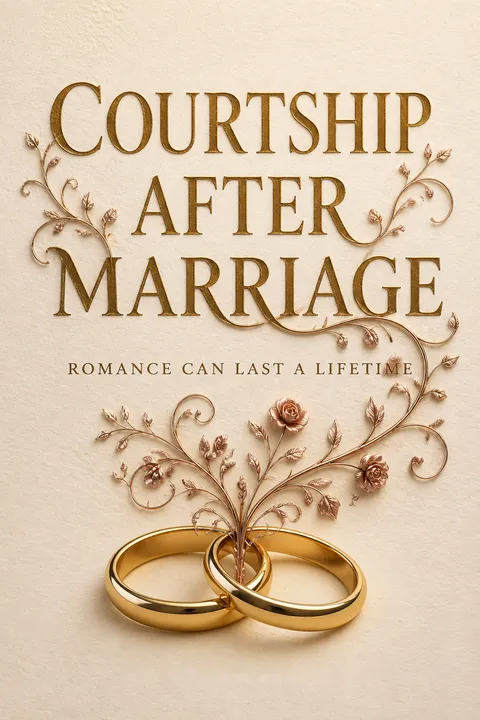


Key Takeaways
Keep courting after the wedding; romance is a practice, not a prize.
Love needs upkeep. Ziglar’s central idea is that marriage does not complete courtship. The everyday attention that helped two people fall in love must continue after the wedding, or familiarity and competing demands can slowly drain affection. He tells of a couple married for twenty-one years whose relationship seemed close to ending. After listening to his advice about courting one another again, they called back together, newly hopeful about the marriage.
Build beyond the honeymoon. Ziglar distinguishes early excitement from the steadier love built through attention, forgiveness, kindness, and shared effort. His own marriage to Jean, whom he calls “The Redhead,” supplies the book’s recurring example: he describes affection growing through decades of small gestures, not through a permanently ecstatic mood. His argument is practical: do not wait to feel romantic before acting with care.
The strongest move here is to treat romance as a relationship habit rather than a lucky personality match. That shifts the question from “Did we choose perfectly?” to “What are we repeatedly doing together?” The couple’s return call illustrates possibility, not proof that every marriage can be restored. The book’s optimism is most useful when it encourages effort without promising a guaranteed outcome. Sustained courtship is an invitation to mutual care, not an obligation to pretend that serious problems are minor.
Stop remaking your spouse; learn the person who is actually there.
Trade correction for curiosity. The book argues that couples can discover, after marriage, that the person they chose is not quite the person they imagined. Ziglar advises learning a mate’s changing preferences, habits, strengths, and vulnerabilities instead of treating them as a project. In his survey of couples married at least twenty-five years who said they would marry the same person again, 84 percent said they accepted their spouses as they were, and 89 percent said they continued trying to do so. The survey was not scientific, but it illustrates his emphasis on acceptance over perfection.
Look for what is good. A story about a wealthy islander who paid an extraordinary bride-price for a woman others undervalued shows how being treated with respect can strengthen confidence. The lesson is not that praise magically changes a partner. It is that a spouse’s attention can either dignify the person or reinforce a narrow, discouraging view of them.
Acceptance is not passive resignation. It can mean giving up the fantasy of controlling another adult while still naming behavior that causes harm. The distinction matters because “accept your spouse” can otherwise become a silencing instruction, especially in unequal or unsafe relationships. The book’s most constructive version is reciprocal: notice a partner’s actual qualities, express appreciation, and invite growth without making love conditional on becoming a different person.
Make ordinary kindness visible, frequent, and specific.
Small acts carry meaning. Ziglar’s final image is a baked sweet potato: his wife prepares one because she knows he enjoys it, not because she shares his enthusiasm for eating it. For him, the food matters less than the attention behind it. Across the book, he points to similarly modest gestures: greeting a spouse warmly, leaving a note, making a favorite meal, helping with an unpleasant chore, or thanking a partner for something easily taken for granted.
Act before the feeling arrives. Ziglar argues that loving actions can create warmer feelings, rather than requiring romance to come first. He urges couples to initiate care instead of keeping score over who made the last gesture. But the gestures should reflect the recipient’s preferences, not a fixed script: one spouse may value a thoughtful note, another an hour of help or uninterrupted time together.
This makes affection concrete. A small act can function as evidence that a partner was remembered and considered, which is more persuasive than a grand declaration that arrives once a year. The sweet-potato story also clarifies that care is not simply doing what the giver enjoys. Its limit is equally important: kind gestures cannot compensate for a persistent imbalance in work or responsibility. Thoughtfulness is strongest when it accompanies fairness.
Listen for the feeling underneath the report.
Details can prevent needless hurt. Ziglar opens his communication advice with an older couple who discover, after fifty years, that each had misunderstood the other’s choice of bread. The husband had saved what he considered the best piece for his wife; she had interpreted it as being given the least desirable piece. A brief conversation could have cleared up the misunderstanding long before their anniversary.
Show that the message landed. The book recommends giving a spouse full attention, letting them finish, reflecting back what they seem to mean, and asking about their feelings before offering solutions. Ziglar observes that some partners want empathy more than a plan. He also suggests writing a calm, non-accusing note when face-to-face discussion repeatedly breaks down. His claims about men and women communicating differently rely on broad generalizations, but the practical advice is to ask what this particular partner needs.
The bread story is memorable because it shows how a loving intention can still miss its target when people do not explain their preferences. Listening is not just courteous silence; it is an attempt to check whether the speaker’s meaning has been understood. The advice to pause before problem-solving is especially useful, since quick solutions can sound like dismissal. The book’s gender claims should not substitute for asking each person directly how they communicate and what helps them feel heard.
Treat intimacy as the climate of marriage, not a bedroom event.
Connection starts before sex. In Ziglar’s Christian view, physical intimacy belongs within marriage and can express closeness and commitment. But he insists it is shaped by the relationship outside the bedroom: affection, attention, kindness, and consideration matter throughout the day. A spouse who feels ignored or treated as useful only for sex may experience intimacy very differently from a spouse who feels loved and respected.
Make affection non-demanding. The book recommends ordinary physical contact, such as a hug or holding hands, without treating each touch as a request for sex. Ziglar describes frequent hugs with Jean as a way to reaffirm their bond. He also encourages couples to make time for one another and to greet each other warmly after time apart. His larger point is that sexual satisfaction is mutual, not a reward one spouse owes the other.
The useful insight is that intimacy is relational, not an isolated technique. Non-demanding affection can make closeness feel safer because it is not automatically a prelude to a sexual expectation. The book’s language sometimes treats a spouse’s sexual availability as a duty, which can blur the line between mutual care and entitlement. Its stronger principle is reciprocal attention: partners communicate about desire, boundaries, comfort, and changing needs rather than assuming that marriage settles those questions.
Protect fidelity before attraction becomes a private story.
Set boundaries early. Ziglar warns that an affair may grow gradually through secrecy, private confidences, special attention, and the sense that a new acquaintance understands one better than one’s spouse. He recommends noticing these shifts rather than insisting that nothing is happening until a clear line has been crossed. In his own example, he avoids private lunches with a female assistant because he sees little benefit and substantial risk to trust at home.
Practice active faithfulness. The book calls “creative fidelity” a positive commitment to a spouse’s well-being, not merely abstaining from sex outside marriage. That includes honest communication, protecting time together, and keeping work relationships appropriately professional. Ziglar suggests asking whether one would be comfortable telling one’s spouse about a choice before making it. His strict boundaries reflect his own values; couples may set different rules, but secrecy and broken agreements deserve direct attention.
The chapter’s useful contribution is its focus on the slope, not just the final fall. People often narrate small exceptions as harmless, while a pattern of secrecy can quietly alter a relationship. Explicit, mutually agreed boundaries make trust more observable than a vague promise to behave well. Still, a universal ban on one-to-one friendships is not the only route to fidelity. The more transferable test is whether the relationship remains transparent, respectful, and consistent with the couple’s shared agreements.
Fight the issue while protecting the person.
Make conflict safer. Ziglar argues that disagreement is inevitable, but personal attacks turn a solvable problem into a contest over dignity. His “Word Fight at the O.K. Corral” is a structured conversation: sit facing each other, hold hands if both are comfortable, state the issue without insults, and speak more slowly as anger rises. Focus on actions and feelings rather than attacking character. If the couple cannot resolve the issue, they can pause and return to it later.
Repair before resentment grows. The book urges couples to apologize, forgive, and avoid saving old complaints as ammunition. Its instruction to make up before bed expresses a desire not to let a quarrel become emotional distance. That should mean restoring respect and agreeing how to continue, not forcing a premature resolution. The core standard is to keep the relationship safe even while addressing what went wrong.
The chair-and-hands exercise makes an abstract rule physical: the couple is reminded that the person across from them is a partner, not an opponent. The most important protection is not the furniture but the ban on contempt and character attacks. A deadline to settle every dispute can backfire when emotions remain high or when an issue needs more time. Pausing with a clear plan to resume is often more constructive than either escalating or pretending the conflict has vanished.
Share the load by strengths, not by inherited gender scripts.
Lead through service. Ziglar describes marriage as teamwork: partners should recognize one another’s abilities, consult each other, and agree who is best placed to handle particular decisions. He recounts how baseball player Nolan Ryan discussed a career choice with his wife before deciding, presenting her perspective as consequential rather than decorative. He also argues that leadership means making sure the right person is making a decision, not claiming every decision for oneself.
Check the balance. The book’s “Wheel of Life” exercise asks each spouse to rate areas such as work, family, social life, and personal well-being, then compare their separate assessments. A couple might discover that one feels socially isolated while the other assumes life is balanced. Ziglar’s overall model assigns husbands formal leadership and wives submission, a framework he grounds in scripture. His emphasis on consultation and shared work is useful; the gender hierarchy is not necessary to apply it.
The book contains a productive tension: it praises partnership and expertise while prescribing a male-led household. Its practical examples often point beyond that hierarchy, toward listening, shared deliberation, and respect for a spouse’s competence. The Wheel of Life is valuable because it exposes mismatched perceptions rather than assigning blame. A modern reader can retain the diagnostic tool and reject the assumption that decision-making authority should follow gender rather than agreement, expertise, and mutual consent.
Choose repair where safe, but never confuse endurance with safety.
Name the danger clearly. Ziglar groups common threats to marriage under three headings: adultery, absence, and abuse. He argues that distance, secrecy, and neglect can erode connection, and he urges couples to recognize problems and seek qualified counseling. He also presents divorce as deeply consequential, especially for children, though many of the book’s statistics come from its era and are not established as universal predictions.
Safety comes first. The book acknowledges that separation or divorce may be necessary in cases such as violence or sexual abuse. It recommends leaving an abusive environment and getting professional help rather than relying on promises alone. Its commitment-and-forgiveness message can motivate repair when both people are willing and safe. It must not be used to pressure someone to remain in danger. A counselor, trusted support, and immediate protection matter more than preserving the appearance of a marriage.
The book’s repair ethic is strongest when it distinguishes ordinary conflict from serious harm. Commitment can create room to work through neglect, incompatibility, or a breach of trust, but it cannot by itself make an unsafe partner safe. The author’s own exceptions for abuse are essential, not incidental. Readers should also treat the book’s divorce figures as historical claims rather than forecasts for an individual family. The decision to stay, separate, or seek help depends on circumstances that no general marriage rule can fully capture.
Analysis
Courtship After Marriage is a Christian relationship manual built around a lively personal narrative. Ziglar makes his marriage to Jean the book’s emotional anchor, then surrounds that account with jokes, survey findings, borrowed stories, scripture, and practical exercises. Its central proposition is memorable: romance is maintained by repeated acts of attention, not secured once at the altar. The book’s best material turns that proposition into observable behavior: listen without immediately fixing, thank a spouse for specific contributions, make time together, discuss conflict without attacking character, and protect trust through agreed boundaries.
The work is also a product of its time. It assumes heterosexual marriage, frequently addresses wives and husbands through sharply differentiated gender roles, and treats Christian belief as the preferred foundation for marital life. Its exhortations toward male leadership sit uneasily beside its strongest examples of partnership, where a wife’s expertise shapes family decisions and both people are expected to serve. Readers can preserve its emphasis on mutuality without accepting its hierarchy as universal.
Its claims about divorce, sexual behavior, children, and social outcomes need particular caution. The text cites surveys and statistics from the 1980s, sometimes explicitly describing its own survey as unscientific, yet often gives broad conclusions a certainty those methods cannot support. Its premise that staying married is usually preferable may resonate in many cases, but it risks oversimplifying the consequences of chronic conflict, coercion, or abuse. The book does name safety exceptions, and those exceptions should govern any application of its repair-first message.
The most durable reading is neither “try harder at any cost” nor “marriage should always feel easy.” It is that care must be practiced, conflict must be handled with respect, and commitment is meaningful only when it protects both people. The title’s courtship metaphor works best as an invitation to keep learning and choosing one another, not as a guarantee that every relationship can or should be saved.
Review Summary
Courtship After Marriage receives mixed reviews. Some readers appreciate Ziglar's advice and humor, finding it helpful for improving relationships. Others criticize the book for its outdated, conservative views on gender roles and marriage. Many note its heavy religious content. Positive reviews highlight practical tips and engaging delivery, while negative reviews point out its heteronormative stance and lack of modern relevance. Despite criticism, some readers find value in Ziglar's traditional approach to maintaining a strong marriage, though they acknowledge it may not align with contemporary perspectives.
People Also Read






Glossary
Courtship After Marriage
Ongoing romantic attentionZiglar’s central idea that courtship should continue after marriage through everyday affection, conversation, shared activities, consideration, and intentional time together. Rather than treating romance as a stage that ends at the wedding, the concept frames it as a continuing practice that helps partners remain attentive to one another and sustain closeness.
Courtship Factor
Marriage connection questionnaireThe book’s informal questionnaire for assessing how much affection, communication, shared decision-making, dating, acceptance, and trust are present in a marriage. Respondents answer questions about their relationship and assign points to responses. Ziglar presents the resulting score as a prompt for discussion, not as a clinical diagnosis; the survey is described as semiscientific.
Three “A’s” of Divorce
Three relationship danger categoriesZiglar’s framework for grouping threats to marriage: adultery, absence, and abuse. Adultery covers sexual betrayal and boundary violations, absence includes emotional or practical disengagement, and abuse includes physical, chemical, and other harmful behavior. The framework is meant to help readers recognize problems and seek intervention, though it does not capture every cause of separation.
Word Fight at the O.K. Corral
Structured fair-conflict exerciseA guided way for spouses to discuss a disagreement without treating each other as enemies. The couple sits facing one another, states that the relationship matters, describes the issue without insults or character attacks, and slows the conversation as anger rises. If they cannot reach a solution, they can pause and agree to return to the discussion.
creative fidelity
Active marital faithfulnessA concept Ziglar attributes to Jane Ellens, describing fidelity as more than avoiding extramarital sex. It involves actively honoring marital promises, communicating honestly, considering a spouse’s well-being, and supporting that person’s growth. The term presents faithfulness as positive care and transparency, not merely restraint from crossing a sexual boundary.
About the Author
Other books by Zig Ziglar







Download PDF
Download EPUB
.epub digital book format is ideal for reading ebooks on phones, tablets, and e-readers.








