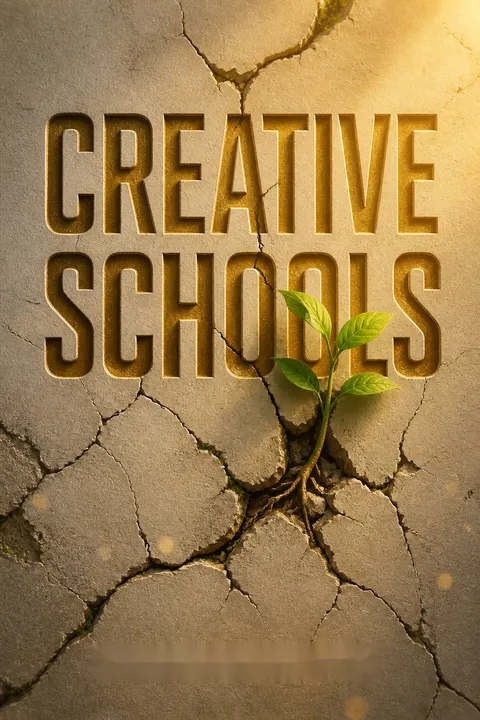


Key Takeaways
Treat each student's interests as the doorway, not a distraction
Belonging comes before lessons. At Smokey Road Middle School, principal Laurie Barron first worked to make students feel safe, wanted, and known. Only after discipline and attendance improved did staff focus on curriculum. Rather than dismissing football as less important than math, teachers connected students’ interests to schoolwork and relationships. One struggling athlete’s discipline referrals fell sharply, and special education students’ math and reading test scores rose by 60 percent.
Interest can unlock effort. The lesson is not to replace academic expectations with whatever students already enjoy. It is to use what matters to a student as a starting point for trust, motivation, and learning. Barron’s school saw stronger attendance and fewer discipline referrals as well as improved scores.
What's powerful here is the shift from managing a supposedly difficult student to asking what makes school worth showing up for. Motivation research often distinguishes autonomy, competence, and relatedness: students engage more when they have meaningful choice, experience progress, and feel connected to adults. Barron's approach touches all three. There is a useful caution, too. An interest should not become a mere bargaining chip for compliance. A student's passion deserves respect in its own right, even when it does not conveniently boost a test score.
Replace the factory model with a living ecosystem for learning
People are not products. Robinson traces mass schooling to the industrial era, when systems were organized around standard rules, age-based batches, fixed stages, and specialized tasks. Those arrangements made administration easier, but they can mistake uniformity for fairness and academic performance for the whole of intelligence. Students learn at different speeds and bring different talents, interests, and circumstances.
Cultivate the conditions. Robinson borrows four principles from organic agriculture to describe a healthier educational approach: health for the whole student, ecology across connected needs and relationships, fairness for people with different potential, and care in designing learning conditions. This does not mean abandoning structure or standards. It means judging structures by whether they help people grow, rather than assuming that a more efficient system must produce better learning.
The ecosystem metaphor changes the question from how to process students efficiently to what conditions let different learners develop. That resembles systems thinking in biology: an organism's health depends on interactions among parts, not on optimizing one isolated output. The metaphor also discourages easy blame. A disappointing outcome may reflect the environment as much as an individual's effort. Still, organic systems are not automatically equitable or effective. Schools need explicit goals and evidence of learning, alongside flexibility, so that responsiveness does not become an excuse for uneven opportunity.
Protect curiosity with time, choice, play, and meaningful problems
Learning starts naturally. Children absorb language and explore their surroundings before anyone gives them a formal lesson. In experiments described by Sugata Mitra, children in an Indian slum explored an internet-connected computer without prior computer experience, then taught one another to use it. In another experiment, children worked for months with difficult material about biotechnology, eventually grasping at least some of it despite limited English.
Freedom needs thoughtful support. Robinson argues that play, inquiry, and self-directed exploration help learners develop skills that lectures alone cannot supply. The examples do not show that teachers or structured knowledge are unnecessary. They show that curiosity can be a powerful engine when learners have time, resources, peers, and guidance. A school that fragments every activity into short periods can interrupt the concentration that deeper learning requires.
The chapter's strongest contribution is not the claim that children can teach themselves everything. It is the reminder that curiosity is an educational resource, not a nuisance to be controlled. This fits inquiry-based learning, where a question gives facts a reason to matter. Mitra's demonstrations are vivid but should not be mistaken for proof that unguided discovery works equally well for every subject or learner. Novices often need clear explanations and carefully sequenced practice. The productive design challenge is combining exploration with enough expert support to keep confusion from becoming discouragement.
Make teaching a craft of connection, judgment, and high expectations
Teachers create conditions. Robinson describes teaching as an art that requires more than subject knowledge. Skilled teachers notice what students understand, adjust their approach, and connect new material to learners’ lives. He summarizes four roles as engaging students, enabling their learning, expecting them to succeed, and empowering them to act as learners themselves.
Relationships change possibility. At Hobart Elementary, Rafe Esquith’s students studied Shakespeare in depth, performed plays, and took on demanding academic work. His example illustrates how high expectations can coexist with care and enthusiasm. In Mexico, Sergio Juárez Correa shifted his fifth-grade class toward collaborative problem-solving; ten students later scored in the 99th percentile in math on a national test. The point is not that every class needs Shakespeare or a dramatic project, but that teaching works best when students are active participants rather than recipients of information.
This account treats teaching as professional judgment, not a script. A teacher must decide when to explain, when to ask, and when to let students work through a problem together. That is similar to clinical practice, where expertise means adapting general knowledge to a particular person and moment. The stories also raise a structural issue: extraordinary teachers often work long hours to compensate for systems that limit their influence. Admiring their dedication should not obscure the need for training, time, and working conditions that make excellent teaching sustainable.
Teach a wide curriculum through doing, not just covering subjects
Knowledge should travel. At High Tech High, students combine academic content with practical projects, such as creating a book about the ecology of San Diego Bay. They research, write, design, and present work for an audience beyond the classroom. This approach treats disciplines as both bodies of knowledge and ways of doing, rather than as isolated subjects to race through.
Educate the whole person. Robinson names four purposes for education: economic independence, cultural understanding, active citizenship, and personal fulfillment. He also proposes eight connected competencies: curiosity, creativity, criticism, communication, collaboration, compassion, composure, and citizenship. A balanced curriculum should include the arts, humanities, language arts, mathematics, physical education, and science. Projects can connect these fields while leaving room for students to pursue particular strengths and interests.
The case for breadth is not that every student must master every discipline equally. It is that early sorting can hide capacities before students have had a chance to encounter them. Project work offers a practical way to connect knowledge, craft, and public contribution, while requiring students to explain what they have made. The eight competencies also broaden the definition of readiness beyond employability. A tension remains: deep projects take time, while students still need foundational knowledge and practice. Strong curriculum design must protect both, rather than treating either coverage or application as sufficient on its own.
Use tests as instruments, never as the definition of learning
A score is a narrow signal. High-stakes standardized tests can shape what teachers teach because schools and staff may face consequences tied to results. One fifth-grade teacher estimated that testing and preparation together consumed about a month of instruction. When preparation crowds out discussion, projects, and broader assessment, schools risk teaching students how to answer test questions instead of helping them use what they know.
Assess to guide progress. Robinson distinguishes diagnostic assessment, which helps identify needs; formative assessment, which supports improvement during learning; and summative assessment, which judges performance at the end of a course or unit. He describes the Learning Record, a portfolio-based approach that documented students’ work and development over time, including learners whose English was still developing. Tests can contribute evidence, but they cannot capture every important outcome.
The central problem is not measurement itself but the consequences attached to a limited measure. Once a score controls funding, reputation, or employment, people rationally redirect effort toward whatever raises that score. This is a familiar problem in public administration: a proxy can displace the goal it was meant to represent. Portfolios and teacher judgments offer richer evidence, though they require time, shared criteria, and safeguards against inconsistency. A balanced system can use tests to spot broad patterns while relying on varied evidence to understand individual learning.
Make principals responsible for school climate, not just compliance
Culture lives in routines. Principals influence a school's habits, such as fixed lesson periods or rigid classroom layouts, and its habitat, the physical spaces that signal how learning should happen. Those choices can support or obstruct collaboration, concentration, and a sense of belonging. At Grange Primary School, Richard Gerver began a student-run town as an extracurricular project, giving teachers, parents, and students time to experience the idea before expanding it.
Leadership enables others. Robinson distinguishes leadership, which provides vision, from management, which organizes resources and implementation. A principal need not supply every new idea. The deeper task is to build a shared purpose, support teachers, and make it safe to test changes. A school culture that respects individuality, community, and possibility can sustain innovation more effectively than a collection of programs imposed from above.
School climate is often treated as atmosphere, but it is also an operating system: routines, spaces, permissions, and relationships shape what people can do each day. Gerver's gradual introduction of the student-run town shows how a low-risk pilot can create trust before a larger change. That strategy aligns with organizational change approaches that make experimentation visible and learnable. Yet climate work cannot depend on a charismatic principal alone. Sustainable change needs distributed leadership, staff development, and institutional memory, or an effective practice may disappear when its champion leaves.
Bring families and communities in without taking agency from students
Learning extends beyond school. Families and community members can help teachers understand students and offer expertise, mentoring, and real-world projects. Robinson cites a seven-year study of low-income Chicago elementary schools: schools with strong family engagement were ten times more likely to improve in math and four times more likely to improve in reading than schools with weak engagement. The book also describes programs that help schools communicate across language and work-schedule barriers.
Partnership is not rescue. Parents can advocate, volunteer, and collaborate with educators, while still allowing young people to struggle, make choices, and take responsibility. Robinson warns against over-parenting that intervenes to secure grades or remove every difficulty. Effective involvement connects home and school around a child's growth; it does not turn adults into managers of the child's every outcome.
Family engagement is more than attendance at school events. It is a relationship in which schools learn from families and make participation accessible, including to caregivers who work irregular hours or speak languages other than English. This can build trust and bring knowledge into the classroom that schools otherwise miss. The Chicago findings are compelling but describe associations, not a guarantee that engagement alone causes improvement. Partnership also needs boundaries: adults should widen a student's support network without replacing the student's own voice, judgment, or responsibility.
Change policy by enabling local experiments, then spreading what works
Begin with the right diagnosis. Robinson argues that reform needs three parts: a critique of current conditions, a vision of better ones, and a theory for moving between them. He contrasts U.S. reforms centered on standards and testing with Finland's broad curriculum, professional trust in teachers, and limited standardized testing. His comparison points to different choices, not a simple template that every country can copy unchanged.
Build conditions for change. Policymakers can support expert teachers, coherent goals, well-focused resources, collaboration, and room for responsible experimentation. In South Carolina, TransformSC brought educators, business leaders, and communities together around shared aims and school-level innovation. The larger argument is grassroots: teachers, principals, families, and policymakers each have leverage in the parts of the system they influence. Standards matter, but they should support learning rather than dictate its every form.
The change strategy is persuasive because it recognizes that education systems are networks of relationships, not machines that respond predictably to a single directive. Local pilots allow ideas to be adapted to context, while collaboration helps promising practices travel. Finland is a useful contrast, but national comparisons cannot isolate one cause of performance; culture, resources, and social policy also differ. The practical lesson is therefore not to copy a foreign system wholesale. It is to test whether policies give educators the capacity and permission to pursue learning goals with evidence and local knowledge.
Analysis
Creative Schools is a case for replacing uniformity with responsive design, not for abandoning common knowledge, rigor, or public accountability. Its narrative moves from the cost of an industrial model to examples of schools that organize learning around relationships, projects, varied talents, and community. The repeated school stories give the argument human texture: Smokey Road suggests that safety and belonging are prerequisites for instruction; Minddrive and High Tech High show how making things can connect academic learning to practical agency; the Learning Record shows how assessment can describe growth rather than merely rank it.
The book's most valuable conceptual move is to treat educational outcomes as properties of an environment as well as of individual students. That view resonates with motivation theory, organizational learning, and complex-systems thinking. It also changes the meaning of accountability. If schools are responsible for learning, policymakers must be accountable for whether their rules, resources, and incentives make learning possible.
The argument is strongest when it critiques incentives that narrow curriculum and distort behavior. It is less conclusive when vivid examples of successful schools stand in for comparative evidence. Exceptional cases establish possibility, but they do not by themselves prove that a model can scale, work for every learner, or outperform alternatives across contexts. The book acknowledges that different communities need adaptation, yet its optimism about personalization can understate the labor, expertise, and resources required to provide it equitably.
The most durable reading is therefore neither anti-standard nor anti-test. Common expectations can protect students from low expectations, and assessment can reveal patterns of exclusion. The danger comes when a narrow measure becomes the purpose of schooling. Robinson's challenge is to keep measurable outcomes in proportion to the larger aims: competence, curiosity, cultural understanding, civic participation, and a life that makes use of a person's capacities. The book's call for transformation is ultimately a governance argument: create the conditions for good teaching, learn from local practice, and spread improvement without pretending that all children or schools are interchangeable.
Review Summary
Creative Schools received mixed reviews, with many praising Robinson's vision for education reform and engaging writing style. Critics appreciated his emphasis on creativity, personalized learning, and holistic development. However, some found the book idealistic and lacking in practical implementation details. Positive reviews highlighted the inspiring examples of successful education initiatives, while negative reviews criticized the anecdotal nature and lack of empirical evidence. Overall, readers found value in Robinson's ideas for reimagining education, even if they disagreed with some aspects of his approach.
People Also Read



Glossary
Organic education
Whole-person learning conditionsAn approach to education that treats students and schools as living systems rather than standardized production lines. Adapted from principles of organic agriculture, it emphasizes the health of the whole learner, the interdependence of individuals and communities, fairness to different talents and circumstances, and care in creating conditions for development.
complex, adaptive system
An evolving network of relationshipsA system made up of connected parts that influence one another and respond to changing conditions. In education, these parts include students, families, teachers, school leaders, policymakers, and community organizations. Their interactions create outcomes that cannot be fully predicted by changing one rule or component in isolation.
Building Learning Power (BLP)
Habits for becoming a learnerAn approach associated with Guy Claxton that helps young people develop the mental, emotional, social, and strategic habits needed to learn effectively. It aims to help students respond to difficulty, uncertainty, and complexity with confidence, persistence, and creativity, so they can keep learning both in school and beyond it.
Flipped Classroom
Instruction before collaborative classworkA teaching model in which students encounter core explanations outside class, often through videos or readings, then use class time for discussion, peer instruction, problem-solving, projects, and individual help. The aim is to let learners revisit material at their own pace and reserve shared classroom time for active support.
Learning Record
Portfolio-based evidence of progressAn assessment approach that tracks a student's development through observations, samples of work, and analysis over time. Developed to recognize learning that standardized tests could miss, it can include student and family perspectives and describe progress in specific skills, such as growing confidence with unfamiliar reading.
assessment as learning
Reflection that guides learningAn approach in which assessment is part of the learning process, not merely a report on its results. Students use feedback, self-evaluation, and clear descriptions of developing skills to understand their progress and choose next steps. Teachers and families can use the same evidence to support improvement.
propositional knowledge
Knowing that something is trueKnowledge of facts, claims, concepts, or explanations. Examples include knowing a historical date or understanding a scientific account of a process. Robinson contrasts it with procedural knowledge, or knowing how to perform a task, and argues that education should make room for both.
procedural knowledge
Knowing how to do somethingKnowledge expressed through the ability to perform a practice or skill, often involving judgment, technique, tools, or physical coordination. Painting, playing an instrument, engineering, and dance all involve forms of procedural knowledge. It complements knowledge of facts and theories rather than replacing it.
Global Education Reform Movement (GERM)
International standards-driven reformA label used by Finnish education commentator Pasi Sahlberg for the spread of similar reform policies across countries. In the book, these policies are associated with centralized standards, standardized testing, competition, and accountability. Robinson argues that this approach can narrow teaching and curriculum when test performance becomes the dominant goal.
FAQ
What's Creative Schools about?
- Focus on Reform: Creative Schools by Ken Robinson emphasizes the urgent need for educational reform to better meet the needs of students in a rapidly changing world.
- Holistic Education: The book advocates for a holistic approach that nurtures individual talents and creativity, moving away from a one-size-fits-all model.
- Real-World Examples: Robinson provides numerous case studies of schools and educators implementing innovative practices that engage students and foster a love for learning.
Why should I read Creative Schools?
- Inspiring Vision: The book offers a fresh perspective on education, challenging conventional wisdom and encouraging critical thinking about the purpose of schooling.
- Practical Solutions: It provides actionable strategies for educators, parents, and policymakers to create more effective and engaging learning environments.
- Global Relevance: The issues discussed resonate globally, making it relevant for anyone interested in the future of education, regardless of their location.
What are the key takeaways of Creative Schools?
- Creativity Matters: Robinson argues that creativity is essential for personal and societal growth and should be cultivated in education.
- Personalized Learning: Emphasizes the importance of learning experiences tailored to the unique interests and strengths of each student.
- Community Involvement: Highlights the role of community and collaboration in education, advocating for partnerships between schools, families, and local organizations.
What are the best quotes from Creative Schools and what do they mean?
- “Civilization is a race between education and catastrophe.”: Highlights the urgency of reforming education to address societal challenges.
- “We don’t do education to students, we do it with them.”: Emphasizes the collaborative nature of learning, advocating for student engagement in their educational journeys.
- “The only way to change education is to change the story.”: Suggests that transforming education requires rethinking its narrative and goals.
How does Ken Robinson define creativity in education in Creative Schools?
- Creativity as a Process: Defined as "the process of having original ideas that have value," applicable across all disciplines.
- Cultivating Creativity: Education should actively cultivate creativity through exploration, experimentation, and critical thinking.
- Broader Implications: Fostering creativity is essential for addressing modern challenges, as creative thinkers are better equipped to innovate and solve problems.
What is the standards movement, and why is it criticized in Creative Schools?
- Focus on Standardization: Emphasizes uniformity through standardized testing and curricula, which Robinson critiques for neglecting individual needs.
- Negative Consequences: Leads to increased stress, disengagement, and a lack of creativity among students, often resulting in teaching to the test.
- Need for Change: Advocates for a shift towards a more personalized and creative approach that values diverse talents and learning styles.
What are the eight core competencies discussed in Creative Schools?
- Communication: Expressing thoughts and feelings clearly in various forms, including verbal and non-verbal communication.
- Collaboration: Working constructively with others, fostering teamwork and shared problem-solving.
- Compassion: Empathizing with others and acting accordingly, promoting community and social responsibility.
How does Creative Schools propose to change the curriculum?
- Interdisciplinary Disciplines: Focus on disciplines rather than traditional subjects, encouraging connections between different fields of knowledge.
- Balanced Curriculum: Advocates for a curriculum that includes arts, humanities, sciences, and physical education, catering to varied interests.
- Real-World Relevance: Curriculum should reflect real-world challenges, preparing students for life beyond school through experiential learning.
What role do teachers play in Creative Schools?
- Facilitators of Learning: Teachers guide students in their learning journeys, encouraging active participation.
- Encouraging Creativity: Foster creativity by providing opportunities for exploration and experimentation in the classroom.
- Building Relationships: Effective teachers build strong relationships with students, understanding their individual needs and strengths.
How does Creative Schools address the issue of standardized testing?
- Critique of Testing: Critiques the over-reliance on standardized testing for narrowing the curriculum and stifling creativity.
- Alternative Assessments: Advocates for assessments that capture a broader range of abilities, such as project-based assessments and portfolios.
- Focus on Learning: Emphasizes that assessment should support learning and personal development, rather than just achieving high test scores.
What examples of innovative schools does Creative Schools provide?
- High Tech High: Known for its project-based learning approach that integrates technology and real-world applications.
- Big Picture Learning: Focuses on personalized learning experiences through internships and community engagement.
- Matthew Moss High School: Exemplifies the Slow Education movement, prioritizing depth of learning over speed.
How can parents and communities support the ideas in Creative Schools?
- Engagement in Education: Parents should actively participate in their children's education by collaborating with schools and advocating for change.
- Building Partnerships: Schools should foster partnerships with families and community organizations to support students.
- Promoting a Culture of Learning: Communities can support educational initiatives by promoting creativity, curiosity, and lifelong learning through events and programs.
About the Author



Download PDF
Download EPUB
.epub digital book format is ideal for reading ebooks on phones, tablets, and e-readers.








