Plot Summary
Prologue: Last Hope at Ryugu
Adedayo Adisa and Isabel Abarca, stranded at the asteroid Ryugu, face the consequences of a desperate gamble to send their crewmates back to Earth. Their mining ship, the Konstantin, is failing, and the only way to save anyone is to send a small crew home on a risky trajectory. Adisa blames himself for the imprecise systems integration that forced this dangerous maneuver, while Abarca reminds him that survival required impossible choices. As they debate whether to inform their departing friends of the near-impossible odds, a new, unidentified spacecraft approaches—potentially hostile, possibly a replacement crew sent by creditors. The arrival of North Korean astronauts sets the stage for a tense, uncertain future, as the original crew's fate hangs in the balance.
Earthbound Reckonings
Back on Earth, NASA economist Erika Lisowski faces a secretive, high-stakes government panel. She's accused of abetting the illegal asteroid mining mission, but she defends the Konstantin's achievements: thousands of tons of resources returned, a leap in human space capability, and a private mission that outpaced national efforts. The US, China, and other powers vie for control of the returned resources, seeing them as strategic assets in a new space race. Lisowski argues for letting the miners lead, warning that hoarding resources for national advantage will doom humanity. The panel, torn between fear and ambition, ultimately coerces her into facilitating a meeting with the surviving miners, setting the stage for a new phase of negotiation and intrigue.
The Asteroid Miners' Dilemma
James Tighe, Priya Chindarkar, and Jin Han, the three Konstantin survivors, struggle to adapt to life on Earth. Tighe, diagnosed with cancer from deep space radiation, hides his illness to keep working toward a rescue mission for Abarca and Adisa. The trio, now minor celebrities in secret, must navigate grief, guilt, and the challenge of raising funds for a return to space. Their bond, forged in the crucible of deep space, is tested by personal secrets and the weight of responsibility for their stranded friends. As they gather investors and allies, the shadow of their past sacrifices and the urgency of the rescue drive them forward.
Assembling the Dream
The miners, with the help of Lukas Rochat and a growing team, begin assembling the resources, technology, and political support needed for a new mission. They face threats from criminal elements—like Adisa's Lagos oga, who tries to extort shares by threatening Adisa's family—and from the machinations of Earth's superpowers. Training resumes on Ascension Island, where new technologies and telepresence robots are introduced. The team must balance secrecy, security, and the need for international cooperation, all while haunted by the knowledge that time is running out for their friends at Ryugu.
Lagos: Shadows and Stakes
A journey to Lagos to secure Adisa's family's safety exposes the miners to the brutal realities of global inequality and criminal power. Their well-intentioned intervention backfires, putting Adisa's family in greater danger and entangling the team in local patronage networks. The episode underscores the interconnectedness of Earth's problems—poverty, corruption, and the legacy of colonialism—with the new frontier in space. The miners realize that their actions have consequences far beyond the technical or heroic, and that building a future in space means grappling with the unresolved injustices of Earth.
Training for the Impossible
On Ascension Island, the team undergoes intensive training with new-generation spacesuits, telepresence robots, and lunar surface operations. They test the limits of human-robot collaboration, learning to operate advanced mining and construction equipment remotely. The training is both physically and psychologically demanding, but it rekindles the sense of purpose and unity that defined their original mission. The team's diverse backgrounds—engineers, hackers, doctors, and adventurers—become their greatest strength as they prepare for the unprecedented challenges ahead.
The Master Plan Unveiled
Lukas Rochat reveals Nathan Joyce's audacious "phase two" plan: use the returned asteroid resources to build a spin-gravity space station at the Moon's L2 point, a solar power satellite, and a lunar mass-driver to launch regolith into orbit. This infrastructure will bootstrap a cislunar economy, enable further asteroid mining, and provide the energy and resources needed to address Earth's climate crisis. The plan is met with skepticism and emotional resistance, but the team recognizes its necessity. The vision is not just about rescue—it's about creating a sustainable, prosperous future for all humanity, and the miners must decide whether to embrace this larger mission.
Political Crossfire
As the miners move forward, they are caught in the crossfire of US, Chinese, Russian, and corporate interests. Each power seeks to control or co-opt the new resources and infrastructure, using legal, financial, and covert means. The miners must navigate shifting alliances, surveillance, and attempts at sabotage—including cyberattacks and the hijacking of their lunar cycler. The creation of the Cislunar Commodity Exchange (CCE), a blockchain-based DAO, becomes both a shield and a lightning rod, offering a new model for off-world governance but also provoking suspicion and resistance from Earth's old powers.
Launching Toward the Moon
With official channels blocked, the miners and their allies execute a covert launch from India, using a cargo rocket and a daring orbital rendezvous to reach the lunar cycler and, ultimately, Clarke Station. The journey is fraught with danger—no escape system, no capsule, only the hope that their calculations and training will see them through. The successful arrival at Clarke Station marks a new beginning, but also a point of no return. The team is now committed to building the infrastructure that will determine the fate of their friends—and perhaps of civilization itself.
Clarke Station: New Frontier
Clarke Station, constructed from asteroid and lunar resources, becomes the first true human outpost beyond the Moon. The team contends with technical challenges—plumbing failures, life support glitches, and the ever-present threat of radiation. International observers, required by political compromise, add complexity and tension. Yet, the station grows, attracting new crews, astropreneurs, and scientists. The miners' vision of a frontier open to all begins to take shape, even as the risks and sacrifices mount.
Building the Cislunar Economy
The CCE launches, using blockchain, NFTs, and smart contracts to create a new economic system insulated from Earth's corruption and collapse. Anyone on Earth can earn lūna by removing CO2 from the atmosphere, linking planetary survival to space development. The exchange becomes a lifeline as Earth's financial systems falter, and the miners' experiment in decentralized, transparent governance offers hope for a more equitable future. Yet, the system's success also attracts new threats—from cyberattacks to political backlash.
Lunar Mass-Driver Trials
The construction and activation of the lunar mass-driver—LEML-Mark-I—marks a turning point. After months of grueling telepresence work, setbacks, and sabotage (including a drone attack), the team finally succeeds in launching regolith into orbit. The achievement unlocks a flood of resources, enabling rapid expansion of Clarke Station and the cislunar economy. But the victory is bittersweet, as the effort claims lives and exposes the fragility of their enterprise. The miners must balance ambition with caution, knowing that every gain is hard-won.
Setbacks and Sacrifices
Tragedy strikes repeatedly: crew members die from accidents, equipment failures, and the relentless hazards of space. The loss of friends and colleagues weighs heavily, testing the team's resolve and unity. The first pregnancy in space ends in miscarriage, a symbol of both hope and the limits of human adaptation. Yet, the community on Clarke Station grows stronger, finding meaning in shared hardship and the pursuit of a common goal. The memory of the fallen becomes a source of inspiration and a reminder of the price of progress.
The CCE and Global Crisis
As Earth's climate and financial systems unravel in the "Debtpocalypse," the CCE's lūna currency and carbon extraction contracts become a beacon of stability. Millions on Earth participate in the new economy by removing CO2, and the cislunar infrastructure offers a path to recovery and hope. The miners' experiment in off-world governance and commerce proves its worth, even as it challenges the old order. The success of the mass-driver, solar satellites, and biosphere projects demonstrates that space can be a solution, not just an escape.
The Rescue Ship Debate
With resources flowing, the team debates the design of the rescue ship—balancing the need for speed, safety, and the preservation of the cislunar economy. The choice between chemical and nuclear propulsion, the risks of uranium enrichment, and the ethical implications of using precious resources for a rescue mission all come to a head. Political resistance from Earth intensifies, but the miners, led by Tighe and Yak, decide to proceed, trusting in their own judgment and the support of the global public.
Solar Storm and Survival
A massive solar storm threatens Clarke Station and the entire lunar infrastructure. The crew scrambles to shield themselves and their systems, relying on the mass they've accumulated and the ingenuity of their biosphere and engineering teams. The crisis brings the international community together, as Clarke Station becomes a haven for radiation-stricken astronauts from other nations. The event cements the station's role as a vital node in human survival and cooperation, even as it exposes the ever-present dangers of the frontier.
The Amy Tsukada Returns
The long-awaited arrival of the Amy Tsukada robot tug brings a windfall of resources—and a new confrontation. A pirate vessel attempts to hijack the tug, forcing Tighe and the team to take decisive, even ruthless, action to secure their hard-won prize. The episode underscores the stakes of the cislunar economy and the lengths to which rivals will go to control it. A message from the past, hidden on the tug, offers hope that Abarca and Adisa may still be alive, reigniting the urgency of the rescue mission.
The Final Confrontation
As the Oberhaus rescue ship nears completion, Earth's powers attempt to block its launch, fearing the precedent of a nuclear-powered, independent spacecraft. The miners, supported by the global public and the moral authority of their achievements, defy the UN Security Council and launch anyway. The crew—Tighe, Yak, Josephson, and Gusev—depart for Ryugu, carrying the hopes of their friends and the world. The moment is both triumphant and fraught, as the future of off-world civilization hangs in the balance.
Return to Ryugu
The Oberhaus arrives at Ryugu, finding the Konstantin battered but still operational. Adedayo Adisa is alive but gravely ill; Isabel Abarca, it is revealed, has departed for Mars with a North Korean captain, seeking a new frontier. The rescue is bittersweet—Adisa is saved, but Abarca's fate is uncertain. The team recovers the remains of their fallen friends, honors their legacy, and secures a new trove of resources. The journey's end is also a new beginning, as the miners realize that the frontier is always moving forward.
Legacy and New Horizons
With the rescue complete and the cislunar economy thriving, Clarke Station and its network become the foundation for a new era. The miners' vision—of a frontier open to all, of space as a solution to Earth's crises, of a decentralized, participatory economy—takes root. The sacrifices and achievements of the Konstantin crew inspire a generation, and the dream of reaching Mars, and beyond, becomes real. The story closes with Tighe and Yak gazing at the distant light of Mars, knowing that the next mountain to climb is already calling.
Characters
James Tighe
Tighe is the emotional core of the story—a cave diver turned asteroid miner, marked by loss, guilt, and a stubborn sense of duty. His relationships with his crewmates, especially Abarca and Adisa, drive his every action. Diagnosed with cancer from deep space radiation, he hides his illness to remain useful, embodying the self-sacrificing ethos of the frontier. Tighe's journey is one of redemption: haunted by the deaths of friends and mentors, he is determined to make their sacrifices meaningful. His psychological arc moves from survivor's guilt to acceptance, and finally to hope, as he helps build a new civilization in space.
Priya Chindarkar
Chindarkar is the team's roboticist and a key architect of the cislunar infrastructure. Disowned by her family for her independence, she finds belonging among the miners. Her analytical mind and ethical clarity make her both a technical leader and the group's conscience. Chindarkar champions the broader mission—using space to save Earth, not just for personal heroics. She navigates the tension between loyalty to her friends and responsibility to humanity, often mediating between Tighe's urgency and the demands of the larger project. Her development is marked by increasing confidence, empathy, and a willingness to make hard choices for the greater good.
Jin Han
Jin, a former Chinese taikonaut and son of a powerful party member, is both insider and outsider. Dismissed for insubordination, he finds purpose with the miners, but his loyalties are constantly tested by geopolitics and family ties. Jin's cool competence and risk-taking are balanced by a deep sense of honor and a longing for reconciliation. He becomes captain of Clarke Station, navigating the minefield of international observers and political intrigue. Jin's arc is one of self-definition—choosing his own path, forging alliances, and ultimately prioritizing the mission and his found family over national or personal interests.
Isabel Abarca
Abarca, the original flight surgeon and de facto captain at Ryugu, is a legendary mountaineer who brings the same fearlessness and drive to space. Her willingness to make impossible choices—sacrificing her own return for the survival of others—sets the tone for the entire expedition. Abarca's psychological complexity lies in her need to test limits, her acceptance of mortality, and her ability to inspire others. Her ultimate decision to leave for Mars, seeking a new frontier, is both a culmination of her character and a symbol of humanity's restless spirit.
Adedayo Adisa
Adisa, a Nigerian satellite hacker from the slums of Lagos, is both a technical genius and a survivor of systemic injustice. His journey from criminalized outsider to key architect of the miners' success mirrors the story's theme of redemption and inclusion. Adisa's loyalty, ingenuity, and self-doubt make him a deeply human figure. His struggle with guilt over the risky return trajectory, his concern for his family's safety, and his eventual illness and rescue highlight the personal costs of the frontier. Adisa's arc is one of transformation—from pawn to agent, from victim to symbol of hope.
Sevastian Yakovlev
Yak, a Russian alternate who becomes a mainstay of the Clarke Station crew, provides both technical expertise and emotional ballast. His dry humor, resilience, and adaptability make him a bridge between cultures and generations. Yak's pragmatism and willingness to bend rules contrast with the idealism of others, but he is fiercely loyal and courageous when it counts. His role as co-captain of the Oberhaus rescue mission cements his place as a leader and survivor.
Lukas Rochat
Rochat, the Swiss attorney and CEO of Catalyst Corporation, is the miners' indispensable Earthside ally. His legal acumen, political savvy, and willingness to bend (or break) rules are crucial in navigating the labyrinth of international law, finance, and espionage. Rochat's psychological complexity lies in his ambition, his desire for power, and his genuine belief in the miners' mission. He is both manipulator and true believer, often acting in ways that seem self-serving but ultimately serve the greater good.
Erika Lisowski
Lisowski, a NASA economist with a family legacy in space, is the miners' advocate within the US government. Her ability to see the big picture, challenge entrenched interests, and broker alliances is vital to the success of the cislunar project. Lisowski's arc is one of increasing risk and commitment—moving from cautious advisor to active conspirator, always pushing for a vision of space that serves all humanity. Her psychoanalysis reveals a deep sense of responsibility, a willingness to sacrifice personal advancement, and a talent for persuasion.
Ramón Marín
Marín, a Venezuelan migrant and crypto expert, embodies the story's theme of global inclusion. Scarred by the collapse of his home country, he is driven to build a new, incorruptible economic system in space. Marín's quiet determination, technical brilliance, and moral clarity make him the architect of the Cislunar Commodity Exchange. His arc is one of healing and purpose—transforming personal trauma into a tool for collective salvation.
Robert Ecklund
Ecklund, the designer of the lunar mass-driver, represents the generation of visionaries who never saw their ideas realized—until now. His late-life opportunity to build the mass-driver is both a personal redemption and a testament to the power of persistence. Ecklund's enthusiasm, humility, and eventual sacrifice (dying from a stroke during repairs) underscore the human cost and the intergenerational nature of the project. His legacy lives on in the infrastructure that makes everything else possible.
Plot Devices
Dual Narrative Structure
The novel weaves together the stories of the stranded miners at Ryugu, the survivors on Earth, and the growing community at Clarke Station. This structure allows for a rich exploration of both the technical and human challenges of building a new civilization, as well as the political, economic, and ethical dilemmas faced by those left behind. The shifting perspectives create suspense, empathy, and a sense of global stakes.
Hard Science Realism
The story relies on meticulously researched science and engineering: spin-gravity habitats, telepresence robots, lunar mass-drivers, solar power satellites, and blockchain-based economies. These elements are not just background—they drive the plot, create obstacles, and shape character decisions. The realism grounds the narrative, making the stakes and sacrifices feel immediate and believable.
Political and Economic Intrigue
The miners' efforts are constantly threatened by the ambitions of Earth's nations, corporations, and criminal networks. The creation of the CCE as a DAO, the use of NFTs and lūna currency, and the struggle for legal recognition are all plot devices that explore the possibilities and perils of new forms of governance. Sabotage, hijackings, and cyberattacks provide tension and test the miners' unity.
Foreshadowing and Symbolism
The recurring motif of climbing—literal and metaphorical—symbolizes the human drive to transcend limits. Abarca's mountaineering, the journey to Ryugu, and the final reference to Olympus Mons on Mars all foreshadow the endless nature of the frontier. The cairn at Ryugu, the "Far Star" diamond, and the recurring dreams of lost mentors serve as emotional anchors and reminders of what is at stake.
Ethical Dilemmas and Sacrifice
Characters are repeatedly forced to choose between saving individuals and serving the greater good, between secrecy and transparency, between caution and boldness. The deaths of crewmates, the decision to enrich uranium, and the handling of Earth's collapse all force the miners to confront the costs of their ambition. These dilemmas are not neatly resolved, but drive character growth and thematic depth.
Analysis
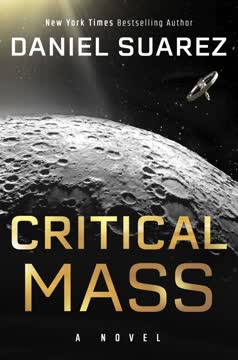
Critical Mass is a sweeping, optimistic, and deeply human vision of how humanity might escape the gravity well of its own limitations—technological, political, and moral. Daniel Suarez's narrative is both a hard science thriller and a meditation on the meaning of progress, sacrifice, and community. The novel argues that the frontier of space is not just a technical challenge, but a crucible for new forms of cooperation, governance, and economic justice. By centering the story on a diverse, international cast—outsiders, refugees, and rebels—it challenges the notion that space is the domain of superpowers or billionaires alone. The creation of the Cislunar Commodity Exchange, with its blockchain-based, participatory economy, is both a plot device and a manifesto for a more inclusive future. The story's emotional arc—marked by loss, resilience, and the relentless pursuit of hope—mirrors the real-world challenges of climate change, inequality, and political paralysis. Ultimately, Critical Mass suggests that the only way forward is together: that the courage to risk, to trust, and to build across boundaries is the true engine of civilization. The final image—of the miners looking toward Mars, the next summit—reminds us that the journey never ends, and that the greatest legacy is the opening of new horizons for all.
Last updated:
Review Summary
Critical Mass by Daniel Suarez receives mixed reviews, averaging 4.18/5 stars. Readers praise the hard science fiction elements, realistic near-future space technology, and detailed world-building. Many appreciate the focus on asteroid mining, space station construction, and cryptocurrency economics. However, common criticisms include excessive technical descriptions, lengthy blockchain explanations, and slow pacing that detracts from the thriller aspects. Some readers found the climate change themes overdone or politically charged. Character development receives mixed feedback, with some finding protagonists flat or annoying. Fans of hard SF generally enjoyed it more than those seeking action-driven narratives.