

Plot Summary
A Billionaire Uncle Dies
Charlie Fitzer learns on television that his estranged uncle Jake Baldwin, a reclusive parking-garage billionaire, has died. Broke after a journalism layoff, divorce, and his father’s death, Charlie is trying to borrow $3.4 million to buy a beloved local pub. The bank doubts his finances, and his siblings want him out of their childhood home.
Then Mathilda Morrison arrives with an offer from Jake: attend the memorial and represent a relative Charlie barely remembers. In return, Jake’s company will help Charlie keep the house and give him enough cash to regain some independence. Charlie accepts less from affection than pity for a dead man with no one else to stand for him.
Charlie’s ambitions are modest in price but large in emotional meaning. The pub represents work, community, and memories of his father, while the house is the last stable piece of a life recently dismantled. Jake’s offer initially looks like an unusual estate transaction, but it also places Charlie inside a family history whose silences have shaped him. His choice to attend is an act of decency toward a stranger, and the first sign that he may act on principle even when there is little personal reward.
A Funeral Full of Enemies
At Chesterfield Funeral Home, Charlie finds Jake’s memorial crowded with silent men who watch him but offer no condolences. The flower arrangements carry elaborate insults, a first indication that Jake’s business relationships were anything but peaceful.
During the viewing, visitors test the corpse, take photographs, and prepare knives, syringes, and swabs to confirm Jake cannot fake his death again. Charlie blocks one man from stabbing his uncle and forces the assembled strangers to explain themselves.
None knew Jake personally; each was sent by a superior who wanted proof he was dead. A local leader’s men confirm the body is cold, and the group leaves. Charlie has honored his promise, but the memorial has revealed that Jake’s death leaves dangerous unfinished business.
The funeral converts private grief into a public audit. Jake is treated less as a dead relative than as a disputed corporate asset, while Charlie’s refusal to let the men mutilate the body is the first meaningful relationship he has with his uncle. He does not claim love or shared memories; he simply insists that the dead deserve dignity. That small boundary places him in opposition to a world where loyalty is transactional and even death is not accepted without verification.
The House Explodes
As Charlie walks home, his cats, Hera and the kitten Persephone, alert him to an intruder in his bedroom. He reaches the street just before his childhood house explodes, killing a person inside and destroying nearly everything he owns.
The FBI begins asking questions, and Charlie has neither money nor somewhere to sleep. Morrison tells him to follow Hera. The cat leads him to a second house, where she types a welcome on a specialized keyboard and offers him a room.
Morrison explains that Hera is genetically engineered for intelligence and works in Jake’s spy network. She supplies Charlie with a real alternate identity, Des Ruiz, and reveals that his uncle’s enterprises extend far beyond parking garages. Charlie must decide whether to disappear or enter Jake’s world.
The explosion strips Charlie of the last material refuge that defined his ordinary life, but the cats turn vulnerability into a route forward. Their care is not sentimental decoration: Hera has been observing threats, preserving evidence, and maintaining a safe house. The revelation destabilizes Charlie’s trust in what he thought was a simple relationship with a stray cat. Yet her protection is also reciprocal. He chose to care for her before knowing she could help him, making his instinctive kindness the beginning of an alliance.
Cats, Dolphins, Villainy
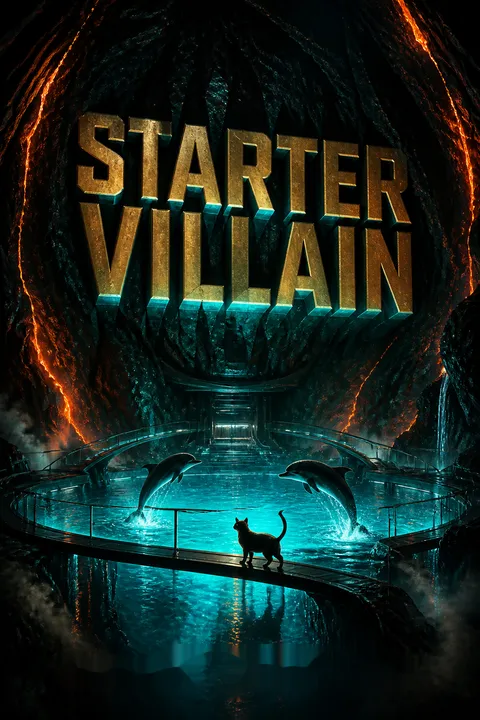
Morrison takes Charlie to Saint Genevieve, Jake’s Caribbean research island, where geothermal power supports technology companies and an intelligence operation staffed partly by engineered cats. Charlie learns that his uncle used ordinary businesses to fund disruptive inventions and covert services for governments and corporations.
The island’s dolphins patrol the surrounding waters and gather intelligence, but they are threatening a labor strike. Their leader, Seventy-three, mocks Charlie as management while making clear that the animals have few alternatives outside the facility.
Charlie postpones a full discussion because Morrison is ushering him toward a meeting in Italy. He arrives as Jake’s replacement without training, facing both a complex organization and a dispute that exposes the people and animals who sustain it.
The island makes the book’s central contradiction concrete: innovations with public value coexist with secret services designed to manipulate power. Charlie inherits not merely a fortune but an institution whose workers include beings denied ordinary forms of agency. His discomfort matters because he has not yet learned to treat moral questions as operational inconveniences. Seventy-three’s hostility is both comic defense and a genuine account of constrained choice, testing whether Charlie will listen when the person making the demand is deliberately unpleasant.
The Satellite Threat
On the island, Morrison demonstrates the Chac Four, a powerful laser system built from rainmaking research. A phone app can track satellites and offer options to disrupt, redirect, or destroy them.
Jake’s organization does not usually fire the weapon; it sells clients the security of knowing it could, collecting enormous fees while competitors pay to keep the same threat available. Charlie also learns that Jake’s apparent trillions are largely unusable, while the island’s companies run on legitimate licensing income.
When a parachuting intruder is captured, Charlie joins Morrison in questioning him. The man, CIA analyst Evan Jacobs, is actually arranging an off-the-books new identity and confirms that Charlie has been cleared in the house fire. He warns that the Lombardy Convocation is focused on Charlie’s inheritance.
The Chac Four turns villainy into a business model based on credible possibility rather than constant violence. Its customers pay for leverage, and the threat gains value from remaining mostly unused. Charlie recognizes the financial logic because he was a business reporter, but understanding the mechanism does not make him comfortable with its consequences. Jacobs’s arrival shifts the danger from abstract corporate competition to Charlie himself: he is now a variable in a contest whose participants have already treated his life as negotiable.
Bellagio’s Dangerous Welcome
At the Grand Bellagio on Lake Como, Charlie meets Anton Dobrev, head of the Lombardy Convocation, a secretive circle of wealthy industrialists. Dobrev welcomes him warmly, while Morrison warns that friendliness is another form of strategy. During a walk, an attacker charges Dobrev with a knife.
Charlie pulls the older man down, but a hidden sniper disables the assailant before he can strike. That evening, Charlie watches the Bellagio Gathering’s Pitch and Pitch, where ambitious founders present ideas and Convocation members eject rejected contestants into the lake with a spring-loaded stage.
The ritual exposes how humiliation binds the aspirants to the powerful men judging them. Charlie then faces the Convocation, which offers him membership while preparing to make its demand for Jake’s resources.
The Bellagio pairs polished hospitality with sudden physical violence, showing that elite manners do not soften the underlying competition. Charlie’s reflex to protect Dobrev echoes his defense of Jake’s body, though he barely knows either man. The Pitch and Pitch reveals how institutions manufacture consent: the founders accept public degradation because access to capital and status feels worth the risk. Charlie sees the cruelty clearly, but his own place at a private table makes him part of the spectacle even as he resists its logic.
The Price of Membership
The Convocation’s members try to pressure Charlie into joining, then threaten to demand money and force Jake’s companies out of competing businesses. Charlie reads their tactics as a desperate attempt to obtain billions quickly, not a genuine offer of mutual advantage, and refuses.
Alone with Dobrev afterward, he learns that Jake once belonged to the Convocation but left, and that a sealed island storeroom contains valuables the group entrusted to him. Dobrev claims Charlie has inherited Jake’s seat and holds the key to the archive.
Before he can explain why Jake departed, the Imperial Suite is rocked by explosions. Charlie is left with a dead man’s unfinished story, a secret cache, and an attack that makes the Convocation’s supposed invitation look like a trap.
Charlie’s reporting instincts become a form of self-defense. He reads the gap between the Convocation’s language of fellowship and its immediate demand for money, refusing to let inherited wealth substitute for trust. Dobrev’s revelation complicates that refusal: Jake’s past may bind Charlie to the very group he rejects. The explosion interrupts the explanation at the moment Charlie asks about his mother, turning missing family history into an urgent danger rather than a solved mystery.
Fire Over Lake Como
Charlie survives the blasts in the suite and returns for Hera, who attacks a masked gunman before he can shoot Charlie. The intruder is Jacobs, now working for people who paid him to leave the CIA.
Tobias Paris, the knife-wielding operative from Jake’s funeral, enters and kills Jacobs, then puts the gun in Charlie’s hands so the evidence will point to him. Tobias claims Charlie also killed Dobrev and warns that the Convocation will hold him responsible for the hotel attack. Morrison arrives and extracts Charlie and Hera through the burning hotel.
In a hideout, she tells him Jake believed the Convocation caused his sister’s fatal car crash after Jake refused to surrender a secret. Charlie now has a family wound entangled with a conspiracy, though he cannot yet know what is true.
Charlie’s return for Hera is the scene’s emotional hinge. He risks capture because he refuses to abandon a companion, while the violence around him repeatedly tries to turn care into liability. Tobias manipulates evidence so that Charlie’s instinctive rescue appears to be murder, exposing how easily institutions can manufacture a usable story. Morrison’s account of Charlie’s mother gives the family estrangement a possible cause, but its timing and source remain uncertain, a reminder that in this world even intimate truths can be tactical.
Whales on the Wire
Back on Saint Genevieve, Charlie opens the storeroom’s outer door with his hand, but the inner door requires six members’ scans. Morrison recounts Jake’s belief that a Convocation member caused Charlie’s mother’s death to gain access to the hidden collection.
Then the dolphins report that whales near the island carry transmitters. Astrud Livgren’s team detects signals reaching a communications satellite owned by Convocation member Ji-Jong Kim, suggesting the whales are monitoring the island.
Tobias also tells Morrison that Robert Gratas has taken control of the Convocation and has the gun bearing Charlie’s prints. Gratas can use it to revive the murder accusation. Charlie is cornered by two forms of surveillance: the literal network in the sea and the accusations built around his presence in Italy.
The island’s defenses are porous in a way Charlie did not expect: a natural-looking whale can carry a corporate listening post, while a single weapon can turn a false account into official suspicion. The storeroom makes inherited history physically present but inaccessible, and the alleged murder of Charlie’s mother gives that inaccessible object a human cost. His growing dependence on information from cats, dolphins, and Morrison suggests that leadership here means assembling partial knowledge, not possessing certainty.
A Satellite Goes Dark
Gratas attacks Jenny’s Bay, destroying the pier and two ferries while threatening Charlie’s staff at a resort in Grenada. Charlie answers by using the Chac Four to destroy Kim’s communications satellite, then proposes a forty-eight-hour pause before either side escalates again.
During the pause, Charlie returns to the dolphins and recognizes that their strike threat gives them real leverage. He agrees to recognize their union, let them manage their own division, and remove birth control from dolphins and cats who want to breed.
He asks them to investigate the whale transmitters and identify who is attacking the island. Seventy-three accepts the work, and the dolphins organize under a new association. Charlie has not merely hired help; he has begun changing the conditions under which it works.
Charlie’s retaliation is deliberately limited and legible: destroying one satellite demonstrates capability, while the proposed pause creates room for negotiation. His more consequential decision is to recognize the dolphins’ leverage and grant concrete control over their labor and reproduction. This is not a sentimental rescue, since the dolphins still insult him and their cooperation remains conditional. The distinction is important: ethical leadership does not require affection, but it does require treating the other party’s interests as real.
Empty Crates, Loaded Guns
Charlie offers Gratas the storeroom’s supposed treasure in exchange for an end to the attacks. Gratas brings the remaining Convocation members to Saint Genevieve, where their six handprints open the inner door.
Inside, he kills five colleagues and directs Tobias to kill another, intending to keep the collection alone. But the crates are empty. Gratas threatens Charlie and tries to use his operatives to destroy the island and the Grenada resort. The whales refuse the order: Charlie’s dolphins have contacted them and helped them unionize.
Tobias reveals he has been working with Morrison, and Hera attacks Gratas after he kicks at her. The dolphins pull him into the lagoon and kill him. His attempt to consolidate power instead completes the Convocation’s collapse.
The empty storeroom is a trap built from greed’s own momentum. Gratas chooses murder before confirming the prize, and every killing narrows his world until he has only a false fortune and an exposed labor force. The dolphins’ refusal is not a miracle of loyalty; it follows from Charlie’s earlier decision to recognize their agency. Meanwhile, Hera’s defense of Charlie recalls the small acts of care that began the story. The climax makes collective power, rather than superior firepower, the force that ends Gratas’s control.
The Dead Man Returns
After Gratas’s defeat, Charlie admits to Morrison that he does not want to continue as a villain. Dobrev then arrives alive. He explains that Jake was dying and worked with him and Morrison to make the Convocation destroy itself.
Jake was never a Convocation member; the storeroom story, the false inheritance, and the claim that the group killed Charlie’s mother were parts of a deliberate deception designed to draw Gratas into murder. Tobias had been protecting Dobrev and Charlie while pretending to serve their enemies.
The real collection had long since been spent, and Jake’s holdings will be wound down, with staff pensions funded and the island returned to Grenada. Hera agrees to vouch for Charlie, allowing him to leave instead of being permanently contained.
The revelation does not erase the harm Charlie experienced. Jake used him without consent, and the fabricated story about his mother exploited the deepest fracture in his family. Yet the plan also shows Jake trying, too late and imperfectly, to repair a life he had stayed outside of. Charlie’s refusal to remain a villain is not a rejection of responsibility; it is a boundary against inheriting a role simply because the plot has prepared him for it.
Home Behind the Bar
Charlie returns to Barrington, clears the house-fire investigation, and receives a letter in which Jake apologizes for the berry-spoon warning, using him in the island plot, and staying away after his mother died.
Jake’s trust provides Charlie with a house and, unexpectedly, McDougal’s Pub and its restaurant. Charlie keeps the staff and lets the former owner guide him through the first six months. A year later, the pub has settled into its old role as a gathering place, and Charlie’s father’s photograph hangs on the wall.
Hera and the grown Persephone appear outside after closing. Charlie asks whether they are coming home; Hera’s response is enough. He has traded a secret empire for a local life where belonging is built one ordinary shift at a time.
The resolution answers the opening’s longing without making wealth the solution to loneliness. Charlie does receive security, but the meaningful inheritance is a place where people return, recognize him, and share routines. Jake’s letter offers an explanation, not absolution; Charlie can keep the apology without pretending the lost years were repaired. The cats’ return completes the movement from being watched and managed to choosing mutual companionship. The pub is not a grand victory, but it gives Charlie a life he can inhabit rather than merely survive.
Analysis
Starter Villain uses the machinery of spy fiction to ask what makes a person fit to wield power. Charlie is not selected because he has a master plan or an appetite for domination. He is selected, in the story’s apparent logic, because he notices when people are being treated as disposable and intervenes even when it is inconvenient. That quality first appears in small gestures: protecting Jake’s corpse, taking in a kitten, and returning for Hera during a hotel attack. The final revelation complicates this moral portrait because Jake’s plan depends on manipulating Charlie and lying about his mother. Good intentions do not cancel the violation of consent.
The novel also turns business language into a form of moral camouflage. The Convocation describes coercion as strategy, and its members treat catastrophic violence as another way to manage risk. Jake’s own operation is more restrained and often produces useful technologies, but it still trades in threats and secrecy. Charlie’s decision to recognize the dolphins’ union marks the clearest departure from inherited practice: rather than assume that intelligence grants him authority over others, he acknowledges that the workers have leverage and a claim to self-determination. This change helps defeat Gratas, but it does not make Charlie eager to keep the throne.
The ending measures success not by how much power Charlie can retain but by whether he can choose an ordinary life. The pub answers the opening’s desire for work and company more directly than the island’s empire ever could. It offers continuity without secrecy, and a form of belonging that depends on daily participation rather than inherited status. Jake’s apology cannot restore the years he was absent, but Charlie can accept its truth without repeating his uncle’s methods. The book’s comic exaggeration therefore lands on a grounded distinction: competence may help someone survive power, while care determines whether they should keep it.
Review Summary
Starter Villain is a humorous, light-hearted novel about an ordinary man who inherits his uncle's supervillain empire. Readers praise Scalzi's witty dialogue, clever plot twists, and entertaining characters, especially the intelligent cats and unionizing dolphins. The book is described as a fun, easy read with elements of satire on corporate culture and modern villains. While some found it lacking depth, most enjoyed its absurd premise and comedic tone. The audiobook narration by Wil Wheaton received mixed reviews.
People Also Read




Characters
Charlie Fitzer
Reluctant business heirA former Chicago business reporter now scraping by as a substitute teacher, Charlie is recently divorced and grieving his father. He wants to buy McDougal’s Pub partly for its promise of community and partly because it holds memories of evenings with his dad. His humor is a form of self-protection, especially when money, family, or his stalled career embarrass him. Beneath the sarcasm, he has a stubborn instinct to protect people and animals who cannot protect themselves. He is practical enough to notice a bad deal, but inexperienced in the clandestine world surrounding his uncle. His central tension is whether inherited power can be used without inheriting the values that built it.
Mathilda Morrison
Uncle Jake’s fixerMorrison is Jake Baldwin’s capable representative, a sharp strategist who moves between legal business, covert operations, and personal danger without confusing any of them. She is protective of Charlie but does not disguise how much she knows or how little he does. Her dry, unsentimental manner keeps people from mistaking competence for warmth, though her loyalty to Jake and her relationships with the island’s staff reveal deeper attachments. She is comfortable making difficult choices and expects others to accept their consequences. Charlie’s questions force her to explain a world she has long treated as work, rather than as a system requiring moral justification.
Hera
Typing spy catHera first enters Charlie’s life as an orange-and-white stray who chooses his home. She is a genetically engineered, highly intelligent cat with access to a keyboard, a spy network, and an independent professional life. Her calm competence contrasts with Charlie’s habit of assuming he is alone and out of his depth. She watches over him, but her bond is not merely an assignment: she values the care he gave her before he knew what she could do. Hera’s affection is direct, practical, and sometimes exasperated. Through her, the novel asks whether intelligence and vulnerability deserve consideration even when they belong to someone outside the human social order.
Jake Baldwin
Absent billionaire uncleJake is Charlie’s estranged maternal uncle, a reclusive billionaire whose public fortune comes from parking structures. He had a bitter break with Charlie’s father after Charlie’s mother died, leaving Charlie with almost no personal memory of him. Jake is private, economical, and willing to make long strategic calculations, but his choices can also be cold and controlling. He keeps watch on Charlie from a distance rather than repairing the relationship directly. That absence shapes Charlie’s image of him as an inexplicable figure, while the berry spoons Jake sends as a wedding gift suggest both unusual foresight and poor judgment about intimacy.
Anton Dobrev
Convocation power brokerDobrev is an elderly industrialist, hotel owner, and influential figure among the Lombardy Convocation. He is expansive in manner, fond of stories, and skilled at making a negotiation feel like a personal welcome. Beneath his geniality is a practiced understanding that trust is dangerous in his line of work. His long professional connection to Jake gives him insight into the older generation’s methods, but he is also capable of seeing the Convocation’s weaknesses. Dobrev’s ease with both luxury and practical compromise makes him difficult to classify as either friend or enemy. He treats Charlie as a test of character as well as a potential business partner.
Tobias Paris
Hired knife and operatorTobias is a professional assassin and security operative whose calm manner makes violence seem like another technical service. He has a complicated history with Morrison, and their sharp exchanges suggest intimacy alongside distrust. Tobias understands how appearances, weapons, and evidence can be used to redirect suspicion. He rarely explains more than he must, which makes him difficult for Charlie to read. His competence gives him value to several powerful employers, but the novel keeps open the question of where his loyalties truly settle.
Robert Gratas
Threatened industrialistGratas is a senior member of the Lombardy Convocation and a representative of an older industrial fortune. He treats business as a contest in which threats and pressure are legitimate tools, and he expects younger or less experienced people to yield. His confidence is rooted in access to wealth, secrets, and hired force, though he is also concerned with the Convocation’s declining resources. Gratas’s polished social manner can turn quickly into anger when others refuse his terms. He embodies an established elite that mistakes control of the room for control of the outcome.
Seventy-three
Dolphin labor organizerSeventy-three is the sharp-tongued leader of the island’s engineered dolphin group. He resents human management and the cats’ greater influence, yet understands the intelligence network on which the island depends. His insults are both comic performance and armor against a system that offers him few meaningful alternatives. He is politically alert, suspicious of easy promises, and willing to bargain when someone takes his demands seriously. Charlie’s new management style gives Seventy-three a reason to consider cooperation without requiring him to become agreeable.
Astrud Livgren
Cetacean liaisonLivgren manages relations between the human staff and the engineered dolphins. She is knowledgeable about their behavior and intelligence, but years of hostility have made her wary and sometimes impatient. Her role requires translating between groups that do not trust each other, while enforcing policies she did not create. She recognizes the dolphins’ grievances but is also responsible for keeping the island’s operations functioning. Charlie’s decisions challenge her to reconsider how much of the status quo she has accepted as inevitable.
Joseph Williams
Island operations managerWilliams runs the day-to-day operations of Saint Genevieve and knows its facilities, staff, and practical constraints. He welcomes Charlie but does not flatter him into believing the job is simple. His experience and understated humor help ground the island’s extraordinary technologies in ordinary concerns such as power, transport, and maintenance. Williams is willing to consider changes to the workplace, including unionization, while understanding that the companies on the island have separate structures and interests.
Evan Jacobs
Off-book CIA analystJacobs is an intelligence analyst who approaches the island as both an assignment and a possible route to a new identity. He is observant, pragmatic, and comfortable operating in the gray areas between official agencies and private employers. His arrival reveals that the island’s services attract clients who need secrets handled outside normal institutional channels.
Andy Baxter
Family estate lawyerBaxter is Charlie’s father’s friend, lawyer, and estate executor. He presses Charlie to sell the family home because its trust arrangement is straining the siblings’ relationships, but he also helps secure insurance and legal assistance after the fire. His concern is practical rather than sentimental, and his bluntness can sound like another demand even when he is trying to help.
Persephone
Young spy catPersephone is the orange-and-white kitten Charlie takes in after finding her in a hedge. She quickly attaches herself to Hera and grows up within the cats’ intelligence network. Her presence gives Charlie an ordinary-seeming responsibility just as his life becomes extraordinary, and her affectionate dependence helps make the cats feel like companions rather than equipment.
Plot Devices
The intelligent cats
Furry intelligence networkJake’s engineered cats gather information, monitor threats, and communicate through keyboards designed for their paws. Hera’s apparent stray-cat arrival gives Charlie companionship before he understands her real purpose, while her evidence about the house bombing clears him of responsibility. The cats also possess careers, property, and political influence of their own, so they are not simply tools. Their intelligence drives the plot while challenging Charlie and the reader to treat nonhuman beings as agents with interests and choices.
The Chac Four
Threat for subscriptionA laser system developed for rainmaking can also interfere with or destroy satellites. Jake’s organization keeps the dangerous capability under its control and sells clients access or security through expensive subscriptions. The weapon’s real value lies less in routine use than in making competitors believe it might be used. Charlie later employs it directly against a Convocation member’s satellite, turning a research asset into a warning that gives him negotiating room.
Animal labor unions
Collective leverageThe dolphins’ threatened strike initially seems like an eccentric workplace problem, but their intelligence operation is essential to Saint Genevieve’s security. Charlie recognizes that their ability to withdraw labor gives them real bargaining power. He agrees to union recognition, self-management, and reproductive choice, then asks them to investigate the whales monitoring the island. Their cooperation helps expose the Convocation’s threat and later persuades the whales to refuse Gratas’s commands.
The storeroom
Greed-driven false prizeA fortified chamber on Saint Genevieve is said to contain hundreds of billions of dollars in valuables entrusted to Jake by the Lombardy Convocation. Its two doors require Charlie’s handprint and a quorum of Convocation members, making it both a security mechanism and a source of leverage. Gratas’s belief in the treasure draws him into murdering his colleagues. The crates prove empty, revealing that the supposed prize was constructed to encourage the Convocation to destroy itself through greed.
The false inheritance
A staged successionThe Convocation is led to believe Charlie inherited Jake’s seat, businesses, and access to a hidden fortune. That assumption makes Charlie an attractive target and gives Gratas a reason to pressure him. Dobrev and Morrison later reveal that Jake was never a Convocation member and that the succession story formed part of a plan to make the group’s conspirators turn on one another. Charlie’s apparent inheritance is therefore both bait for the antagonists and a test of how he behaves under power.
FAQ
Synopsis & Basic Details
What is Starter Villain about?
- Reluctant heir inherits chaos: Starter Villain follows Charlie Fitzer, a down-on-his-luck substitute teacher, who unexpectedly inherits his estranged uncle's vast and morally ambiguous business empire, thrusting him into a world of villainy, secret technologies, and dangerous power struggles.
- Navigating a world of villains: The story explores Charlie's journey as he grapples with his new responsibilities, the ethical dilemmas of his uncle's work, and the complex relationships he forms with both allies and enemies in this unfamiliar world.
- Balancing humor and intrigue: Scalzi blends humor and wit with elements of suspense and action, creating a narrative that is both entertaining and thought-provoking, as Charlie tries to make sense of his new life.
Why should I read Starter Villain?
- Unique blend of genres: Starter Villain offers a fresh take on the villain trope, combining elements of science fiction, humor, and social commentary, making it a compelling read for fans of various genres.
- Relatable protagonist: Charlie Fitzer's journey from a relatable everyman to a reluctant leader of a villainous organization provides a unique perspective, allowing readers to connect with his struggles and growth.
- Sharp wit and social commentary: Scalzi's signature wit and sharp social commentary are on full display, making the story both entertaining and thought-provoking, as it explores themes of power, morality, and the nature of good and evil.
What is the background of Starter Villain?
- Contemporary setting with advanced tech: The story is set in a contemporary world, but with the addition of advanced technologies and secret organizations, creating a blend of the familiar and the fantastical.
- Secret world of villainy: The background includes a hidden world of powerful individuals and organizations operating outside the bounds of conventional morality, with their own rules, codes, and agendas.
- Focus on corporate and political power: The story explores the intersection of corporate and political power, highlighting the influence of wealth and technology on global events, and the ethical dilemmas that arise from it.
What are the most memorable quotes in Starter Villain?
- "They're just terribly comfortable. I think everyone will be wearing them in the future.": This quote, a Princess Bride reference, highlights Charlie's dry wit and his ability to find humor in absurd situations, setting the tone for the novel.
- "You're not my dad, Andy.": This quote, spoken during a phone call with his father's lawyer, reveals Charlie's struggle with his past and his desire to forge his own path, independent of his family's expectations.
- "It's not personal, Fitzer.": This chilling line, spoken by the man who tried to stab Jake's corpse, underscores the cold, calculating nature of the villainous world, where actions are driven by business and strategy, not emotion.
What writing style, narrative choices, and literary techniques does John Scalzi use?
- First-person, conversational narrative: Scalzi employs a first-person narrative style, allowing readers to experience the story through Charlie's witty and often self-deprecating voice, creating a sense of intimacy and immediacy.
- Humorous and sarcastic tone: The novel is characterized by a humorous and sarcastic tone, which is used to both entertain and to provide social commentary, making the story both engaging and thought-provoking.
- Fast-paced plot with unexpected twists: Scalzi uses a fast-paced plot with unexpected twists and turns, keeping readers engaged and invested in Charlie's journey, as he navigates the complexities of his new life.
Hidden Details & Subtle Connections
What are some minor details that add significant meaning?
- Berry spoons and cryptic note: The wedding gift from Uncle Jake, a pair of berry spoons and a note saying "three years, six months," foreshadows the end of Charlie's marriage, highlighting Jake's manipulative nature and his knowledge of Charlie's life.
- Cat names and mythology: Charlie's cat names, Hera and Persephone, connect to the theme of mythology and power, hinting at the cats' intelligence and their roles in the larger narrative.
- The Eames chair: The Eames chair, a gift from Charlie's mother to his father, symbolizes family history and the weight of the past, as Charlie grapples with his parents' legacy and his own identity.
What are some subtle foreshadowing and callbacks?
- The "Dead? LOL okay" flowers: The floral arrangement with the "Dead? LOL okay" message foreshadows the skepticism surrounding Jake's death and the attempts to confirm it, hinting at the complex web of deceit and hidden agendas.
- The mention of the Hummel collector: The throwaway line about the Hummel collector foreshadows the later reveal of the third cousins once removed, highlighting the absurdity and unexpected connections in Jake's life.
- The recurring orange-and-white cats: The appearance of both Hera and Persephone as orange-and-white cats foreshadows the larger role of cats in Jake's organization, hinting at their intelligence and their connection to the villainous world.
What are some unexpected character connections?
- Mathilda and Tobias's past: The revelation that Mathilda and Tobias had a past relationship adds a layer of complexity to their interactions, hinting at the personal stakes and hidden agendas within the villainous world.
- Andy Baxter and Jake's knowledge: Andy Baxter's knowledge of Jake's interest in Charlie's life, despite their estrangement, suggests a deeper connection between the two men and a hidden network of information.
- The dolphins and the cats: The connection between the intelligent dolphins and cats, both working for Jake, highlights the unexpected ways in which Jake's organization operates, and the diverse range of talents he employed.
Who are the most significant supporting characters?
- Mathilda Morrison: As Jake's associate, Mathilda is a key figure in Charlie's journey, guiding him through the complexities of the villainous world and providing him with crucial information and support.
- Anton Dobrev: As the head of the Lombardy Convocation, Dobrev is a complex character who initially appears as an antagonist but is later revealed to be a key player in Jake's plan, challenging Charlie's perceptions of good and evil.
- Hera: More than just a pet, Hera is a key player in Jake's intelligence network, providing Charlie with crucial information and support, and highlighting the unexpected sources of power and wisdom in the story.
Psychological, Emotional, & Relational Analysis
What are some unspoken motivations of the characters?
- Jake's desire for connection: Despite his reclusive nature, Jake's actions suggest a desire to connect with Charlie, his only living relative, and to ensure his safety, even if it meant manipulating him into a dangerous situation.
- Mathilda's loyalty and guilt: Mathilda's unwavering loyalty to Jake and her willingness to help Charlie suggest a sense of guilt or responsibility for Jake's actions, and a desire to make amends for his past.
- Dobrev's desire for control: Dobrev's actions reveal a desire to control the Lombardy Convocation and to maintain his power, even if it means manipulating and betraying those around him, highlighting the corrupting influence of power.
What psychological complexities do the characters exhibit?
- Charlie's imposter syndrome: Charlie's constant self-doubt and feelings of inadequacy highlight his struggle to adapt to his new role as the head of a villainous organization, revealing his internal conflict and his desire to find his place in this unfamiliar world.
- Jake's manipulative nature: Jake's actions, from the cryptic wedding gift to the elaborate plan he sets in motion after his death, reveal a manipulative nature and a willingness to use others to achieve his goals, highlighting the moral ambiguity of his character.
- The Convocation's insecurity: The members of the Lombardy Convocation, despite their wealth and power, exhibit a deep-seated insecurity and a need for validation, which drives their actions and their desire to control others.
What are the major emotional turning points?
- The house explosion: The destruction of Charlie's childhood home marks a major emotional turning point, forcing him to confront his past and to embrace a new path, however uncertain and dangerous it may be.
- The funeral and the stabber: The bizarre events at Jake's funeral, including the attempted corpse stabbing, force Charlie to confront the reality of his uncle's life and the dangers that surround him, setting the stage for his transformation.
- The discovery of the storeroom: The revelation of the empty storeroom and the truth about Jake's plan forces Charlie to confront the manipulative nature of his uncle's legacy and to make a choice about his own path.
How do relationship dynamics evolve?
- Charlie and Mathilda's partnership: The relationship between Charlie and Mathilda evolves from a professional alliance to a bond of trust and mutual respect, as they navigate the complexities of the villainous world together.
- Charlie and Hera's bond: The relationship between Charlie and Hera deepens as they work together, highlighting the unexpected connections and sources of support that Charlie finds in his new life.
- Charlie and Dobrev's complex dynamic: The relationship between Charlie and Dobrev is characterized by a mix of respect, suspicion, and manipulation, as they navigate their shared history and their competing agendas, highlighting the moral ambiguity of the villainous world.
Interpretation & Debate
Which parts of the story remain ambiguous or open-ended?
- Jake's true motivations: While the story reveals some of Jake's motivations, his true feelings for Charlie and his reasons for choosing him as his heir remain somewhat ambiguous, leaving room for interpretation and debate.
- The future of the Convocation: The story leaves the future of the Lombardy Convocation open-ended, suggesting that the power dynamics and conflicts within the villainous world are likely to continue, even after the events of the novel.
- The nature of villainy: The story challenges the traditional notion of villainy, leaving the reader to question the nature of good and evil, and the extent to which individuals are responsible for their actions, or are simply products of their circumstances.
What are some debatable, controversial scenes or moments in Starter Villain?
- The Pitch and Pitch event: The brutal and dehumanizing nature of the Pitch and Pitch event raises questions about the ethics of the villainous world and the extent to which individuals are willing to go to achieve their goals.
- The use of animals for intelligence: The use of intelligent dolphins and cats for intelligence gathering raises ethical questions about the treatment of animals and the extent to which they should be used for human purposes.
- The justification of violence: The story presents violence as a necessary tool for achieving certain goals, raising questions about the morality of using violence to achieve one's objectives, even if those objectives are considered to be good.
Starter Villain Ending Explained: How It Ends & What It Means
- Charlie chooses a different path: The ending sees Charlie rejecting the villainous path and embracing a simpler life, running a pub and reconnecting with his roots, suggesting that true power lies in integrity and community, not in wealth and influence.
- The dismantling of the Convocation: The destruction of the Lombardy Convocation represents a rejection of the corrupt and manipulative power structures of the villainous world, highlighting the importance of challenging established systems of power.
- A new beginning for Charlie: The ending offers a sense of hope and the promise of a fresh start for Charlie, as he finds his place in the world and embraces a life that is more aligned with his values, suggesting that it is possible to break free from the cycle of violence and corruption.
About the Author


Download PDF
Download EPUB
.epub digital book format is ideal for reading ebooks on phones, tablets, and e-readers.








