


Plot Summary
A Job Beyond Huckleberry
John Perry has built a settled life on Huckleberry with Jane, his former Special Forces wife, their adopted daughter Zoe, and Savitri Guntupalli, the sharp-tongued assistant who once challenged him as a Colonial Union lackey.
His work as New Goa’s ombudsman now means resolving everything from farm disputes to village quarrels. Then General Rybicki arrives with a request: Perry and Jane must lead Roanoke, a politically contentious seed colony assembled from ten established human worlds.
Jane recognizes the cost of abandoning the home she has learned to love, while Perry admits he is ready for another challenge. Zoe also wants to go, and Savitri quietly secures a place on their staff. Before they leave, Zoe’s Obin companions warn Perry that the Colonial Union’s account of Roanoke’s ownership is false.
The departure begins not with a grand call to adventure but with an ordinary life that has become genuinely valuable. Perry’s village work and Jane’s hard-won attachment to Huckleberry make the choice consequential rather than automatic. Their willingness to leave is also relational: Jane follows Perry’s restlessness, while Zoe claims her own appetite for a beginning. The Obin warning punctures the official story before the family has even boarded, establishing that duty in this universe often means acting with incomplete information.
The Wrong Green World
On the colony ship, Perry and Jane meet the ten worlds’ delegates and discover that Manfred Trujillo, the politician who championed inter-colony settlement, resents being passed over for leadership. The public expedition first takes them to a lush planet presented as Roanoke, but Savitri notices its geography does not match.
Captain Zane confirms the ship has arrived somewhere unregistered and its engines have been locked out. Lieutenant Stross, a space-adapted Special Forces soldier hiding on the hull, explains that this is the real Roanoke and that the other world was a decoy.
A coalition called the Conclave has forbidden new colonies and threatens those that defy it. The settlers must conceal themselves, abandon contact with the Colonial Union, and eventually send the Magellan’s crew down before the ship is destroyed.
The false landing turns colonization into a problem of knowledge before it becomes a problem of soil. The settlers are not merely sent to a dangerous planet; they are denied the information and communications that would let them judge their danger independently. Trujillo’s suspicion of the leadership now has real grounds, even though his political vanity initially obscures them. Stross’s revelation makes the colony’s first act of self-government a forced choice between obedience and survival.
Croatoan Without Signals
Perry, Jane, and the colonists establish Croatoan, a camp ringed with cargo containers, while Jerry Bennett builds a shielded information room and discovers that nearly all modern equipment leaks detectable signals. With wireless tools forbidden, the settlers rely on manual machinery, printed records, and the Mennonites’ farming knowledge.
Hiram Yoder organizes crop planting and teaches the others to use the obsolete equipment; the first harvest eases the threat of hunger. Jane’s unexplained fever and new physical strength reveal that General Szilard secretly altered her body during the voyage, reversing her choice to leave Special Forces behind.
Meanwhile, the colony faces exhaustion, crowded tents, unfamiliar wildlife, and night raids against its barricades. Jane delays homesteading until she can identify the animals outside, but the colonists’ patience is running thin.
Croatoan is a social experiment made concrete through toilets, crops, tents, and the work of people who know how to repair what technology can no longer do. The Mennonites’ practices become practical infrastructure, challenging the assumption that simplicity is backwardness. Jane’s altered body gives the colony a defender, but it also violates the autonomy she fought to reclaim. The section binds collective survival to two kinds of trust: trust in neighbors’ skills and trust that powerful institutions will not silently redefine a person’s life.
The Forest Takes Its Due
When Joseph Loong disappears near the migrating fanties, a search party finds his body cut apart with tools rather than eaten by animals. Perry and Jane conclude that intelligent inhabitants share the planet. They keep the discovery from the wider colony while warning the Council, hoping to avoid panic.
Paulo Gutierrez ignores the warning and leads armed settlers into the woods. The creatures ambush them from above: Marco Flores, Gutierrez, Juan Escobedo, Deiter Gruber, and Galen DeLeon die, while Jane is wounded.
Hiram Yoder tries to meet the attackers without violence, but one kills him as Perry reaches the scene. Returning to Croatoan, Perry blames himself for the secrecy and faces a frightened colony. Trujillo pushes him to appear before the mourners, insisting that leadership means being seen when fear is spreading.
The massacre exposes how secrecy can reproduce the very paternalism Perry distrusts in the Colonial Union. He withholds information to prevent reckless action, yet the concealment leaves Gutierrez free to act on rumor and resentment. Yoder’s attempt at nonviolence is neither sentimental nor effective protection, and Perry’s rescue of the colony comes too late for him. Trujillo’s advice marks a shift from rivalry toward responsibility: he sees that a leader’s public presence can steady people even when no reassuring answer is available.
The Colony Was Bait
After the deaths, Bennett uncovers deleted material hidden in the Colonial Union’s files, including the full record of the Whaid colony’s destruction. The longer footage shows General Tarsem Gau giving its leader a chance to evacuate before the Whaid choose defiance and are destroyed.
Perry also learns from Hickory and Dickory that the Obin have records of seventeen colony removals: most ended in evacuation, not extermination. The evidence conflicts with the Colonial Union’s shortened account, which portrayed the Conclave as uniformly genocidal.
Perry and Jane begin to suspect that both governments are managing what they know. The Obin’s treaty keeps them from openly helping, but their testimony makes the colony’s situation less simple: the Conclave is dangerous, yet Gau may be a leader who can still choose restraint.
The recovered footage does not prove that Gau is harmless; it makes the moral landscape harder to flatten. The Conclave’s coercion remains real, but the Union’s edit has hidden the distinction between forced evacuation and annihilation. Hickory and Dickory’s careful disclosure also shows how intelligence is shaped by alliances and rules, not simply by facts. Perry’s growing skepticism is therefore more than distrust of authority. He is learning that accurate judgment requires comparing accounts produced by institutions with incompatible interests.
Four Hundred Silent Bombs
After a year in hiding, Roanoke is found when information about the Magellan crew’s return leaks to the Conclave. Gau comes to the colony and asks Perry to surrender, promising that the settlers can be spared; he also admits that factions within the Conclave want to attack humanity.
Perry asks him to withdraw his fleet, though he knows the Colonial Union is preparing a strike. Gau calls in 412 ships. Hidden Gameran soldiers, planted on the fleet’s hulls, detonate antimatter charges and destroy every ship except Gau’s.
The operation was designed to trap the Conclave fleet and cripple its authority, using Roanoke as bait. Perry’s warning gives Gau a chance to leave alive, but the surviving general tells him that anger across the Conclave may now escape his control.
The fleet’s destruction is a tactical victory built on a moral cost the planners tried to hide from the people bearing it. Roanoke’s settlers were treated as a symbol before they were treated as citizens, and Perry’s warning to Gau is his refusal to let strategy erase individual responsibility. The two men recognize something honorable in each other without becoming allies. That uneasy respect matters because the attack does not end the conflict; it removes the one leader who might have restrained it.
Roanoke Is Left Exposed
A missile probe tests Roanoke’s defenses and kills Zoe’s boyfriend Enzo along with his family, though the colony prevents the strike from becoming a complete bombardment. The Colonial Union then orders Perry to Phoenix Station for questioning over his conversation with Gau.
There, he learns that attacks have spread across human worlds and that the Union is withholding the news. General Szilard privately admits the Roanoke operation was meant to provoke a wider war and that the Union may prefer the colony’s destruction as a recruiting symbol.
He tells Perry that Gau faces assassination and that a hard-line rival, Nerbros Eser, could take control. Perry returns with the warning and with evidence that Jane’s restored abilities include a BrainPal capable of reading thoughts. She uses it to expose the Union’s lies, but refuses to leave Roanoke unattended.
Enzo’s death makes the strategic contest intimate: a political plan now has a face Zoe loved and a family that was not part of any military calculation. The inquiry’s language of responsibility clashes with the Union’s own willingness to sacrifice civilians for future mobilization. Szilard’s warning does not absolve him; it gives Perry enough knowledge to act while revealing how little trust remains between them. Jane’s mind-reading power strengthens their position but deepens her fear that the old military self is being imposed on her again.
A Vote for Treason
Because the Obin will defend Roanoke only if it leaves the Colonial Union, Perry asks the Council to consider independence. The delegates reject secession, unwilling to abandon their human ties or risk relying on the Obin.
Perry and Jane nevertheless send Zoe with Hickory and Dickory to warn Gau about the assassination plot; she can travel where her parents cannot, and Gau may believe her. The Council removes Perry and Jane from leadership, giving the office to Trujillo, who delays reporting their actions to the Union.
Zoe returns after witnessing the attempt on Gau’s life. He survived and is trying to restore control, but Eser’s faction still threatens the colony. Zoe also brings a Consu-made sapper field, a device that can redirect the energy of fast-moving objects and interfere with weapons.
The failed secession vote shows that survival is not a purely technical calculation. The settlers understand the danger but still value membership in a human community, even one that has manipulated them. Sending Zoe turns family love into political leverage, a choice her parents know is unfair even as they believe it necessary. Their removal from office costs them formal authority but not responsibility. The sapper field offers a new defense, though its limited power means courage and coordination will matter as much as technology.
The Sapper Turns Guns
Eser arrives with about a hundred Arrisian soldiers, expecting a quick surrender and a public triumph. Perry’s group appears to comply while secretly preparing Croatoan: the sapper field makes the soldiers’ rifles fail explosively, Jane attacks with a flamethrower and knives, Trujillo drives a cargo lorry through the ranks, and the Obin fight beside them.
Hidden turrets cut down the retreating troops, while Jane’s planning keeps the colonists from firing blindly. Perry joins the battle and kills an attacker who reaches him.
The colony captures Eser, but Jann Kranjic is shot while recording the fight, and Beata loses her former husband. Their victory proves Roanoke can defend itself, but it is paid for in blood and leaves the colony’s fragile future unresolved.
The battle converts the colony’s improvised habits into a coordinated defense: obsolete tools, hidden equipment, Jane’s tactical knowledge, Trujillo’s political instincts, and the Obin’s abilities each fill a different gap. Eser’s contempt makes his force vulnerable, but the colonists do not win without loss. Kranjic’s death gives the spectacle he pursued its human cost, while Beata’s grief interrupts the easy pleasure of triumph. Roanoke has proved it can resist an invasion, not that it can escape the larger war.
Earth Hears at Last
Gau retrieves Eser and promises that the Conclave will recognize Roanoke as a legitimate colony, but the Colonial Union orders Perry’s arrest. Perry, Jane, Zoe, and Savitri leave with a fleet of 413 trade ships, each carrying gifts from a different Conclave world.
They bring General Rybicki along and skip to Earth, where the ships broadcast decades of withheld history and technology in human languages. Perry offers Earth a choice rather than deciding its future for it.
Later, he returns to his Ohio hometown with Jane and Zoe, and Jane visits the grave of Perry’s first wife, Kathy. She sees the constellations that once helped her claim Huckleberry as home. Then she tells Perry she is pregnant, joining a future to the lives and losses that brought them there.
Perry’s final act answers the opening’s question of what makes a world home. He does not claim Earth for the Conclave or restore the Colonial Union’s control; he breaks the information monopoly and lets people judge for themselves. The trade fleet replaces a military demonstration with exchange, a fragile alternative to coercion rather than a guarantee of peace. At Kathy’s grave, Jane’s acceptance of Perry’s continuing love makes identity feel inherited without being duplicated. Her pregnancy closes the story not with certainty, but with a future no institution has fully planned.
Analysis
The novel’s central conflict is not simply whether humans can survive among hostile species. It is whether survival justifies turning people into instruments of policy. The Colonial Union recruits Perry and Jane to administer a colony whose real purpose is military deception, then withholds the truth from the people expected to bear the risk. Roanoke’s settlers are thus asked to trust a government that has already decided what their lives are worth. Perry’s resistance begins as practical protection and becomes a larger refusal to let any institution monopolize the meaning of humanity.
The Conclave offers a genuine alternative to perpetual war, but its prohibition on independent colonization is enforced through threats and destruction. Gau’s willingness to evacuate colonies complicates the Union’s portrayal of him without making his coercion benign. Likewise, Perry’s destruction of the fleet helps avert one danger while provoking others. The story rejects a clean opposition between enlightened alliance and evil empire: institutions can pursue peace through methods that reproduce domination, and even defensive victories can create new motives for violence.
The colony’s everyday life gives this political argument its weight. Farming, waste disposal, education, and mourning are not pauses between battles; they are what the battle is supposed to protect. The Mennonites’ practical knowledge and Trujillo’s evolving loyalty show that a community is built from forms of expertise its official hierarchies may overlook. Jane’s altered body sharpens the same question at the personal scale: when does protection become a violation of choice?
Perry’s final broadcast to Earth does not dictate a political answer. It restores the information needed to make one. That act links personal integrity to public freedom: people cannot choose their allegiance when governments decide what they are allowed to know. The ending’s return to Kathy’s grave and Jane’s pregnancy places the future beside the past, suggesting that home is neither a fixed planet nor a government’s designation. It is a life people make together, with enough truth to choose it.
Review Summary
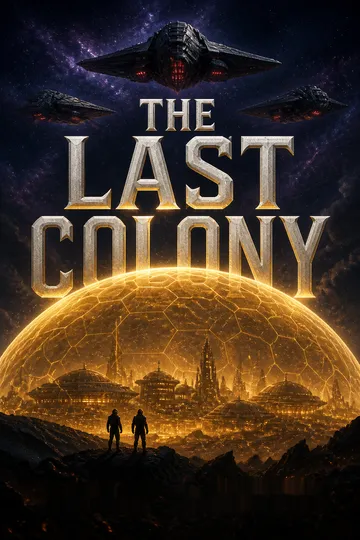
The Last Colony receives mostly positive reviews, with readers praising Scalzi's writing style, humor, and character development. Many appreciate the shift from military focus to colony-building and political intrigue. Some critics note a lack of depth in character growth and alien depictions. The book is seen as a satisfying conclusion to the trilogy, with John Perry's return as narrator welcomed by fans. While a few readers found the plot predictable, most enjoyed the blend of action, politics, and humor characteristic of Scalzi's work.
People Also Read






Characters
John Perry
Reluctant colony builderA former Colonial Defense Forces officer who has traded combat for village life, Perry is practical, sociable, and more politically perceptive than he first appears. His instinct is to listen, mediate, and keep people alive, whether he is settling a goat dispute or leading a colony. He distrusts the Colonial Union’s methods but understands why people rely on it. His loyalty is less to governments than to the people placed in his care. That distinction makes him difficult to control and often forces him to weigh collective survival against his own conscience.
Jane Sagan
Strategic protectorPerry’s wife is a former Special Forces operative whose disciplined attention makes her an exacting administrator and a formidable protector. She values competence, directness, and clear-eyed preparation, partly because she has spent much of her life in situations where hesitation is costly. Beneath her severity is a person who has chosen domestic attachments and learned to find meaning in ordinary life. She is not naturally comfortable with vulnerability, but her bond with Perry and Zoe gives her a reason to defend a life beyond the next mission.
Zoe Perry
Bridge between speciesPerry and Jane’s adopted daughter is a teenager with a complicated inheritance: her biological father was Charles Boutin, whose work transformed the Obin. She has grown up surrounded by the Obin’s reverence for her father and the attention they direct toward her, yet she is also determined to live as an ordinary young person among friends. Her humor and stubbornness protect her from being reduced to a symbol. Zoe’s emotional openness gives her unusual influence with the Obin, but she wants relationships based on care rather than worship.
Savitri Guntupalli
Plainspoken organizerPerry’s capable assistant from New Goa combines sharp humor with a deep impatience for authority that mistakes itself for wisdom. She once challenged Perry’s role in the Colonial Union, then became one of his most dependable colleagues after watching how he worked. Savitri is ambitious enough to seek a life beyond her village and practical enough to prepare for setbacks. Her loyalty is personal, earned through trust and shared work rather than rank.
Manfred Trujillo
Political rival and allyA skilled politician from Erie, Trujillo helped win the right for established colonies to found new settlements and believes his experience deserves recognition. His pride makes him challenging to work with, but it does not erase his concern for the colonists whose lives depend on the project. He understands public opinion, power, and the emotional needs of a community. Perry’s refusal to treat him as either a villain or an unquestioned authority allows their rivalry to become useful.
Hickory
Obin guardianOne of Zoe’s Obin companions, Hickory carries an individual consciousness implant that lets it experience and express emotions, though those feelings can overwhelm it. It serves as a guardian and as a conduit through which the wider Obin share experiences of Zoe’s life. Hickory is bound by treaty and duty, and it takes both seriously. Its careful answers reflect a difficult balance between loyalty to Zoe, responsibility to the Obin, and respect for the family that has welcomed it.
Dickory
Quiet Obin strategistHickory’s companion and Zoe’s other Obin guardian, Dickory speaks less often but is observant, capable, and willing to act decisively when danger comes close. Like Hickory, it uses a consciousness implant and shares the Obin’s intense attachment to Zoe. Dickory’s reserve should not be mistaken for passivity: it notices details other people miss and brings a different kind of judgment to the family’s protection.
General Rybicki
Colonial Union liaisonAn experienced officer serving as a bridge between the Colonial Defense Forces and the Department of Colonization, Rybicki is accustomed to balancing military requirements with political realities. He recruits Perry and Jane because he believes their combined skills can steady a difficult colony. His candor is constrained by the institutions he serves, leaving him to choose carefully what he reveals and when. He respects Perry’s judgment, even when their duties place them on opposing sides of a decision.
General Tarsem Gau
Conclave architectA Vrenn general and the leading advocate of the Conclave, Gau believes a coalition can replace the endless cycle of species fighting over habitable worlds. He is intellectually ambitious and willing to use overwhelming force in pursuit of that goal, a contradiction he does not hide from himself. His conversations with Perry show a leader who can respect an opponent and still make a terrible threat. Gau’s political project depends on persuading very different races to accept both shared security and shared responsibility.
Nerbros Eser
Conclave power seekerAn Arrisian political and military rival within the Conclave, Eser seeks authority by presenting himself as a stronger answer to the coalition’s internal crisis. He is ambitious and theatrical, attentive to the public meaning of military action as well as its practical effects. Unlike leaders who speak chiefly in terms of restraint, Eser treats force as a route to legitimacy. His presence makes clear that a coalition can contain factions with very different ideas of what order requires.
Hiram Yoder
Mennonite farming teacherA representative of the Colonial Mennonites, Yoder practices simplicity without rejecting useful technology. He is patient, capable, and clear that his community is neither ignorant nor withdrawn from its neighbors. His farming knowledge becomes crucial to a colony forced to use manual tools, and his religious convictions shape how he approaches conflict. Yoder’s steadiness offers the settlers a model of cooperation that does not depend on command.
Jann Kranjic
Ambitious colony reporterA polished journalist from Umbria, Kranjic sees Roanoke as both a colony and a story that could secure his reputation. His appetite for footage and access often puts him at odds with Perry and Jane, who need settlers to work rather than perform for cameras. Beneath the opportunism is a serious belief that the colony’s history should be recorded. His uneasy marriage and professional rivalry with Beata complicate his search for a public identity.
Beata Novik
Watchful camera operatorKranjic’s camera operator and partner, Beata is perceptive, dryly funny, and less interested in publicity than in seeing what is actually happening. She understands the gap between a compelling image and the labor behind it, and she is not afraid to challenge Kranjic when his ambitions become absurd. Her technical skill makes her an important witness to Roanoke’s uncertain beginning, while her independence keeps their relationship from being defined entirely by his career.
Lieutenant Stross
Space-adapted messengerA Special Forces soldier whose body is engineered for life in vacuum, Stross delivers the information that changes the colonists’ understanding of Roanoke. Informal and easily distracted, he contrasts with the gravity of his assignment. His unusual physical adaptations reveal how far the Colonial Defense Forces will reshape a soldier to meet a mission.
Plot Devices
The Obin consciousness implant
Emotion made shareableThe Obin lack individual consciousness until technology derived from human BrainPal research gives them an inner sense of self. Hickory and Dickory can activate their implants to experience emotion, especially their attachment to Zoe, and can share recordings of those experiences with the wider Obin population. The implants make the companions more than silent watchers, but they also impose a physical and emotional strain. Their treaty-based presence links Zoe’s family to Obin politics and makes intimacy itself a matter with consequences beyond the household.
The hidden Roanoke colony
A settlement kept off-gridThe Colonial Union switches the colonists from the publicized planet to an uncharted world, then forbids contact and technology that could reveal their location. The settlers must dismantle or avoid wireless systems, rely on obsolete manual equipment, and build a shielded information room. The deception buys time for the Union’s plan against the Conclave, but leaves the colonists with incomplete knowledge and little protection. The colony’s concealed status turns ordinary choices about tools, communication, and leadership into matters of survival.
The sapper field
Enemy weapons turned inwardA Consu-made device channels kinetic energy and can be configured to interfere with fast-moving objects. Zoe secures it for Roanoke after negotiating with the Obin, and Jane uses it to make the Arrisians’ rifles malfunction during Eser’s invasion. Its limited power means the colonists cannot rely on it indefinitely. The field rewards planning rather than brute force: Jane and the settlers use the brief window it creates to combine traps, hand weapons, and coordinated movement against a better-armed force.
The skip-drone network
Messages across isolated worldsBecause interstellar communication depends on information carried between worlds, skip drones and traveling ships become both lifelines and vulnerabilities. The Colonial Union uses controlled routes and restricted information to keep Earth and the colonies separated from wider events. Leaked knowledge about the Magellan’s return eventually gives the Conclave Roanoke’s location, while Perry later uses a fleet of trade ships to carry a broad, uncensored account of interstellar history to Earth. The same communication system can enforce secrecy or make it impossible to maintain.
FAQ
0. Synopsis & Basic Details
What is The Last Colony about?
- A New Frontier's Peril: The Last Colony follows John Perry, a retired Colonial Defense Forces (CDF) soldier, and his wife Jane Sagan, a former Special Forces operative, as they are recruited to lead a new, politically charged colony on the planet Roanoke. This colony is a melting pot of settlers from various established human worlds, intended to appease growing demands for expansion.
- Unforeseen Deception & Isolation: The journey takes an unexpected turn when the colonists arrive at an uncharted world, cut off from the Colonial Union (CU) and facing the threat of the Conclave, a vast alliance of alien races hostile to human expansion. John and Jane must navigate this deception, rally their diverse colonists, and establish a new society under extreme secrecy and isolation.
- Humanity's Future at Stake: The narrative escalates into a high-stakes game of interstellar politics, where Roanoke becomes a pawn in a larger conflict between the Colonial Union and the Conclave. John and Jane, along with their adopted daughter Zoe and her Obin companions, must make impossible choices to ensure not just their colony's survival, but potentially the future of humanity itself, by challenging the very foundations of the Colonial Union's control.
Why should I read The Last Colony?
- Masterful Political Intrigue: Scalzi weaves a complex web of interstellar politics, deception, and moral dilemmas, forcing characters to question loyalty and redefine "humanity." The story constantly shifts perspectives on who the true enemy is, keeping readers engaged in a high-stakes game.
- Deep Character Evolution: Beyond the action, the novel offers profound character development, particularly for John and Jane, as they grapple with leadership, identity, and the emotional toll of their choices. Their journey from domesticity to galactic strategists is compelling and deeply human.
- Thought-Provoking Themes: The book delves into themes of colonialism, propaganda, the ethics of war, and the nature of consciousness, prompting readers to consider the costs of expansion and the importance of truth. It's a smart, fast-paced read that leaves a lasting impression.
What is the background of The Last Colony?
- Colonial Union's Hegemony: The story is set in a future where humanity, guided by the Colonial Union (CU), expands across the stars, often clashing with numerous alien species over habitable planets. Earth serves as a recruitment ground for the CDF, providing soldiers and colonists who are largely ignorant of the wider universe, a key aspect of the CU's control.
- Emergence of the Conclave: A significant development is the rise of the Conclave, a massive alliance of over 400 alien races, formed to enforce a ban on new colonization by non-member species. This organization, led by General Tarsem Gau, seeks to stabilize the galaxy and end endless territorial wars, but its methods are often ruthless.
- Roanoke's Strategic Purpose: The colony of Roanoke is not a typical expansion effort. It's a deliberate political and military maneuver by the CU, designed to be a decoy and a symbol of defiance against the Conclave, ultimately intended to destabilize the alien alliance and rally human colonies against a perceived common enemy.
What are the most memorable quotes in The Last Colony?
- "My place is where you are." (John Perry, Chapter 1):
- Defining Love & Loyalty: This quote encapsulates John's unwavering devotion to Jane, transcending physical location or personal ambition. It highlights the core of their relationship, which serves as an emotional anchor throughout the novel's tumultuous events, emphasizing personal connection over grander political schemes.
- "When you make someone more than human, you make them less than human, too." (Jane Sagan, Chapter 5):
- Identity & Humanity's Cost: Jane's poignant reflection on her re-engineered body reveals her struggle with identity and the dehumanizing aspects of military enhancement. This quote is central to her character arc, exploring the philosophical cost of power and the value of ordinary human experience, a key Jane Sagan character analysis point.
- "I'm changing the world." (John Perry, Chapter 15):
- Defiance & New Beginnings: John's declaration to General Rybicki marks his ultimate act of defiance against the Colonial Union's manipulative policies. It signifies his commitment to transparency and self-determination for Earth, setting the stage for a radical shift in human interstellar politics and the The Last Colony ending explained.
What writing style, narrative choices, and literary techniques does John Scalzi use?
- First-Person, Conversational Voice: Scalzi employs a highly engaging first-person narrative from John Perry's perspective, characterized by a witty, often sarcastic, and conversational tone. This style makes complex sci-fi concepts accessible and builds immediate rapport with the reader, enhancing the Scalzi writing style.
- Pacing and Dialogue-Driven Plot: The novel maintains a brisk pace, driven significantly by sharp, realistic dialogue that often carries exposition and character development. Scalzi uses dialogue not just for information but also to reveal personality, power dynamics, and underlying tensions, making the emotional impact The Last Colony immediate.
- Subversion of Sci-Fi Tropes: Scalzi frequently subverts common science fiction tropes, such as the heroic military leader or the benevolent government, by injecting moral ambiguity and political cynicism. This technique challenges reader expectations and adds depth to the themes in The Last Colony, particularly regarding the Colonial Union's true nature.
1. Hidden Details & Subtle Connections
What are some minor details that add significant meaning?
- Huckleberry's Twain-Themed Naming: The planet Huckleberry, with its moons Sawyer and Becky, and continents Samuel, Langhorne, and Clemens, subtly evokes themes of American frontierism, innocence, and a yearning for freedom. This The Last Colony symbolism foreshadows the colonists' eventual struggle for self-determination against a controlling authority, mirroring the spirit of Mark Twain's characters.
- Obin's "Overstimulated" Emotions: Hickory and Dickory's explanation that intense human emotions like Zoe's grief can "overstimulate" their consciousness implants (Chapter 11) is a minor detail that profoundly highlights their unique, artificial consciousness. It underscores their alienness and vulnerability, making their unwavering loyalty to Zoe even more poignant and a key aspect of Obin consciousness explained.
- The Magellan's Obsolete Equipment: The cargo foreman, Aldo Ferro, notes the unusual amount of "obsolete equipment" on the Magellan, beyond what the Mennonites would need (Chapter 3). This seemingly throwaway detail subtly foreshadows the Colonial Union's true intent: to force the colony into self-reliance and isolation, ensuring they couldn't rely on modern, traceable technology, a crucial hidden detail The Last Colony.
What are some subtle foreshadowing and callbacks?
- Jane's Constellation Revelation: Jane's emotional account of finally "seeing the crane" in Huckleberry's constellations (Chapter 1) is a powerful moment of finding home. This foreshadowing in The Last Colony subtly prefigures her later struggle with her re-engineered body, where her enhanced vision initially prevents her from seeing patterns, symbolizing a temporary loss of her "human" way of connecting with the world.
- The Name "Roanoke" as a Historical Allusion: The choice of "Roanoke" for the colony's name is a direct historical callback to the infamous "Lost Colony" on Earth. This Roanoke colony meaning immediately signals to the astute reader that the colony is destined for disappearance or abandonment, subtly foreshadowing the CU's plan to hide them from the Conclave.
- Rybicki's Casual Mention of Coral: General Rybicki's offhand reference to the "Coral" incident (Chapter 12), where CDF plans "failed miserably and a hundred thousand of our people died," serves as a stark callback to past military blunders. This detail reinforces John's skepticism about military infallibility and foreshadows the potential for catastrophic failure in the CU's grand schemes, adding depth to Colonial Union secrets.
What are some unexpected character connections?
- Savitri's Unseen Ambition: Savitri Guntupalli, initially John's sarcastic assistant on Huckleberry, unexpectedly reveals she secured a position as Jane's assistant on Roanoke (Chapter 2). This connection highlights Jane's keen eye for talent and Savitri's hidden ambition, showing her desire to escape her "small village" life and become a key player in the colony's administration, a crucial part of Savitri Guntupalli character development.
- Szilard's Calculated Manipulation of Jane: General Szilard's revelation that he intentionally re-engineered Jane's body back to Special Forces parameters (Chapter 5) without her consent creates a shocking, unexpected connection. This act, framed as a necessary measure for humanity's survival, reveals Szilard's ruthless pragmatism and his deep, albeit twisted, trust in Jane's capabilities, adding layers to Jane Sagan character analysis.
- Trujillo's Transformation to Loyal Opposition: Manfred Trujillo, initially presented as a self-serving politician vying for leadership, evolves into John's "loyal opposition" (Chapter 6). His political savvy and deep understanding of CU bureaucracy, initially a source of friction, become invaluable to John, forging an unexpected alliance born of shared adversity and a common goal for the Roanoke colony's survival.
Who are the most significant supporting characters?
- Savitri Guntupalli: More than just a witty assistant, Savitri evolves into a critical strategic mind, Jane's confidante, and eventually, the interim colony leader. Her sharp intellect, moral compass, and ability to cut through bureaucratic nonsense make her indispensable, providing a grounded perspective amidst the high-stakes political maneuvering. Her journey from a "small village" to a galactic stage is a testament to her resilience and intelligence, a key aspect of Savitri Guntupalli character development.
- Manfred Trujillo: Initially an antagonist, Trujillo's political acumen and deep understanding of the Colonial Union's inner workings prove vital. His transformation from a self-aggrandizing legislator to a pragmatic, albeit still ambitious, leader who genuinely cares for the colonists' welfare is significant. He provides crucial insights into the CU's machinations and becomes a necessary, if sometimes irritating, ally, offering a nuanced Manfred Trujillo motivations analysis.
- General Laurence Szilard: The enigmatic head of Special Forces, Szilard is a master manipulator whose actions, though morally ambiguous, are driven by a singular focus on humanity's survival. His calculated re-engineering of Jane and his strategic use of John and Roanoke reveal the ruthless pragmatism at the highest levels of the CU. He represents the "ends justify the means" philosophy, making him a complex and pivotal figure in understanding the Colonial Union secrets and the broader themes in The Last Colony.
2. Psychological, Emotional, & Relational Analysis
What are some unspoken motivations of the characters?
- John's Quest for Meaning Beyond War: Despite his peaceful life on Huckleberry, John Perry harbors an unspoken restlessness, a desire for purpose beyond ombudsman duties. His quick acceptance of Rybicki's offer, despite the risks, suggests a deeper motivation to contribute meaningfully, reflecting a John Perry motivations analysis of a man who found his second youth in service and struggles with a quiet life.
- Jane's Deep-Seated Fear of Dehumanization: Jane's intense reaction to her re-engineering by Szilard (Chapter 5) reveals an unspoken fear of losing her hard-won humanity. Her choice to leave Special Forces and embrace a "normal" life with John and Zoe was a conscious effort to reconnect with her human self, making the forced return to her enhanced state a profound psychological violation.
- General Gau's Personal Drive for Peace: General Tarsem Gau's relentless pursuit of the Conclave's mission, even through destructive means, is rooted in his personal trauma from the "Battle of Amin" (Chapter 8). His unspoken motivation is to prevent the endless, self-destructive wars he witnessed, making his seemingly ruthless actions a desperate attempt to forge a lasting peace, a key General Gau Conclave insight.
What psychological complexities do the characters exhibit?
- Jane's Identity Crisis Post-Re-engineering: Jane's struggle with her re-enhanced body is a profound psychological complexity. She feels "less than human" despite being "better than human" (Chapter 5), grappling with the loss of her chosen identity and the return of abilities she deliberately shed. This internal conflict highlights the psychological burden of forced transformation and the deep value she places on her humanity, central to Jane Sagan character analysis.
- John's Moral Burden of Calculated Sacrifice: John Perry exhibits significant psychological complexity as he navigates decisions that require sacrificing individuals for the greater good, such as keeping the intelligent native species a secret (Chapter 7) or sending Zoe to General Gau (Chapter 13). His internal monologues reveal the heavy moral burden he carries, constantly weighing the lives of his colonists against strategic necessity, a core moral dilemma The Last Colony.
- The Obin's Processing of Human Emotion: Hickory and Dickory's unique consciousness, which makes them "overstimulated" by intense human emotions (Chapter 11), presents a fascinating psychological complexity. Their struggle to process Zoe's grief and anger underscores their alien nature while simultaneously deepening their bond with her, as they learn to navigate the complexities of consciousness through her, offering unique insights into Obin consciousness explained.
What are the major emotional turning points?
- Jane's Breaking of the Table: Jane's furious outburst and the accidental destruction of the table (Chapter 5) upon realizing Szilard re-engineered her is a powerful emotional turning point. It signifies her profound sense of betrayal and violation, marking the moment her suppressed anger and identity crisis come to the forefront, deeply impacting her character development The Last Colony.
- Hiram Yoder's Pacifist Sacrifice: The death of Hiram Yoder, who offers his other cheek to the attacking native creature (Chapter 7), is a devastating emotional turning point for John and the colony. It highlights the tragic cost of John's decision to keep the native intelligence a secret and underscores the profound moral courage of the Mennonites, forcing John to confront the consequences of his leadership.
- Zoe's Defiance of the Obin: Zoe's passionate refusal to leave Roanoke without her family and friends, directly challenging Hickory and Dickory (Chapter 14), is a pivotal emotional moment. It demonstrates her fierce loyalty and burgeoning maturity, solidifying her agency and commitment to her chosen family and community, and revealing the depth of her Zoe Perry role.
How do relationship dynamics evolve?
- John and Jane's Command Partnership: Their relationship evolves from a domestic partnership on Huckleberry to a high-stakes command dynamic on Roanoke, where their individual strengths complement each other under immense pressure. Jane's strategic mind and John's diplomatic skills become a formidable force, deepening their mutual respect and reliance, a key aspect of John Perry and Jane Sagan relationship analysis.
- Zoe's Maturation and Agency: Zoe's relationship with her parents shifts from a protected child to a vital, active participant in the colony's survival. Her decision to deliver the message to General Gau and her defiant stand against the Obin demonstrate her growing maturity and agency, transforming her role from adopted daughter to indispensable ally, highlighting Zoe Perry character development.
- The Colonists' Forged Unity: The diverse groups of colonists, initially fragmented by their planetary origins and political squabbles, gradually forge a unified identity through shared adversity. Events like the dodgeball tournament (Chapter 4) and the collective mourning of losses (Chapter 7) illustrate their evolution from disparate "tribes" to a cohesive "Roanoke" community, emphasizing the themes in The Last Colony of collective survival.
4. Interpretation & Debate
Which parts of the story remain ambiguous or open-ended?
- The Consu's True Intentions: The Consu's "spontaneous gift" of the sapper field (Chapter 14) remains highly ambiguous. Given their history of ruthless experimentation and the high cost of previous interactions, it's debatable whether their aid was truly altruistic or part of a larger, unfathomable manipulation of galactic events, leaving their Consu technology motives open to interpretation.
- Long-Term Stability of the Conclave: While General Gau successfully reasserts control over the Conclave, the long-term stability of this vast alliance remains open-ended. The internal factions and the deep-seated resentments among member races suggest that the Conclave's peace is fragile, and its future is far from guaranteed, inviting The Last Colony analysis of political systems.
- The Future of John, Jane, and Zoe: Their status as "traitors" to the Colonial Union and their new role as interspecies diplomats leaves their personal future uncertain. While they find a new purpose, their ability to truly "go home" or integrate into a new society without constant threat or political pressure is left unresolved, a key aspect of The Last Colony ending explained.
What are some debatable, controversial scenes or moments in The Last Colony?
- Szilard's Re-engineering of Jane's Body: General Szilard's decision to secretly re-engineer Jane's body back to Special Forces capabilities (Chapter 5) is highly controversial. It raises profound ethical questions about bodily autonomy, consent, and the military's right to control its assets, even former ones. Readers debate whether his "ends justify the means" approach is morally defensible, a central moral dilemma The Last Colony.
- John's Decision to Send Zoe to General Gau: John's choice to send his teenage daughter, Zoe, as a messenger/hostage to General Gau (Chapter 13) is a deeply debatable moment. While framed as a calculated risk for the colony's survival, it forces readers to confront the morality of using a child in such a dangerous political maneuver, questioning the limits of parental and leadership responsibility.
- The Colonial Union's "Coventry" Strategy: The CU's deliberate sacrifice of Roanoke, likened to the "Coventry" bombing (Chapter 14), is a controversial utilitarian decision. The debate centers on whether sacrificing a small colony to achieve a larger strategic victory (destabilizing the Conclave and rallying other human worlds) is justifiable, highlighting the brutal calculus of interstellar warfare and Colonial Union secrets.
The Last Colony Ending Explained: How It Ends & What It Means
- Earth's Radical Re-entry into Galactic Politics: The novel concludes with John Perry leading a Conclave fleet to Earth, broadcasting unencrypted information about the Colonial Union's deceptions and the wider galactic reality. This act shatters Earth's long-standing isolation and forces it to choose its own path, fundamentally altering humanity's relationship with its interstellar government and the Conclave.
- John Perry's Transformation into a "World Changer": John, Jane, and Zoe become exiles from the Colonial Union but emerge as pivotal figures in a new era of interspecies diplomacy. John's final declaration, "I'm changing the world" (Chapter 15), signifies his shift from a reluctant colony leader to an active agent of change, advocating for truth and self-determination for Earth, a key John Perry motivations insight.
- A New Definition of Humanity and Hope: Jane's unexpected pregnancy (Chapter 16) symbolizes a future where humanity, now fully aware of its place in the universe, can forge its own destiny. Her "wholly integrated, human BrainPal" represents a new, enhanced yet fully human, evolution, offering a hopeful counterpoint to the CU's manipulative past and a fresh perspective on Jane Sagan character analysis and the themes in The Last Colony.
Old Man's War Series
About the Author

Download PDF
Download EPUB
.epub digital book format is ideal for reading ebooks on phones, tablets, and e-readers.








