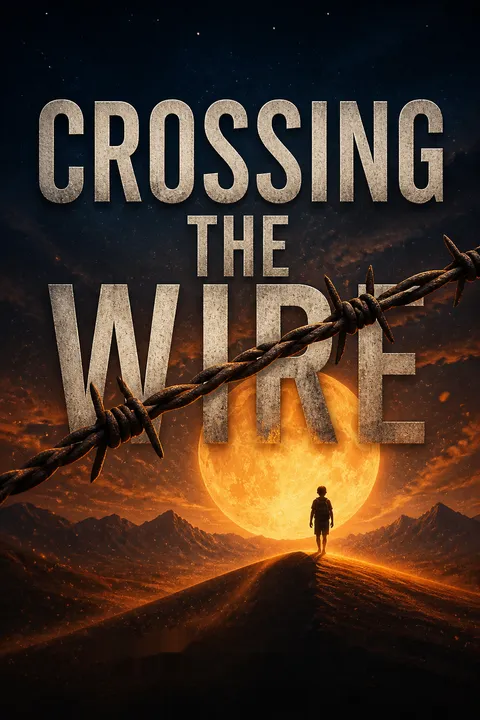


Plot Summary
Rico’s Hidden Fare
Fifteen-year-old Victor Flores1 is working the fields of Los Árboles when his closest friend, Rico Rivera,2 reveals a jar holding fifteen hundred American dollars. Rico2 plans to leave the next day with a coyote, using money sent by his estranged older brother12 in Arizona. He imagines the United States as both adventure and a place where hard work can buy a future.
Victor1 remembers his own father, who crossed north for farm work and died in a trench collapse in South Carolina. He warns Rico2 that the border is more dangerous now, but Rico2 has already chosen. He asks Victor1 to tell his parents after he is gone, leaving Victor1 to carry the secret of a friend who is fleeing the life his family expects.
Rico’s plan begins as a bid for independence, but the secrecy makes its cost immediate: he turns his closest friend into the custodian of a family wound. Victor’s fear is not simply timidity. His father’s death has made migration concrete, a route that can end in a coffin rather than opportunity. Their differing responses establish the novel’s central tension between hope as forward motion and caution as knowledge purchased through loss. Neither boy is foolish or wholly right. They are adolescents forced to make adult calculations with incomplete information, while the adults’ economic choices have already narrowed their futures.
The Corn Runs Out
Victor1 watches Rico2 leave with four other men, then learns from Rico’s father6 that subsidized American corn is undercutting Mexican growers and that the village co-op expects another disastrous season.
The news makes Victor’s family’s5 poverty impossible to ignore: his mother,5 four sisters, and five-year-old brother7 depend on his crops, and even their meals are thin. He tells his mother5 that he must go north to earn money. She fears losing another loved one, but accepts that the family cannot survive another winter without income.
After praying at El Cristo Rey, Victor1 receives enough pesos from a priest to reach the border. That night his family shares hot chocolate and a final sunset together. In the morning, Victor1 walks alone to the bus, carrying his mother’s5 blessing and the burden of providing for them.
The economic crisis is not background scenery; it acts directly on the family’s choices. Cheap imported corn reaches Victor’s kitchen as empty plates, then pushes him toward the same migration that killed his father. The mother’s consent is therefore neither a simple blessing nor a denial of danger. It is a decision made under constraint, in which staying also carries a threat. The priest’s travel money gives Victor a way forward, but its meaning remains practical as well as spiritual: faith does not remove risk, it helps a family endure the decision to take it. The farewell makes Victor’s departure a shared sacrifice.
A Mexican Without Papers
On a first-class bus toward Nogales, Victor1 studies the other passengers and quietly hopes to find someone traveling without a coyote. A customs-police roadblock interrupts the journey. Victor1 has no birth certificate or identification, and the officer doubts that his dark, Mayan features belong to a Mexican from Guanajuato.
His seatmate, Miguel Escobar,3 presents military papers but refuses to claim Victor.1 Police pull Victor1 from the bus and make him unload a truck concealing thirteen Guatemalan migrants beneath its cargo.
The sight of exhausted families convinces Victor1 that he may be deported to a country he has never lived in. When the officers turn away, he crawls beneath a police car and escapes onto railroad tracks. Finding the North Star, he resumes his journey on foot, now an undocumented traveler inside his own country.
Victor’s first border obstacle is not the international boundary but a demand that he prove his belonging at home. His lack of documents converts a family history of displacement into present vulnerability: he is Mexican, yet the officer’s suspicion carries more force than his own account. The concealed migrants sharpen this fear by showing how the state can classify people by appearance and paperwork, then move them across borders. Victor’s escape is a physical turning point, but also a change in self-understanding. The cautious boy who wanted an experienced guide discovers that survival may require action before certainty arrives.
Inside the Suburban
Victor1 boards a moving freight train, clinging to a ladder through the night until police force riders to jump near Mazatlán. He hits the ground hard, opens his scalp, and wakes in a hospital with an officer watching him. Rather than wait to be detained, he slips away and returns to the rail yards.
A boy his age, Julio,4 shows him how to climb atop an automobile carrier and drop inside through a narrow roof opening. Hidden among new Suburbans, they search the vehicles and find concealed keys, then sleep in the seats as the train carries them north.
Julio4 is a Honduran migrant making another attempt after detention and deportation; Victor,1 who has little money and no plan beyond reaching work, finds in him a companion who knows the route’s hazards without pretending to control them.
The freight train teaches Victor that migration is built from improvised decisions, each one converting danger into a temporary shelter. His injury does not end the attempt; it changes how he travels, and Julio’s practical ingenuity supplies a form of companionship without the security of a formal guide. The new cars are an especially pointed refuge: manufactured in Mexico for American roads, they carry two boys toward the country that promises wages while hiding them from its authorities. Julio’s familiarity with deportation also punctures the fantasy of a single successful crossing. Getting north is an ongoing struggle, not a one-time passage.
Nogales, Then the Flood
In Nogales, Victor1 and Julio4 are robbed by young gang members beneath a mesquite tree, and their attempts to find paid work bring almost nothing. They learn that the storm tunnels are controlled by cholos and that gates on the American side make the route dangerous.
A church soup kitchen keeps them fed; Victor1 earns a few pesos washing windshields, while Julio4 acquires a heavy pack of food. Then a storm sends black floodwater roaring through the tunnel. Julio4 buys inner tubes and flashlights, believing the flood may carry them beneath the border while patrols are distracted.
Victor1 sees the danger to his family if he dies and stays behind. The next day, news that the gates opened suggests Julio4 may have made it through. Victor1 returns to the street, where he spots the battered Miguel3 and slips onto his bus.
The tunnel separates the boys not by affection but by how they calculate responsibility. Julio’s repeated attempts make risk feel like a condition of movement; Victor measures it against the people waiting for money at home. His decision to stay is prudent, yet the possible success of Julio’s passage turns prudence into regret. Meanwhile, Miguel’s reappearance offers a different model: not a spectacular shortcut, but a route built from observation, preparation, and accumulated experience. The episode also refuses to romanticize resourcefulness. Food comes through uncertain means, the tunnel is a real flood channel, and every apparent opportunity carries costs that the boys cannot fully know.
Miguel’s Mountain Map
Victor1 follows Miguel3 east to Agua Prieta, then trails him from a bus into a canyon leading toward the border. Miguel’s3 face is bruised and swollen from an attack by vigilantes on the American side, but he initially refuses company. Victor1 persists, offering to carry food and water, and Miguel3 finally lets him help.
As they travel through the mountains, Miguel3 explains why he no longer trusts coyotes: a guide once abandoned his group in deadly heat, and he has since crossed alone. He teaches Victor1 to read a map, conserve supplies, locate water, and watch other migrant groups from above.
Miguel3 also describes his wife and four children, whose needs keep him returning north. He agrees to take Victor1 toward La Perra Flaca, where agricultural laborers find work, and promises that Victor1 must be able to continue if they are separated.
Miguel’s hard-won independence is not presented as invulnerability. He accepts Victor only after weighing the danger the boy could bring, then turns companionship into instruction rather than reassurance. The map embodies that ethic: knowledge is something Miguel transfers because he knows a crossing can divide allies without warning. His refusal to use coyotes follows personal loss, not abstract pride, while his repeated migration remains tied to obligations at home. Victor, meanwhile, learns that bravery is not the absence of fear but the ability to acquire skills while afraid. Their partnership rests on mutual usefulness, gradually becoming trust.
Miguel Gives Him North
Victor1 and Miguel3 cross the San Bernardino Valley at night, hiding in a dry wash as Border Patrol vehicles search the open ground. A patrol truck crosses the wash and closes in; Miguel’s3 injured knee slows their escape. When officers pursue them through the rocks, Miguel3 gives Victor1 his map, food, cord, lighters, and knife, then urges him to run for the trees while he draws the patrol away.
Victor1 hears Miguel3 fall and sees him captured, but keeps moving because staying would mean both are caught. He reaches cover alone. The supplies Miguel3 chose for him now become essential: Victor1 must find his own route through the Chiricahuas and reach the farm-labor settlement they had planned to find together.
The separation is the consequence of a lesson Miguel has been teaching all along: a traveler cannot make survival depend entirely on another person. Yet the lesson becomes painful precisely because Victor has grown to rely on him. Miguel’s transfer of tools turns care into preparation, while Victor’s flight forces him to enact that care without knowing whether Miguel will survive or reunite with him. The patrol encounter also complicates the image of law enforcement as a single force. The officers pursue migrants, but the chapter’s immediate emotional truth is not ideological abstraction; it is a boy continuing alone because his companion has made continuation possible.
Snow, Teeth, and Rotor Wash
Victor1 climbs into the Chiricahua pines and builds a lean-to before a storm buries the ground under knee-deep snow. He keeps a fire alive, waits several days for the slush to loosen, and rationing leaves him nearly out of food. When a puma stalks him through the forest, he raises a stick and invokes the jaguar he remembers from Chiapas until the animal retreats.
Soon afterward, a Border Patrol helicopter spots him and drops a message offering help. Victor1 sees its medical case but cannot know whether accepting help will mean deportation, so he runs into the trees. He continues north with Miguel’s3 map and dwindling supplies, no longer able to count on a companion to judge each threat for him.
The wilderness strips away the usual distinctions between human and natural danger. Snow, hunger, a predator, and the helicopter all demand a judgment under uncertainty, and Victor has to decide what help might cost before he can know whether it is safe. His appeal to the jaguar draws on a childhood memory, but it is not magical protection; it gives him enough nerve to act while the puma is close. The episode marks a shift from following Miguel’s competence to exercising his own. Victor does not become fearless. He learns to make fear usable, turning memory into a small reserve of courage.
The Toolbox Trap
Short of food, Victor1 finds a group of migrants following a coyote but avoids joining them, unwilling to risk a stranger’s control. At a mountain lake, he hides in an unlocked toolbox on a fisherman’s pickup, hoping for a ride toward Willcox.
The driver discovers him at home and calls the Border Patrol. Officer Sandoval17 arrests Victor1 and drives him to juvenile detention in Tucson. Because the crowded facility cannot process him promptly, another officer lets him return to Nogales rather than wait months for deportation.
Victor1 reaches the Plaza de Toros ashamed and nearly penniless. Weeks of carrying bags at the port earn him little, and the rising heat makes another crossing harder. Then, in the soup kitchen, he recognizes Rico,2 the friend whose departure began his own journey.
Victor’s refusal to join the coyote group shows how experience has sharpened his suspicion, but the toolbox ride demonstrates that caution cannot eliminate risk. He chooses a private stranger over a smuggler and is still caught. Detention makes bureaucracy another uncertain landscape, where the officer’s decision to release him is a narrow opening rather than a guarantee of safety. Returning to Nogales feels like failure because Victor measures himself by the money his family needs. Rico’s unexpected presence interrupts that isolation and returns the story to its first relationship, now altered by everything each boy has survived.
Rico’s Price of Passage
Rico2 tells Victor1 that a thief stole five hundred dollars from his jacket before the group reached the border. Their discounted coyote deal led to a police ambush; Rico2 escaped the truck, then tried again with another group.
That crossing left women and children behind when they could no longer keep pace, and the smugglers offered no assurance that they survived. After reaching Phoenix, Rico2 was detained during a raid and returned to Mexico. In Nogales, cholos later robbed him after promising to guide him through a tunnel.
He and Victor1 compare their remaining money and decide to try a shorter route through the Tohono O’odham reservation. They take a bus to Altar, but drivers refuse them rides because independent crossers threaten coyote business. Their last chance becomes a ride to Sasabe.
Rico’s account dismantles his earlier confidence in a clean bargain: lower fees meant fewer protections, and the people guiding migrants treated them as units of payment rather than people in danger. His stories echo Victor’s experiences without making the boys interchangeable. Rico has pursued risk as a route to possibility; Victor has tried to reduce it, yet both end up stranded and dependent on chance. Their renewed partnership is real, but it does not erase the different reasons they travel. The revelation that children may have been abandoned puts a human cost behind the logistics and makes their next choice more morally fraught.
The Mosquito’s Bargain
In Sasabe, Victor1 and Rico2 find no safe independent crossing and meet Jarra,10 a gang-connected guide who boasts about smuggling people and drugs. When the boys cannot secure a ride, Rico2 secretly contacts his brother Reynaldo12 through Jarra’s10 network.
He tells Victor1 that Reynaldo12 has vouched for them and arranged a passage, but the van carries no larger group of migrants. At a remote airstrip, Jarra10 makes the boys load bundles of marijuana from a small plane.
Victor1 realizes that Rico2 has accepted a debt they will repay by working for smugglers, despite promising they would carry only food and water. Jarra10 then transfers them to an armed crew, where they receive enormous food packs and are assigned to a line of drug mules crossing the border.
Rico’s lie is an act of desperate problem-solving, but it repeats the very pattern that hurt his family: deciding for others, withholding the truth, and treating a dangerous gamble as protection. Victor’s anger is sharpened by the fact that his mother and siblings are implicated in the risk without their consent. Jarra’s bravado makes exploitation seem almost like a career ladder, but the boys have little power to refuse once they are isolated in the desert. The scene exposes how coyotes, gang members, and drug smugglers can blur together, while the migrants who carry their loads bear the greatest physical and legal consequences.
Heat, Fangs, and Flight
The armed crew drives Victor,1 Rico,2 and thirteen drug mules into the Baboquivari Mountains, where the boys carry heavy food packs through punishing heat. Victor’s1 body begins failing, and he helps a young mule, Cornelio, who tells him his brother died on an earlier smuggling trip.
Later, a rattlesnake strikes Victor’s1 ankle, but the bite does not swell or worsen. During the next rest, Rico2 reports that Jarra10 intends to kill them after the trip so they cannot identify the crew. The boys slip away while the others sleep and search the mountains for water.
They find a spring beside an injured Border Patrol agent, Torres,11 whose partner has been killed in a gunfight with armed smugglers. Victor1 and Rico2 hide Torres’s11 weapons, then recover his radio when they learn the smugglers are following him.
The desert turns the boys’ borrowed labor into bodily arithmetic: weight, water, heat, and the limits of a step. Cornelio’s family loss shows that Victor’s danger is not exceptional, while his apparent harmless snakebite offers only a reprieve, not security. The escape is triggered by the threat of murder, but it also forces Victor and Rico to cooperate after betrayal. Their encounter with Torres unsettles easy categories. He represents the agency trying to deport them, yet he is injured and pursued by the same armed network endangering them. Choosing what to do with his radio becomes a practical moral test under immediate threat.
Jaguar’s Ledge
Torres11 leads Victor1 and Rico2 toward a trail above Baboquivari Canyon, but Jarra10 and an armed smuggler catch up. Victor1 throws rocks down the steep switchbacks to delay them while Torres11 reaches the ridge and radios for help.
A rescue helicopter arrives and takes the injured agent away; Rico2 stays hidden rather than risk being detained, and Victor1 remains to hold Jarra10 back. With the trail ending beneath a sheer peak, the boys climb onto a narrow ledge. Victor1 sees a jaguar cross a higher shelf and takes its route as a possible escape.
He makes a frightening climb between ledges, then helps Rico2 follow. They cross the peak unseen, descend through forest, and find water. A wildlife researcher, Dave Hansen,9 gives them a ride toward Tucson after turning back to help.
The ledge brings together the book’s competing forms of knowledge: Miguel’s practical training, Victor’s memory of the jaguar, and Rico’s trust in his friend. Victor’s courage is no longer only a response to family duty; he becomes the person who can lead another frightened boy through a danger he has already faced. The rescue helicopter offers safety to Torres but not necessarily to the migrants, so Rico’s decision to hide remains understandable even as it carries risk. The jaguar is both a real animal and a sustaining image from Victor’s past, helping him imagine movement where the cliff seems to permit none.
Two Roads from Tucson
Hansen9 drives the boys to Rico’s brother’s12 Tucson address, but neighbors say Reynaldo12 fled after police linked his family to stolen vehicles and a fatal smuggling shootout. The promised work and protection are gone.
Hansen9 then takes them to La Perra Flaca, where they learn Miguel3 has not arrived and the local harvest is nearly over. A labor contractor offers them work picking asparagus in Washington. Victor1 earns enough to send two hundred and fifty dollars to his mother, his first proof that the journey can support his family.
Rico,2 shaken by the danger and by thoughts of his parents,6 decides to return to Silao and care for them rather than keep chasing money in the United States. The friends part in tears. Victor1 stays north, still uncertain when he will see his family again.
The ending refuses a single definition of success. Victor reaches paid work and sends money home, fulfilling the urgent purpose that drove him out of Los Árboles, but the remittance cannot restore ordinary family life or promise his return. Rico’s choice reverses his original migration not because he has stopped wanting opportunity, but because his parents have become the reason he must turn back. The brothers’ divergent routes give their friendship a more mature shape: loyalty no longer means wanting the same future. Their separation preserves grief alongside agency, suggesting that sacrifice may take the form of leaving home or choosing to return.
Analysis
Crossing the Wire makes migration legible through decisions that are both intimate and structural. Victor1 does not leave because he has been seduced by adventure; he leaves because his family’s corn cannot compete with subsidized imports and hunger has made staying a decision with consequences of its own. The book’s strongest ethical insight is that agency persists under pressure but is never unlimited. Victor,1 Rico,2 and Julio4 choose routes, companions, and risks, yet they make those choices amid poverty, missing documents, exploitative guides, policing, and the urgent need to support relatives.
The friendship between Victor1 and Rico2 gives this system a human scale. Their differences are not merely cautious boy versus reckless boy. Rico2 imagines migration as a way to escape a future assigned to him, while Victor1 experiences it as an obligation to people who cannot leave. Both misjudge danger, and both learn that the border makes certainty impossible. Their shifting trust, especially after Rico2 conceals the drug-running deal, shows how survival can turn love into control: one friend’s attempt to protect another can also deny him consent.
The novel also complicates moral categories without pretending all actions are equivalent. Coyotes and gang members exploit migrants, but a Border Patrol agent can be injured and in need of help; an American researcher can choose to assist without solving the system. These encounters matter because Victor1 must judge people through action rather than labels, even when he has little time to judge at all.
The ending gives neither boy a simple reward. Victor1 earns wages and sends money, but remains separated from home. Rico2 chooses to return to his parents,6 recognizing that opportunity is not valuable if its pursuit requires abandoning the people who give his life meaning. Their parting suggests that maturity is not one fixed definition of courage. It may mean enduring danger for family, or turning back toward family when the original dream no longer fits.
Review Summary
Crossing the Wire received mixed reviews, with an average rating of 3.83 out of 5. Many readers praised its portrayal of illegal immigration, highlighting the realistic depiction of dangers faced by those crossing the border. The book's adventure and suspense elements were appreciated, along with its ability to humanize the issue. Some criticism focused on slow pacing and lack of character development. Overall, readers found it thought-provoking and educational, particularly for young adults, though some felt the ending was unsatisfactory.
People Also Read



Characters
Victor Flores
Reluctant family providerVictor is a fifteen-year-old farmer from Los Árboles whose father died working in the United States. He is cautious, observant, and deeply conscious of his responsibility to his mother5, sisters8, and little brother7. His fear is grounded in experience, not weakness: he knows migration can end in death, deportation, or separation. At the same time, hunger and collapsing crop prices leave him few choices. Victor learns by watching others, asks questions others overlook, and carries his family’s needs into every decision. His humor and inherited sayings help him endure fear without pretending it has vanished. He is most himself when care becomes action, whether that means earning money or helping a fellow traveler.
Rico Rivera
Restless childhood friendRico is Victor’s1 closest friend, a quick runner and enthusiastic admirer of American music, cars, and the possibilities he associates with life north of the border. As the youngest child in a large family, he feels constrained by expectations that he remain near his parents6, even though he also longs for their approval. His confidence often masks uncertainty, and his talent for acting decisively can become a habit of deciding for others. Rico is affectionate, funny, and capable of bravery, but he is also vulnerable to promises that turn risk into apparent opportunity. His friendship with Victor1 is unusually intimate, shaped by shared childhood and by the strain of wanting different futures.
Miguel Escobar
Weathered desert guideMiguel is a Mexican migrant in his late twenties who has spent years crossing the border for work. Lean, guarded, and marked by an injured knee and partial hearing loss, he trusts preparation more than promises. A previous crossing left him with a lasting distrust of coyotes, and the needs of his wife and four children keep drawing him back north. Miguel can be brusque with Victor1, but his severity is a survival method rather than simple contempt. He teaches through maps, observation, and practical tasks, trying to make Victor1 capable of continuing without him. His care is concrete: food, route knowledge, and tools are more natural to him than reassurance.
Julio
Resourceful Honduran migrantJulio is a Honduran boy about Victor’s1 age who has already crossed into the United States, worked, been detained, and been deported. His wide grin and quick confidence help him approach danger as a problem to solve, though his experience has taught him that no plan is foolproof. Julio shares food and practical knowledge with Victor1, and their friendship grows inside a railcar hidden among new vehicles. He dreams of earning enough to help his parents and siblings, but he also seeks movement and possibility beyond the limited work available at home. His boldness contrasts with Victor’s1 caution without reducing either boy to a single trait.
Victor’s mother
Steadfast family anchorVictor’s1 mother holds together a household facing hunger, poor harvest prices, and the loss of her husband. She is practical, loving, and acutely aware of the dangers her son1 will face if he migrates. Rather than dismissing Victor’s1 plan, she weighs it against the family’s shrinking options and gives him a blessing when she understands that staying may also bring ruin. Her care appears in the work of feeding, preparing, and reassuring her children. She represents both the home Victor1 carries with him and the reason every wage he earns matters.
Señor Emilio Rivera
Village co-op leaderRico’s father6 is a respected campesino who has worked in the United States and returned after a tractor accident. He organizes a village co-op to improve the price farmers receive for their corn and takes pride in rural life, even as the economics increasingly undermine it. He has also been generous to Victor’s family5 since they fled Chiapas and settled in Los Árboles. His anger at agricultural policy comes from intimate knowledge of what farming demands and what farmers are paid. His relationship with Rico2 is shaped by concern, disappointment, and different ideas of where a young man’s future lies.
Chuy
Victor’s hungry little brotherChuy, whose baptismal name is José de Jesús, is Victor’s1 five-year-old brother. Playful and openly hungry, he brings the family’s poverty into sharp focus for Victor1, who gives him food even when their mother5 has set aside an extra portion. Chuy’s jokes and childlike questions also remind Victor1 that his family is more than an abstract obligation. He is too young to understand the full danger of migration, but he feels the approaching separation keenly.
Teresa
Proud eldest sisterTeresa is Victor’s1 oldest sister and a steady presence in the family’s shared work. Her pride in Victor1 when he leaves gives him a lasting image of the family’s trust. She represents the siblings whose future schooling and security he hopes his earnings can support.
Dave Hansen
Jaguar researcher and driverHansen is an American wildlife researcher studying jaguars in the border mountains. He is cautious about helping Victor1 and Rico2 at first, aware that transporting them could draw scrutiny, but their condition and the deaths he has heard about in the desert persuade him to return. His work makes him attentive to animals and terrain, while his decision to assist the boys reveals a humane impulse that operates outside official enforcement. Hansen helps at crucial moments without promising a solution to their larger predicament.
Jarra
Gangster guideJarra, who calls himself the Mosquito10, is a young gang-connected smuggler with a purple forelock, conspicuous tattoos, and a taste for theatrical bravado. He treats migration as both business and performance, boasting about his earnings and his ability to outwit authorities. Beneath the showmanship is a willingness to intimidate and exploit desperate travelers. Jarra understands the border routes and the migrants’ hopes well enough to manipulate both, making him dangerous even when he appears merely ridiculous.
Torres
Wounded Border Patrol agentTorres is a Border Patrol agent Victor1 and Rico2 encounter injured in a remote canyon after a violent confrontation with armed smugglers. He believes enforcement is necessary and points to the lives he has helped save, but his work places him directly against migrants whose motives he may not fully understand. His injury strips away the distance of uniform: he is a frightened, vulnerable person in need of help. His encounter with the boys complicates the easy division between pursuer and pursued.
Reynaldo Rivera
Distant brother in ArizonaReynaldo is Rico’s2 oldest brother, an absent figure whose money and apparent success make the United States seem reachable to Rico2. He lives in Arizona and has established a life far removed from Los Árboles, though his relationship with his parents6 is strained. To Rico2, Reynaldo represents both family connection and the promise of opportunity. His distance leaves Rico2 relying on stories and assumptions rather than a close knowledge of the person he hopes will help him.
Pablo Ortega
Seasoned farmworkerPablo is a migrant worker from Morelos who has seven children and years of experience following seasonal jobs. He explains the rhythms of agricultural labor, the unstable periods between harvests, and the risks of relying on a single good paycheck. His practical advice gives Victor1 a wider view of migrant life beyond the crossing itself. Pablo’s generosity is modest but meaningful, especially when he helps the boys navigate their first payday and money transfer.
Enrique
Asparagus labor contractorEnrique hires Victor1 and Rico2 for Washington’s asparagus harvest. His limp and silver mustache remind Victor1 of Rico’s father6, while his knowledge of work, temporary advances, and fake documents offers the boys a practical entry into seasonal labor.
Fortino
Rico’s first coyote leaderFortino leads the group Rico2 joins when leaving Los Árboles. He negotiates with coyotes and tries to secure a cheaper crossing for the men, but his authority cannot guarantee their safety once the deal goes wrong.
Señora Perez
La Perra Flaca shopkeeperThe weary shopkeeper at La Perra Flaca knows the migrant workers who pass through and has heard of Miguel3. She gives Victor1 and Rico2 a clear account of the dwindling harvest and the next likely work, her practical help tempered by an understanding that jobs and people rarely stay.
Sandoval
Juvenile detention officerSandoval is the Border Patrol agent who arrests Victor1 after finding him in a fisherman’s toolbox. He gives Victor1 water, takes him to juvenile detention, and later explains that the agency may release him to Nogales rather than keep him for months.
Plot Devices
The border crossings
Routes made of riskThe novel’s routes are practical systems that shape each decision: first-class buses, freight trains, storm tunnels, desert trails, and seasonal labor transport. Every route offers a different balance of speed, cost, visibility, and danger. Victor’s1 missing documents make even travel inside Mexico risky, while coyotes offer access at a price that may include deception or coercion. As Victor1 moves from Julio’s4 improvised train shelter to Miguel’s3 mountain map and the smugglers’ forced march, travel becomes a test of how much control a migrant can retain over his own body and choices.
Money sent home
Wages become family survivalMoney is both the reason Victor1 leaves and the measure by which he judges whether the danger has been worthwhile. Rico’s2 fifteen hundred dollars buys entry into a coyote arrangement, while Victor1 begins with only enough pesos to reach the border. At home, falling corn prices and hunger give each American wage a direct consequence. The Western Union transfer is a particularly important device because it turns invisible survival in the United States into something Victor’s mother5 can receive and verify. Money never erases separation, but it makes absence materially useful to the family.
Maps and field knowledge
Knowledge passed forwardMiguel’s3 map represents a form of protection different from a coyote’s promise. It records routes, mountains, roads, and the possibility of finding water, while Miguel3 teaches Victor1 how to orient himself and why he must be prepared to continue alone. Victor1 later carries the map through snow and desert, applying what he has learned after their separation. His own memories and his ability to observe terrain add to that practical knowledge. The device shifts survival from dependence on a guide toward learned competence, though it cannot make the landscape predictable or safe.
The jaguar image
Memory becomes courageVictor’s1 memory of seeing a jaguar as a small child in Chiapas returns at moments when fear threatens to paralyze him. When a puma approaches in the mountains, he draws on that memory to make himself seem dangerous; later, a jaguar’s movement across a high ledge helps him imagine an escape route. The image does not replace physical skill or remove risk. It gives Victor1 a way to connect his present self to the home and ancestry he has left behind, turning remembered strength into the confidence to take the next step.
FAQ
Synopsis & Basic Details
What is Crossing the Wire about?
- A Teenager's Desperate Journey: The novel follows Victor Flores, a fifteen-year-old Mexican boy from a village facing economic collapse due to falling corn prices and global trade policies. Driven by the need to support his family after his father's death, Victor decides to undertake the perilous journey north to the United States to find work.
- The Perils of Undocumented Migration: The story chronicles Victor's solo attempt to cross the U.S.-Mexico border without a coyote, facing dangers from authorities, the harsh desert environment, and criminal elements like drug smugglers and vigilantes. It highlights the immense risks and moral compromises faced by migrants.
- Friendship and Betrayal, and Resilience: Along his path, Victor encounters various individuals – a hopeful Honduran boy, a seasoned Mexican migrant, and his childhood friend Rico – whose stories intersect with his own, revealing themes of companionship, deception, survival, and the complex human cost of seeking opportunity across borders.
Why should I read Crossing the Wire?
- Humanizes the Immigration Story: The book offers a deeply personal, first-person perspective on the motivations and hardships faced by undocumented migrants, moving beyond political rhetoric to show the human struggle for survival and family support.
- Gripping and Suspenseful Narrative: Victor's journey is filled with intense challenges, narrow escapes, and unexpected encounters, creating a compelling and often harrowing adventure story that keeps readers engaged.
- Explores Complex Moral Themes: Through Victor's experiences and the characters he meets, the novel delves into difficult questions about poverty, global economics, family responsibility, loyalty, and the lengths people will go to for a better life.
What is the background of Crossing the Wire?
- Impact of Economic Policies: The story is set against the backdrop of the economic realities faced by Mexican farmers in the early 2000s, specifically mentioning the impact of American corn subsidies and "free trade" policies that make it impossible for them to compete (Chapter 4). This economic pressure is the primary driver for Victor's decision.
- Post-9/11 Border Security: The narrative explicitly references the increased difficulty and danger of crossing the border "ever since the terrorist attacks" (Chapter 4), highlighting the heightened security and surveillance migrants faced in the specific time period the book is set (2004, as per the Author's Note).
- Geographical and Cultural Context: The story is rooted in specific locations, from the fictional village of Los Árboles near Guanajuato, Mexico, at the foot of El Cristo Rey, to the harsh deserts and mountains of Arizona, including the Tohono O'odham reservation and places like Nogales and the Baboquivari Mountains, drawing on the author's research and visits (Author's Note).
What are the most memorable quotes in Crossing the Wire?
- "Travel well, my brother.": Victor's poignant farewell to Rico (Chapter 2, repeated in Chapter 28), encapsulates their deep bond despite their diverging paths and the uncertainty of their future, highlighting the theme of brotherhood forged in hardship.
- "In Mexico, if you are born poor, there are no branches within reach, and the trunk is coated with lard.": Miguel's stark description of the lack of social mobility in Mexico (Chapter 13) powerfully illustrates the economic desperation that drives people like Victor and Rico to risk everything for opportunity in El Norte.
- "Sorrow also sings, when it runs too deep to cry.": Victor's father's proverb (Chapter 28) provides a profound reflection on enduring pain and finding a way to carry on despite overwhelming sadness, resonating with Victor's solitary struggle and the sacrifices inherent in his journey.
What writing style, narrative choices, and literary techniques does Will Hobbs use?
- First-Person Perspective: The story is told entirely from Victor's point of view, providing immediate access to his thoughts, fears, and experiences, creating a strong sense of empathy and immediacy for the reader.
- Direct and Evocative Language: Hobbs employs a straightforward, accessible style, yet uses vivid descriptions of the landscape, weather, and physical sensations to immerse the reader in the harsh realities of the journey.
- Integration of Cultural Elements: The narrative weaves in Mexican proverbs ("dichos"), references to religious figures like the Virgin of Guadalupe and El Cristo Rey, and details of village life and migrant culture (like the term "perrera" or "pollos"), grounding the story authentically.
Hidden Details & Subtle Connections
What are some minor details that add significant meaning?
- The Jaguar as a Spiritual Echo: Victor's childhood memory of seeing a jaguar in Chiapas (Chapter 5) and his later encounter with one on Baboquivari Peak (Chapter 25) serve as more than just animal sightings; they connect him to his Mayan heritage, his father's stories about the "tigre," and symbolize stealth, strength, and perhaps a guiding presence in his most desperate moment.
- The Changing Border Fence: The descriptions of the border varying from a high metal wall in Nogales to a simple barbed wire cattle fence near Agua Prieta and a vehicle barrier near Sonoyta (Chapters 9, 12, 18) subtly illustrate the inconsistent and evolving nature of border security, showing it's not a uniform barrier but a complex, varied landscape of enforcement.
- The Significance of Tools and Objects: The specific items Miguel gives Victor – a map, can opener, lighters, parachute cord, and switchblade (Chapter 14) – are not just practical survival gear; they represent the transfer of knowledge and self-reliance, equipping Victor not just physically but symbolically for his independent journey.
What are some subtle foreshadowing and callbacks?
- Señor Rivera's Warning about Reynaldo: Rico's father's comment that Reynaldo "lacks honesty" and their relationship "will come to grief sooner or later" (Chapter 5) subtly foreshadows the revelation about Reynaldo's criminal activities and involvement in car theft and smuggling (Chapter 26), explaining why Rico's attempt to rely on him ultimately fails.
- The Customs Police Roadblock: Victor's terrifying encounter with customs police looking for Central Americans without documents (Chapter 6) foreshadows the constant threat of being stopped and questioned even within Mexico, highlighting the vulnerability of migrants and explaining why riding freight trains becomes a necessary, albeit dangerous, alternative (Chapter 7).
- The Repeated Mention of Drowning in Tunnels: Julio's plan to use the storm tunnels under the border (Chapter 9) is met with Victor's fear of drowning, a fear echoed later when the newspaper confirms the gates were opened during a flood (Chapter 11), subtly validating Victor's caution while leaving Julio's fate ambiguous.
What are some unexpected character connections?
- Victor's Family's Refugee Status: The detail that Victor's family originally fled violence in Chiapas near the Guatemala border (Chapter 3) reveals they were internal refugees before seeking refuge in Los Árboles, adding a layer of past trauma and displacement to their current economic hardship.
- Miguel's Past as a Coyote Victim: Miguel's deep distrust and hatred of coyotes stems from being abandoned by one in the desert, leading to the death of half his group (Chapter 12), providing a powerful, personal reason for his decision to cross alone and his cynicism about the smuggling trade.
- The Border Patrolman's Injury: The detail that Agent Torres was injured by a rock splinter during a shootout with drug smugglers (Chapter 23) provides a surprising connection to the violent world Victor and Rico briefly entered, showing the dangers faced by enforcement officers as well as migrants and smugglers.
Who are the most significant supporting characters?
- Miguel: More than just a guide, Miguel serves as a mentor and surrogate father figure, teaching Victor practical survival skills, sharing his philosophy of self-reliance ("Walk your own road and bear your own load"), and embodying the resilience and trauma of the experienced migrant (Chapters 12-14).
- Julio: Victor's first ally, Julio represents youthful optimism, resourcefulness, and the shared plight of Central American migrants also passing through Mexico; his story highlights the varied origins and desperate circumstances of those heading north (Chapters 8-11).
- Señor Rivera: Rico's father, Señor Rivera, is a symbol of the traditional campesino life and the devastating impact of global economics on rural Mexico; his kindness to Victor's family and his explanation of the corn subsidies provide crucial context for Victor's decision to leave (Chapters 3, 4).
Psychological, Emotional, & Relational Analysis
What are some unspoken motivations of the characters?
- Rico's Desire for Validation: Beyond adventure and material wealth, Rico's eagerness to reach his brother Reynaldo and succeed in the U.S. seems partly driven by a need to prove himself, perhaps to his parents who expected him to stay home, and to escape the perceived limitations of village life (Chapter 2, 20).
- Miguel's Need for Companionship: Despite his insistence on traveling alone and his gruff demeanor, Miguel's decision to allow Victor to accompany him and his eventual reliance on Victor (Chapter 12, 14) suggest a deeper human need for connection and shared burden, perhaps a result of the trauma of losing his previous group.
- Victor's Fear of Failure: While his primary motivation is supporting his family, Victor's intense fear throughout the journey (Chapters 6, 7, 14, 15) is compounded by the unspoken pressure of being the family's sole hope; failure would mean not only personal hardship but the potential collapse of his family's future.
What psychological complexities do the characters exhibit?
- Rico's Impulsivity and Guilt: Rico's character is marked by a conflict between his desire for adventure and quick success (leaving without telling his parents, trusting smugglers) and underlying guilt and regret over the pain he caused his family, which eventually leads to his decision to return (Chapters 2, 20, 28).
- Miguel's Trauma and Cynicism: Miguel's experiences, particularly the vigilante attack and abandonment by a coyote (Chapter 12), have left him physically and emotionally scarred, resulting in a cynical outlook and a guarded personality, though his capacity for empathy remains, particularly towards Victor.
- Victor's Developing Resilience: Victor's journey forces him to confront his cautious nature and deep fears (fear of snakes, heights, authorities, drowning); his psychological complexity lies in his ability to push past these fears, drawing strength from his family's need and his father's memory, demonstrating growth under extreme pressure (Chapters 5, 7, 15, 25).
What are the major emotional turning points?
- Victor's Decision to Leave: The moment Victor tells his mother he must go to El Norte (Chapter 4), after hearing the devastating news about the corn prices, marks a profound emotional shift from childhood responsibility to adult sacrifice, solidifying his commitment despite the immense fear.
- The Betrayal by Jarra and Rico's Deception: The revelation that Rico arranged for them to travel with drug smugglers (Chapter 20) is a major emotional climax, shattering Victor's trust in his friend and forcing him to confront the dangerous reality of their situation and Rico's desperation.
- Rico's Decision to Return Home: Rico's realization on the mountain ledge that his primary motivation is his parents (Chapter 28) leads to his decision to abandon the pursuit of wealth in the U.S. and return to Mexico, representing a significant emotional and thematic resolution for his character arc.
How do relationship dynamics evolve?
- Victor and Rico: From Childhood Friends to Brothers: Their relationship is tested by distance, differing motivations, and ultimately, betrayal. However, surviving extreme danger together, particularly the escape from Jarra, forges a deeper bond, culminating in a mutual understanding and acceptance that transcends their earlier conflicts, making them "true brothers" (Chapter 28).
- Victor and Julio: A Fleeting but Vital Alliance: Their connection is one of immediate necessity and shared vulnerability on the road. Julio's street smarts and optimism provide Victor with crucial support and knowledge, demonstrating how temporary alliances can be vital for survival in the migrant world, even if their paths diverge (Chapters 8-11).
- Victor and Miguel: Mentor and Protégé: Miguel initially sees Victor as a burden but comes to respect his persistence and determination. Their relationship evolves into one of mutual reliance and affection, with Miguel passing on his knowledge and Victor providing unexpected support, highlighting the informal networks of guidance that exist among experienced migrants (Chapters 12-14, 26).
Interpretation & Debate
Which parts of the story remain ambiguous or open-ended?
- Julio's Fate After the Tunnel: While the newspaper confirms the tunnel gates were opened and no one drowned (Chapter 11), it doesn't explicitly state that Julio successfully emerged and evaded capture. His story ends with him floating into the darkness, leaving his ultimate fate unknown to Victor and the reader.
- Miguel's Fate After Capture: Victor last sees Miguel being handcuffed by Border Patrol (Chapter 14). Although Señora Perez later suggests migrants are being bused back to the border due to crowded jails (Chapter 26), Victor never confirms Miguel's status or if he made it to La Perra Flaca, leaving his mentor's story unresolved.
- The Long-Term Success of Victor's Migration: The ending shows Victor finding work in Washington and sending money home (Chapter 28), fulfilling his immediate goal. However, the narrative emphasizes the precariousness of his situation (seasonal work, risk of deportation, loneliness), leaving his long-term future and ability to sustain his family uncertain.
What are some debatable, controversial scenes or moments in Crossing the Wire?
- The Vigilante Attack on Miguel: The brutal beating of Miguel by vigilantes (Chapter 12) is a disturbing depiction of extra-legal violence against migrants, raising questions about the breakdown of law and order in border regions and the extreme dangers faced beyond official enforcement.
- Rico's Involvement with Drug Smugglers: Rico's decision to use drug smugglers for passage and his deception of Victor about it (Chapters 20, 21) presents a morally complex situation, forcing readers to consider the desperation that leads individuals to associate with criminal elements and the ethical boundaries crossed in the pursuit of survival.
- Victor and Rico Disarming the Border Patrolman: The decision to take Agent Torres's gun and radio (Chapter 23), effectively leaving him vulnerable, is a controversial act, highlighting the desperate measures migrants might take for self-preservation when they perceive authorities as a threat to their freedom and survival.
Crossing the Wire Ending Explained: How It Ends & What It Means
- Rico's Return to Family: The ending sees Rico decide to return to Mexico, prioritizing reconciliation with his parents and continuing his education over the uncertain pursuit of wealth in the U.S. (Chapter 28). This signifies a shift in his values, recognizing the importance of family and roots over material gain and adventure.
- Victor's Solitary Survival: Victor remains in the U.S., finding work in agricultural fields and successfully sending money home, fulfilling his primary mission (Chapter 28). However, he is left alone, facing a future of transient labor and constant risk of deportation, embodying the ongoing sacrifice and hardship required to support his family from afar.
- A Bitter Sweetness and Enduring Hope: The conclusion is not a simple happy ending. Victor achieves his goal but at the cost of separation and loneliness, reflecting the "bitter sweetness" his mother described (Chapter 5). Yet, his ability to provide for his family and his connection to his father's wisdom ("Sorrow also sings") suggest a resilient hope and the continuation of his journey, now defined by endurance and sacrifice.
Download PDF
Download EPUB
.epub digital book format is ideal for reading ebooks on phones, tablets, and e-readers.








