


Summary Unavailable
This book is not suitable for a summary (it may be a textbook, workbook, cookbook, reference book, or collection). However, you can still explore the FAQs, about author, and other metadata below!
Plot Summary
A Friend on Retainer
Greg Heffley begins the school year two and a half weeks after a fight ended his friendship with Rowley Jefferson. He expects Rowley to apologize, but Rowley spends afternoons with Cool Brian, an older mentor hired by his parents.
Greg takes this as a personal replacement, since he considers himself Rowley's real role model, and privately keeps score of who owes whom. With school starting, Greg considers Christopher Brownfield and Tyson Sanders as substitutes, rejects both for their quirks, and dismisses Fregley outright.
At school, he treats a hand-me-down math book once owned by popular Jordan Jury as a possible route into the in-crowd. Watching Bryce Anderson's obedient circle, Greg concludes that equal friendships are a losing arrangement. His first response to loneliness is not apology, but a search for better leverage.
Greg's account turns friendship into a marketplace: he weighs Rowley's loyalty against the advantages of other companions, while imagining that his own status should be the price of admission. Cool Brian's paid role sharpens Greg's sense of being displaced, though Rowley's parents see the arrangement as ordinary support. Greg's blind spot is not simply vanity. He treats closeness as a hierarchy because mutual dependence leaves him exposed to rejection. The borrowed textbook and Bryce's followers offer him a fantasy of status without reciprocal obligation. His narration lets readers see the gap between Greg's confident theories and the insecurity those theories are meant to cover.
Too Old for Peachy Breeze
As classmates post pictures of exciting lives, Greg stages a party photograph on his computer to make his own look enviable. His mother catches him before he can publish it, a reminder that the family already has trouble with Rodrick's online images.
Greg then spots an audition for the Peachy Breeze ice-cream commercials and decides the job would combine fame, free ice cream, and less school. His mother nearly takes Manny, Greg's little brother, to the tryout instead, so Greg hurries to join the crowded line. He adds a heel-clicking stunt to his performance, but the judges dismiss him almost immediately.
Recalling an earlier local-news shoot where younger children replaced him and Rowley, Greg recognizes the pattern: adults keep choosing the next, smaller child. He takes the rejection as evidence that growing older means losing attention.
The audition gives Greg's fear of aging a concrete stage. He wants a commercial role, but also the kind of attention that once came automatically when he was the youngest child in the family. Manny's near-substitution makes that anxiety visible: Greg reads an ordinary sibling dynamic as a contest for continued relevance. His staged photograph belongs to the same strategy. Rather than risk showing an unremarkable life, he tries to manufacture proof that he is already popular. The judges' quick dismissal punctures both performances at once. Greg can identify the unfairness of being too old for a children's part, but he cannot yet imagine an identity that does not depend on being watched.
Mom Leaves the Kitchen
Susan Heffley announces that she is returning to school for a semester, so Greg, Rodrick, and their father must take over dinners and chores. Their first attempt ends with Manny stirring iced tea with his hands and Rodrick putting roast beef in the oven with its plastic wrapping still on.
The family abandons cooking and eats out; afterward, Rodrick's attempt to hit moths with gum leads their father to chase him, fall, and injure his ankle. The boys conceal the real cause by blaming a toy truck. More domestic experiments fail: Rodrick serves Greg cold spaghetti while pretending it was heated, and his lunch notes embarrass Greg.
At homework time, their father insists on teaching methods instead of supplying answers, stretching math into a long, frustrating ordeal. Greg resents the disruption, even as the household exposes how much work Susan had quietly carried.
Susan's decision changes the household's labor system, not merely its schedule. Greg initially experiences her education as a loss of convenience, while the practical failures reveal how thoroughly he and his brothers have depended on her invisible work. Their father's injury and the boys' cover story show the family adapting through concealment rather than competence. Greg's complaint about homework is especially revealing: he prefers answers that end the task to instruction that might make him more capable. The comedy rests on a real developmental tension. The adults are asking the children to assume responsibility, but Greg interprets every new demand as an unfair subtraction from his comfort.
The Alarm Wakes Nobody
When Greg's father demands that he remember chores and wake himself, Greg defends a reminder system built from misplaced socks and pillows. His first alarm attempts fail, so he hides a loud wind-up clock under his bed. The ticking keeps him awake; exhausted at school, he accidentally pulls the fire alarm and brings the whole school outside.
A rumor about invisible alarm residue makes students afraid to wash their hands, and the school closes early. Around the same stretch of lessons, Greg forges his mother's permission for a health unit, only to find its biology charts less sensational than he expected.
Then his father transfers him from a child-friendly dentist to the intimidating Dr Kagan. Greg accidentally bites the dentist's finger during an X-ray, and Dr Kagan recommends conspicuous headgear for his overbite. Greg sees each mishap as proof that growing up brings new hazards and humiliations.
Greg's attempts at self-management repeatedly create the emergencies they are meant to prevent. The alarm is a literal device, but it also makes his refusal to change visible: he wants adulthood's privileges without surrendering the comfort of being supervised. His forged permission slip and his disappointment in the health lesson show the same wish to control what he encounters while avoiding uncertainty. Dr Kagan's headgear adds a social dimension to bodily change. Greg fears not only discomfort but public visibility, imagining that other people will define him by an awkward stage. The incidents are comic, yet they form a precise portrait of a boy trying to manage adolescence as if it were a set of nuisances he could outsmart.
The Egg in the Refrigerator
Nurse Powell assigns each student an egg to carry home overnight without cracking, making the exercise count toward the health grade. Greg treats the assignment as a test he cannot afford to fail, especially because he is already struggling in Algebra.
He wraps his egg in toilet paper inside his backpack, then worries that Manny will find it. Rather than hide it somewhere difficult, Greg puts it in the refrigerator, convinced the obvious place will escape his brother's attention. In the morning, the egg is gone. Susan explains that she used it to make Greg breakfast.
At school, Greg presents the resulting scrambled egg, while Rowley and the girls have kept theirs intact. Nurse Powell discards the successful eggs after grading them, upsetting the students who had protected them. Greg's brief experiment leaves him wondering whether he is ready to care for anyone.
The egg turns responsibility into a small, legible object, which is exactly why Greg becomes anxious about it. He knows that Manny can destroy possessions and recognizes that the task requires attention beyond his own immediate needs. Yet his solution depends on a clever trick rather than sustained care. Susan's breakfast is not sabotage; it is the ordinary household routine Greg has failed to account for. That misunderstanding makes the lesson more pointed than the assignment itself. Greg draws a sweeping conclusion about parenthood from one cracked egg, while the girls' careful pouches and Rowley's attachment to his egg complicate his assumption that everyone has understood the exercise in the same way.
Grandpa's Outdated Manual
When Susan and Greg's father leave for a weekend, Grandpa arrives to look after Greg, Rodrick, and Manny. Rodrick promptly escapes, and Greg discovers that Grandpa is following an old binder of instructions written for the boys when they were small. Greg secretly replaces the television rule so he can watch as much as he likes.
After Susan and his father return, Susan hires Isabella to help with housework while she studies. Greg expects to offload his laundry, but Isabella answers his fake notes with requests for clarification, eats the family's snacks, and naps in his bed.
Susan sees a spotless house and assumes Isabella is doing excellent work. When Susan later catches Isabella hosting a soap-opera gathering with other neighborhood maids, she ends Isabella's employment. Greg's experiment in delegating chores ends with the family back where it started: responsible for its own mess.
The manual and the maid episodes expose two versions of Greg's wish to avoid change. Grandpa's binder preserves a childhood that no longer fits, and Greg edits it to protect the one comfort he cares about most. Isabella, meanwhile, refuses to become the invisible servant Greg imagines he has acquired. Her notes make his attempted authority look childish, while Susan's judgment depends on the visible result of a clean house rather than the actual work behind it. The episode's humor comes from mismatched expectations, but its sharper point is that household labor cannot be transferred by wishful thinking. Greg wants the benefits of adulthood's help without accepting any responsibility for the arrangement.
A Lock-In Goes Cold
Greg signs up for a school fundraiser overnight, expecting a boy-girl party, but finds a room dominated by boys, adults, and confiscated phones. Chaperones force the students through icebreakers and monitor snacks; Justin Spitzer even tips them off about hidden food in exchange for treats.
During a guessing game, Greg's team photographs Tyson Sanders's bent arm, but the teachers mistake the close-up for a picture of a backside and threaten to call parents. The boys scatter, and Greg hides with Tyson before the team proves the image shows Tyson's arm.
Later, the boys are kept in the cold auditorium while the girls sleep elsewhere. With phones locked away, parents cannot reach their children and arrive in alarm. Nearly everyone goes home, leaving Greg and Rowley, the only boys without phones, stranded together in the awkward aftermath.
The Lock-In turns adult supervision into an engine of miscommunication. The teachers try to create intimacy through forced games, but their control of phones, snacks, and movement makes the students more secretive, not more open. Greg's team is punished for an image that means something different to the adults, and the mistake sends the boys into a comic flight from consequences. The final phone problem enlarges the joke into a failure of trust: the chaperones have removed the very tools parents expect their children to use in an emergency. Greg and Rowley are left beside each other, but the shared ordeal does not instantly repair their friendship. Proximity cannot substitute for a choice to reconnect.
Jordan Jury's Invitation
After the Lock-In, Rowley arrives at school with his first pimple and treats it as proof that he is becoming older. Greg is irritated that Rowley has reached this milestone first, especially since Rowley still seems younger in other ways.
Greg passes a note meant to make Rowley hide the blemish, but the rivalry is interrupted when Jordan Jury invites both boys to his party. Greg is thrilled by the prospect of older students and girls, and he accepts the invitation as a package deal that might also keep his friendship with Rowley useful.
Susan refuses to let him go because Uncle Gary's wedding falls on the same weekend. Greg tells Rowley that he should stay away too, but Rowley insists on making his own decision and plans to attend. Greg takes this independence as fresh evidence of Rowley's selfishness.
Rowley's pimple becomes a status object because Greg has no reliable measure of maturity except visible signs and social access. His irritation is less about the blemish than about losing the privilege of being ahead. Jordan's invitation briefly seems to solve two problems at once: it offers Greg a route into an older crowd and lets him present himself as Rowley's friend when the connection is advantageous. The wedding conflict removes that opportunity, while Rowley's decision to go makes clear that their friendship is not under Greg's control. Greg interprets this as betrayal rather than autonomy. The episode shows how quickly he can move between wanting Rowley's company and resenting the other boy's independent desires.
A Wedding and the Talk
At Gammie's crowded family house, Greg expects to be a groomsman after seeing his tuxedo, but the wedding program assigns him to assist Manny as a flower boy. The role leaves him carrying petals instead of joining Uncle Gary's imagined bachelor-party excitement.
During the reception, best man Leonard recounts that Gary once planned to end things with Sonja and pursue her sister. A marriage proposal banner, intended for another couple, appeared at the game; Gary went along with Sonja's acceptance rather than explain the mistake.
After the ceremony, Gammie privately gives Greg the growing-up talk he has dreaded. She warns him that adolescence can bring years of awkward changes, then veers into details of old age that embarrass him. Greg escapes the conversation and leaves the weekend relieved that family togetherness is over.
The wedding repeatedly punctures Greg's habit of converting possibility into certainty. The tuxedo becomes, in his mind, evidence of adult access, but his actual duty is to help Manny. Leonard's story reveals that even Uncle Gary's marriage began through confusion and fear of disappointing someone, not through the clean romantic script Greg might expect. Gammie's talk then places adolescence inside a longer bodily timeline: the awkward years are temporary, but aging does not stop at the point Greg wants to reach. Her bluntness is loving without being tactful, and Greg responds by fleeing. He can receive advice only up to the moment it becomes physically or socially uncomfortable.
One Month at a Time
Back at school, Greg hears that Jordan Jury's party was less glamorous than he had imagined: the older students made younger guests fetch drinks and do chores. He also learns that the Peachy Breeze role went to Scotty Douglas, the younger boy from down the street, confirming the pattern Greg has been worrying about.
At home, Susan pauses her studies after the semester and returns more time to family life, which Greg welcomes as a return to normal. He decides to visit Rowley and restart their friendship, though he cannot remember what began their fight.
Rowley is delighted and offers Greg half of a matching friendship locket. Greg refuses to wear it and avoids promising forever, proposing instead that they take the friendship gradually. He also notices Rowley's recent growth and privately thinks a taller friend may be useful.
The ending offers reconciliation without pretending Greg has become selfless. He approaches Rowley because he values their history, but also because the alternatives have disappointed him and Rowley may become more useful as he grows. His refusal of the locket keeps emotional commitment at a safe distance; taking the friendship gradually is both an honest limit and a way to preserve control. The party's humiliating reality and the commercial's younger winner expose the fantasies Greg built around status and attention. Susan's return restores a familiar household, but the year's changes cannot be undone. Greg's modest step toward Rowley matters precisely because it is imperfect: he chooses contact again without mastering the vulnerability that friendship requires.
Analysis
The book's central problem is not whether Greg will grow up, but how much of growing up he can postpone while still claiming its rewards. He wants to be treated as older when that means parties, attention, or independence, yet rejects the chores, bodily changes, and uncertainty that would make those privileges credible. The recurring comic failures make this contradiction concrete: Greg tries to wake himself and triggers a school evacuation; he wants to care for an egg but hides it where his mother will cook it; he hires help in his imagination before Isabella has agreed to do his work.
Greg's diary is essential to this design. He is a perceptive observer of status and embarrassment, but his explanations protect him from seeing how his own behavior affects others. He casts Rowley's separate interests as betrayal, adult supervision as persecution, and domestic labor as something that should happen without his participation. The reader sees more than Greg admits, not because he is deliberately lying, but because self-interest has become his default lens.
The family subplots widen that lens. Susan's return to school makes the household's dependence on her visible, while Frank's demands for responsibility expose Greg's preference for shortcuts. Gammie's talk places the awkward middle-school body in a longer life, though her bluntness makes advice difficult for Greg to absorb. The book does not offer a grand transformation. Greg and Rowley reconnect, but Greg still qualifies commitment and notices the possible usefulness of Rowley's height. That imperfect ending suits the story's emotional honesty: friendship can resume before either friend has learned to be wholly generous, and growing up can begin with a small choice to show up again.
Last updated:
Report IssueReview Summary
The Ugly Truth receives mostly positive reviews, with an average rating of 4.18 out of 5. Readers find it funny and enjoyable, appreciating Greg's relatable struggles with growing up and friendship. Some note it's not as hilarious as previous books but still entertaining. The book explores themes of puberty, responsibility, and family dynamics. Greg's self-centered nature and strained relationship with Rowley are central plot points. While a few readers dislike Greg's character, most find the book a quick, amusing read suitable for various age groups.
People Also Read





Characters
Greg Heffley
Status-conscious narratorGreg is a middle-schooler who interprets school, family, and friendship through the question of how each situation affects his comfort and reputation. His diary gives him room to present himself as shrewder than the people around him, while his choices often reveal anxiety about being overlooked, outgrown, or embarrassed. He wants the rewards of growing up, such as popularity and independence, but resists the duties and bodily changes that come with it. His humor depends on this mismatch between his confident explanations and his evident insecurity. Greg is observant about social behavior, though he often uses that skill to protect himself rather than understand others.
Rowley Jefferson
Openhearted best friendRowley is Greg's longtime friend, a cheerful and trusting boy whose gentleness often makes him seem younger than his classmates. He enjoys simple pleasures and is less concerned than Greg with managing his image, though he does want to belong and to feel grown-up. His parents arrange an older mentor for him, and his changing relationship with Greg tests how much independence he can claim within their friendship. Rowley's straightforward affection contrasts with Greg's calculations. He is not merely naïve: he can make his own choices, even when Greg interprets them as disloyalty.
Susan Heffley
The family organizerSusan is Greg's mother and the household's habitual organizer, responsible for much of the work her family barely notices until she steps away. She is affectionate and attentive, but she also expects her sons to adapt when she pursues education of her own. Greg experiences her independence largely as an inconvenience, while her decisions reveal a parent trying to balance family care with personal growth. Susan's optimism can make her too trusting of arrangements that appear successful, but she is capable of acting when she sees that a situation is not working. Her role complicates Greg's assumption that a mother's care is simply a permanent service.
Frank Heffley
The demanding fatherFrank is Greg's father, a practical adult who believes his sons should become more responsible as they grow older. He pushes Greg to wake himself, remember chores, and learn schoolwork rather than receive ready-made answers. That approach often frustrates Greg, who sees guidance as an obstacle to finishing quickly. Frank is not always in control of the household, and his attempts to enforce change can produce comic mishaps, but he represents a more direct expectation of competence than Greg is ready to meet. Their relationship carries both affection and impatience, especially when Greg mistakes effort for needless interference.
Rodrick Heffley
Reckless older brotherRodrick is Greg's older brother, a drummer who prizes freedom and tends to leave the consequences of his choices for someone else to handle. His practical jokes and carelessness make him a source of trouble at home, but he also gives Greg a model of adolescent independence that is more appealing than responsible adulthood. Greg is both irritated by Rodrick and alert to what he can learn from him. Their rivalry is less a matter of deep hostility than a contest over who can escape rules and make the other do the work.
Manny Heffley
The youngest siblingManny is Greg's little brother, a young child whose needs and unpredictable actions shape family routines. To Greg, Manny represents the new child who receives attention once reserved for him, making ordinary sibling life feel like replacement. Manny can disrupt Greg's plans simply by finding or handling his belongings, but he is not acting from the rivalry Greg imagines. His presence gives the book a recurring contrast between the care younger children require and Greg's reluctance to take responsibility for anyone besides himself.
Gammie Heffley
The family elderGammie is Greg's ninety-five-year-old great-grandmother and the formidable center of the extended Heffley family. She values letters, family gatherings, and old customs, and she knows how to use guilt or a well-timed surprise to bring relatives together. Greg finds her expectations antiquated, yet he recognizes her authority and anticipates the private advice she gives family members as they grow older. Her manner combines genuine concern with a disregard for what younger relatives consider embarrassing. She represents a long view of family life that Greg wants to hear about only when it suits him.
Uncle Gary
The impulsive uncleUncle Gary is Frank's brother, a charming but impulsive relative whose romantic decisions have become familiar family news. Greg sees him as a kindred spirit because Gary seems less committed than Frank to solemn plans for adulthood. Yet Gary's hurried relationships and complicated history also make him a comic warning about mistaking excitement for good judgment. Greg pays close attention to the wedding because he hopes it will offer him a more adult role, while the family treats it as another gathering in a long series.
Grandpa Heffley
The old-school babysitterGrandpa is Greg's grandfather, a gentle caretaker whose routines reflect how he remembers the boys as small children. His old-fashioned food, early bedtime, and outdated instruction binder come from an effort to look after them, not from a desire to control them. Greg finds the rules inconvenient and secretly edits them, but Grandpa's visit also offers a glimpse of family care across generations. His patience contrasts with Greg's impatience, even when his understanding of what the boys need has fallen years behind.
Isabella
The elusive housekeeperIsabella is hired to help the Heffleys with housework while Susan studies. Greg immediately treats her as a chance to transfer his chores, but Isabella does not accept his attempt to assign her extra work through disguised notes. Her evasions make her a comic opponent to Greg's assumptions about service and authority. She is not part of the family, and her priorities do not automatically match the role Greg imagines for her. Through her, the story makes household labor visible as work rather than a convenience that simply appears.
Jordan Jury
The popular party hostJordan is a popular older student known for hosting parties that younger students want to attend. Greg treats Jordan's approval as a possible shortcut into a more exciting social world, and even a textbook that once belonged to him seems valuable. Jordan's reputation matters more to Greg than any genuine relationship between them. His role reveals how Greg turns popularity into a kind of currency, while the actual party culture remains less glamorous than the image Greg has built around it.
Nurse Powell
The health-class instructorNurse Powell teaches Greg's health classes and presents lessons about growing bodies, reproduction, and parenting. Her assignments are designed to make students confront subjects they would rather avoid, though Greg often finds the formal explanations confusing or disappointing. The egg-carrying exercise puts responsibility into a practical classroom test. Powell's role is not to interpret Greg's feelings for him; she gives the lesson and evaluates what students do, leaving Greg to draw his own conclusions.
Dr Kagan
The intimidating dentistDr Kagan is the adult dentist Frank chooses after deciding Greg has outgrown his child-friendly practice. His office feels severe to Greg, and his blunt explanations make dental care seem more consequential than Greg expects. Kagan's professional concern about Greg's teeth leads to a recommendation Greg finds socially alarming. He functions as a comic embodiment of adult expertise: his warnings are grounded in a real concern, but Greg hears them chiefly as a threat to his appearance and comfort.
Cool Brian
The paid mentorCool Brian is the name Greg gives the older mentor hired by Rowley's parents. He spends time with Rowley playing outside and offers the kind of attentive company Greg believes he has long provided for free. The service unsettles Greg because it makes companionship look replaceable, even though Rowley may simply enjoy having another person around. The mentor remains more a function in Greg's story than a fully known individual, which reflects Greg's tendency to focus on what the arrangement means for his own status.
Fregley
The eccentric classmateFregley is Greg's classmate, an odd and socially unpredictable boy whom Greg refuses to consider as a possible best friend. His habits make him a recurring source of discomfort and comic surprises. Greg uses Fregley as a benchmark for how far he believes he can fall socially, rather than trying to understand him. Even in the wider circle of classmates, Fregley's presence reveals how intensely Greg sorts people into categories of usefulness and embarrassment.
Tyson Sanders
The video-game friendTyson shares Greg's interest in video games and is one of the possible replacement friends Greg considers after his falling-out with Rowley. Greg hesitates because of Tyson's awkward habits, yet the two later end up hiding together during the school Lock-In. Their brief connection shows Greg's judgments are often made before he has spent much time with someone.
Christopher Brownfield
The summer companionChristopher spends part of the summer with Greg and serves as an easy companion, though Greg thinks of him as more suited to summer than the school year. During the Lock-In, Christopher is part of Greg's team for the photograph game. Greg's practical assessment of him reflects how he treats friendship as something that must fit a particular season or social purpose.
Mrs Mackelroy
The new math teacherMrs Mackelroy is Greg's new math teacher, formerly an elementary-school teacher who struggles with the middle-school classroom's noise and resistance. She tries to enforce showers after gym and holds an open-notebook quiz, but students respond with evasion and disorder. Her classroom troubles underline the distance between adult expectations and the students' attention.
Rachel
Greg's dental crushRachel is the hygienist at Greg's former pediatric dentist. Greg develops a crush on her and mistakes dental appointments for chances to make an impression. Her ordinary reminders about brushing and flossing become, in his mind, part of a romantic encounter, illustrating how he turns routine interactions into imagined performances.
Ms Grove
The disappointed neighborMs Grove hires Greg to care for her plants while she travels. Greg forgets the job, misplaces her key, and leaves her plants neglected, giving his father a concrete reason to question Greg's responsibility. She is a brief but important reminder that Greg's shortcuts can affect people beyond his family.
Plot Devices
Greg's diary
Self-serving diary lensGreg narrates the school year as a personal record, filtering classmates and family through his shifting concerns about status, comfort, and embarrassment. The diary allows him to explain away mistakes and present self-interest as strategy. Readers can compare those explanations with the concrete outcomes he records, such as the ruined plants, the cold spaghetti, or the alarm evacuation. That gap creates much of the humor while also providing psychological depth: Greg is not an objective judge of his relationships, but his account exposes anxieties he rarely admits directly.
Cool Brian
Paid friendship pressureRowley's parents hire an older mentor to spend time with him, giving Greg an external form for his fear that Rowley has found a replacement. The arrangement begins the school-year conflict and unsettles Greg's belief that he is indispensable to his friend. Because Greg knows little about the mentor beyond the service, he focuses on the insult he imagines rather than asking what Rowley wants from the relationship. The device turns an ordinary after-school activity into a test of Greg's possessiveness and his limited understanding of companionship.
The parenting egg
Responsibility made tangibleNurse Powell's assignment asks students to keep an egg intact from school through the night, making care measurable through a fragile object. Greg responds by trying to engineer a hiding place rather than planning how to protect the egg amid family routines. The task connects health-class instruction to the practical dependence of a baby, while its comic scale lets Greg exaggerate one failure into a judgment about his future. The assignment also exposes how little control Greg has over the household when his mother unknowingly uses the egg for breakfast.
The school Lock-In
Supervised overnight farceThe fundraiser promises a night of social freedom but places students under constant adult oversight, with phones taken away and activities tightly managed. Greg's expectations collide with the actual crowd, forced games, snack policing, and a photo that adults misread. The event escalates when parents cannot contact their children, turning a supposedly controlled school activity into a late-night scramble. It also brings Greg and Rowley into the same space without magically repairing their friendship, allowing the book to keep their emotional conflict unresolved until Greg chooses to approach him later.
Gammie's family talk
Generational reality checkGammie's private talk gives the Heffley children an older relative's perspective on growing up. Greg expects useful wisdom but hears a blunt warning about adolescence followed by uncomfortable facts about aging. The encounter broadens the book's recurring concern with bodily change: Greg wants to reach maturity when it promises status, yet recoils from the awkwardness and decline that Gammie describes. Her talk does not resolve his resistance, but it places his current anxieties within a family history that includes his parents and uncle, making adolescence less like a personal catastrophe and more like a stage others have already survived.
FAQ
Synopsis & Basic Details
What is The Ugly Truth about?
- Middle school struggles continue: Greg Heffley navigates the complexities of middle school, dealing with friendship troubles, family changes, and the looming anxieties of puberty.
- Humorous diary entries: Told through Greg's diary, the story chronicles his attempts to gain popularity, manage family responsibilities, and understand the "ugly truth" about growing up, all with comedic mishaps.
- Friendship and self-discovery: The book explores themes of friendship, family dynamics, and self-discovery as Greg learns valuable lessons about relationships and accepting change.
Why should I read The Ugly Truth?
- Relatable middle school experiences: Readers can connect with Greg's struggles with friendships, school, and family, making the story highly relatable and engaging.
- Humorous and entertaining: Jeff Kinney's writing style and illustrations provide plenty of laughs, making it an enjoyable read for all ages.
- Exploration of growing up: The book offers insights into the challenges and awkwardness of adolescence, encouraging readers to embrace their individuality and navigate the journey to adulthood with humor and resilience.
What is the background of The Ugly Truth?
- Middle school setting: The story is set in a contemporary middle school, reflecting the social dynamics, trends, and challenges faced by students in that environment.
- Suburban family life: The Heffley family's suburban setting provides a backdrop for exploring relatable family dynamics, including sibling rivalry, parental expectations, and the impact of changing family roles.
- Cultural references: The book incorporates cultural references to popular media, technology, and social trends, grounding the story in a specific time and place and enhancing its relatability for young readers.
What are the most memorable quotes in The Ugly Truth?
- "I'M Rowley's role model.": This quote highlights Greg's ego and his belief that he is a positive influence on Rowley, despite his often questionable behavior. It underscores the theme of friendship and Greg's skewed perception of himself.
- "So I guess that means I'm probably gonna be in summer school to repeat Health class.": This quote encapsulates Greg's academic struggles and his tendency to blame external factors for his failures. It reflects the theme of responsibility and Greg's reluctance to take it.
- "I guess I'm just not in a big rush to grow up right now.": This quote reveals Greg's underlying fear of adulthood and his desire to hold onto his childhood. It underscores the theme of growing up and Greg's resistance to the changes that come with it.
What writing style, narrative choices, and literary techniques does Jeff Kinney use?
- First-person perspective: The story is told from Greg Heffley's point of view, providing a subjective and often unreliable account of events. This allows for humor and satire, as readers see the world through Greg's skewed perspective.
- Diary format with illustrations: The use of diary entries combined with cartoon-style illustrations enhances the book's accessibility and appeal to young readers. The illustrations add visual humor and complement the text, bringing Greg's experiences to life.
- Simple language and relatable scenarios: Kinney employs simple language and relatable scenarios to create a connection with readers. The book's focus on everyday challenges and humorous mishaps makes it engaging and accessible for a wide audience.
Hidden Details & Subtle Connections
What are some minor details that add significant meaning?
- The Peachy Breeze Kid: Dad's intense dislike symbolizes generational differences and resistance to change. The coupons he receives ironically highlight the family's dependence on something he outwardly despises.
- Gammie's apology letter: Her exaggerated apology for the whoopee cushion incident reveals her manipulative tendencies and the family's complex dynamics. It shows how she maintains control through guilt.
- Rodrick's altered band photo: Rodrick replacing his band photos with a seemingly innocent one highlights the performative nature of online personas and the lengths people go to manage their image.
What are some subtle foreshadowing and callbacks?
- Cool Brian foreshadows Rowley's independence: Greg's initial jealousy of Cool Brian foreshadows Rowley's eventual growth and independence, highlighting Greg's fear of being left behind.
- The drainage pipe incident: Greg's experience crawling through the drainage pipe to avoid Fregley foreshadows his later attempts to avoid responsibility and unpleasant situations, highlighting his avoidance tendencies.
- The "Facts of Life" permission slip: Greg forging the permission slip foreshadows his later struggles with honesty and his tendency to take shortcuts, highlighting his moral ambiguity.
What are some unexpected character connections?
- Greg and Uncle Gary: Greg identifies with Uncle Gary's reluctance to grow up, suggesting a shared desire to avoid responsibility and embrace a carefree lifestyle. This connection highlights Greg's internal conflict between maturity and childishness.
- Mom and Isabella: Mom's initial satisfaction with Isabella's "immaculate" cleaning reveals her own desire for an easy solution to household chores, highlighting her own struggles with balancing work and family.
- Dad and Gammie: Both Dad and Gammie represent traditional values and expectations, creating a generational divide with Greg, who resists their attempts to impose responsibility on him.
Who are the most significant supporting characters?
- Rowley Jefferson: Rowley's naivete and loyalty serve as a foil to Greg's self-centeredness, highlighting Greg's flaws and providing opportunities for growth. Rowley's development throughout the story challenges Greg's perception of their friendship.
- Susan Heffley: Susan's decision to return to school disrupts the family dynamic and forces Greg to confront his own dependence and lack of responsibility. Her actions drive much of the plot and highlight the challenges of modern parenting.
- Gammie: Gammie's traditional values and "wisdom" provide a counterpoint to Greg's modern sensibilities, creating a generational conflict that forces him to consider his own future and the inevitability of aging.
Psychological, Emotional, & Relational Analysis
What are some unspoken motivations of the characters?
- Greg's popularity pursuit: Greg's underlying motivation is to achieve social status and validation, driving his actions and shaping his relationships. He seeks external approval to mask his insecurities.
- Susan's need for fulfillment: Susan's decision to return to school stems from a desire for personal fulfillment and intellectual stimulation, reflecting her need to balance her roles as a mother and an individual.
- Frank's desire for control: Frank's attempts to instill responsibility in Greg reflect his desire for control and order within the family, stemming from his traditional values and expectations.
What psychological complexities do the characters exhibit?
- Greg's cognitive dissonance: Greg experiences cognitive dissonance between his desire for popularity and his reluctance to put in the effort, leading to rationalizations and self-deception. He struggles to reconcile his actions with his values.
- Susan's guilt and ambition: Susan grapples with guilt over neglecting her family while pursuing her education, highlighting the psychological toll of balancing personal ambitions with familial responsibilities.
- Frank's repressed emotions: Frank's stoic demeanor and difficulty connecting with his sons suggest repressed emotions and a struggle to express vulnerability, reflecting traditional masculine norms.
What are the major emotional turning points?
- The Lock-In humiliation: The Lock-In disaster marks a turning point for Greg, forcing him to confront his social anxieties and the superficiality of his friendships. It leads to increased self-reflection.
- Gammie's "Talk": Gammie's unsettling "Talk" about aging and physical decline triggers a fear of the future in Greg, prompting him to re-evaluate his priorities and resist the pressure to grow up.
- Reconciliation with Rowley: Greg's decision to reconcile with Rowley represents a significant emotional shift, demonstrating his capacity for empathy and his recognition of the value of genuine connection.
How do relationship dynamics evolve?
- Greg and Rowley's friendship: Their friendship evolves from a power imbalance to a more equal partnership, as Rowley gains independence and Greg learns to appreciate his loyalty. The reconciliation signifies a shift towards mutual respect.
- Greg and Susan's mother-son dynamic: Their relationship shifts from dependence to greater autonomy, as Susan pursues her own goals and Greg takes on more responsibility (albeit reluctantly). This evolution highlights the challenges of adolescence and changing family roles.
- Greg and Frank's father-son dynamic: Their relationship remains strained, but moments of connection emerge as Frank attempts to guide Greg towards responsibility, reflecting the ongoing struggle to bridge generational gaps and communicate effectively.
Interpretation & Debate
Which parts of the story remain ambiguous or open-ended?
- Greg's true feelings for Rowley: The extent of Greg's genuine affection for Rowley remains ambiguous, leaving readers to question whether his reconciliation is motivated by genuine friendship or self-interest.
- The long-term impact of Gammie's talk: The lasting impact of Gammie's unsettling "Talk" on Greg's perception of aging and adulthood is left open-ended, suggesting that his fears may resurface in the future.
- The future of Greg's personal growth: Whether Greg will truly embrace responsibility and overcome his self-centered tendencies remains uncertain, leaving readers to speculate about his future development.
What are some debatable, controversial scenes or moments in The Ugly Truth?
- Greg's treatment of Rowley: Greg's manipulative behavior towards Rowley, particularly his attempts to control their friendship and take credit for Rowley's success, raises ethical questions about the nature of friendship and the abuse of power.
- The "Guess Who?" photo incident: The "Guess Who?" photo incident sparks debate about the appropriateness of the teachers' reaction and the extent to which the students were intentionally being inappropriate.
- The hiring and firing of Isabella: The portrayal of Isabella and the Heffley family's treatment of her raises questions about class dynamics, cultural stereotypes, and the ethics of domestic labor.
The Ugly Truth Ending Explained: How It Ends & What It Means
- Reconciliation with Rowley: Greg reconciles with Rowley, suggesting a return to normalcy and the importance of long-term friendships. However, Greg's reservations about committing to "best friends forever" reveal his continued self-interest and fear of vulnerability.
- Mom's return to the home: Susan's decision to put her academic career "on hold" signifies a restoration of traditional family roles and a return to the status quo. This ending reinforces the importance of family and the challenges of balancing personal ambitions with familial responsibilities.
- Greg's resistance to growing up: Greg's final reflection on his desire to avoid growing up underscores the central theme of the book and his resistance to the pressures of adolescence. The ending suggests that Greg will continue to navigate the challenges of growing up on his own terms, embracing his childishness while grappling with the inevitability of adulthood.
Diary of a Wimpy Kid Series



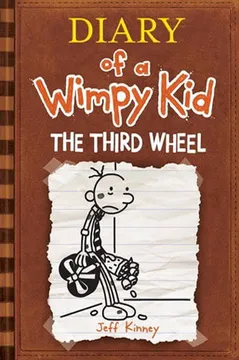


About the Author
Jeff Kinney is an American author and cartoonist best known for creating the Diary of a Wimpy Kid series. Born in 1971 in College Park, Maryland, Jeff Kinney began his creative journey by developing a comic strip called "Igdoof" during his college years. His passion for storytelling and illustration led him to create the immensely popular Diary of a Wimpy Kid books, which have become a global phenomenon. In addition to his successful book series, Kinney is also the creator of Poptropica, a children's website featuring educational games and activities. His work has resonated with young readers worldwide, establishing him as a prominent figure in children's literature.
Other books by Jeff Kinney

Download PDF
Download EPUB
.epub digital book format is ideal for reading ebooks on phones, tablets, and e-readers.








